


As we begin a new year, we have compiled a top 10 list of 2023 reports, featuring exclusive data, interactive visuals, and expert insights. These reports, organized by key topics, offer a glimpse of what the new year might bring. Data specific to New York is highlighted in blue
- Millennials Make Historic Switch to Homeownership: America’ largest generation has finally transitioned from renter-majority to owner-majority. This milestone was achieved after the number of Millennial homeowners increased by 7 million in the last years. By contrast, Gen Z-ers maintain a 74% renter share.
- The number of Millennial homeowners in New York increased by 90% in the last five years and a 892% rise in Zoomer renters. All of the other generations we looked at lost renters in New York, including Millennials (-0.3%).
- Millionaire Renters Tripled Since 2015: The number of renter households with incomes of more than $1 million reached a record high of 3,381, with Millennials taking the largest share (28%). The average millionaire renter is 41 and works in management or finance.
- New York leading the pack with the highest number. 2,457 renter households earn over a million dollars per year in the Big Apple, three-quarters of the national total.
- Apartment Construction: This year, 460,860 new apartments were completed, with the New York metro area emerging as the top builder. Looking ahead, another 1 million new rentals are set to be completed through 2025. Headwinds are expected though, with the number of new apartments projected to drop by 15% year-over-year in 2025.
- New York lead the country in new apartment construction once again, with 33,000 units planned for 2023. These were expected in Brooklyn (9,825 units, more exactly), 4,430 rentals in Queens and 3,770 rentals in Manhattan.
- Best Cities for Renters: For our annual guide, we looked at 140 cities and ranked them based on 20 relevant metrics, including apartment quality; local economy; traffic; air quality and more. Charleston, SC, leads the way, followed by many other beautiful Southern cities.
- All the NYC boroughs landed at the end of the ranking because of the high cost of living and housing. However, Manhattan has the 8th best Local Economy and the 14th best Life Quality.
- Turning Office Space Into Apartments: Mirroring the evolving dynamics of urban environments, the share of office spaces that will be converted into apartments has reached 37% of all future adaptive reuse projects, followed by hotels (23%) and factories (14). Renters will have access to more than 122,000 converted apartments in the next several years.
- In the next years, New York is set to witness the creation of 3,987 apartments, the second biggest number after Los Angeles. Our experts state that what you can get away with in high-value markets like New York wouldn’t be possible in cities that don’t have a huge housing crisis.
- Multigenerational Living: The nation’s younger generations are taking longer than their parents to leave the nest: 20% of Millennials and 68% of Gen Z-ers still live with their family members. In fact, our survey revealed that almost half of Millennials and Gen Z-ers expect to share their homes for at least two more years.
- New York has the 3rd highest share of Millennials living with parents or other relatives – almost 30%. In the same time, 79% of Gen Zers have the same living arrangements.
- Solo Renters on The Rise: The number of solo renters has gained about 1 million people since 2016, reaching 16.7 million (up 6.7%), led by Baby Boomers and Millennials. That’s the fastest-rising renter group during those five years, having accelerated significantly during 2020.
- Those renting alone in the notoriously pricey New York metro make an extra $13,839 per year (or $1,153 per month) compared to the average renter. That said, the average income of those renting alone in the metro is $56,511.
- Build-to-Rent Homes: The build-to-rent sector is booming, as developers are building new single-family rentals at an impressive pace. A record 14,541 new homes for rent were opened recently, up 47% since 2021, amid a sky-high 97% occupancy rate that outpaces the occupancy in regular rentals. Plus, several metro areas hit 10-year highs in the year prior for build-to-rent developments
- In the entire New York metro, we tracked down 92 single family homes for rent built in the past 5 years.
- How Much Does $1,700 Stretch in Apartment Size by Zip Code? This report provides a granular look at how rental budgets translate into apartment size across various zip codes. Specifically, we compiled 50 city maps where renters can search and see where they can get the most space for their money across 1,600 zip codes.
- Of the top 50 zip codes in the U.S. where $1,700 gets you the least amount of space, 36 are in New York. Here, your $1,700 might only secure a very small amount of s, for example 211 square feet in zip code 10013.
- Year-End Report 2023: In 2023, nine renters competed for each vacant apartment amid very limited options, as 94% of rentals were already occupied. At the same time, the nation’s supply of apartments saw a solid growth, increasing by almost 1.89%. Notably, Miami was the nation’s hottest rental market of the year.
- In 2023, Manhattan re-entered Top 30 Most Competitive Markets and showed a Competitive Score of 76, an increase from the previous year. With a 94.6% of apartments occupied, prospective renters remained steady at 8, while the Lease Renewal Rate was 62.5%. The share of new apartments in the market was relatively low at 0.16%.
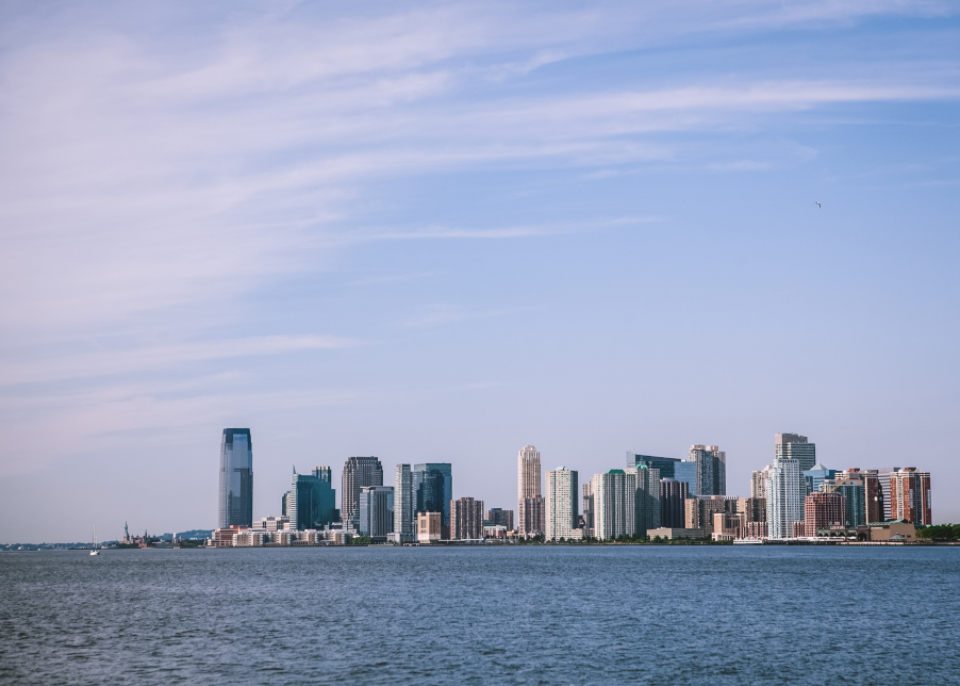
Banner Image: Manhattan skyline. Image Credit – Matt Bango

