

State Legislators Embrace DA McMahon’s Call for Governor to Declare an Opioid Public Health Disaster Emergency
Editor’s note: We previously covered the recommendations of the Staten Island Fentanyl and Heroin Task Force, where one of the recommendations was declaring a State Opioid Public Health Emergency. Additional information about the task force and the report were also provided by DA McMahon. There was also a recent drug smuggling arrest that was the first of its kind, using court paperwork to transfer illegal drugs into the correctional facility.
On Monday, Richmond County District Attorney Michael E. McMahon announced great appreciation for a bipartisan call from nearly 60 New York State Senators and Assemblymembers to declare a State Opioid Public Health Emergency.
“This action by the legislators directly tracks our work on Staten Island as part of our January report of our Staten Island Fentanyl and Overdose Task Force,” said DA McMahon. McMahon, together with Borough President Vito Fossella, convened the group whose number one recommendation was for the Governor to declare the Opioid Crisis a Public Health Emergency.
Upon issuance of its report, the Staten Island Task Force delivered copies to state leaders. The fact that so many legislators have now penned a letter to Governor Kathy Hochul is “great news” noted McMahon. “It is wonderful that our voices were heard. The members of our Task Force who worked through six separate sessions and brought their incredible experience and perspective to the discussion should feel a true sense of accomplishment. Especially because the issues around opioid addiction, fentanyl, and fatal and non-fatal overdoses have been a raging 5 alarm fire in our borough for too long,” McMahon added.
‘“Last year, over 110,000 Americans, including 7,000 in our State and at least 155 of our relatives, friends, and neighbors on Staten Island have passed from this deadly disease. More can and must be done!” McMahon emphasized.
Both the Staten Island Fentanyl and Overdose Task Force Report and the legislators’ letter recommend Governor Hochul and all legislative representatives align behind declaring an Opioid Public Health Emergency. Such a declaration would allow New York State to take immediate actions such as:
• Waiving insurance copays and deductibles for New Yorkers attempting to access addiction treatment;
• Creating a procurement process that speeds up the distribution of opioid settlement funds;
• Waiving application fees for counselors who want to work in the addiction service system;
• Adjusting staffing requirements for addiction service providers that protect patient safety while acknowledging that they cannot recruit and retain a workforce that allows for more services to be provided; and
• Speeding up the distribution of opioid settlement funds, among other changes.
“At least eight other states have already declared a state of emergency over the opioid crisis; New York is behind the curve,” McMahon added. Massachusetts became the first state to make such a declaration in 2014, and Alaska, Arizona, Florida, Maryland, Pennsylvania, South Carolina, and Virginia have all followed suit. The federal government declared a national state of emergency in 2017 that is still in effect.
The declaration of a public health emergency gives state leaders expanded authority to boost a variety of public health measures. New York has previously used such executive orders to declare emergencies to deal with everything from the COVID-19 pandemic, to gun violence, to the migrant crisis, to a water main break in Jefferson County. In 2021 when former Governor Andrew Cuomo declared a public health emergency on guns, opioids killed nearly five times as many people as gun-related deaths.
Public declarations are an important mechanism to allow states to mobilize and share data across agencies and to get more up to date information in a crisis. In Arizona, for example, officials used emergency powers to get daily overdose reports, similar to the COVID reports utilized during the pandemic. “In contrast, New York remains in the dark and constantly behind the eight ball – an example highlighted by the growing presence of Xylazine. Xylazine was involved in approximately 20% of opioid-related deaths in New York in 2021 and 2022, but the New York Department of Health’s first warning was not issued until December 2022, and its first report on the topic was released in 2023. To date, testing is still not being done for xylazine limiting our ability to adequately respond and address its presence in our communities,” McMahon said citing the Staten Island Task Force Report.
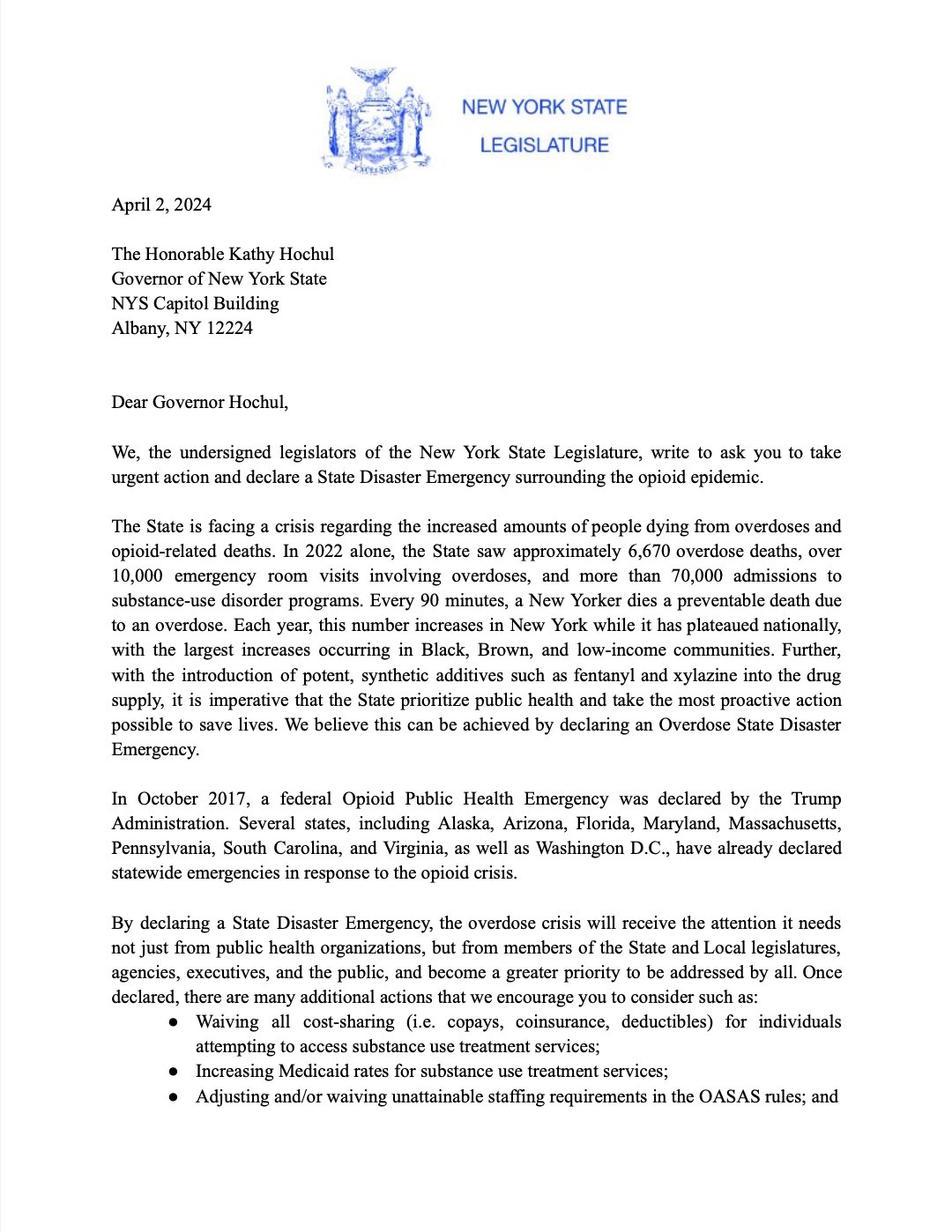
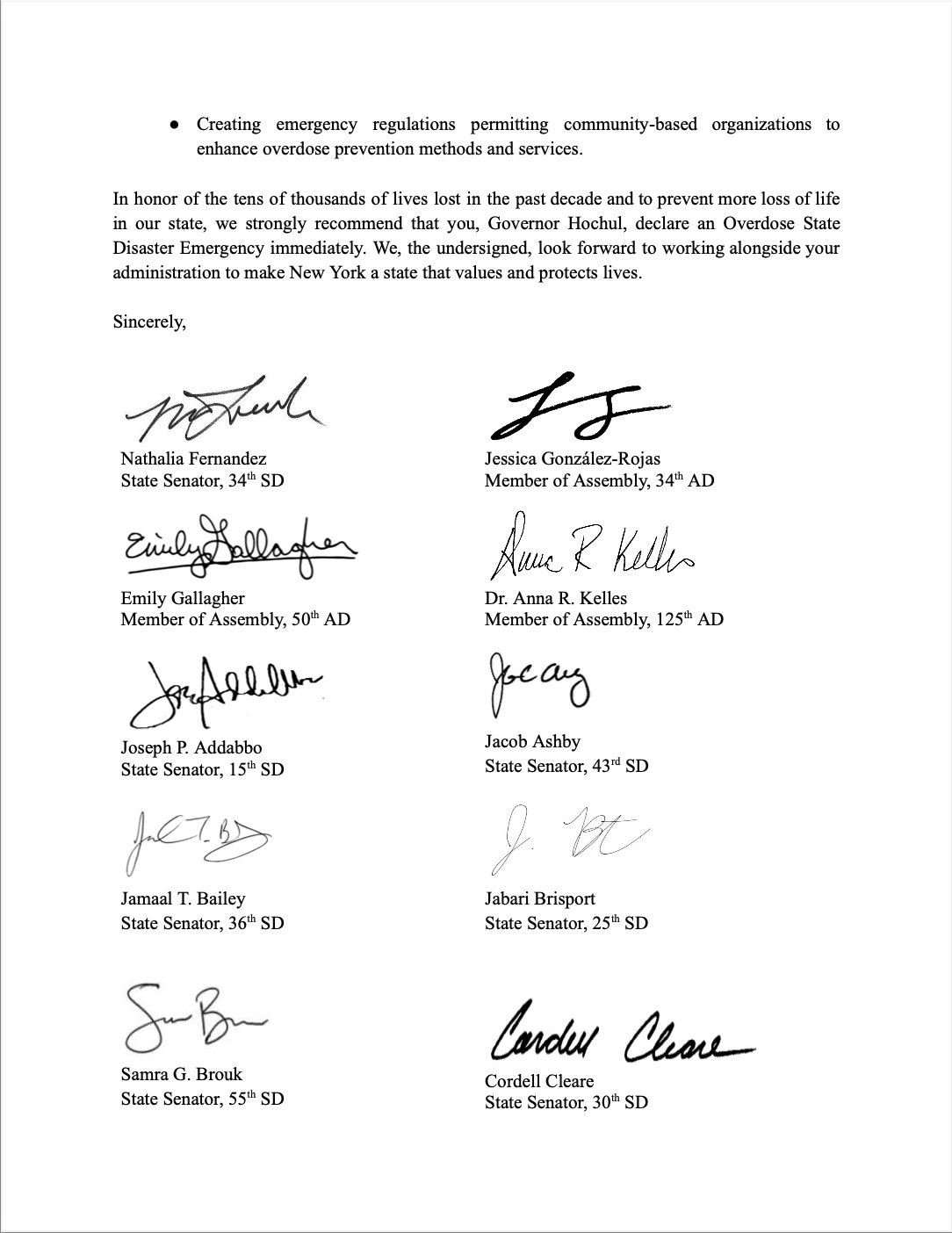
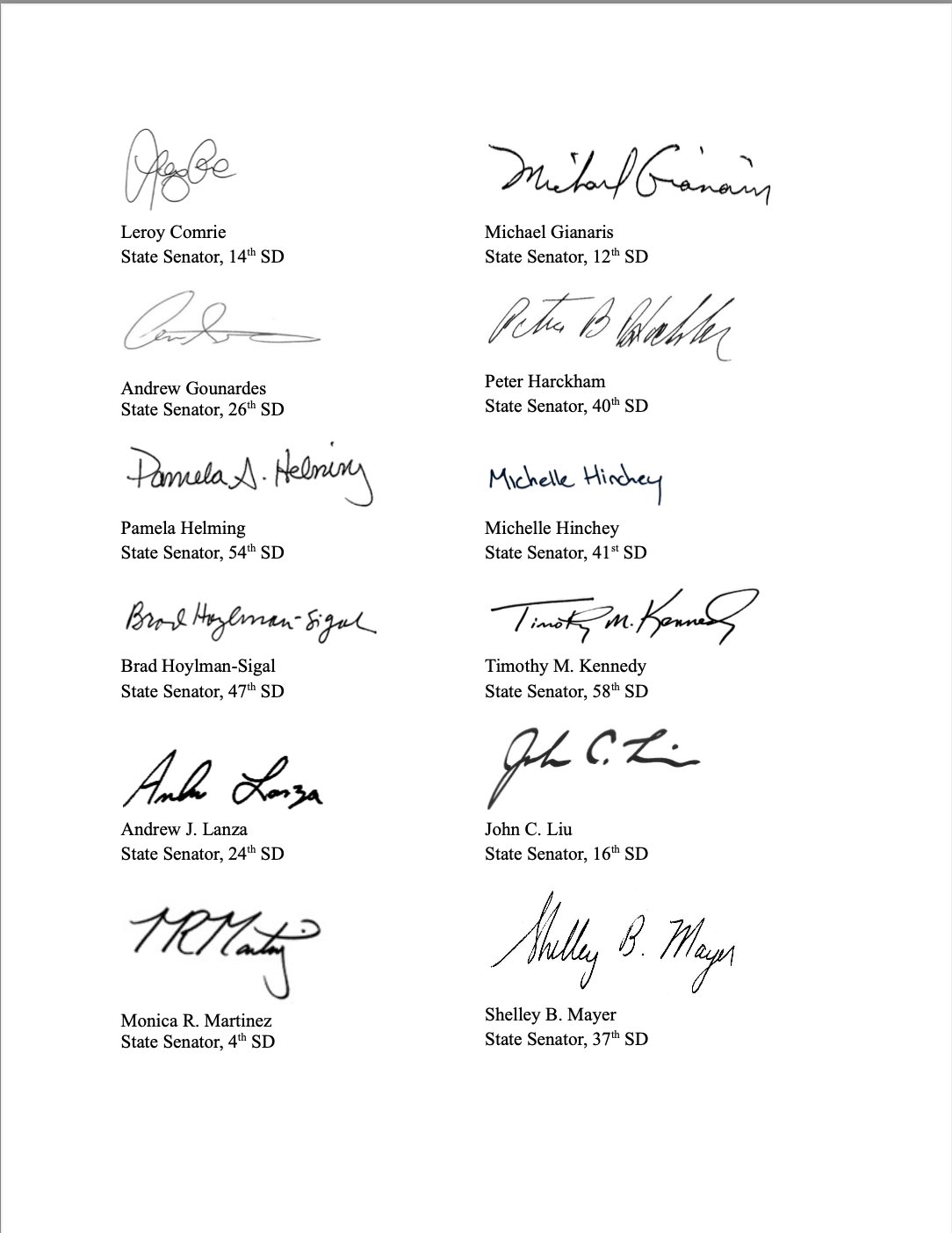
On April 2, 2024, nearly 60 legislators signed a letter to Governor Cuomo endorsing the call for a Statewide Emergency Task Force. Images of the letter are below:
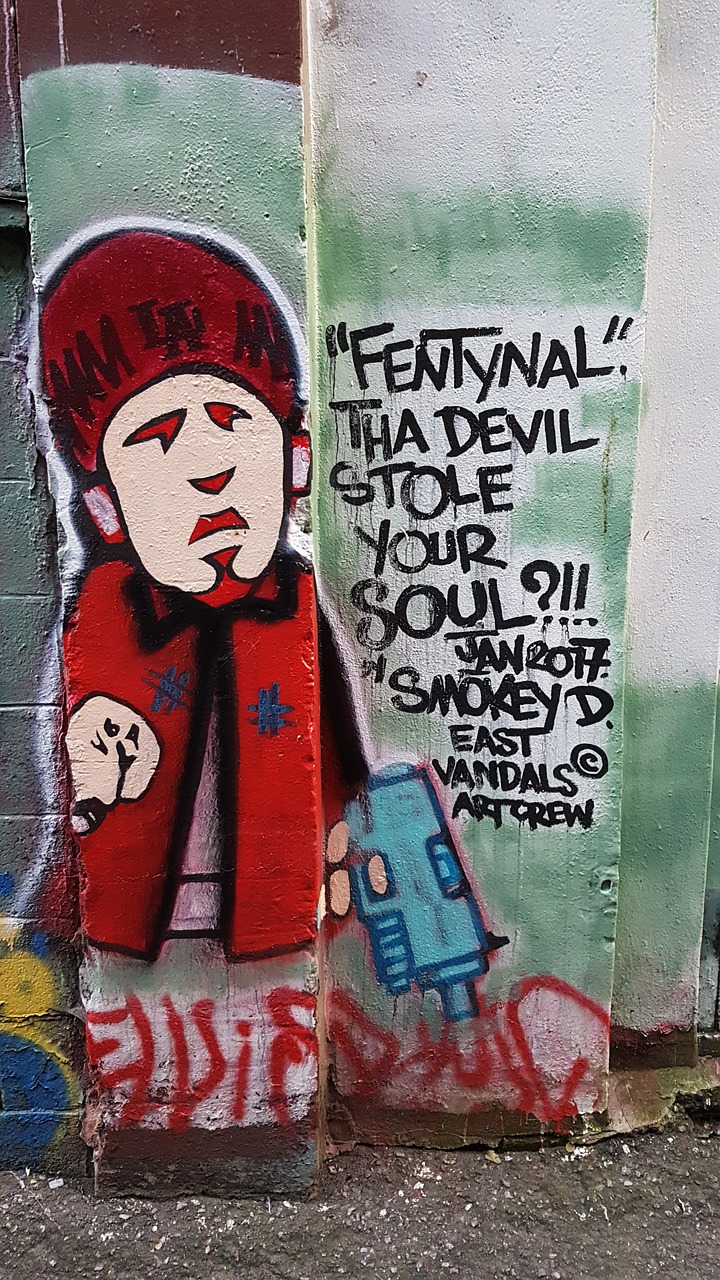
Banner Image: Fentanyl graffiti. Image Credit – alarsenault

