

Historic Preservation Commission Passes Resolution Recommending City Ordinance to Preserve St. Andrew’s Church
Editor’s note: Staten Islander has also reported in the past on the preservation commission on Staten Island holding a hearing to preserve Frederick Douglass Memorial Park for future generations.
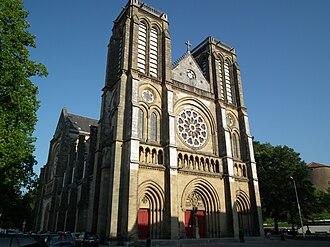
On October 22, the Bayonne Historic Preservation Commission passed a resolution recommending that the City Council adopt an ordinance to preserve St. Andrew’s Church. The commission, which is an official municipal body, passed the resolution unanimously. The resolution cited the history of St. Andrew’s Church and its architectural features, including its stained-glass windows, reddish-brown dress brick, and limestone trim. The church was constructed in 1922-1923.
Among those speaking at the meeting were City Council President Gary LaPelusa, Sr. and First Ward Council Member Neil Carroll III. The Catholic Archdiocese of Newark was represented at the meeting by attorneys from the Newark-based firm of Sills Cummis and Gross.
A crowd of approximately 200 attended the meeting in the City Council Chambers.
Under Bayonne’s Historic Preservation Ordinance, the façade of a historically designated building is preserved. The Catholic Archdiocese has closed the church building. The church building’s future has not been determined yet.
Under Bayonne’s procedures, the Historic Preservation Commission sends resolutions recommending historic preservation of particular buildings or districts to the City Council. If the City Council introduces an ordinance that would preserve a building or district, that proposed ordinance would go to the Planning Board for a review. Then the Planning Board would send the proposed ordinance back to the City Council for a public hearing and further consideration.
Two of Bayonne’s churches are covered by historic preservation ordinances: St. Vincent DePaul Roman Catholic Church, and First Federated Church, a combined Reformed and Presbyterian house of worship, which is Bayonne’s oldest religious congregation. Both St. Vincent’s and First Federated are also on the State and National Registers of Historic Places.
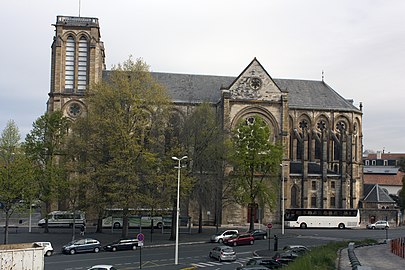
Southern Side of the Church. Image Credit – Wikipedia
Banner Image: St. Andrew’s Church facade. Image Credit – Wikipedia
City of Bayonne


Bayonne is a community that retains many of the elements of a small town. One and two family homes, small apartment buildings, and small business predominate. There is a population of 62,000 people who take pride in their hometown and its history. Bayonne residents and their ancestors moved to the city from many parts of the world. During colonial times and the first century of the American Republic, the Dutch, British, and Africans were the first groups to arrive after the Native Americans. Subsequent waves of immigrants came from all over Europe, especially between the 1880s and the 1920s. In recent decades, sources of immigration have largely been represented from countries in Latin America, the Middle East, and Southeastern Asia. Each group has left its mark on the cultural, religious and political life of the community.