

Must-See Movie Review: Cabrini by Angel Studios
Editor’s note: You can see our original announcement about the film when it was in theaters here.
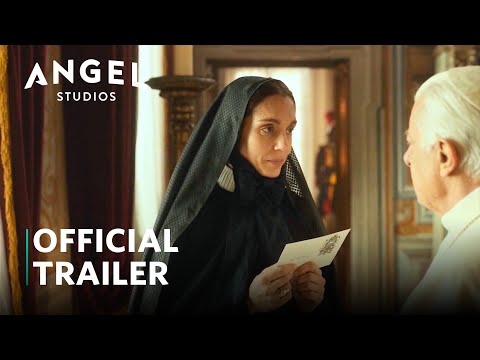
I recently had the opportunity to watch Cabrini by Angel Studios. First I want to say this movie was incredible. It was a great experience watching it, and it did an excellent job of transporting you into the time and place.
From the moment the movie starts, it is fast-paced and emotionally stimulating. It begins as a young man in New York City brings his mother in a cart to the local hospital, where no one speaks Italian, and he is dismissed by a police officer. By the time they find him again, his mother has died. They take her body to Potter’s Field, handing him a note which he cannot read. As they wheel her away, he calls after them, asking where they are taking her. He then becomes one of the many abandoned children in the city left to fend for themselves.
The year is around 1889, the very same year that a nun named Mother Cabrini arrives in Rome to plead her case for a missionary orphanage in China. Her persistence and tenacity, despite her frailty which we are introduced to when we first meet her, pays off in an unexpected way. Instead of China, the pope asks her to start in America, in New York’s Hell’s Kitchen, of all places.
For New Yorkers who are avid history buffs, you may already know of this time period. If not, there are several interesting books about it, including Paul Moses’ The Italian Squad which describes the portion of life for Italian immigrants which is well known.
This story is about the hidden parts of history, which is less well known. There was a time when children and adults lived on the streets and in the tunnels under the city. This really did happen, though it may have been just on the streets. There’s a photographer at the time, Jacob Riis, who immortalized these homeless children in a book called How the Other Half Lives: Studies among the Tenements of New York, and some of those photos inspired scenes of the movie, according to the director.
The lighting, the emotion, the way each scene was shot: all were incredible. This movie was interesting and inspiring. While the movie was a bit long, the time passed quickly, and there were no dull moments. The children Mother Cabrini cared for, as well as the nun herself, were very well developed as characters and personalities.
The inner spiritual life of Mother Cabrini was quite clearly shown (rather than having a focus on external spirituality). I felt this was a much better tactic for showing how clearly connected her spiritual life was to her attitude and actions.

Putting on the habit. Image Credit – Angel Studios
One of the poignant demonstrations of her inner faith and spirituality are expressed when she puts on the nuns’ habit. You can see the great strength she derives from this outfit, which represents her pledge to God and the Catholic Church. This is actually utilized as an anchoring point throughout the movie, particularly when she is facing a very difficult challenge, such as before she barges into the Italian Senate (which really did happen).

At the Senate. Image Credit – Angel Studios
The Catholic network known as EWTN also had their own version, which was not very good. All of the characteristics that this new Cabrini film has, that one lacked. You barely get to know the nun, her and the other sisters come off as superior, judgemental, and ultra religious, rather than warm and caring. They don’t connect with the orphans in any meaningful way, and the movie is long and boring. It’s also highly sanitized in its depictions of early New York City. It was definitely grittier than they showed it.
EWTN’s network hosted a reviewer who complained that the new Cabrini movie wasn’t religious enough. But as other reviewers have pointed out: how much religion do you want? How interesting would it be to see her praying every few minutes? That would be quite tedious. That kind of describes the EWTN film, though.
However, returning to the Angel Studios film, it is extremely watchable, with no boring moments or scenes. Mother Cabrini is depicted as the fierce fighter that history shows her to have been. Some artistic license was taken, but overall it is quite factual and based in real history.
The newspaper article that provides the breakthrough in fundraising for the Cabrini orphanage really existed, and the quiet interview with this strong woman inspired the wealthy of the time to open their pocket books for the poor Italian orphans in Mother Cabrini’s care.
You can learn more about the article here and here it is quoted extensively
And an image appears below.

Being A Woman In A Time, Religion, And City Dominated By Men
Other reviewers have said that it was too focused on the fact that she was a woman, but it should be noted that this would have been a real obstacle at the time. It’s likely that more than one of the individuals she needed help from would have had to overcome the hurdle of her gender. It was an extremely misogynistic world at the time. Many of the things the pope says in the movie to her in the meeting are from real notes of conversations at the time. So she would have stressed her abilities despite her sex in the course of her activities.
Casting
I also would be remiss if i didn’t point out how amazing the casting was in this movie. The mayor is the father from Third Rock from the Sun (Academy Award winning actor John Lithgow), and he does an excellent job playing the part of the very corrupt mayor of the time.
The archbishop of New York is played extremely well by David Morse, as is the part of the prostitute (by Romana Maggiora Vergano), the Senate members, and all of the other secondary roles.
But the most evocative acting was that of Mother Cabrini herself, played by Cristiana Dell’Anna. The depth of character that you feel watching her is just breathtaking. She pulls you into the world of the real Mother Cabrini with incredible skill and precision.
You really feel like you get to know this amazingly strong and emotionally relatable nun through her performance. The script is incredible as well, with so many nuances that you really will want to watch it a second time. Mother Cabrini believes that she has a very short time to live, since she has post tubercular syndrome herself from an infection earlier in her life. As a consequence, she rarely rests, and spends every waking moment working to provide for the children in her care.
Oddly enough, she lives a lot longer than expected. She actually goes on to fulfill the mission and vision she describes to the pope on one of her meetings with him. As he says during their first meeting (paraphrased): If the world is not big enough for your vision, then it doesn’t matter where you start.

Meeting the pope. Image Credit – Angel Studios
And it didn’t matter. She and her fellow nuns went on to found orphanages all over the United States, as well as, eventually, in China and other parts of the East. 67 of them in all, the same age she was upon her death. So, as the pope asked her to start in the West and eventually reach the East, she actually did just that. And she became legendary as a result.
This movie does an awesome job of telling her story in a real and relatable way. If you know nothing about her before, you will learn a lot. And if you know about her already, this will give a more nuanced, in depth look at her life. I would give this movie five stars, and it’s a definite must-see!

Banner Image: At the Italian Senate. All Images Credit – Angel Studios

