


Staten Island, NYC Politicians Weigh In On Proposed MTA Fare Hike: Urge Board To Vote No On Proposals
Below, hear from the NYC Mayor Adams, Candidate Curtis Sliwa, Rep. Malliotakis, and BP Fossella on their opposition to the proposed fare hike, which will raise the fare on buses and other public transit methods for all New Yorkers, including those in the outer boroughs. All of the politicians are against this change, which they say will have a disproportionate effect on low-income residents who must commute view the bus and train. In addition, BP Fossella has been bringing light to the terrible state of the express bus system on Staten Island, where a substantial portion of daily trips are canceled, leaving commuters stranded.
MAYOR ADAMS’ STATEMENT ON METROPOLTIAN TRANSPORTATION AUTHORITY’S PROPOSED FARE HIKES
NEW YORK – New York City Mayor Eric Adams today released the following statement after the Metropolitan Transportation Authority (MTA) announced proposed fare hikes for transit services:
“Every day, the Adams administration is working hard to make New York City safer and more affordable — and we’re delivering real results. But New Yorkers are still feeling the affordability crunch, and the more than 5.5 million MTA riders each day deserve fast, reliable, and affordable public transit.
“The current MTA fare is already too high for many, and we have taken steps within our control to ease the burden through Fair Fares, which we recently expanded to include New Yorkers earning up to 145 percent of the federal poverty level, making nearly 1 million low-income residents eligible for discounted MTA benefits. And now, with congestion pricing set to generate billions in dedicated funding for MTA improvements, the agency has no excuse.
“Proposing a fare hike without demonstrating meaningful improvements is offensive to hard-working New Yorkers, and that’s why I’m urging all board appointees to vote no on this proposal. We strongly oppose this fare increase and remain committed to fighting for a more affordable and equitable city.”
Governor Hochul said of the proposed hikes:
“Increases in fares are never welcome. Nobody likes them at all,” Hochul said. “But we have to deal with the reality of (how) tariffs are going to make aluminum and steel more expensive — thank you, Donald Trump.”
“When we do a project like this, we have to add in escalation costs for everything because of inflation, the pandemic and now this unforced, unnecessary additional expense to doing everything,” Hochul added.
Curtis Sliwa: MTA’s $3 Fare Hike is Latest Blow to New Yorkers
Demands Urgent Reform to End MTA’s Waste and Mismanagement


NEW YORK CITY: – Curtis Sliwa, NYC Mayoral Candidate and longtime advocate for the city’s working-class commuters, today condemned the Metropolitan Transportation Authority’s (MTA) decision to raise subway and bus fares to $3.
The fare hike, recently approved by the MTA board, adds to the growing financial burden on everyday riders already hit with congestion pricing, payroll mobility taxes, and toll increases. Meanwhile, service continues to deteriorate.
“The MTA has been scamming New Yorkers for far too long, and this fare hike is just the latest insult,” Sliwa said. “It is always more money for worse service. Trains are delayed, dangerous incidents regularly bring the system to a halt, and stations are unsafe. Instead of hiring more transit workers to restore safety and reliability, the city wasted money on private security firms.”
Sliwa noted that while fare evasion remains a concern, it should not distract from the real problem. The MTA is a bloated and mismanaged agency that continues to waste billions while delivering less for riders.
“The system is broken,” Sliwa said. “The MTA must be audited, its waste and inefficiencies must be exposed, and real accountability must be put in place. Riders should be paying less and getting more. Safety and reliability are not optional.”
Learn more about Sliwa’s Safe Commute Plan at: SliwaForNYC.com/safecommute


Proposed Fare Policy Changes For New York City Transit Subways and Buses
Complete Transition to “Tap-and-Go” and Retire the Unlimited MetroCard Passes.
The 7-day rolling fare cap, which allows customers to pay for 12 rides in a 7-day period and automatically ride free for the rest of the week with no pre-payment required, would become permanent. At the proposed base fare, no customer would pay more than $36 for subway and local bus rides in a week; reduced-fare customers would pay no more than $18 in a week.
Fare capping would also be extended to the express bus network on a promotional basis. During this promotion, express bus riders would never pay more than $67 for unlimited express bus, local bus, and subway rides in any 7-day period.
With fare capping available to all subway, bus, and express bus customers, the 7-Day, 30-Day, and Express Bus Plus Unlimited Ride MetroCards will no longer offer substantial financial savings and will no longer be sold. Customers will still be able to pre-load funds onto an OMNY card for unlimited travel using the fare cap. Unlike with MetroCards, any unused funds will roll over. More than 75% of subway and bus riders are already using their contactless debit/card, mobile wallet or OMNY card to pay their fare.
Tap-and-go Would be Required for All Subway, Local Bus, and Express Bus Rides Once MetroCards Are No Longer Accepted as Fare Payment
Cash and coins would continue to be accepted at card vending machines in subway stations and at one of the 2,700 local businesses that sell OMNY cards. Retail locations can be found via this map.
For the MTA, coin collection on local buses is inefficient and if it continues, would cost the agency $14 million annually to operate and maintain. Eliminating coin collection would also allow teams to fully deploy proof-of-payment on buses and conduct thorough fare enforcement.
Proposed Rates
Under the fare rate proposed, the base fare for subways, local buses, the Staten Island Railway and Paratransit would rise 10 cents to $3.00. Express bus fares would rise to $7.25, from the current $7.00. The reduced-fare would remain at half-off the base fare, rising from $1.45 to $1.50. Single-ride tickets on subways and buses will increase to $3.50 from the current $3.25. The fee for a new OMNY card would increase to $2 when the MetroCard is no longer accepted for fare payment later in 2026. To view the full NYC Transit fare table under the proposal, see here.
Proposed Fare Policy Changes for LIRR and Metro-North Ticket
More Flexible Ticket Offerings
A new promotional Day Pass for unlimited travel would replace the Round-Trip ticket. The Day Pass would be valid on the day of purchase until 4 a.m. the following day. On weekdays, the Day Pass would cost 10% less than two one-way peak tickets; on weekends, it would cost the same as two one-way off-peak tickets. Unlimited Day Passes are also available for CityTicket and Far Rockaway ticketholders, priced at $14.50 in the peak and $10.50 in the off-peak.
A new promotional discount would be available for mobile customers. After 10 peak or off-peak trips in 14 days, mobile customers would get an 11th peak or off-peak one-way trip for free in the same zone combination in the same 14-day period. Unlike today’s 10-Trip, which would be eliminated, this new fare product would not require customers to pre-pay for 10 tickets to receive a discount and introduces a new discount for 10-Trip peak customers. 71% of customers already purchase their tickets via the TrainTime mobile app.
Reduced Fare is Always Available
A promotional reduced fare product would be available all day, every day for seniors, people with disabilities, and Medicare recipients, even in the morning peak period.
No Need to Activate Tickets
The MTA is eliminating the need for customers to activate tickets after purchasing. All One-Way mobile tickets would auto-activate upon purchase, and the ticket would expire after four hours. Paper tickets would also expire four hours after purchase.
Customers Can Buy Before Boarding to Avoid the Onboard Surcharge
The surcharge for tickets purchased onboard, whether from a conductor or the TrainTime app, would increase by $2. Customers who repeatedly purchase mobile tickets onboard would be penalized after an escalating series of warnings.
Proposed Fare Rate Changes for LIRR and Metro-North
For the commuter railroads, a proposed increase of up to 4.4% would apply to monthlies and weeklies. All other ticket types would increase up to 8%, with no fare increasing more than $2. To view the full LIRR proposed fare table see here. To view the full Metro-North fare table under the proposal, see here.
Given a 10% discount applied to monthly tickets in 2022 and suspension of the fare increase in 2021, the current cost of a monthly ticket is about the same price of a monthly ticket in 2019 when adjusted for inflation. Monthly ticket fares will not exceed $500.
The Off-Peak CityTicket would go from $5 to $5.25 and the Peak CityTicket from $7 to $7.25. These proposals also apply to the Far Rockaway ticket. The Peak CityTicket and Far Rockaway ticket, which are currently promotional, would become permanent fare products.
Base fares for Metro-North’s West-of-Hudson services, the Pascack Valley Line and Port Jervis Line would increase by 4.4%.
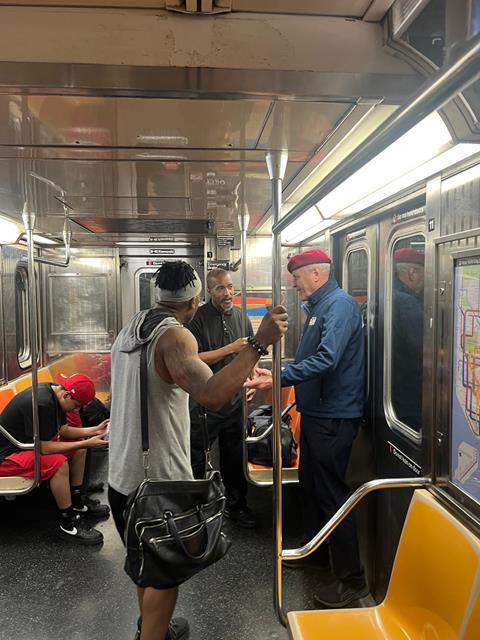
Banner Image: Curtis Sliwa on the subway. Image Credit – Curtis Sliwa
Staten Islander News Service Staff Writer


This byline indicates that this article was penned by a member/members of the Staten Islander News Organization office team. Our staff writers are the backbone of our newspaper, performing all sorts of important tasks like conducting interviews, investigating leads, besides writing the news stories you see.