


Secretary Rollins Blocks Taxpayer Dollars for Solar Panels on Prime Farmland
Editor’s note: We previously covered the ways in which solar power, as a renewable energy source, is superior to many other forms of power generation, and is nearly on par with current non-renewable methods. It is far superior to wind energy, which has the added hazard of killing migrating birds and bats, as well as some insects, due to their invisibility while spinning. According to the Cornell Cooperative Extension, there is currently high demand in New York State for farmlands to be leased for solar panel installation. Such leases can help farmers keep their farms in some cases.
See below for the response from Guillermo Metz at the Cornell Cooperative Extension of Tompkins County, Solar and Agriculture Senior Resource Educator, regarding the program. Note that the REAP program is a loan program, which must be paid back with interest. As we asked below, there are no grant programs for renewable energy. Continue below for questions and answers from USDA clarifying their press release, which follows the answers:
You should talk with someone at USDA for clarification [see below for this clarification], but it seems to me that what is essentially happening is USDA funding for solar, which is mainly through the Rural Energy for America Program (REAP), and which won’t affect large-scale solar at all, just small farm-sited projects where the power goes to the farm operations themselves. In that sense, it is troubling because it will negatively affect farmers trying to install solar (or wind, if you read on) on their farm, which is generally for resilience and to save on energy costs long-term. The first paragraph of the USDA’s press release is very misleading, as well, in that while farmland has been lost at what some might call an alarming rate nationwide, very little of that has gone to solar development. All kinds of other development, the aging of farmers without a viable plan to pass the farm on to anyone, and the inability of farmers to continue to afford to farm are the main drivers, not solar development. Another piece of the conversation is what is currently being farmed on the land — a significant amount of land nationally, including here in NYS, is used for growing corn for ethanol. Whatever your position on ethanol, or corn, if the aim is to make energy, solar can make much more energy per acre than corn.
1. Can you please specify which programs specifically have been cut?
a. The new guidance impacts how RBCS administers the Business & Industry (B&I) Guaranteed Loan Program and the Rural Energy for America Program (REAP) Guaranteed Loan Program. Projects that were already awarded will continue to receive funding under the terms in place at the time of their award.
2. Are there any grant programs that are being blocked from funding, or is it loan programs only?
a. The new guidance impacts Business & Industry (B&I) Guaranteed Loan Program and the Rural Energy for American (REAP) Guaranteed Loan Program; at this time no grant programs are being impacted. Future REAP grants are expected to be disincentivized via the scoring criteria.
3. Are any solar grant programs affected under recent changes including this one?
a. RBCS administers several programs of which solar projects have been eligible to participate in, programs are not explicitly for solar projects.
4. Are current recipients or those already approved for such loans or grants affected by this decision, or is it new applications only?
a. Recipients who have loans approved are not affected. As noted above, grants are not impacted at this time.
5. Can the secretary explain what is meant by a subsidized solar farm?
a. A project that receives financial support from RD to help lower additional costs.
6. Are smaller farms that utilize solar energy for their own operations still qualified for these programs, or will they need to move to other sources of energy than solar?
a. Solar energy projects sized at 50 KW or less, to replace the applicant’s historical energy consumption, are still eligible under the REAP Guaranteed Loan Program if they are not installed on cropland and if components are not made in a country named as a foreign adversary.
7. Does this apply to solar only or is it applicable to wind as well?
a. The guidance is applicable to both wind and solar technologies.
8. Is there any farmland in New York that will be affected by this change?
a. Again, projects that were already awarded will continue to receive funding under the terms in place at the time of their award.
b. For specifics on projects, please visit the Rural Data Gateway.
USDA Press Release:
(Lebanon, TN) – U.S. Secretary of Agriculture Brooke L. Rollins alongside Tennessee Governor Bill Lee, Senator Marsha Blackburn, Senator Bill Hagerty, Representative John Rose, and U.S. Department of Agriculture (USDA) Deputy Secretary Stephen Vaden, announced USDA will no longer fund taxpayer dollars for solar panels on productive farmland or allow solar panels manufactured by foreign adversaries to be used in USDA projects. Subsidized solar farms have made it more difficult for farmers to access farmland by making it more expensive and less available. Within the last 30 years, Tennessee alone has lost over 1.2 million acres of farmland and is expected to lose 2 million acres by 2027. This problem is not just in Tennessee; since 2012, solar panels on farmland nationwide have increased by nearly 50%. That is why the Department is taking action.
“Our prime farmland should not be wasted and replaced with green new deal subsidized solar panels. It has been disheartening to see our beautiful farmland displaced by solar projects, especially in rural areas that have strong agricultural heritage. One of the largest barriers of entry for new and young farmers is access to land. Subsidized solar farms have made it more difficult for farmers to access farmland by making it more expensive and less available,” said Secretary Brooke Rollins. “We are no longer allowing businesses to use your taxpayer dollars to fund solar projects on prime American farmland, and we will no longer allow solar panels manufactured by foreign adversaries to be used in our USDA-funded projects.”
“Tennesseans know that our farmland is our national security, our economic future, and our children’s heritage. We were honored to welcome Secretary Rollins to Tennessee this week, and I’m grateful for her leadership to defend America’s farmland from foreign adversaries and protect our food supply,” said Tennessee Governor Bill Lee.
“Tennessee farmland should be used to grow the crops that feed our state and country, not to house solar panels made by foreign countries,” said Senator Blackburn. “Secretary Rollins and President Trump are right to put an end to these Green New Deal subsidies that waste taxpayer dollars while threatening America’s food security. I applaud this administration for investing in rural communities across Tennessee and empowering them to prosper for years to come.”
“Agriculture has been a part of my life from when I was a kid serving as FFA chapter president to helping President Trump negotiate the trade deal that opened Japan—the world’s third-largest economy—agriculture markets for American farmers, so I know firsthand the importance of protecting our farmland. We can’t afford to lose it to foreign-made solar panels. For generations, Tennessee farmers have fed and fueled this nation, and that legacy must be preserved,” said Tennessee Senator Bill Hagerty.
“Competition is the American way. As a business owner, I know well the importance of fighting for your spot in the free market. It sparks innovation and often drives down costs for consumers. By leveling the playing field, USDA Secretary Brooke Rollins is ensuring an abundant energy future for Tennessee and beyond,” said Representative John Rose (TN-06).
“Secretary Rollins understands that food security is national security, and preserving prime farmland for agricultural production is a key component of protecting our food supply. I look forward to working with her and this Administration to ensure any incentives for renewable energy projects have commonsense safeguards in place that provide options for producers while protecting our most productive farmland,” said House Committee on Agriculture Chairman Glenn “GT” Thompson (PA-15).
“I strongly support Secretary Rollins’ action today implementing President Trump’s executive order de-prioritizing undependable energy sources, and protecting our prime farmland for much-needed food production. Ending wasteful taxpayer Green New Scam subsidies that have driven up energy costs and taken farmland out of production are long overdue. This action protects farmland so important to our Eastern Shore economy, strengthens American agriculture, and puts our energy independence first,” said Representative Andy Harris (MD-01).
“The land that feeds America should never be sacrificed for unreliable green energy experiments subsidized by taxpayer dollars. With this action, the USDA is making it clear that agriculture, not foreign-made solar panels, belongs on America’s farmland. This step ensures our land, food supply, and rural traditions are protected for generations to come,” said Representative Tom Tiffany (WI-7).
“We shouldn’t be subsidizing solar projects on prime farmland; that land is too valuable for producing the food and fuel our nation depends on. Secretary Rollins is right to step in and make sure taxpayer dollars aren’t used to take our best farmland out of production, and I strongly support stopping the use of solar panels made by foreign adversaries. I’m proud to see that the Trump Administration continues to be committed to protecting American agriculture,” said Representative Mike Bost (IL-12).
“There is no such thing as a solar farm. It is a waste of one of our most precious resources, our land. The extortion of the American taxpayers through solar subsidies, and the destruction of our farm and forest resources, has gone on for far too long. I commend Secretary Rollins for taking action to keep taxpayer dollars from being wasted on solar panels, purchased from our adversaries, and to no longer allow these unaffordable “green” projects to waste space on our American farmland and destroy our forest and wildlife habitat,” said Representative Austin Scott (GA-08).
“For too long, Washington bureaucrats and foreign adversaries have tried to dictate how we use our land and our resources. Taxpayers should never be forced to bankroll green new deal scams that destroy our farmland and undermine our food security. I applaud President Trump and Secretary Rollins for standing up for America’s farmers and ranchers by ensuring our prime farmland is protected from foreign adversaries and our taxpayer dollars are spent wisely. Our agricultural heritage is the backbone of this nation, and these commonsense reforms put food security, national security, and American sovereignty first,” said Representative Harriet Hageman (WY-AL).
“The Trump Administration is continuing to listen to those at home who were struggling under the previous administration’s Green New Scam. It’s been proven time and time again that subsidies negatively impact market pricing, passing the cost directly to consumers. I applaud the work of the USDA protecting national security, prioritizing American products first, and amplifying an all-of-the-above energy approach,” said Congressman Ralph Norman (SC-05).
“Green New Deal subsidies have distorted the energy market and supplanted American farmland. USDA is taking decisive action which complements policies I supported in the One Big Beautiful Bill Act, ending the misuse of taxpayer dollars and upholding our national security interests in energy infrastructure. I appreciate Secretary Rollins’ leadership in restoring common sense to these USDA programs,” said Representative Adrian Smith (NE-03).
Protecting American Farmland:
This action will rapidly eliminate the market distortions and costs imposed on taxpayers by reducing energy subsidies and builds upon the repeal of and modifications to wind, solar, and other “green” energy tax credits in the One Big Beautiful Bill Act. It will further USDA’s determination to end taxpayer support for unaffordable and unreliable “green” energy sources and ensure the supply chain consists of American products and manufacturing.
Effective immediately, USDA will implement the following programmatic actions:
- For the USDA Rural Development Business and Industry (B&I) Guaranteed Loan Program wind and solar projects are not eligible.
- For the USDA Rural Development Rural Energy for America Program Guaranteed Loan Program (REAP Guaranteed Loan Program), USDA will ensure that American farmers, ranchers, and producers utilizing wind and solar energy sources will install units that are right-sized for their facilities. If project applications include ground mount solar photovoltaic systems larger than 50kW or ground mount solar photovoltaic systems that cannot document historical energy usage, they will no longer be eligible for the REAP Guaranteed Loan Program, and priority points will no longer be given for REAP grants.
USDA Rural Development invests in rural America with loan, grant, and loan guarantee programs to promote rural prosperity. The commitment and resources we bring to rural communities help drive economic security and prosperity. Our programs expand access to high-speed internet, electric, and transportation infrastructure, and support business growth, healthcare, education, housing, and other community essentials. Learn more online at www.rd.usda.gov.
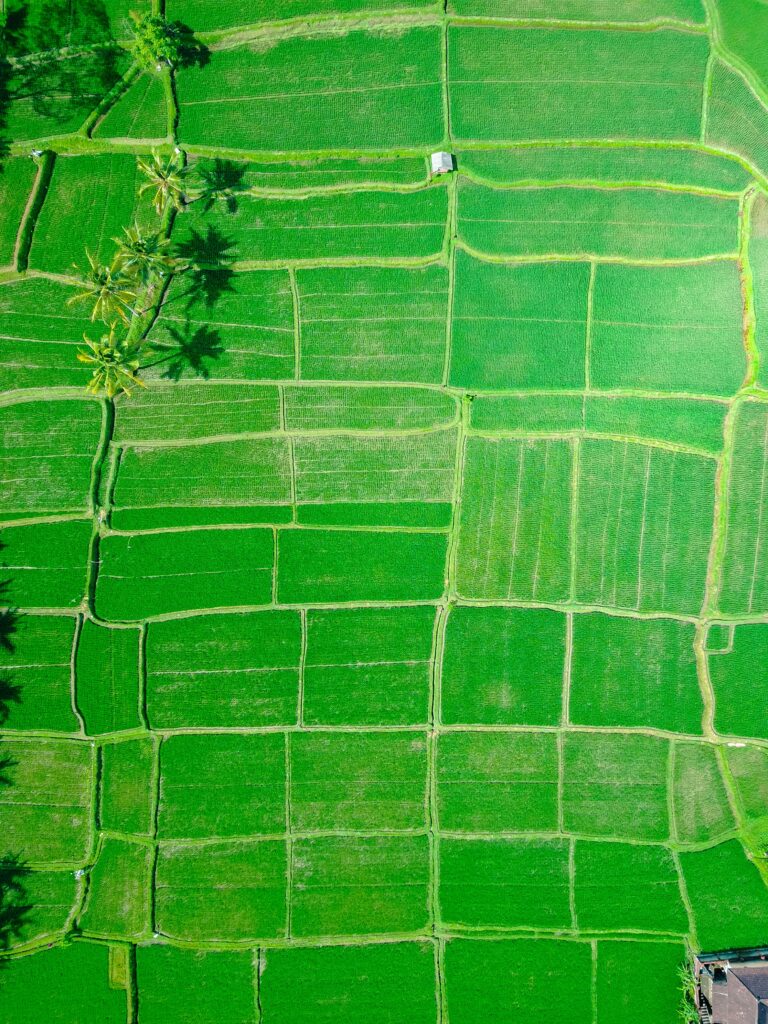
Banner Image: Farmland. Image Credit – Joel Vodell
Staten Islander News Service Staff Writer


This byline indicates that this article was penned by a member/members of the Staten Islander News Organization office team. Our staff writers are the backbone of our newspaper, performing all sorts of important tasks like conducting interviews, investigating leads, besides writing the news stories you see.