


What’s Really at Stake in the Kilmar Abrego Garcia Case?
From pretrial detention to the threat of foreign rendition, the Abrego Garcia case shows how political prosecutions and coercive plea deals have eroded the promise of a fair trial.
Editor’s note: We previously reported on the case of 50 Venezuelans imprisoned in El Salvador without due process. These individuals had been going through the proper process and following the laws of the United States when they were taken. There have also been citizens who have been swept up in the dragnet allegedly targeting anyone who looks or speaks Spanish.
This article appeared on Reason.com on October 9, 2025.
Editor’s note: We previously published an article about the detention and subsequent release of Kilmar Abrego Garcia, who is just one undocumented immigrant among hundreds who have been sent to detention centers in El Salvador and other locations under the Alien Enemies Act.
Thanks to a Supreme Court that has blessed anything short of physical torture, prosecutors have more coercive tools than ever before, including the ability to threaten to indict a defendant’s family members or friends. Now, the dubious, politically motivated prosecution of Kilmar Abrego Garcia could force a court to decide if the threat of rendition to a foreign country is another legal leverage for prosecutors.
This summer, President Donald Trump’s Department of Justice offered Abrego Garcia a deal: plead guilty to human smuggling and serve time in Costa Rica or face deportation to Uganda. It is clear that the prosecution of Abrego Garcia is not about one man. Rather, the Trump Administration is relentlessly pursuing him because by fighting his unlawful rendition, Abrego Garcia is forcing the government to admit it made a mistake.
On October 3, U.S. District Judge Waverly Crenshaw Jr. found that Abrego Garcia had presented “evidence of vindictiveness,” and ordered a hearing to determine this question—scrutiny the Justice Department would have avoided had Abrego Garcia pleaded guilty.
The promise of a trial by a jury of one’s peers is a cornerstone of the American justice system. The Founders enumerated it not once, but twice, ensuring that in all criminal prosecutions the defendant has the right to a public trial before an impartial jury. Yet, in today’s courtrooms, this sacred right has become a vestigial organ—an option rarely exercised.
The system now runs on a different engine: the plea bargain. While not inherently unconstitutional, these backroom agreements account for a staggering 98.3 percent of all federal convictions and a similarly disturbing percentage at the state level. Prosecutors, armed with an overstocked arsenal of weapons, have become incredibly adept at pressuring the accused—even the innocent—to plead guilty.
Pretrial detention is one of the most powerful weapons used in plea bargaining. For a defendant locked in a jail cell, unable to meaningfully participate in their own defense, the mere promise of going home is often enough to compel them to plead guilty. Prosecutors might argue that a defendant is too dangerous to be released pretrial, but that concern magically vanishes the very moment they agree to forgo their right to a jury trial. This is because prosecutors’ fervor to win at all costs can override any motivation they have to seek justice or protect the community.
There’s also the threat of a harsher sentence, a tactic so prolific it’s known as the “trial penalty.” Prosecutors can stack charges and leverage mandatory minimums, painting a picture of decades behind bars if a defendant dares to exercise their constitutional right to a jury trial. The tragic case of Aaron Swartz serves as a stark warning. After federal prosecutors threatened the internet activist with 35 years in prison for a nonviolent crime, he took his own life. Carmen Ortiz, the then‑U.S. Attorney for the District of Massachusetts, defended her actions, quipping that she offered a plea deal for just four months. For demanding the government prove its case, Swartz faced an astounding 10,400 percent increase in prison time.
The system is a far cry from the one where twelve citizens would be the ultimate arbiters of justice. Today, the power has shifted, and the promise of a jury trial has become a high-stakes gamble, with prosecutors holding all the cards.
Public confidence in federal prosecutors has severely eroded as the Trump Justice Department faces increasing scrutiny for bringing politically motivated prosecutions, even absent evidence of wrongdoing. These alarming tactics are vividly exemplified in Abrego Garcia’s case. Despite being scheduled for trial in January on serious felony charges, the government is aggressively seeking to deport him in advance. If the prosecution’s evidence is truly overwhelming, why the effort to bypass a jury trial?
Abrego Garcia’s steadfast declaration of his innocence simplified Crenshaw’s role in his criminal case. But even without such clarity, following recent rejections of bad-faith prosecutions by grand jurors, trial jurors, and magistrate judges, trial judges must meticulously examine plea deals and be prepared to veto any agreement that appears unduly coercive.
About the Author


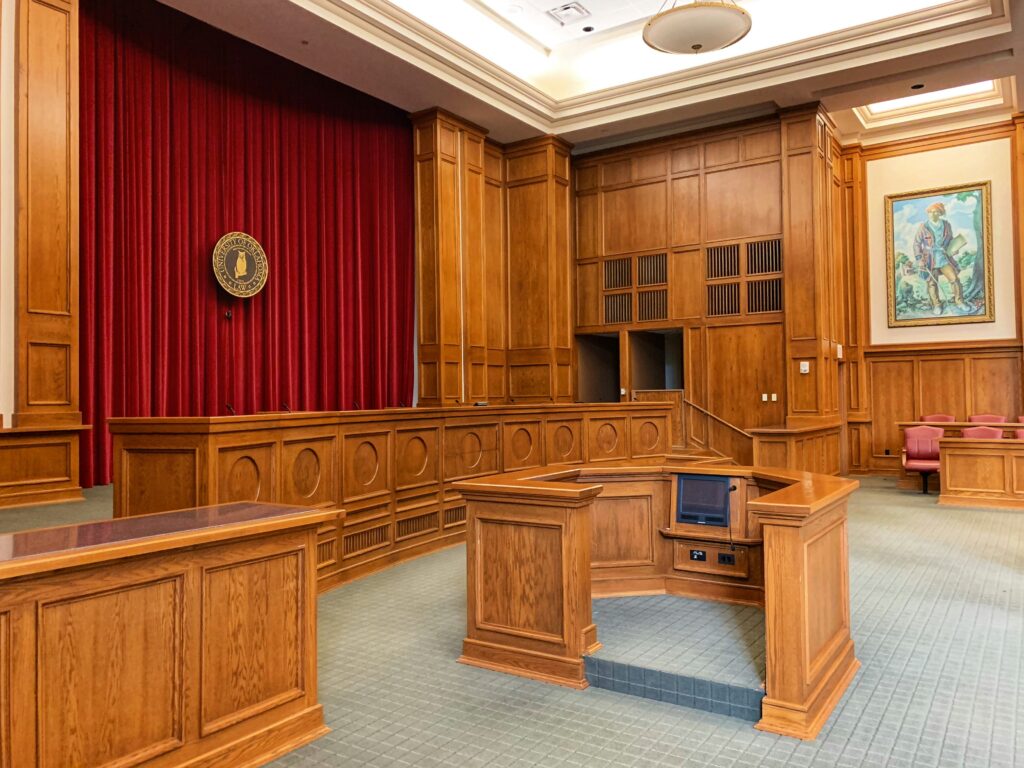
Banner Image: Courthouse. Image Credit – David Veksler
CATO Institute


For more than 40 years, Cato has led the charge for liberty in our nation and around the world. The Cato Institute is a public policy research organization—or think tank—that creates a presence for and promotes libertarian ideas in policy debates. Our mission is to originate, disseminate, and advance solutions based on the principles of individual liberty, limited government, free markets, and peace. We make liberty come alive for people by sharing our research and ideas in clear language, free of jargon. We find common ground and work with individuals and groups across the political spectrum in order to build a society that is freer, happier, and more prosperous. We hope you will join us.