Robert Brooks’ Family Meet with Governor Hochul
As the last trial involving the death of Robert Brooks begins with jury selection today, Brooks’ family return to Albany to continue their fight for prison reform.
We asked End Prison Violence: Were there any particular proposals the Governor may have mentioned her support for during the meeting?
A: The Governor did not indicate what type of legislation/bill she would specifically support, but that she was “very interested” in our agenda items.
(ALBANY, NY) – The Brooks family met with Governor Hochul to thank her for recently signing the historic Prison Reform Omnibus Bill and to impress upon her that meaningful, systemic prison reform is still urgently needed and long overdue. The End Prison Violence Campaign (EPV) is committed to policy and litigation solutions in three key areas relating to corrections: Transparency, Accountability & Oversight; Prison Healthcare Reform; & Addressing Conditions of Confinement & Forging Pathways Home.
Despite rampant violence in NYS prisons, the Department of Corrections provides oversight over itself. Members of the EPV campaign today stressed the pressing need for independent investigations of serious incidents of violence across New York state prisons and also called for immediate attention to a group of bills that will ameliorate what can only be described as horrific conditions.
Following the meeting with the Governor, the family joined a press conference hosted by End Prison Violence and moderated by EPV Co-Founder, Rosemary Rivera. She was joined by former Attorney General and EPV Co-Founder Eric Schneiderman along with State Senator Julia Salazar, Assemblymember Linda Rosenthal, Assemblymember Jessica González-Rojas and Assemblymember Gabriella Romero, Assemblymember Linda Rosenthal, Assemblymember Jessica González-Rojas, Senator Dilan, and Assemblymember Michaelle Solages, who have been staunch supporters of prison reform following the murder of Robert Brooks, a Rochester man brutally beaten to death by prison staff in December 2024. His death, captured on body-worn camera, provided a rare glimpse into the everyday violence and neglect inside New York’s prisons.
EPV was co-founded by the father of Robert Brooks, Robert Ricks, in partnership with a growing coalition of advocates, formerly incarcerated leaders, community organizations, & policy and legal experts. Today marked the launch of EPV’s 2026 Legislative Agenda to continue a statewide campaign to transform prison culture, end prison violence and create a system of corrections rooted in dignity, transparency, and independent oversight.
“Today we are here to acknowledge that the Omnibus bill was an important but incomplete step toward ending the epidemic of violence in New York’s prisons, but we have more work to do. We will continue to fight for the full transformation of the prison system that incarcerated people and their families deserve, said Robert Ricks, father of Robert Brooks.
Robert Brooks Jr., son of Robert Brooks, said, ““We met with the Governor today to thank her for signing the omnibus prison reform bill of 2025, and to let know that we are going to be back this year demanding more comprehensive reforms to New York’s prisons. My father’s murder was not an isolated incident; it was part of a pattern of violence that permeates our prisons. We are back this year to demand an end to this violence. More reforms are needed to ensure that my father did not die in vain.”
Senator Julia Salazar, Chair of the Committee on Crime Victims, Crime, and Correction said: “Our State prisons are fraught with a systemic pattern of violence and abuse at the hands of correction officers. It was just over a year ago that prison staff brutally murdered Robert Brooks and then tried to cover up their crime. While our Prison Reform Omnibus Bill is a serious step toward reform and will bring desperately needed accountability and oversight to New York State prisons, there is much more work to do. We must continue the fight for humane conditions, independent oversight, sentencing reform, expanded pathways home, and more. Thank you to Mr. Ricks and his family, End Prison Violence, and all of our advocates for the incredible work they’ve done and continue to do every day.”
“The murders of Robert Brooks and Messiah Nantwi exposed a culture of violence that thrives in hopeless, unaccountable systems. New York has a moral obligation to change the conditions that allow this brutality to happen in the first place. If New York is serious about preventing future deaths, we must pair oversight and accountability with real pathways home, including passing laws like the Earned Time Act and the Second Look Act. Hope, fairness, and opportunity are proven tools for reducing violence and saving lives,” said Thomas Gant, Center for Community Alternatives.
“I have understood deeply through my work as a public defender and now as a legislator that our criminal justice system is in dire need of reform,” said Assemblymember Gabriella A. Romero (D, WFP–Albany, Guilderland, New Scotland). “That’s why I proudly stand alongside End Prison Violence, and the many New Yorkers who are calling for change, accountability, and transparency within our prisons. The bills EPV is fighting for – such as the Marvin Mayfield Act, the Second Look Act, the Earned Time Act, and many more – aim to give those navigating our justice system the fair, humane treatment we all deserve. It’s time to get these bills across the finish line.”
“No one is above the law — especially those entrusted with the power to deprive others of their liberty. When allegations of violence or misconduct arise inside our correctional facilities, they must be investigated by an independent authority with the credibility and freedom to follow the facts wherever they lead. Legislation that guarantees truly independent investigations is essential to protecting human rights, restoring public trust, and ensuring that accountability, not silence, is the standard behind prison walls,” said Eric Schneiderman, Co-Founder of EPV and former Attorney General of New York State
“As a formerly incarcerated person myself, I can tell you that incarcerated women are too often invisible in our policy debates, even though they are among the fastest-growing and most vulnerable populations in our prison system,” said Rosemary Rivera, Co-Founder of EPV and Senior Advisor at Citizen Action of New York “The CARE Act and related legislation are urgently needed to ensure that women behind bars have access to basic dignity, healthcare, family connection, and trauma-informed support. If we are serious about safety, rehabilitation, and breaking cycles of violence, we must pass legislation that recognizes the real needs of incarcerated women and treats them with the humanity they deserve.”
“Inhumane treatment, excessive force, psychological harm and other abusive tactics have no place in our correctional facilities,” said Assemblymember Linda B. Rosenthal (D/WF – Manhattan), Chair of the Assembly Housing Committee. “I am proud to join the End Prison Violence coalition in calling for the passage of a package of bills to create a correction system that is rooted in dignity and truly provides an opportunity for rehabilitation. These protections must extend to the thousands of women in New York State’s jails and prisons. I will be working this session to pass my bills into law to prevent the cruel and unnecessary shackling of pregnant women, provide victims of prison sexual assault the shot at justice they deserve and guarantee that new mothers have access to breast pumps and clean and safe spaces to use them while incarcerated.”
“The brutal killing of Robert Brooks by prison staff, and the attempted cover-up that followed, was not an isolated tragedy, but a devastating indictment of a system that too often chooses dehumanization over rehabilitation. The killing of Robert Brooks, Messiah Nantwe, and other recent cases make painfully clear, as multiple reports now show, that this is a systemic failure, not an aberration. We must continue to push for legislation that is a step toward a system that sees people, not just charges, that prioritizes dignity, healing, and accountability over cycles of violence. The Earned Time Act (ETA) creates a meaningful pathway for redemption, allowing incarcerated New Yorkers to earn time off their sentences through education, vocational training, and other positive programs. It recognizes that people can grow, change, and contribute when given the chance, and evidence shows that these approaches also reduce violence inside prison systems and make facilities safer for everyone. Passing transformative legislation like the ETA is about preventing future harm, restoring trust, and ensuring that the state does not answer suffering with silence or brutality. We owe it to Robert Brooks, to Messiah Nantwe, and to every person caught in the grip of a system that has too often forgotten its obligation to humanity. We cannot undo what has been done, but we can change what comes next,” said Assemblymember Anna Kelles
“New York’s prisons are plagued by a systemic pattern of violence and abuse that thrives in secrecy and impunity. Ending that violence requires real accountability, especially when it comes to healthcare, where neglect and indifference can be deadly. That’s why I’m proud to sponsor S360/A2149, legislation that strengthens independent oversight of correctional healthcare by empowering the Department of Health to investigate and evaluate care in our prisons and jails. Medical neglect is violence, and transparency saves lives. The End Prison Violence Campaign is about transforming a system rooted in punishment into one grounded in dignity, oversight, and shared humanity. We owe it to incarcerated people, survivors, and their families to continue pushing for humane conditions and meaningful reform,” said Assemblymember Jessica González-Rojas.
The EPV campaign includes Citizen Action of New York, the NYS Council of Churches, Prisoners Are People Too, Families and Friends of the Wrongfully Convicted, the Perlmutter Center for Legal Justice at Cardozo Law, A Little Piece of Light, New Hour for Women and Children, Justice Strikeforce, Freedom Unshackled, and others.
To learn more about the End Prison Violence campaign, visit EndPrisonViolence.org.
EPV 2026 POLICY AGENDA
The End Prison Violence (EPV) campaign, in partnership with a growing coalition of advocates, formerly incarcerated leaders, community organizations, & policy and legal experts have launched a bold statewide campaign to transform prison culture. Our goal is to end prison violence and create a system of corrections rooted in dignity, independent oversight, healing and shared humanity, all while working towards more pathways home and prison closures.
The End Prison Violence Campaign is committed to regulatory, litigation, policy and legislative solutions in three key areas relating to corrections: Transparency, Accountability & Oversight; Healthcare; & Conditions of Confinement & Pathways Home.
Conditions of Confinement & Justice for Vulnerable People
There are four pieces of legislation that are worthy of immediate action that would protect incarcerated women and adult survivors of prison assault. There remains a pressing need for comprehensive policy for ensuring basic quality of care for incarcerated pregnant and post-partum individuals, as well as their babies. A trio of complementary, mutually supporting bills that are essential to protecting the health and well-being of incarcerated pregnant and postpartum people and their infant children include:
- A4879A/S4583A (Kelles/Salazar) – Known as the CARE Act, this bill relates to the health, safety and human rights of incarcerated pregnant individuals, incarcerated birthing parents of children and their children.
- A1670/ S2667 (Rosenthal/Salazar): This bill prohibits the use of force against pregnant people in custody; strengthens prohibitions around the shackling of pregnant and post-partum people in custody; adds (currently lacking) prohibitions against the shackling of pregnant people in police custody; and ensures that pregnant and laboring people in prison and jails are given privacy and support while receiving medical care.
- A1607A/S2666 (Rosenthal/Salazar): This bill would provide breast pumps to certain incarcerated birth parents and allow children to remain with their incarcerated birth parent for a period of time.
The sexual abuse of women behind bars, while unacceptable anywhere, has reached epic proportions in New York State. According to the Department of Justice, which reported on sexual victimization in American prisons, the prison with the highest percentage of incarcerated people reporting sexual victimization by staff in the United States is Bedford Hills, known for its particularly brutal conditions of late.
The following bill would provide exceptions to specificity requirements for incarcerated individuals in the Court of Claims Act, e.g. exact timing of an event, in certain cases involving sexual assault, allowing the cases of hundreds of survivors of sexual abuse to proceed when such specificity is impossible:
- A8635A (Rosenthal)
Independent Oversight
The End Prison Violence campaign is also committed to assuring fulsome and independent investigations of allegations of acts of violence and abuse by correctional staff. Further, the campaign to End Prison Violence supports efforts that interrupt an arbitration process that has been shown to re-install the vast majority of correctional staff that DOCCS itself has sought to terminate. EPV is actively working with Senator Salazar and other legislative leaders to develop and enhance legislative proposals to effectuate these goals.
Medical & Healthcare
The following additional bills, guiding medical professionals and healthcare, also warrant action:
- S8106 (Salazar) – removes death investigations from county coroners and creates an independent medical examiner system
- S7865/A8286 (Salazar/Kelles) – prohibits participation in torture by correctional healthcare professionals
- S360/A2149 (Rivera/Gonzalez-Rojas) – enhances oversight of correctional healthcare by increasing the Department of Health’s authority to investigate and evaluate healthcare services in correctional facilities.
Pathways Home/Addressing Excessive Sentencing
Several other pieces of legislation are also on the table this year with advocates from other organizations taking the lead, but with EPV’s support. Several of these would improve processes that give incarcerated people a second chance at release when they demonstrate growth, rehabilitation, and improvement while incarcerated.
- The Second Look Act (S.158/ A.1283), which would allow incarcerated individuals in New York State to apply for a judge to review their sentence to assess whether the sentence is still appropriate after they have served 10 or more years.
- The Earned Time Act (S.342/ A.1085) which would increase the amount of time people can earn off of their sentences by participating in rehabilitative programs and demonstrating good behavior.
- The Elder Parole Act (S.454/A.514) which would allow incarcerated people aged 55 and older who have served at least 15 years to apply for parole release consideration. It would not automatically grant anyone parole.
- The Fair and Timely Parole Act (S159/A127), which would ensure that parole decisions would be made based mainly on who an incarcerated person is today, including evidence of rehabilitation and their current risk of violating the law.
- The Marvin Mayfield Act (S.1209/A1297) would eliminate mandatory minimum sentences, which require judges to impose a minimum state prison sentence for certain offenses. The bill would instead allow judges to consider the individual facts of the case and any mitigating circumstances and impose the sentence they deem appropriate.
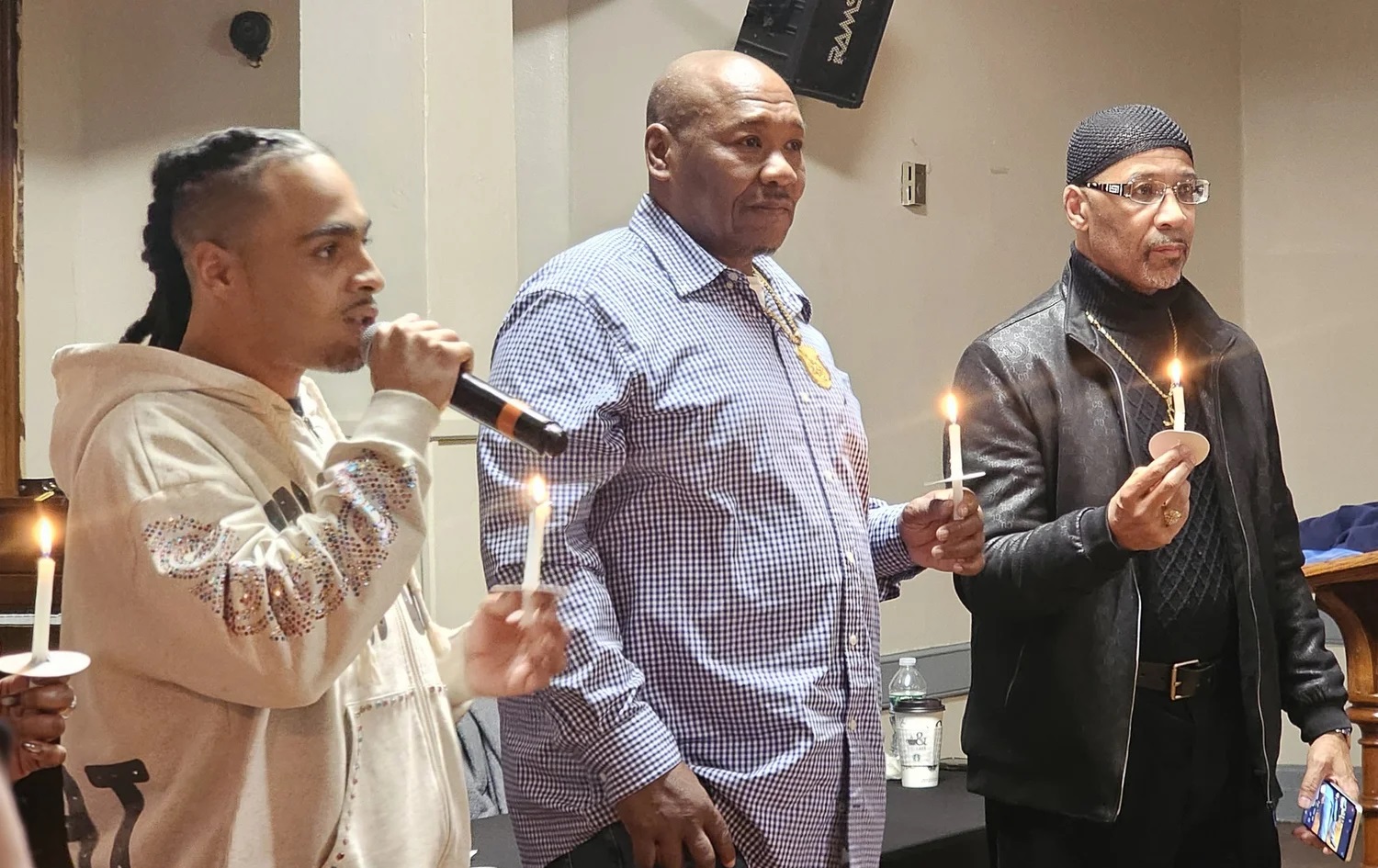
End Prison Violence vigil. Image Credit – EPV
Defend Laws that Enhance Public Safety
In 2026, it is imperative that we also defend past gains that help to nurture healthier and safer correctional environments and to contain and prevent the brutality that has long plagued NY prisons. These include ensuring that Raise the Age remains law and that children are not thrown in a brutal & already overtaxed adult correctional system; and ensuring that the advancements developed in the HALT Solitary law – passed in 2021 by supermajorities – are honored.
Kathleen Majella Campbell
History says, don’t hope on this side of the grave. But then, once in a lifetime the longed-for tidal wave of justice can rise up, and hope and history rhyme.
Seamus Heaney
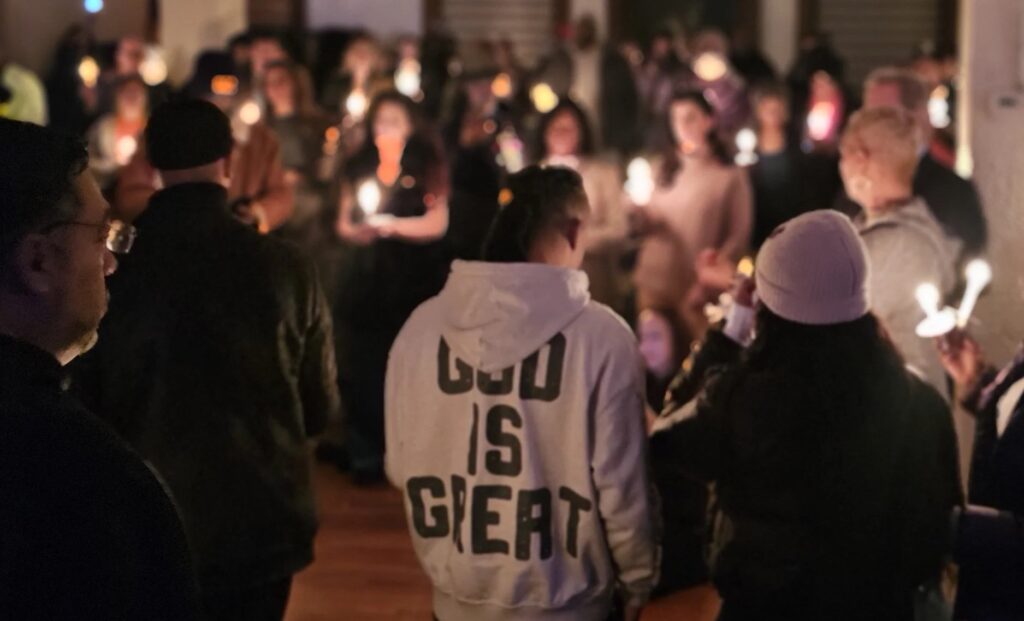
Banner Image: End Prison Violence vigil. Image Credit – EPV