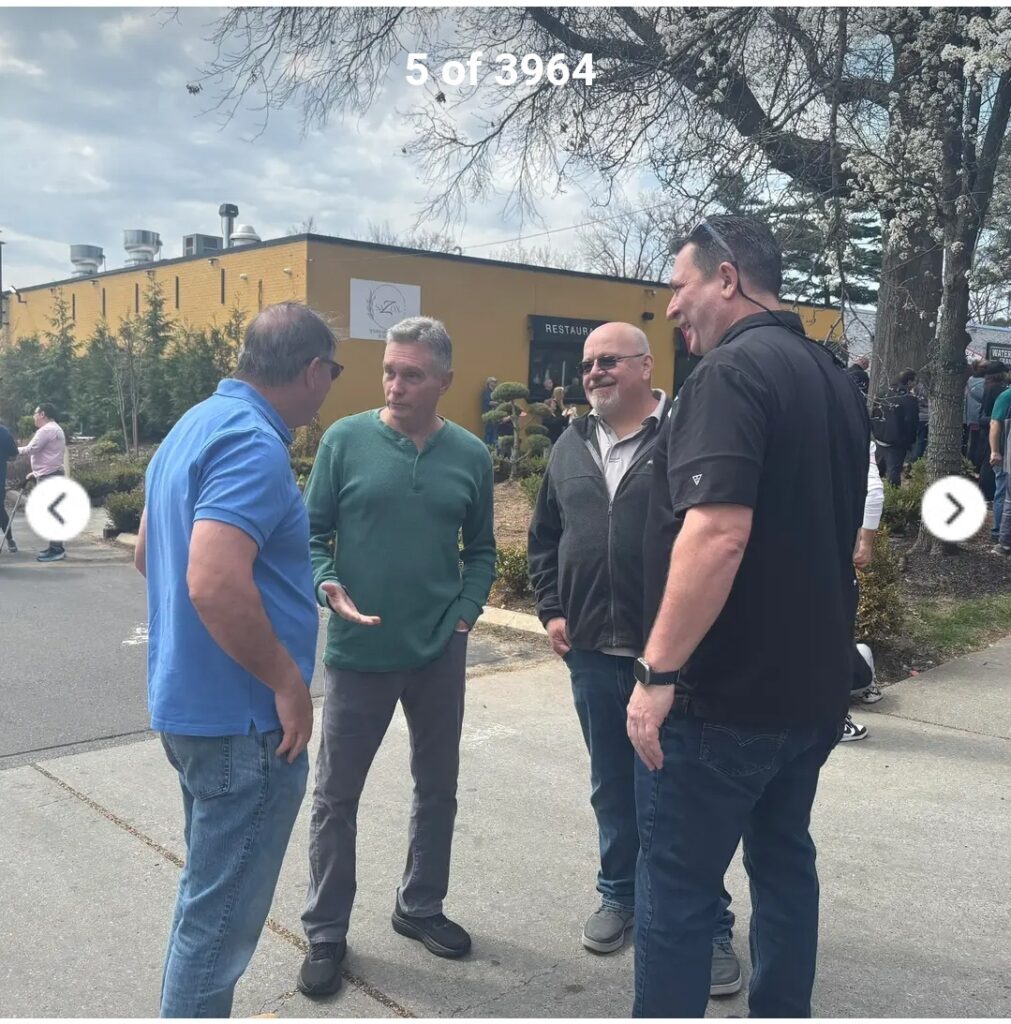
Staten Island, NY – Borough President Vito Fossella delivered a public update on the actions being taken, and strategies being developed, to oppose the proposed transient hotel and homeless shelter in Charleston at a press conference at 4934 Arthur Kill Road Thursday, April 2nd at 3:00 PM.
The press conference follows the Borough President’s long-time opposition to the 160-bed single-adult men’s homeless shelter being developed by the City at the corner of Arthur Kill Road and Richmond Valley Road in Charleston, a location which is zoned for manufacturing.
Section 42-152 of the NYC Zoning Resolution mandates that any hotel that is developed in a manufacturing zone must obtain a special permit from the Department of City Planning in order to proceed. That process requires a review from the local Community Board and the Borough President’s office.
However, the resolution allows for a special permit to be bypassed under certain exclusions – including if the hotel is being operated by the City or State “exclusively for the public purpose of temporary housing assistance”, which is the case for this development.
Further questions have since arisen about the process by which the shelter is moving forward. First, the City has yet to produce a full public hearing, as it is mandated by law, to allow for residents to provide comments and make their concerns heard. Additionally, the owners of the developing shelter are seeking to build a gas station immediately next to the shelter with a suspicious and excessive number of curb cuts along Richmond Valley Road, raising questions that the proposals are connected.
At the press conference, the Borough President detailed a novel angle of attack against the shelter, pertaining to the exclusion that is allowing the shelter to move forward without a special permit, alongside additional actions being explored. Further, BP Fossella will publicly call into question the adjoining gas station development, and the City’s failure to create for residents a meaningful forum by which to air their grievances.
In attendance: BP Fossella; Lou Gelormino and Mark Fonte, attorneys
Banner Image: BP Fossella rallies with local residents. Image Credit – BP Fossella
The Office of the Borough President has a responsibility to advocate for the entire Borough of Staten Island and all its residents, and represents the Borough's interests within City government.
The Borough President communicates directly with the Mayor and the City Council to emphasize Staten Island’s budget priorities.
In addition, the Borough President is responsible for reviewing major land use decisions and proposing sites for city facilities within the Borough.
As the chair of the Borough Board, the Borough President leads Staten Island’s City Council delegation and Community Board chairs in the process of reviewing and approving the transfer of public properties to private use. The Borough President’s Office houses the Borough's Topographical Bureau, which maintains the borough’s official maps and assigns street addresses.
The Borough President monitors the delivery of city services on Staten Island, and acts as a liaison between residents and city agencies when problems arise to devise solutions. The Borough President is also responsible for appointing one member to the Panel for Educational Policy and one member to the City Planning Commission, as well as some 150 members to Staten Island’s three community boards.