

Fighting Senior Hunger, Successfully Releasing LIHEAP Funding, Social Security For Unpaid Caregivers, Voting Rights Act SCOTUS, Push For Religious Institution Protections, Investigating & Questioning Sec. Hegseth, Iran War, Insider Information Profit Rules: Senator Gillibrand
You can see the video of the press conference mentioned below on fighting senior hunger with expansion of SNAP benefits for older adults, below:

We have covered the issues related to the expiration of LIHEAP benefits, especially as it relates to older Americans who struggle to afford the high cost of heating their homes during the winter. We also covered the announcement of the SNAP expansion legislation several weeks ago. Next week, we will be covering issues related to student loan debt relief, including the many borrowers in New York who are stuck in limbo. We will be speaking with an expert about the recent decisions affecting voter rights and protections, including New York and Texas redistricting decisions, along with the most recent decision, below.
AS AMERICANS STRUGGLE TO AFFORD BASIC NEEDS, GILLIBRAND TO HOLD VIDEO PRESS CONFERENCE TO DEMAND PASSAGE OF LEGISLATION TO FIGHT SENIOR HUNGER
Washington, D.C. – Wednesday, April 22nd at 11:45 AM: Amid rising grocery prices and a cost-of-living crisis, U.S. Senator Kirsten Gillibrand (D-NY) will hold a virtual press conference to demand passage of her legislation to help seniors put food on the table.
Despite facing high rates of food insecurity, less than one-third of eligible older adults are enrolled in the Supplemental Nutrition Assistance Program (SNAP). Gillibrand’s Senior Hunger Prevention Act would increase the minimum monthly SNAP benefit for all participants and eliminate unnecessary administrative hurdles to make it easier for seniors to receive SNAP benefits. This legislation comes in the wake of Republicans’ $186 billion cut to SNAP in the One Big Beautiful Bill Act.
AS AMERICANS STRUGGLE TO AFFORD BASIC NEEDS, GILLIBRAND DEMANDS PASSAGE OF HER LEGISLATION TO FIGHT SENIOR HUNGER
Washington, D.C. – Amid rising grocery prices and a cost-of-living crisis, U.S. Senator Kirsten Gillibrand (D-NY) held a virtual press conference to demand passage of her legislation to help seniors put food on the table.
Nationwide, over 12 million older Americans face food insecurity. Despite this, less than one-third of eligible older adults are enrolled in the Supplemental Nutrition Assistance Program (SNAP).
Gillibrand’s Senior Hunger Prevention Act would increase the minimum monthly SNAP benefit for all participants and eliminate unnecessary administrative hurdles to make it easier for seniors to receive SNAP benefits.
“Skyrocketing grocery prices in President Trump’s America have left too many seniors struggling to put food on the table,” said Senator Gillibrand. “Unfortunately, the complexity of the current application process for SNAP benefits deters many older adults from using this critical resource. Other older adults have mobility and transportation challenges that make it difficult to go to the store, carry heavy groceries, or prepare meals at home. My legislation would simplify the SNAP application process for seniors, increase the monthly benefit available to all SNAP participants, and expand SNAP food delivery options. This is critical to make sure that every senior can access the nutritious food they need for healthy aging, and I am determined to get this bill across the finish line.”
The Senior Hunger Prevention Act comes in the wake of Republicans’ $186 billion cut to SNAP in the One Big Beautiful Bill Act. It also comes as President Trump is spending billions of dollars on his illegal, reckless, and deeply unpopular war with Iran.
Gillibrand introduced this bicameral legislation last week alongside Senator John Fetterman (D-PA), and Representatives Suzanne Bonamici (D-OR-1) and Andrea Salinas (D-OR-6). The Senate bill is also cosponsored by Senators Chris Murphy (D-CT), Peter Welch (D-VT), Richard Blumenthal (D-CT), Jeff Merkley (D-OR), Ron Wyden (D-OR), Cory Booker (D-NJ), Elizabeth Warren (D-MA), Sheldon Whitehouse (D-RI), Bernie Sanders (I-VT), Ed Markey (D-MA), Martin Heinrich (D-NM), Adam Schiff (D-CA), Angela Alsobrooks (D-MD), and Andy Kim (D-NJ).
Specifically, the Senior Hunger Prevention Act would:
- Increase the minimum monthly SNAP benefit for all participants;
- Simplify application and certification processes for eligible individuals in nutrition programs, including SNAP, and ensure they can stay enrolled in programs for longer periods of time;
- Support outreach efforts to enroll more older adults, caregivers, and adults with disabilities in nutrition programs;
- Enable adults with disabilities to participate in additional nutrition assistance programs;
- Provide grants to non-profits, local aging and disability service providers, and related organizations to bring fresh, local food to accessible locations;
- Expand SNAP food delivery options through public-private partnerships and strengthen retail delivery options for older adults and people with disabilities.
The full text of the legislation can be found here.
The following quotes were provided by Senator Gillibrand’s office regarding her push for passage of the Senior Hunger Prevention Act:
AT 0:50 – ON THE HARM OF PRESIDENT TRUMP’S CUTS TO SNAP AND RECKLESS SPENDING:
GILLIBRAND SAID: “While Americans struggle to afford basic necessities, the Trump administration and Republicans in Congress are cutting the programs they rely on. Last year, Republicans cut $186 billion from SNAP to pave the way for tax cuts for the ultra-wealthy. Now, President Trump is spending billions of dollars on this reckless war, and costs are continuing to go up. For families already stretched thin, this decision is more than political. It’s a matter of survival.”
AT 2:11 – ON HOW THE SENIOR HUNGER PREVENTION ACT SUPPORTS OLDER AMERICANS IN NEED:
GILLIBRAND SAID: “I introduced the Senior Hunger Prevention Act to help resolve these challenges and make sure all of our seniors can put food on the table. This critical legislation would simplify the application process for nutrition programs, including SNAP. It would support outreach efforts to encourage more older adults, grandparents, caregivers, and people with disabilities to enroll in these programs, and it would expand SNAP food delivery options for those who have trouble getting to and from the grocery store.”
AT 2:51 – ON THE NEED TO INCREASE THE MINIMUM MONTHLY SNAP BENEFIT:
GILLIBRAND SAID: “Currently, the minimum monthly SNAP benefit for a single adult is just $24. Think about that, $24 for food for an entire month. That’s impossible. Clearly, this number must be updated to guarantee that benefits meet the actual needs of New Yorkers, and my legislation would do just that. The United States is the richest country in the world and one of our top global food producers. It’s time that we work towards a future where our seniors and every American can put food on the table.
Senator Gillibrand’s Senior Hunger Prevention Act would increase the minimum monthly SNAP benefit for all participants and eliminate unnecessary administrative hurdles to make it easier for seniors to receive SNAP benefits
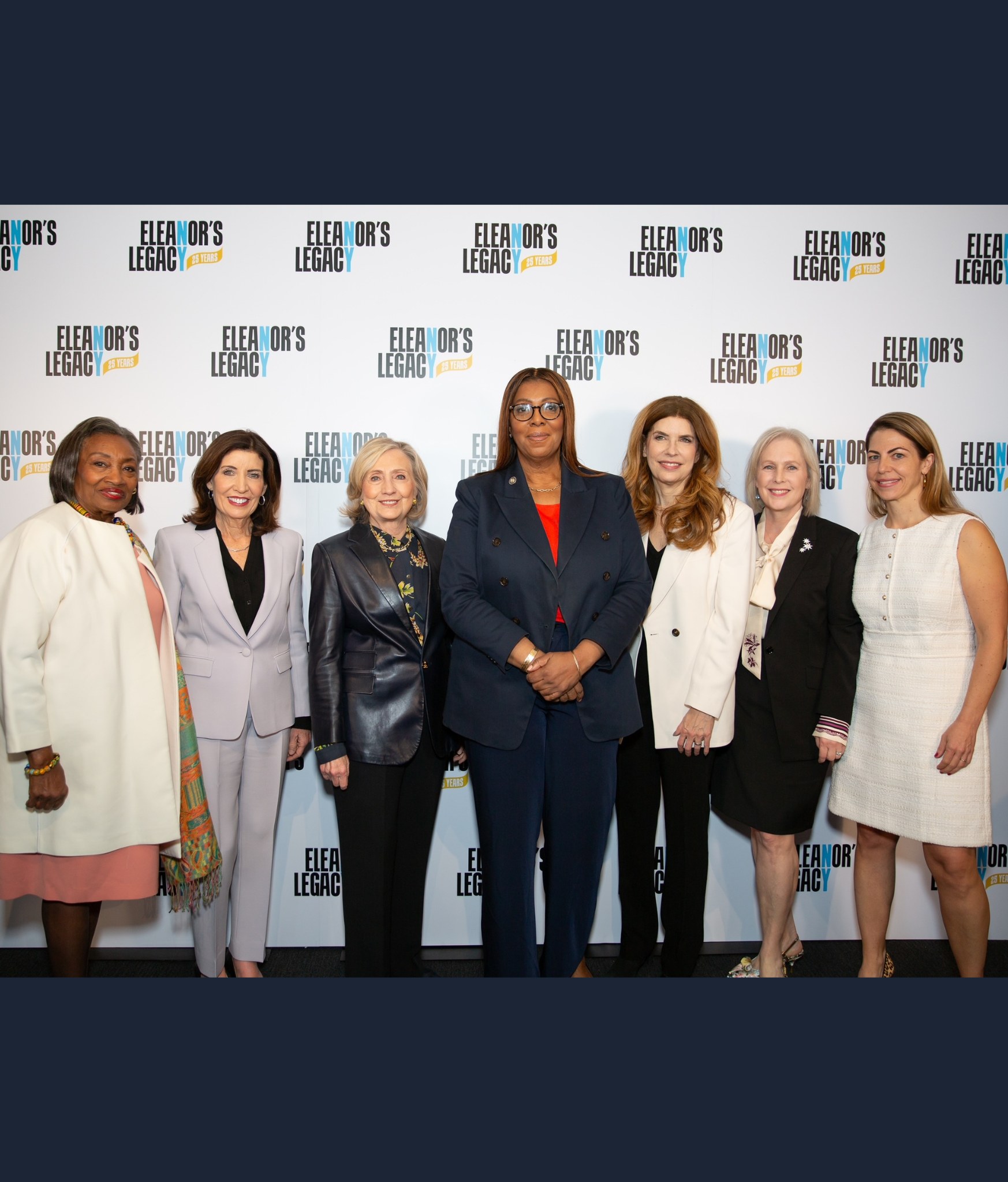
Image Credit – Senator Gillibrand
AFTER PRESSURE FROM SENATOR GILLIBRAND, TRUMP ADMINISTRATION TO RELEASE ENERGY ASSISTANCE FUNDING
The announcement comes as relief for working families across New York and the country who are facing sticker shock from their eye-popping gas and utility bills.
NY will receive an additional $40.3 million in federal funding to help them afford home energy bills.
Washington, D.C.– U.S. Senator Kirsten Gillibrand (D-NY), a member of the Senate Appropriations Committee, has successfully pushed the Trump administration to release over $400 million to help New York families afford their energy bills.
The announcement comes as relief for working families across New York and the country who are facing sticker shock from their eye-popping gas and utility bills. According to the National Energy Assistance Directors Association, roughly 1 out of 6 U.S. households (21.5 million nationwide) are behind on their energy bills in 2026.
Earlier this month, Senator Gillibrand and a bipartisan group of senators demanded that the Trump administration release over $400 million in remaining Low Income Home Energy Assistance Program (LIHEAP) funding that Congress delivered in fiscal year (FY) 2026.
Following this pressure from Senator Gillibrand, New York will receive an additional $40,356,315 in LIHEAP funds to go along with the more than $360 million in federal funding that the state previously received. As a result, New York will net a total of $401.2 million in LIHEAP aid this year to help New Yorkers afford their home utility bills. This means a $20 million increase over the previous year.
“LIHEAP is a commonsense, bipartisan program,” said Senator Gillibrand. “In the coldest and hottest months of the year, it lowers the cost of living and saves lives. President Trump is already causing fuel and gas prices to skyrocket due to his reckless choice to start a war in Iran. He continued to make life harder for working Americans by stalling hundreds of millions of dollars in federal funding that Congress already allocated to LIHEAP from reaching families in need. Finally releasing these funds is a welcome step, and I will continue pushing back on the administration’s recent budget proposal that eliminates LIHEAP in order to fund an unauthorized war of choice.”
LIHEAP is a federally funded program that helps low-income households pay utility bills, address energy crises, and lower costs by improving home energy efficiency through weatherization. Over the last year, nearly six million households nationwide – including about 1.5 million in New York — received LIHEAP assistance to help them lead a healthier, more stable life and avoid having their utilities shutoff or having to make tradeoffs such as skipping medical care or meals or turning to unfair payday loans that lead to a cycle of unending debt.
Earlier this month, the Trump administration released a $2.2 trillion Fiscal Year 2027 budget proposal that would completely eliminate all LIHEAP funding and slash ten percent of other domestic programs across the board while increasing defense spending. And last year, the Trump administration fired the entire LIHEAP program staff at the U.S. Department of Health and Human Services (HHS).
In addition to Gillibrand, the April 15 letter was signed by U.S. Senators Jack Reed (D-RI), Susan Collins (R-ME), Chuck Schumer (D-NY), Richard Blumenthal (D-CT), Charles E. Grassley (R-IA), Angus S. King, Jr. (I-ME), Dan Sullivan (R-AK), Lisa Murkowski (R-AK), Susan Collins (R-ME), Elissa Slotkin (D-MI), Sheldon Whitehouse (D-RI), Jack Reed (D-RI), Tammy Baldwin (D-WI), Ben Ray Luján (D-NM), Lisa Blunt Rochester (D-DE), Jeff Merkley (D-OR), Mark Warner (D-VA), Ruben Gallego (D-AZ), Jacky Rosen (D-NV), Mazie K. Hirono (D-HI), Michael Bennet (D-CO), Chris Coons (D-DE), Elizabeth Warren (D-MA), Raphael Warnock (D-GA), Chris Van Hollen (D-MD), Angela D. Alsobrooks (D-MD), Edward J. Markey (D-MA), Tim Kaine (D-VA), Catherine Cortez Masto (D-NM), Ron Wyden (D-OR) Adam Schiff (D-CA), Peter Welch, Richard Durbin (D-IL), John Fetterman (D-PA), Tina Smith (D-MN), Jeanne Shaheen (D-NH), Amy Klobuchar (D-MN), Tammy Duckworth (D-IL), Mark Kelly (D-AZ) Bernie Sanders (I-VT), and Cory Booker (D-NJ).
The text of the letter can be found here.
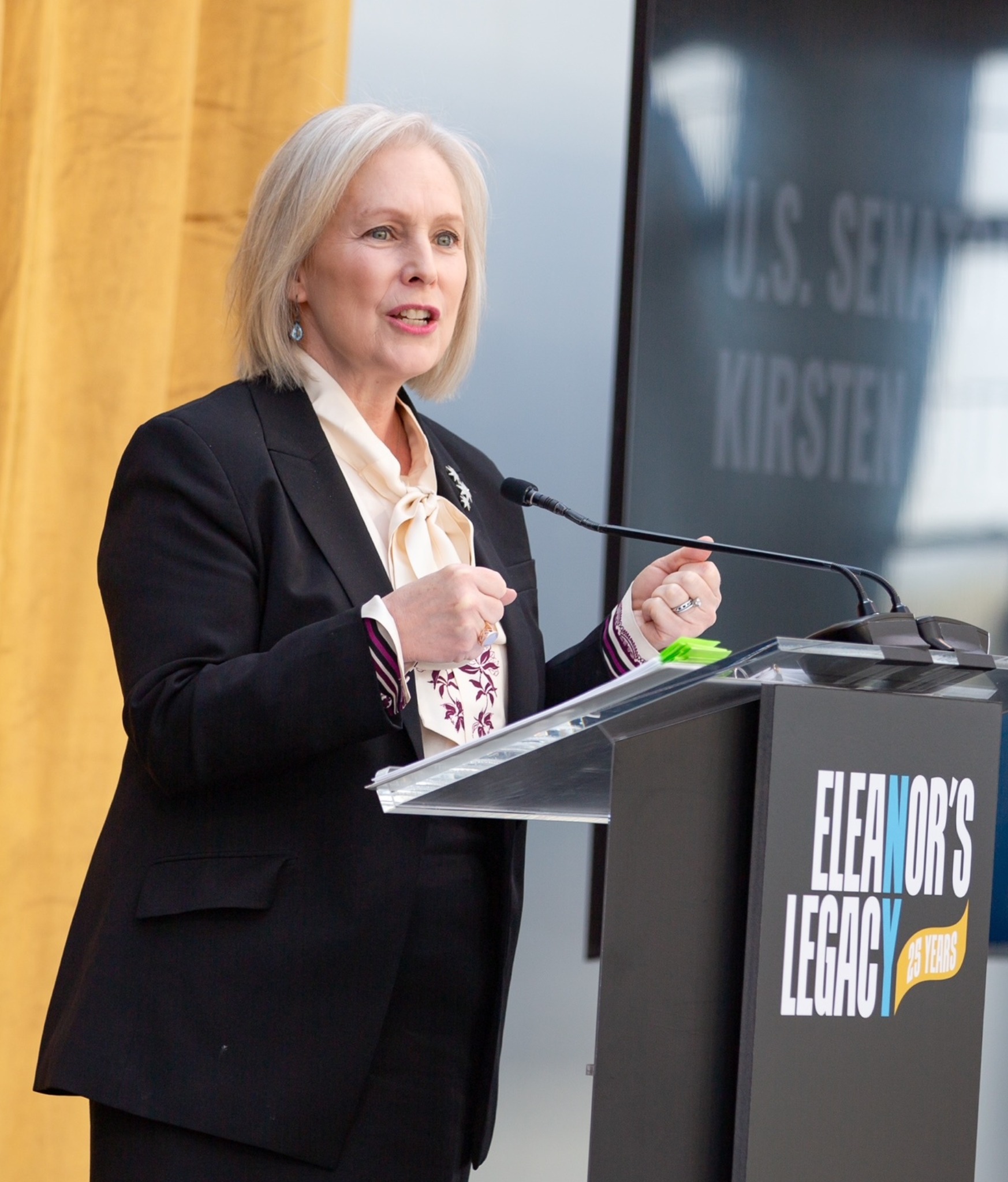
Image Credit – Senator Gillibrand
GILLIBRAND, MURPHY INTRODUCE BICAMERAL BILL TO PROTECT RETIREMENT SECURITY FOR UNPAID CAREGIVERS
Over 4 million New Yorkers served as caregivers in 2025
Washington, D.C. – U.S. Senators Kirsten Gillibrand (D-NY) and Chris Murphy (D-CT) reintroduced bicameral legislation to provide retirement compensation for individuals who leave the workforce to care for their loved ones.
The Social Security Caregiver Credit Act would provide five years of Social Security retirement credits to caregivers who spend at least 80 hours per month providing care to a dependent relative. By allowing caregivers to earn Social Security Credits while they are out of the formal workforce, this legislation recognizes the economic value of care work and would aid millions of Americans’ long-term financial security. U.S. Representative Brad Schneider (D-IL-10) introduced companion legislation in the House.
“Caregiving for an aging parent, relative with a disability, or ailing loved one is a full-time job,” said Senator Gillibrand. “Individuals who leave the workforce to care for their loved ones should receive compensation for that critical work. This commonsense bill would ensure eligible caregivers receive essential Social Security benefits in retirement, helping them to continue to provide for themselves and their families after leaving their jobs. As the top Democrat on the Senate Aging Committee, I am committed to getting this legislation passed.”
“Caregivers shouldn’t lose out on Social Security benefits because they step away from the workforce to care for a loved one,” said Senator Murphy. “Caregiving is work, and it’s time we start treating it that way. This legislation would make clear that the selfless decision to care for a family member no longer jeopardizes if and when you can retire.”
“The cost of a care facility or in-home nurse is simply out of reach for many American families caring for a relative in need. Too often, families must risk their own financial security when doing what we all would do – providing essential care for spouses, parents, grandparents, or children,” said Representative Schneider. “The Social Security Caregiver Credit Act would help ensure that people who step away from the workforce to care for loved ones aren’t penalized in retirement.”
4.1 million New Yorkers served as caregivers in 2025, providing more than 2.6 billion hours of hands-on care to family members. Nationwide, 63 million American adults—nearly a quarter of the U.S. adult population—provide care to adults or children with a medical condition or disability. Many of those individuals significantly reduce their work hours or leave the workforce entirely to provide care for a dependent relative at some point in their career. The Social Security Caregiver Credit Act would lower the financial stakes for individuals facing the difficult choice between continuing their careers or caring for their loved ones.
Specifically, this legislation would:
- Provide eligible caregivers with up to five years of deemed wages for Social Security benefit calculations, if they spend at least 80 hours a month caring for a dependent under 12 or a chronically dependent relative.
- Apply to qualifying caregivers who provide care without receiving monetary compensation.
- Allow up to five years of caregiving to be treated as high-earning years, boosting the average indexed monthly earnings and mitigating the impact of zero-earning years on Social Security benefits which are calculated based on an individual’s 35 highest-earning years.
The Social Security Caregiver Act is endorsed by the following organizations: Social Security Works, National Association of Nutrition and Aging Services Programs (NANASP), The Arc, Sibling Leadership Network, National Alliance of Caregiving, ALS Association, and Alliance for Retired Americans.
Full text of the Social Security Caregiver Credit Act is available here.

Image Credit – Senator Gillibrand
GILLIBRAND STATEMENT ON SUPREME COURT UNDERMINING THE VOTING RIGHTS ACT
Washington, D.C. – Today, in response to the Supreme Court’s decision undermining Section 2 of the Voting Rights Act, U.S. Senator Kirsten Gillibrand released the following statement:
“This is a tragic day in our nation’s history. Make no mistake: this decision will disenfranchise voters and dilute minority communities’ representation in Congress. Republicans have been engaged in a yearslong battle to prevent anyone who doesn’t vote for them from having a say in the democratic process. This decision further emboldens them to engage in discriminatory redistricting and silence voices they don’t want to hear. It’s despicable. I strongly condemn this decision and will keep fighting in Congress to protect Americans’ access to the ballot box and their ability to fairly elect leaders who represent their interests.”
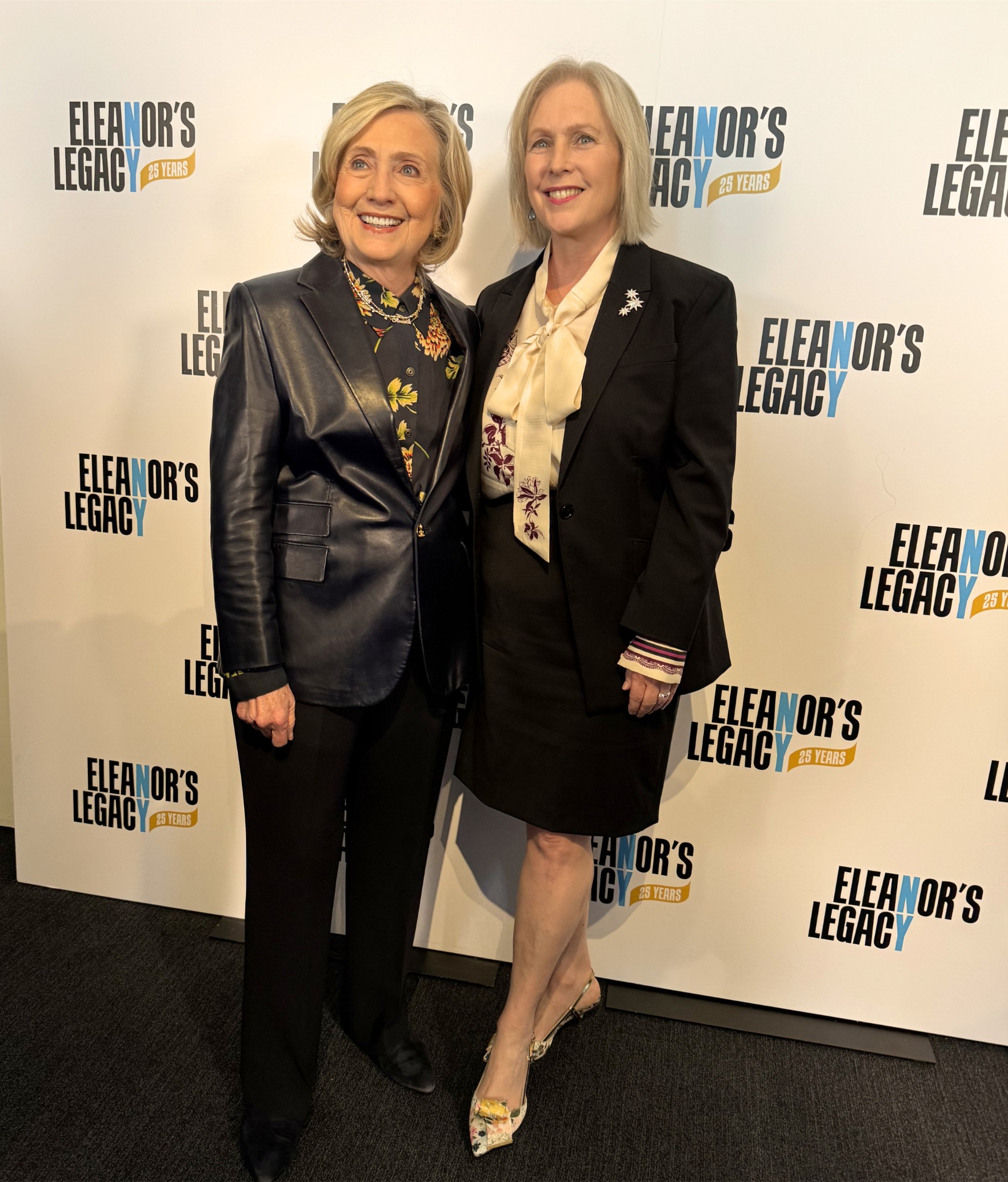
Image Credit – Senator Gillibrand
WITH ANTISEMITIC AND ANTI-MUSLIM ATTACKS ON THE RISE, GILLIBRAND LEADS BIPARTISAN PUSH FOR FUNDING TO PROTECT SYNAGOGUES, MOSQUES, AND OTHER RELIGIOUS INSTITUTIONS
Funding through the Nonprofit Security Grant Program Would Help At-Risk Religious Institutions and Other Nonprofits Protect Themselves Against Terror Attacks
Washington, D.C. – Today, U.S. Senator Kirsten Gillibrand (D-NY), member of the Senate Appropriations Committee, led more than 40 Senate colleagues in a bipartisan letter requesting $750,000,000 for the Nonprofit Security Grant Program (NSGP) in the Fiscal Year 2027 Homeland Security Appropriations bill. NSGP funding provides the security needed to protect nonprofit organizations, particularly houses of worship and other faith-based organizations, with physical security enhancements and emergency preparedness training in order for these places to allow individuals to worship in religious sanctuaries without fear of attacks. This program is critical to addressing the increasingly large uptick in threats and acts of violence against religious institutions across the country. Senator Gillibrand leads the effort to fund NSGP each year.
In their letter, the senators wrote that NSGP provides “critical security resources to at-risk faith-based and other nonprofit institutions located in urban, suburban, and rural communities. In addition to ensuring that the NSGP is funded at these levels, we also again urge the committee to advocate for and maintain separate line-items for this program. The program provides critical security resources to at-risk faith-based and other nonprofit institutions located in urban, suburban, and rural communities.”
The senators continued in their letter, “In 2025, the Anti-Defamation League (ADL) Audit of Antisemitic Incidents recorded nearly 10,000 antisemitic incidents in the United States, an over 893 percent increase over the past decade and the highest number recorded in a single year since ADL started tracking antisemitic incidents in 1979.”
The senators further noted, “Even with the additional NSGP funding provided by the National Security Supplemental Act for FY2024, FEMA could only fund 43 percent of all grant applicants. This left more than half of the applicants without the funding they needed to provide security to their at-risk institutions.”
Other senators who joined the letter included Gary Peters (D-MI), Jacky Rosen (D-NV), James Lankford (R-OK), Kevin Cramer (R-ND), Tina Smith (D-MN), Ben Ray Luján (D-NM), Sheldon Whitehouse (D-RI), John Hickenlooper (D-CO), Raphael Warnock (D-GA), Mark Warner (D-VA), Christopher Coons (D-DE), Maggie Hassan (D-NH), Andy Kim (D-NJ), Tim Kaine (D-VA), Chris Van Hollen (D-MD), Tammy Baldwin (D-WI), Tammy Duckworth (D-IL), Angus King (I-ME), Amy Klobuchar (D-MN), Mark Kelly (D-AZ), Ruben Gallego (D-AZ), Ron Wyden (D-OR), Jack Reed (D-RI), Adam Schiff (D-CA), Elissa Slotkin (D-MI), Richard Blumenthal (D-CT), Angela Alsobrooks (D-MD), Cory Booker (D-NJ), Maria Cantwell (D-WA), Jeanne Shaheen (D-NH), Elizabeth Warren (D-MA), Edward Markey (D-MA), Michael Bennet (D-CO), Jon Ossoff (D-GA), Alex Padilla (D-CA), Catherine Cortez Masto (D-NV), Mazie Hirono (D-HI), Lisa Blunt Rochester (D-DE), Jeff Merkley (D-OR), and Josh Hawley (R-MO).
The full text of the letter can be found here.
GILLIBRAND, COLLEAGUES OPEN NEW INVESTIGATION INTO HEGSETH’S ROLE IN DISMANTLING MILITARY’S CIVILIAN HARM PREVENTION GUARDRAILS
Hegseth has made deep cuts to funding, personnel for civilian harm mitigation programs
There have reportedly been more than 1,700 civilian deaths, over 30 strikes on schools and health care facilities during President Trump’s illegal war in Iran
Washington, D.C – Today, U.S. Senator Kirsten Gillibrand (D-NY), along with Senators Elizabeth Warren (D-MA), Chris Van Hollen (D-MD), and eight of their Senate colleagues, opened a new investigation into Secretary of Defense Pete Hegseth’s role in weakening civilian harm prevention programs and the catastrophic civilian impacts of President Trump’s war in Iran.
“The American people want lower costs, not forever wars that endanger our troops, jeopardize our national security, and raise costs for working families,” said Senator Gillibrand. “In gutting our military’s ability to prevent harm to civilians, Secretary Hegseth continues to show blatant carelessness and a severe lack of the moral fitness his position demands. I will not stop fighting until this reckless war has ended and the Trump administration fully restores the programs and public servants that mitigate civilian harm.”
Since the start of President Trump’s illegal war in Iran, attacks on civilian infrastructure have reportedly led to more than 1,700 civilian deaths, along with strikes on more than 20 schools and a dozen health care facilities.
“We are concerned that these were all preventable tragedies…This is a concerning pattern and raises questions about whether the administration is upholding international law and the laws of war,” the senators wrote in a letter to Hegseth. The senators called on DoD to answer questions about reported attacks on two separate elementary schools in Iran that killed more than 170 people, most of them children.
Prior to the war, Secretary Hegseth made deep cuts to the military’s civilian harm mitigation and response (CHMR) programs, fired personnel at DoD’s Civilian Protection Center of Excellence, and slashed CHMR staff at the U.S. combatant commands by over 90 percent. All the cuts were reportedly made over the objections of veterans organizations and top military officials, including admirals, generals, and members of the Joint Chiefs of Staff.
“We are also concerned that your leadership is further harming the credibility of our armed forces, exacerbating threats to civilians and U.S. servicemembers alike,” the senators wrote.
Secretary Hegseth has mocked “stupid rules of engagement” and threatened to offer “no quarter, no mercy for our enemies” in Iran, which would violate international law and the military’s own Law of War Manual.
“These statements not only harm civilians and undermine established standards, but also endanger U.S. servicemembers with greater risk of reciprocation and erode good order and discipline,” the senators warned.
Senior military officials in the Trump administration agree that mitigating civilian harm is vital for national security. Under Secretary of Defense for Policy Elbridge Colby wrote to Congress that, “it is in the U.S. national interest, as well as morally right, to seek to reduce civilian harm to the degree possible.” During his confirmation, chairman of the Joint Chiefs of Staff Dan Caine said that combatant commanders who incorporated CHMR personnel into planning “see positive impacts from the program.”
“Your attempts to gut DoD’s civilian harm institutions contradicts more than a decade of bipartisan consensus and DoD-led reforms, initiated during the first Trump administration,” the senators noted.
“The importance of protecting civilian life to the greatest extent possible is central to effective military operations and differentiates the United States from our adversaries…We call on the administration to immediately end the war in Iran, fully restore Congressionally authorized programs and staffing to mitigate civilian harm,” the senators concluded.
The lawmakers asked Hegseth to explain the cuts to civilian harm programs and explain what steps the Pentagon is taking to protect civilian lives in Iran by May 4, 2026.
Senators Mazie Hirono (D-HI), Mark Kelly (D-AZ), Ben Ray Luján (D-NM), Jeff Merkley (D-OR), Bernie Sanders (I-VT), Tina Smith (D-MN), Raphael Warnock (D-GA), and Peter Welch (D-VT) joined in signing the letter.
The full text of the letter can be found here.
Image Credit – Senator Gillibrand
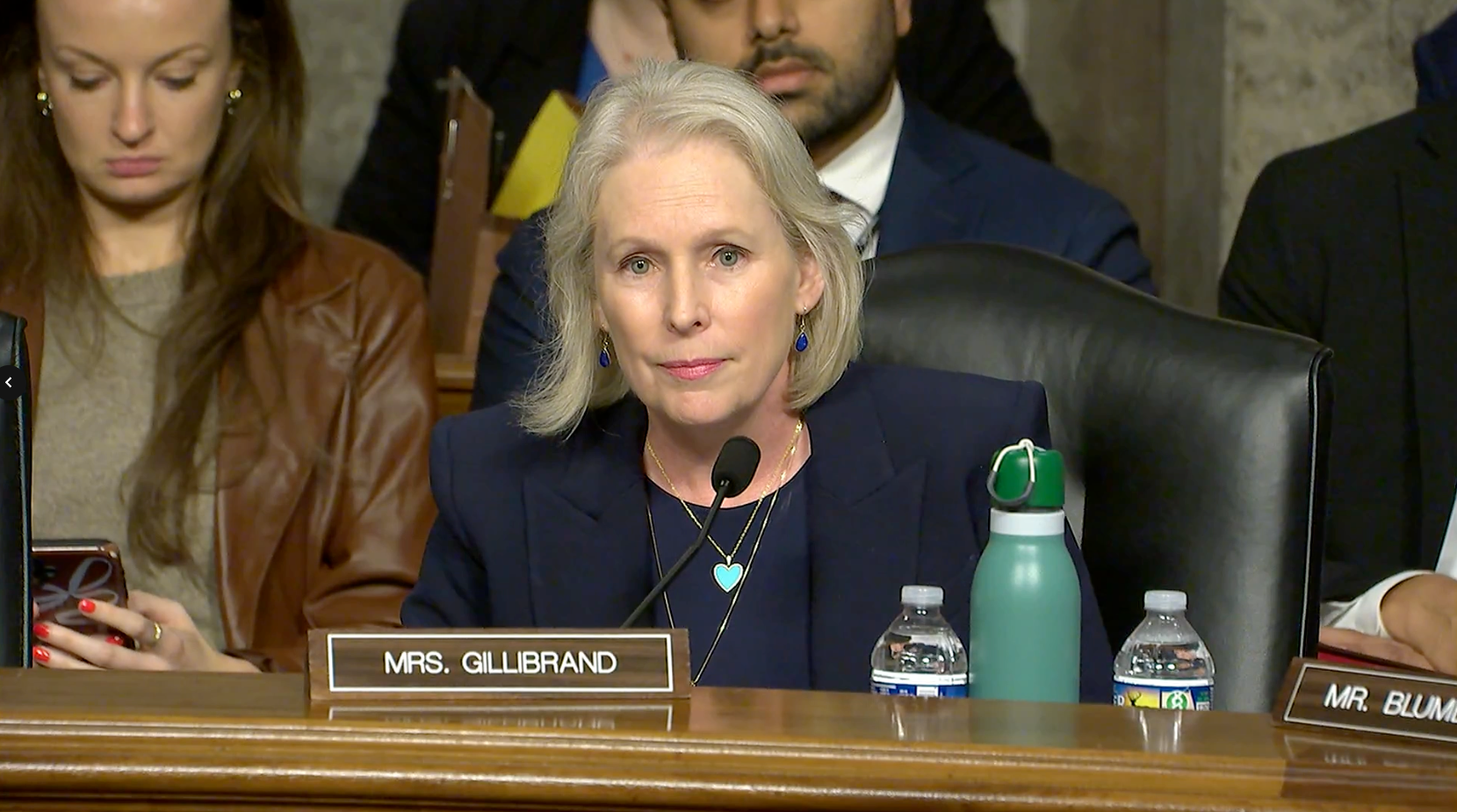
During the Senate hearing during which Secretary Hegseth gave testimony and was questioned by senators, the following exchange occurred:
Senator Kirsten Gillibrand (D-NY), a member of the of the U.S. Senate Armed Services Committee, pressed Secretary of Defense Pete Hegseth over the skyrocketing costs and deep unpopularity of President Trump’s war with Iran — and demanded answers after Hegseth claimed the administration has the support of the American people.
Below is a key moment from the exchange where Senator Gillibrand confronted Secretary Hegseth after he dismissed evidence that nearly 3 in 5 Americans disapprove of President Trump’s unauthorized war in Iran.
Hegseth doubled down, insisting the administration has public support, but Senator Gillibrand shut it down.
The exchange laid bare the truth: the administration is pushing a costly war, unpopular war and pretending Americans aren’t noticing.
Americans across the country are paying today the highest price at the pump than they have in years.
The war with Iran has already cost American taxpayers billions of dollars — money that could be invested in lowering healthcare costs, strengthening Social Security, and building a stronger economy for working families.
Senator Gillibrand has been a leading voice calling on the Trump administration to end the war in Iran and come to Congress before taking military action, consistent with the Constitution’s war powers framework.
Today’s hearing made clear that the administration is unwilling to be held accountable — not to Congress, and not to the American people.
Find a transcript of the exchange below:
Image Credit – Senator Gillibrand
ON AMERICANS’ DISAPPROVAL OF TRUMP’S WAR IN IRAN
GILLIBRAND: “I don’t know if you fully appreciate how much the American people do not support this war. It is an unauthorized war. Normally, when you come to Congress, it’s a way for the American people to be part of that discussion.
GILLIBRAND: The American people, particularly in my state of New York, are upset for a lot of reasons. First of all, this war is costing so much money: over $25 billion already, estimates a billion dollars a day. And they’re feeling it every single day at the gas pump with higher prices for both fuel, for diesel, for gasoline for their cars. They’re also feeling it with higher grocery costs, and they’re exhausted. They are truly exhausted. On top of that, on top of that, they have so many grave concerns about how this war is being prosecuted. They read in the paper that 22 schools have been hit. They read in the paper about a girls’ school, hundreds getting killed. We have a debate going on in this country about AI, a serious debate about AI. And I haven’t heard yet from you that you will not allow AI to make final targeting determinations, even when nuclear weapons are being used. That’s a huge issue that we need to discuss. So I want to start from the top, Secretary Hegseth. Why do you continue to prosecute a war that the American people aren’t behind?”
SEC. HEGSETH: “First of all, I appreciate the opportunity for that closed session where we had an unsurprisingly very different discussion than we have here with the cameras on. We support this…
GILLIBRAND: “Because my job is to represent New Yorkers, and I can tell you, when I talk to them all across my state, they are furious, and they expect me to explain to them why they are furious.”
SEC. HEGSETH: “…And Senator, when I talk to Americans, and especially when I talk to the troops, they are grateful for a President who has the courage to take on this threat after 47 years of what Iran has done, targeting and killing Americans, and what it would mean to the world if Iran’s nuclear ambitions were actually achieved. So the question I would ask to you and to others is, what is the cost of a nuclear-armed Iran…”
GILLIBRAND: “We know that is a rhetorical question that you are asking everyone.”
SEC. HEGSETH:” …What is the cost to the American people if the world’s most dangerous regime has a nuclear weapon?”
GILLIBRAND: “But the truth is, they don’t want war coming to this shore. And when you do a decapitation operation, the likelihood is going to be exchanged in the United States. There’s no evidence that we are safer because of this war. We did not have any evidence that Iran intended to imminently attack this country in any way, shape, or form. So I disagree with your assessment that we are under threat.”
ON TRUMP’S WAR IN IRAN COSTS IMPACTING AMERICAN FAMILIES
GILLIBRAND:…So, Mr. Hegseth, you don’t care that the American people are not supporting this war? You don’t care whether the American people support this war?
SEC. HEGSETH: “The American people are quite smart. They understand and see through spin. They know that a regime that says “Death to America,” that seeks nuclear weapons, and the ability… did they lie about the range of their missiles? Because I saw a 4,000 kilometer missile get shot at.”
GILLIBRAND: “And at what cost? How much more will you ask the American people to pay for this war? Right now. Do you want a billion dollars a day? Do you want $2 billion a day? You’re asking for $200 billion more to fund this war and to make sure we have…”
SEC. HEGSETH: “We didn’t ask for $200 billion more. I don’t know where you got that number
from, Senator. I think you got it from the news, which you should be careful about what you read in the news.”
GILLIBRAND: “Okay, Mr. Hegseth, Secretary Hegseth, here’s a few more. Let’s talk about how you’re prosecuting the war. What is your response to targeting that has resulted in the destruction of schools, hospitals, civilian places? Why did you cut, by 90%, the division that’s supposed to help you not target civilians? And do you know the impact of a strategic failure at a war when you have so many civilian casualties? You may have tactically completed a mission well, but strategically it’s not meeting your goals because of the harm to civilians. What is the cost of that?”
WICKER: Let’s leave time for an answer.
SEC. HEGSETH: “No military, no country works harder at every echelon to ensure they protect civilian lives in the United States military, and that is an ironclad commitment that we make, no matter how, no matter what systems.”
GILLIBRAND: “Then why did you cut the department by 90%?”
WICKER: “Thank you, Senator Gillibrand. There’ll be other rounds of questions.”
Image Credit – Senator Gillibrand
GILLIBRAND STATEMENT ON REPUBLICANS ALLOWING PRESIDENT TRUMP TO CONTINUE HIS RECKLESS AND COSTLY WAR IN IRAN
Washington, D.C. – After Senate Republicans voted for a fifth time to block War Powers Resolutions that would end President Trump’s war in Iran, U.S. Senator Kirsten Gillibrand (D-NY) released the following statement:
“Working families are struggling with higher prices on everything from groceries to health care to gas, and President Trump’s war of choice in Iran is only making the essentials more expensive. He still has not clearly explained to the American people why we are in Iran, what his objectives are, or what his exit strategy is, but he continues to spend billions of taxpayer dollars on an overseas conflict while families here at home struggle to put food on the table. It’s completely absurd. Democrats will continue to fight for common sense by forcing votes to stop this chaos, including on my own War Powers Resolution that I introduced last week, even as congressional Republicans repeatedly rubberstamp endless spending on a war the American people do not want.”
Image Credit – Senator Gillibrand
SENATORS GILLIBRAND AND MCCORMICK INTRODUCE BIPARTISAN BILL TO STOP POLITICIANS FROM PROFITING OFF INSIDER INFORMATION AND PROTECT CONSUMERS IN PREDICTION MARKETS
The Prediction Market Act of 2026 bans elected officials from trading on prediction markets, establishes a transparent regulatory framework, and creates strong safeguards for retail investors
A majority of Americans support banning officials with insider information from trading event contracts on government actions like war, legislation, and other decisions
With this legislation, Gillibrand doubles down on her record to ban members of Congress from owning or trading stocks, criminalize insider trading by congressional members, and clean up corruption and conflicts of interest in Washington
Washington, D.C. – U.S. Senators Kirsten Gillibrand (D-NY) and Dave McCormick (R-PA) today introduced the Prediction Market Act of 2026, landmark bipartisan legislation that establishes regulatory clarity, stops Washington politicians from using non-public information to enrich themselves, and protects consumers from fraud in the rapidly growing prediction market sector.
Recent polling by Navigator shows that a majority of Americans support banning officials with insider information from trading event contracts tied to government actions — including war, legislation, and other consequential decisions.
Senator Gillibrand’s regulatory framework puts regular Americans first by banning members of Congress, the president and vice president, and senior executive branch officials from trading event contracts, prohibiting deceptive marketing, and mandating strict safeguards for retail investors.
“Elected officials should be working for the people they represent — not lining their own pockets with insider information. Americans deserve financial markets that are fair, transparent, and not tilted in favor of those with privileged access,” said Senator Gillibrand. “This commonsense, bipartisan bill puts strong guardrails in place to protect consumers, prevent insider trading, and hold prediction market platforms to standards of integrity.”
Prediction markets have expanded dramatically in recent years, with millions of Americans trading event contracts tied to real-world outcomes — economic indicators, weather, elections, and cultural events. Yet the industry has operated with limited regulatory clarity, leaving the door open to insider trading, manipulation, and retail investor harm. The Prediction Market Act of 2026 addresses these risks head-on.
Key provisions of the Prediction Market Act of 2026 include:
- Banning Political Insider Trading: Members of Congress, the president, the vice president, and senior executive branch officials are prohibited from trading on prediction markets. This prevents politicians with access to sensitive government information from unfairly profiting at the expense of everyday Americans.
- Establishing Clear Insider Trading Standards: The bill directs the Commodity Futures Trading Commission (CFTC) to prohibit trading on material nonpublic information and to define enforceable insider trading standards tailored specifically to prediction markets.
- Protecting Customer Funds: Firms must meet strict financial protection standards, including full segregation of customer funds and a ban on commingling, ensuring that customer assets are fully protected at all times.
- Safeguarding Vulnerable Consumers: The bill requires self-exclusion programs and mandatory age verification to protect vulnerable consumers from predatory practices.
- Strengthening Illicit Finance Safeguards: Platforms must comply with Bank Secrecy Act–level requirements, including customer due diligence, transaction monitoring, and suspicious activity reporting.
- Creating an Office of the Retail Advocate: A new, independent office within the CFTC will champion everyday investors, assist consumers with disputes, and hold bad actors accountable.
- Creating an Advisory Council on Consumer Protection: A new Advisory Council on Consumer Protection within the CFTC brings together regulators, law enforcement, consumer advocates, and market participants to strengthen oversight of retail activity in prediction markets.
- Preserving State Consumer Protections: The bill maintains robust federal oversight while preserving state authority to enforce consumer protection laws, ensuring comprehensive, layered supervision.
Senator Gillibrand has spent nearly two decades leading the fight against corruption and insider trading in Congress.
In 2012, she led the passage of the STOCK Act — one of the first major laws to explicitly ban insider trading by members of Congress and require public disclosure of their trades. Building on that foundation, she has continued to champion stronger ethics rules through bipartisan legislation like the Restore Trust in Congress Act, which would fully ban members of Congress and their families from owning or trading individual stocks — and now, this bill to close emerging loopholes in prediction markets.
Full text of the Prediction Market Act of 2026 can be found here and a summary of the legislation here.
Image Credit – Senator Gillibrand

