

NYC Mayor: World Cup Was New Yorkers’, TalkTo Tenants, Open For Small Business, Track & Field Tickets, Queens Bus Lanes, Judiciary Committee, COGE proposals, Millionaire Tax Outreach, City Fleet Safety Alerts
World Cup Was New Yorkers’, TalkTo Tenants, Open For Small Business, Track & Field Tickets, Queens Bus Lanes, Judiciary Committee, COGE proposals, Millionaire Tax Outreach, City Fleet Safety Alerts: Mayor Mamdani
Editor’s note: See last week’s rundown of the mayor’s stories here. Readers should check back later this week to see how local organizations have responded to the below-mentioned COGE proposals.

Mayor Zohran Kwame Mamdani and New York City Public Schools (NYCPS) Chancellor Kamar Samuels announce a major expansion of preschool special education, bringing the City’s nationally recognized Nest, Horizon, AIMS, Path and ACES programs to Pre-K classrooms for the first time. PS 5 Ellen Lurie, Manhattan. Tuesday, July 14, 2026. Credit: Ed Reed/Mayoral Photography Office.
Mayor Mamdani: The World Cup Belonged to New Yorkers
From $50 tickets and free watch parties to safer streets and stronger small businesses, the Mamdani administration made the world’s game accessible to working people — and left behind improvements that will outlast the final whistle
NEW YORK – With seven World Cup matches down and the Final still to come, Mayor Zohran Kwame Mamdani today reflected on a tournament that welcomed more than 1 million visitors to the New York-New Jersey region while proving something larger: the world’s biggest sporting event can belong to working people.
“We said from the beginning that the World Cup belongs to New Yorkers. This summer, we proved it,” said Mayor Mamdani. “In the most international city on earth, you didn’t need thousands of dollars to be part of the world’s game. A kid in Corona, a nurse in Bay Ridge and a small business owner in Little Haiti could all celebrate together — for free or at a price they could afford. That’s what we mean when we talk about a city for the many. This summer, strangers became neighbors on Open Streets and in free Fan Fests across the city because government made room for people to come together. And long after the confetti is swept away, New Yorkers will keep what we built: safer streets, faster buses, stronger protections, closer neighbors and the memory of a summer when the whole world felt at home here.”
A World Cup Every New Yorker Could Afford
The Mamdani administration made affordability the organizing principle of New York City’s World Cup celebration, ensuring that New Yorkers didn’t need an expensive ticket to be part of the world’s biggest sporting event.
- Secured 1,000 affordable World Cup tickets at $50 per seat for New Yorkers, including free round-trip bus transportation to NYNJ Stadium.
- Opened free Official NYNJ Fan Events in all five boroughs, including the Billie Jean King National Tennis Center, Rockefeller Center, Brooklyn Bridge Park, Bronx Terminal Market and SIUH Community Park.
- Announced a free watch party for tens of thousands of people on Central Park’s Great Lawn in partnership with Governor Kathy Hochul, FIFA, the NYNJ Host Committee and Global Citizen.
- Partnered with Governor Hochul to provide affordable shuttle bus service between New York City and NYNJ Stadium throughout the tournament.
- Launched “Soccer Streets,” transforming 50 blocks citywide into free soccer pitches, block parties and community celebrations.
- Supported more than 100 free public watch parties in plazas, parks and Open Streets in partnership with City agencies, cultural institutions and community organizations.
- Distributed a free World Cup activity guide designed by Rich Tu, redeemable for free admission to the Whitney Museum through July 31.
- Launched the “Dressing the City” campaign in partnership with the New York City Economic Development Corporation and NYC Tourism + Conventions, bringing original World Cup artwork to NYC Ferries, bus shelters, subway stations, LinkNYC kiosks, taxi tops and streets across all five boroughs.
- Streamed marquee matches on 200 LinkNYC kiosks citywide in partnership with Telemundo, bringing free Spanish-language World Cup coverage directly to New Yorkers on city streets.
- Extended field lighting at 50 locations, adding 4,000 hours of evening play and expanded NYC Open Play with free, late-night soccer in every borough.
- Opened FIFA Arena, a free mini-pitch in Central Park operated by Street Soccer USA, featuring youth clinics, community tournaments and open play.
- Hosted Department of Social Services-run watch parties across the shelter system, including events featuring former French national team star Robert Pires.
- Released a World Cup promotional video featuring U.S. Men’s National Team star Tim Weah and Bronx-born Palestinian soccer pioneer Morad Fareed and a special soccer edition of “NYC Field Guide,” highlighting neighborhood soccer culture.
- Brought World Cup viewing to Rikers Island, hosting roughly 90 watch parties for the tournament’s duration and drawing participation from about 4,500 of the jail’s 6,600 inmates as a reward for good behavior, with Mayor Mamdani stopping by Wednesday’s England-Argentina semifinal viewing.
- Produced neighborhood mini-documentaries through the Department of Cultural Affairs’ Public Residence program, highlighting how immigrant and working-class New Yorkers experienced the tournament.
- Published a free online calendar and interactive map connecting residents and visitors to free and low-cost events across the city at nyctourism.com/worldcup26.
Small Businesses Shared in the Win
More than 1 million visitors came to the New York-New Jersey region during the tournament. The Mamdani administration worked to ensure those visitors spent their dollars in neighborhoods across all five boroughs.
- Launched the “Five Borough Winners Special,” bringing $26 meal and drink specials and commemorative cups to more than 900 restaurants and bars.
- Promoted the “Welcome World Rewards” program with the NYNJ Host Committee, allowing fans to earn points and prizes — including World Cup Final tickets — by shopping at participating small businesses.
- Developed the World Cup Business Toolkit, reaching more than 56,000 New Yorkers with resources and targeted outreach in commercial corridors, including Jackson Heights, Little Haiti, Koreatown and the South Bronx.
- Sold Mazzi Sports $50 NYC World Cup jerseys exclusively at the CityStore, offering New Yorkers an affordable alternative to official jerseys retailing for $375. After selling out due to overwhelming demand, jerseys were restocked.
Workers and Immigrants Were Protected — Not Left Behind
As New York City welcomed millions of visitors from around the world, the Mamdani administration made clear that immigrants and workers would be protected, not exploited.
- Notified more than 77,000 licensed businesses of their legal obligations to workers through the Department of Consumer and Worker Protection (DCWP) and reached more than 20,000 New Yorkers through weekly “Worker Rights Day of Action” events.
- Launched targeted enforcement efforts, including a new initiative requiring City inspectors to verify that businesses prominently displayed worker rights notices. Those inspections were paired with a citywide public education campaign and multilingual public service announcements on consumer and worker protections.
- Protected the city’s iconic yellow taxi industry by cracking down on illegal operators and establishing branded taxi queues at key World Cup venues, making it easier for visitors to choose licensed drivers.
- Launched a sweeping “Know Your Rights” blitz to protect workers and immigrants. The Mayor’s Office of Immigrant Affairs (MOIA) distributed a new bilingual “Referee Kit” – modeled on soccer’s yellow and red card system and available in more than 10 languages – connecting immigrants with legal services, labor protections and domestic and gender-based violence resources while providing information on constitutional rights during interactions with federal immigration authorities.
The City Stayed Safe and Kept Moving
Hosting the world’s largest sporting event required unprecedented coordination across every level of government. Throughout the tournament, the Mamdani administration kept New Yorkers and visitors moving safely while ensuring the city remained open for millions of New Yorkers.

- Coordinated a comprehensive citywide preparedness operation across all eight local match days alongside Governor Hochul, the MTA and regional partners.
- Launched a Midtown transportation plan, featuring dedicated bus and shuttle corridors that reduced congestion and helped move hundreds of thousands of people efficiently on match days. People traveled from bus staging areas to the Lincoln Tunnel in less than a total of 10 minutes, consistently outpacing general traffic on the same corridors. Midtown travel times ran up to 23 percent faster than historical averages across all eight match days, even as more than 1 million visitors came through the region.
- Nearly 50% of stadium attendees across the first three games — rising for later matches — got to and from MetLife Stadium via NJ Transit or official FIFA shuttles rather than driving.
- Transformed the subway into a rolling celebration of the tournament, wrapping trains on the 1, 2, 4, 6, 7, A, E, F and R lines in the colors of competing nations through a partnership with the NYNJ Host Committee and the MTA.
- Delivered the most NYC Ferry service in city history to keep commuters, riders and visitors moving on high-demand routes, including five custom-wrapped vessels celebrating each borough through World Cup-inspired artwork.
- Activated the Emergency Operations Center and Joint Information Center to coordinate operations across agencies and provide clear, accurate and multilingual information throughout the tournament. Notify NYC alerts kept residents and visitors informed in real time, while NYC Health + Hospitals facilities stood ready to support public health needs.
A Legacy That Lasts Beyond the Final Whistle
The Mamdani administration utilized the World Cup as an opportunity to build a better city. Investments made for the tournament will continue serving New Yorkers long after the final match, including:
- A new center-running bus lane on Broadway in Queens, improving transit access to LaGuardia Airport.
- A transformational redesign of Ninth Avenue expanding pedestrian space, strengthening cycling infrastructure and creating new bus-priority lanes.
- Bike and pedestrian upgrades from SoHo and the East Village to Union Square, creating a safer north-south corridor from the Brooklyn Bridge to Astor Place.
- A dedicated bike and pedestrian connection to the Brooklyn Bridge along Centre Street.
- A doubled-width protected bike lane on Sixth Avenue with expanded pedestrian space.
- Permanent equipment upgrades at borough venues, including infrastructure installed for Fan Fest programming, such as the new large screen at SIUH Community Park
- A citywide mural project to celebrate the 2026 FIFA World Cup, leaving a lasting legacy in New York City’s neighborhoods.

Mayor Mamdani Launches “Talk to Tenants” Campaign to Build Tenant Power Across New York City
Volunteers will knock on doors in buildings with history of housing violations to connect tenants with organizing resources and inform tenants of their right to organize
Campaign builds on Rental Ripoff hearings by empowering renters to turn shared experiences into collective action
NEW YORK — Today, Mayor Zohran Kwame Mamdani and the Mayor’s Office of Mass Engagement (OME), in partnership with the Mayor’s Office to Protect Tenants (MOPT), launched “Talk to Tenants,” a door-to-door organizing campaign to support renters living in buildings with chronic housing violations organize together and advocate for safer, healthier homes.
Volunteers with OME will knock on doors to inform tenants of their right to organize and connect residents with resources and organizing trainings. The campaign will begin in East Harlem, Washington Heights and Inwood and Flatbush — neighborhoods where renters are confronting rising costs and persistent housing quality concerns — before expanding to communities across the five boroughs.
New Yorkers interested in volunteering can learn more HERE.
“The Rental Ripoff hearings showed us something that every tenant already knows: when landlords neglect their buildings, New Yorkers are left with no heat, kitchens overrun with cockroaches, mold and broken elevators,” said Mayor Mamdani. “When neighbors organize, they have the power to hold landlords accountable and win safe, dignified housing. ‘Talk to Tenants’ is about empowering New Yorkers to build that power one conversation, one building and one block at a time.”
“Every New Yorker has the right to a safe and stable home — and the Talk to Tenants campaign will help make that a reality. Organized tenants can support their neighbors, better building conditionsand responsible preservation deals and owners. Thanks to outreach by OME, MOPT and volunteers across the city, we’ll ensure that many more New Yorkers know their rights and how the City can help protect their homes,” said Leila Bozorg, Deputy Mayor for Housing and Planning.
“From a next-door neighbor who is available to bring in your mail when you’re away to widespread collective action to win better repairs and respect from the landlord, the community and solidarity of a tenant association is the very foundation of New York City,” said Director of the Mayor’s Office to Protect Tenants Cea Weaver. “The most protected tenant is an organized tenant. Through the ‘Talk to Tenants’ campaign, we are calling on New Yorkers to join together with their neighbors and partner with us to secure dignified and affordable housing for all.”
“Every New Yorker has heard the stories—or lived them themselves: landlords who refuse to make basic repairs, ignore dangerous conditions and leave tenants to deal with mold, pests and other hazards. ‘Talk to Tenants’ is about reminding renters that they have the right to a safe, clean and well-maintained home—and the right to organize with their neighbors to demand it,” said Commissioner for the Office of Mass Engagement Tascha Van Auken. “Change often begins with a conversation between neighbors. By knocking on doors and connecting tenants with organizing resources, we’re helping New Yorkers build the collective power to hold negligent landlords accountable and fight for the homes they deserve.”
The campaign builds on Mayor Mamdani’s Rental Ripoff hearings, where tenants across all five boroughs described the conditions they have endured, from mold and vermin to broken elevators, chronic heat outages and years of landlord neglect. Last week, Mayor Mamdani released the Rental Ripoff report, outlining a series of reforms to strengthen tenant protections and hold negligent landlords accountable. “Talk to Tenants”turns those recommendations into action by helping renters organize and advocate together for safe, affordable housing.
Throughout the summer and early fall, OME will also host NYC 101 workshops for New Yorkers interested in learning how tenant organizing works, how to build tenant unions and how collective action can improve conditions in their buildings.
NYC 101 Dates and Locations:
- August 12 — Lower Manhattan
- August 19 — Prospect Heights
- September 16 — Flatbush
- September 24 — East Harlem
- September 30 — Washington Heights
More information about upcoming events and registration is available HERE.
Since taking office, Mayor Mamdani has made tenant organizing and tenant power central to his administration’s housing agenda. The administration has revitalized the Mayor’s Office to Protect Tenants, convened Rental Ripoff hearings across all five boroughs and supported tenants in negotiating with new ownership to resolve long-overdue repairs, back rent and other issues affecting their homes.
Tenant organizing is also a cornerstone of Block by Block: The Housing Plan for a New Era, Mayor Mamdani’s plan to build and preserve affordable housing while strengthening tenants’ ability to hold negligent landlords accountable. The plan includes outreach to tenants and homeowners about their rights, as well as to landlords about best practices, as well as overhauling the City’s response to housing code and heat complaints, allowing tenants to schedule certain HPD inspections directly and coordinating comprehensive “roof-to-cellar” inspection days in buildings where tenants have organized.
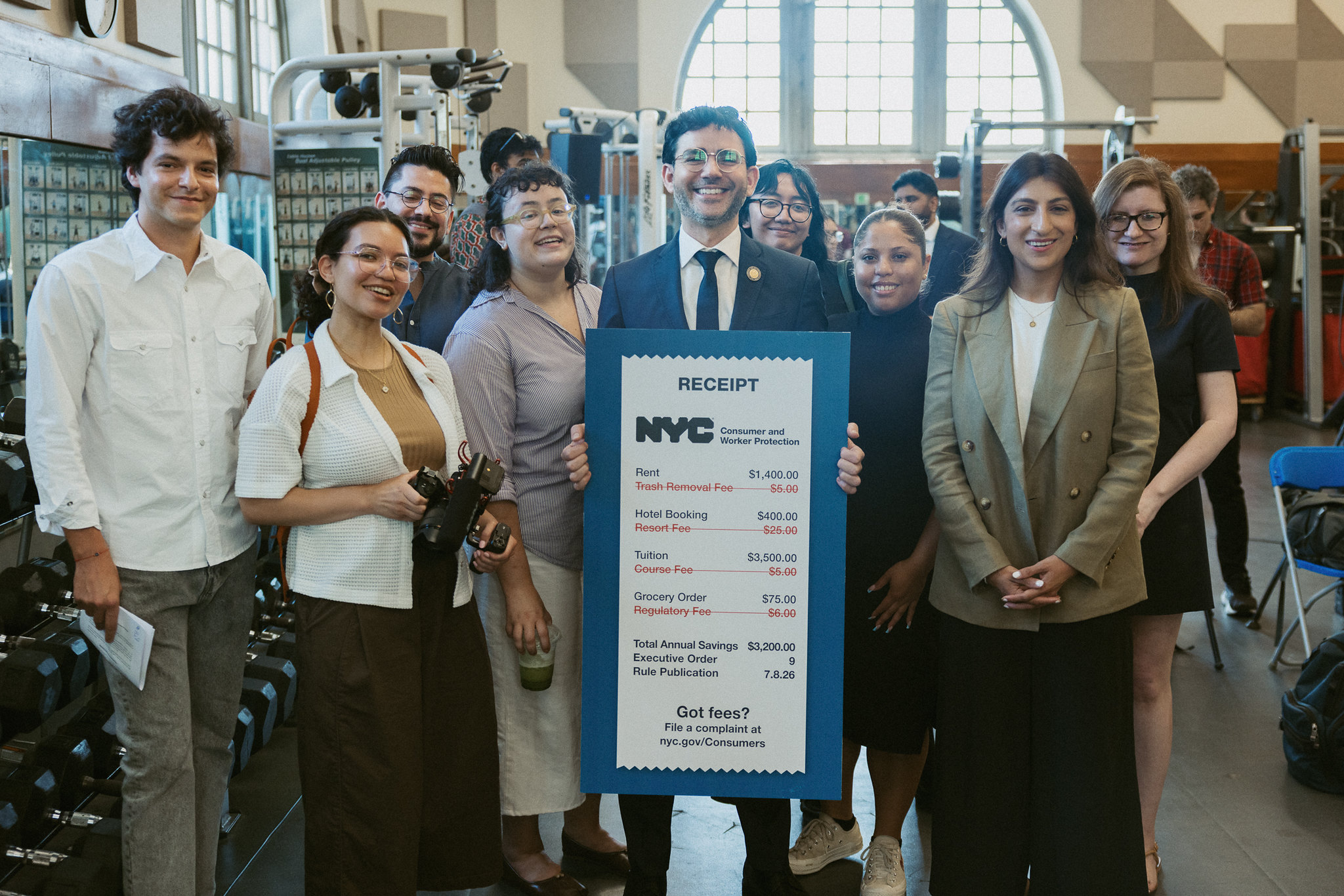
New York City Mayor Zohran Mamdani and the Department of Consumer and Worker Protection (DCWP) Commissioner Samuel A.A. Levine announce landmark “Click-To-Cancel” consumer protection rules to ban subscription traps and junk fees, the first of its municipal kind in the nation. Friday, July 10. Kara McCurdy. Mayoral Photography Office.
Mayor Mamdani Announces “OPEN for Small Business,” Over 50 Reforms to Slash Red Tape and Increase Support for Small Businesses
Overhauling Procedures and Expanding Navigation (OPEN) eliminates outdated permits, redundant paperwork, and unnecessary fines for restaurants, bodegas, barbershops, and small businesses across New York City
From making it easier to host Bingo games to making it simpler to serve ice cream, the reforms target the pesky issues slowing our small businesses down
New Executive Order reinforces excellence in City government’s customer service standards, offering concierge support and strengthened rights during inspections
Find all proposed reforms HERE
NEW YORK — Mayor Zohran Mamdani today announced “OPEN for Small Business”, a package of more than 50 regulatory reforms to reduce the paperwork and bureaucratic burden facing the city’s roughly 180,000 small businesses. Alongside an Executive Order that immediately implements several reforms, the package saves time, effort, and money for the small businesses that anchor New York’s economy and the one million New Yorkers they employ.
“You cannot tell the story of New York without our small businesses, and yet our city has often made it too hard for them to open their doors and keep them open,” said Mayor Mamdani. “The owners tell us the same thing again and again. What wears them down is not simply the cost of any one fee, it is the paperwork and the inconsistency they face when dealing with their own government. Today we are not only announcing reforms, we are building the machinery to find and fix more, so that a small business owner in this city is finally treated as someone government works for, not around.”
In January, Mayor Mamdani signed Executive Order 11, which directed seven city agencies — the Department of Consumer and Worker Protection (DCWP), Department of Sanitation (DSNY), Department of Health and Mental Hygiene (DOHMH), Department of Transportation (DOT), Department of Environmental Protection (DEP), Fire Department (FDNY), and Department of Buildings (DOB) — to inventory their fees and civil penalties and recommend ways to reduce them. In the six months since, the Office of the Deputy Mayor for Economic Justice (DMEJ) and the Department of Small Business Services (SBS) held roundtables and surveyed over 500 business owners across all five boroughs to better understand the barriers they face.
Business owners who took part in these roundtables and surveys most often pointed to delays in opening, uncertainty about compliance requirements, and inconsistent enforcement as key pain points. OPEN responds directly to those findings.
What OPEN Means for Small Businesses Across the City
The more than 50 reforms in OPEN touch nearly every type of small business in New York City, and break down as follows: 25 for food service and food retail businesses, seven for transportation businesses, five for other retailers, four for child care providers, three for industrial and commercial businesses, two for personal care businesses, three for nonprofits running bingo and games of chance licenses, and six that apply to every business in the city.
“Having the backs of small businesses starts with listening and that’s what we’ve been doing,” said Deputy Mayor for Economic Justice Julie Su. “What I’ve heard again and again, across boroughs and industries, is the sense that government too often treats them as a problem to be managed rather than a constituency to be valued. Small business owners run on customer service, and they cannot survive without it. OPEN holds the City to that same standard, with a single point of contact to help owners open, clear rights when an inspector walks in, and an ongoing commitment to keep cutting the red tape that stands in their way.”
“I grew up watching my family navigate the same maze so many small business owners face, the paperwork, the fines, and the deciphering of city regulations. As we dramatically expand our NYC Business Express Service Team, new businesses will have a dedicated case manager to help them open their business quickly,” said SBS Commissioner Kenny Minaya. “Thank you, Mayor Mamdani and Deputy Mayor Su, for your commitment to putting money back into the pockets of the entrepreneurs that power our city.”
“Small businesses are the heartbeat of New York City, but for too long outdated rules, excessive paperwork, and confusing processes at City agencies have stood in their way,” said DCWP Commissioner Samuel A.A. Levine. “Executive Order 11 and ‘OPEN for Small Business’ will save people precious time and money—cutting back on red tape and axing pricey fines, while upholding core protections New Yorkers deserve. DCWP is proud to partner with Mayor Mamdani to ensure our city is a place where hardworking business owners can thrive.”
“Every TLC driver is a small business on wheels, safely delivering service to nearly one million New Yorkers every day,” said Taxi & Limousine Commissioner Midori Valdivia. “Reducing unnecessary costs and fees for hardworking drivers — no matter how small those costs may seem — helps them earn a more dignified living, strengthens the industry, and supports a safer transportation system for everyone. This is just the beginning. We will continue looking for ways to provide meaningful relief to drivers while also holding the bases and corporations that directly benefit from their labor accountable for their fair share.”
“Our commercial corridors depend on clean, cared for streets, sidewalks, and public spaces to draw customers and create a sense of pride,” said Sanitation Commissioner Gregory Anderson. “Our regulations and their enforcement should be clear, consistent, and equitable, with a direct connection to achieving our goals — cleaner streets, worker protection, sustainability. These new initiatives will reduce the burdens on small businesses, while ensuring that all New Yorkers do their part to keep us safe and our neighborhoods sparkling.”
“Small businesses are the backbone of New York City’s economy, and every dollar matters,” said DEP Commissioner Lisa F. Garcia. “By eliminating these registration fees, we’re making it easier for food truck operators and small businesses with commercial cooking equipment to invest in their success, create jobs and keep serving communities across our city.”
“The City’s relationship with small businesses shouldn’t end with enforcing rules. It should be built on respect, responsiveness, and service,” said Annie Levers, Director of the Mayor’s Office of Operations. “By listening to business owners, improving customer service, and recognizing public servants who go above and beyond, we’re making it easier for small businesses to succeed.”
“This package of more than 50 regulatory reforms, along with the new Executive Order to reduce bureaucratic burdens, are meaningful steps toward making it easier to start, operate, and grow a business in our city,” said Bronx Borough President Vanessa L. Gibson. “By cutting red tape, streamlining compliance, and modernizing outdated regulations, we are creating a more efficient, business-friendly environment that allows our entrepreneurs to focus on creating jobs, serving their communities, and driving New York City’s economic future.”
“Small businesses are the foundation of our local economy and the heart of our neighborhoods,” said New York State Senator José M. Serrano (SD-29, East Harlem & the South Bronx), Chair of the New York State Senate Majority Conference, and Chair of the Senate Committee on Cultural Affairs, Tourism, Parks and Recreation. “When government makes it easier to open, operate, and grow a business, our communities are stronger because of it. I welcome these reforms and look forward to continuing to work with Mayor Mamdani and my colleagues to ensure small businesses have the support they need to succeed.”
“Every successful small business starts with someone willing to take a risk,” said Councilmember Shanel Thomas-Henry, Chair of the Committee on Small Business. “Government shouldn’t be the biggest one they face. The OPEN plan is the product of real collaboration, listening to entrepreneurs, working alongside the Council, and turning those conversations into action. No one knows business better than the people running one every day, and good government works best when it responds to that expertise. I’m proud to stand alongside the Administration in advancing reforms that transform bureaucracy into partnership and create more opportunity for New Yorkers to turn their dreams into thriving businesses.”
“Our City is home to over 180,000 small businesses whose economic impact is felt in their local communities and beyond,” said Councilmember Harvey Epstein, Chair, Committee on Consumer and Worker Protection. “Revisiting and reinventing the policies that affect their day to day operations is exactly the approach we should take as government to ensure small businesses continue to propel our city and state economy forward. I appreciate the administration’s focus on uplifting these vital businesses with smart regulation that streamlines their interaction with government without compromising consumer protections.”
“As a City, it is critical that we find new ways to reduce red tape for our small business owners and help them build wealth in the neighborhoods they call home,” said Deputy Whip of the New York City Council Elsie Encarnación. “By reducing paperwork and administrative busywork for our small businesses, OPEN for Small Business is another step toward making local government work better for everyone. We must keep making it easier for small businesses to open, grow, and succeed, because when those investments bear fruit, every New Yorker benefits.”
“Every New Yorker benefits when our small businesses can open their doors and thrive without unnecessary bureaucratic hurdles,” said Council Member Lynn Schulman, chair of Committee on Health. “I want to thank Mayor Mamdani and his administration for listening to small business owners and taking meaningful steps to make City government more transparent, more responsive, and more accountable. By giving entrepreneurs the tools, guidance, and support they need to succeed, these reforms will help create stronger commercial corridors, healthier neighborhoods, and a more equitable city for everyone.”
The Full Reform Package
Developed by DMEJ and SBS in partnership with the agencies named in Executive Order 11, the package includes proposals to:
- Waive Mayoral approval for the sidewalk café program immediately, removing a layer of review that adds time without adding scrutiny, and will waive it for the roadway café program once outdoor dining reforms are enacted.
- Work with the State to eliminate the second permit restaurants need just to serve ice cream and other frozen desserts, a requirement left over from decades-old dairy regulation, on top of the general permit they already hold to serve food safely.
- Repeal the license a bodega needs to sell fruit, flowers, or soft drinks from a stand just outside its own door, on top of the license it already holds to sell those same goods inside.
- Publish a single plain-language guide for child care providers covering DOHMH, DOB, and FDNY together, so opening a center means one playbook instead of three separate agency timelines.
- Relocate the Health Academy, the City’s only in-person location for the food protection course every restaurant needs, from the Upper West Side to 125 Worth Street, so an owner in Canarsie or Throgs Neck no longer loses most of a day just getting certified.
- Remove the requirement that mobile food vendors carry a paper copy of their commissary agreement on the cart at all times, even though the City already has the same document on file and can look it up itself.
- Extend license renewal cycles for newsstand operators, pawnbrokers, second-hand dealers, sightseeing bus companies, scale dealer repairers, and storage warehouses.
- Cut DEP registration fees for cooking equipment and food trucks from $110 to $0 for the next twelve months.
- Reduce the maximum penalty from $600 to $500 for three common food safety violations, and replace two overlapping City and State allergy-poster requirements with a single poster that satisfies both, so owners face one standard instead of the risk of multiple violations.
- Remove outdated regulations on bingo and game of chance licenses held by nonprofit fundraisers, including prize caps set well below what today’s fundraisers are worth, so nonprofits and the businesses that host them aren’t boxed in by decades-old limits.
A complete list of all 50-plus reforms is included in the accompanying policy summary.
The Executive Order
Alongside the reform package, Mayor Mamdani signed a new Executive Order to both create ongoing infrastructure for identifying regulatory reforms and make changes today to how government serves small businesses. The Executive Order:
- Expands the mission of the NYC Business Express Service Team (NYC BEST) at SBS: the Executive Order creates a dedicated one-stop concierge service for new businesses, where they are assigned a single client manager who stays with them start to finish, facilitating permitting, licensing, inspections, and compliance across agencies. Today, business owners either navigate this complexity alone or pay expediters to do it alongside them. The administration’s dramatic expansion of NYC BEST will ensure more businesses benefit from 1:1 compliance education, saving them time and money. Under the new Executive Order, SBS and partnering city agencies will work together to proactively reach small businesses ahead of qualifying inspections, instead of waiting on them to request for help.
- Puts the Business Owner Bill of Rights in every owner’s hands: the document sets out what owners should expect from City government during inspections: how they should be treated, what an inspector must tell them, and what recourse they have when those standards are not met. City agencies are required to provide it, but in SBS’s 2025 survey of over 500 small businesses, only 9% reported ever receiving it. SBS and the Mayor’s Office of Operations have broadened the document to better reflect what small business owners actually experience, and agencies will now distribute it at every point of service, including at inspections (available at nyc.gov/bizrights).
- Establishes a permanent working group (the OPEN Taskforce): convened by SBS and DMEJ, the OPEN Taskforce will consist of nearly ten city agencies and offices who will continue to identify and fix the pain points business owners face, with an annual update of reform opportunities delivered to the Deputy Mayor for Economic Justice.
- Strengthens customer service training and accountability for city inspectors: the Executive Order will require annual training and regular review of Customer Service Survey results by agency leadership so patterns are identified and addressed, and recognition each year for inspectors who demonstrate excellence in public service.
- Directs SBS to develop recommendations to address small business costs beyond regulation: SBS will develop these recommendations by the fall to help businesses with other costs they face — including insurance, commercial rents, utility costs – and address chronic storefront vacancy.
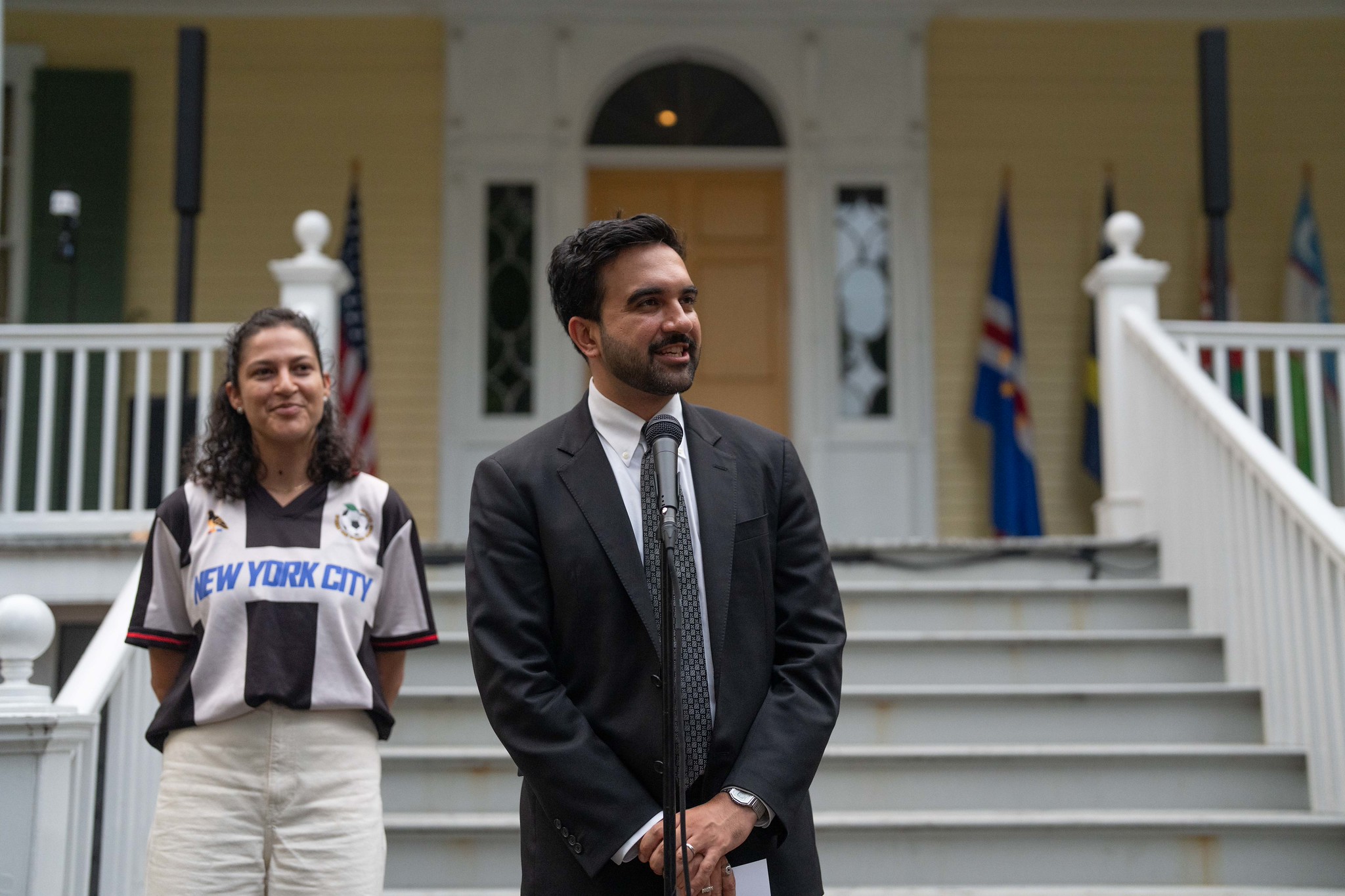
Mayor Zohran Kwame Mamdani hosts a pickup soccer match at Gracie Mansion on Thursday, July 9, 2026. Michael Appleton/Mayoral Photography Office
Mayor Mamdani Announces 500 Free Tickets for USA Track & Field Outdoor & Para National Championships in New York City
New Yorkers can enter lottery for free tickets until 11 p.m. today
New York City is hosting the USATF Outdoor Championships for the first time since 1991 and the Para National Championships for the first time in history
Discounted tickets to championship also available through special code, “MAYOR10”
NEW YORK – Mayor Zohran Kwame Mamdani today announced that New York City will give away 500 free tickets to the historic 2026 USA Track & Field (USATF) Outdoor & Para National Championships, taking place in New York City at Icahn Stadium on Randall’s Island from July 23 to July 26. New York City is hosting the Outdoor Championships for the first time since 1991 and the Para National Championships for the first time in history.
The event — which includes the USATF Outdoor Championships and USATF Para National Championship — will gather Olympians, Paralympians and rising Team USA athletes, including Noah Lyles, Sha’Carri Richardson, Grant Fisher and Tara Davis-Woodhall. New Yorkers can enter the lottery for free tickets at on nyc.gov/TrackAndField until 11 p.m. today and choose between tickets to either Thursday or Friday’s events. Winners will be notified Wednesday and be able to claim up to two tickets each.
In addition to the ticket lottery, Mayor Mamdani also announced a ticket discount to help more New Yorkers attend the historic event. Individuals can use the promotional code “MAYOR10” at usatf.org/tickets during check out to receive a 10 percent discount.
The announcement was made in partnership with local nonprofits USATF New York, Central Park Track Club and New York Road Runners and will give hundreds of New Yorkers the chance to watch world-class track and field athletes in their own backyard for free. The event will be held at Icahn Stadium, an NYC Parks facility maintained by the Randall’s Island Park Alliance.
Along with affordable tickets to 2026 FIFA World Cup™ and Gotham FC matches, today’s announcement continues Mayor Mamdani’s commitment to make sports accessible for every New Yorker, including by:
- Securing 1,000 affordable tickets to World Cup matches.
- Making all FanFests in the five boroughs free to all New Yorkers.
- Offering a $26 meal deal at nearly 900 restaurants.
- Creating free Soccer Streets and 24/7 World Cup pitches.
- Delivering 600 free tickets to the Knicks championship ceremony.
- Showing Knicks playoff games for free on hundreds of LinkNYC screens citywide.
- Extending field lighting this summer, adding 4,000 more hours of play on basketball courts, soccer fields and other athletic fields citywide.
“One hundred and fifty years ago, a group of sprinters, jumpers and throwers gathered in New York for the first national track and field championship. This week, we will run it back – and gather even more New Yorkers in the stands,” said Mayor Mamdani. “With these free and discounted tickets, we will give thousands of New Yorkers the chance to watch world-class athletes compete while demonstrating once again that sports must be affordable and accessible for all.”
“New York Road Runners believes running should be accessible to everyone. We’re proud to partner with Mayor Mamdani and the other local organizing committee members — USATF New York and Central Park Track Club — to offer New Yorkers free and discounted tickets to the USATF Outdoor Track & Field and Para National Championships being held right here on Randall’s Island at Ichan Stadium,” said New York Road Runners CEO Rob Simmelkjaer. “Bringing the nation’s top track and field athletes to our city is an opportunity to inspire the next generation of runners and unite communities across the five boroughs through a shared love of sport.”
Fast Buses: Mayor Mamdani Breaks Ground on Offset Bus Lanes on Fordham Road
Project will speed up service for 130,000 daily riders along the Bronx’s busiest bus corridor
NEW YORK – Mayor Zohran Kwame Mamdani and New York City Department of Transportation (NYC DOT) Commissioner Mike Flynn today broke ground on the redesign of Fordham Road, adding new offset bus lanes from Sedgwick Avenue to Boston Road in the Bronx. The project will make commutes faster and more reliable for 130,000 daily bus riders while delivering critical safety upgrades on one of the borough’s highest-crash corridors.
“We’re not only promising fast buses, we’re delivering them,” said Mayor Mamdani. “This year, Fordham Road riders won’t have to watch their time disappear in traffic while cars block bus lanes that were meant for people. This project will give 130,000 New Yorkers faster, more reliable commutes every day so they can spend more time doing what they love and less time stuck in traffic.”
“Fordham Road buses are a lifeline for many Bronxites, and yet their commutes to work, to visit family and to visit friends are slow and unreliable,” said NYC DOT Commissioner Mike Flynn. “This redesign will give bus riders much-needed relief with faster and more reliable service while still accommodating vehicle traffic in the area. Where we’ve installed similar designs, we’ve seen bus speeds increase as much as 28%, and we’ll continue monitoring the corridor for further improvements as needed.”
“With this project now underway, Fordham Road is at the center of New York’s burgeoning bus renaissance,” said MTA Chair and CEO Janno Lieber. “Things are taking off now because we finally have City partners who share MTA’s vision for a better bus network, and that starts with more dedicated bus lanes.”
“Every change we can make to the street infrastructure goes a long way in improving bus service, whether that be improving speeds, accessibility or reliability,” said MTA New York City Transit President Demetrius Crichlow. “Simply put, better bus infrastructure leads to better bus service. And offset lanes like the ones being built here will help improve all three. These lanes mean that 130,000 Bronx riders will get where they need to go faster, more safely and more reliably.”
Today, buses on Fordham Road travel as slowly as 5 mph, with existing curbside bus lanes frequently blocked by deliveries and passenger pick-ups and drop-offs. The City will convert those curbside lanes into offset lanes that better separate buses from general traffic while creating dedicated parking and loading spaces to support local businesses. Similar redesigns across the city have increased bus speeds by as much as 28% while reducing pedestrian and cyclist injuries by as much as 30%.
In this section of the Bronx, 62% of households do not have access to a private vehicle, and 71% of residents rely on public transit, biking or walking to get around.
In February, Mayor Mamdani announced the City would restart work on the Fordham Road redesign after years of delays under the previous administration. Construction begins just weeks after the release of Next Stop, the City’s historic partnership with New York State to shorten commutes by up to six minutes across 175 bus routes, including Fordham Road.
Since January, the Mamdani administration has advanced major projects to speed up buses across the five boroughs, including on Fordham Road, 161st Street and Tremont Avenue in the Bronx; 34th Street, 116th Street, Madison Avenue and Lexington Avenue in Manhattan; Marcy Avenue, Flatbush Avenue, Utica Avenue, Church Avenue and Linden Boulevard in Brooklyn; Victory Boulevard on Staten Island; and Broadway in Queens.
“The Fordham Road redesign will deliver faster, more reliable public transit for the everyday New Yorkers who depend on it most,” said Congressman Adriano Espaillat. “In a Bronx community where 62% of households do not have access to a car and more than 70% of residents get around by bus, on foot or by bike, our neighbors deserve service that is quick, dependable and safe. New offset bus lanes will give more than 130,000 daily riders the reliable service they have long been owed, while dedicated loading and parking keeps the small businesses along Fordham Road strong and thriving. I commend everyone involved in advancing this project, and our communities are grateful to the workers who will make faster, safer streets a reality for our communities.”
“The new offset bus lanes and redesign of Fordham Road will help thousands of bus riding Bronxites to get where they need to be faster and more reliably,” said State Senator Gustavo Rivera. “These upgrades will make roads in my district safer for drivers, commuters and pedestrians. I want to thank Mayor Mamdani, the DOT and the MTA for their commitment to faster busses and safer roads for my neighbors and visitors alike.”
“Public transit is not simply how people move through a city. It is how opportunity reaches them,” said State Senator Robert Jackson. “For the riders who depend on Fordham Road each day, faster buses and safer streets mean more time with family, more reliable access to work and education and a government that recognizes the value of every hour they spend waiting. This project reflects a fundamental principle of public service: our streets must serve the many, not merely accommodate the few. I commend Mayor Mamdani and Commissioner Flynn for advancing a redesign that places working people, public safety and the future of the Bronx at the center of our transportation policy.”
“For too long, buses on Fordham Road have crawled along at speeds as slow as 5 miles per hour,” said Assemblymember Yudelka Tapia. “This project will speed up commutes for 130,000 daily riders, deliver critical safety upgrades and create dedicated parking and loading spaces to support our small businesses. Fordham Road is a vital corridor for our community where most residents rely on public transit, and this redesign will finally give it the investment it deserves.”
“The Bronx deserves transportation that is fast, safe and reliable,” said Assemblymember George Alvarez. “Every day, thousands of residents in our district depend on Fordham Road to get where they need to go, yet too many have spent years stuck in traffic or navigating unsafe streets. This redesign is about putting our community first by investing in safer roads, faster bus service and a stronger local economy. For far too long, other boroughs have received millions of dollars in investments for roadway resurfacing, pedestrian plazas, enhanced lighting, streetscape improvements and countless other infrastructure projects, while communities in the Bronx have too often been left waiting. Today’s groundbreaking represents an important step toward ensuring our borough receives the same level of attention and investment that every New Yorker deserves. I applaud NYC DOT and Mayor Mamdani for moving this long-overdue project forward and for recognizing that the Bronx deserves meaningful investments in its infrastructure. By improving bus service for more than 130,000 daily riders while making Fordham Road safer for pedestrians, cyclists, drivers and local businesses, we are building a transportation system that better serves the hardworking families who call the Bronx home.”
“We’re ecstatic that the long-awaited Fordham Road bus project is finally becoming a reality,” said Anna Berlanga, Bronx & Uptown Organizer for Transportation Alternatives. “With faster buses, Bronx residents will be able to more quickly and reliably travel to school, to work, to the doctor or just to one of the many local stores on one of the strongest commercial corridors in the city. Fordham Road is also the most dangerous street for pedestrians in the Bronx, and these improvements will transform a dangerous street into one that’s safe for everyone.”
“Fordham Road is one of the busiest bus corridors in New York City, and 130,000 daily riders should not have to accept buses crawling along at five miles per hour as the status quo,” said Kate Slevin, Executive Vice President of Regional Plan Association. “This redesign will give buses the space they need to move, while making one of the Bronx’s most dangerous corridors safer for everyone who uses it. In a community where nearly two-thirds of households do not have access to a private vehicle, faster and more reliable bus service is fundamental to expanding access to jobs, education and opportunity. RPA applauds the Mamdani administration and NYC DOT for moving this long-delayed project forward and continuing to prioritize the bus improvements New Yorkers need.”
“Fordham Road is one of the Bronx’s most important commercial and transit corridors and improving bus reliability and street safety can deliver meaningful benefits for residents, workers and businesses alike,” said Lisa Sorin, President of the Bronx Chamber of Commerce. “The inclusion of dedicated parking and loading spaces is especially important for the small businesses that depend on reliable deliveries and customer access. As construction moves forward, the Bronx Chamber looks forward to working with NYC DOT to ensure implementation is coordinated, clearly communicated and responsive to the day-to-day realities of the businesses operating along the corridor.”
“Getting 130,000 daily bus riders moving faster and more reliably is a critical step forward, and we’re glad to see this long-delayed project moving ahead,” said Jackson Chabot, Director of Advocacy and Organizing at Open Plans. “New York has an enormous opportunity to make transit faster and more attractive while reducing our reliance on cars. Delivering on that vision will require not only dedicated bus lanes and true Bus Rapid Transit across all five boroughs, but also holistic curb reform and automated enforcement to keep those lanes clear and moving. Together, these tools can give more New Yorkers a fast, reliable alternative to driving and make real progress on reducing vehicle miles traveled.”
“Fordham Road is one of New York City’s busiest bus routes — and also one of its slowest,” said Eric McClure, Executive Director of StreetsPAC. “People who rely on the bus to get around the Bronx deserve better, so we’re thrilled to see NYC DOT breaking ground on major improvements to Fordham Road, which will both speed up trips for more than 100,000 daily riders and make the entire corridor safer for everyone who uses it. Fordham Road is a critical facet of the Mamdani administration’s plans to significantly improve bus service citywide, and we tip our caps to Commissioner Flynn and the NYC DOT team for getting this project underway.”

Mayor Mamdani breaks ground on a new American Express corporate headquarters. 2 WTC, Manhattan. Thursday, July 9, 2026. Credit: Ed Reed/Mayoral Photography Office.
Mayor Mamdani Announces Full Slate of Committee Appointees for Mayor’s Advisory Committee on the Judiciary
The eighteen appointees include law professors and three former New York State judges
NEW YORK – Mayor Zohran Kwame Mamdani today announced the full slate of members appointed to the Mayor’s Advisory Committee on the Judiciary (MACJ), which evaluates candidates for judicial appointments and recommends qualified candidates to the Mayor. The newly revitalized committee will work to make the judicial selection process more transparent, more accessible and truly reflective of New York City.
In January, Mayor Mamdani signed an executive order directing the Committee to engage the full breadth of the legal community in the judicial selection process, including public defenders, attorneys who represent parents and children in Family Court and those working in indigent legal services. The executive order also directs the Committee to regularly publish demographic data about the judicial applicant pool and create a searchable public database through which New Yorkers can monitor upcoming appointments, ensuring transparency in the process.
“I am proud to announce our full slate of appointments to the Mayor’s Advisory Committee on the Judiciary,” said Mayor Mamdani. “The Committee will help ensure that our judicial system reflects the city it serves, applies the rule of law universally and does so without favor. These members bring a diverse range of legal expertise, and I am confident they will carry out this important responsibility with fairness, independence and integrity.”
“The members announced today offer a truly representative cross-section of the legal profession in New York City, bringing a wide range of professional experience from all five boroughs to the Mayor’s Advisory Committee on the Judiciary,” said Ramzi Kassem, Chief Counsel to the Mayor and City Hall, who supervises the activities of the Committee. “Under Mayor Mamdani’s leadership, MACJ will reach across the legal community to build a broad and highly qualified pool of judicial applicants. An independent and impartial judiciary composed of jurists who have served their fellow New Yorkers in a range of legal circumstances is essential to a healthy democracy, and these appointments reflect our administration’s commitment to a fair, inclusive and transparent judicial selection process.”
“I am honored to Chair this group of leading legal practitioners and scholars,” said Ali Najmi, Chair of the Mayor’s Advisory Committee on the Judiciary, appointed by Mayor Mamdani in January. “The Mayor has made transparency in judicial selection a priority and today’s appointments are just the beginning of that work. I look forward to leading this talented committee and helping to deliver a more just city.”
“The formation of the full committee marks an important step toward ensuring that judicial vacancies are filled through a fair, rigorous and accessible process,” said Rowan D. Wilson, Chief Judge of the State of New York and the New York Court of Appeals. “I look forward to continued collaboration to support a judiciary that serves all New Yorkers with integrity.”
“These appointments reflect the breadth of talent, experience and commitment to justice that New Yorkers deserve. The nominees bring diverse perspectives and deep expertise from across the legal profession — from public defense, including former Legal Aid attorneys, and civil rights advocacy to academia, private practice and public service,” said Twyla Carter, Attorney-in-Chief and Chief Executive Officer of The Legal Aid Society. “A judicial selection process that draws on this range of experience strengthens both our courts and the public’s confidence in them. I commend the Mayor, the Chief Judge, the Presiding Justices and all those involved in these appointments for their commitment to this important process.”
“A well-staffed judiciary is critical to the fairness and effectiveness of our criminal justice system, and I look forward to the appointment of additional qualified judges,” said Manhattan District Attorney Alvin Bragg.
The Committee’s duties include evaluating and appointing judges to the City’s Family and Criminal Courts, as well as interim judges to its Civil Courts. The Committee reviews judges to evaluate temperament, fairness and judgment before making recommendations to the Mayor. The Committee includes members that have been reappointed, and nominees from local law schools and judges.
The Committee expects to issue its first set of recommendations to the Mayor by the beginning of October, with a public hearing to follow that month.
About Members of the Mayor’s Advisory Committee on the Judiciary:
Dianisbeth Acquie is a native Brooklynite. She began her legal career as a litigation associate at Paul, Weiss, Rifkind, Wharton & Garrison LLP and previously clerked for Chief Judge Margo K. Brodie in the U.S. District Court for the Eastern District of New York. She currently serves as the Assistant Dean of the Office of Judicial Careers at Columbia Law School and as Vice President of the High School Division for the Sonia & Celina Sotomayor Judicial Internship Program. She graduated summa cum laude from Harvard College with a degree in English and earned her Juris Doctor cum laude from Harvard Law School, where she was a student attorney and Vice President of Membership for the Harvard Legal Aid Bureau. (Mayoral nominee)
Jill Soffiyah Elijah is the founder and former Executive Director of the Alliance of Families for Justice (“AFJ”). Prior to founding AFJ, Ms. Elijah was the Executive Director of the Correctional Association of NY. Prior to leading the Correctional Association, Ms. Elijah served as Deputy Director and Clinical Instructor at the Criminal Justice Institute at Harvard Law School. Before moving to Harvard, she was the Director and Supervising Attorney of the Defender Clinic at the City University of New York School of Law. Earlier in her career, Ms. Elijah also worked as a Supervising Attorney at the Neighborhood Defender Service of Harlem, a Staff Attorney at the Juvenile Rights Division of the Legal Aid Society and in private practice. Throughout her career she has trained thousands of lawyers and continues to do so as a consultant. An accomplished advocate, attorney, scholar and educator, Ms. Elijah has practiced criminal and family law for more than 40 years. (Mayoral nominee)
Julia Hernandez is an Associate Professor of Law at the CUNY School of Law where she co-founded and co-directs the Family Defense Practicum and Clinic. Together with her students, Julia challenges government surveillance and the separation of families of color and advocates for policies that support family well-being. Before joining CUNY’s faculty, Julia was an attorney with Brooklyn Defender Services’ Family Defense Practice and Catholic Migration Services. Julia graduated from CUNY School of Law and received her BA in Anthropology and Latin American Studies from SUNY New Paltz. (Mayoral nominee)
Everett Hopkins is the managing attorney of Hopkins Law Group, LLC. He received his undergraduate degree from the City University of New York at Hunter College and earned his law degree at the University of Buffalo. During his career, he served with distinction for eight years as general counsel and director of administration for the New York City Criminal Justice Agency. Prior to this position, he held key positions with the New York City Housing Preservation and Development and Fraud Enforcement with the Internal Revenue Service. Over the last 20 years, he has been an adjunct professor at several New York City area colleges. (Mayoral nominee)
Martin LaFalce serves as Associate Professor of Clinical Law at St. John’s University School of Law. Prior, he spent 14 years as a public defender at the Legal Aid Society, 10 years as a trial attorney in Manhattan and a policy attorney in Legal Aid’s Criminal Defense Practice. He began his career representing clients at Rikers Island charged with violating the conditions of their parole. He received his law degree from Georgetown University Law Center and undergraduate degree from Georgetown University. (Mayoral nominee)
Juan Luciano is a divorce lawyer. He began his career in Westchester and Queens working for immigrant families seeking to adjust their status in the United States. In 2013, he joined the assigned counsel panel for the Appellate Division First Department, serving in the Bronx and Manhattan Family Court. He worked with indigent families, adults and children. Since then, Mr. Luciano has dedicated his practice to family law and domestic relations, representing his clients with their best interests and those of their families in mind. He received his JD from the University at Buffalo School of Law. (Mayoral nominee)
Mina Malik is the CEO & Executive Partner of The Cochran Firm – New York and on the teaching faculty at Harvard Law School. She is a distinguished civil rights attorney and trial lawyer, former prosecutor and thought leader with over 25 years’ experience in criminal and civil litigation. Mina has served and held leadership positions in the Queens and Brooklyn District Attorney’s Offices, the Civilian Complaint Review Board, the Office of the Attorney General for the District of Columbia and the D.C. Public Defender Service. Throughout her career, she has been at the forefront of advancing justice, strengthening public trust in government and protecting the constitutional rights of individuals through principled leadership, public service and advocacy. Mina received her JD from The American University Washington College of Law and her BA from Bates College. (Mayoral nominee)
Sherbune Paul is an attorney with 10 years of experience and serves as a Senior Associate at Russo & Gould LLP. Her previous roles include serving as a Managing Attorney at Bailey Law Firm LLP, Associate in the Transportation Practice Group at Windels Marx and Supervising Attorney at the NYC Taxi and Limousine Commission. Sherbune holds a JD from New York Law School and earned her BA in Sociology from Stony Brook University. (Mayoral nominee)
Amber Baylor is the founding director of the Criminal Defense Clinic and Clinical Professor of Law at Columbia Law School. She was previously the founder and director of the Criminal Defense Clinic at Texas A&M School of Law. Prior to teaching, Baylor was a staff attorney with Neighborhood Defender Service of Harlem and a trial attorney for Federal Defenders of San Diego, Inc. She received her LL.M from Georgetown University Law Center, holds a JD from New York University School of Law and earned her BA from Columbia University. (Chief Judge nominee)
Judge Kristen Booth Glen brings a wealth of relevant experience as a judge, a legal educator, a practicing lawyer and an advocate for diversity in the profession and the court system. Judge Glen was elected to the Civil Court of the City of New York in 1980; during her term she also sat in Criminal Court, and as a Sitting Supreme Court Justice in both Civil and Criminal terms. In 1986 she was elected to Supreme Court where she sat in the Matrimonial and Malpractice Parts and chaired the Committee on Diversity. In 1992 she was appointed to the Appellate Term, hearing appeals from the Criminal and Civil Courts. She left the bench in 1995 to become the third Dean of CUNY School of Law, and after a decade of service there, was elected Surrogate, New York County where she significantly increased the diversity of that Court’s staff. Judge Glen is an Honors graduate of Stanford University and Columbia Law School. (Chief Judge nominee)
A. Camila Popin is the principal attorney at Popin Law, P.C. After law school, she worked for a firm where she concentrated in the areas of Divorce and Family Law. In 2004, she opened her own law practice in Queens County concentrating in Family Law and Divorces and representing clients throughout the City of New York, Long Island and Westchester. She received her law degree from Brooklyn Law School and graduated cum laude with a Bachelor of Science degree in Political Science from St. Francis College. (Chief Judge nominee)
Judge Milton Tingling was the first African-American County Clerk of New York County. He clerked for Harlem-based judges Justice Milton H. Richardson, Justice Wilford O’Connor and Justice Dennis Edwards, Jr, and ran a solo practice on West 125th Street. In 1986, he became the first Black person to ever be elected to a judgeship from the 7th Municipal Court District. He serves on numerous boards and community organizations, including the Greater Harlem Chamber of Commerce. He is the founder of The Initiative, a volunteer project that educates, facilitates and assists formerly incarcerated individuals in obtaining Certificates of Relief and Certificates of Good Conduct. He received his law degree from North Carolina Central University School of Law and earned a BA from Brown University. (Chief Judge nominee)
Joseph Drayton is a partner at Proskauer Rose LLP and is a first-chair trial lawyer with over two decades of experience representing companies in intellectual property (IP) and complex commercial litigation. He recently received the United States President’s Volunteer Service Award by President Joseph R. Biden for his leadership activities in the legal community. Joe also received the C. Francis Stradford Award. He received his JD from University of Pennsylvania Law School and earned a Bachelor of Science in Electrical Engineering. (Presiding Justice, Appellate Division, First Judicial Department nominee)
Danielle Jones is the Assistant Managing Attorney at Proskauer Rose LLP and Lecturer in Law at Columbia Law School. Previously, she was Deputy Managing Attorney of the Criminal Defense Practice of Neighborhood Defender Service of Harlem (“NDS”). Danielle worked in the New York State Court System as a Principal Court Attorney in Kings County Supreme Court, Criminal Term and as an Assistant Law Clerk in New York County Supreme Court-Civil Term. She began her legal career as a Staff Attorney in the Criminal Defense Practice of The Legal Aid Society and has appeared as a legal commentator on the Law & Crime Network. She received her JD from Howard University School of Law and earned her BA in Communication from University of Illinois Urbana-Champaign. (Presiding Justice, Appellate Division, First Judicial Department nominee)
Judge William Mastro was elected to the New York State Supreme Court in November 1992. He was appointed to the Appellate Division, Second Department, in June of 2002 and served as a justice of that court until December 2021. During his tenure with the court, Mastro twice served periods as acting presiding justice. In May 2013, Mastro had the honor of being selected to hear and determine a case as a member of the New York State Court of Appeals. He presently serves as a member of the Governor’s Appellate Division Second Department Screening Committee. He graduated from Villanova University and New York Law School. (Presiding Justice, Appellate Division, Second Judicial Department nominee)
Thomas Principe has been a partner at Kramer, Dillof, Livingston & Moore in Manhattan, representing injured parties in the specialty of personal injury and medical malpractice for 37 years. He is a former prosecutor with the Queens County District Attorney’s Office, rising to the rank of deputy bureau chief of the Supreme Court Trial Bureau. Principe served in the New York Army National Guard for 33 years, retiring as a brigadier general. He was one of the first wave of First Responders from the New York Army National Guard on 9/11/2001. Among other military medals received during his career, he was awarded the Legion of Merit by the US Army and the Meritorious Service Medal by the State of New York. He is a graduate of St. John’s University and St. John’s University School of Law and is a Past President of the Alumni Association of St. John’s University School of Law. (Presiding Justice, Appellate Division, Second Judicial Department nominee)
Dennis Fan is the Founder and Director of Columbia Law School’s Appellate Litigation Clinic. He previously served as a senior assistant solicitor general in the New York Attorney General’s Office, where he handled major business fraud and consumer protection appeals, and before that worked in the U.S. Department of Justice’s Civil Division on high-profile cases involving national security, presidential powers and federal administrative law. At the start of the Biden Administration, he served as counsel to the assistant attorney general, helping coordinate regulatory reforms to DACA and implementation of the Inflation Reduction Act. A 2015 Columbia Law graduate, Fan clerked for Judge Denny Chin and Judge James E. Boasberg, served as editor-in-chief of the Columbia Law Review and received multiple academic and clinical honors. Dennis received his JD from Columbia Law School and earned his BA from Swarthmore College. (Law school nominee)
Jared M. Trujillo is an Associate Professor of Law at CUNY School of Law, where he teaches Constitutional Law, Legislative Drafting, Critical Race Theory and courses focused on the criminal legal system. Before joining the faculty, he served as Senior Policy Counsel at the New York Civil Liberties Union. He previously served as President of the Association of Legal Aid Attorneys, UAW Local 2325 and worked as a juvenile defense and criminal defense attorney at The Legal Aid Society in New York City. Jared is a co-chair of the LGBTQ+ Rights Committee of the New York City Bar Association, a co-chair of the American Constitution Society New York Lawyer Chapter and Law and Policy Counsel at Equality New York. (Law school nominee)

Mayor Zohran Kwame Mamdani joins a World Cup watch party at the Brooklyn Bridge Arches Plaza in Manhattan on Friday, July 10, 2026. Michael Appleton/Mayoral Photography Office
COGE Releases 5 Ballot Proposals and Final Report to Make Government Work Better for New Yorkers
Final ballot props to cut outdoor dining application timeline by 75%, speed up bike lane creation by 33%, accelerate nonprofit contracts and building permits, and strengthen rainy day funds
COGE members will vote to adopt ballot props during public meeting at 5 PM today
After November election, COGE advisory board will continue to hear New Yorkers’ ideas about how to improve government – as administration furthers commitment to public excellence
NEW YORK – The Commission on Government Efficiency (COGE), the 2026 New York Charter Review Commission, today released five final ballot proposals to make city government work better, faster and more efficiently for New Yorkers. The ballot proposals address outdated, unnecessary and redundant requirements in the City Charter to speed up permits and contracts, save small businesses money, accelerate housing and street safety improvements, strengthen fiscal responsibility – and ultimately, build a more modern city government.
These ballot proposals, accompanying COGE’s final report, are the culmination of 10 public hearings attended by 1,220 New Yorkers across the five boroughs, with 264 live testimonies and 603 pieces of submitted written testimony. While most of COGE’s recommendations will take the form of ballot questions, COGE additionally recommended, and the City is adopting, a number of internal reforms to agency processes that will make government more efficient. COGE was also clear: speed cannot come at the cost of labor standards, safety or quality. True efficiencies are gained not by shortchanging workers, but by listening to their expertise. COGE members will vote on adoption of the final report and ballot proposals at 5 PM today in Manhattan.
The Mamdani administration also announced the continuation of COGE’s efforts in a permanent structure, to further the work of government efficiency for years to come. Due to the enthusiasm New Yorkers showed for engaging with government directly and honestly, following the November election COGE will transition from a charter revision commission to an advisory board. This advisory body will engage New Yorkers about their ideas, explore additional ideas that began to surface during the COGE process this summer and use the input of everyday New Yorkers to advise the Mayor on ongoing efficiency reforms.
“In every borough, at every hearing, New Yorkers told us again and again that they want a government that works at the same speed and efficiency that they do each day,” said Patrick Gaspard, Chair of the Commission on Government Efficiency. “From simplifying construction permitting so we can rapidly tackle the housing crisis to making it easier to offer outdoor dining, we believe these proposals would help make our city more affordable and livable for working New Yorkers. The Commission looks forward to voting on the charter reforms this week and putting our proposals before New Yorkers at the ballot box this November.”
“This Commission is proud of its effort to suggest true efficiencies for how government can function, ones gained not by shortchanging workers or small business owners but by listening to them,” said Ann Cheng, Executive Director of the Commission on Government Efficiency. “Over the past few months, this Commission has scoured the Charter to determine what could be done to modernize our government to meet the challenges our city faces with the scale and speed they require. The Commission is thankful for the hundreds of New Yorkers who testified at hearings and informed these ideas.”
Prop 1: Speed Up Timeline for Using Public Space – Including Outdoor Dining, Ramps and Benches
- Cut the eight-month outdoor dining application process by 75% (to 2 months)
- Save small businesses up to $1,800 on application costs and thousands of dollars of staff time
The Commission’s proposal would modify the revocable consent process that determines the use of public space by combining the sidewalk café and roadway dining revocable consent process into a single application and modernizing public notice requirements.
Prop 2 and related non-Charter reforms: Reform the Contracting Process to Improve Procurements, including for Small Business and Nonprofits
- Ballot prop will save up to 30 days on procurements
- Internal reforms to cut qualified nonprofit procurement time by more than half (13 months to 6)
The Commission’s proposal would reduce burdens on small businesses and nonprofits by simplifying the pre-contracting questionnaire and requiring quarterly meetings of the Procurement Policy Board (PPB) to ensure consistent and transparent regulation of the City’s procurement system. The proposal would also allow the Mayor to delegate certain contract approvals to agencies, make permanent a public comment period instead of a public hearing for contract awards and streamline the issuance of the client services plan.
Beyond ballot props, the City will also begin to move nonprofit Council discretionary awards from procurements to grants, an approach that in pilot stage has shown to cut time to payment from 10 to six months. The City will also begin to competitively procure umbrella agreements with nonprofits to create pools of qualified, pre-vetted nonprofit providers eligible to receive future project-specific task orders, helping save up to seven months off a 13-month process. When approaching procurement, COGE took seriously its commitment to the labor force, both public and private sector, and specifically formulated recommendations that preserve all existing labor standards.
Prop 3: Fast-Track Street Safety Infrastructure Including Bike Lanes, Acquisition of Office Space and Activation of City Land
- Speed up street safety projects, including bike lanes, by at least 33%
- Reduce time for sale of small plots of City land from seven months to 90 days
- Unlock more than $200 million in revenue for the City from sale of small surplus lots
The Commission’s third proposal streamlines how the City uses its own property. The proposal would simplify review of street safety projects to reduce construction timelines and allow the Commissioner of the Department of Transportation to fast-track critical street infrastructure improvements where there is an identified, immediate safety need. Additionally, this ballot question fast-tracks the sale or lease of small City properties, the air rights above landmarked City properties and the lease of office space for City workers.
Prop 4: Simplify Building Permitting
- Bring 40 approvals from 18 separate offices and agencies into one place, saving builders time and frustration
The Commission’s proposal would create a centralized permitting hub through which applicants could access and manage construction-related permits and approvals across City agencies. It would also allow additional divisions at the Department of Buildings to approve certificates of occupancy and centralize the City’s waterfront permitting process within the agency.
Prop 5 and related internal reforms: Set Contributions Goals for Rainy Day Fund to Ensure Sufficient Budgetary Reserves
- Ballot prop establishes reserves target of 12%, aimed at ensuring long-term fiscal stability
- Internal reforms commit to review standard hires and promotions within 14 days and capital project initiation applications within 40 days
The fifth ballot proposal would set a target amount of funds held in reserve –– 12% percent of the City’s total tax revenues. The proposal would also require the Mayor’s Office of Management and Budget (OMB), in consultation with the Comptroller, to establish a deposit formula that would govern mandatory contributions to the rainy day fund. Beyond the ballot proposal, the City will also begin implementation of OMB service standards for the review of hirings and promotions as well as the review of capital project initiation applications.
The Commission consists of:
- Patrick Gaspard, Chair
- Ann Cheng, Executive Director
- Emma Wolfe, Vice Chair
- Susan Kang, Secretary
- Marco A. Carrión, Commissioner
- Henry A. Garrido, Commissioner
- Kapil Longani, Commissioner
- Ruth Messinger, Commissioner
- Theodore Moore, Commissioner
- Ana Oliveira, Commissioner
- Dawn Pinnock, Commissioner
- Carlina Rivera, Commissioner
- Esther Rosario, Commissioner
- Marc V. Shaw, Commissioner
- Barika X. Williams, Commissioner
- Kathryn Wylde, Commissioner
COGE’s proposed amendments follow broader efforts by the Mamdani administration to make city government more efficient. Just this week, the Mayor announced Overhauling Procedures and Expanding Navigation (OPEN) for Small Business, a package of more than 50 regulatory reforms to reduce the paperwork and bureaucratic burden facing the city’s roughly 180,000 small businesses. The Mayor also created Chief Savings Officers who identified $1.7 billion in savings across city government, cut red tape for housing construction through the SPEED (Streamlining Procedures to Expedite Equitable Development) report and launched Public Interest Technology (PIT) Crews to deploy teams of technologists to tackle public problems with in-house digital solutions.
“All too often, “Government Efficiency” is code for gutting public services to benefit corporate greed. Real efficiency is about finding ways a government can do more and do better for its people; It’s deeply refreshing to see COGE doing exactly that,” said State Senator Jabari Brisport.
“New Yorkers deserve a government that is responsive to their needs, efficiently delivers high quality services, and works to make their lives better. I commend Mayor Mamdani on his commitment to improving the way government works. From public interest technology, to cutting red tape for small businesses, and launching the Commission on Government Efficiency, this administration is showing what it means to put the people first. I encourage everyone to engage with COGE’s report and make their voice heard in government,” said New York State Senator Kristen Gonzalez.
“I’m thrilled to see that the Commission on Government Efficiency is outlining tangible steps, with the input of New Yorkers, to be taken that will help ensure our local government functions efficiently and cost effectively – whether that’s eliminating unnecessary red tape, making sure our public spaces actually work for the public, or cutting wasteful spending. I look forward to seeing the Commission’s work continue in the coming months,” said New York State Senator Julia Salazar.
“New Yorkers deserve a government that works as hard as they do,” said Assembly Member Amanda N. Septimo. “When it takes months to approve a sidewalk café, years to complete a housing project, or far too long for community organizations to secure contracts that serve our neighborhoods, everyone pays the price. I appreciate the Commission on Government Efficiency’s work to identify practical reforms that make City government more responsive, transparent, and effective. These proposals give New Yorkers the opportunity to consider how we can modernize government so it delivers better results for residents, small businesses, and nonprofits across our city.”
“Democratic socialism is grounded in the simple principle that government should improve the lives of working people. I’m thrilled to see the Commission on Government Efficiency propose streamlining approval for the ramps, benches, and outdoor dining that make our streets work for everyone, and to the administration for building toward a city that all New Yorkers can be proud to call home,” said Assembly Member Claire Valdez of Queens.
“Mayor Mamdani’s Commission on Government Efficiency is proving that cutting red tape and delivering real permitting reform doesn’t have to come wrapped in far-right politics – it can be done right here in Manhattan. My office was proud to testify before COGE, and I’m glad to see it produce thoughtful ideas: a central permitting hub, faster nonprofit contracting, and bus lane projects delivered at least a third faster, so government finally moves at the speed New Yorkers deserve,” said Manhattan Borough President Brad Hoylman-Sigal.“Thank you to Mayor Mamdani, Chair Patrick Gaspard, and the entire COGE panel for their diligent, policy-driven work. This is an important juncture to decide how government delivers for Manhattanites, and I encourage all New Yorkers to turn out and vote in November.”
“COGE did something rare: it elevated government efficiency as a serious civic priority and got New Yorkers talking about how city government can and should work better. Citizens Union applauds COGE for leading this effort and starting this important public conversation,” said Grace Rauh, Executive Director of Citizens Union. “There is more structural reform to be done to modernize the infrastructure of government, and we look forward to continuing to engage on and champion the changes needed so city government can better serve New Yorkers.”
“Today our sidewalks and streets are strangled with red tape. Caught in this knot are the perpetually delayed dreams of outdoor diners, restaurant owners and workers, as well as delivery workers, who risk life and limb, navigating perilous unprotected streets. The COGE shears are out, decisively cutting this bureaucratic tangle, finally freeing New Yorkers to thrive and stay alive on the streetscapes we love,” said Meera Joshi, President of Green-Wood and former Deputy Mayor for Operations.
“My members, who prepare babies and toddlers for their next steps in life, are pillars of the communities they serve,” said Linda McPherson, President of Local 95 Head Start Employees. “When contracted Head Start providers face payment delays from the City, it leads not only to late and missing paychecks but also to the sudden closures of these facilities that New York families rely on. I’m grateful to see more streamlining of the procurement process in these ballot proposals.”
“For years, our members who provide care for the youngest New Yorkers in our city’s day care centers have had their paychecks tied up in the bureaucracy of payments to contracted nonprofit organizations– often for months at a time,” said Robert Ramos, President of Local 205 Day Care Employeesa. “These delays are unacceptable. We applaud the Committee’s ballot proposals to make the City’s procurement and award process more efficient so that the workers who deliver these important services are no longer left in the dark about the security of their next paycheck.”
“As a former NYCDOT borough commissioner, I am very excited about COGE’s proposals to streamline the approval process for street safety projects. Cutting unnecessary delays will help advance the Mamdani Administration’s vision of safer, more livable streets for all New Yorkers, whether they walk, bike, drive, or rely on public transit,” said Nivardo Lopez, Former NYC DOT Bronx Borough Commissioner.
“The COGE recommendations offer meaningful structural solutions while recognizing that achieving maximum impact also requires technology and business innovation. Addressing late payments will keep the doors to community-serving organizations open for 3m New Yorkers who depend on them and will ensure that the workforce gets paid on time so they can take care of their own families. 1digit congratulates COGE on its important procurement recommendations,” said Jennifer Geiling, President of 1digit, and former MOCS Deputy Director for Human Services Procurement Operations.
“PSC members and the CUNY students we serve need access to housing they can afford. The rent freeze was a promise kept, and now we’re thrilled to see COGE propose a ballot measure that would simplify and accelerate the building of more affordable housing for working class New Yorkers. PSC thanks COGE Chairman Gaspard, PSC member and COGE Secretary Susan Kang, and the rest of the commission for their efficient work,” said Jen Gaboury, First Vice President, of Professional Staff Congress/CUNY AFT Local 2334.
“Bronx businesses know firsthand how valuable a more coordinated and predictable approach to permitting and City contracting can be,” said Lisa Sorin, president of the Bronx Chamber of Commerce. “We welcome the Commission’s thoughtful focus on modernizing these systems and reducing unnecessary complexity so businesses can spend more time serving customers, creating jobs and growing. Continued input from the business community will be important as these proposals move forward, and we look forward to working closely with the Commission and the administration to deliver clearer timelines, stronger agency coordination and practical results for employers across the Bronx.”
“New Yorkers deserve effective and timely government action on critical priorities from street safety to technological progress. Too often, though, excessive review and outdated procedures obstruct city action, slowing progress on a range of issues. The COGE report charts a path towards a more efficient, more effective government that can expand the range of services New Yorkers enjoy,” said Dr. Emily Eisner, Executive Director of Fiscal Policy Institute.
“Nonprofits are the backbone of New York City and they should be empowered to deliver on their mission with efficiency,” said Christine C. Quinn, President & CEO of Win. “As the city’s largest provider of shelter for families, COGE’s reforms will cut through the red tape that keep us from serving families faster, meaning we can focus on what we do best. These changes will also make it easier to open accessible, affordable childcare centers, providing parents a pathway to stable jobs with steady housing. Win is grateful to the Mamdani administration for prioritizing mission over process and we look forward to seeing these reforms to fruition.”
“The United Probation Officers Association supports efforts to make City government more efficient, provided those efficiencies strengthen, not decrease the public workforce,” said Dalvanie K Powell, President of United Probation Officers Association. “Restructuring government should mean faster hiring, responsiveness, quicker promotions, better services for New Yorkers, and giving frontline public servants the tools they need to succeed while fully protecting workers’ rights and investing in the City employees who deliver necessary public service every day”
“New Yorkers took time out of their busy days to testify at this commission’s hearings and make it crystal clear: they want a more efficient City government that is actually capable of getting things done. We’re particularly excited about ballot proposals one and three, to speed up outdoor dining permitting and fast-track the installation of street infrastructure that will both save lives and save commuters a great deal of time. We’re glad to see the Mamdani administration’s willingness to strip away unnecessary red tape, so that critical street safety projects will no longer sit on the shelf for months or even years on end while New York families are navigating dangerous streets and stuck in traffic. These proposals will save lives,” said Ben Furnas, Executive Director of Transportation Alternatives.
“Nonprofits are lifelines in communities, and can no longer operate under the status quo of antiquated processes and delayed payments and that’s why HSC is pleased to see COGE seek reforms to the Charter to simplify the procurement process and help address the chronic delays nonprofits face getting City contracts approved and paid,” said Michelle Jackson, Executive Director of the Human Services Council. “I have testified at Charter Commissions since 2010 asking for reforms, and to see a ballot initiative that finally takes a swing at cutting red tape is a big step for the city and the nonprofits so many of us rely on. Streamlining processes like the pre-contracting questionnaire and mandating PPB meetings through charter amendment while also taking on important policy change through expanding the council discretionary grant program and beginning to use umbrella agreements to procure nonprofit services are crucial steps toward a more efficient and accountable City government. We look forward to continuing to partner to cut red tape to deliver lifesaving services to New Yorkers who will get to vote on these important changes in November.”
“Fast buses can’t get here fast enough. By cutting red tape, the Mamdani administration’s charter revision will help save riders lots more time even sooner,” said Betsy Plum, Executive Director of Riders Alliance. “After decades of being left behind, bus riders are eager to receive the priority we deserve both on our streets and in the way government works to improve our lives.”
“The political establishment has built a consensus that the government can only be an imposition on the lives of ordinary people. Democratic socialists have a responsibility to prove we can build a government that is responsive, efficient, and just. NYC DSA applauds Mayor Mamdani and COGE for their efforts and final report, showing the world that affordability, justice, and efficiency can go hand in hand,” said Gustavo Gordillo, Co-Chair of DSA-NYC.
“Making government work better and faster is too seldom on anyone’s agenda; congratulations to this Commission for listening to the public and finding ways to do just that,” said The Rev. Dr. Frederick Davie, Co-Chair of Interfaith Center of New York.
“On behalf of the Third Avenue BID also known as ‘The Hub’, I testified at two COGE hearings, which was a positive experience. The Commission members were well-informed and asked thoughtful, solutions-oriented questions. I was thrilled to see that the COGE Preliminary Report was responsive to the testimony of individuals and organizations that support small businesses and public spaces. While all the ballot proposals are important, I am particularly thrilled to see proposals streamlining the approval process for pedestrian ramps, benches, and sidewalk cafés as well as modernizing city contracting to expand opportunities for small businesses and nonprofit organizations. It is also critical that the city activate its underutilized property, such as the shuttered municipal parking garage on E 149th Street. Many opportunities exist to improve the quality of life for Bronxites and the COGE process reminds New Yorkers that government can and should work for them,” said Pedro Suarez, Executive Director of Third Ave BID.
“As someone who works closely with entrepreneurs every day, I see firsthand how unnecessary bureaucracy can slow business growth and limit opportunities. These proposed reforms are an important step toward making New York City government more efficient, more accessible, and more responsive to the needs of small businesses,” said Mariame Diallo, New York State Director of Guinea–USA Chamber of Commerce (GUSCOC). “Modernizing City contracting and reducing administrative barriers will help entrepreneurs compete fairly, create jobs, and strengthen our local economy. I commend the Commission on Government Efficiency for advancing practical reforms that support small businesses while improving how government serves New Yorkers.”
“Since day one, Mayor Mamdani’s administration has been committed to making life easier in this city – for residents, small businesses, and non-profits alike,” said Ben Guttmann, Executive Director of Queens Economic Development Corporation. “The reforms proposed by COGE will do just that. These proposals will make it simpler to enjoy lunch outdoors on a sunny day, find an affordable place to live, and to cross the street safely. It’s refreshing to finally see this level of attention paid to improving the quality of life in New York City.”
“New Yorkers love outdoor dining, and our small businesses shouldn’t have to navigate an eight-month bureaucratic maze to make it happen,” said Sara Lind, Co-Executive Director of Open Plans. “We’re thrilled to see COGE propose straightforward reforms that would cut the approval process in half, save businesses up to $1,800 in application costs plus thousands of dollars in staff time, and make it easier to create the vibrant, welcoming streets that New Yorkers want. This is exactly the kind of government efficiency we need.”
“Gotham Organization applauds the Commission’s proposal to simplify and centralize the City’s building permitting process. Anyone who has developed housing in New York understands how navigating approvals across numerous agencies adds unnecessary time, cost, and complexity to projects that our city urgently needs,” said Brian Kelly, President of the Gotham Organization. “Creating a single, coordinated permitting hub is a practical, commonsense reform that will help accelerate the delivery of affordable housing and critical infrastructure while maintaining appropriate oversight. We appreciate Mayor Mamdani and the Commission for advancing reforms that will make it easier to build the homes New Yorkers need.”
“The need to build housing in this city has never been more urgent, and it’s encouraging to see an administration treating that urgency as a management problem it can actually solve,” said Annemarie Gray, Executive Director of Open New York. “The final proposals from the Commission on Government Efficiency (COGE) include good steps: consolidating the 40 approvals now scattered across 18 offices and agencies into a single hub, cutting the time to sell small surplus lots from seven months to 90 days, and putting more than $200 million worth of idle City property back to work for the public. We’re glad the Commission paired reforms to the city charter with a continued focus on internal process fixes, because so much of what makes it hard to deliver for New Yorkers is the small, unseen stuff that never makes headlines. Credit to the COGE team and Mayor Zohran Mamdani for committing to the often-unglamorous work of ensuring that government is a true partner in the task of building housing and bringing costs down.”
“One of the greatest barriers to building affordable housing isn’t financing or construction—it’s bureaucracy. Every month lost navigating approvals across multiple agencies is another month that families wait for the housing they desperately need. Creating a single, coordinated permitting process is exactly the kind of government reform that helps good projects get built faster without lowering standards,” said Kirk Goodrich, President of Monadnock Development. “That’s how we begin to address New York’s housing crisis.”
“At the Staten Island Business Outreach Center and the Forest Avenue Business Improvement District, we hear every day from small business owners who are frustrated by unnecessary delays, complicated permitting, and procurement processes that make it harder to grow their businesses. These proposed Charter reforms are a meaningful step toward creating a more efficient, business-friendly City Hall,” said Nina Flores, Executive Director of the Staten Island Business Outreach Center & Forest Avenue BID. “Streamlining approvals for outdoor dining, accessibility ramps, benches, and sidewalk improvements, while modernizing City contracting, will help reduce costs, eliminate unnecessary red tape, and create greater opportunities for small businesses and nonprofit organizations. When government works more efficiently, our entrepreneurs can spend less time navigating bureaucracy and more time creating jobs, investing in their neighborhoods, and strengthening our local economy. We applaud the Commission on Government Efficiency for listening to the voices of the small business community and advancing reforms that have the potential to make a real difference across all five boroughs.”
“Streamlining the City’s approvals, permitting, and procurement processes can reduce costs, eliminate unnecessary delays, and help deliver much-needed housing and infrastructure more quickly for New Yorkers,” said James Whelan, President of the Real Estate Board of New York (REBNY). “We appreciate the Commission’s focus on making City government work more effectively and look forward to reviewing the full proposals.”
“As a CDFI lender, we see the balance sheets. Too often, the capital we deploy in Harlem isn’t financing growth — it’s financing the wait for the City to pay its own invoices. When a nonprofit waits thirteen months to get paid for work, it has already been delivered, that’s not a procurement issue — it’s a survival issue,” said Sharon Joseph, CEO & President of Harlem Commonwealth Council. “Cutting contracting timelines from thirteen months to six returns that capital to its real purpose: building businesses, housing, and opportunity.”
“New Yorkers told the Commission on Government Efficiency what gets in the way of a thriving city, and these amendments reflect the testimony of CitizensNYC and many others,” said Julie Shapiro, CEO of CitizensNYC. “Faster, fairer business approvals and contracting means small businesses and community-based nonprofits spend less time navigating City Hall and more time serving their neighborhoods. We commend the Commission for listening, and we’re proud to support these changes.”
“The Commission on Government Efficiency has identified a critical set of issues where the City has gotten in its own way—and proposed charter amendments to make it easier, faster, and cheaper to deliver what New Yorkers need. An amendment to speed up street safety projects by 33% will save time — and save lives,” said Catherine Vaughan, Executive Director of Abundance New York. “Modifying our procurement system will ensure that nonprofits delivering critical services are paid on time. And a centralized permitting hub will get much-needed housing built faster and more efficiently. We’re pleased to see COGE take on these important issues and deliver well-considered, high-impact recommendations.”
“AIA New York commends COGE for their diligent work identifying opportunities within the City Charter to improve how the city functions and drive public excellence. These five ballot questions send a clear message that the City is targeting meaningful process reforms to deliver for New Yorkers by reducing administrative burdens, expediting the delivery and activation of infrastructure and the public realm, and making it easier to do business in and with the City,” said Jesse Lazar, Executive Director of American Institute of Architects New York. “AIANY is particularly excited about the reforms to permitting to create a centralized hub for all permitting needs across multiple agencies and the commitment to streamline internal processes for capital project delivery and hiring.”
“For local mom-and-pop eateries already constricted by high costs, tight spaces, and thin margins in our communities—including many of our neighbors in Little Italy — any additional breathing (outdoor) space to help offset and lower operating pressures is a life-saver and a game-changer for these struggling small businesses,” said Wellington Z. Chen, Executive Director of the Chinatown BID/Partnership “For anyone interested in saving and supporting them we ought to examine any and all affordability options on the table.”
“New Yorkers are innovators and problem solvers, and our government should reflect that same spirit. We’re excited to see Mayor Mamdani’s Charter Revision Commission advancing practical reforms that modernize city government by reducing unnecessary bureaucracy, simplifying permitting, improving procurement, and helping government work more effectively,” said Julie Samuels, President and CEO of Tech:NYC. “These proposals are thoughtful first steps toward building a more responsive government and a stronger city for the people, nonprofits, and businesses that call it home.”
“For too long, outdated rules have made it harder than it needs to be to build in New York City. The Building Congress is thrilled to see COGE present concrete solutions to modernize how our City does business,” said Carlo A. Scissura, Esq. President & CEO of New York Building Congress. “Cutting nonprofit and small business procurement time by more than half, adding a formal rainy-day fund, consolidating 40 permits across 18 offices into a single hub, streamlining the use of public space, and unlocking more than $200 million in value from underutilized City property are exactly the kinds of reforms our industry has been calling for. These changes would mean builders spend less time navigating bureaucracy and more time delivering the housing, infrastructure, and services that New York needs. Would we have loved to see even more? Of course! But as a former Commission Chair, I understand complex policy shifts sometimes require more time and study. We commend Mayor Mamdani, Chair Patrick Gaspard, and the Commission for tackling efficiency head-on, and we look forward to these measures going before voters this November.”
“What we call common sense reforms have the tremendous benefit of being common sense. Nobody is a diehard believer in the idea that restaurants should have to file multiple permits and testify before committees just to put tables outside of their cafe — common sense says this should be a simple process. The same goes for life saving street improvements, or the city using its land to add more housing supply. The common sense ideas in this report will make New York City’s service delivery more efficient across the board,” said Paul Williams, Executive Director for the Center for Public Enterprise.
“For Latino and immigrant-owned restaurants, outdoor dining is far more than additional tables—it is an opportunity to grow, create jobs, and welcome more customers into the neighborhoods we proudly serve. Making the permitting process more efficient allows restaurant owners to spend more time investing in their businesses and less time navigating paperwork,” said Sandra Jaquez, President of NYS Latino Restaurant Association. “Streamlining this process will help more restaurants strengthen our commercial corridors and continue serving New Yorkers. We applaud the Commission on Government Efficiency for advancing this practical, common-sense reform that makes government work better for small businesses.”

Mayor Zohran Kwame Mamdani and New York City Public Schools (NYCPS) Chancellor Kamar Samuels announce a major expansion of preschool special education, bringing the City’s nationally recognized Nest, Horizon, AIMS, Path and ACES programs to Pre-K classrooms for the first time. PS 5 Ellen Lurie, Manhattan. Tuesday, July 14, 2026. Credit: Ed Reed/Mayoral Photography Office.
Mayor Mamdani Notifies Property Owners of New Pied-à-Terre Tax
Department of Finance Sends Letters Notifying Property Owners of the Non-Primary Residence Property Surcharge
Dedicated Webpage Launched to Guide Owners Through the Process
NEW YORK – Today, Mayor Zohran Kwame Mamdani and Department of Finance (DOF) Commissioner Richard Lee began notifying property owners that they may be subject to the new “pied-à-terre” tax via mail. This marks the first step in implementing the tax – proposed in partnership with Governor Kathy Hochul and the State of New York – which applies to one- to three-family homes, condominiums, and co-ops when owners have a separate primary residence.
To support property owners throughout the process, DOF has launched a dedicated webpage (nyc.gov/npsurcharge) featuring frequently asked questions, an eligibility tool, detailed guidance, and instructions for submitting documentation. The administration also funded 13 additional positions within DOF to implement the program and assist property owners and 11 additional staff positions at the Office of Administrative Tax Appeals (OATA) to support the administration of the surcharge.
The “pied-à-terre” tax was first announced alongside Governor Hochul this past April, as part of the Mayor’s efforts to close a historic budget gap without slashing essential services or offsetting the cost onto working New Yorkers.
“When I came into office, I made clear that our City would need long-term solutions to our city’s long-term fiscal challenges,” said Mayor Mamdani. “On Tax Day earlier this year, I promised that we would tax the rich, and with our new pied-à-terre tax, that is exactly what we have done. Today is the first step in implementing this tax and collecting critical revenue to fund our parks, schools and libraries. We will diligently implement this law and ensure that we collect what working New Yorkers – and this city – deserve.”
“The Mamdani administration and Department of Finance are committed to implementing the new non-primary residence property surcharge fairly and efficiently,” said Commissioner Lee. “We have already taken the first steps in this process, including mailing initial notifications, launching a dedicated webpage, and other resources to help property owners navigate the new requirements. As implementation continues, we will ensure the process is carried out transparently and with careful consideration at every step.”
“The second home tax is a win for New York,” wrote The New York Times editorial board earlier this week.
In addition to the dedicated webpage (nyc.gov/npsurcharge), DOF prepared extensive resources for property owners, including:
- Customer service representatives and 311 operators trained to answer questions about the surcharge and appeals process.
- A secure online account to help protect sensitive information for property owners to upload supporting documents and track their submissions.
- A dedicated team to review inquiries and supporting documentation.
- Staff specially trained to handle complex or unique cases.
- Internal review procedures to ensure consistent determinations.
For more information about the non-primary residence property surcharge, including eligibility requirements, instructions for submitting documentation and how to file an appeal, visit nyc.gov/npsurcharge or call 311.

Mayor Zohran Kwame Mamdani and Chief Technology Officer and Office of Technology & Innovation (OTI) Commissioner Lisa Gelobter today announce the launch of “Public Interest Technology (PIT) Crew,” a new initiative that will deploy teams of technologists alongside City agencies to tackle public problems with in-house digital solutions in Coney Island on Monday, July 13, 2026. Michael Appleton/Mayoral Photography Office
Mayor Mamdani Signs Executive Order to Make City Fleet Safer for Pedestrians, Cyclists and Drivers
4,000 municipal trucks to install audible pedestrian alerts by June 2029
All new non-emergency municipal vehicles will feature pedestrian alerts and speed-limiting technology shown to reduce dangerous speeding by 64%
New York City has implemented the largest intelligent speed assistance fleet in the country
NEW YORK – Mayor Zohran Kwame Mamdani today signed Executive Order 19, codifying the administration’s commitment to a safer, more modern municipal fleet. At the direction of Executive Order 19, the Department of Citywide Administrative Services (DCAS) will retrofit all non-emergency municipal trucks with pedestrian alerts and require pedestrian alerts and intelligent speed assistance for all new non-emergency vehicle and truck procurements.
Pedestrian alerts connect to a vehicle’s turn signals and make an audible alert to warn pedestrians, cyclists and other street users of the driver’s plan to turn. DCAS will retrofit all of the roughly 4,000 existing civilian City fleet trucks with pedestrian alerts by June 2029.
Intelligent speed assistance is a safety system that limits vehicle acceleration once the vehicle exceeds the local speed limit or a speed threshold set by DCAS. Under Executive Order 19, any contract for the purchase or lease of a non-emergency municipal fleet vehicle will require intelligent speed assistance technology. In June, DCAS completed the 1,000th City vehicle retrofit with the speed-limiting technology and will work to retrofit additional vehicles as feasible.
DCAS has pioneered municipal intelligent speed assistance technology, successfully implementing the largest intelligent speed assistance-equipped fleet in the country, with 1,000 vehicles at 21 agencies across 23 vehicle types that have already logged over 8 million miles using the technology since August 2022. The program has reduced dangerous speeding among equipped vehicles by 64%.
“Our administration expects every driver to do their part to keep our streets safe for everyone, and that begins with those behind the wheel of our City vehicles,” said Mayor Mamdani. “Pedestrian alerts and speed-limiting technology deliver immediate results, and we can waste no time in keeping our neighbors safe.”
“Safer streets mean safer communities, and with this Executive Order, Mayor Mamdani is affirming our ability at DCAS to directly impact the lives of New Yorkers through our municipal fleet,” said DCAS Commissioner Yume Kitasei. “We are proud to build on our efforts to modernize our fleet; through speed assistance technology, pedestrian turn alerts and telematics tracking, we are protecting drivers and pedestrians alike.”
“Mayor Mamdani’s Executive Order is our next big step for fleet safety,” said DCAS Deputy Commissioner and NYC Chief Fleet Officer Keith Kerman. “Pedestrian alerts on trucks will help warn and safeguard road users when trucks are making turns in the city, and the expansion of intelligent speed assistance will slow the fleet down. DCAS looks forward to working with all agencies and vehicle suppliers to get these safe new technologies installed.”
DCAS manages the functionality and operations of intelligent speed assistance on City vehicles through the Fleet Office of Real Time Tracking (FORT). At FORT, DCAS monitors the movements of over 29,000 vehicles and manages the speed limit maps, tracking and controls required for intelligent speed assistance technology.
New York City is a national leader in sustainable, safe and efficient fleet operations. DCAS has installed over 105,000 safety upgrades — including truck side guards, backup alerts and surround cameras — in the City fleet in under a decade. The agency manages the largest electric vehicle fleet and charging networks in New York State with 5,850 EVs and 2,500 chargers and the first large fleet on the East Coast to completely transition from fossil diesel fuel to renewable diesel.
“Traveling on our streets shouldn’t mean putting your life at risk. We have the tools to make streets safer for every New Yorker, and I’m thrilled New York City is investing in them,” said State Senator Andrew Gounardes. “Pedestrian alert systems and intelligent speed assistance are proven technologies that reduce crashes and traffic deaths. That’s why I fought so hard to pass my Stop Super Speeders Act, and why I applaud DCAS for taking this step to save New Yorkers’ lives. We’re laying the groundwork for a future where no New Yorker has to mourn the loss of a loved one to a preventable crash.”
“I’m thrilled that these life-saving features are coming to our City’s fleet of vehicles,” said Assemblymember Emily Gallagher. “The City’s current ISA program has already led the way in making our streets safer for everyone who uses them, and I’m grateful that the mayor and his administration is furthering that commitment to these built-in safety measures.”
“New York City is leading the way with intelligent speed assistance and pedestrian alerts for new non-emergency vehicles, and there’s no doubt that this effort will make the streets safer for everyone who shares the road,” said City Council Majority Leader Shaun Abreu. “I applaud DCAS for their commitment to street safety, and I hope we inspire other cities to take similar action. This is yet another critical step forward for good government and safe streets.”
“Every New Yorker deserves to get home safely. Adding pedestrian alerts and intelligent speed assistance to the City’s fleet is a commonsense step that will help prevent crashes, protect pedestrians, cyclists and drivers, and make our streets safer for everyone,” said Council Member Shahana Hanif. “I’m grateful to DCAS for advancing these life-saving improvements and look forward to seeing them implemented across the City’s fleet.”
“Every New Yorker deserves to safely get around our city,” said Council Member Lincoln Restler. “I’m pleased that DCAS is leading the way with innovative safety policies that will ensure our existing fleet of non-emergency municipal trucks — and all new non-emergency municipal vehicles and trucks — will have new technological features designed to protect pedestrians and cyclists.”
New York City Mayor Zohran Mamdani and the New York City Department of Environmental Protection (DEP) work together to distribute free flood kits to New Yorkers in East Elmhurst, Queens, a neighborhood hit hard by Hurricane Ida in 2021. Tuesday, July 14. Kara McCurdy. Mayoral Photography Office.
Banner Image: Mayor Zohran Kwame Mamdani and New York City Public Schools (NYCPS) Chancellor Kamar Samuels announce a major expansion of preschool special education, bringing the City’s nationally recognized Nest, Horizon, AIMS, Path and ACES programs to Pre-K classrooms for the first time. PS 5 Ellen Lurie, Manhattan. Tuesday, July 14, 2026. Image Credit: Ed Reed/Mayoral Photography Office.



NYC Mayor Zohran Mamdani
Zohran Mamdani was sworn in as Mayor of the City of New York on January 1st, 2026. Prior to becoming Mayor, he represented the 36th New York State Assembly District and its neighborhoods of Astoria, Ditmars-Steinway, and Astoria Heights.
[…] can see the mayor’s discussion of the outreach about this tax here. You can also learn about it at the announcement initially […]