

In NYC: Preparing For Nor-Easter, MOECM Appointee, Urban 20, Mayors Unite, Brooklyn Navy Yard Housing, Historic DoorDash Settlement, Gold Street Homes, Tremont Ave Busway, Most Trees Planted In Decade, Opera For All, Park In Park Avenue: Mayor Mamdani
Editor’s note: Readers may remember our coverage of the tree canopy’s recent extensions in our article from the Nature Conservancy some time ago. Some of the components of the recent budget in Albany will also be helpful for extending New York’s tree canopy as well as improving climate resilience, though more needs to be done. Readers can see last week’s Mayoral rundown here. We will be adding in video of the Mayor’s visit to Curtis high school’s nursing program on Staten Island.
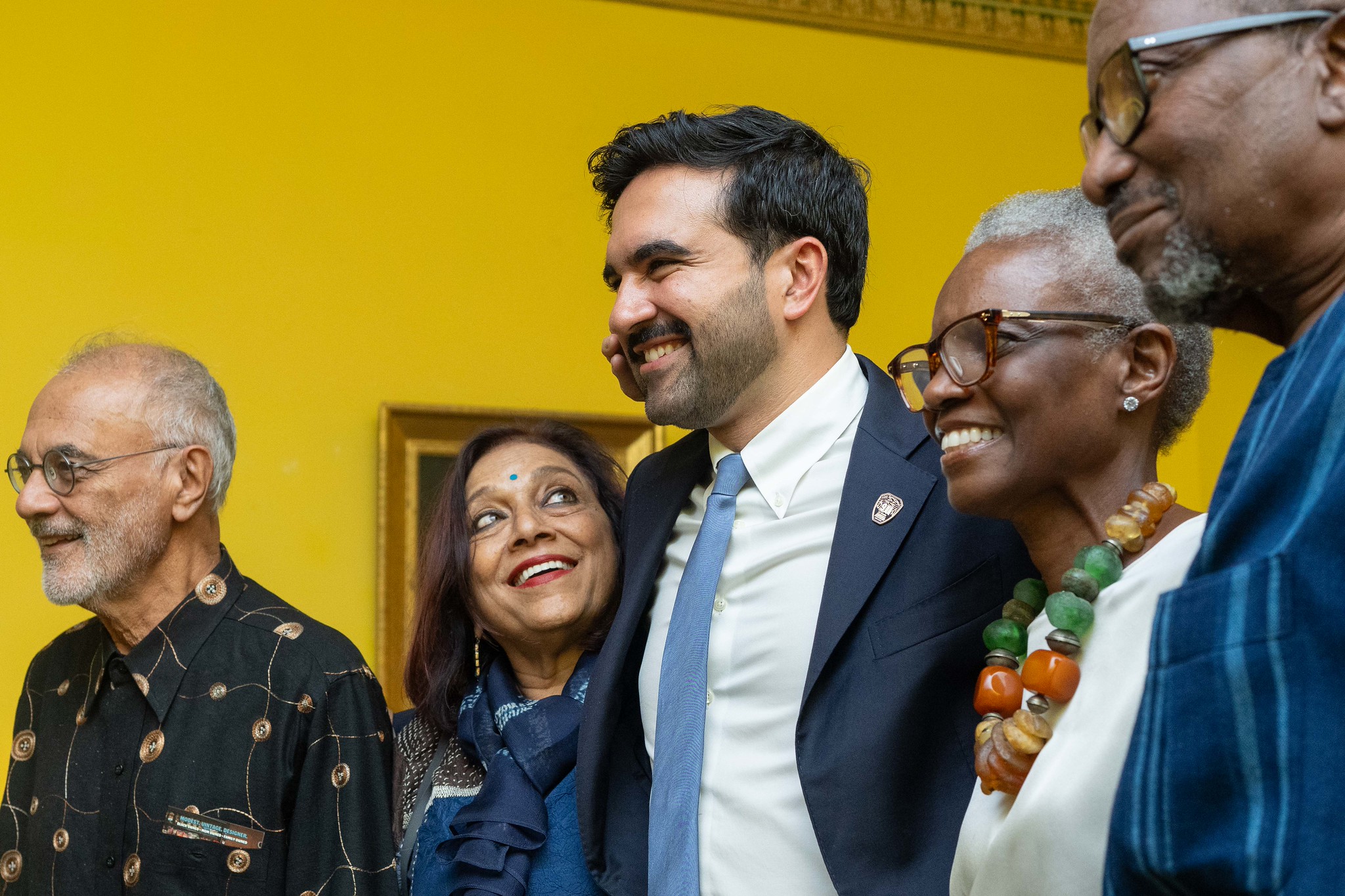
New York City Mayor Zohran Kwame Mamdani host the 2026 African Heritage Reception at Gracie Mansion on Wednesday September 9, 2026. Michael Appleton/Mayoral Photography Office
Mayor Mamdani Prepares New Yorkers for Nor’easter
New Yorkers should prepare for gusty winds, rain and high-tide flooding along the coast
Storm is currently expected to pass offshore, keeping heaviest rain east of New York City
NEW YORK – Mayor Zohran Kwame Mamdani and New York City Emergency Management (NYCEM) are monitoring a nor’easter expected to pass offshore this weekend, bringing gusty winds, periods of rain and coastal flooding to New York City while keeping the storm’s heaviest rain east of the city.
Winds are expected to increase late Friday into Saturday morning, with gusts reaching up to 40 mph. Rain is expected from Friday afternoon through Sunday, with total rainfall of approximately 1 to 1.5 inches over that period. Coastal neighborhoods may experience flooding during high tides, particularly Friday evening and Saturday morning. Conditions are expected to improve Saturday night into Sunday as the storm moves farther offshore.
“While this storm is expected to pass offshore and keep the heaviest rain east of New York City, New Yorkers should still prepare for gusty winds, rain and coastal flooding this weekend,” said Mayor Mamdani. “If you live near the coast, move your car to higher ground or away from streets that regularly flood, and secure anything outside that could be picked up by strong winds. Storm tracks can change, so stay informed and take the simple steps that can keep you and your neighbors safe. For emergency alerts, text NOTIFYNYC to 692-692.”
“We’re keeping a close eye on the Friday evening and Saturday morning high tides, which could bring flooding to low-lying areas on Staten Island’s eastern shore, in the Rockaways and around Jamaica Bay,” said NYCEM Commissioner Christina Farrell. “Winds will pick up late Friday, so bring in or tie down anything outside before then, and if you’re traveling this weekend, allow extra time and watch for ponding on roads. Never drive or walk through floodwater, and never go around traffic barricades. We’re working with the National Weather Service and our partner agencies every day, and we’ll keep New Yorkers updated.”
A high risk of rip currents at area beaches is expected to continue through at least Saturday. Rough surf could cause some beach erosion, though erosion is more likely on Long Island than at New York City beaches. New Yorkers are reminded that City beaches officially closed for the season on Sunday, September 13. Swimming is no longer permitted at public beaches because lifeguards are not on duty.
NYCEM has been closely monitoring the storm and holding daily briefings with the National Weather Service (NWS) and City agencies to review the latest forecast and coordinate preparations.
Storm tracks can change. New Yorkers should take steps to prepare now:
- If you park in a coastal area that frequently floods, move your car to higher ground before Thursday evening’s high tide.
- Secure outdoor items such as furniture, decorations, grills and garbage containers, including anything on balconies, rooftops and patios.
- Clear debris from drains, gutters and stairwells around your home so water can flow freely.
- If you live in a basement or ground-floor apartment in a low-lying area, know more than one way out and make sure exits are clear. If water begins to enter, move to a higher floor. Never remain in or re-enter a flooded basement.
- Never walk or drive through floodwater, no matter how shallow it looks. Six inches of moving water can knock a person off their feet, and one foot of water can sweep away a car.
- Never drive around traffic barricades. They are there for your safety.
- Avoid touching floodwater, which may contain sewage, chemicals or debris.
- Report nonemergency issues to 311 and call 911 if you are in immediate danger.
- If you rely on powered medical equipment, register with your utility provider and keep backup batteries charged.
- Check on neighbors who may need extra help, especially older adults, people with disabilities and anyone in a basement or low-lying home in a coastal area.
Sign up for Notify NYC, the City’s free emergency alert system, by texting NOTIFYNYC to 692-692 or visiting nyc.gov/notifynyc. Basement apartment residents can sign up to receive automated phone call alerts during flooding by visiting nyc.gov/notifynyc and selecting the basement apartment option.
For more coastal storm preparedness tips, visit nyc.gov/beready

New York City Mayor Zohran Kwame Mamdani visits Mama Tingo’s Childcare Center in Washington Heights and holds a press conference with Governor Kathy Hochul and Schools Chancellor Kamar H. Samuels to launch 2-K on the first day of school on Thursday, September 10, 2026. Michael Appleton/Mayoral Photography Office
Mayor Mamdani Appoints Mazin Sidahmed as Executive Director of the Mayor’s Office of Ethnic and Community Media
Sidahmed brings nearly fifteen years of experience in journalism and community media to the administration
NEW YORK — Mayor Zohran Kwame Mamdani today announced the appointment of Mazin Sidahmed as Executive Director of the Mayor’s Office of Ethnic and Community Media.
Sidahmed, co-founder and executive director of Documented, the nonprofit newsroom serving New York’s immigrant communities, brings a wealth of experience in journalism and community media. He will lead paid media placement and marketing efforts across City agencies, advancing the administration’s commitment to ensuring every New Yorker knows about the services and programs available to them – regardless of the language they speak or the community they call home.
The Mayor’s Office of Ethnic and Community Media promotes City services and programs through partnerships with ethnic and community media outlets and community-based organizations and nonprofits serving New Yorkers across the five boroughs. Established by Local Law 83 of 2021, the office is the first mayoral office of its kind in the United States. The law requires each mayoral agency to seek to direct at least 50% of its total advertising spending to ethnic and community media outlets.
“City services only matter if they reach the people who need them. Too often, the people who most need to hear from their government are the least likely to hear from it,” said Mayor Mamdani. “Mazin Sidahmed has spent his career building trusted news for immigrant New Yorkers, in the languages they speak and on the platforms they actually use. He understands that how you reach people matters as much as what you say. I’m proud to welcome him to this administration as we build a government that reaches every New Yorker.”
For many immigrant, multilingual and working-class New Yorkers, a neighborhood paper, radio show or local WhatsApp group is how they learn what is happening in their city. Sidahmed will ensure the City’s advertising reaches New Yorkers where they already are, strengthen partnerships with ethnic and community media outlets, and advance the requirement that City agencies direct at least half of their advertising to community and ethnic media.
“I created Documented to be the connective tissue between immigrant New Yorkers and the often lifesaving services that many are unaware of,” said Sidahmed. “I’m excited to continue this work citywide, while also helping the city’s diverse array of community and ethnic media thrive. I am grateful to Mayor Mamdani for the opportunity to serve the city and can’t wait to get started.”
About Mazin Sidahmed
Mazin Sidahmed is a journalist, media entrepreneur and advocate for local news, immigrant communities and journalism’s role in democracy. He is the co-founder and executive director of Documented, a multilingual nonprofit newsroom serving immigrant New Yorkers in English, Spanish, Chinese and Haitian Creole.
Documented’s community-driven journalism model has made it a nationally recognized standard-bearer for how newsrooms can serve immigrant communities. Through its Building Bridges program, Documented trains newsrooms across the country to adopt that model.
Sidahmed co-chairs the News Futures Gardening Club and co-founded the Immigrant News Coalition, a national collaboration of newsrooms serving immigrant communities across the United States. His work has been recognized by the Edward R. Murrow, Deadline Club, Online Journalism and LION awards. He is the 2024 recipient of the Reporters Committee for Freedom of the Press Local Champion Award.
Before founding Documented, Sidahmed was a reporter at The Guardian and The Daily Star in Lebanon.

New York City Mayor Zohran Kwame Mamdani visits Curtis High School on Staten Island on the first day of school on Thursday, September 10, 2026. Michael Appleton/Mayoral Photography Office
Mayor Mamdani Welcomes Mayors from Around the World to New York City for 2026 Urban 20 Summit
New York City and Los Angeles co-chair three-day summit on housing, climate and migration, kicking off Climate Week NYC
NEW YORK – Mayor Zohran Kwame Mamdani today welcomed mayors from across the United States and around the world to New York City for the 2026 Urban 20 (U20) Mayors Summit, where city leaders will work together on practical solutions to rising housing costs, the climate crisis and migration.
New York City and Los Angeles, led by Mayor Mamdani and Mayor Karen Bass, are co-chairs of this year’s U20. Convened by C40 Cities and United Cities and Local Governments (UCLG), the summit runs from September 19 through 21 and is expected to bring together 25 mayors, along with deputy mayors and senior city leaders representing 34 cities across the G20 countries.
Leaders from Atlanta, Chicago, Denver, Miami, Phoenix, San Diego and Seattle will join counterparts from cities across Canada, Europe, Africa, Latin America and Asia. Over three days, mayors will share the steps their cities are taking to build more affordable housing, protect tenants, lower energy costs, support immigrants, create good jobs and protect residents from extreme heat, flooding and other climate change impacts.
“New York City was built by people who came here from every corner of the world, so there is no better place for the world’s mayors to meet,” said Mayor Mamdani. “This weekend, we are bringing over 25 mayors together to confront the challenges and opportunities before all of us. Working families across the globe are being squeezed by rents that rise faster than paychecks, energy bills that spike every summer and heat waves that can turn an uncomfortable apartment into a dangerous one. New York City is proud to co-chair the Urban 20 and stand with mayors who will not leave those families on their own, no matter where they were born. At a time of division and retreat, our cities are choosing cooperation.”
“From accelerating the building of affordable housing to bold climate action to standing strong with immigrant communities in the face of attacks from the federal government, cities are on the frontlines—and where solutions are put into action,” said Los Angeles Mayor Karen Bass. “Los Angeles is proud to co-chair the 2026 Urban 20 with New York City and bring mayors from around the world together to tackle the challenges our communities face every day. By sharing what works and learning from one another, we can move faster and deliver more for the people we serve. Together, Los Angeles and New York City are making sure the voices of cities are heard—not only in our communities, but at the global table where decisions that shape our collective future are made.”
The summit will close on Sunday with the ratification of a communique outlining a shared agenda for city action. Representatives from national governments, the United Nations and other international organizations will then be invited to respond.
“Whether we lead a city in Africa, Europe, Asia or the Americas, mayors from around the world see many of the same pressures on our residents: rising costs, extreme heat, housing insecurity and displacement,” said Mayor Yvonne Aki-Sawyerr of Freetown, Co-Chair of C40 Cities, and MMC Founding Leadership Board Member. “But cities are also where solutions are being delivered. We want young people to have real opportunities at home, and we want climate change to never be the reason they have to leave. By working together, sharing what works and investing in a just transition, we can tackle the climate crisis while creating jobs, improving lives and making our communities more resilient. The message from mayors in New York will be clear: give cities the tools and resources to act, and we will deliver.”
“The spirit we need to carry forward is one of cooperation over division, solidarity over isolation and shared responsibility for protecting our communities,” said Mayor Ugur Ibrahim Altay of Konya, President of United Cities and Local Governments (UCLG). “A stronger multilateral system is needed. It will need to trust cities, work with them and design solutions that can be delivered through them. That is the present we are shaping every day and the future we are committed to delivering.”
The U20 Summit opens a week of city climate leadership in New York, as mayors join leaders from government, business and civil society at Climate Week NYC, which runs from September 20 through 27. Throughout the week, C40 mayors will advance work on extreme heat and weather resilience, clean air, sustainable housing and other climate-related issues. The week will also set the stage for COP31, where mayors will continue pressing national governments to match the ambition of their cities.
More information about the U20 is available at urban20.org.
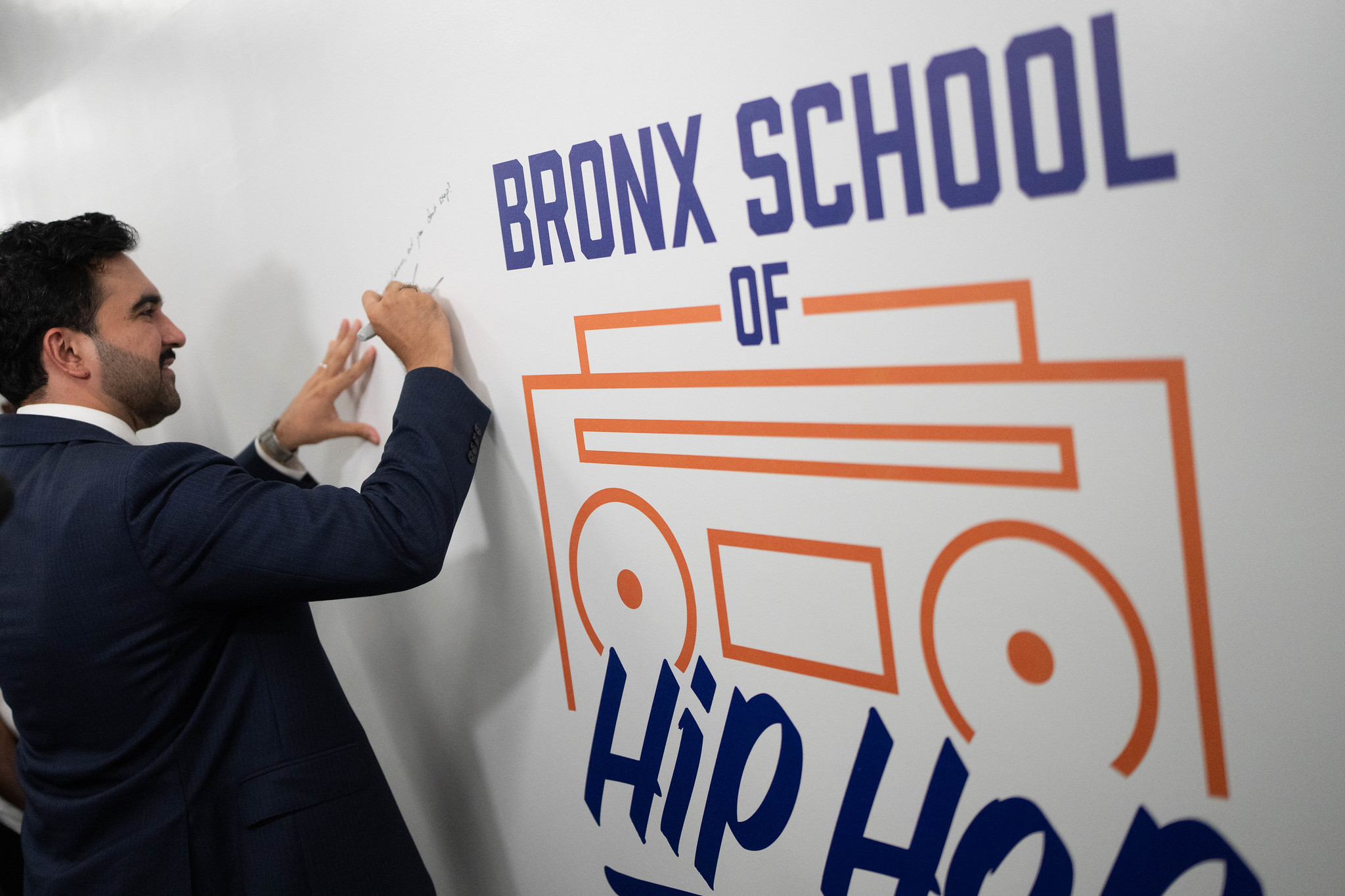
New York City Mayor Zohran Kwame Mamdani visits the newly opened Bronx School of Hip Hop on the first day of school on Thursday, September 10, 2026. Michael Appleton/Mayoral Photography Office
REMARKS AS PREPARED: MAYOR MAMDANI DELIVERS REMARKS AT U20 OPENING SESSION
Mayor Zohran Kwame Mamdani: Good afternoon. It is my great pleasure to welcome you to New York City. Many of you have traveled thousands of miles to join us. We are so delighted that you did. I want to thank those who organized this conference, the many who have planned the logistics needed to bring the world together, and all those who continue to believe — as I do — in the deep value of international cooperation. And I want to acknowledge those who have convened us: C40 Cities, United Cities, UCLG and the Mayor’s Migrations Council.
I have been thinking these past days about the world gathering here in New York City; how no matter where you come from, you will find something here that feels like home. It is my favorite thing about New York — how it contains a million worlds in one.
Visitors from China can find food that tastes like what they grew up eating in not one but three Chinatowns. Visitors from Turkey or Korea can dip into baths that both remind them of Istanbul or Seoul and immediately cure jet lag. And if you are the Mayor of Manchester, you can stand shoulder to shoulder with New Yorkers in a crowded bar as your club — whichever one you support — puts in a performance markedly worse than Arsenal’s.
In all seriousness, I have been thinking too about how New York City seeks to understand these many worlds, how we display them, and how we share them with those we are so delighted to welcome to our city. In short, my friends, I have been thinking about the concept of the museum. Each of our cities have world-class museums that we are so proud of. Amsterdam has the Rijksmuseum. Jakarta has the Elephant Museum. Paris has Les Invalides.
New York is no exception. People travel thousands of miles to see the masterpieces housed at the Met, the incredible artifacts displayed at the New York Transit Museum, the history and fauna brought to life at the Museum of Natural History.
And yet I know that I am speaking to a collection of leaders devoted to a shared purpose: preserving the museum and the city as distinct concepts. All around us, there are enormous forces seeking to flatten the distance between the two.
There is the cost-of-living crisis, which we know is not constrained by borders. When New Yorkers cannot afford to send their children to childcare, when Barcelonians cannot afford a home in the city, when Torontonians cannot afford the cost of public transit, our cities no longer remain places that working people can live and shape, but museums that we observe from afar, great monuments to a once-joyful past that perhaps we can visit one weekend a month.
There is the growing impact of the climate crisis. When rising sea levels make flooding a regular occurrence in low-lying parts of the five boroughs; or when soaring temperatures push Freetown residents out of neighborhoods where they have lived for generations; or when you cannot endure a summer in Rome without air conditioning, the working people leave and all that remain are the wealthy who can afford these costs, and marble statues that do not sweat under the sun.
And we must each contend with a moment where authoritarianism and far-right movements are ascendant, when anti-democratic sentiment is on the rise. When leaders both in the United States and overseas make it their mission to demonize and terrorize immigrants, when they seek to accumulate political capital by targeting our LGBTQIA+ neighbors, when they roll back the freedoms that have been hard-won by the press or those fighting for reproductive and civil rights, our cities become darker, lonelier places and our monuments to the progress of the past come to possess a cruel irony.
We cannot allow this to come to pass. The work of making our cities belong to everyone, no matter how much they earn or where they come from, is a shared purpose we are all so fortunate to hold.
From Konya to Copenhagen, Milan to Mexico City, what an immense opportunity we possess to expand freedom to as many people as possible, to prove that democracy does not live only in the ballot box but in material improvements we deliver to our constituents’ lives. And to show that good governance is not an abstract idea, but rather a force felt each time a bus runs faster, each time a roof does not leak when it rains and each time someone can afford a dignified life in the city they love.
I am so grateful that we are together for the next few days to discuss this work because what we are all trying to achieve is deeply interconnected. Solidarity is not just a slogan, it is a practice; and as we hold panels, conversations and plenary sessions, my sincere hope is that this conference marks only the beginning of a new era of cooperation and emulation.
Let us learn what succeeded and failed from the initiatives those in this room have led. Let us ask questions — and then take what we learned back to our cities. Let the relationships we form here endure for years to come and let us lean on one another in times of success and adversity alike.
The people of the world look to our cities for greatness. They expect it in the art we create, the architectural marvels we build, the coexistence across cultures that exists with unparalleled harmony in the urban centers we lead.
Together, we can create a new expectation of public greatness from our cities. When the world is straining to find a way to overcome inequality, to defeat authoritarianism, to chart a future of progress, let them look to our cities for proof of all that is possible.
After all, the global challenges we face cannot be solved in isolation. Our cities can and must be laboratories of innovation — places where new initiatives are tested, developed and then expanded at larger scale. Places that set new standards in how to serve the people of the world.
It is an enormous privilege to welcome you to New York City and to do this work together. Thank you.
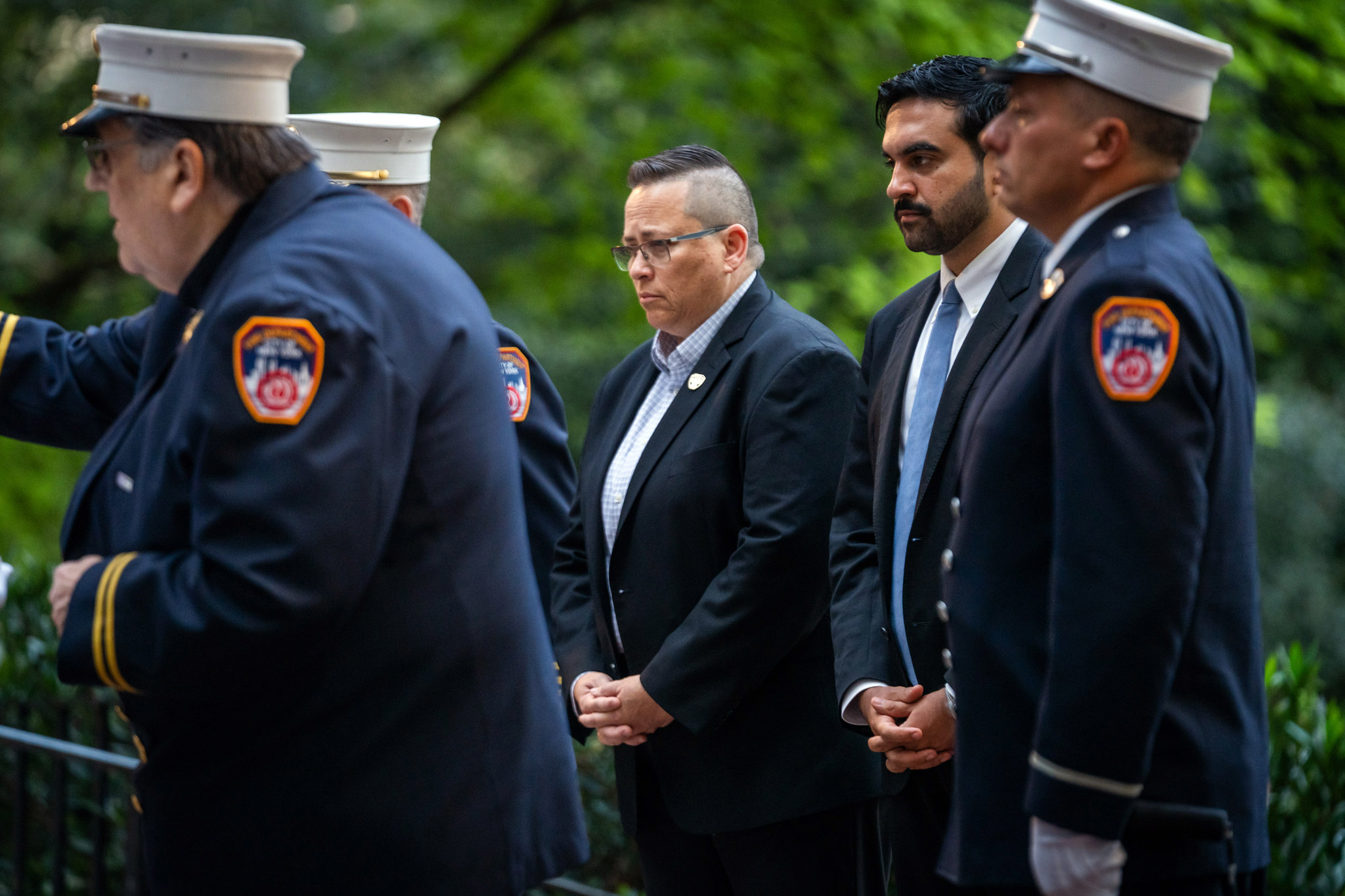
Mayor Mamdani attends the New York City Fire Department (FDNY)’s wreath laying memorial event. Fireman’s Monument, Manhattan. Friday, September 11, 2026. Credit: Ed Reed/Mayoral Photography Office.
Mayors from Around the World Unite to Demand the Power to Deliver for Their Cities
Leaders representing cities across the world ratify communique calling on G20 countries to give cities the authority and resources to deliver for their residents
NEW YORK – This weekend, Mayor Zohran Kwame Mamdani joined mayors from across the United States and around the world to close the 2026 Urban 20 (U20) Mayors Summit, where city leaders ratified a communique outlining what cities are already doing to confront the housing affordability crisis, climate change and migration — and what national governments must do to give cities the tools to do more.
New York City and Los Angeles co-chaired this year’s U20, convened by C40 Cities and United Cities and Local Governments (UCLG). Over three days, 25 mayors, deputy mayors and senior city leaders representing 34 cities across G20 countries met in New York to share what is working in their cities and establish a common agenda for national governments. Representatives from national governments, the United Nations and other international organizations were invited to respond to the communique following its ratification.
The communique centers on three priorities: expanding access to secure, dignified and affordable housing; confronting the climate crisis through a clean and just energy transition and stronger urban resilience; and protecting immigrant and displaced communities while managing migration with dignity and humanity.
“People experience government through the rent they pay, the energy bill on their kitchen table, whether their children are safe when they leave the house and whether their family can build a good life,” said Mayor Mamdani. “That is why it matters that mayors from around the world came together in New York to say that cities need the power and resources to deliver for the people we serve. We know what is possible when government works for working people. Give cities the tools to meet these challenges and we will rise to the occasion.”
Across each priority, the message from mayors was clear: Cities are already doing the work. National governments must give them the authority and resources to do more.
- On housing: U20 cities called on national governments to give local governments greater authority over their housing markets, including through tenant protections, rent stabilization and rent control, limits on short-term rentals and inclusionary zoning. Mayors also called for predictable public funding and direct access to housing finance through multilateral development banks, allowing cities and nonprofit housing institutions to access resources without having to go through national governments first.
- On climate: Mayors highlighted the central role cities play in cutting emissions and protecting residents from extreme heat, flooding and other climate hazards. They called for cities to be eligible recipients of multilateral climate funds, to have a formal role in national climate and energy planning, and to have access to the meteorological and public health data needed to operate early warning systems and protect residents.
- On migration: The communique rejects the political narratives that stigmatize newcomers and recognizes the contributions migrants make to cities and economies around the world. Mayors called for dedicated funding for reception and integration, a meaningful role for cities in shaping migration policy, and coordinated access to housing, health care, education and work for migrants and displaced people, in partnership with the community already doing this work.
The communique represents cities serving more than 500 million people — over a third of global GDP — and calls on mayors to stand with locally elected leaders facing threats, intimidation, political persecution or removal from office for exercising their democratic mandate.
“The 2026 Urban 20 has shown what cities can accomplish when we come together around the challenges our communities face every day. From housing affordability and climate action to supporting immigrant communities and creating good jobs, mayors are on the front lines, developing practical solutions and delivering results. In Los Angeles, we are putting that work into action — from going coal-free and doubling EV chargers citywide to creating capacity for half a million new homes through our historic rezoning program,” said Los Angeles Mayor Karen Bass. “The U20 Communiqué turns that shared experience into a collective call for action, giving cities the tools, resources, and partnerships they need to go further and faster. Los Angeles is proud to have co-chaired this year’s U20 with New York City, and we will carry this work forward with cities around the world.”
“Mayors came to New York from different countries and different circumstances, but the pressures facing our residents are remarkably similar: rising costs, extreme heat, housing insecurity and displacement,” said Mayor Yvonne Aki-Sawyerr of Freetown, Co-Chair of C40 Cities. “This communiqué turns that shared experience into a shared agenda for action. Cities are ready to deliver. Give us the tools and resources to act, and we will.”
“The spirit we need to carry forward is one of cooperation over division, solidarity over isolation, and shared responsibility for protecting our communities,” said Mayor Ugur Ibrahim Altay of Konya, President of United Cities and Local Governments (UCLG). “A stronger multilateral system is needed. It will need to trust cities, work with them and design solutions that can be delivered through them. That is the present we are shaping every day and the future we are committed to delivering”
“Public service delivery is about shaping communities in which people can live with dignity. That is precisely why the three priorities of this U20 cycle matter: they speak directly to the conditions that shape people’s daily lives and to the capacity of our cities to protect dignity, opportunity and belonging,” said Emilia Saiz, Secretary General of UCLG.
The close of the U20 Summit opens a week of city climate leadership in New York as mayors join leaders from government, business and civil society for Climate Week NYC, which runs from September 20-27. Throughout the week, C40 mayors will continue work on extreme heat and weather resilience, clean air and sustainable housing and set the stage for COP31, where cities will continue pressing national governments to match their ambition.
The full communique is available here. More information about the U20 is available at urban20.org.
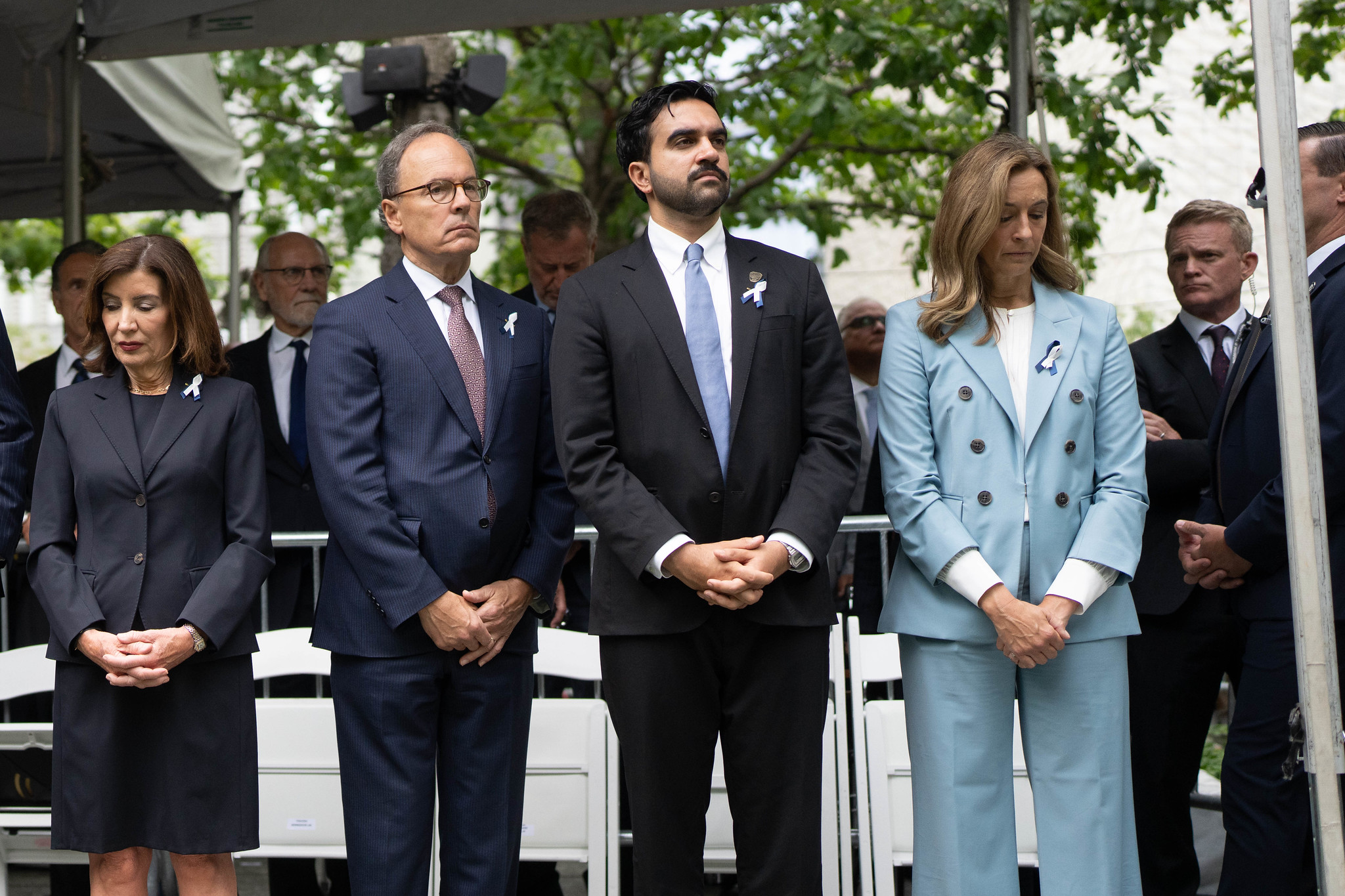
New York City Mayor Zohran Kwame Mamdani attends the official 9/11 25th anniversary memorial event at the National September 11 Memorial & Museum on Friday, September 11, 2026. Michael Appleton/Mayoral Photography Office
Mamdani Administration, NYCHA and Brooklyn Navy Yard Unveil Model Sustainability Apartment for Public Housing
New model apartment gives residents, builders and property managers a firsthand look at clean energy technologies being developed across NYCHA
Showcase features heat pumps, induction stoves, high-efficiency windows and radiant heat panels as NYCHA brings cleaner, more efficient technologies to its apartments

NEW YORK – Yesterday, Mayor Zohran Kwame Mamdani, Deputy Mayors Leila Bozorg and Julie Su, New York City Housing Authority (NYCHA) Chief Executive Officer Lisa Bova-Hiatt and Brooklyn Navy Yard Development Corporation (BNYDC) President and CEO Lindsay Greene unveiled a model sustainability apartment showcasing the technologies that will help build a cleaner, healthier and more comfortable future for public housing residents.
Located at the Brooklyn Navy Yard, the model apartment brings together technologies that are being incorporated into NYCHA modernization projects across the city, including window heat pumps, 120-volt induction stoves, triple-pane insulated casement windows and infrared heat panels.
The apartment will give NYCHA residents, design-build teams, property managers and other stakeholders an opportunity to see and experience the technologies firsthand as they plan and carry out future public housing renovations.
The showcase builds on the 2026 NYCHA Sustainability Agenda, which sets a five-year goal of transitioning 20,000 NYCHA apartments from inefficient, fossil fuel-based heating systems to clean, efficient heat pumps and installing modern induction stoves in 10,000 apartments. The agenda also includes goals around energy efficiency, electric vehicle charging, solar power and climate resilience.
“For too long, New Yorkers living in public housing have been asked to wait for the investments they deserve. We are changing that by putting NYCHA at the forefront of climate innovation. The technologies in this model apartment show how we are delivering a stronger, more sustainable future for public housing. Cleaner heat, better cooling and modern appliances can make homes more comfortable while helping us build a city that is ready for the climate challenges ahead,” said Mayor Mamdani.
“The future of public housing is green,” said Deputy Mayor for Housing and Planning Leila Bozorg. “With the heat pumps, induction stove, and other technology on display at the model sustainability apartment, we’re making it easier than ever to see examples of the improvements available to NYCHA residents as part of comprehensive renovations at their properties. We’ll keep fighting for the investment that NYCHA needs in order to bring these innovative appliances to even more New Yorkers.”
“This model apartment shows residents exactly what modernization looks like in practice, and it shows our partners how to build it at scale,” said Deputy Mayor for Economic Justice Julie Su. “NYCHA households deserve reliable heat, working appliances and homes that don’t cost a fortune to run, and this administration is putting the capital and the technology behind that goal.”
“NYCHA is building a future where public housing is not only preserved, but transformed through innovation, sustainability, and investments that improve the quality of life for residents,” said NYCHA Chief Executive Officer Lisa Bova-Hiatt. “This model apartment gives our partners, stakeholders, and residents the opportunity to see that future taking shape and to experience firsthand the technologies that will help us create healthier, more efficient, and more resilient homes. I thank Mayor Mamdani and his administration for their commitment to advancing this work, and the Brooklyn Navy Yard for generously providing a space where we can bring this vision to life and continue exploring the next generation of solutions for NYCHA residents.”
“At the Brooklyn Navy Yard, we’re proud to support this effort that demonstrates how investments in sustainability and innovation can create healthier, more comfortable homes for public housing residents,” said Lindsay Greene, President and CEO of the Brooklyn Navy Yard Development Corporation. “These technologies and appliances demonstrate how local government can create opportunities for businesses to develop solutions with the potential to benefit residents and buildings across New York City and beyond. This showroom brings that work to light, giving residents, advocates, and policymakers a tangible way to see the benefits of energy efficiency and resilient building improvements. When we improve the energy efficiency of any building in New York City, it benefits all New Yorkers, and creates opportunities beyond as well.”
“NYCHA’s approach to modernization is grounded in a simple principle: we must invest in technologies that are innovative, but also proven, reliable, and capable of addressing the challenge of installing new efficient systems in existing buildings as we modernize heating systems across our portfolio,” said NYCHA Chief Asset and Capital Management Officer Dylan Baker-Rice. “The technologies showcased here represent that approach and demonstrate how thoughtful capital investments can deliver both dependable heating and cooling systems and meaningful sustainability improvements. By bringing these technologies together in one place, we can give our project partners, property managers, and other stakeholders a clear understanding of how these solutions can be integrated into NYCHA’s capital and modernization projects and scaled to serve more residents across NYCHA and greater New York.”
“NYCHA’s 2026 Sustainability Agenda sets an ambitious course for creating more energy-efficient, resilient, and sustainable homes for our residents, and the technologies showcased in this model apartment bring those goals into focus,” said NYCHA Vice President for Sustainability Siobhan Watson. “From transitioning 20,000 apartments to clean heating and cooling to installing 10,000 induction stoves, we are taking concrete steps to reduce our reliance on fossil fuels, lower energy consumption, and build a more sustainable public housing portfolio. This showroom allows us to demonstrate what that future can look like today as we continue implementing the innovations that will help NYCHA meet its sustainability goals by 2031.”
“Clean energy technologies such as heat pumps, induction stoves, and high-efficiency windows are critical in advancing New York State to a clean energy economy,” said New York Power Authority President and CEO Justin E. Driscoll. “Our collaboration with New York City and NYSERDA on innovative programs like Clean Heat for All and the Induction Stove Challenge improve NYCHA housing units and demonstrate an effective path forward for State-City partnerships. Through these innovative programs, we are bringing cleaner, more efficient technologies to city apartment dwellers so that they can stay warm in the winter and cool in the summer and make meals at home in a more efficient way using modern technology.”
“The unveiling of new apartments at the Brooklyn Navy Yard is an example of how New York is harnessing innovation and strong public-private partnerships through the Clean Heat for All and Induction Stove Challenges to accelerate adoption of next-generation technologies,” said NYSERDA President and CEO Doreen M. Harris. “NYSERDA is proud to work alongside our partners at NYCHA and NYPA to advance clean energy solutions that can improve comfort, reduce energy use and deliver lasting benefits for New Yorkers.”
Many of the technologies featured in the model apartment were developed through procurement initiatives that use the Authority’s purchasing power to spur innovation and develop products specifically suited to the needs of public housing.
The technologies on display include:
- Window heat pumps: Packaged window heat pumps from Midea and Gradient, developed through the Clean Heat for All Challenge, are being incorporated into modernization projects as NYCHA works toward its goal of installing heat pumps in 20,000 apartments.
- High-efficiency windows: Intus casement windows designed with sleeves specifically suited for window heat pumps will help support their installation in NYCHA apartments.
- Induction stoves: Copper is developing a battery-operated electric induction stove that can be operated using standard 120-volt, 20-amp outlets, allowing induction cooking to be brought to older buildings without requiring major electrical upgrades. The company will produce 100 units for a pilot evaluation before broader rollout.
- Radiant heating panels: Far-infrared radiant (FIR) heating panels provide direct warmth without heating the surrounding air.
The technologies are in different stages of development and deployment. Window heat pumps are installed or planned for installation at Woodside Houses, Morrisania Air Rights, Claremont Consolidated, and Beach 41st Street Houses, as well as at Bay View Houses and Campos Plaza II, which are undergoing comprehensive renovations through the Permanent Affordability Commitment Together (PACT) program. FIR heating panels are currently installed and providing heat to residents of Tilden Houses.
Yesterday’s announcement marks the latest milestone of the Clean Heat for All Challenge and the Induction Stove Challenge, a partnerships between NYCHA, the New York State Energy Research and Development Authority (NYSERDA) and the New York Power Authority (NYPA) to develop new electrification products that can better serve the needs of existing multifamily buildings.
The model apartment will continue to be updated as new products become available, creating a living showcase for the technologies that can help modernize NYCHA homes.
Investing in Public Housing
These sustainability improvements are part of the Mamdani administration’s broader commitment to NYCHA. The City’s Fiscal Year 2027 capital plan includes $5.6 billion for NYCHA over five years, the largest capital commitment to the Authority in recent history.
The budget also includes $374 million in combined expense and capital funding to turn over vacant apartments for new residents, $42.5 million to launch a new Critical Repairs Initiative modeled on the Ombudsperson Call Center, and $5.9 million to repair and maintain elevators, among other investments.
New York City Mayor Zohran Kwame Mamdani attends the official 9/11 25th anniversary memorial event at the National September 11 Memorial & Museum on Friday, September 11, 2026. Michael Appleton/Mayoral Photography Office
Mayor Mamdani Wins Record $131.5 Million From DoorDash for Delivery Workers
Largest Worker Settlement in NYC History
Largest Settlement for Delivery Workers in American Municipal History
Relief for More Than 260,000 Workers, Stronger Protections Against Unemployment
NEW YORK, NY — Today, Mayor Zohran Kwame Mamdani, Deputy Mayor for Economic Justice Julie Su and Department of Consumer and Worker Protection (DCWP) Commissioner Samuel A.A. Levine announced a historic $131.5 million enforcement action against DoorDash for systematic violations of New York City’s Delivery Worker Laws.
The settlement will deliver more than $115 million directly to delivery workers and more than $16 million in civil penalties and costs. It will provide relief to more than 260,000 workers who were underpaid by DoorDash, including workers who were not paid at all or were paid late for work they had already performed.
This is the largest worker settlement in New York City history and the largest settlement involving food delivery workers in the United States.
“When a worker earns a wage, they deserve to be paid that wage — not tomorrow, not after a lawsuit, but on time and in full,” said Mayor Zohran Kwame Mamdani. “DoorDash underpaid more than 260,000 workers, and today we are getting that money back. This is what it looks like when City government stands with working people: We find the violations, we enforce the law and we make sure workers get what they’re owed. No corporation is above the law, and this administration will keep fighting until every worker gets the pay and protections they deserve.”
“The size of this settlement shows the damage done to workers by wage theft. But it also shows that enforcement matters. And in this administration, if you steal workers’ wages, it’s not enough to just pay what you should have paid in the first place. After this, DoorDash workers will also have the power to protect their rights going forward through the new compliance monitoring program,” said Deputy Mayor for Economic Justice Julie Su. “We know that giving workers power in the workplace to protect themselves is critical and this settlement does just that.”
The action builds on the Mamdani administration’s broader effort to vigorously enforce the laws that protect delivery workers. The administration has already secured more than $104 million in additional tips and $725 million in increased wages for delivery workers since January.
“Today, New York City’s delivery workers are showing that opaque algorithms will not have the final word when it comes to how much they are paid for the hard work they do,” said DCWP Commissioner Samuel A.A. Levine. “With this record-breaking settlement and innovative compliance monitoring strategy, the Mamdani administration is demonstrating what it looks like to build an economy that puts working people first.”
The settlement is about more than recovering money that workers are owed. It also puts in place a new monitoring system ensuring DoorDash follows the law going forward – one that gives workers a direct role in identifying violations and gives the City data it needs to act quickly.
DCWP is partnering with Workers Justice Project and the Workers’ Algorithm Observatory to develop software that will allow workers to share their DoorDash trip and earnings data directly with the agency. The new worker-driven compliance system will give DCWP an independent way to identify underpayment and other violations rather than waiting for workers to discover problems after they have occurred.
The effort will be led by DCWP’s new Research and Analytics Division, which uses data science, technology and economic analysis to strengthen the City’s ability to uncover corporate violations and get relief to New Yorkers.
Workers will begin receiving payments this fall. More information is available at nyc.gov/doordash.
Details of the Case
DCWP’s citywide investigation began after dozens of workers reported that DoorDash had failed to pay them or had paid them late for work they had performed. Workers Justice Project helped many of these workers file complaints with DCWP.
The agency then expanded the investigation, using detailed pay data to identify additional violations of the City’s Minimum Pay Rate. DCWP found that DoorDash failed to pay thousands of workers at all for work they had performed and failed to pay thousands more on time. These workers will receive compensation calculated at approximately 200% of the amount they were underpaid.
For example, a worker who was owed $1,000 but received no payment will receive $3,000. A worker who was paid $1,000 later than allowed under the law will receive $2,000.
DCWP also found that DoorDash violated the Minimum Pay Rate. Although DoorDash increased hourly pay to the Minimum Pay Rate in December 2023, the company excluded several categories of trip time and on-call time when calculating compensable time.
DCWP will allocate relief to workers who experienced Minimum Pay Rate violations proportionately based on trip time.
As part of the investigation, DCWP obtained terabytes of data from DoorDash, including billions of rows documenting the company’s treatment of delivery workers. DCWP’s Research and Analytics Division analyzed the data to identify more than 152 million individual payment transactions and 110 million working hours connected to the investigation.
A New Model for Compliance
The settlement does more than compensate for past violations. It establishes a worker-driven compliance monitoring program designed to help the City identify and address violations quickly.
Government enforcement can take time, while workers experience violations in real time. The new program will allow DCWP to monitor DoorDash’s compliance with requirements governing minimum pay, maximum trip distances, trip disclosures, pay transparency and tip transparency.
- Monthly Data Reports: DoorDash must submit detailed data reports to DCWP every month for three years. The agency will use those reports to audit the company’s compliance with the law and the terms of the settlement.
- Worker-driven Data Collection: Workers Justice Project and the Workers’ Algorithm Observatory will develop software that allows workers to capture the information DoorDash presents to them about their trips and pay and share that information with City government. Workers Justice Project will conduct outreach to workers about the technology and their rights under City law.
- The New York Community Trust will issue grants to both organizations to support the collaboration throughout the three-year monitoring period. DoorDash is prohibited from preventing or penalizing workers for using the tool.
- Software Updates: DoorDash will be required to make software updates to prevent the company from offering a delivery to a worker in New York City unless that worker’s time is being recorded as compensable on-call time or trip time. The updates will also provide workers with additional information about their work time and pay and ensure DoorDash complies with the Minimum Pay Rule for “batched” trips, ending the unlawful practice of paying a lower rate for certain legs of a trip.
- Internal Controls: DoorDash must adopt internal controls to address the problems that led to violations and prevent future violations. The company must preserve records demonstrating compliance.
- Internal Compliance Monitor: DoorDash’s internal Compliance Monitor will oversee all aspects of the company’s compliance with the settlement. The monitor must document instances of noncompliance, the company’s response and how each issue was resolved. The monitor must also submit an annual report and sworn statement to DCWP certifying compliance with each requirement of the settlement and disclosing and correcting any instances of noncompliance.
About the Minimum Pay Rate
Since DCWP began enforcing the Minimum Pay Rate in December 2023, pay for food delivery workers has increased substantially alongside consumer demand.
The Minimum Pay Rate is adjusted annually for inflation and is currently $22.13 per hour, excluding tips.
How Workers Will Receive Relief
Workers do not need to file a claim or submit evidence to receive payment. DCWP has identified all individuals owed money through its analysis of DoorDash’s records.
In late October, DCWP’s Settlement Administrator will send personalized emails to each worker who experienced an underpayment from April 22, 2022 to June 28, 2026. Emails will be sent to the last email address the worker used with DoorDash and will state the amount the worker is owed.
Workers will be able to choose between an electronic payment and a check by mail. Workers who do not make a selection will receive a check at their last-known address.
A hotline will be available beginning at the end of September for workers with questions or who need to update their email address.
A second round of payments will be made to a small group of DoorDash workers in early 2027 because DoorDash is still correcting elements of the compensable-time calculation logic that caused additional underpayments. This issue may affect workers using DashLink who are entitled to the Minimum Pay Rate.
Delivery workers who believe their rights are being violated can file a complaint with DCWP at nyc.gov/workers.
“Props to Mayor Mamdani, Deputy Mayor Su, Commissioner Sam Levine, and the great team at DCWP on delivering this historic $131.5 million win for delivery workers,” said Brad Lander, former New York City Comptroller and Council Member. “When we passed the Minimum Pay Rate law in 2021, inspired by the organizing of Workers Justice Project, we knew it would take diligent, creative, aggressive enforcement. The Mamdani Administration is showing powerfully what it looks like to govern on behalf of workers.”
“This settlement reflects a tremendous amount of work and advocacy on behalf of workers, and I am proud to stand with Mayor Mamdani and Commissioner Levine as we put all app-based companies on notice that flouting New York City’s laws has consequences, and that this City will make sure workers get their due,” said Majority Leader Shaun Abreu. “This record-breaking enforcement action puts more money back in the pockets of workers who earned it and were owed it, and that will make a real difference for working-class families across our city. I was proud to sponsor and pass the tipping bills that have brought more than $104 million in additional tips to delivery workers. I look forward to our continued partnership to make sure delivery workers get every cent they’ve earned.”
“Amidst a cost of living crisis, delivery workers deserve to rest assured that work completed means compensation earned,” said Council Member and Consumer and Worker Protection Chair Harvey Epstein. “DoorDash must be held accountable for violating minimum wage laws, and withholding wages entirely for hours of work New Yorkers performed over the course of weeks or even months. I commend the Mayor and the Department of Consumer and Worker Protection for implementing systems to empower workers, particularly through partnership with the Workers Justice Project that will allow delivery workers to report their deliveries and pay data directly with DCWP. By increasing transparency between workers and the government, we can ensure robust support for workers against companies who take advantage of them.”
“DoorDash thought they could shortchange their workers and get away with it. Not on our watch,” said Council Member Sandy Nurse. “As DoorDash pulls in record profits, the workers who make them rich are entitled to their fair share. I commend this administration on achieving this historic settlement for workers.”
“For a long time, our deliveristas have gotten the short end of the stick when it comes to their wages,” said Council Member Jennifer Gutiérrez. “Having complex systems to navigate, while also trying to make ends meet, doesn’t always allow these low-wage workers to seek justice for the compensation they deserve from big corporations. I’m happy that the Mamdani administration and DCWP led this effort, making it clear that workers and their livelihoods are paramount.”
“This historic settlement is a major victory for thousands of Deliveristas across New York City who have been organizing for basic rights and building their own union, Los Deliveristas Unidos,” said Ligia Guallpa, Executive Director of Workers’ Justice Project. “For too long, DoorDash treated workers as disposable—stealing their wages and deactivating them, leaving families without the income they rely on. This settlement puts money back in workers’ pockets and holds DoorDash accountable. We are grateful to DCWP for delivering this historic settlement and standing with Deliveristas in this fight. We celebrate this victory, but the fight continues: we will keep organizing for job security, safer working conditions, higher pay and respect.”
“For many years, we delivery workers have been out here every day, working more than 80 hours a week, delivering food and medicine to keep New York City moving,” said Rosendo Tacam, delivery worker and leader of Los Deliveristas Unidos and member of Workers’ Justice Project. “I gave DoorDash everything I had, and then they deactivated me and didn’t pay me for my last week of work. I felt angry and disrespected. When I joined Los Deliveristas Unidos, I realized I was not alone. I filed my complaint with DCWP because I knew we had to speak up. Today, seeing delivery workers get justice is proof that when we organize, we can make companies respect us as the essential workers we were—and continue to be—for our city. Thank you to NYC DCWP for standing with us and defending our rights. We will keep fighting for everything we deserve, because we are the ones delivering what New Yorkers need—rain, snow or shine.”
“We’re glad to serve as an independent check on what platforms report,” said Andrés Monroy-Hernández, founding member of the Workers’ Algorithm Observatory and Associate Professor of Computer Science at Princeton University. “The people doing the work are often the best source of evidence about how these systems actually operate.”
“The New York Community Trust is honored to provide the stewardship, oversight and grantmaking infrastructure needed to ensure these funds are managed responsibly and deployed effectively to benefit the city’s delivery workers,” said Carrie Trowbridge, Interim President and General Counsel of The New York Community Trust. “This initiative highlights the important role that community foundations can play in helping agencies translate settlement recoveries into lasting public benefit.”
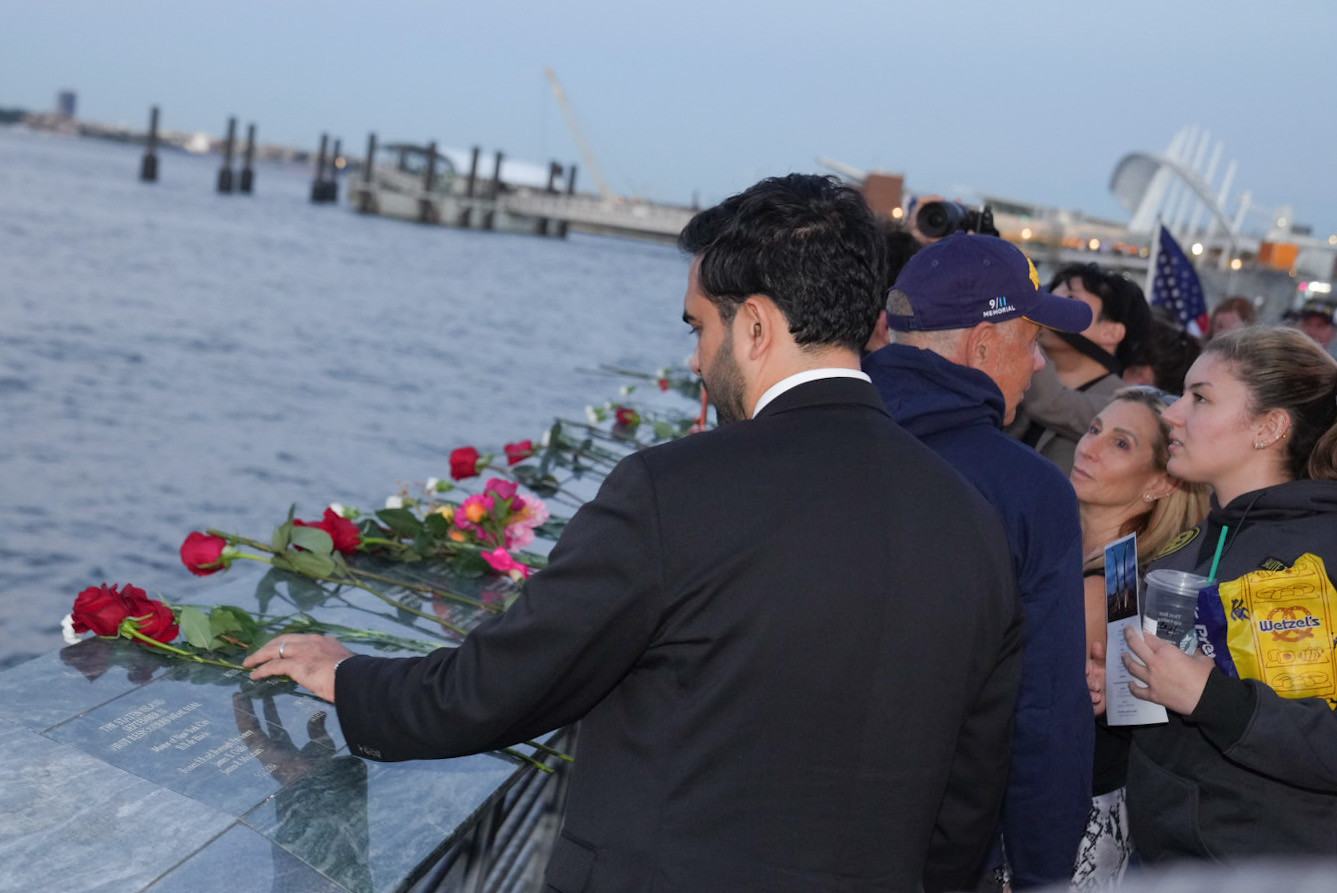
Mayor Mamdani attends Postcards Memorial, a remembrance ceremony honoring Staten Island residents who lost their lives in the 9/11 attacks. Friday, September 11, 2026. Credit: Ed Reed/Mayoral Photography Office.
Mamdani Administration Advances Plan to Build Nearly 4,000 New Homes at 100 Gold Street
City-owned Lower Manhattan site will become mixed-income housing, including approximately 1,000 permanently affordable, rent-stabilized homes, an older adult center, public open space and community amenities
Project will nearly double the number of permanently affordable homes built in Manhattan Community District 1 over last decade – at no cost to the City
NEW YORK – Today, New York City Mayor Zohran Kwame Mamdani announced the start of the public review process on the redevelopment of 100 Gold Street, taking a major step toward transforming a City-owned site in Lower Manhattan into approximately 4,000 new homes, including around 1,000 permanently affordable, rent-stabilized homes.
The updated plan adds roughly 300 additional homes to previous estimates, reflecting the Mamdani administration’s commitment to building housing at the scale that New York City’s housing crisis requires.
Following a competitive request for proposals process, the city selected GFP Real Estate to develop the site. The project will also include a new older adult center to replace the existing facility currently operated by Hamilton-Madison House, approximately 40,000 square feet of public realm improvements and a 40,000-square-foot publicly accessible commercial fitness center with community programming and other neighborhood amenities. The new mixed-use building will utilize cross-subsidy in order to be completed at no cost to the City, with proceeds used to relocate City agencies currently operating from the aging building into modern office space.
“New York’s housing crisis demands that we build more – and that we use every tool we have to do it. That means looking at land the City already owns and asking how it can serve New Yorkers better. At 100 Gold Street, we have an opportunity to turn an aging government building into nearly 4,000 new homes, including approximately 1,000 that will remain permanently affordable, while delivering new spaces for the community,” said Mayor Mamdani. “Day by day, block by block, and building by building, we are building a city that New Yorkers can afford to call home.”
“Where better to deliver thousands of new homes than the former site of our City’s housing agency? The redevelopment of 100 Gold will be a major step forward in creating the housing New Yorkers need — including permanently affordable, rent-stabilized homes — in addition to new community space, at no cost to the City. I’m grateful for the work of our agency and development partners to advance this project and to deliver housing at the scale that our city demands,” said Leila Bozorg, Deputy Mayor for Housing and Planning.
“100 Gold Street reflects the kind of bold, practical action needed to address New York City’s housing shortage. By transforming an aging office building into nearly 4,000 mixed-income homes, including more than 1,000 permanently affordable units, we’re advancing Mayor Mamdani’s Block-by-Block Housing Plan and demonstrating how public land can be levered to meet New York City’s most pressing needs,” said NYCEDC President & CEO Anthony Shorris. “This is exactly the type of transformative project that will create housing at scale, expand affordability, and deliver lasting community benefits for Lower Manhattan and New Yorkers for generations to come.”
Building on City-owned Land
The 100 Gold Street redevelopment advances the goals of the Mamdani administration’s housing plan, Block by Block, and the Land Inventory Fast Track (LIFT) Task Force, which is focused on accelerating the development of housing on City-owned land.
The LIFT Task Force was established by an executive order signed by Mayor Mamdani on his first day in office. In July, the administration launched the LIFT Tracker, providing New Yorkers with a comprehensive look at more than 100 City-owned sites that could deliver more than 50,000 new homes.
When complete, 100 Gold Street will include nearly twice as many permanently affordable homes as have been built in Manhattan Community District 1 over the last decade – at no cost to the City, saving finite resources to build and preserve additional affordable housing at other sites.
The 100 Gold Street site currently houses City agencies, including the Department of Housing Preservation and Development (HPD). As part of the redevelopment, those agencies will relocate to modern office space.
The project is a part of the administration’s all-of-the-above approach to addressing New York City’s housing crisis. Block by Block, released in May, sets an ambitious goal of building 200,000 new affordable homes and preserving another 200,000 over the next decade, backed by a $22 billion investment in affordable housing capital over five years.
The Mamdani administration is also working to strengthen tenant protections, revamp the City’s housing code enforcement system and hold negligent landlords accountable. In addition, the administration is advancing “SPEED” reforms to cut as much as two years from the pre-development and lease-up process, investing in public housing – including rebooting NYCHA as a public developer – and expanding affordable homeownership opportunities, including through the Open Door program.
In the first six months of 2026, the administration financed the creation and preservation of 12,491 affordable homes, including more than 2,000 homes for formerly homeless New Yorkers.
Community Engagement and Public Review
The project follows a competitive request for proposals (RFP) process shaped by public input and extensive engagement with elected officials, Manhattan Community Board 1, community organizations and other key stakeholders.
The city will hold a scoping hearing next month to begin the formal environmental review process for the redevelopment.
The environmental review process will continue this fall, with the project expected to enter the Uniform Land Use Review Procedure (ULURP) in 2027.
The public review process will provide additional opportunities for New Yorkers to weigh in as the project move forward.
“Affordable housing is a critical need for New Yorkers of all ages, and NYC Aging supports Mayor Mamdani’s commitment to creating thousands of permanently affordable and rent-stabilized homes,” said NYC Aging Commissioner Dr. Lisa Scott-McKenzie. “The redevelopment of 100 Gold Street is a great example of how we can expand housing while preserving the community spaces older New Yorkers rely on. We thank the Mayor, the New York City Economic Development Corporation, Hamilton-Madison House, and GFP Real Estate for making sure the older adult center remains part of the future of 100 Gold Street.”
“100 Gold Street is a strong example of how the city can rethink our real estate portfolio to address the housing crisis and better serve New Yorkers,” said DCAS Commissioner Yume Kitasei. “By managing the transition from the existing building and working to relocate our city agency partners into modern, functional office space, we are proud to help move this project forward.”
“Amid a historic housing shortage, every site counts — even ours. By repurposing HPD’s headquarters for mixed-income housing, we’re making our values concrete,” said HPD Commissioner Dina Levy. “As New Yorkers face housing scarcity, we’re using 100 Gold to the fullest, creating nearly 4,000 new homes, including around 1,000 permanently affordable. Alongside a new older adult center, we’re proud to see our home become home to thousands of New York families.”
“Manhattan is facing an unprecedented housing affordability crisis, and Mayor Mamdani’s plan to build 4,000 new units at 100 Gold Street, including 1,000 permanently affordable apartments, represents a significant opportunity to create much-needed housing in Lower Manhattan. I commend Mayor Mamdani and NYCEDC for putting forward this ambitious proposal, and I look forward to working with the Mamdani administration, Community Board 1, the Downtown Alliance, and our neighbors as it moves through environmental review and ULURP,” said Manhattan Borough President Brad Hoylman-Sigal.
“Utilizing every opportunity to build more housing on city and state owned land, particularly affordable housing, is a key component of our efforts to combat the ongoing and worsening housing crisis that New Yorkers are facing. I welcome the City’s efforts to build housing at 100 Gold Street, including permanently affordable homes, and to replace the older adult center and provide public open space and other community amenities. A project of this scale requires a comprehensive community engagement and public review process, and I look forward to engaging in that process in the coming months to ensure the final project is responsive to our community’s needs. I thank Mayor Mamdani, the Economic Development Corporation, the Department of Housing Preservation and Development, and GFP Real Estate for their work to advance this important development, and for their continued commitment to supporting affordable housing creation,” said State Senator Brian Kavanagh, who chairs the Senate Housing Committee and represents 100 Gold Street.
“This critical project will replace an outdated office building in prime Lower Manhattan with a thoughtful mixed-use mixed-income development, representing the single largest infusion of new affordable housing in the area in decades,” said Brian Steinwurtzel, CEO and Principal of GFP Development. “We are grateful to Mayor Mamdani for his leadership as the city tackles an urgent housing crisis and look forward to continuing to work with the community on turning this ambitious vision into a reality.”
“I applaud Mayor Mamdani’s bold vision for creating affordable housing at the scale NYC needs while continuing critical social services for thousands of older New Yorkers. Since 1951, Hamilton-Madison House’s older adult center has been a cornerstone of connection and support for generations of our neighbors. The current center at 100 Gold Street is one of the largest and longest-running older adult centers in NYC and provides a welcoming place where older adults can build friendships, access social services, and remain connected to their community. The opportunity to create a new, modern facility represents an investment not only in a building, but in the health, dignity, and well-being of current and future generations of older adults. By preserving the rich history and legacy of this longstanding community institution while creating a modern, state-of-the-art center, this project honors the past and prepares us to meet the evolving needs of older New Yorkers for decades to come. We are excited to be part of a vision that recognizes the importance of pairing strong community infrastructure and social services with affordable housing,” said Hamilton-Madison House Executive Director Isabel Ching.
“Gotham Park has been thrilled to serve our diverse, growing community in Lower Manhattan over the past 3 years. We are eager to welcome the new residents who will bring this corner of Gold and Frankfort Streets to life – children playing, learning, and growing; adults enjoying green space and activity; older neighbors staying active and connected. Gotham Park is the canvas, but our neighbors are the art. Twenty-five years after 9/11, Lower Manhattan continues to rebuild and grow into a flourishing community, and we welcome this significant commitment from City Hall and GFP Real Estate to our continued growth. We are, quite literally, neighbors, and we are all in this together,” said Rosa Chang, Co-Founder & President of Gotham Park.
“Manhattan’s businesses can’t grow if the people who work in them can’t afford to live here. Turning an aging City-owned building at 100 Gold Street into nearly 4,000 new homes (including 1,000 that stay permanently affordable) is exactly the kind of practical, no-cost-to-taxpayers approach we need. Lower Manhattan has spent two decades becoming a true live-work neighborhood, and more residents mean more customers for local storefronts, more workers within reach of Manhattan’s jobs, and a stronger district economy. The Manhattan Chamber of Commerce looks forward to a public review that keeps this project moving,” said Jessica Walker, President & CEO of the Manhattan Chamber of Commerce.
“The project at 100 Gold Street is on track to help address the housing crisis while improving the lives of countless hardworking New Yorkers,” said Gary LaBarbera, President of the Building and Construction Trades Council of Greater New York. “Through collaboration with GFP Real Estate and City partners, this redevelopment will deliver thousands of much-needed affordable homes and an opportunity to create family-sustaining union careers for our city’s tradesmen and tradeswomen.”
“As Secretary-Treasurer, I’m pleased to announce 32BJ’s support for 100 Gold, a development by GFP Real Estate. Projects like this help address the pressing housing needs in our area. Once completed, it will create quality jobs that meet and protect the labor standards workers in our industry have fought for,” said John Santos, Secretary-Treasurer, 32BJ SEIU.
“The health and vibrancy of our City depends on adding more housing at all affordability levels. This project represents a significant step towards the City’s production goals, and importantly fosters a mixed-income community in a neighborhood with excellent transit, schools, and job opportunities,” said Molly Wasow Park, President and CEO of the New York City Housing Partnership. “And leveraging the power of a strong real estate market to produce a thousand permanently affordable units and a new senior center without City financing is a creative way to maximize resources for affordable housing development.”
“We commend the Mamdani administration for using every tool at its disposal, including repurposing city-owned land, to deliver housing at the scale New Yorkers need. 100 Gold Street shows what that approach can achieve. This project has tremendous potential, and it is as creative as it is ambitious. It replaces an aging building with new homes, a modern older adult center, upgraded space for City agencies, and public open space. We’re pleased to see it enter public review and look forward to seeing a project of this scale get across the finish line,” said Carlina Rivera, President & CEO, New York State Association for Affordable Housing (NYSAFAH).
“100 Gold Street is exactly the kind of bold, large-scale housing project New York City needs more of. By creating thousands of new homes, including a significant number of permanently affordable apartments, this project represents the type of transformative development that can help address our housing shortage. We congratulate the Mamdani administration, NYCEDC, and GFP Real Estate on reaching this important milestone and look forward to seeing the project move through the public review process,” said James Whelan, President of the Real Estate Board of New York.
“Lower Manhattan’s transformation is one of New York City’s enduring success stories and a testament to what’s possible when we deliver on an enduring vision through public-private collaboration,” said Emma Pfohman, CEO of the Association for a Better New York. “We should bring that same ambition and creativity to our housing crisis by looking everywhere and particularly leaving no city-owned site unturned. ABNY is pleased to see nearly 4,000 new homes, alongside other community amenities, coming to 100 Gold, showing how we can seize every opportunity to build the housing that New Yorkers of all backgrounds need and deserve.”
“Lower Manhattan should be one of the easiest places in America to say yes to more homes,” said Annemarie Gray, Executive Director of Open New York. “Instead, it consistently ranks as one of the lowest producing Community Districts in Manhattan for affordable housing. 100 Gold Street doubles the last decade of production on a single site the City already owns. We are excited to see Mayor Mamdani keep leaning into building more homes of all kinds, and to see this administration add homes to a proposal rather than trim it. Open New York looks forward to advocating for 100 Gold Street through public review, and to the continued momentum of seizing every opportunity to use City land to build more homes.”
“The Building Congress applauds the Mamdani administration for moving 100 Gold Street development forward. This is what building at scale looks like: turning underused City-owned land into nearly 4,000 new homes, including 1,000 permanently affordable, at no cost to taxpayers. New York doesn’t have a housing crisis because we can’t build, it’s because we don’t build enough! Projects like this prove what’s possible when the City chooses growth over gridlock. We need more of this, faster,” said Carlo A. Scissura, Esq. President & CEO, New York Building Congress.
“New Yorkers are facing a housing affordability crisis that drives homelessness, displacement, segregation, and sprawl. As the city has identified, we need to add 700,000 new homes over the coming decade to address our severe supply shortage—a shortage that gives landlords all the power. The 4,000 homes planned for 100 Gold, including 1,000 affordable and major public realm improvements, will be a significant step towards the abundant housing New York needs,” said Ryder Kessler, Co-Executive Director, Abundance New York.
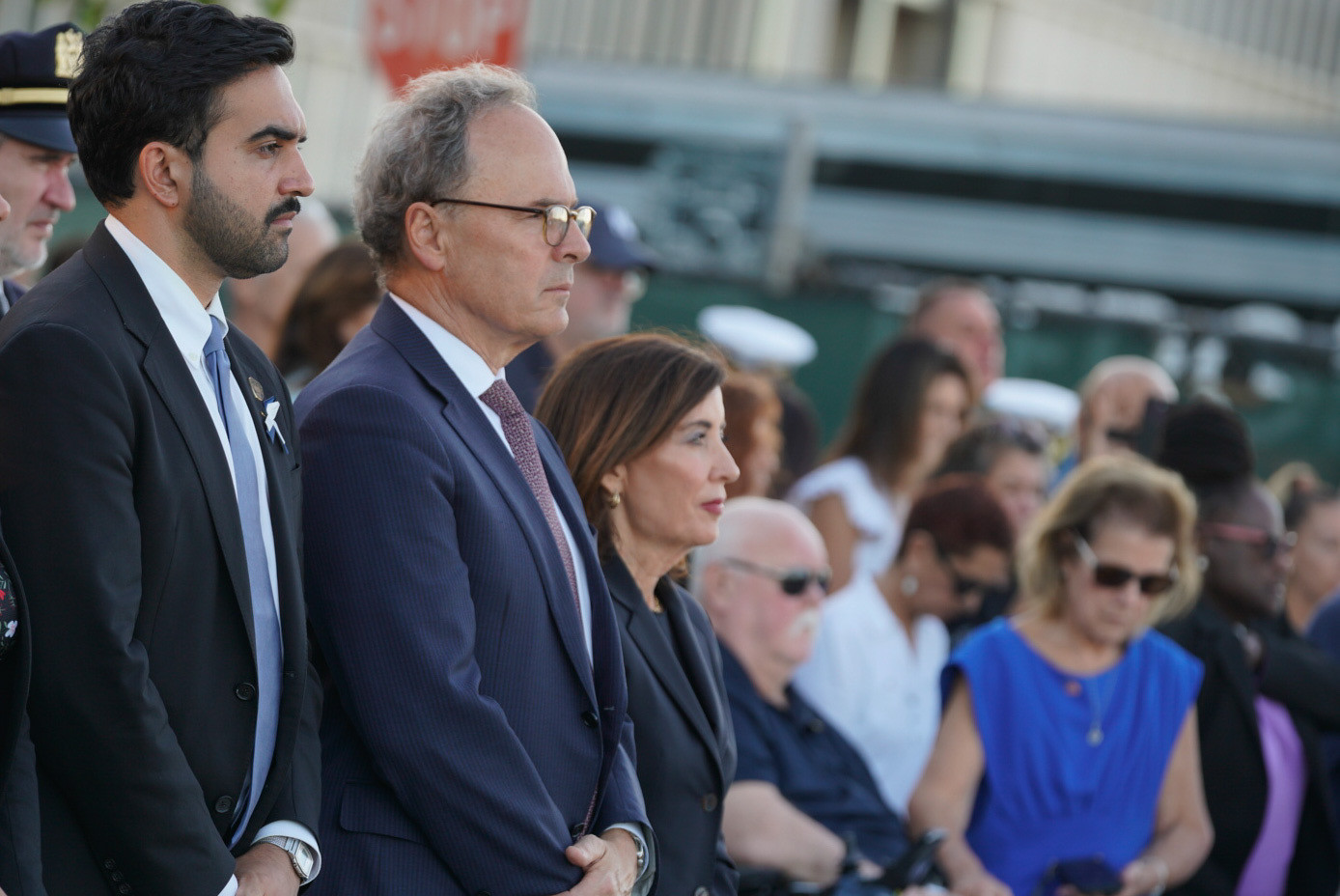
Mayor Mamdani attends Postcards Memorial, a remembrance ceremony honoring Staten Island residents who lost their lives in the 9/11 attacks. Friday, September 11, 2026. Credit: Ed Reed/Mayoral Photography Office.
Fast Buses: Mayor Mamdani Completes the Bronx’s First Busway on Tremont Avenue
Tremont Avenue busway speeds commutes for 39,000 daily Bx36 riders
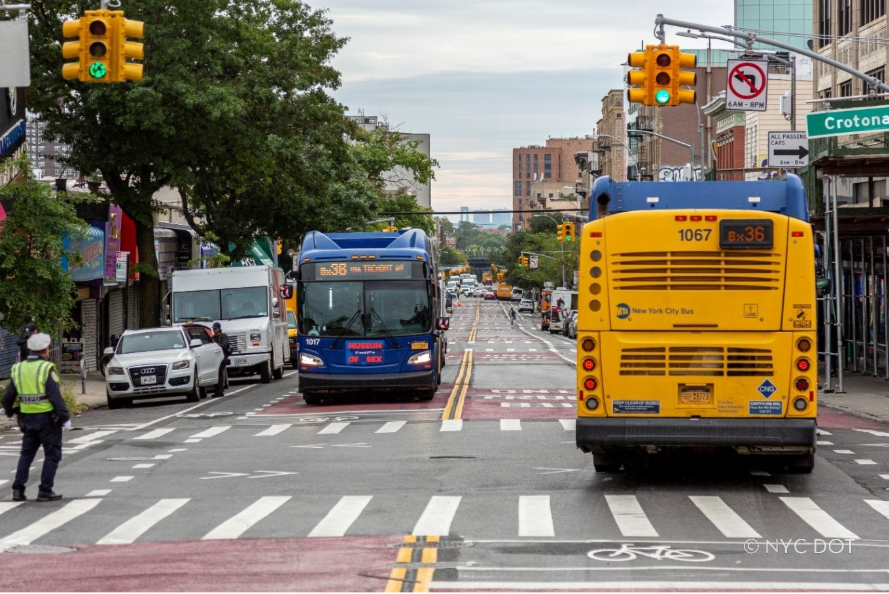
Bx36 buses travel in the recently activated busway on Tremont Avenue in the Bronx. Credit: NYC DOT
NEW YORK – Mayor Zohran Kwame Mamdani and New York City Department of Transportation (NYC DOT) Commissioner Mike Flynn today announced the completion of the Tremont Avenue busway, bringing faster, more reliable service to 39,000 daily Bx36 riders and making one of the Bronx’s busiest and most dangerous corridors safer.
Tremont serves the Bx36, where buses historically traveled as slowly as 5 mph. The corridor connects riders to nearby subway routes and the Metro-North Railroad and is home to a transit-dependent community, where 72% of households do not own a private car.
The busway is now operating seven days a week from 6 a.m. to 8 p.m. Buses, trucks with six or more wheels, emergency vehicles and Access-a-Ride vehicles are permitted to travel the full corridor. Other vehicles, including taxis and for-hire vehicles, may enter only for local access and must exit at the next available right turn.
With high ridership yet frequent delays, Tremont Avenue is one of the corridors prioritized in Next Stop: Fast Buses, Better Service, Mayor Mamdani’s historic partnership with Governor Kathy Hochul and the Metropolitan Transportation Authority (MTA) to make bus service faster and more reliable across 175 bus routes.
The new busway also lays the groundwork for future bus rapid transit along a broader Tremont Avenue corridor. As outlined in Next Stop, future upgrades will include streetscape improvements, station-like bus stops with improved shelters and other investments to deliver world-class bus service.
“Two months ago, we announced that the City would finally move forward with the Bronx’s long-delayed busway. Today, it’s officially up and running,” said Mayor Mamdani. “For 39,000 daily riders, that means less time stuck in traffic and more time getting where you need to go. This is what it looks like when we build a city that respects New Yorkers’ time and makes our streets safer for everyone.”
“When I stood with Mayor Mamdani to launch New York’s most ambitious plan to improve bus service in history, we promised riders that we would move fast to deliver the better service they deserve,” said Governor Hochul. “Now, by delivering the Bronx’s first busway along Tremont Avenue, 39,000 bus riders will benefit from faster trips and better service and the entire community will benefit from safer streets that move better for all.”
“Fast, reliable bus infrastructure has arrived on Tremont Avenue. Bus riders will now spend less time stuck in traffic and more time where they need to be: with their families, friends and making it on time to work and appointments,” said NYC DOT Commissioner Mike Flynn. “We look forward to building off the success of this busway to deliver true world-class, bus rapid transit upgrades in the future. We will be starting the public outreach process soon to share with the community how we can take this design to the next level with upgrades to streets, sidewalks and bus stops to bring comfortable, reliable and convenient transit options to Bronx residents.”
“When the State, City and MTA are all on the same page, results come quick,” said MTA Chair and CEO Janno Lieber. “The Tremont Avenue Busway has been completed just two months after it was announced, and it’s going to build on MTA’s local bus network redesign to improve speeds and reliability for almost 40,000 daily riders.”
“The completion of the Tremont Avenue busway is what happens when government puts bus riders first and prioritizes people’s everyday needs,” said Elizabeth Adams, Senior Advisor for Fast and Free Buses for Mayor Mamdani. “Mayor Mandani has been committed to fast and free buses from day one, and today we are giving New Yorkers real time back in their day to spend with families, friends or just taking care of what’s needed during their day. Today is an exciting step, and we are excited to continue to roll out new fast bus projects across the city.”
Tremont Avenue is among the most dangerous streets in the Bronx and a Vision Zero priority corridor. Between 2020 and 2024, four people were killed and nearly 630 people were injured in crashes along Tremont Avenue — an average of two injuries every week.
As part of the busway installation, NYC DOT added safety improvements at eight intersections along the corridor and nearby streets:
- Tremont Avenue at Webster Avenue
- Tremont Avenue at Third Avenue
- Tremont Avenue at Southern Boulevard and Crotona Parkway
- Third Avenue at East 175th Street
- Southern Boulevard at Crotona Parkway and 180th Street
- Crotona Avenue and 180th Street
- Third Avenue and 180th Street
- Tremont Avenue and Washington Avenue
The redesign includes painted sidewalk extensions that shorten pedestrian crossing distances and encourage turning vehicles to slow down. The curb extensions are reinforced with flexible delineators, granite blocks and bicycle parking to discourage illegal parking.
In 2026, the Mamdani administration has advanced major projects to speed up bus service across all five boroughs, including:
- The Bronx: Fordham Road, 161st Street and Tremont Avenue
- Manhattan: 34th Street, 116th Street, Madison Avenue and Lexington Avenue
- Brooklyn: Marcy Avenue, Flatbush Avenue, Utica Avenue, Church Avenue and Linden Boulevard
- Staten Island: Victory Boulevard
- Queens: Broadway
Together, these projects are part of the administration’s broader effort to make bus service faster, more reliable and safer for millions of New Yorkers who rely on it every day.
“Finally, the Bronx has a busway, saving time and aggravation for 39,000 daily riders,” said Danny Pearlstein, Policy & Communications Director at Riders Alliance. “Bronxites depend more on buses than other New Yorkers, yet for too long have lacked the state-of-the-art in bus priority treatments. Now, the Mamdani administration has put bus riders first on Tremont Avenue, speeding commutes up and down hills, across the borough and to healthcare jobs and appointments in Washington Heights.”
“We applaud the Mamdani administration for speeding up bus commutes and improving street safety for tens of thousands of Bronx residents,” said Ben Furnas, Executive Director of Transportation Alternatives. “The completion of the Tremont Avenue busway is a major accomplishment achieved in Year 1, and we hope to see DOT rapidly roll out more car-free busways and street safety upgrades across the five boroughs.”
“The new Tremont Avenue busway will make a real difference for the 39,000 riders who rely on the Bx36 every day, helping them get where they need to go faster and more reliably while making the street safer for everyone,” said Kate Slevin, Executive Vice President of Regional Plan Association. “We’re excited to see this long-awaited project become a reality and hope to see more improvements that make getting around New York safer, easier, more sustainable and more equitable.”
“The rapid delivery of the Tremont Avenue busway proves that when there is political will, we can move quickly to transform our streets and improve people’s lives,” said Renae Reynolds, Executive Director of Tri-State Transportation Campaign. “We celebrate this milestone, and we must use this momentum to deliver fast, frequent and reliable bus service to every neighborhood across New York City. Equitable transit cannot wait.”
“Tremont Avenue is a lifeline for the small businesses along the corridor and for the workers and customers who reach them by bus every day, and in a community where most households don’t own a car, a faster, safer Tremont should mean more customers and easier commutes,” said Lisa Sorin, President of the Bronx Chamber of Commerce. “We thank Mayor Mamdani and Commissioner Flynn for this investment, and we look forward to working with the City to make sure deliveries, loading and customer access work for Tremont’s merchants and to bring this kind of attention to commercial corridors across the Bronx.”
“Reliable bus service is one of the most direct ways we can improve daily life for New Yorkers, and the completion of the Tremont Avenue busway is a major step forward for the Bronx. By improving travel times, increasing reliability and enhancing safety, the Mamdani Administration, in partnership with Governor Hochul and the MTA, is helping New Yorkers get where they need to go with greater ease and confidence,” said Melanie Hartzog, President and CEO of The New York Foundling and MTA Board Member. “This project represents important progress, and I hope it is one of many continued investments in this community.”
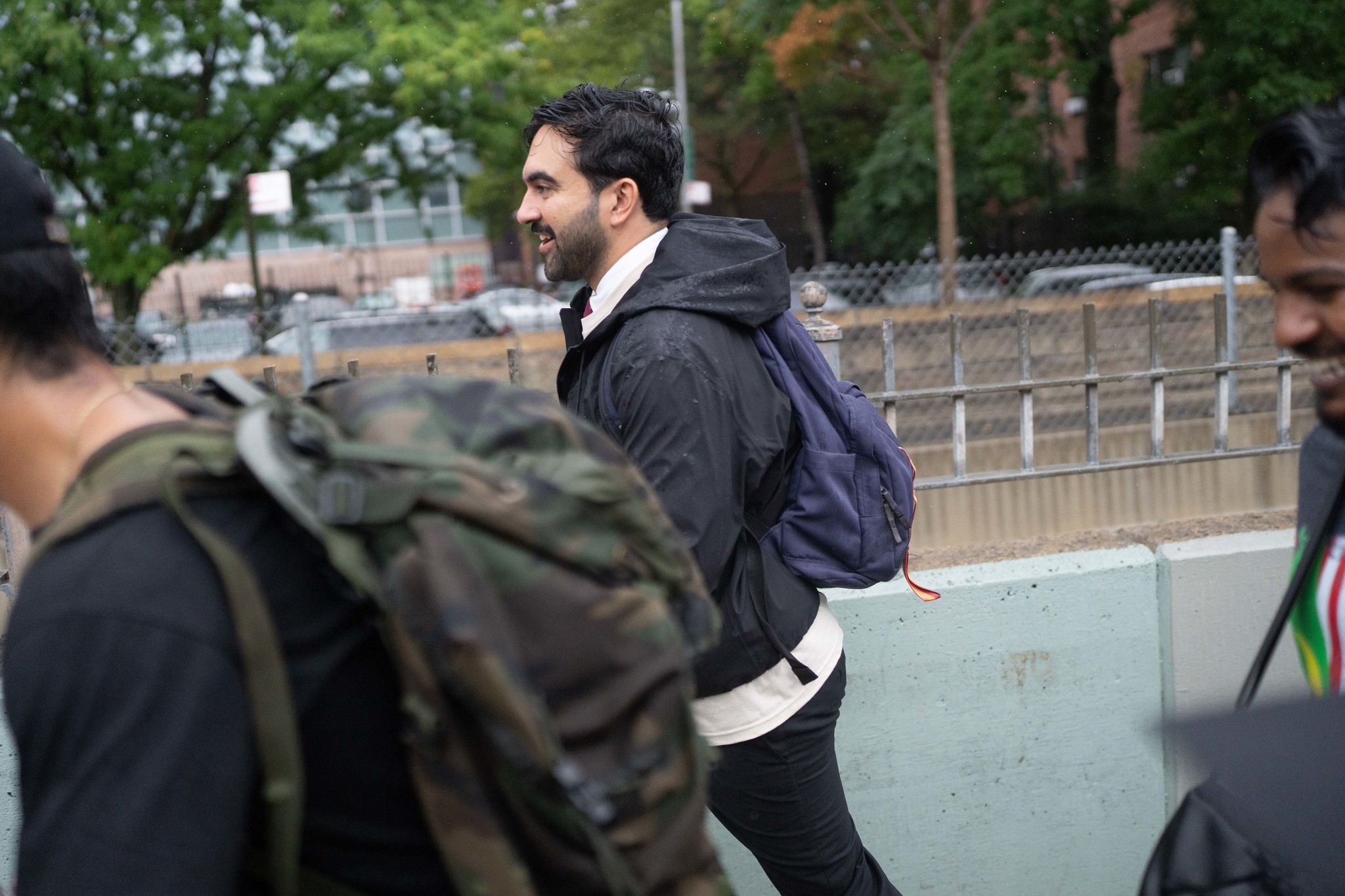
New York City Mayor Zohran Kwame Mamdani delivers remarks and participates in Remembrance Ruck on Sunday, September 13, 2026. Michael Appleton/Mayoral Photography Office
Mayor Mamdani Announces Most Trees Planted in a Decade
NYC Parks planted 18,261 trees in fiscal year 2026, prioritizing neighborhoods most vulnerable to extreme heat
NEW YORK – Mayor Zohran Kwame Mamdani and NYC Parks Commissioner Tricia Shimamura today announced that the City planted 18,261 trees in fiscal year 2026, the most in a single fiscal year since 2016.
The new trees will bring cleaner air, cooler streets, greater flood resiliency and more greenery to neighborhoods across the five boroughs, with the majority planted in communities most vulnerable to extreme heat. This record-setting year reflects an aggressive new approach by NYC Parks to accelerate tree planting and expand the city’s tree canopy, advancing the goals of the Urban Forest Plan to reach 30% canopy coverage by 2040.
To plant more trees, NYC Parks started earlier. The agency partnered with nurseries to build a larger supply of trees before planting season, harvested many trees before spring bud-break and kept newly planted trees watered and mulched throughout the summer. NYC Parks will use the same strategy to get ahead of this fall’s planting season.
“Our administration is building a city where every neighborhood can find cool shade on a hot day, breathe clean air and enjoy the beauty of a healthy tree canopy,” said Mayor Mamdani. “Access to green space and relief from extreme heat should not depend on your ZIP code. Planting more trees, especially in the neighborhoods that need them most, will help make our city cooler, healthier and more beautiful for all New Yorkers.”
“New Yorkers rely on our trees to provide vital shade, and with climate change leading to more frequent, intense heat, the need is more prevalent than ever,” said NYC Parks Commissioner Tricia Shimamura. “Our team of expert foresters and arborists is putting NYC Parks at the cutting edge of urban forestry, helping us plant smarter and target the neighborhoods that need shade and relief from extreme heat the most. This record-breaking year shows NYC Parks is facing the challenge of climate resiliency head on, keeping New York livable and prepared across every borough.”
“Every New Yorker, no matter their ZIP code, deserves access to the critical benefits trees provide,” said Chief Climate Officer Louise Yeung. “With the Urban Forest Plan as our roadmap, NYC is planting more trees, especially in the neighborhoods that need more shade and tree canopy the most, for a healthier and more resilient New York.”
The majority of the City’s new trees were planted in neighborhoods vulnerable to extreme heat, including:
The Bronx: Williamsbridge, Woodlawn, Eastchester, Edenwald, Soundview, Morris Park, Concourse Village, Morrisania and Mott Haven
Brooklyn: Seagate, Coney Island, East Flatbush, Bushwick, Crown Heights, Flatlands, Sunset Park, East New York and Brownsville
Manhattan: West Harlem, East Harlem, Lower East Side, Hamilton Heights and Washington Heights
Queens: Hunters Point, Sunnyside, Long Island City, Elmhurst, Laurelton, St. Albans, South Ozone Park, Queens Village and Cambria Heights
New York City is home to more than 7 million trees spanning more than 100 species. New Yorkers can help keep the city’s trees healthy by signing up for stewardship events through NYC Parks, watering neighborhood trees weekly and weeding unwanted plants from tree beds — young trees are extra thirsty!
New Yorkers can also record tree care activities through the NYC Tree Map.
Mexican Independence Day Parade
New York City Mayor Zohran Kwame Mamdani marches in the Mexican Independence Day Parade in Brooklynn Sunday, September 13, 2026. Michael Appleton/Mayoral Photography Office
Mayor Mamdani Launches “Opera for All,” Bringing 70,000 Free Metropolitan Opera Tickets to New Yorkers
10,000 Tickets Released Each Month by Lottery · Seats Across Every Section of the House · Initiative Designed for New Yorkers Who Have Never Attended the Met
NEW YORK – Mayor Zohran Kwame Mamdani, Deputy Mayor for Economic Justice Julie Su and New York City Department of Cultural Affairs (DCLA) Commissioner Diya Vij today announced “Opera for All,” a long-term partnership between the City and the Metropolitan Opera that will provide 70,000 free tickets this season to New Yorkers who have never attended a performance at the Met.
Beginning this month, the Met will release 10,000 tickets each month throughout the 2026-27 season, about 10% of all tickets for the season. New Yorkers can enter the monthly lottery at on.nyc.gov/opera or through the Met’s app. This season’s performances include Macbeth, Lincoln in the Bardo and La Bohème.
Mayor Mamdani announced the partnership in a video filmed on the Met’s stage with the cast of La Bohème. Watch the video here: https://www.youtube.com/watch?v=FckhbDho1rE
“Opera is one of the greatest art forms we have, and there is no better place to experience it than the Metropolitan Opera House,” said Mayor Zohran Kwame Mamdani. “But art should not be reserved for those who can afford it. Every New Yorker should have the opportunity to sit in these seats, hear these voices and experience this stage, no matter what’s in their bank account. From the rise of opera buffa in the 18th century to Mayor Fiorello La Guardia’s “people’s opera” in the 1940s, this art form was meant to be seen by everyone.”
“Throughout its storied history, the Met has culturally enriched New York,” said Peter Gelb, the Met’s General Manager. “With this new initiative, we hope to further demonstrate that the Met is a vital part of life in the city.”
“Economic justice means access to the things that make a city worth living in,” said Deputy Mayor for Economic Justice Julie Su. “Too many New Yorkers have walked past Lincoln Center their whole lives and never gone inside. This season, tens of thousands of them will.”
“The Met Opera’s iconic stage is one that too many New Yorkers have yet to experience for themselves. Thanks to this partnership, that’s about to change,” said Cultural Affairs Commissioner Diya Vij. “Opera has a long history of welcoming working people of all ages. With ‘Opera for All,’ we’re getting back to these roots and letting all New Yorkers know that the incredible work on this stage is for them, too.”
The Met has committed to continuing “Opera for All” in future seasons. Tickets will be available in every section of the house, excluding standing room. Any New Yorker who has not purchased a Met Opera ticket since 2019 is eligible to enter the lottery. Additional pathways to distributing tickets directly to New Yorkers will also be made available in the months ahead.
The City is helping promote and distribute tickets through the Department of Social Services, NYCHA, New York City Public Schools, the New York Public Library, The City University of New York (CUNY), the Department for the Aging and Situation Project.
The announcement builds on the Mamdani administration’s commitment to making New York’s arts and culture accessible to all New Yorkers. Earlier this summer, in partnership with the Theater Development Fund, Mayor Mamdani provided thousands of free and low-cost Broadway and off-Broadway tickets to high school students, along with free memberships to more than 20 cultural institutions across the City.
The Metropolitan Opera employs approximately 3,000 people, including performers, musicians, carpenters, wigmakers and ticket sellers. Fifteen unions represent its workforce.
In the video announcing “Opera for All,” Mayor Mamdani also cited Mayor Fiorello La Guardia’s commitment to making opera accessible to New Yorkers. In 1943, Mayor La Guardia helped establish New York City Center as a home for what he called “The People’s Opera,” with tickets priced from 75 cents to $2.
New Yorkers can enter the monthly lottery at on.nyc.gov/opera. More information about the Metropolitan Opera is available at metopera.org.
“The arts are one of the great joys of living in New York City and every New Yorker should have access to the cultural experiences that make our city so vibrant,” said NYCHA Chief Executive Officer Lisa Bova-Hiatt. “NYCHA residents are a vital part of the city’s artistic and cultural fabric and I hope they will take part in this lottery for a chance to enjoy the transformative experience of live opera at the Met.”
“New York City is home to some of the world’s finest cultural institutions, including the Met Opera, and every New Yorker should have the opportunity to experience the best the city has to offer,” said DSS Commissioner Erin Dalton. “We are proud to work with DCLA and the Met Opera to provide free tickets to our clients so that they can experience the wonders of the opera.”
“The arts and our city’s cultural institutions are an important part of building a more age-inclusive city,” said NYC Aging Commissioner Lisa Scott-McKenzie. “At older adult centers across the city, we see how creative programs can promote well-being, foster connection, and reduce social isolation. ‘Opera for All’ expands that opportunity by opening the doors of the Metropolitan Opera to more New Yorkers. I applaud Mayor Mamdani, the Met and the Department of Cultural Affairs for helping ensure New Yorkers of every age can participate in the cultural offerings of our city.”
“Public libraries are among the most democratic institutions in our society, and providing access to learning and culture is at the heart of our mission,” said Linda E. Johnson, Anthony W. Marx, and Dennis M. Walcott, the presidents of Brooklyn, New York and Queens Public Libraries. “We are pleased to join Mayor Zohran Kwame Mamdani, Deputy Mayor for Economic Justice Julie Su, and New York City Department of Cultural Affairs Commissioner Diya Vij in supporting ‘Opera for All.’ This program reflects a shared commitment to making the arts more accessible and ensuring that all New Yorkers have the opportunity to experience a performance at the Metropolitan Opera, one of the city’s – and the world’s – great cultural institutions.”
“The Met has committed to continuing ‘Opera for All’ in future seasons. Tickets cover seats in every section of the house. They do not include standing room. The City is helping distribute tickets this season. The City will promote the lottery through DSS, NYCHA, New York City Public Schools, Brooklyn Public Library, The New York Public Library, Queens Public Library, CUNY, and DFTA, and through the Situation Project.
“‘Opera for All’ promises a new avenue of access for CUNY students to broaden their perspectives through engagement with our city’s rich arts institutions,” said CUNY Chancellor Félix V. Matos Rodríguez. “We’re grateful to Mayor Mamdani and the Metropolitan Opera for making these performances more accessible to CUNY students and all New Yorkers. I urge those who haven’t yet experienced the joy of attending a production at the Met to take advantage of this one-of-a-kind opportunity to attend.”
“Opening doors to NYC students, the next generation of creatives, to the amazing performances featured at the Metropolitan Opera is an incredible step forward in welcoming them into the city’s artistic fold in their own backyards. We couldn’t be more excited for them,” said Damian Bazadona, Founder of Situation Project.
Mayor Mamdani Puts Even More ‘Park’ Back in Park Avenue With More Space for People
Updated design places protected bike lane alongside median while maintaining proposed pedestrian space expansion based on feedback from New Yorkers
Project will make eleven blocks along Park Avenue safer, greener and more welcoming
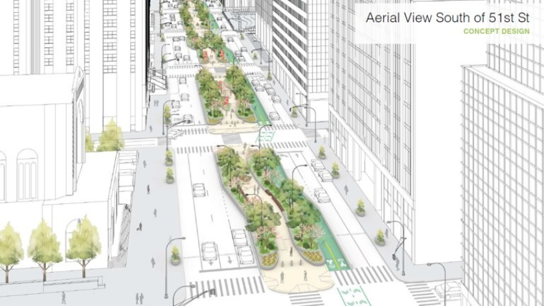
The updated redesign of Park Avenue converts a vehicle lane to a protected bike lane based on feedback from New Yorkers. CREDIT: Starr Whitehouse Landscape Architects and Planners
NEW YORK – Mayor Zohran Kwame Mamdani and New York City Department of Transportation (NYC DOT) Commissioner Mike Flynn today unveiled an updated design to put the ‘park’ back in Park Avenue, reimagining 11 blocks of Midtown Manhattan as a greener, safer and more people-centered corridor.
The updated design will expand the avenue’s median, add pedestrian space, seating and landscaping and convert an existing southbound vehicle travel lane into a two-way protected bike lane. The redesign responds to feedback from New Yorkers by moving the originally proposed two-way bike lane alongside the median into dedicated space while preserving expanded pedestrian areas.
“New Yorkers asked us to make more room for people to walk, bike and enjoy their city, and we listened,” said Mayor Mamdani. “This updated design puts more space where it belongs: in the hands of New Yorkers. By expanding our medians, adding greenery and seating and creating a dedicated protected bike connection, we are making Park Avenue safer and more beautiful for everyone who uses it.”
“Building on feedback from the community, this final design converts underused median space into vibrant public space while incorporating a dedicated, world-class bike connection that lays the foundation for future bike network upgrades in East Midtown,” said NYC DOT Commissioner Mike Flynn. “Whether you’re walking, biking or just looking for a place to sit and take a break, this project is about transforming Park Avenue to work better for New Yorkers as visitors alike.”

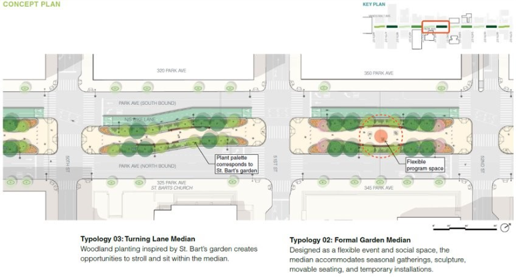
Dedicated pedestrian space in the planted medians will feature flexible programming, temporary art and new vantage points for viewing iconic Midtown landmarks. CREDIT: Starr Whitehouse Landscape Architects and Planners
The updated design covers 11 blocks from 46th Street to 57th Street. It would remove one travel lane in each direction and convert one additional southbound travel lane into a two-way protected bike lane. The expanded medians will accommodate seating, plantings and other pedestrian amenities, while new crosswalks will connect the medians along the corridor.
The project area sits directly above the Grand Central Terminal train shed, which is undergoing a major capital rehabilitation by Metro-North Railroad. As the MTA replaces and waterproofs the structure below, the City is using the opportunity to transform the avenue above, aligning major infrastructure investment with a broader vision for public space shaped by community input.
“The redesign of Park Avenue has been shaped by New Yorkers, for New Yorkers. I am pleased that this stretch of Midtown will be transformed into a safer, more beautiful space for our community to bike, walk, drive and enjoy the City,” said Congressman Jerrold Nadler. “As more people turn to biking and walking as cleaner, more effective modes of transportation, we must continue updating our infrastructure to keep our riders and pedestrians safe.”
“Today marks an important step toward transforming Park Avenue into a world-class boulevard that works for people, not just cars,” said Manhattan Borough President Brad Hoylman-Sigal. “After extensive engagement with Community Boards 5 and 6, I’m pleased that DOT’s latest design would widen the median and create more space for pedestrians, public art and landscaping. I’m also glad DOT listened to community feedback by moving the proposed two-way bike lane alongside the median while preserving the expanded pedestrian space. I’m grateful to Mayor Mamdani and Commissioner Flynn for advancing this ambitious reimagining of one of Manhattan’s most iconic thoroughfares, and I look forward to seeing work get underway.”
“Manhattan Community Board 6 is pleased to see DOT’s updated designs respond to feedback from our resolution and better balance pedestrian space, greenery and dedicated bicycle infrastructure,” said Sandra McKee, Chair of Manhattan Community Board 6. “The proposed bike infrastructure in the roadway, separated from the pedestrian-focused medians, reflects an important step toward a Park Avenue that is safer, greener and more welcoming for everyone. We appreciate DOT’s continued engagement with our community and look forward to working with our partners, stakeholders and the public as this transformative public realm project moves ahead.”
Banner Image: New York City Mayor Zohran Kwame Mamdani visits Curtis High School on Staten Island on the first day of school on Thursday, September 10, 2026. Michael Appleton/Mayoral Photography Office
NYC Mayor Zohran Mamdani


Zohran Mamdani was sworn in as Mayor of the City of New York on January 1st, 2026. Prior to becoming Mayor, he represented the 36th New York State Assembly District and its neighborhoods of Astoria, Ditmars-Steinway, and Astoria Heights.