

NYC Schools Surpass Class Size Target, Greenpoint Redesign, Office of Nightlife, Disbanding Strategic Response, 16 New Judges, Older Adult Produce Program Doubles, Faster Buses Flatbush, Media Availability, Free Immigration Legal Help, New Brooklyn Homes: Mayor Mamdani
Editor’s note: Staten Islander previously interviewed a dietitian and policymaker on this very lack in the NYC Schools system, where religiously inclusive meals were not part of the program. It can also be pointed out that plant-based meals would satisfy the requirements for nearly all religious restrictions, including Judaism, Islam, Seventh Day Adventist, Hindu, Buddhist, Jainist, etc. Video featuring testimony of the horse carriage ban testimony before the Mayor and the signing ceremony are below:

Mayor Mamdani Announces NYC Public Schools Surpass State Class Size Compliance Target
73.4% of classes now meet state class size requirements, exceeding the state’s 70% target for the 2026-27 school year
133 additional schools have achieved full compliance, doubling the number of schools where every class size meets the state limit
Milestone follows $244 million investment in teacher hiring and $1.5 billion capital funding under the Mamdani administration
NEW YORK – Mayor Zohran Kwame Mamdani and New York City Public Schools (NYCPS) Chancellor Kamar Samuels, alongside School Construction Authority President and Chief Executive Officer Celeste Ramirez, today announced that 73.4% of City public school classes now comply with the state’s class size law, surpassing the state’s 70% target for the 2026-27 school year.
The achievement delivers on a key campaign promise by Mayor Mamdani and marks significant progress toward ensuring every student has the space and individual attention they need to succeed.
An additional 133 schools are now fully compliant with the class size law, doubling the number of schools where every class meets the state limits. More than 640 schools have reached at least 90% compliance, and more than 1,120 schools have reached at least 70% compliance. Meanwhile, the number of schools at or below 50% compliance has fallen by more than 230.
“The days of overcrowded classrooms and students struggling to get the attention of their teachers are coming to an end. Today, we are delivering on our promise to make smaller class sizes a reality for more New York City kids,” said Mayor Mamdani. “Through a $244 million investment in teacher hiring and $1.5 billion in capital funding, we are building the classrooms that every student deserves.”
“I know from my days as a teacher and a school leader that students learn best when instruction is tailored to their unique strengths, needs and goals. Smaller class sizes help make that a reality,” said Schools Chancellor Kamar Samuels. “I am deeply grateful to the Mamdani Administration, the SCA and our labor partners at the UFT and CSA for their collaboration and commitment to this effort, including significant capital and hiring investments from the City. Together, we have reached 73.4% compliance, exceeding the state’s target and making our students’ day-to-day classroom experience more rigorous, engaging and personalized.”
This milestone was made possible by a $244 million investment in teacher hiring in the Mamdani Administration’s budget, alongside $1.5 billion in new capital funding for future class size compliance. This brings the total capital funding dedicated to smaller class sizes to more than $7.6 billion and will create a total of 41,000 seats in smaller classrooms.
Class size compliance increased across every grade band, with the largest gains in middle school, where compliance rose 7.2 percentage points. Compliance increased 6.4 percentage points in fourth and fifth grades, 4.9 percentage points in kindergarten through third grade and 4.8 percentage points in high school.
Among classes that have not yet reached compliance, just over one-third exceed the legal limit by only one to three students. The share of classes exceeding the limit by six or more students has fallen from 17% to 12%. The City achieved this progress without relying on exemptions.
“Smaller class sizes mean more opportunities for students to receive individual attention, build meaningful relationships with their teachers, and get the support they need to succeed,” said School Construction Authority President and Chief Executive Officer Celeste A. Ramirez. “At the School Construction Authority, we are proud to be a partner in this historic effort, working closely with the Mayor and NYC Public Schools to identify and maximize space, create new classrooms, and make strategic investments in our school buildings. Surpassing the State’s 70 percent compliance threshold is an important milestone, but our work is far from finished. We remain committed to delivering safe, modern and welcoming learning environments that give every New York City student the space and opportunity to reach their full potential.”
“We are getting closer to every New York City student getting the benefit of being in a smaller class. Students, parents, and educators all say the difference is exhilarating. Students love the additional individualized attention. Educators love having more opportunities to forge the personal connections with students that are the foundation for all learning, “ said United Federation of Teachers President Michael Mulgrew.
“Smaller classes mean more attention for every student, and that is why the Council of School Supervisors and Administrators has fully supported the class size law since its inception. Reaching this year’s benchmark of 70 percent took real work from our school leaders: reprogramming schedules, finding space, and recruiting new teachers, all without cutting programs that families depend on. We thank the Mayor and the Chancellor for recognizing what it takes, and we will work together until every school is in full compliance,” said Council of School Supervisors and Administrators President Henry D. Rubio.
“Overcrowded classrooms are a disservice to students and teachers alike,” said State Senator Julia Salazar. “I’m so glad we’re finally turning the corner, with a majority of our public school classrooms in compliance with our state’s class size law. I’m grateful to the Mayor’s investment in teacher hiring, and I know both our youth and our educators will feel the positive impact of this change.”
“Smaller class sizes means students get closer attention, similar to the attention I needed and, fortunately, received when I struggled in school. I’m particularly pleased to see that David A. Boody, IS 228 in the Gravesend part of my district is seeing one of the largest increases of available seats citywide,” said Council Member Simcha Felder. “This issue is close to my heart and I commend Mayor Mamdani and Chancellor Samuels for their commitment to improving education quality for our students.”
“Smaller classes make a massive difference. Nearly 3 out of 4 public school students are in smaller classes and benefiting from more teacher attention this year and I can’t wait for even more schools to achieve smaller class sizes in the years to come. Credit to Mayor Mamdani, Chancellor Samuels, President Ramirez and all the public servants who have worked hard to advance this important goal,” said Council Member Lincoln Restler.
“Our city’s children thrive when they have access to a learning environment that is conducive to their growth and support,” said Chair of the Subcommittee on Early Childhood Education Jennifer Gutiérrez. “I applaud Mayor Mamdani, Chancellor Samuels and the Department of Education for this achievement, and look forward to continuing to build more supportive and compliant classrooms for our students.”
“Surpassing the state’s class size compliance target is a significant achievement, and I commend Mayor Mamdani, Chancellor Samuels, and NYC Public Schools for the hard work and investments that have brought us to this point,” said Deputy Leader Council Member Sandra Ung. “If we want families to put down roots and raise their children in our community, we must ensure that they have access to quality neighborhood schools, and that includes providing enough classroom space for every student. I recently met with School Construction Authority President Celeste Ramirez to discuss these needs in my own district, and I look forward to working with the administration to ensure that our students and families get the school capacity they deserve.”
“Today’s announcement shows that New York City is working to ensure our students can benefit from the most optimal learning environment possible. Lower class sizes mean more personalized attention, stronger academic achievement, and better working conditions for educators. I look forward to continuing to work with Mayor Mamdani and Chancellor Samuels to improve our city’s public schools and exceed state mandates for the state class size law,” said Council Member Crystal Hudson.
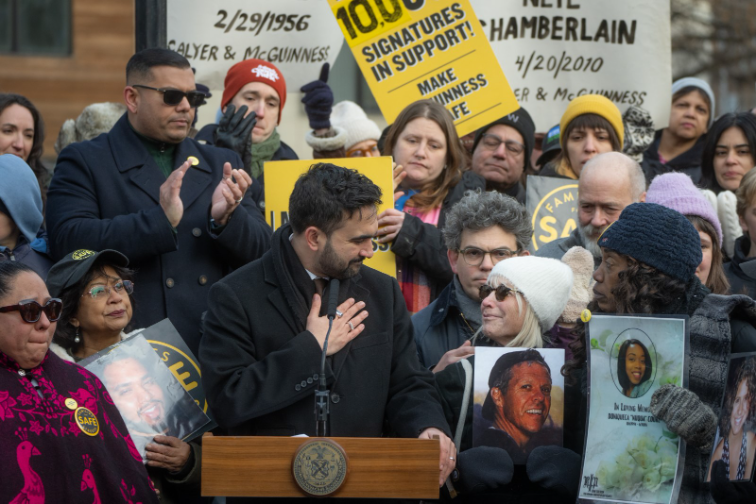
Mayor Mamdani joins NYC DOT Commissioner Flynn, Greenpoint residents, advocates and elected officials days after his inauguration in January to commit to completing the original redesign of McGuinness Boulevard. Credit: Mayor’s Office
A New Era for Greenpoint: Mayor Mamdani Completes McGuinness Boulevard Redesign
Parking-protected bike lanes now stretch the full length of McGuinness Boulevard, from Meeker Avenue to the Pulaski Bridge
Redesign shortens pedestrian crossings, reduces reckless driving and slows turning drivers
NEW YORK – Mayor Zohran Kwame Mamdani and New York City Department of Transportation (NYC DOT) Commissioner Mike Flynn today announced the completion of the McGuinness Boulevard redesign, delivering parking-protected bike lanes along the entire corridor, from Meeker Avenue to the Pulaski Bridge.
The redesign makes McGuinness Boulevard safer for everyone who uses it. The improvements shorten pedestrian crossing distances, slow turning vehicles and prevent dangerous driving, while providing a protected connection for thousands of cyclists traveling through Greenpoint.
Just days after his inauguration on Jan. 3, Mayor Mamdani joined community leaders and safe street advocates to reaffirm the City’s commitment to completing the original redesign — a project long championed by neighborhood residents who fought to make their streets safer.
“A new era has begun on McGuinness Boulevard. For too long, this street was defined by danger and the loss of loved ones. Today, it stands as a testament to what a community can accomplish when it refuses to accept that loss as inevitable,” said Mayor Mamdani. “With parking-protected bike lanes running up and down the boulevard, we are making it safer for pedestrians, cyclists, drivers and families. This victory belongs to the people of Greenpoint — especially the community members and advocates who turned grief into action and fought to ensure that no more families have to endure the pain of losing a loved one on this street.”
“This project delivers safety benefits for everyone — whether you are walking, biking or driving — with a design that helps stitch Greenpoint together instead of dividing it,” said NYC DOT Commissioner Mike Flynn. “It was made possible by the tireless advocacy of residents who have lost too many neighbors and loved ones to traffic crashes on McGuinness. Mayor Mamdani made this project his first safety announcement because we wanted to send a clear message: We are ushering in a new era of local government that listens to its people and delivers for them, not one that makes decisions through backroom deals.”
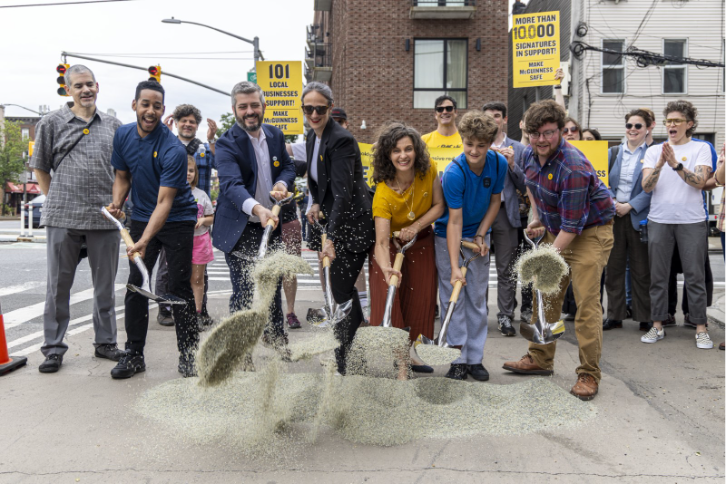
Deputy Mayor for Operations Julia Kerson and NYC DOT Commissioner Mike Flynn join elected officials and community members to break ground on the McGuinness Boulevard redesign on May 27, 2026. Credit: NYC DOT
McGuinness Boulevard is a critical cycling connection between Brooklyn and Queens, serving more than 4,000 daily riders during the summer months. The completed redesign includes one travel lane in each direction, a parking-protected bike lane in each direction and a curbside lane for parking and loading on both sides of the boulevard.
“Make McGuinness Safe started in 2021 as an outlet for our collective grief, anger and fear after the death of beloved PS110 teacher, Matthew Jensen,” said Bronwyn Breitner, Co-founder of Make McGuinness Safe. “Today Greenpoint is celebrating not only a safer McGuinness Boulevard, but the power of community organizing to bring about real change on our streets. We’re deeply grateful to Mayor Mamdani for keeping his promise and to all of our elected leaders for standing with us.”
“I am gratified to see a full length of McGuinness Boulevard made safer from north to south,” said Congresswoman Nydia Velázquez. “These street improvements make pedestrian crossings and commutes by bike safer. No longer is McGuinness a highway cut-through but a more complete neighborhood street for all users. I commend the Mayor and his team for following through on promises to the community.”
“I want to thank Mayor Mamdani for prioritizing street safety and for prioritizing investments to McGuinness Boulevard at the start of his administration,” said State Senator Kristen Gonzalez. “For years, McGuinness Boulevard has divided the Greenpoint community. Before the redesign, McGuinness experienced a crash every other day. After the loss of beloved teacher Matthew Jensen, parents of PS 110 and the Make McGuinness Safe Coalition demanded real street safety, a full redesign, organized hundreds of Greenpointers and gathered thousands of signatures. It is thanks to them that McGuinness will be safe for generations to come. I want to thank Mayor Mamdani and DOT Commissioner Flynn for listening to our community and working with our local electeds to make the redesign a reality.”
“The McGuinness redesign represents the culmination of decades of work and an uphill battle that often felt impossible. Part of why I ran for office was the perpetual inaction from local elected officials, despite years of serious injuries and deaths on McGuinness Boulevard,” said Assemblymember Emily Gallagher. “If our local government couldn’t respond to community demands to fix a deadly road, how could we trust them to protect us at all? This victory belongs to our community, especially the brave and tenacious Make McGuinness Safe organizers. It’s a reminder that we can demand our elected representatives fight for our communities, over the status quo — and if they don’t, we will step up to elect new ones. The redesigned McGuinness exists to honor the memory of Matthew Jensen and every person lost to senseless traffic violence.”
“McGuinness Boulevard has dangerously divided Greenpoint for generations. Now, we finally have permanently remade McGuinness into a far safer road for our kids, older adults and all of us to navigate,” said Council Member Lincoln Restler. “I’m enormously grateful to Mayor Mamdani for making the full McGuinness safety plan a top priority, and to Assembly Member Emily Gallagher, Brooklyn Borough President Antonio Reynoso, Senator Kristen Gonzalez and Congresswoman Nydia Velázquez. I’m especially grateful to the tireless activists at Make McGuinness Safe and the countless neighbors and friends for fighting to transform this dangerous mile stretch into a citywide model for commonsense street safety measures.”
“After a long and arduous process of community-driven coordination, today we celebrate peace of mind for Greenpoint and Williamsburg residents to cross this corridor safely,” said Council Member Jennifer Gutiérrez. “Following years of stop-and-go confusion from the previous administration, I applaud Mayor Mamdani and all partners for listening to the community and following through on this long-awaited project.”
“Thanks to the tireless advocacy of the Make McGuinness Safe coalition — and the Mamdani administration — this deadly street will finally be safe for everyone,” said Ben Furnas, Executive Director of Transportation Alternatives. “After beloved teacher Matthew Jensen was killed crossing this street, families and neighbors demanded a truly safe McGuinness Boulevard. Greenpoint’s decades-long battle for safety is finally a reality up and down McGuinness, and now families can safely walk to school no matter which side of the street they call home. This redesign will save lives and model just how our city will be transformed when we finally put children first.”
“The speed of transformation on our city’s streets continues to accelerate, and McGuinness Boulevard is the latest proof that the movement for livable streets is here to stay. It’s exciting to see yet another major corridor redesigned to reflect the needs of the vast majority of New Yorkers who walk, bike and use transit to get around,” said Sara Lind, Co-Executive Director at Open Plans. “We thank the administration for delivering another major corridor that’s safer for everyone, and for continuing to make progress on our city’s streetscape. We’re only just getting started, and Open Plans looks forward to helping deliver what’s next, from Low Traffic Neighborhoods to School Streets and more.”
“The completion of the full redesign of McGuinness Boulevard marks a major milestone in improving street safety in New York City, as well as the fulfillment of a promise made by Mayor Mamdani just days after he was sworn into office,” said Eric McClure, Executive Director of StreetsPAC. “We’re grateful to the Mayor and Commissioner Flynn and their teams for pushing this project to the finish line, to Assemblymember Gallagher and State Senator Gonzalez and Council Member Restler for their unwavering support of the redesign, and especially to the advocates and organizers of Make McGuinness Safe who worked tirelessly and selflessly to get us to this day.”
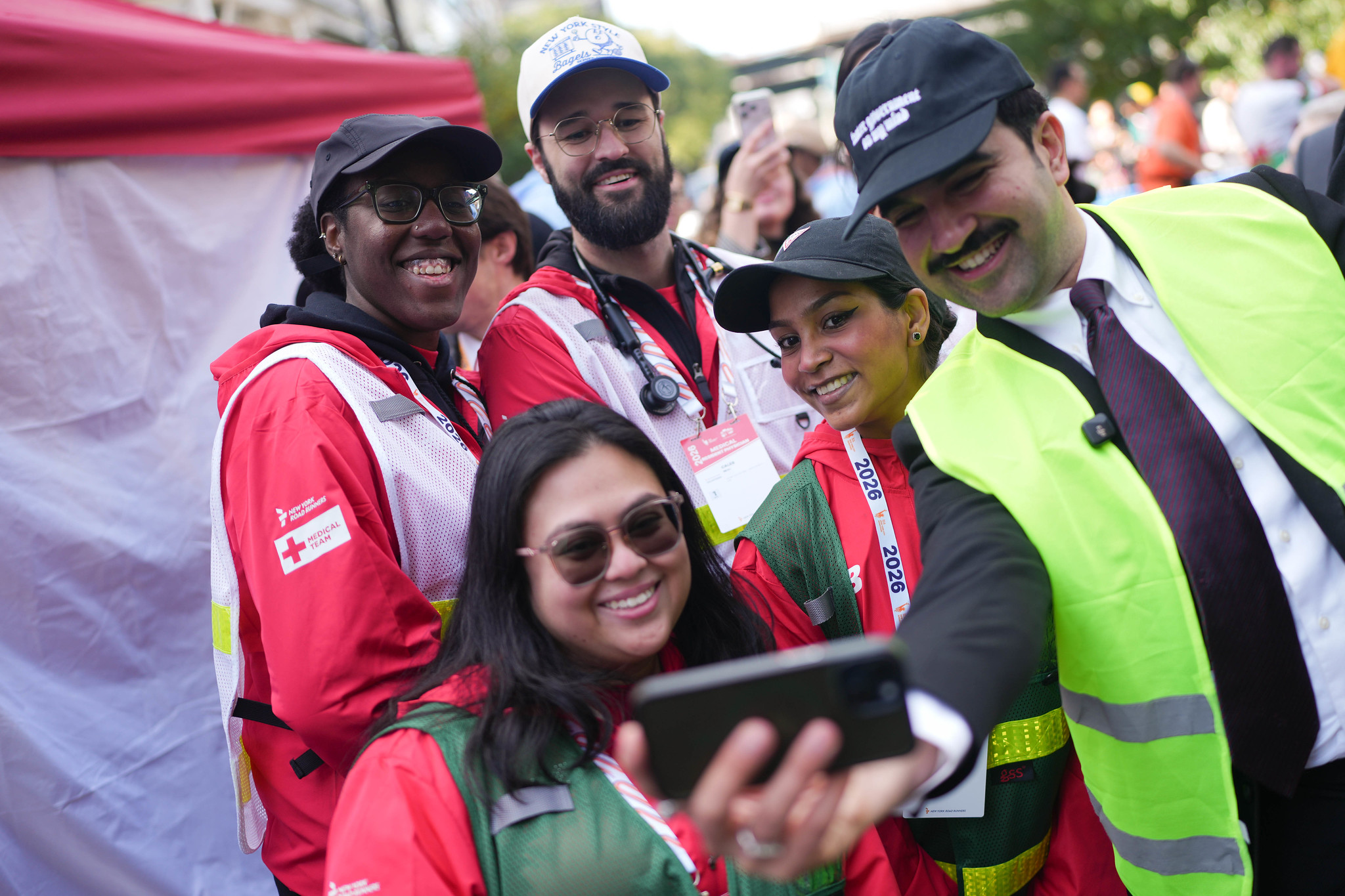
New York City Mayor Zohran Kwame Mamdani hands out water to TCS New York City Marathon runners as they make their way through Queens on Sunday, November 1,, 2026. Michael Appleton/Mayoral Photography Office
Mayor Mamdani Appoints Eric Thor to Lead NYC’s Office of Nightlife
Longtime community organizer will work with nightlife workers, small businesses and neighborhood establishments across all five boroughs
NEW YORK – Today, Mayor Zohran Kwame Mamdani announced the appointment of Eric Thor as Executive Director of the Office of Nightlife, which operates within the Department of Small Business Services (SBS).
Thor will lead the City’s efforts to support the workers, small businesses and communities that make New York’s nightlife possible, from DJs and bartenders to security staff, promoters and venue owners. Thor will begin meeting with workers, business owners, and community members across all five boroughs to help shape the office’s priorities.
His agenda will focus on improving conditions for nightlife workers, streamlining the permitting process for small events and strengthening the Coordinating a United Resolution with Establishments (CURE) program.
“New Yorkers work hard all week, and being able to afford a night out with friends is part of what makes this city worth living in,” said Mayor Zohran Kwame Mamdani. “Nightlife is more than entertainment. It’s good jobs, a lifeline for small businesses and what makes New York City the best place in the world to be out after 10 p.m. The workers and business owners who keep it going are left to navigate a bureaucracy that makes their jobs harder. Eric has spent years organizing alongside working people, and he will bring that same commitment building a nightlife economy that works for everyone.”
“I want every New Yorker to be able to afford a good night out after a long week, and every nightlife worker to have a fair, safe job,” said Eric Thor. “Nightlife is for everyone, from clubs to queer spaces to immigrant-run venues. A good night out should work for the people who organize it, the people who work it and the people who come to dance. It should be easy to start one in this city, not just for people who can afford lawyers.”
“New York City’s bars, nightclubs and nightlife venues are an integral part of our city’s small business ecosystem, employing thousands of New Yorkers and generating more than $30 billion in economic activity across all five boroughs,” said SBS Commissioner Kenny Minaya. “The Office of Nightlife at SBS connects those businesses with free resources and services, from NYC BEST to commercial lease assistance to affordable financing, while simultaneously fostering positive relationships with neighborhoods and communities through MEND and CURE. I am thrilled to welcome Executive Director Eric Thor to SBS and am excited to continue the work of maintaining New York City’s position as the premier nightlife capital of the world.”
“NY-7 is home to many of the city’s most iconic bars, clubs, venues and lounges — and thousands of nightlife workers. I’ve organized alongside Eric for years,” said Congresswoman-Elect Claire Valdez. “Whether you’re unwinding on your time off the job or you’re a worker who makes a night out possible, Eric will make sure you have a voice at City Hall.”
“Nightlife is woven into the identity of the West Side, from the neighborhood bars and music venues of the Upper West Side to the bars and clubs of Hell’s Kitchen and Chelsea, the West Village and queer venues and community spaces throughout our neighborhoods. As these small businesses face growing economic pressures, strong leadership at the Office of Nightlife matters,” said State Senator Eric Bottcher. “I look forward to working with Eric Thor to support nightlife workers and business owners, and to ensure New Yorkers have a meaningful voice in shaping the office’s priorities.”
“What is New York City if not for its nightlife? The nightlife scene is not limited to the entertainment we immerse ourselves in but also to the incredible workers, venues and communities that are the industry’s backbone,” said Council Member Chi Ossé. “I am delighted to see Mayor Mamdani appoint Eric Thor as Executive Director of the Office of Nightlife, and I have the utmost confidence in his ability to strengthen ties among nightlife workers, small businesses and neighborhood establishments. His years of organizing will support our city’s continued success in ensuring our nightlife economy is the best in the world.”
“This is a really critical moment for nightlife in New York. The scene feels more alive than it has in years, and the Office of Nightlife deserves real credit for helping drive that. At the same time, like every sector in this city, nightlife is at risk of being swallowed by money that doesn’t care about the culture or workers,” said Michael Falco, Executive Director of the Queer Nightlife Community Center. “So, it’s meaningful to have a leader whose starting point is the people who actually make nightlife happen: the workers, the collectives, the folks trying to build a life doing this. New York should be the nightlife capital of the world, and that means making sure the people who make it can actually afford to live here.”
Thor lives in Astoria, Queens. He previously served as lead developer for LaborLab, where he built a searchable database connecting filings from the National Labor Relations Board and Office of Labor-Management Standards. He also spent 10 years building websites for Wine Spectator and has been active in community and electoral organizing with the New York City chapter of the Democratic Socialists of America.
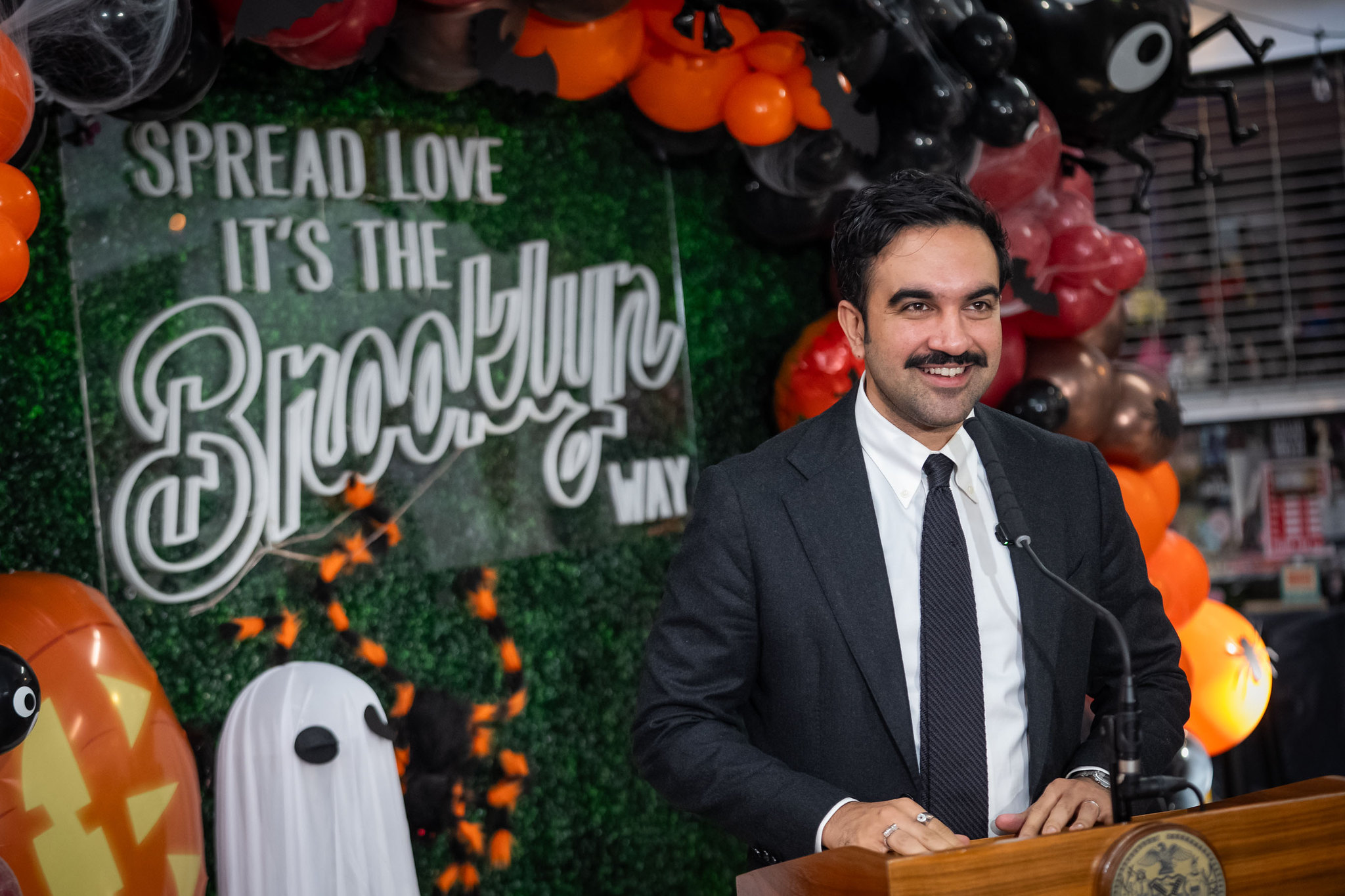
Mayor Mamdani visits a grocery store in Brooklyn to highlight SNAP cuts. Monday, November 2, 2026. Credit: Ed Reed/Mayoral Photography Office
Mayor Mamdani and Police Commissioner Tisch Disband NYPD’s Strategic Response Group
Fulfills key campaign promise to separate counterterrorism from crowd management
New approach improves NYPD dialogue team, creates civilian-led dialogue division, transitions crowd management functions to patrol unit and formally restricts use of kettling, tear gas and long guns for crowd management
NEW YORK — Mayor Zohran Kwame Mamdani and Police Commissioner Jessica Tisch today announced the disbanding of the New York City Police Department’s (NYPD) Strategic Response Group, fulfilling a key campaign promise to separate protest response from counterterrorism.
This overhaul will transform how the City prepares for and responds to protests, placing communication, de-escalation and civilian coordination at the center of our approach, while protecting New Yorkers’ constitutional right to protest.
The reforms — the development of which began in January — establish a first-of-its-kind, civilian-led Community Dialogue and De-escalation Division (CDDD) within the Mayor’s Office of Community Safety and improve the NYPD’s protest response through a specialized dialogue team, the First Amendment Support Team (FAST), within the department’s Community Affairs Bureau. The two teams will work in close coordination to prepare for and respond to First Amendment activities.
The CDDD will not have weapons or arrest powers. FAST will consist of 30 uniformed officers trained in communication and de-escalation. The NYPD will also establish a new Patrol Support Division (PSD), a unit within the NYPD’s Patrol Services Bureau, with vetted officers who will spend most of their time on patrol-related duties and receive specialized crowd management training to support responses to demonstrations.
The reforms also establish significant new restrictions on the tactics and weapons all officers can use during First Amendment activities, including a formal prohibition on kettling, long guns and tear gas. Pepper spray will not be used as a crowd-management tool, and long-range acoustic devices will be limited to 90 decibels. Officers will also be prohibited from using bicycles as weapons except when necessary to prevent death or physical injury to themselves or another person.
Under the new structure, the SRG’s counterterrorism functions, including heavy weapons deployments at critical infrastructure, will be consolidated within the NYPD’s Intelligence and Counterterrorism Bureau, ensuring that the City’s response to First Amendment activity and counterterrorism operations are entirely separate.
“During our campaign, I promised New Yorkers that we would disband the Strategic Response Group and separate counterterrorism from protest response, and today we are delivering on that promise,” said Mayor Mamdani. “New Yorkers exercising their constitutional right to protest should not be met with the same police response as a terrorism threat. We are establishing a new, civilian-led approach that prioritizes dialogue, engagement and de-escalation. These reforms accomplish the key changes called for by Councilmember Chi Ossé’s CURB Act — a bill I am proud to support. Protecting New Yorkers’ rights and keeping our communities safe go hand in hand.”
“Today, we announced a new structure designed to consolidate our counterterrorism capabilities, provide greater support to our patrol officers and ensure we continue to respond to protests consistent with public safety and the First Amendment,” said NYPD Commissioner Jessica S. Tisch. “I believe strongly that the NYPD must always be willing to examine how we operate and make improvements. I would never support changes that diminish the NYPD’s ability to protect New Yorkers, or that put our officers in a position where they lack the resources necessary to confront a serious threat. These changes will make us a stronger, more effective department. I thank the men and women of the NYPD for their noble service to this city.”
Together, these changes will help ensure that New Yorkers who exercise their First Amendment rights are met with clear communication and de-escalation.
The new strategy includes the following measures:
- Establishes a civilian-led dialogue unit: Creates the Community Dialogue and De-escalation Division (CDDD) within the Mayor’s Office of Community Safety to plan for and respond to protests in coordination with the NYPD’s FAST team.
- Creates the NYPD’s first dialogue team: Establishes FAST, a team of 30 uniformed officers within the Community Affairs Bureau with specialized training in communication and de-escalation and coordination with crowd-management personnel. FAST will handle dialogue and de-escalation while CDDD is being built.
- Creates new patrol unit: Establishes the Patrol Support Division, which reports to the Patrol Services Bureau and will comprise vetted officers who will receive specialized training and conduct arrests at protests in rare instances, if necessary. PSD will work with CDDD and FAST when responding to First Amendment activities, building on the reforms agreed to in the Payne protest settlement. For the vast majority of the time, PSD will serve as a resource to patrol, including participating in searches for missing persons, supporting major events, such as the NYC Marathon and Thanksgiving Day Parade, and assisting with priority traffic posts during hazardous weather. There will be strict eligibility requirements to enter the PSD.
- Regulates aggressive crowd-management tactics: Codifies the ban on kettling, prohibits the use of long guns and tear gas during First Amendment activities and limits long-range acoustic devices to 90 decibels. Pepper spray will not be used as a general crowd-management device.
- These reforms will be implemented at no additional cost and without increasing or reducing NYPD headcount.
The announcement reflects Mayor Mamdani’s broader vision for public safety — one where New Yorkers have confidence in the institutions responsible for keeping them safe and where fundamental freedoms are respected.
In March, Mayor Mamdani created the first-ever Mayor’s Office of Community Safety to strengthen violence prevention, coordinate mental health crisis response and address the root causes of crime. In October, Mayor Mamdani directed the first comprehensive review of the NYPD’s use of force policies in more than a decade and announced new leadership at the Civilian Complaint Review Board to strengthen police accountability. The administration also ended criminal enforcement against cyclists for low-level traffic offenses.
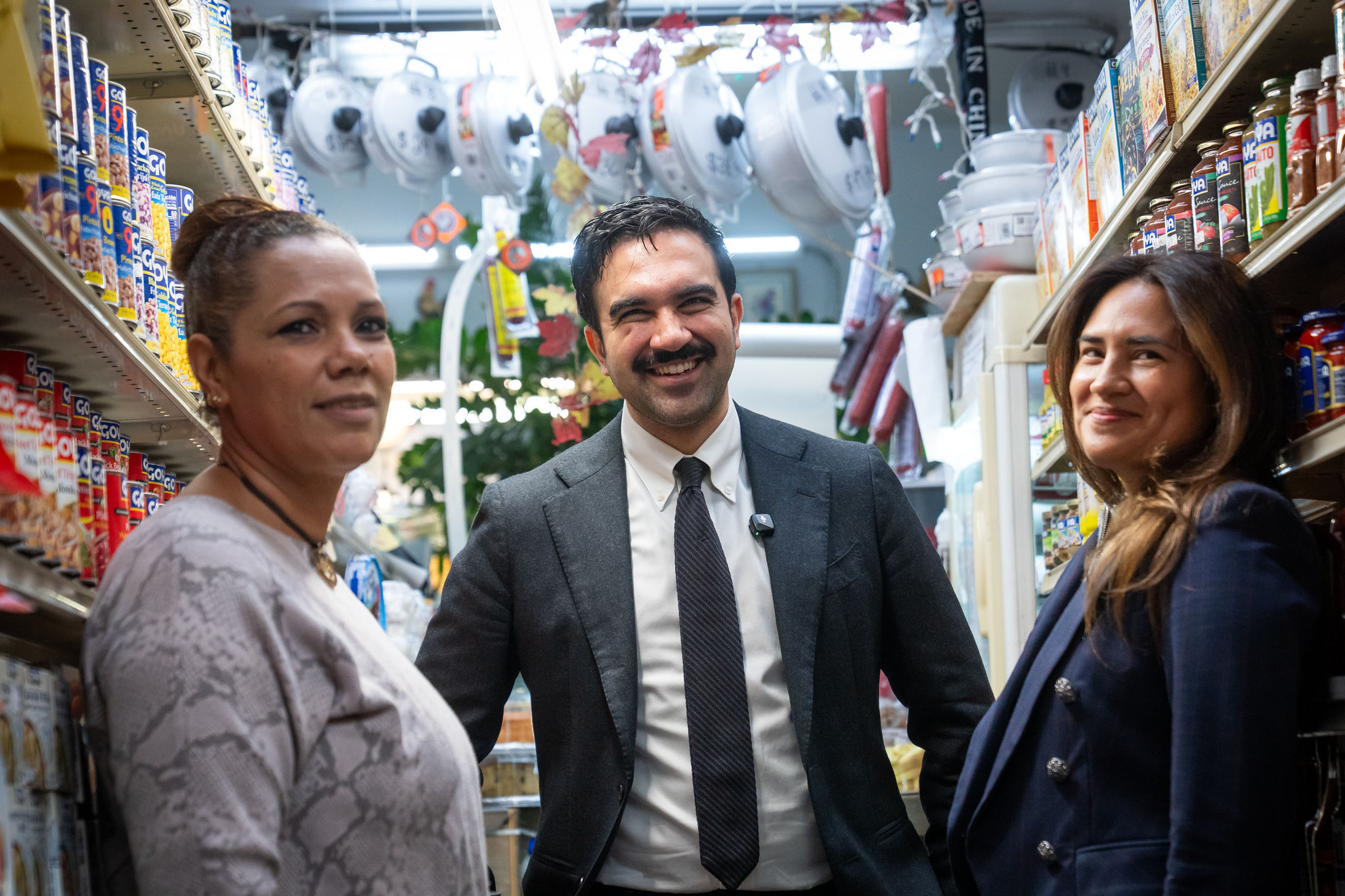
Mayor Mamdani visits a grocery store in Brooklyn to highlight SNAP cuts. Monday, November 2, 2026. Credit: Ed Reed/Mayoral Photography Office
Mayor Mamdani Names 16 Judges to Strengthen New York City’s Criminal and Family Courts
Mayor’s appointments include 10 new judges and six reappointments following recommendations from the Mayor’s Advisory Committee on the Judiciary
Appointments and reappointments build on administration’s efforts to strengthen judicial integrity, transparency and fairness across New York City’s courts
NEW YORK — Mayor Zohran Kwame Mamdani today announced 16 prospective judicial appointments and reappointments to New York City’s Criminal and Family Courts, including 10 new judges, which will all be subject to a public hearing on November 17, 2026. The appointments and six reappointments follow recommendations from the Mayor’s Advisory Committee on the Judiciary (MACJ), which interviewed and vetted candidates before submitting its recommendations to the mayor under the process established by Executive Order 6.
“The decisions made in our courts can change the course of a New Yorker’s life. That is why the people entrusted with serving on the bench must bring the highest standards of fairness, integrity and accountability to their work,” said Mayor Mamdani. “These 16 judges reflect our commitment to a judiciary that treats every New Yorker fairly. I am grateful to MACJ for its rigorous work in identifying and reviewing these candidates.”
“The judges that Mayor Mamdani just named underwent an extensive vetting process and demonstrated the highest standards of integrity and competence,” said Ramzi Kassem, Chief Counsel to the Mayor and City Hall, who supervises the Mayor’s Advisory Committee on the Judiciary. “Under this administration, when New Yorkers appear in Criminal and Family Court, they can expect to be treated with dignity and respect by judges who reflect the diversity of the legal profession and the city at large.”
“MACJ worked hard to identify and recommend highly qualified candidates from a diverse pool of attorneys,” said Ali Najmi, Chair of the Mayor’s Advisory Committee on the Judiciary. “New Yorkers deserve a fair and effective court system, and the Mayor’s appointments today reflect the immense responsibility and opportunity City Hall has to ensure the judiciary lives up to our values.”
In October, the Mayor named Douglas Keith as Executive Director of MACJ and announced two significant reforms to strengthen the committee’s independence, transparency and accountability. For the first time, MACJ adopted a publicly available Code of Conduct establishing clear ethical standards for evaluating judicial candidates. The committee also formalized the advisory role of the New York City Bar Association in the candidate evaluation process.
Criminal Court Appointments
Alexis Flyer is a principal court attorney at the Kings County Supreme Court. After graduating from law school, she joined the Legal Aid Society’s Criminal Defense Practice, where she worked for nine years before becoming associate court attorney to Judge Michael D. Kitsis. She earned her bachelor’s degree from the University of California, Los Angeles, and her law degree from New York University.
Molly Gallivan is a senior homicide attorney at Brooklyn Defender Services. She previously spent five years at the Legal Aid Society’s Criminal Defense Practice. She joined Brooklyn Defender Services in 2011 as a senior trial attorney and was later promoted to supervising attorney. Since 2008, she has also served as an adjunct professor at Fordham Law School. She earned her bachelor’s degree from the University of Notre Dame and her law degree from Fordham University.
William Kendall is a supervising attorney in the Criminal Defense Practice at the Neighborhood Defender Service of Harlem. He previously clerked for the Honorable Ronald L. Ellis and worked as a senior staff attorney at the Office of the Appellate Defender. He earned his undergraduate degree from Wesleyan University and his law degree from Northeastern University School of Law.
Hana Kim has served in the Queens District Attorney’s Office for more than 15 years. She began as an assistant district attorney in the Kew Gardens Felony Trial Bureau and Narcotics Trial Bureau and has since held several leadership positions, including deputy bureau chief of the Frauds Bureau. She currently serves as bureau chief of the Financial Frauds Bureau. Kim earned her undergraduate degree from George Washington University and her law degree from the University of Connecticut.
Melissa Medilien is associate counsel at the Metropolitan Transportation Authority. She previously served for six years as an assistant district attorney in the Queens District Attorney’s Office, working across several units, including the Criminal Court Bureau, Rider Program, Narcotics Trial Bureau and Domestic Violence Bureau. She earned her undergraduate degree from New York University and her law degree from Fordham University.
Family Court Appointments
Mary Cheng began her legal career as a public defender in Maryland before serving as a staff attorney in the family law unit of Maryland Legal Aid Bureau. Upon moving to New York, she joined the Children’s Law Center, where she was promoted to senior staff attorney and eventually co-director. Before joining the Family Court system, she established a solo practice as an assigned counsel attorney under Article 18-B. Most recently, she served as a court attorney to Judge Robert A. Markoff and as a court attorney referee in Brooklyn. She earned her undergraduate degree from Tufts University and her law degree from the Catholic University of America.
Brian Holbrook is a senior attorney for law and appeals at Brooklyn Defender Services’ Family Defense Practice. After graduating from law school, he clerked for a judge on the U.S. Court of Appeals for the 10th Circuit before joining Brooklyn Defender Services as a staff attorney nearly a decade ago. He also taught a legal practice workshop at Columbia Law School for several years. Holbrook earned his bachelor’s degree from Oberlin College and his law degree from Yale Law School.
Beth Krause is a supervising attorney at the Legal Aid Society’s Immigration Law Unit. She previously spent three years at the Children’s Law Center before establishing a solo practice as an assigned counsel attorney under Article 18-B. She joined the Legal Aid Society a decade ago. Krause earned her bachelor’s degree from the University of Notre Dame and her law degree from the University of Maryland.
Deana Tietjen is the deputy executive director at the Children’s Law Center. She began her legal career as an advisor for Legal Awareness of Westchester. She then spent 20 years in private practice representing litigants and social service agencies in New York City Family Court. She earned her undergraduate degree from Syracuse University and her law degree from New England School of Law.
Danielle Rodriguez served as a court attorney-referee for New York City Family Court for nearly a decade, most recently in Richmond County Family Court. She previously worked for the Honorable Jody Adams in Manhattan Family Court and as supervising court attorney to the Honorable Douglas E. Hoffman. She earned her bachelor’s degree from Pace University and her law degree from Hofstra University.
Reappointments
Judge Tamiko Amaker is an administrative judge in New York City Criminal Court. She began her legal career as an assistant district attorney in the Bronx District Attorney’s Office, where she worked in the Domestic Violence and Child Abuse and Sex Crimes Bureau. Mayor Michael Bloomberg initially appointed her to the bench in 2010. She has served in multiple administrative capacities in courts across New York, Richmond and Bronx counties. Mayor Bill de Blasio reappointed her in 2017.
Judge Toni Cimino serves as a Criminal Court judge and has been assigned as an acting justice of the Supreme Court, Queens County since 2019. She began her career as a criminal defense attorney for seven years before joining the Unified Court System in 1999 as a court attorney, deputy counsel and later a foreclosure referee before her appointment to the bench in 2016.
Judge Valentina Morales is a Criminal Court judge in New York County, assigned to Criminal and NYS Supreme Court. Beginning her career at the Neighborhood Defender Service of Harlem, she practiced international arbitration and later joined the Mental Hygiene Legal Service as a regional supervisor. Before taking the bench, she designed social service programs for those involved in and impacted by the criminal legal system. She founded and currently presides over ATI-M, an alternative to incarceration part in New York County. Mayor Bill de Blasio appointed her to the bench in 2021.
Judge Jennifer Saint-Preux serves as a Criminal Court judge in Queens County. She spent three years at the Legal Aid Society before joining the New York State Unified Court System. She was appointed to the bench in 2025.
Judge Joseph Sorrentino is a Criminal Court judge in Bronx County. He previously served in the Appellate Division, Second Department, as principal clerk to Judge L. Priscilla Hall before being promoted to chief appellate court attorney. He was appointed to the bench in 2024.
Judge Juanita E. Wing serves as a Family Court judge in Bronx County. She began her career as a staff attorney at the Administration for Children’s Services before serving as a family law attorney at District Council 37 (DC 37). She later established a solo practice as an assigned counsel attorney under Article 18-B before joining the court system in 2010 as a court attorney referee and served in that capacity for 14 years. She was appointed to the bench in 2024.
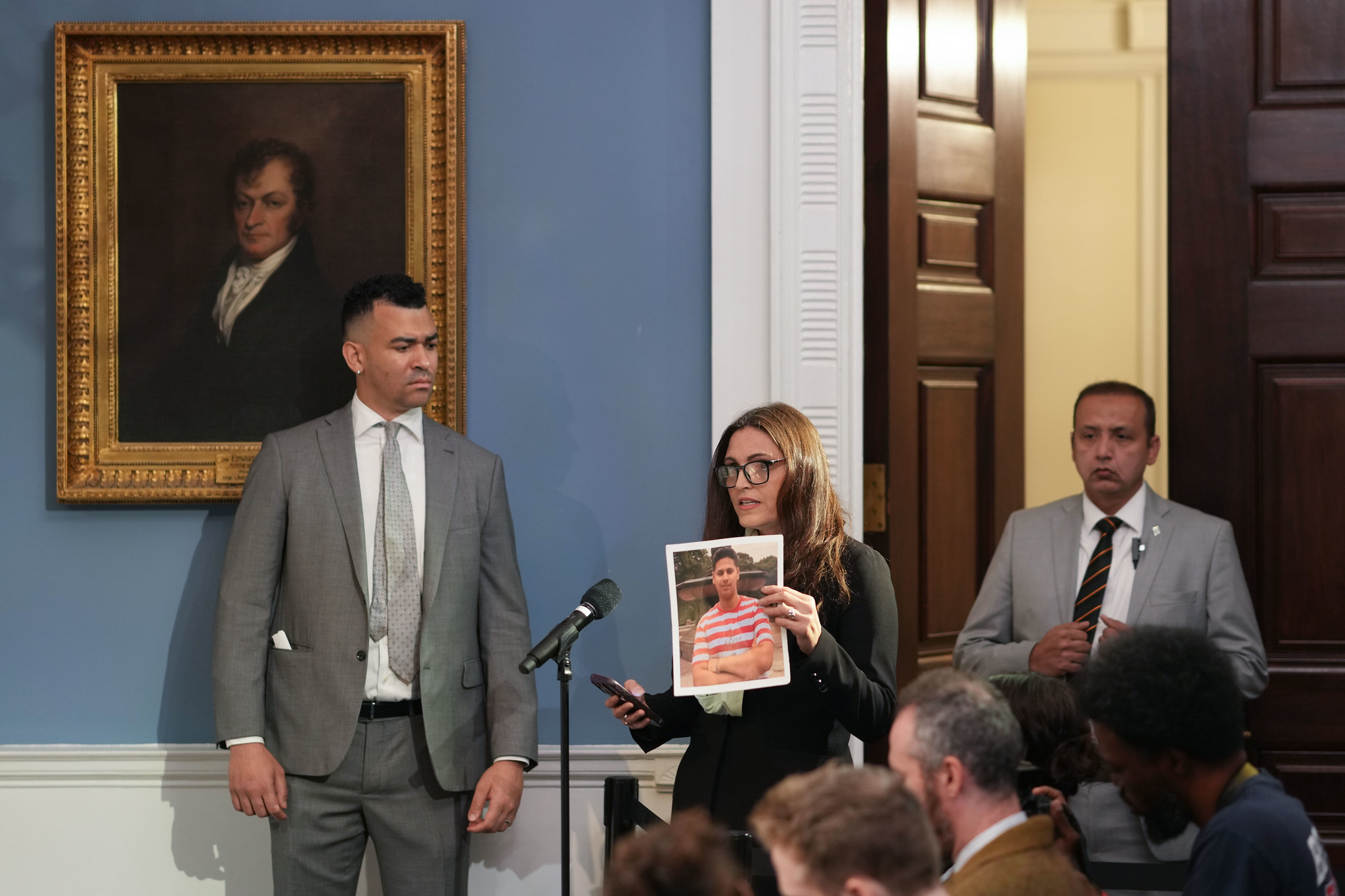
Mayor Mamdani holds a media availability. City Hall. Wednesday, November 4, 2026. Credit: Ed Reed/Mayoral Photography Office.
Mayor Mamdani Doubles City’s Free Produce Program for Older New Yorkers
Pop-Up Produce initiative doubles the number of participating sites from 10 to 20 across the five boroughs
First round distributed 24,000 bags of fresh produce to older New Yorkers in August
NEW YORK – Mayor Zohran Kwame Mamdani today announced the second round of NYC Aging’s Pop-Up Produce initiative, expanding the City’s effort to combat food insecurity among older New Yorkers. Following the distribution of 24,000 bags of fresh produce in August, the City will double its reach, growing from 10 to 20 participating sites across the five boroughs and bringing free fruits and vegetables directly into more neighborhoods for New Yorkers ages 60 and older.
The expansion comes as older adults face growing food insecurity and social isolation, particularly during the holiday season. Recent federal changes to the Supplemental Nutrition Assistance Program (SNAP) have also raised the age threshold for certain work requirements from 54 to 64 years old, putting older adults at risk of losing access to healthy, nutritious food.
“Older New Yorkers should not be forced to choose between having dinner and paying their heating bill. But thousands of seniors are facing that impossible choice, even as the cost of groceries continues to rise,” said Mayor Mamdani. “We’re expanding this initiative to bring fresh, nutritious food directly into our communities.”
“Good nutrition is essential to supporting the health, well-being and independence of older adults, which is why it’s so important that NYC Aging is expanding its Pop-Up Produce initiative,” said Deputy Mayor for Health and Human Services Dr. Helen Arteaga. “I encourage older New Yorkers to join us this holiday season as our administration hosts 20 free events across the five boroughs to distribute fresh, healthy produce for older adults.”
“NYC Aging is proud to bring our Pop-Up Produce initiative back, expanding it to reach even more older New Yorkers this holiday season,” said NYC Aging Commissioner Dr. Lisa Scott-McKenzie. “Access to fresh, nutritious food is essential to the health and well-being of older adults, particularly at a time when many families may be facing increased financial pressures. By bringing produce directly into communities, we are helping older New Yorkers access healthy food they can enjoy with their family and friends.”
Throughout November and December, older adult centers (OACs), food pantries and community centers will host distribution events in every borough. A full list of dates, times and locations is available at nyc.gov/aging or via Aging Connect at 212-AGING-NYC (212-244-6469).
NYC Aging is one of the largest food providers in New York City. In fiscal year 2026, the agency served or delivered more than 10 million meals and provided congregate meals at more than 300 OACs citywide.
Nearly a quarter of older adults aged 65 or older experience social isolation. OACs help reduce isolation among older New Yorkers by providing meals and creating spaces to build connections and grow within their communities.
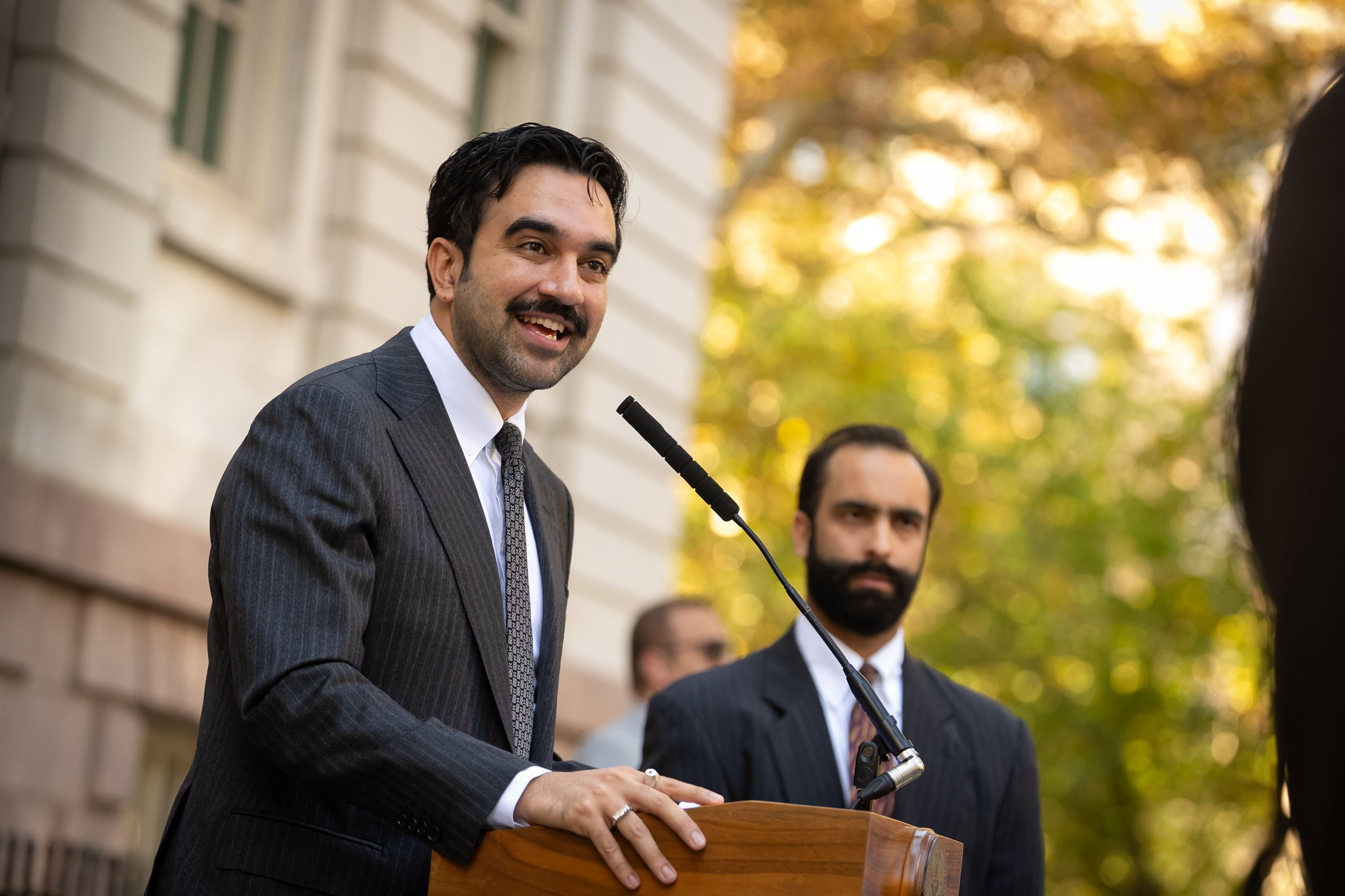
Mayor Mamdani holds a media availability. City Hall. Wednesday, November 4, 2026. Credit: Ed Reed/Mayoral Photography Office.
Mayor Mamdani Delivers Faster Buses on Flatbush Avenue, Laying Groundwork for City’s First Bus Rapid Transit Corridor
New center-running, barrier-protected bus lanes will speed up service for 120,000 daily riders
Redesign marks first step toward world-class bus rapid transit on Flatbush Avenue by 2030
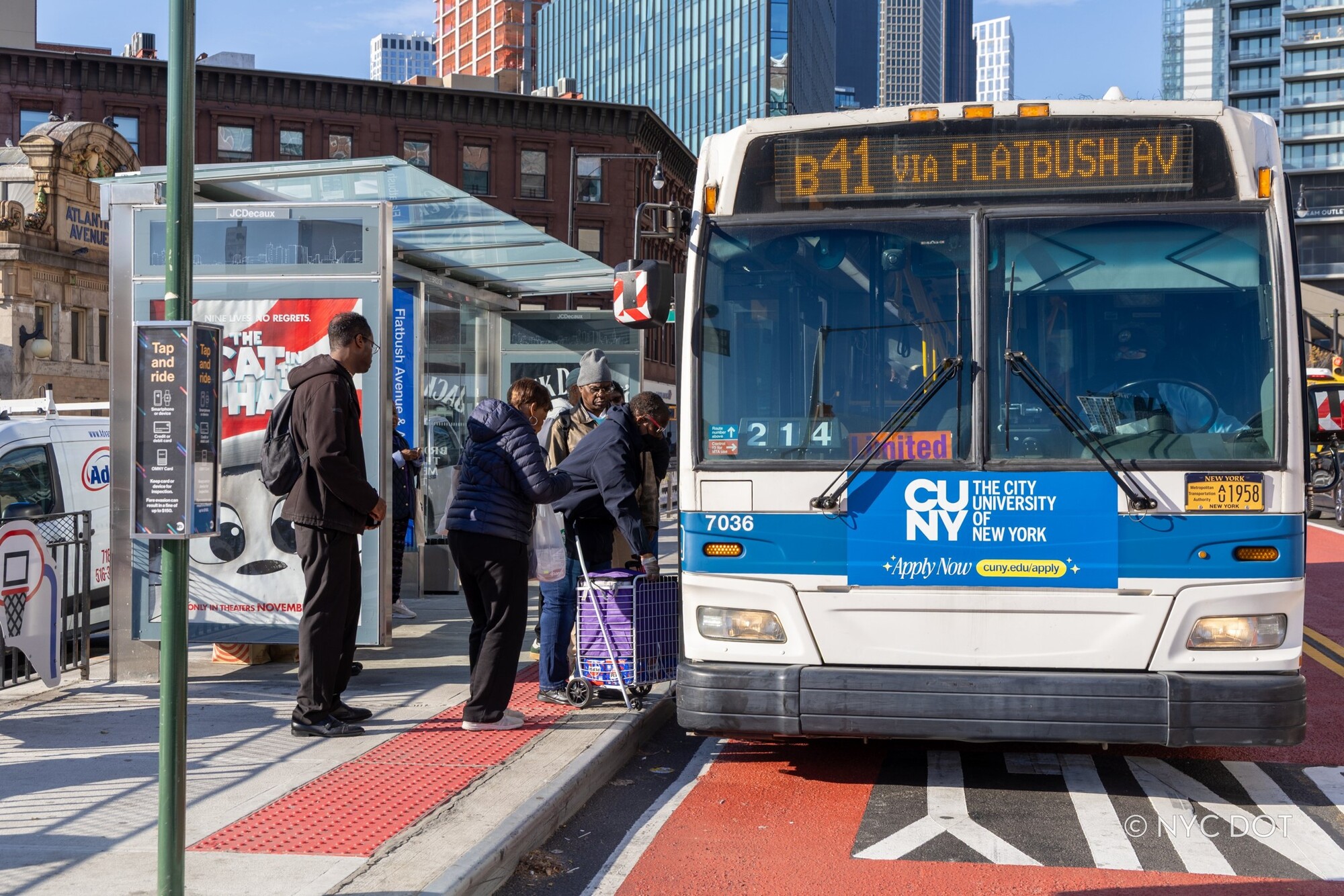
NEW YORK – Mayor Zohran Kwame Mamdani and New York City Department of Transportation (NYC DOT) Commissioner Mike Flynn today announced the completion of a major redesign of Flatbush Avenue in Brooklyn, bringing faster bus service and safer streets to a corridor serving 120,000 daily riders.
The project delivers 1.9 miles of new, physically protected, center-running bus lanes, six concrete bus boarding islands and safety upgrades to improve service and accessibility. Buses on Flatbush Avenue historically crawl along at just 4 mph, even as the corridor serves the B41 — one of Brooklyn’s busiest bus routes — as well as the B67, B45 and B103.
The redesign is the first step toward delivering world-class bus rapid transit service on Flatbush Avenue by 2030. It is also a key commitment of Next Stop: Fast Buses, Better Service, Mayor Mamdani’s historic partnership with Governor Kathy Hochul and the Metropolitan Transportation Authority (MTA) to make bus service faster and more reliable across 175 routes, nearly 75% of the city’s bus network.
“Flatbush Avenue is the foundation for the future of bus service in New York City,” said Mayor Mamdani. “With center-running bus lanes, new boarding islands and safety upgrades, we are speeding up rides for New Yorkers today and laying the groundwork for our city’s first world-class bus rapid transit corridor. Bus riders are tired of waiting — waiting for the bus that never comes, waiting for the bus to crawl through traffic and waiting for government to care about their precious time. We are changing that. On Flatbush Avenue and across the city, we’re building the fast, reliable public transit that New Yorkers deserve.”
“New Yorkers deserve a world-class transit system, and the Mamdani administration is delivering it first right on Flatbush Avenue with bus lanes that are fully protected from traffic so riders can get where they are going quickly and reliably,” said NYC DOT Commissioner Mike Flynn. “NYC DOT was able to deliver this transformative upgrade quickly, in just a few months, as the first building blocks for future bus rapid transit on the corridor. We will be using the coming months to monitor the project’s success as New Yorkers adapt to the new patterns and will make any adjustments needed.”
“I’m thrilled to have partners across City government who understand that millions of New Yorkers rely on buses to get them where they need to go and are dedicated to doing their part to make our buses faster, more reliable and safer,” said MTA NYC Transit Buses Executive Vice President Frank Farrell. “Projects like this one in the heart of Downtown Brooklyn, combined with other efforts outlined in the Bus Action Plan like expanding ACE and purchasing new buses will help us do just that.”
In communities where 69% of households do not own a car, the project prioritizes faster buses, safer streets and more accessible pedestrian space. These improvements will make it easier and more affordable for New Yorkers to get to work, school and local businesses without relying on a car.
The project adds 29,000 square feet of new pedestrian space through concrete bus boarding islands and painted curb extensions at intersections, 36 bike racks as well as seating elements such as bus shelters, benches and leaning bars at every single bus boarding island. New planters maintained by the North Flatbush Avenue BID will further harden and beautify pedestrian spaces along the corridor.
The project also brings playful art and color to the corridor. Signs designed by artist Marc-Olivier Lamothe and fabricated by the NYC DOT sign shop feature illustrations titled Day to Day, depicting scenes of everyday New York life, from basketball courts and brownstones to bodega cats and greenery. The signs are installed on the fences along the new concrete bus boarding islands and will remain on display through fall 2027.
Additional improvements include dedicated loading zones and updated parking regulations along the corridor to allow commercial and passenger vehicles to use metered parking in every parking lane, improving access for deliveries and customers of local businesses.
Approximately 45 new signal poles will support improvements like left- and right-turn signals, Accessible Pedestrian Signals (APS), pedestrian countdown signals, new signal installations to accommodate bus boarding islands and new street lighting.
The redesign followed extensive public outreach that began in 2022. This year, NYC DOT began outreach on the next phase of improvements to Flatbush Avenue, between Grand Army Plaza and Avenue H.
In 2026, the Mamdani administration has advanced major projects to speed up bus service and improve street safety across all five boroughs, including:
- The Bronx: Fordham Road, 161st Street and Tremont Avenue
- Manhattan: 34th Street, 116th Street, 6th Avenue, 9th Avenue, Madison Avenue and Lexington Avenue
- Brooklyn: Marcy Avenue, Flatbush Avenue, Utica Avenue, Church Avenue, Bay Parkway and Cropsey Avenue, Linden Boulevard and Dekalb Avenue and Lafayette Avenue
- Staten Island: Victory Boulevard
- Queens: Broadway
Together, these projects reflect the administration’s commitment to a transportation system that works for the millions of New Yorkers who rely on buses, bikes and sidewalks to get around — with faster commutes, more reliable service and safer streets in every borough.
“Here in New York, every minute counts when you’re traveling to work, school and everywhere else you need to be,” said State Senator Andrew Gounardes. “Flatbush Avenue is one of the busiest bus corridors in Brooklyn. These new protected bus lanes and boarding islands will help buses move more efficiently, making the daily commute more reliable for thousands of New Yorkers who depend on it. Thanks to Mayor Mamdani and NYC DOT for making dependable bus service a priority and for helping our neighbors reclaim their time.”
“Brooklynites depend on Flatbush Avenue buses to get to work, school and everywhere in between,” said Assemblymember Phara Souffrant Forrest. “I’m thrilled to see the swift completion of this redesign and look forward to continuing to work with DOT to deliver faster, more reliable bus service for our communities.”
“I commend Mayor Mamdani and Commissioner Flynn on the completion of this important project,” said Assemblymember Robert Carroll. “I have long advocated that the MTA should receive the funding it needs to maintain and improve our public transportation system and for measures to make our streets safer for everyone. Improved bus service is particularly beneficial to elderly, young people getting to and from school and low-income New Yorkers. This project both improves bus service and improves street safety along the vital Flatbush Avenue corridor. Bus rapid transit has been an important innovation in cities all over the world and it is great to see New York City joining the ranks of urban mobility leaders in this regard.”
“It’s time to bid farewell to the days of New York City buses moving at a snail’s pace,” said Brooklyn Borough President Antonio Reynoso. “With the redesign of Flatbush Avenue now complete, tens of thousands of Brooklynites can count on faster bus rides, safer streets and more time to go about their days. These physically separated bus lanes are a major step toward the boroughwide bus rapid transit network envisioned in the Comprehensive Plan for Brooklyn, and I look forward to working with Mayor Mamdani and the Department of Transportation to realize this shared vision.”
“Flatbush Avenue buses serve 120,000 daily riders who live, work and shop in Downtown Brooklyn and along the corridor,” said Council Member Lincoln Restler. “I’m excited to see how many more Brooklynites will rely on the bus on Flatbush now that DOT has completed its dedicated bus lanes, which are already delivering the faster, safer, more accessible service that we deserve.”
“Flatbush Avenue runs through the entire southern end of my district, and its importance to the surrounding neighborhoods cannot be overstated,” said Council Member Crystal Hudson. “For the many residents who rely on the B41, faster and more reliable service will make a real difference in their daily lives, saving time commuting to work and school or attending medical appointments. I am glad to see this project moving towards completion and hope that the improvements will make Flatbush Avenue more efficient for the people who depend on it.”
“For the 120,000 New Yorkers who rely on Flatbush Avenue buses every day, Brooklyn’s first-ever center-running bus lane is transformative,” said Council Member Shahana Hanif. “Transit riders, especially those of us who cannot use our inaccessible subways, will be able to rely on bus service to get to where we need to go. I’m proud to celebrate this new era of bus service in New York City alongside the community members and advocates who fought for years to make it a reality.”
“After years of being put last on our streets, nurses, teachers, home health aides, students and parents who depend on Flatbush’s buses stood up and said: enough,” said Betsy Plum, Executive Director of Riders Alliance. “Today, we’re making buses faster on Flatbush, and there’s so much more to come. Thank you to those thousands of riders, to the DOT and MTA teams who delivered this project and to the elected officials and community partners standing with us. Our campaign to Fix the Bus is about making that progress real for every single rider: buses that are fast enough to get you to work on time, free so you can afford to get where you need to go and fully funded so you can count on the service being there.”
“Finally, 120,000 daily riders will have faster commutes up and down Flatbush Avenue,” said Ben Furnas, Executive Director of Transportation Alternatives. “With center-running lanes, concrete bus boarding islands, brand-new signals and new loading zones, this bus lane will move New Yorkers more efficiently throughout Brooklyn. This project also shows that better buses and safer streets go hand in hand: increased pedestrian space, shortened crossing distances and better bus shelters will create an easier and safer walk down Flatbush Avenue, whether you’re headed to a bus stop or not. We’re excited to ride a faster B41 bus, and we’re looking forward to bus rapid transit along more of Flatbush Avenue.”
“New Yorkers move fast, and our buses should too,” said Kate Slevin, Executive Vice President of Regional Plan Association. “Buses moving at four miles per hour is an inconvenience that costs New Yorkers valuable time. This redesign gives buses the necessary, dedicated space they need to move riders efficiently while creating a safer street for everyone. We commend Mayor Mamdani, Commissioner Mike Flynn and the team at NYCDOT for improving bus commutes. We look forward to the creation of more protected bus lanes throughout the city.”
“As one of Downtown Brooklyn’s major thoroughfares, the implementation of the Flatbush Avenue BRT will better serve the thousands of residents, workers and visitors who rely on this corridor every day,” said Regina Myer, President of Downtown Brooklyn Partnership. “More reliable bus service and enhanced pedestrian experience will make it easier to access local businesses, cultural institutions and jobs throughout our district. Improving transportation and public space are shared priorities for DBP and NYC DOT, and we are grateful to Mayor Mamdani, Commissioner Flynn and the administration for delivering this project.”
“We are excited to see the improvements that propose to help so many users of our part of the Avenue,” said Regina Cahill, President of the North Flatbush Avenue BID Board of Directors. “The North Flatbush Avenue Business Improvement District will continue these efforts supporting public and pedestrian spaces in hopes of supporting an enhanced district for neighbors and visitors to frequent our many amazing businesses. We are grateful for the opportunity to work with the DOT teams and continue conversations to better the North Flatbush Avenue experience.”
“For too long, bus riders along Flatbush Avenue have been stuck crawling through traffic when they should be getting where they need to go. These new protected bus lanes are a major win for Brooklyn riders and an important step toward making our streets work better for everyone,” said Natasha Elder of the New York Public Interest Research Group (NYPIRG) Straphangers Campaign. “Faster, more reliable buses mean less time waiting, more time with family and better access to jobs, schools and opportunities. We applaud NYC DOT for making bus riders a priority and hope to see these improvements replicated across the five boroughs.”
“Riders on some of the city’s most critical bus routes will soon see faster and more reliable rides thanks to the Flatbush Avenue redesign,” said Lisa Daglian, Executive Director of the Permanent Citizens Advisory Committee to the MTA (PCAC). “The new center-running bus lanes, bus boarding islands and other upgrades mark New York City’s first attempt at true Bus Rapid Transit. Buses are the backbone of our transit system, and we’re deeply appreciative of the work that Mayor Mamdani, NYC DOT and the MTA have accomplished to speed up buses around all five boroughs.”
“The completion of the Flatbush Avenue redesign gives priority to tens of thousands of daily bus riders who’ve been treated like second-class citizens for far, far too long,” said Eric McClure, Executive Director of StreetsPAC. “The early returns demonstrate that the design is delivering faster speeds and giving valuable time back to riders and shows the promise for bus rapid transit to transform routes across the city. Surface transit can be incredibly efficient if designed right, and the Flatbush Avenue project is a huge step forward.”
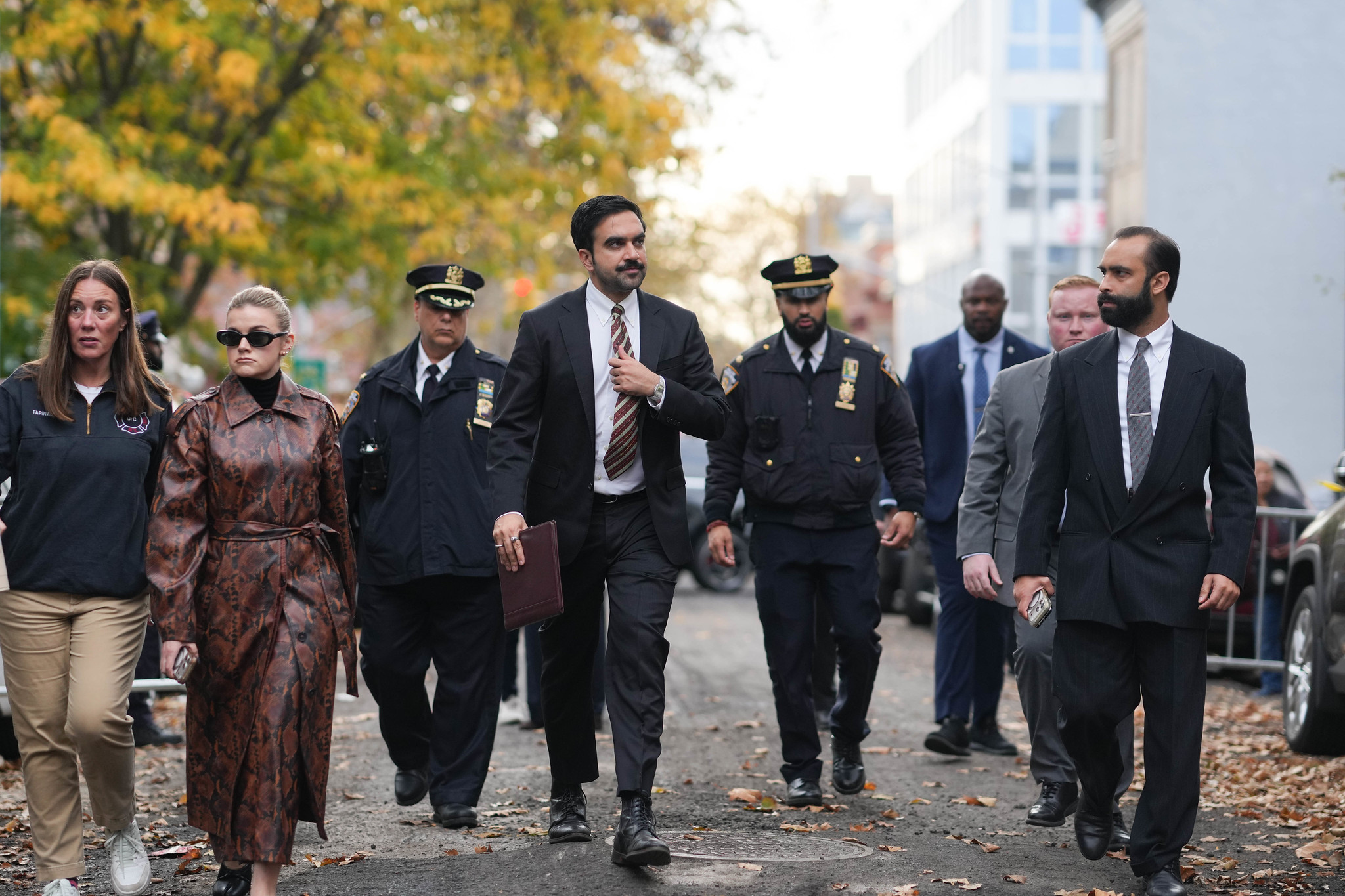
New York City Mayor Zohran Kwame Mamdani holds a press conference after a deadly fire in Sunset Park, Brooklyn on Thursday, November 5, 2026. Michael Appleton/Mayoral Photography Office
TRANSCRIPT: MAYOR MAMDANI HOSTS MEDIA AVAILABILITY
Question: I’m wondering, regarding SRG, what’s your response to the criticism that this doesn’t go far enough in terms of implementing a significant reform, especially with this new patrol unit that may take the place of the current unit in many scenarios? And then I’m also wondering, why was Chi in the video instead of [Jessica] Tisch, and are you sending any kind of message ahead of 2028, appearing with him and boosting his profile that way?
Mayor Zohran Kwame Mamdani: I’ll start with your first question, then I’ll go to your second question. On your first, I’ve long said that counterterrorism and protest response are fundamentally different responsibilities and that New Yorkers exercising their constitutional right to protest should not be met with the same police response as a terrorism threat.
I made this promise over the course of the campaign, and I’m proud to be fulfilling this promise. When it comes to what it is that we’re doing, we’re fundamentally transforming how our city both prepares for protests and responds to protests. We are establishing a new civilian-led approach that prioritizes dialogue, de-escalation and engagement. And when we are speaking about SRG’s counterterrorism functions, these will be reabsorbed by the NYPD’s Counterterrorism Bureau.
And in terms of your second question, the reason that I was with Councilmember Ossé in the video was because Councilmember Ossé has been at the forefront of calling for changes as it pertains to SRG. He is the sponsor of the CURB Act legislation that I’m proud to support, and we would not have gotten to this point were it not for the work that he and so many others have been doing.
[Crosstalk.]
Oh, and I was proud to have a sit-down conversation with the commissioner and NJ to speak about SRG.
Question: Mr. Mayor, over the last several days, New Yorkers have been beset by an outage from Microsoft, a complete national plane stoppage, banks [where] people can’t get their money. I’m wondering, what are you doing as the mayor of the city of New York to prepare for the possibility of a technological outage? Not only internet, [but also] utilities, phones [and] streetlights. What are you doing proactively and actively to protect New Yorkers from the possibility that there could be a technological meltdown?
Mayor Mamdani: I appreciate this question because when we were commemorating the 25th anniversary of the horrific terror attacks of 9/11, one of the actions that we took as part of that was to assign a responsibility across agencies to ensure that our city would be prepared in the event of any kind of an attack, both of that nature as well as any kind of a large-scale disruption to the way in which New Yorkers are living their lives.
And over these past few days, as you’ve mentioned, there have been significant disruptions to New Yorkers’ lives, especially those who’ve been seeking to either travel out of the city or come back to the city. And so, we have been in close communication with our partners at the state level, at the federal level — working especially with the Port Authority — looking to see if there’s any support that we can provide, as well as ensuring that we are able to distribute that information to New Yorkers whenever it is that we have it.
Question: Are you at all worried about the possibility of a cyberattack in New York since we are a major terror target? But also, what do you want to say to New Yorkers to calm them down? The reason I’m partly asking the question is because, you know, there was this — I know you like videos — there was this “South Park” episode saying that on Oct. 17 at 2:20 the power was going to go down in Springfield, and so there’s a whole dark web thing about something happening today, the 17th, at 2:20.
Mayor Mamdani: I’m not familiar with the video. What I will say to New Yorkers is both an understanding of their frustration. We’re speaking about New Yorkers who had made plans for months, some of them years, about going on a trip with their family or coming home from a trip with family.
And frankly, the response that we heard from federal officials was far from what many wanted to hear. And it did not leave many New Yorkers with any greater sense of confidence about our national capabilities in case of this occurring again.
And I’m looking forward to seeing Democratic majorities in the House and the Senate utilize that power to also ensure that we’re delivering more answers at a national level, because what we were hearing from some of the secretaries that day was in no way confidence-building.
[Crosstalk.]
Question: [inaudible] Is New York preparing?
Mayor Mamdani: We are prepared, and we always know that every single day is a day to do more, especially when it comes to technology. We are working closely with our Office of Technological Innovation to ensure that that is at the forefront of our preparation. Thank you, Marsha.
Question: Back to SRG, if I could, please. So, one of the big criticisms we heard, specifically from police unions, was the idea that civilians would be holding the line at protesters and be the leading edge of de-escalating and handling protests. So specifically on that, if civilians are holding the line of protesters — excuse me, if civilians are holding the line of protest, working to de-escalate, [inaudible] times protests get out of hand. People yell, get in the face of cops [and] even push cops sometimes. If it turns into a civilian-versus-civilian situation, what do you want to see happen? What is the role of police officers if that happens?
Mayor Mamdani: I want to make very clear that over the course of the 11 months that I’ve been the mayor, I’ve always said that the time that we’re taking to deliver on this campaign promise is time to ensure that we are keeping New Yorkers safe and protecting their First Amendment rights when we deliver this. That’s exactly what we’re doing in this moment.
And the point of a civilian-led community dialogue and de-escalation division is work that takes place in advance of a protest, as well as during the initial stages of a protest. We know that the vast majority of protests that take place in the city do not require any arrests. The vast majority of protests in this city are New Yorkers peacefully exercising their First Amendment rights. And we need to ensure that our initial response does not suppose that violence is an innate part of a protest.
Now, police will always be present in the case of any kind of violence. They will always be there across our city to ensure that we’re delivering public safety. Our point is transforming the city’s approach to protest itself.
And we also know that when we’re talking about the civilian-led division that is underneath the Office of Community Safety. That will launch in 2028. In advance of that, we’ve talked about this plan as taking effect in 90 days. We will be setting up the First Amendment Support Team within the Police Department. And these are officers that will be within the Community Affairs Bureau.
And even when the CDDD function does ramp up, while this FAST team will ramp down, they will continue to retain their liaison function. So, this idea that New Yorkers’ safety will be compromised is not true.
Question: Just so I understand, based on your comments, can you maybe give a little more detail of what the civilians will be doing once the protest gets going? Because it sounds like you’re talking about them having a big role leading up to it, maybe as things get going. But we all know that when or if a protest gets a little too out of hand — that often happens during mid-march, end of march — where will the civilians be at that point, mid-march, end of march?
Mayor Mamdani: I think the point here is looking for de-escalation, looking for engagement and dialogue, and that being a constant both in advance and during. And when you’re asking about as the march continues, if you have a sense that this march is transforming into something else, then it’s not for civilians to be on the front lines of that.
But the point here is that too often in our city, we have seen an attempt to meet any question, any tension through the same means and an attempt to conflate counterterrorism responsibilities and First Amendment response. We are separating it once and for all, and we are doing it in a manner that respects New Yorkers’ constitutional rights while keeping them safe.
Question: You just mentioned FAST as a ramping down. Is the plan for that unit to then be gone once the D-triple-C, if that’s what we’re calling it, actually comes online?
Mayor Mamdani: No, not the D-triple-C — C-triple-D.
Question: I thought it almost sounded like the congressional campaign arm, but whatever. Is the plan for it to basically dissolve once the civilian unit comes online?
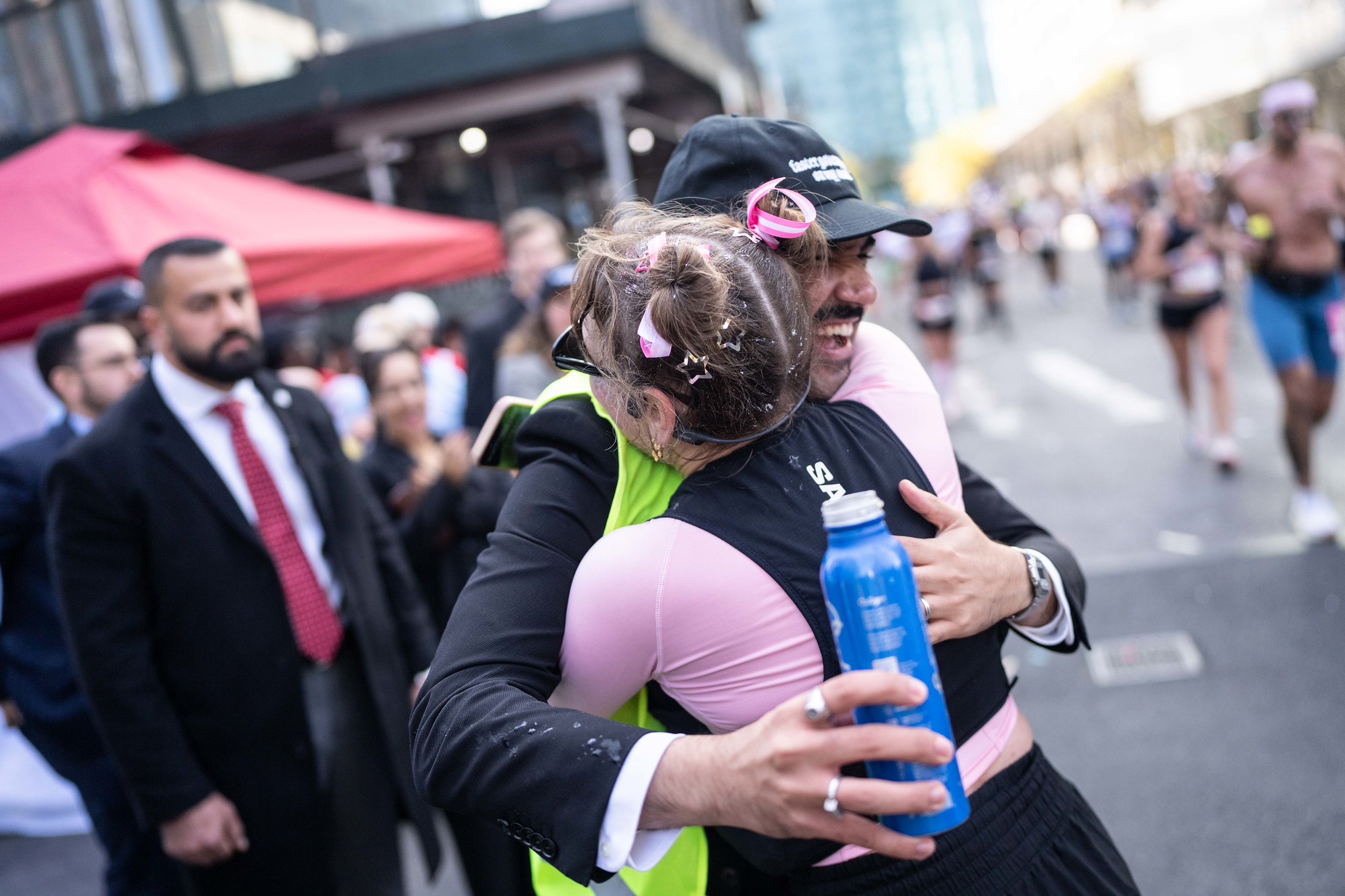
New York City Mayor Zohran Kwame Mamdani hands out water to TCS New York City Marathon runners as they make their way through Queens on Sunday, November 1,, 2026. Michael Appleton/Mayoral Photography Office
Mayor Mamdani: No, not for it to dissolve. It will continue to be present. It will just be ramped down while continuing to retain a liaison function.
Question: Got it. And on the CURB Act — this came up yesterday — at least in Council member Oswald Feliz’s telling, if you pass that law, these new specialized units that you created would be prohibited from responding to protests, almost making your announcement yesterday moot. Do you agree with that analysis, and is the plan to ultimately get rid of these types of specialized units altogether in responding to protests? If not, do you want to see that bill amended? And if I may, just one more thing—
[Crosstalk.]
Question: You’ve endorsed Hakeem Jeffries for speaker. You withheld support for Chuck Schumer for Senate majority leader. What’s up with that decision? Why support a New York representative in one case and not in the other?
Mayor Mamdani: What I’ve said is that Americans have made their voices clear in the midterm elections. They have voted, no matter whether we’re speaking of Astoria or Albuquerque or Allentown, with a clear desire and demand for government to work as hard and as fast as they do and for government to deliver change that they can feel in their wallets.
And I’ve said that I care less about who serves in what position and more about what they do with that power. Because I can tell you that when I’m speaking to New Yorkers, they do not ask me about the questions of who serves in that position. They ask me: “Will I be able to make rent? Will I be able to afford my groceries? Will child care actually be something that I can afford in the city that I love?”
And that is what I think that we need to be judged by, on whether or not we deliver that. And I’m excited to see Democratic majorities in both the Senate and the House because it is an opportunity to wield that power for the benefit of working people. And that’s something that I and many other New Yorkers look forward to.
And then on your second question, you know, I’ve said I support the CURB Act, and I believe that’s exactly why these are the kinds of questions that should be engaged with during the legislative process. The things that we have set up here, the community dialogue and de-escalation division, the First Amendment Support Team, these are not things that are in any way in tension with what we’re speaking about when it comes to the CURB Act.
And when I’ve spoken also about — you know, I was asked earlier, “why have Council Member Ossé in the video?” It’s precisely because the advocacy that he has brought forth, the CURB Act itself, we’ve incorporated a number of the major aspects of that legislation into this announcement. Our plan with this announcement is that this be our approach to responding to protests, and the CURB Act is one that would then codify that for future administrations to come.
Question: You’re open to that legislation potentially being amended in order to ensure that these new units can live on?
Mayor Mamdani: I don’t think that there’s actually a tension in the way that has been put forward when it comes to a number of these things, and I’m open to the CURB Act getting its chance in the legislative process. I’m sorry, not open. I support that.
Question: Two questions. First, will existing SRG officers be allowed to join the new Patrol Support Division? And second question, what would you tell parents whose kids attend shrinking schools about whether they should expect those schools to be closed in the near-ish future or merged with other schools?
Mayor Mamdani: I’ll go with your second question first, and then I’ll go to your first question. You know, your question is also coming at a moment where we’re talking about enrollment rates in general, and I think, like many districts across our country, our New York City public schools are seeing a decline in enrollment because of the affordability crisis, as well as because of declining birth rates.
It is incredibly expensive to raise children in our city — as I know many of you in our press corps know — which has led to families leaving our city all together. And that, combined with slowed immigration policies from the federal government, have had a major impact in enrollment levels.
Now, the chancellor and I are committed to putting our schools on the strongest possible footing so they can continue to serve New Yorkers for generations to come. And we are actively discussing what the next steps look like to ensure that every child actually has a school that is best serving them.
We have heard reports across our city where we have seen the size of certain schools being far less than what anyone had ever originally intended. And to your second question, when it comes to the Patrol Support Division, we are going to maintain a high level of eligibility. Any police officer that wants to be a part of that has to meet that eligibility threshold, no matter what part of the department that they are applying from.
[Crosstalk.]
Question: My colleague today wrote about the increase in time it takes to repair broken streetlights on major thoroughfares, like the corner of Flatbush and Ocean Avenue by Prospect Park and the Queensboro Bridge, not too far from here. What will your administration do to improve the time it takes to fix these broken streetlights, and will you tackle it like you’ve done potholes in making sure that New Yorkers are not left in the dark?
Mayor Mamdani: I think that this is an incredibly important part of not just delivering excellence in city services, but I think it is also connected to public safety and the importance of lighting across our city.
So, I will follow up on the report. You said that your colleagues — The City Reporter? So, I’ll follow up on that report, and we’ll get back to you.
Question: Do you have any idea of how to fix [inaudible]?
Mayor Mamdani: I think one of the key things is ensuring that we actually have the city workers on hand. And one of the things that we inherited were a number of different measures that have been taken both at the Office of Management and Budget and generally across the city workforce of a freeze on hiring except for two-for-one. A lot of these kinds of measures that we’ve since undone, that is now work that we still have to continue to build upon.
Question: Will the NYPD still be able to use bicycles in terms of addressing protests? Will the NYPD still be able to use bikes at certain protests? And is your limitation on bicycles just in the way they’re used or that have been used allegedly as weapons, as opposed to — to get up a street where it’s been blocked off and the traffic is stopped?
And just one more. Can you give us an example — since [Jessica] Tisch wasn’t in your video and people have had, you know, curiosity about where you’ve differed on this issue. Of course, you’re the mayor, you’re the one who gets to make the decision, but could you give us an example of an area where you and the commissioner negotiated on this subject and came to a compromise and how you worked it out?
Mayor Mamdani: On your first question, the NYPD will be able to continue to use bicycles as a form of transit, and what we’ve made very clear is a limitation on the use of bicycles as a weapon or form of aggression.
When it comes to your second question, I appreciate the many conversations that I had with the commissioner on this, as well as between our teams, in ensuring that we could operationalize the fulfillment of this campaign promise.
And those conversations began at the very beginning of our working relationship. They continued through these 11 months, and they range from the very straightforward separation of responsibilities of responding to First Amendment protests and responding to terroristic threats. And then they also extend to the very technical questions of how to compose the First Amendment Support Team, that we would have a community dialogue and de-escalation division within the Office of Community Safety, what kind of models to build upon. And you also saw this in the trip that a number of staff took to Columbus to see the Columbus model in action.
So, I appreciate all of that work, and I would say that what we are delivering today is something that we both stand behind.
Question: So, how will these civilians be chosen, and who will choose them? And will there be rules and regulations that these civilians have to follow, and who will they be reporting to? If they do something wrong, will they have to also report to the CCRB? How will this be sort of handled? Thank you.
Mayor Mamdani: So, when we are speaking about the civilian unit — this is the community dialogue and de-escalation division — it will be housed in the Office of Community Safety. So, these are a staff of starting at about 30 that will be hired by the Office of Community Safety.
And the office will engage with local and national experts in design and implementation. They will focus on de-escalation, on mediation, on preparing civilian responders to engage with protest organizers in advance of protests, as well as how to identify any tensions that they can help to mediate.
These trainings, as I was just saying earlier, will draw on existing models like the Columbus model. And if — when it comes to the actual hiring process, that is the information that we’ll share closer to the date of its operationalizing.
Question: Will they have to go through background checks? And then also, why not retrain officers for de-escalation? Why use civilians? Is this eroding trust in the Police Department that they’re able to handle things like de-escalation?
Mayor Mamdani: I completely have confidence in our Police Department delivering public safety across our city. The point here is that so often our city’s first response to the question of protest has been a conflation with counterterrorism. And that’s been a result of the fact that the SRG was founded with a belief that these two responsibilities went hand in hand.
So, what we are doing by fulfilling this campaign promise is separating out these responsibilities and doing so with an adherence to what we’ve seen work elsewhere in organizing, liaising with protests and de-escalating any tensions that come from it. And then in terms of New Yorkers and their expectation of public safety, we would never announce something that would compromise that. Thank you, guys.
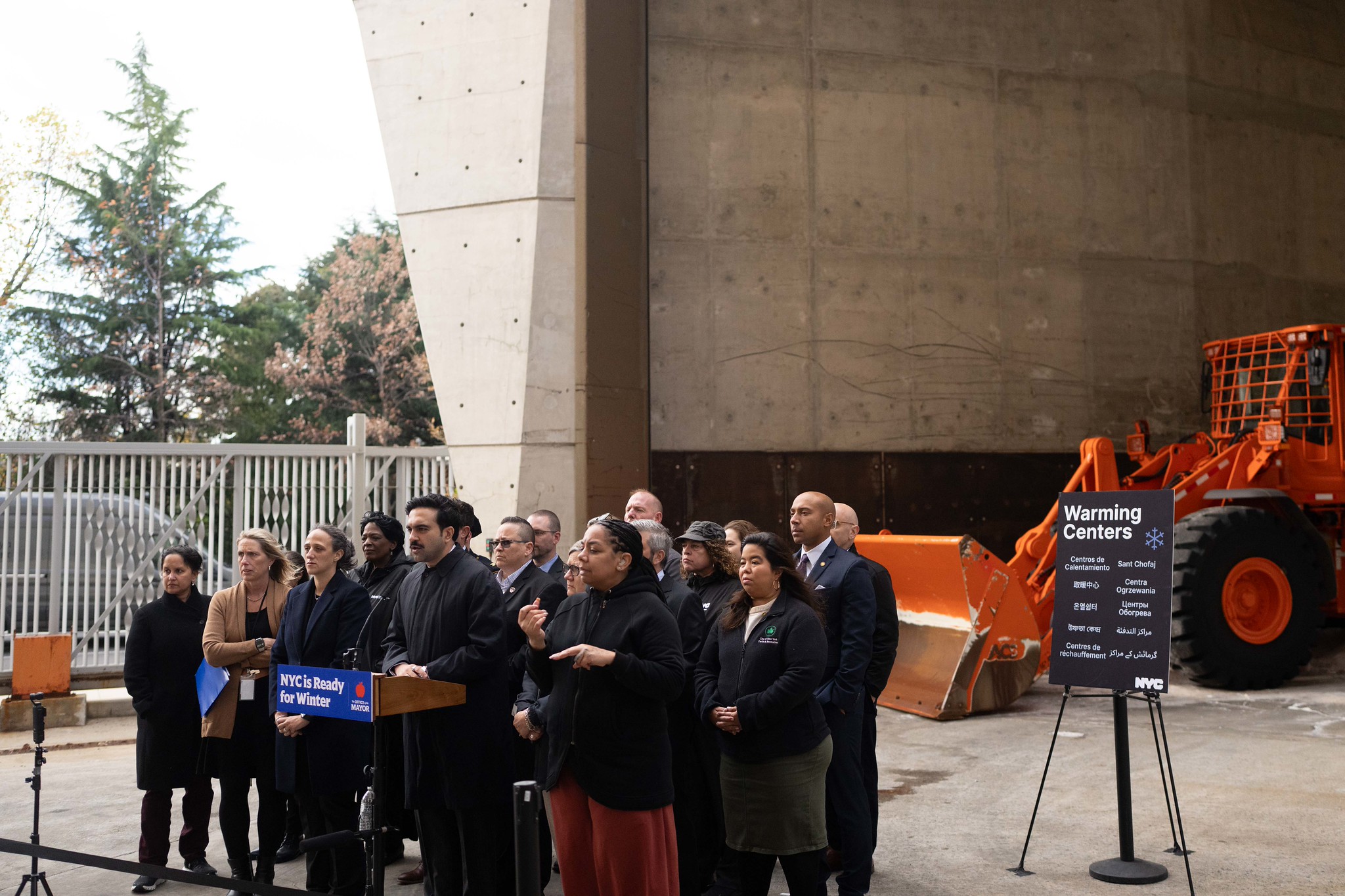
New York City Mayor Zohran Kwame Mamdani holds a press conference on winter preparedness at the Spring Street Salt Shed in Manhattan on Monday, November 9, 2026. Michael Appleton/Mayoral Photography Office
Mayor Mamdani Expands Access to Free Immigration Legal Help, Opens City Hotline Seven Days a Week
Nearly $1.5 million investment expands access to free, safe and confidential legal assistance for New Yorkers, regardless of immigration status
NEW YORK – Mayor Zohran Kwame Mamdani today announced expanded hours for the New York City Mayor’s Office of Immigrant Affairs’ (MOIA) Immigration Legal Support Hotline. New Yorkers can now call seven days a week to connect with free, safe and confidential legal help in their preferred language, regardless of immigration status. The Hotline also provides trusted information and referrals to community resources to help New Yorkers understand their options.
New Yorkers can reach MOIA’s Immigration Legal Support Hotline at 1-800-354-0365 or by calling 311 and saying “Immigration Legal.” The Hotline’s expanded hours are:
- Monday-Friday: 9 a.m. – 8 p.m.
- Saturday-Sunday: 9 a.m. – 5 p.m.
“More than 3 million immigrants call New York City home. Every one of them deserves to know their rights, understand their options and have someone to turn to when they need help,” said Mayor Zohran Kwame Mamdani. “With nearly $1.5 million in new funding, our Immigration Legal Support Hotline is now open seven days a week, including weekends, when working New Yorkers finally have the time to make that call. At a moment when the federal government is sowing fear and intimidation in our neighborhoods, New York City is answering with real, tangible support. As long as I am Mayor, every immigrant in this city will have someone in their corner. Call 1-800-354-0365 for free, confidential help in your preferred language.”
As part of the expansion, the Hotline will hire additional counselors who speak Arabic, Mandarin and Haitian Creole. Current Hotline counselors speak English, French, Haitian Creole, Spanish and Wolof. Counselors can also access telephonic interpretation in more than 200 additional languages.
To improve responsiveness and multilingual access, the Hotline has also launched WhatsApp communication in English and Spanish. It is implementing an after-hours answering and callback system and an interactive voice response system.
“Immigrant New Yorkers are our neighbors, and they deserve dignity and respect,” said Deputy Mayor for Economic Justice Julie Su. “Yet some bosses threaten to call ICE when a worker asks for the wages they earned, and some scammers charge immigrants for legal help they never provide. That is why we expanded this hotline, so a worker who gets off a long shift can pick up the phone and talk to someone who will explain their rights and help them figure out what to do when a boss cheats them.”
“At a time when immigrant communities are navigating heightened fear and uncertainty amid increased federal immigration enforcement and changes to immigration policies, access to trusted legal support and resources is more important than ever,” said MOIA Commissioner Faiza N. Ali. “By expanding the hours of our Immigration Legal Support Hotline, we are making it easier for New Yorkers, regardless of immigration status, to connect with free, confidential legal assistance and get reliable information about their options. We want every immigrant New Yorker to know that they are not alone, that help is available and that the City is here to support them.”
The Mamdani administration invested nearly $1.5 million in the Fiscal Year 2027 budget to support the Hotline and its expanded hours. The additional funding will help the Hotline’s respond to more callers and address their evolving immigration needs.
In August, MOIA launched a $300,000 advertising campaign to raise awareness of the Immigration Legal Support Hotline. Through print, radio and digital ads, as well as community outreach sessions, the campaign reached New Yorkers in 17 different languages: English, Spanish, Chinese, Russian, Pulaar, Tibetan, Tagalog, Nepali, Kichwa, Soninke, Arabic, Punjab, French, Haitian Creole, Urdu, Wolof and Min Nan.
“Catholic Charities Community Services, Archdiocese of New York, is proud to partner in the expansion of the Immigration Legal Support Hotline,” said Lisa Flores, CEO of Catholic Charities Community Services, Archdiocese of New York. “Expanding service to seven days a week and adding multilingual hotline counselors are important steps toward ensuring that New Yorkers can access reliable information and assistance when they need it most. Immigration-related questions and concerns don’t stop at the end of the workday or on weekends. By extending weekday hours and adding weekend availability, we can reach more individuals and families, provide timely information and guidance, and connect callers with critical legal services and community resources.”
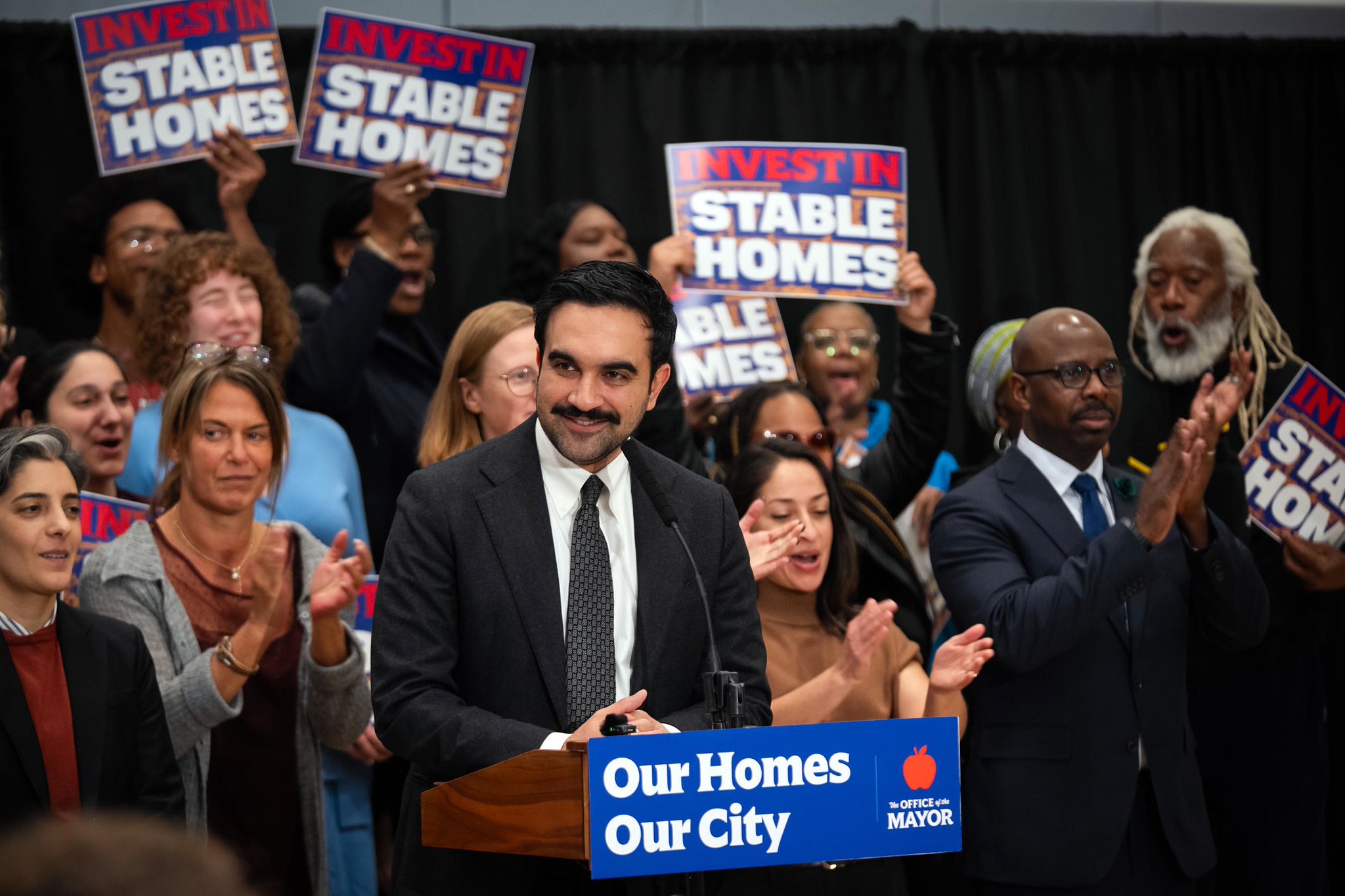
Mayor Zohran Kwame Mamdani signs the Community Opportunity to Purchase Act (COPA), landmark legislation that will give qualified nonprofits and community groups the first opportunity to purchase certain multifamily buildings before they hit the private market. 276 Chestnut St, Brooklyn. Tuesday, November 10, 2026. Credit: Ed Reed/Mayoral Photography Office.
Mamdani Administration and MSquared Break Ground on 134 Homes at Long-Vacant Brooklyn Site, Launching New Public Financing Tool
665 New York Avenue, vacant since a 2012 fire, will be redeveloped using the City’s new SMRRT Loan, creating a revolving source of public investment in housing
The mixed-income project will deliver 90 affordable apartments, including 18 homes for displaced tenants and 14 homes for formerly homeless New Yorkers
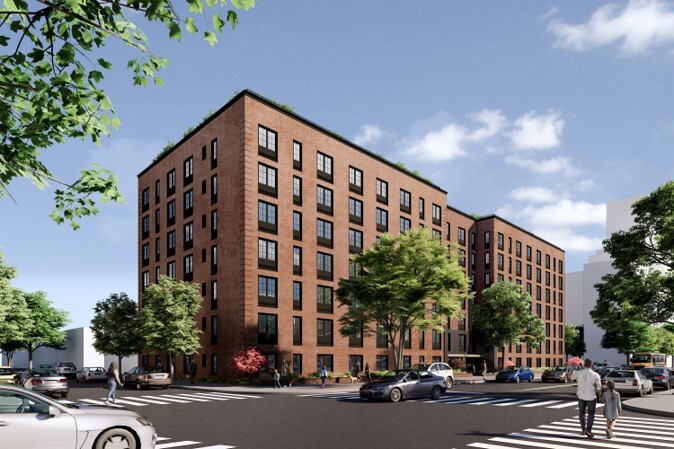
Rendering of the redevelopment of 665 New York Avenue. Credit: Beyer Blinder Belle
NEW YORK – Today, Mayor Zohran Kwame Mamdani, MSquared and project partners broke ground on the redevelopment of 665 New York Avenue in Brooklyn, bringing 134 homes back to a site that has sat vacant since a devastating fire in 2012.
The project marks the first use of the Mamdani administration’s Subordinate Market Rate Revolving Term (SMRRT) Loan, a new public financing tool included in the administration’s housing plan. The loan is designed to return revenue from financed projects to the City, creating a revolving source of public investment that can be reinvested in future affordable housing development.
When complete, the mixed-income development will include 134 homes with 90 affordable apartments, including 18 apartments for formerly displaced tenants and 14 homes for formerly homeless New Yorkers. The all-electric building will replace the gas system that served the property before the fire and include parking, bike storage, a rooftop deck and a fitness center. Construction is expected to be complete in 2028.
“New York City must use every tool at our disposal to deliver relief for families who are struggling to find an affordable place to call home. Bringing 665 New York Avenue back to life will welcome former residents home, create new affordable housing and put a new financing tool to work for New Yorkers,” said Mayor Mamdani.
“The SMRRT Loan is an innovative, flexible tool that will help us accelerate the preservation and creation of mixed-income affordable housing across the five boroughs. This investment will not only help rehabilitate important projects like 665 New York Avenue, but it will also establish a revolving source of capital that can be reinvested in future affordable housing projects across our city,” said Leila Bozorg, Deputy Mayor for Housing and Planning. “Congratulations to the HDC team for developing this important new financing tool, and to MSquared, HPD, and all of our partners for bringing this deal across the finish line.”
“Amid our city’s unprecedented housing shortage, HDC is proud to help develop new financing tools that will expand the resources we have available to deliver more affordable mixed-income housing across New York City,” said Housing Development Corporation (HDC) President Eric Enderlin. “We look forward to working with all our partners in the months ahead to deliver more than 130 affordable homes to the Prospect Lefferts Gardens community of Brooklyn.”
“New York’s housing crisis demands smart solutions and 665 New York Avenue demonstrates how we can bring the public and private sectors together and deploy creative financing tools to unlock stalled sites,” said Alicia Glen, Founder & Managing Principal of MSquared. “By transforming a building that has sat vacant for nearly 15 years, we are returning much-needed housing to the community, serving both former residents and working New Yorkers. We’re grateful to HDC, HPD, Councilmember Rita Joseph, and Citibank for supporting this project and delivering a new model for mixed-income housing in New York City.”
“For more than a decade, 665 New York Avenue has been a scar on East Flatbush, a burned-out building that families walked past every day and wondered when anyone would act. Today we finally have an answer. With 90 affordable homes, including homes for tenants who’ve been displaced and for New Yorkers coming out of homelessness, this site will once again be a place where our neighbors can put down roots. I thank the Mamdani Administration and MSquared for treating this corner as a priority, and for showing that when government and partners work together, we can turn a symbol of neglect into a source of hope,” said Council Member Rita Joseph.
The SMRRT Loan is a component of the Mamdani administration’s Block by Block housing plan. Administered by the New York City Housing Development Corporation (HDC), the financing tool is designed to return revenue generated by the projects it supports to the public, allowing the City to reinvest those funds in additional mixed-income housing. The administration plans to use the tool to accelerate affordable housing development and extend the reach of public investment across the five boroughs.
MSquared also secured debt financing from Citibank for the project. Additional funding came through a mixed-income Article XI tax abatement, in partnership with the New York City Department of Housing Preservation and Development (HPD) and New York City Councilmember Rita Joseph.
The redevelopment marks a new chapter for the blighted site, which has remained vacant and uninhabitable for nearly 15 years. In 2012, a lightning strike during a storm sparked a seven-alarm fire that severely damaged the building and prompted vacate orders. Hundreds of rent-stabilized residents were displaced.
The Block by Block housing plan sets a goal of building 200,000 new affordable homes and preserving 200,000 more over the next decade, backed by a historic $22 billion investment in affordable housing over five years. The administration is also advancing an ambitious land use agenda and reforms to get New Yorkers into affordable housing faster.
These efforts are a part of Mayor Mamdani’s broader approach to addressing the housing crisis, including stronger protections for organized tenants, new tools to crack down on negligent landlords, a revamped code enforcement system and increased investment in public housing.
Banner Image: Mayor Mamdani visits a grocery store in Brooklyn to highlight SNAP cuts. Monday, November 2, 2026. Credit: Ed Reed/Mayoral Photography Office
NYC Mayor Zohran Mamdani


Zohran Mamdani was sworn in as Mayor of the City of New York on January 1st, 2026. Prior to becoming Mayor, he represented the 36th New York State Assembly District and its neighborhoods of Astoria, Ditmars-Steinway, and Astoria Heights.