


This Thanksgiving, reclaim the holiday from a Native perspective and celebrate the Indiginous mothers that saved the settlers
Duwamish leader on how Native women taught settler mothers to feed their children when milk was scarce
This week, we share a Duwamish tribal leader’s relationship with the holiday, and stories about fostering indigenous teachings and efforts to pay rent for living on Native land.
Editor’s note: Earlier today, readers learned about the origins of the Thanksgiving holiday which we know today, which was not celebrated continuously from America’s founding. Instead, it was made an official holiday by President Lincoln after the Civil War to unite the country and make immigrants feel accepted and part of the culture. In the 1600s, settler women would have usually fed their babies themselves using breastmilk, as wet nurses and high class Victorian women eschewing the practice wasn’t yet in vogue. But the woman who had just birthed her baby when they arrived in America was very ill with malaria and exhaustion from the four month journey, so had no milk to provide for her child. Consequently, native women helped her to find sustenance for her baby while she recovered and was later able to provide milk.
Each week on The Newsfeed, host Paris Jackson and a team of veteran journalists dive deep into one topic and provide impactful reporting, interviews and community insights from sources you can trust. Each day this week, this post will be updated with a new story from the team.
Duwamish director reflects on Thanksgiving roots
By Jaelynn Grisso, story published 11/23/2026
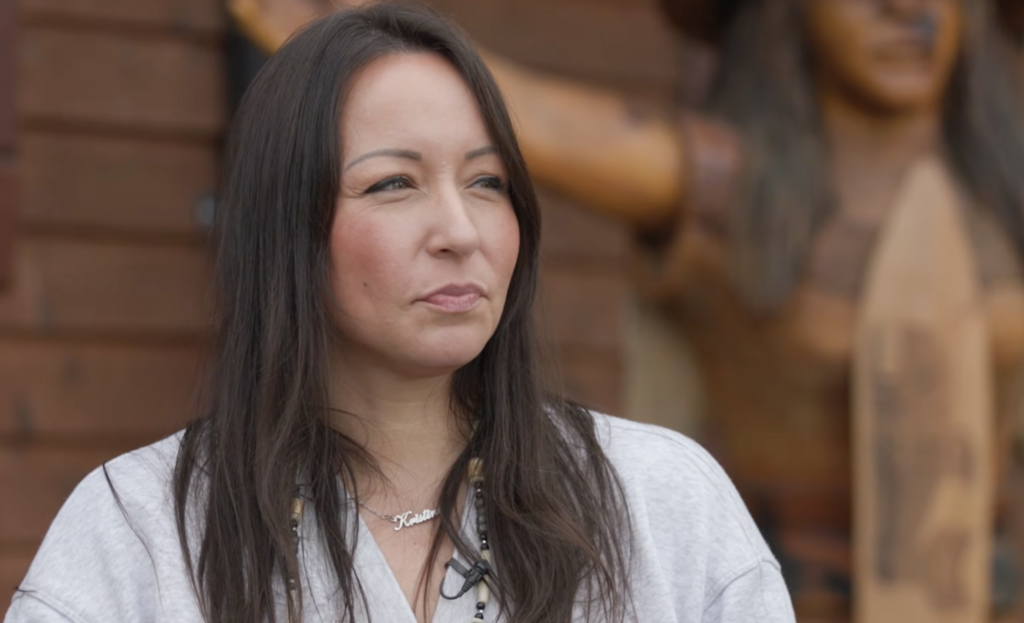
November is Native American Heritage Month. Thanksgiving Day can be complicated for many Native Americans, including Kristina Pearson, Executive Director of Duwamish Tribal Services.
“Thanksgiving was just something that happened, and you accepted that it happened because this is what people do in America,” she said.
“We’re Duwamish, Suquamish, Chinook [and] Snoqualmie,” Pearson said as she introduced herself. “My mother is Cindy. My grandmother is Cecile Hansen. Cecile has been chairwoman for the tribe for 51 years now.”
When it comes to Thanksgiving, Pearson thinks about the first winter after Denny party settlers came to the Puget Sound in 1851.
“There were like instances of like folks not being able to feed their babies. And because there weren’t necessarily, you know, cows for milk here. And Duwamish people, women,” she paused. “I feel like women don’t get enough credit. We talk about Chief Seattle a lot. I have a whole speech where I go into how we’re related to Seattle, but then I pivot and I talk about how really, It’s about his sister and their mother. So I kind of imagine it to be these the women, right, who would have shown that those colonial women how to use clam juice to feed their babies.”
These days, she says that particular Thursday has become more focused on gathering and being together. As for being grateful? That’s a regular practice
“We went out to harvest some devil’s club recently, right, and you leave something as a way to say thank you,” she said. “And that’s just an everyday thing. Not on, you know, some obscure day in November.”
Real Rent Duwamish raises funds to support federally unrecognized tribe
By Jaelynn Grisso, story published 11/24/2026
A local, grassroots effort allows people living in Seattle, including folks outside of the Native community, to directly support the Duwamish tribe by paying rent.
Jerome Hagen, volunteer for the Duwamish Solidarity Group, explained Real Rent Duwamish.
“It is a way for people to pay a symbolic rent to the tribe,” he said. “Many of us have to pay rent that we have no choice over, but we have the opportunity to pay rent to the first people of this land, the Duwamish tribe, who’ve been here since time immemorial.”
The rent is symbolic, but the money is real. The program began almost a decade ago to provide material support to the Duwamish people. The Duwamish Tribe is not recognized by the federal government, so it doesn’t get the same powers, funding and services as tribes with recognition.
“The actual origin of Real Rent is there was a conversation that members of the solidarity group were having with Cecile Hansen, the chairwoman of the tribe,” Hagen said. “The thing she said was, if everybody in the Seattle area could just give $1 to the Duwamish tribe, the tribe would be in much better shape. And so out of that conversation, Real Rent was created as a way to make that possible and to create a structure for people to do that.”
For Olivia Johnson from the Duwamish tribe, Real Rent’s impact can’t be understated.
“They helped us to do so much that we’ve never been able to do before. It’s just like night and day. Like, from just being… operated out of, you know, rented offices and business parks all throughout King County to having our own spot, and keeping the legacy of the Duwamish people alive. [That includes] providing services for our tribal members that we were not able to provide before,” she said. “We have a lot of tribal members who are very low income, who are struggling, and there are some people in our tribe who really depend on those services to get through the month.”
As Thanksgiving approaches, Hagen says it’s a chance to build relationships.
“We all have an opportunity to have to rethink about Thanksgiving in a way that actually builds towards that true partnership between indigenous people and the other people who have arrived here,” he said. “To be able to use Thanksgiving as a way to build a relationship, to form partnerships with indigenous tribes and indigenous people, to be able to purchase from indigenous tribes, to be able to support indigenous tribes, to help them in their fights and struggles that are going on that can hopefully turn Thanksgiving into something that that we can be proud of as a way to live together in partnership.”
Banner Image: Kristina Pearson, Executive Director of Duwamish Tribal Services Image Credit – Cascade PBS
The Staten Islander News Organization Editors


This is the shared editors' account for the Staten Islander news organization. To locate the account of a particular editor, please search using their screen name.