


Lillie P. Bliss and the Birth of the Modern
Through Mar 29, 2025
Editor’s note: Staten Islander has previously covered the installation of artworks by Alex Katz and an interview with the artist. We also covered their Crown Creativity Lab which explores the connections between art, gardening, and social justice.
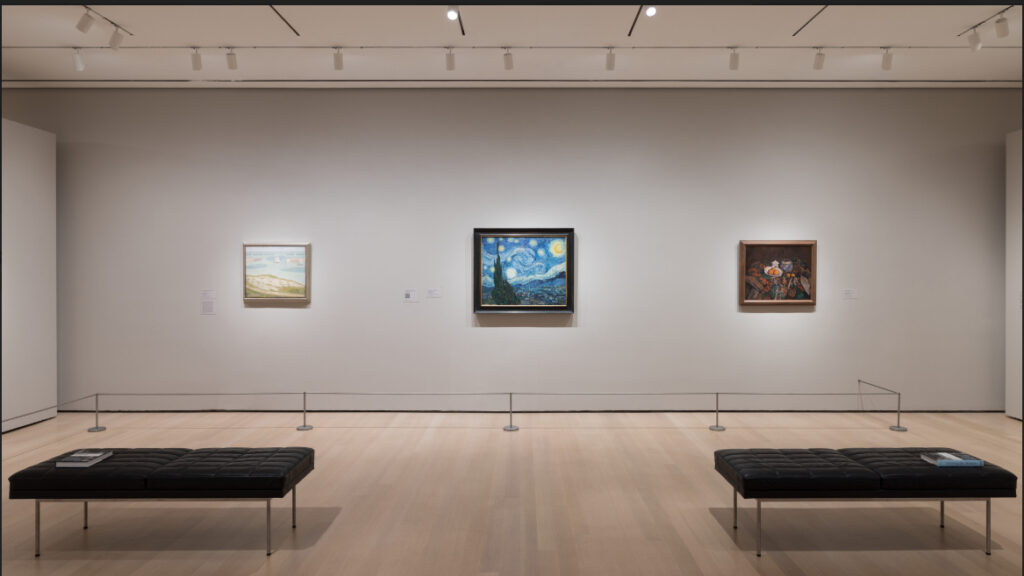
A collector. A founder. A visionary. Lillie P. Bliss was a fierce supporter of groundbreaking artists at a time when modern art was often met with suspicion or ridicule. “They have something to say worth saying and claim for themselves only the freedom to express it in their own way,” she declared. As one of MoMA’s three founders, Bliss played a critical role in bringing modernism to America, and her transformative gift helped shape the Museum’s future, enabling iconic acquisitions like Vincent van Gogh’s The Starry Night.
Lillie P. Bliss and the Birth of the Modern illuminates this pivotal figure in MoMA’s history through the works of art she loved most, including paintings and works on paper by Paul Cézanne, Odilon Redon, Georges-Pierre Seurat, and Pablo Picasso.
MoMA would not be what it is today without Lillie Plummer Bliss. In 1929, after years of advocating for modern art in New York, Bliss, together with Abby Aldrich Rockefeller and Mary Quinn Sullivan, founded The Museum of Modern Art. When she died, at 66, just two years later, Bliss left a large part of her art collection to the museum—a visionary act that fundamentally changed MoMA’s trajectory.
Lillie P. Bliss and the Birth of the Modern brings together 40 works from Bliss’s collection, including paintings and works on paper by Paul Cézanne, Odilon Redon, Georges-Pierre Seurat, and Pablo Picasso. Bliss was a fierce supporter of these groundbreaking artists at a time when modern art was often met with suspicion or ridicule. “They have something to say worth saying and claim for themselves only the freedom to express it in their own way,” she declared. Her uniquely generous gift, which allowed for the sale of her works to fund new acquisitions—including Vincent van Gogh’s The Starry Night—provided the young museum with a means to develop its collection far into the future.
Bliss’s remarkable contribution to the history of modern art in the United States remains under-recognized. This is partly due to her wish to stay out of the spotlight; at the end of her life, Bliss requested that her personal papers be burned. While much of her story remains left to the imagination, Lillie P. Bliss and the Birth of the Modern illuminates this pivotal figure through the works of art she loved most.
Organized by Ann Temkin, The Marie-Josée and Henry Kravis Chief Curator of Painting and Sculpture, and Romy Silver-Kohn, co-editor with Temkin of Inventing the Modern: Untold Stories of the Women Who Shaped The Museum of Modern Art, with Rachel Remick, Curatorial Assistant, Department of Painting and Sculpture.

