


NYC’s Manufactured Migrant Crisis At Southern Border: Roads of Fire Movie Review
Were you paying attention over the course of the last several years, as the media told us again and again that there was a major migrant crisis happening in the cities of the United States? Migrants were coming in droves, millions more than ever before, according to many media reports at the time. Videos were shown on television and on YouTube of the many migrant buses entering New York City, Chicago, San Francisco, and others.
This change seemed very severe and different than before at the time: all of a sudden, there were millions of migrants beating down the door to get into the US, and, of course, Democrat politicians were completely to blame because of their sanctuary city laws. These laws, which have been condemned by politicians on both sides, but especially by those on the Republican ticket, make it so that anyone who comes to New York City, or who resides there already, has the right to shelter. As a right, it has not been quite so fundamental, as there are still many people who are homeless on the streets of these cities. But in principal, it is supposed to mean that there are enough shelter spaces for those who need them. In practice, however, many of those who call the streets home do not want to go into the shelter system. Especially in shelters in boroughs like the Bronx, they are notoriously dens of criminal activity, mostly robberies and assaults (including sexual assault). The woman from New Jersey whose life could have turned around had the circumstances of the last days of her life been different was reported to have been in one of the more violent Bronx shelters before a migrant set her on fire on the subway, taking her life. This migrant was also here illegally.
So what has been actually going on? According to this film, and the people on the ground who are interviewed, the story is very, very different from what we were told. First of all, the sudden massive influx of illegal migrants seeking sanctuary was a myth. A myth supposedly perpetuated by the governor of Texas. In opposition to what we have been told, the migration rates have steadily increased, and this has been a global problem. Millions of people have been forcibly displaced from their homes around the world, and many are seeking sanctuary in countries all around the globe. Readers may remember our recent stories about the Democrat politicians seeking to bring attention to the gerrymandering (or politically redrawing of maps in order to increase the number of seats likely to be won by the majority party – in other words a form of quasi-legal and sometimes illegal political cheating) going on over in – you guessed it – Texas. A similar form of gerrymandering occurred right here on Staten Island, seeking to absorb Staten Island districts into other districts, including those in the more liberal Brooklyn, to silence the voices of local residents, who almost always vote contrary to the rest of the City. For context, we are the ONLY NYC borough with an incumbent Republican borough president. All others citywide are Democrats. In addition, Rep. Malliotakis spoke out against the successful gerrymandering by Texas as well.
In Texas, they had recently had some politically embarrassing moments, including a devastating hurricane they were woefully under-prepared for and a snowstorm that they simply had never experienced at that magnitude before. This was prior to the 2025 disaster at Camp Mystic (which we also covered the heroism of a local first responder from New Jersey who saved many of those who were thought to be lost). This tragedy could have been avoided if Texas had passed the measures under discussion earlier, which had been possible, but they did not pass them.
It should be noted that in this particular special session where the Democrats fled the state and were hosted by other cities, flood relief and preparation was supposed to be passed. According to Google’s AI: “passage of Senate Bill 3, which provides funding for flood warning sirens, and House Bill 1 (the “Youth CAMPER Act”), which creates new safety regulations for summer camps. Additionally, Senate Bill 1 requires camps to have emergency action plans and train staff and campers for flood events. The state legislature also passed other flood relief and disaster preparedness bills, and Governor Greg Abbott signed Senate Bill 5, which allocates significant funding for flood relief and preparedness.”
The governor of Texas was complaining that there were many illegal migrants at the border, and in response, New York’s mayor and several other city and state representatives said that he was exaggerating. So, in response, he started putting people on buses and sending them to liberal cities with a one way trip. This caused a major influx into the cities, including New York City, which they were unprepared for. They did not have enough places to put these people who were suddenly at the gates. They asked the federal government for relief, which actually was finally transferred to pay back the city for its expenditures, but during one of DOGE’s rounds of cuts, this money was literally taken out of New York City’s bank account. So, the city had to lay out a massive amount of money in order to contract with hotels, build makeshift shelters such as on Staten Island’s Floyd Bennett Field, and take many other actions in order to deal with the actual crisis on the ground.
According to one of the members of EV Loves NYC, the officials in Texas were loading migrants onto the buses without providing them with their paperwork, and in some instances, they even loaded children and parents separately. So children without accompanying adults were also showing up in the City. One 14 year old girl had diabetes, and she was loaded onto the bus without her papers or her medication. She nearly died, though the local hospital in NYC was able to save her life.
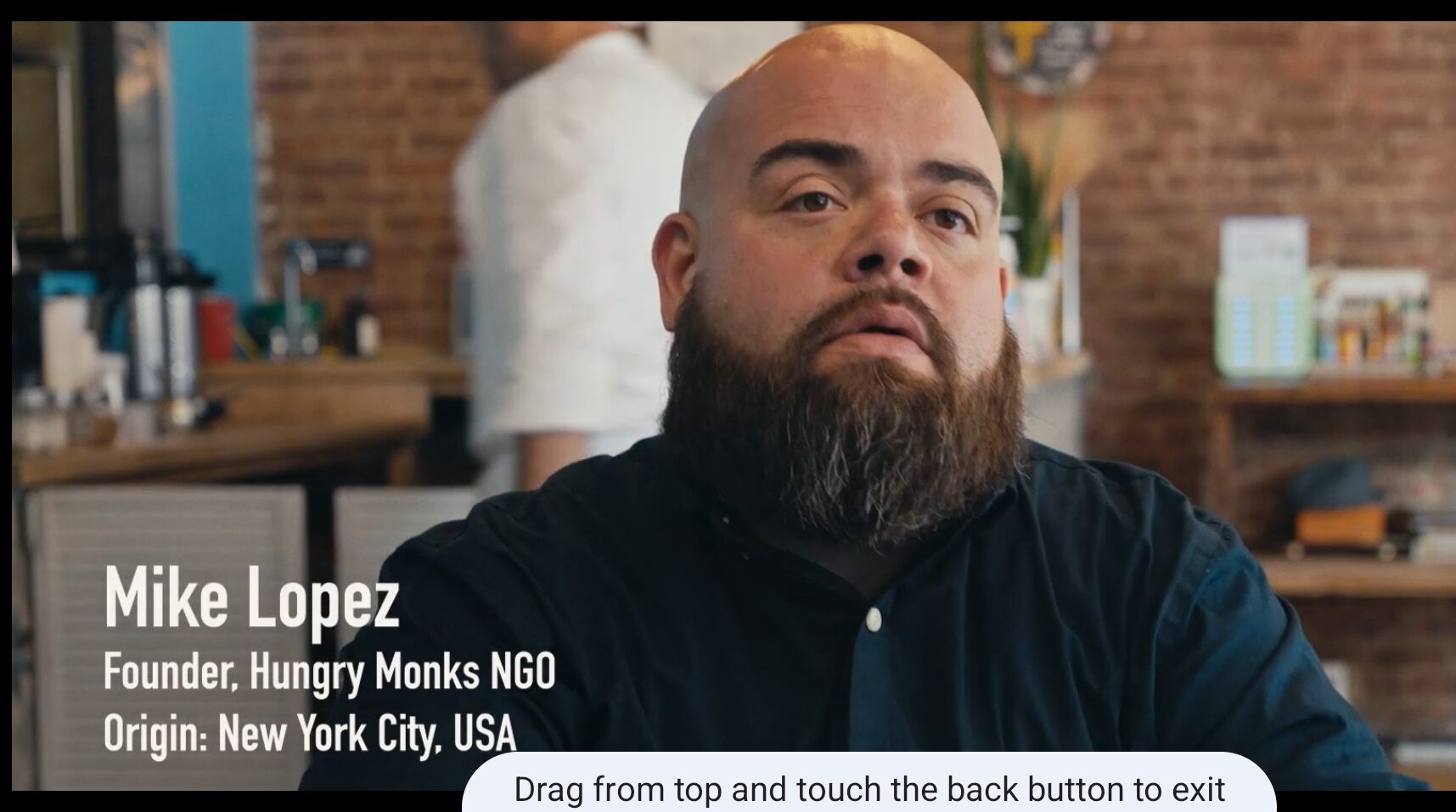
In the film itself, we are following several different individuals as they participate in three different corners of the migrant crisis. We meet the people at EV Loves NYC, which is a small, grassroots charity that operates and supplies soup kitchens to care for the homeless and for the arriving migrants. Their wholesome meals are sometimes the first food the migrants have had since their journey from the bus station in Texas to New York City (about a 14 hour trip). One of them is the pastor of the local church, and he helps many migrants navigate the complex legal system to apply for asylum. One of the non-profit members is a person with blue hair, another is a pink haired person, and finally there is a Muslim woman and the heavyset, cigar-smoking, bearded priest. All of them work together to help get these new arrivals in the City fed and housed and on their way to asylum.
Cast of characters mentioned above:




We also follow a ‘coyote,’ who is himself a migrant from another country which was torn apart and ravaged by war. In his gratitude to those who risked their lives to save him from that situation, he helps others to escape their bad life circumstances. We meet many who are risking everything to leave their country and come to America. Because in America, there is medication. You thought I was going to say opportunity. But many of those we meet are traveling here to save their child from a condition that means the end of their life in their home country. In the US, their child will have a much better chance of thriving.
So the coyote picks up the people he is assisting at a meeting spot. He takes a bus with them across the country, and then they must go through the jungle. Many have died on this route; in fact, their dead bodies can be seen and also smelled as those who do not succumb to this fate go though this, the toughest and most uncertain part of the their journey. Once they get into America, then they are subject to its laws.
Once here, they are given a hearing date, and they must attend or the deportation proceedings are started. Sanctuary is a possibility for some, while others will have wasted their time and risked their life for nothing when they are sent home (or somewhere else, in the case of the current situation). Most are escaping political persecution, gang violence, or domestic abuse. The American laws regarding immigration have remained the same since the early 20th Century, when racist quotas were put into place in order to prevent more people immigrating here from Italy. Yes, Italy (learn more about this in the excellent book The Italian Squad, which details the early immigrants to New York City from Italy and the crimes that some of them committed. You can also see what life was like in the time these laws were being contemplated in the film Cabrini, about the nun from Italy who helped save many of the orphan children on the streets and in the sewers here).
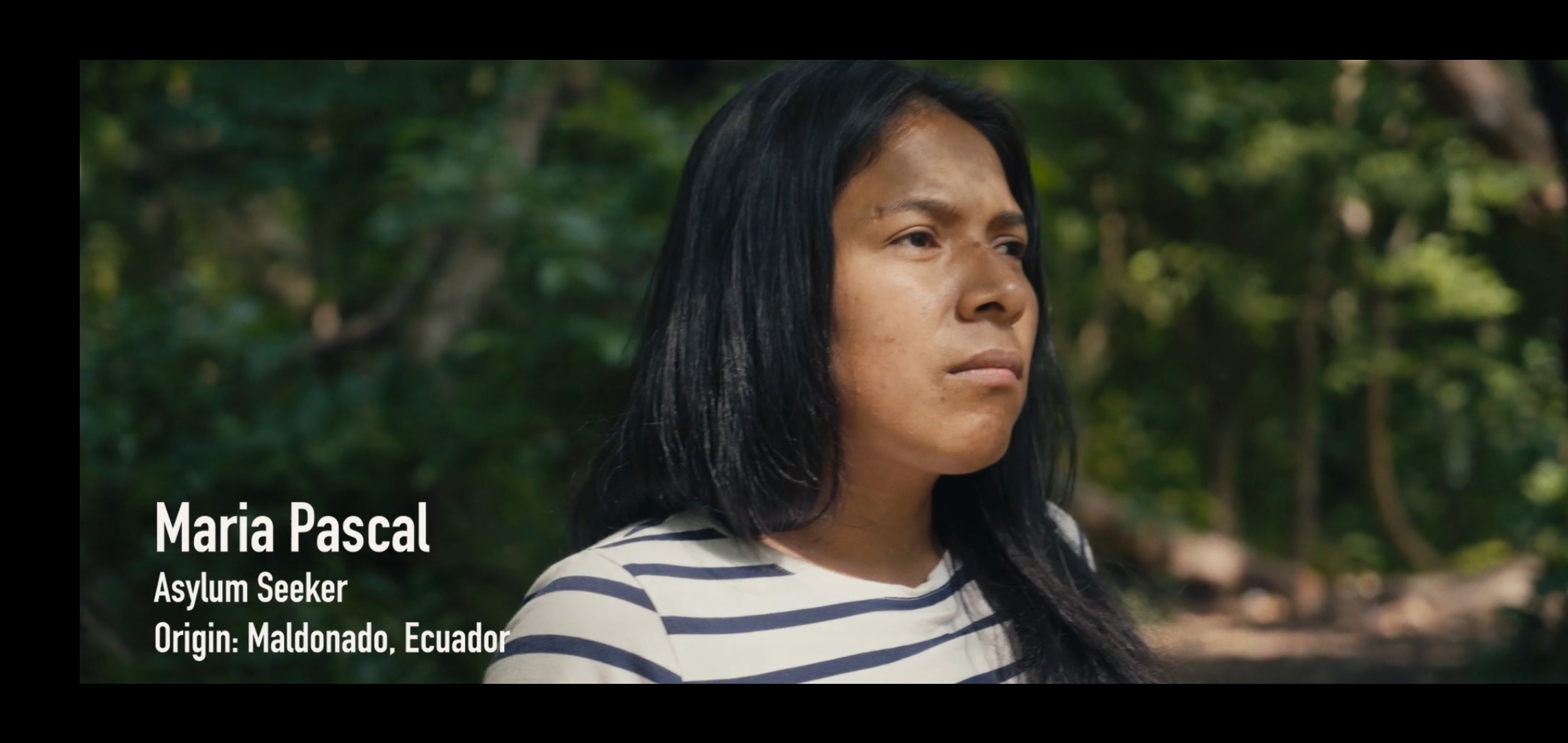
The third person we meet is a woman who was beaten daily by her husband. She could not hide from him anywhere in the country she originated from, since she knew he would find her. She had to navigate a system that she does not speak the language of, and she relied on the kindness of others to make her way here. She is helped by the priest before mentioned. He finds a family for her to stay with, and he brings her to an immigration attorney who explains to her what she must do. She needs witnesses who can attest that she was abused and was fleeing for her life. She must bring this before a judge, and she must testify as to what she experienced and why she cannot return. The one and only person who holds her, and every other immigrant seeking asylum-seeker’s fate, is their immigration court judge. Eventually, as the film ends, we learn that her asylum has been granted. She can rest easy, as she has made it into her version and image of the American Dream.
EV Loves NYC, along with many other charitable organizations, care for the migrants because they are human and have arrived on their doorstep. There is no judgment in the care they provide. Many have traveled a long and dangerous road to come to this country and seek a better life for their families. And as the film opens, we are reminded of a real truth: that America was built on immigration, and that we must never close our doors to them, or we will not be America anymore. This is a country of immigrants, as only Native American tribes have complete ancestral claim to this land. Everyone else is the descendant of an immigrant, whether one or five generations ago.
You will be surprised to learn that this following quote is from President Ronald Reagan, hero of the Republican party, and a president whose legacy is confusing at times. The film opens with this clip where he said this: “Since this is the last speech that I will give as president, I think it’s fitting to leave one final thought, an observation about a country which I love: Anyone, from any corner of the Earth, can come to live in America and become an American. If we close the door to new Americans, our leadership in the world will soon be lost.” This was at a time when the annual immigrant refugee population was 19,850. It is much higher now, but America is still a nation of immigrants.
Following are a few other quotes from the film:
Mammad Mahmoodi of EV Loves NYC: “They call it a migrant or refugee crisis… In relationship to New York City, this all started in 2022 as a stupid political gimmick… Texas [****] up multiple times during Covid, then the winter storm came, they lost power for ten days. Things that showed all the problems in the state of Texas… The governor of Texas wanted a very big distraction. So people were crossing the Southern border. It was a part of life. But they suddenly decided to emphasize it. And then a lot of New York City politicians went down to criticize them doing that. Then like a childish revenge, they were like ‘Well, if you are criticizing us, we are gonna send them to you.’ A game of political chess, how to shame people. You know Abbott saw that it got a lot of media attention, and it became a whole process. At the peak of it, 11 buses arrived at Port Authority in 1 day. They were literally piling up people in the buses without even giving them their paperwork. Kids were sent without parents…
“…this one thing that really enraged me. There was a 12/13 year old girl that was put on the bus. She was diabetic, but they didn’t even provide insulin to her. She nearly died. By the time that the bus arrived in NYC, FDNY had to take her to the hospital. They nearly had the blood of a 12 year old on their hands just to send a message…”
The film is highly recommended, and I would give it five stars:


Following are the press notes on the film:
The lives of a human smuggler transporting refugees to the Darién Gap, an asylum seeker in New York City, and volunteers on the frontlines of a humanitarian crisis interweave in a harrowing examination of the global migration crisis.
With unprecedented access to the global migration crisis, Roads of Fire weaves together three powerful, deeply personal narratives: a human smuggler guiding refugees through the treacherous Darién Gap, an asylum seeker rebuilding her life in New York City, and volunteers working on the frontlines of a mounting humanitarian emergency.
The film offers an unflinching, intimate look at the human cost of forced migration, and the resilience of those navigating one of the greatest humanitarian crises of our time.
“Anyone from any corner of the earth can come to live in America, and become an American. If we ever closed the door to new Americans, our leadership in the world would soon be lost.”
Ronald Reagan (1989)
“Our immigration system is broken. It has been for decades -and everyone knows it.”
Barack Obama (2015)
“We have to remember that all of us New Yorkers come from somewhere.”
Eric Adams (2022)
DIRECTOR’S STATEMENT
Roads Of Fire is the culmination of years of labor executed by an extraordinary, compassionate, engaged, and courageous group of artists and crewmembers. It is also a window into a journey I’ve been undertaking for roughly a decade – one that began with my learning about my grandfather’s experiences as a Spanish Arab refugee in Morocco, having escaped one of the Spanish dictator Franco’s concentration camps in Northern Africa, and relocated to Tangier. He restarted his life there from nothing as a delivery boy, and up until his recent death he could still recite in Spanish, French, English, and Arabic the roadmap of Tangier, and the names of people he met along the ancient alleyways and thoroughfares he navigated as the pilot of a local delivery donkey-cart.
Hearing that story for the first time coincided with the early days of my professional directing career, and completely altered my perception of what I wanted to do with my time on this planet.
I’ve always been interested in stories that interrogate places, and peoples’ relationships with them – people estranged from home, people searching for it having never known it, experiencing displacement within their lands, or watching their home change and erode around them. I heard my grandfather’s story, and a few years later directed my second feature film and first feature documentary for Paramount, Don’t Leave Me Behind: Stories of Young Ukrainian Survival – a film that took me to the edge of war, and brought me into the dizzying, devastating, and thoroughly wrecking world of conflict journalism and storytelling. On that project, and with my grandfather’s story in my brain, I realized that I’d found what I was here to do, and where my journey was going to take me. Roads of Fire was born soon after.
My goal for the film initially was to examine the systemic mishandling of the migrants and refugees being sent to New York City from Texas and other parts of the United States. As we filmed, I met humanitarians and volunteers who gave me glimpses through – then pushed me through – the curtains of the ugly world of non-profit financing, the political machinations that exist between and around administrations, those who need money to bolster and pay out their overheads, and those who need money to truly do the work that needs to be done to save lives. I met more Asylum Seekers from more parts of the world than I could count. I heard stories of unimaginable pain, and inconceivable courage.
I was humbled by the generosity, courage, and openness of people who had experienced extremes of life that I couldn’t fathom. I met our subjects: Maria, and her two boys Axel and Alex, then newly arrived Asylum Seekers totally adrift and alone in a harsh city collapsing in on itself, the result of administrative gridlock, internal corruption, and inhuman politics. And through a complex web of relationships, I met Jonathan, a smuggler of people, someone who understands and accepts the moral implications of his trade, taking money in exchange for guiding human beings into and through danger, all while paying off drug cartels and international criminal syndicates.
It took going to Colombia, being invited into a migrant encampment on the beaches of Necoclí, evading guerrilla zones in the mountains, and eating a local meal with former narcos turned security contractors to really understand what the film was about. Roads of Fire is about illuminating the messy humanity at the heart of what the rest of the world only sees as a political or economic talking point. Its goal is to bring the viewer into the sweat, dirt, anxiety, adrenaline, joy, and pain of people of all walks of life – all of whom make mistakes, sacrifice, compromise, dream, and strive for more. It’s about bringing the viewer into a conversation they’ve never been a part of with people they don’t see.
I traveled two continents making this film. The prevailing take-away for me is that when you tell someone in good faith that you want to listen to what they have to say, learn about their lives, get their perspective, they’ll talk to you. People will let people in, given an honest chance.
If this film helps people build those bridges of basic compassion, and opens the door, even a tiny amount, for people to have those conversations, then it will have succeeded. My grandfather did that on a donkey cart almost a century ago in Morocco, and I’ll be proud if this film helps those who watch it do the same.
Global Migration Economy Overview
As reported by Reuters, in 2017 human smugglers made 35 billion USD on the global migrant crisis, and drove the devastating migrant push across the Mediterranean ocean that led to enormous numbers of deaths by drowning, dehydration, and heat stroke, according to the head of the International Organization for Migration (IOM).
This statistic lies at the heart of Roads of Fire, and opens the door to a constellation of questions that implicate the entire economies of countries, cities, their political machineries, infrastructure, and the shadow economies that exist within them and along their borders. Migrants fleeing mortal circumstances leave home with every dollar they can muster, and through the process of navigating these trades, locations, and structures, can wind up with nothing, stranded, and more vulnerable than when they began.
Banner Image: Roads of Fire poster. Image Credit – Roads Of Fire

