

Somos Leadership Reception, Winter Response, Landmark COPA Legislation, November Financial Plan, Lowest Overdose Rates Since 2019, Flight 587 Memorial: Mayor Mamdani
Editor’t note: A few weeks back, the Mayor announced that more snow shovelers would be hired, and that they would be paid a better salary. Last week, the mayor discussed the newly expanded SNAP benefits available for use to consumers at farmers markets and other local stores on fresh produce. Check back later this week to see the testimony that the Mayor listened to before deciding to sign the horse carriage ban. And before they start giving out the hats and celebrating with champagne, this law is going to be challenged legally. With the precedent set by New York City during the takedown of the yellow cab industry by what some have said was collusion between the big app companies and the Big Apple, with all sorts of perks and red carpets provided to these new companies – at the serious expense of cab drivers and, unfortunately, passengers, who blithely signed away their right to accountability by the companies if they were assaulted or in an accident. The company’s terms of service removed all liability for their driver’s behavior from the company, unlike in the car service industry where drivers are heavily vetted and companies are, in fact, liable. There has been some change, but many drivers committed suicide because they were placed in the literal exact position these horse carriage drivers now find themselves in – married to a medallion that cost more than a decent house and has now become worthless – with the loans still due with interest.
Mayor Mamdani Wins 90-Day Extension to Protect Small Retailers Nationwide from New Federal Requirements
Agreement with Trump administration gives bodegas and small retailers more time to meet new requirements that threatened their ability to accept SNAP and serve more than 36 million Americans
NEW YORK – Mayor Zohran Kwame Mamdani today announced that, following negotiations with the Trump administration, the U.S. Department of Agriculture (USDA) will delay the start of enforcement of a new rule requiring SNAP-authorized retailers to meet expanded stocking standards. Although the rule was originally required to be implemented Nov. 4, the 90-day extension gives bodegas and small retailers across the country additional time to comply.
“When hundreds of bodegas came to our administration asking for help, we stood with them. These neighborhood businesses are the backbone of our small business economy and an essential source of affordable food for more than one million New Yorkers — and 36 million Americans — who rely on SNAP,” said Mayor Mamdani. “Without more time, many of these stores risked losing the ability to accept SNAP — threatening their livelihoods and making it harder for families to put food on the table. I am grateful that President Trump has agreed to delay beginning enforcement of this rule, and we will continue fighting to protect our neighborhood businesses and the New Yorkers who depend on them.”
“When we met with bodega owners at City Hall last month, we heard from them directly about how they wanted to comply with the new federal rule, but that they didn’t have the resources, the guidance or the time to do so,” said Deputy Mayor for Economic Justice Julie Su. “We told them we would fight for them and we meant it. Now this extension gives them a welcome reprieve and time to make these changes. Our smallest businesses are a foundational part of our administration’s commitment to economic justice. We will continue to engage with bodegas across our city to build a city for all.”
“In response to federal changes putting thousands at risk of losing their SNAP benefits, our administration has made unprecedented strides to ensure nobody in New York City goes hungry. We knocked 10,000 doors, connected with New Yorkers through 40,000 calls and established resources to help those affected navigate the new rules,” said Deputy Mayor of Health and Human Services Dr. Helen Arteaga. “Today’s announcement is an important step toward keeping nutritious food accessible to vulnerable New Yorkers. We look forward to continuing to work with our federal partners to protect New Yorkers experiencing food insecurity.”
“Bodega owners keep asking us the same questions: which products count, where to buy them, and where to put them,” said SBS Commissioner Kenny Minaya. “This extension will give bodegas more time to learn about the rule and get into compliance. Our administration is committed to supporting all small businesses with free compliance education through our expanded NYC Business Express Service Team program. We encourage any bodega owner with questions to call us at 888-SBS-4NYC.”
“This Administration understands that running a bodega today isn’t easy. Between rising costs, changing federal regulations and the everyday challenges of running a small business — our bodegas have a lot on their plates,” said Mom and Pop Czar Delia Awusi. “Today’s announcement of a 90-day extension of the compliance deadline will be met with a sense of relief by many of our bodega owners. It gives them some much-needed breathing room to prepare for these changes.”
Today’s announcement comes one week after Mayor Mamdani publicly called on the USDA to delay enforcement of the rule on behalf of hundreds of New York City bodega owners and convenience store retailers. Business owners had warned that they needed more time to understand the requirements, secure qualifying products and make necessary investments.
The City will work closely with USDA’s Food and Nutrition Service, the New York City Department of Small Business Services (SBS) and the New York City Department of Health and Mental Hygiene to reach store owners, provide guidance and ensure they have the support needed to meet the new requirements before enforcement begins.
The USDA’s final rule requires SNAP-authorized retailers to meet expanded stocking standards, including offering at least seven varieties of food in each of four categories: dairy, grains, proteins and fruits and vegetables. The USDA did not issue implementation guidance until Sept. 4, leaving businesses with just two months to meet the new requirements.
Without adequate time, neighborhood stores and bodegas risked losing their ability to accept SNAP, threatening the viability of businesses that rely on the program for a significant share of their sales. Bodega organizations estimate that SNAP purchases account for 15-20% of a typical New York City store’s sales, with some Bronx owners reporting figures as high as 30%.
The loss of neighborhood SNAP retailers would leave New Yorkers with fewer places to buy groceries and deepen existing food deserts in the city. Combined with the new federal work requirements, enforcement of the stocking rule threatened to create additional barriers for New Yorkers who rely on SNAP to feed themselves and their families. The 90-day delay gives these essential neighborhood businesses more time to comply while continuing to serve their communities.
Earlier this year, Mayor Mamdani launched an unprecedented citywide outreach campaign to help New Yorkers navigate sweeping federal changes to public benefits, including SNAP and Medicaid. Since January, the administration has knocked on 10,000 doors, made 40,000 person-to-person phone calls and launched an online resource, NYC.gov/workrules, to help New Yorkers understand the changes and how they may be affected.
Through these efforts, the City has assisted more than 220,000 New Yorkers at risk of losing SNAP benefits. More than 98% of eligible SNAP recipients in New York City have maintained access to food assistance.
“I am very grateful for Mayor Mamdani’s continuous fight to save the SNAP program as we know it and to ensure that millions of New Yorkers, including our treasured seniors continue to have access to life-sustaining nutrition through this program. I hope that we can build upon this momentum to not only preserve the SNAP program but expand it for Seniors in the very near term,” said State Senator Cordell Cleare, Chair of the Senate Aging Committee.
“I have made protecting access to food a priority because families should not lose convenient places to use their SNAP benefits because neighborhood stores cannot meet new federal requirements on an unreasonable timeline. In my district, bodegas are an essential part of our communities, particularly for residents who rely on nearby stores to buy everyday groceries. The USDA’s new stocking requirements threatened the ability of thousands of bodegas to accept SNAP, putting small businesses and food access at risk. I am proud that our advocacy secured a 90-day extension for New York City bodegas, giving these neighborhood businesses more time to meet the requirements and continue serving the families who depend on them. I will continue fighting to ensure our neighborhood businesses can serve our communities and families can access the food they need,” said Assembly Member and Senator-elect Jessica González-Rojas.
“In neighborhoods like Corona and East Elmhurst, bodegas are more than small businesses. They are lifelines for working families, seniors, and neighbors who depend on them to put food on the table,” said Council Member Shanel Thomas-Henry, Chair of the Committee on Small Business. “This 90-day extension is a critical victory for our small businesses and the millions of New Yorkers who rely on SNAP. I applaud Mayor Mamdani and his administration for securing this agreement.”
“I commend Mayor Mamdani for his leadership in securing a 90-day extension of the new federal SNAP retailer requirements and recognizing the serious implications these changes could have for neighborhood businesses and the families they serve,” said Council Member Amanda Farías, Chair of the Committee on Women and Gender Equity and Co-Chair of the Bronx Delegation. “In many Bronx neighborhoods, the local bodega is one of the most accessible places to buy groceries, for our seniors, working parents, and residents who depend on SNAP benefits. We cannot expect small business owners to navigate these new federal requirements without adequate time and guidance, especially when their ability to accept SNAP seriously impacts whether families can continue shopping close to home. This extension provides an important opportunity to help these businesses prepare and comply without disrupting food access for the communities that rely on them. I look forward to working with the administration to ensure that opportunity is not wasted.”
“My community relies on SNAP for their basic needs and nutrition. Any barrier to accessing those benefits puts New Yorkers at risk. This policy in particular discriminates against our small business economy. New Yorkers deserve access to food. It is a matter of basic safety, health, and dignity. I am grateful that the Mayor has fought for this extension to this new rule that will allow for more New Yorkers to access SNAP benefits at local bodegas,” said Council Member Alexa Avilés.
“Our city’s bodegas are the hearts of our neighborhoods, places where New Yorkers go to pick up essentials and chat with their local bodega owner. For many New Yorkers living in food deserts, the only place to buy food staples is their local bodega. Yet the aggressive timeline of the Trump administration’s recent stocking standards for SNAP-authorized retailers threatened to eliminate SNAP eligibility for many of these neighborhood gems. I’m grateful to Mayor Mamdani for negotiating an agreement with the federal government to extend the deadline by 90 days, giving our city’s small grocers more time to ensure they comply and order any necessary products from their suppliers,” said Council Member Crystal Hudson.
“In the same way bodegas meet New Yorkers where they are, at any hour and on any block in our city, our government must do the same as we navigate this affordability crisis. This agreement proves that when we put people before politics and focus on delivering results, we can find common ground across the political spectrum and make government work like it’s supposed to,” said Council Member Justin E. Sanchez.
REMARKS AS PREPARED: MAYOR MAMDANI DELIVERS REMARKS AT SOMOS LEADERSHIP RECEPTION
Mayor Zohran Kwame Mamdani: Buenas tardes! What a joy it is to be back in beautiful San Juan, surrounded by so many friends, partners, and New York leaders.
Each year, we arrive at SOMOS from Buffalo and Binghamton, Albany and St. Albans.
And each year, we arrive here at the Leadership Reception to recognize the work that Majority Leader Andrea Stewart-Cousins and Assembly Speaker Carl Heastie do year-round.
I would like to take a moment to do so myself.
In the five years that I served in the State Assembly, I had the good fortune to not just work alongside Speaker Heastie and Majority Leader Stewart-Cousins, but to learn from them.
Speaker Heastie taught me that there was no shame in being Prince’s greatest fan.
And Majority Leader Stewart-Cousins taught me new ways to tell time depending on what stage of the budget process we were at—such as the middle of the beginning, and the beginning of the end.
But most importantly, both of them have taught me and so many others, in ways seen and unseen, what it takes to get things done. What it means to lead a government that actually delivers for the people it serves.
Throughout their decades in government, they have demonstrated what leadership should truly accomplish: transforming the lives of working New Yorkers by delivering on their every need—from the cost of utilities to buses and trains that run on time.
And they have done so, by being two leaders who may possess enormous power but have never forgotten where they came from.
I will never forget the day that I received the Majority Leader’s endorsement on the Mayoral campaign. We were together at Amsterdam Houses, the public housing development on the Upper West Side where she grew up.
Her leadership has been defined not only by a devotion to the New Yorkers who are so often forgotten by those with power, but by a deep understanding that progress can only be truly measured if it reaches deep into the lives of those too often left behind.

Mayor Mamdani joins Ofrenda at City Hall. Friday, October 30, 2026. Credit: Ed Reed/Mayoral Photography Office.
And when I recently had the opportunity to join Speaker Heastie at the reopening of the newly converted Edenwald Houses in the Bronx, I was reminded of his unwavering commitment to the community that raised him.
Thanks to an $8.1 million dollar investment secured by the Speaker, the Edenwald Senior Center has finally reopened its doors after 25 years—an achievement that will be felt in the lives of residents every single day.
While their hands may touch the clouds in Albany, their feet remain planted firmly on the streets of New York.
And over the past 10 months, City Hall has sought to govern guided by those same principles—the idea that government should be visible in New Yorkers’ lives, and instrumental in delivering material changes to those lives.
We have been able to do so in no small part thanks to the leaders’ enduring partnership from the very beginning.
When City Hall inherited a historic $12 billion dollar budget deficit this past January, they were instrumental, alongside Governor Kathy Hochul, in helping us to return our city to stable financial ground.
It is one thing to say that we reject a politics of austerity.
But we were only able to reject a politics of austerity—one that would have had to slash services that millions of New Yorkers rely on—because of the billions of dollars in funding they helped to secure.
And over the years to come, we will be able to pursue a politics of ambition thanks to their support of measures like the pied-à-terre and shifts in cost burdens that have long been unfairly borne by the city.
Since we finalized our city budget, they have been steadfast partners in the work of making life better and more affordable for working people across the five boroughs.
Together with Governor Hochul, we have delivered universal childcare for 2,000 2-year-olds across the five boroughs, with 10,000 more seats opening next fall. We have enacted some of the strongest tenant protections anywhere in the nation. We have filled more than 200,000 potholes.
And together, we are setting a new national standard for what people can and should expect from their leaders.
Today, a new generation of Democratic lawmakers is preparing to take office—in our nation’s capitol and in state capitols across the country.
And as they prepare to lead, they will look to New York—to the model of collaboration, shared ambition and dedication embodied by the leaders and so many others here in this room—to learn not only what is possible, but what it takes to make their vision real.
It has been a privilege to get things done alongside the Speaker and Majority Leader—to pave a path of what productive partnership looks like.
The best is yet to come.
Thank you.
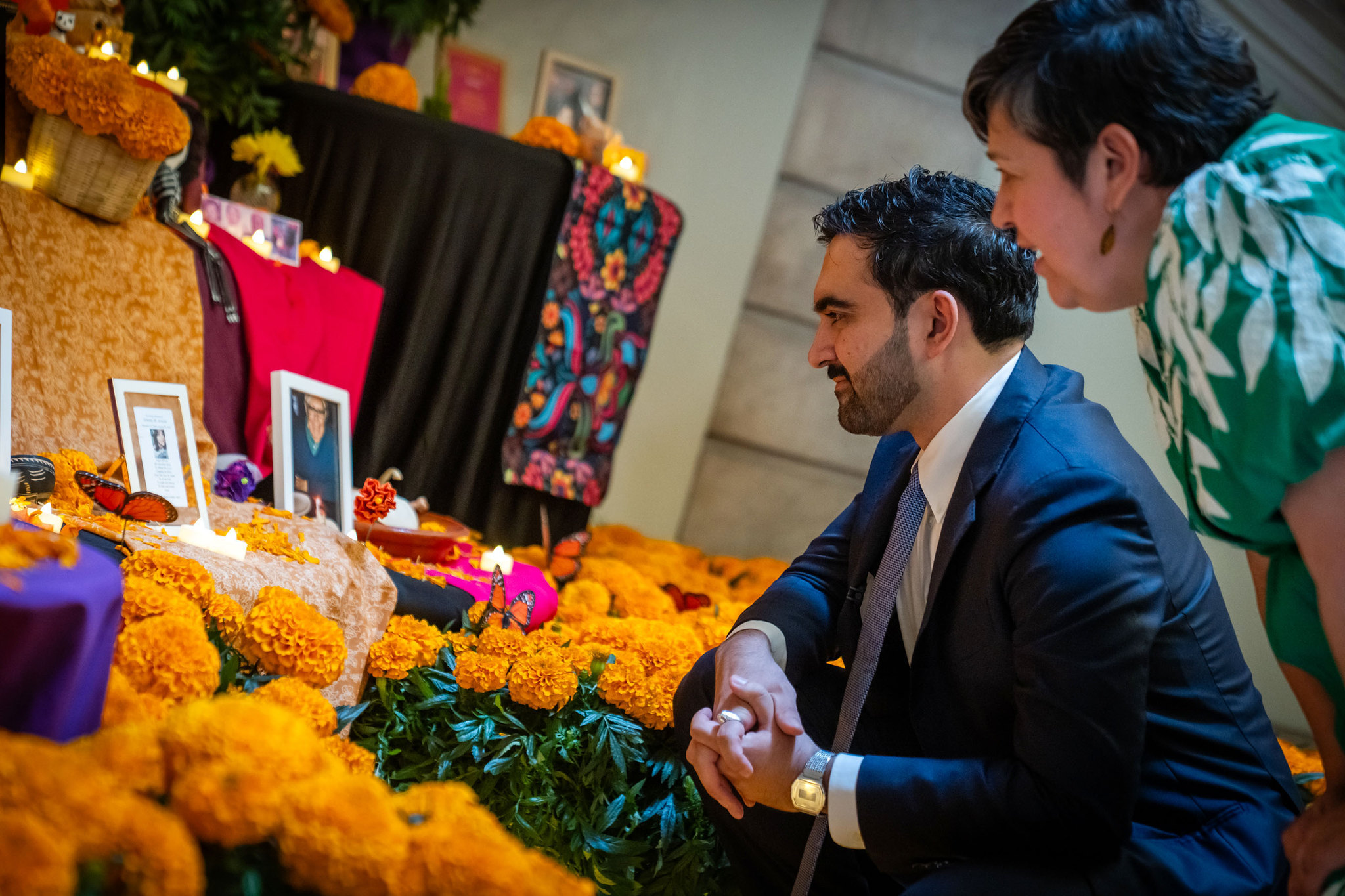
Mayor Mamdani joins Ofrenda at City Hall. Friday, October 30, 2026. Credit: Ed Reed/Mayoral Photography Office.
Mayor Mamdani Mobilizes Citywide Winter Response, Expands Code Blue and Supercharges Snow and Ice Removal
$25 million investment strengthens Code Blue system, putting more outreach teams, vehicles and warming sites in the field during prolonged cold snaps
City workers, emergency equipment and new protocols are ready to keep New Yorkers safe, warm and moving throughout the winter
NEW YORK – Mayor Zohran Kwame Mamdani today announced a sweeping, citywide mobilization to prepare New York City for winter weather, including a $25 million investment in an expanded Code Blue system and a supercharged snow and ice clearing operation. Across City agencies, thousands of workers, new equipment and enhanced emergency protocols are being readied to protect New Yorkers from extreme cold and keep the city moving through the winter months.
According to the National Weather Service (NWS), a strong El Niño is expected to bring a warmer, wetter winter, increasing the likelihood of rain, sleet and ice, as well as potentially heavy, wet snow during major storms.
“We have spent the past year preparing for any challenge winter throws our way. We have trained our workers, readied our equipment and strengthened our protocols because keeping New Yorkers safe can’t begin when the first storm hits,” said Mayor Mamdani. “This winter, we’re doing things differently — we’re expanding Code Blue to reach more New Yorkers in need, equipping New York’s Strongest to clear snow and ice faster and leaving no stone unturned when it comes to protecting our neighbors from the cold. No New Yorker should face the dangers of winter alone, and no part of our city should be left behind.”
“Throughout 2026, we have been working closely with our partner agencies, nonprofit agencies, elected officials and other stakeholders to update our winter plans and include all that we learned during the extreme cold temperatures and snowstorms that New York City experienced earlier this year,” said NYCEM Commissioner Christina Farrell. “Winter weather can be dangerous for everyone, but particularly for vulnerable populations. With just a few weeks until the official start of the winter, we encourage New Yorkers to review and update their winter heating safety and emergency plans. Visit nyc.gov/beready to get started.”
Investing $25 Million in an Upgraded Code Blue System
Last winter, Mayor Mamdani coordinated dozens of agencies during the city’s first-ever 24-hour Enhanced Code Blue activation. The administration opened new warming shelters, deployed warming buses and activated the City’s Strengthening Communities partner network in person for the first time.
This winter, Mayor Mamdani is building on those efforts with a new, upgraded Code Blue system that will put more outreach teams, vehicles and warming sites in the field as cold weather intensifies.
Backed by $25 million in new City funding, the system will scale up resources according to the severity and duration of cold, snowy and icy conditions. New measures include:
- Reaching New Yorkers wherever they are. More than 300 additional canvassers will follow designated walking and driving routes through high-impact areas in all five boroughs, covering 75% of locations where homeless New Yorkers are known to stay. Teams will engage every person they encounter, rather than relying on predetermined lists. This approach builds on the City’s success with Code Red operations this summer, which engaged 20 times more people than previous efforts.
- Bringing medical care directly to New Yorkers in need. Up to 55 NYC Health + Hospitals (H+H) WARM mobile units will provide medical support and transportation to warming centers, medical facilities and other warm locations. Each team will include a registered nurse or nurse practitioner.
- Opening more places to get warm. H+H will open at least three hospitals as warming centers and will open all 11 facilities during the most severe weather. The Department of Homeless Services (DHS) will activate eight drop-in centers, four new warming centers and 20 warming buses at peak level, scaling resources according to Code Blue level. The Department of Health and Mental Hygiene (DOHMH) will extend hours at four syringe service providers to give clients overnight access to warm spaces.
- Adding more low-barrier shelter options. The City is adding more than 600 single- and double-occupancy rooms, creating 800 beds, giving homeless New Yorkers more options for safe, warm shelter during the coldest days of the year.
- Hiring additional nurses. Nurses will partner with outreach teams during extreme weather to check on people’s health and safety, provide on-site clinical care and competency assessments and escalate to a higher level of care when appropriate.
These new measures will build on existing Code Blue practices, including wellness checks on older adults by NYC Aging and open-door policies across the DHS shelter system.
The Department of Social Services (DSS) and DOHMH will continue outreach through existing networks, including an estimated 12,000 people served through Adult Protective Services (APS), the HIV/AIDS Services Administration (HASA), domestic violence services and Medicaid home care. Teams will check that these New Yorkers are safe and warm, have heat and essential supplies at home and know where to turn for help.
DOHMH will also activate health-focused outreach teams to expand operations in key areas of concern, including major transit hubs.

Mayor Mamdani joins New York City kids to celebrate Halloween in Queens. Friday, October 30, 2026. Credit: Ed Reed/Mayoral Photography Office.
Supercharging Snow and Ice Clearing Operations
New York’s Strongest are preparing to work even faster this winter. The Department of Sanitation (DSNY) has spent the past year strengthening its snow and ice clearing operations, with a particular focus on pedestrian infrastructure and ensuring streets and sidewalks are accessible to older adults and people with disabilities.
The agency has more than 2,200 vehicles ready to be turned into snowplows, more than 700 salt spreaders, 47 pieces of specialized equipment to clear protected bike lanes and 7,000 uniformed Sanitation Workers trained for snow clearing.
New this year, DSNY has:
- Mapped pedestrian infrastructure routes into snow removal routes. DSNY has formally incorporated every bus stop, sidewalk and crosswalk into its internal route maps, allowing the agency to better deploy snow clearing resources more effectively during and after snowstorms.
- Established new forecast triggers. New protocols will allow the agency to pre-position contractor equipment to clear pedestrian infrastructure before and after snowfall.
- Expanded coverage on Staten Island. Eight new plow sector routes have been added in the borough’s hilliest areas, bringing more equipment to its steepest and narrowest streets.
- Upgraded its plows. A total of 678 plows and spreaders have been outfitted with new composite plow blades that adapt to the contours of roadways, clear snow more effectively and reduce damage to roads, bridges and highways.
- Restored its existing equipment. All 705 large and small salt spreaders and other snow removal equipment have been serviced and restored following extensive use last winter.
- Acquired its first snow blowers. The agency has acquired 120 snow blowers to clear bus stops and crosswalks faster, along with an expanded fleet of pickup trucks to transport equipment where it’s needed.
- Stockpiled salt. DSNY has secured 500 million pounds of salt to deploy across the city.
- Overhauled the Emergency Snow Shoveler program. DSNY has already registered more than 3,000 Emergency Snow Shovelers, compared with only a few hundred at this point last year.
City agencies are also working together to enhance DSNY’s snow and ice clearing capacity:
- The Department of Transportation (NYC DOT) purchased $2 million in small snow clearing equipment like tractors and gators with plow attachments and established new protocols with JCDeceaux and Citi Bike to clear bus stops, bikeshare infrastructure and other priority transit areas faster.
- NYC Public Schools (NYCPS) has acquired 10 all-terrain vehicles (ATVs) equipped with snowplows, 650 snow blowers and approximately 3,000 shovels, ice choppers and other tools. The department has already upgraded existing equipment with 190 new snowplow and blade attachments.
- The Parks Department (NYC Parks) is preparing nearly 400 vehicles operating out of 11 garages across the five boroughs to clear more than 2,000 miles of pathways following snowfall, prioritizing park perimeters, commuter hubs and other high-traffic areas.
- The Department of Citywide Administrative Services (DCAS) is stocking the City’s Central Storehouse with up to six months’ worth of calcium chloride and rock salt.
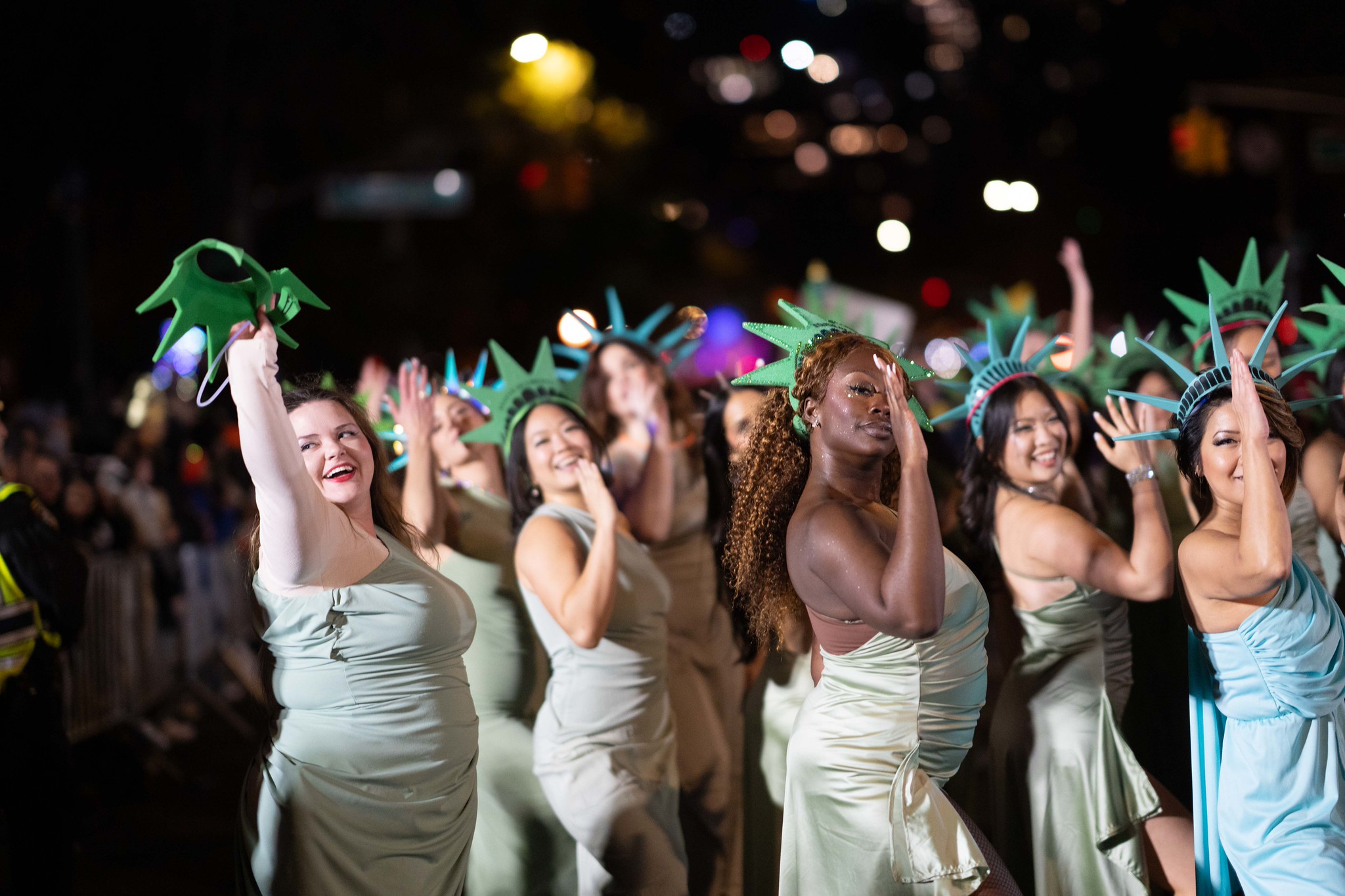
The Village Halloween Parade on Sixth Avenue in Manhattan on Saturday,, October 31, 2026. Michael Appleton/Mayoral Photography Office
Prepositioning Emergency Resources
NYCEM and the City’s first responders are constantly monitoring conditions and preparing to activate emergency operations centers to coordinate agencies and deploy resources when needed.
As New York City readies for a wetter, heavier winter, NYC Parks and City agencies are preparing to activate the Downed Tree Task Force to respond to fallen branches and trees. The New York City Police Department (NYPD) is preparing to deploy tow trucks during storms to clear roads, assist stranded motorists and keep snowplow routes open.
NYPD will also assist in downed tree operations, escort DSNY snowplows, transport DHS employees providing services for at-risk New Yorkers and deploy officers at high-volume traffic locations to help emergency vehicles reach their destinations safely.
The Fire Department (FDNY) will adjust on-call staffing across all engine companies during extreme weather emergencies and strategically preposition high-axle vehicles for rapid deployment ahead of coastal flooding.
NYCEM is also updating mutual aid agreements to ensure the City can access additional resources if needed during a winter emergency.
Activating Outreach Networks
NYCEM will lead citywide communications about cold, snow, ice and other changing weather conditions through Notify NYC, which now reaches more than 1.6 million subscribers, as well as through other communication networks.
The agency is also hosting preseason briefings with private-sector partners, the Advance Warning System, the Disability, Access, and Functional Needs Advisory Council (DAFN) and elected officials at every level of government.
NYC Aging will work with its network of service providers to prepare older adult centers, adjust home-delivered meal schedules and coordinate wellness checks for vulnerable clients ahead of, during and following extreme weather.
The Mayor’s Office of Community Safety is partnering with community organizations to strengthen outreach during the winter months. Efforts include engaging young people, especially during the holidays and winter break, distributing essential winter supplies and proactively connecting vulnerable New Yorkers with support.
The Department of Buildings (DOB) is conducting outreach to more than 40,000 construction and development industry professionals to start implementing site-specific winterization procedures, including properly securing temporary construction equipment in anticipation of winter storms, ensuring temporary heating equipment complies with the City’s Fire and Building Codes and planning to implement winter weather housekeeping procedures to clear work sites of snow and ice.

New York City Mayor Zohran Kwame Mamdani. delivers remarks at Evangelical Crusade Christian Church in Brooklyn on Sunday, November 1,, 2026. Michael Appleton/Mayoral Photography Office
Readying New Yorkers’ Homes for the Cold
The New York City Housing Authority (NYCHA) has spent the year preparing its public housing developments for winter.
To ensure reliable heat and hot water, the Authority conducted preventative maintenance, inspections and necessary repairs on every single piece of its heating infrastructure: 965 boilers, 1,472 hot water systems and 1,507 heat distribution systems.
Last month, NYCHA cut the ribbon on a new, state-of-the-art, 12,271-square-foot heating training facility. The facility will provide hands-on instruction for all 654 active frontline heating employees, as well as future hires.
Since last winter, NYCHA has invested more than $121 million in heating infrastructure upgrades at four developments, with another $728 million across 20 developments nearing completion this winter.
The Authority has also invested more than $9.7 million this year in heating equipment repairs and replacements to improve service for the upcoming season, with an additional $6.4 million committed to ongoing heating and hot water projects.
NYCHA maintains a reserve of mobile boilers that can be deployed during a severe heating emergency. Twenty-two mobile boilers are currently connected to developments, with four more additional units available for deployment if needed.
For tenants in privately managed housing without working heat, the Department of Housing Preservation and Development (HPD) will conduct tens of thousands of inspections in response to complaints. This winter, for the first time, HPD will respond to every nonanonymous heat complaint, rather than grouping together complaints from multiple apartments in the same building and closing all complaints when the first is resolved.
In extreme cases where a landlord fails to correct a heating issue, HPD will conduct emergency repairs, assessing issues with heat and hot water, restoring services and billing the landlord. For buildings that repeatedly fail to provide heat, HPD’s Housing Litigation Division will take cases to Housing Court to obtain court orders for repairs and, where appropriate, civil penalties.
HPD is also improving monitoring and emergency response protocols at Mitchell-Lama and Tenant Interim Lease (TIL) buildings, including improved communication with tenants and building managers, proactive storm preparation and heated buses in the event of a heating emergency at a privately owned Mitchell-Lama development.

Mayor Mamdani joins a fireside chat at United Way of New York City Board meeting. Hearst Tower, Manhattan. Thursday, October 29, 2026. Credit: Ed Reed/Mayoral Photography Office.
Protecting New Yorkers From Rising Utility Costs
Fuel oil prices have risen by nearly 70% over the past year and continue to rise. The Mayor’s Office of Climate and Environmental Justice (MOCEJ) and the Mayor’s Public Engagement Unit (PEU) are canvassing all five boroughs to help New Yorkers lower their energy bills.
HPD will proactively assist New Yorkers who receive HPD rental subsidy with signing up for the Home Energy Assistance Program (HEAP), which can help cover the cost of utilities.
NYCEM is also coordinating with Con Edison, National Grid and PSEG-Long Island to prepare for potential natural gas and electrical outages, including how outages will be tracked and how utilities will respond and expedite restoring power. This year, NYCEM will receive utility notifications filed with the New York State Public Service Commission, allowing the agency to identify possible gas service problems sooner.
NYCPS has tripled its emergency fuel delivery contracts, and DCAS is overseeing fuel quality and supply at approximately 5,500 City locations and conducting interagency exercises to streamline fuel delivery during emergencies.
Preparing Schools and Students for Winter
NYCPS is working with students, families and school leaders to ensure schools are ready to transition to remote instruction during a weather emergency.
Preparations include rapid device distribution, three load tests of digital learning platforms during the school year and a practice remote learning assignment this fall to help every student prepare to learn remotely if needed.
Readying Rikers Island for Winter
In preparation for the 2026-27 winter season, the Department of Correction (DOC) has completed extensive repairs and upgrades to Rikers Island’s heating system.
Crews replaced nearly 80 sections of heating equipment, repaired dozens of leaks and restored lighting, pumps and ventilation in underground steam tunnels. These improvements will help ensure reliable heat and hot water throughout the winter, with backup capacity if part of the system goes down.
In addition to daily temperature readings, people in custody have been provided with warmer clothing.
How New Yorkers Can Prepare Now
New Yorkers can take the following steps to protect themselves, their families and their neighbors this winter:
- SIGN UP FOR EMERGENCY ALERTS: Stay informed about extreme weather, power outages, emergency resources and more by texting NOTIFYNYC to 692-692 or download the mobile app.
- REPORT HEAT AND HOT WATER ISSUES: During heat season, which runs from Oct. 1 through May 31, every New York City tenant is legally entitled to heat and hot water. Apartments must maintain a temperature of at least 62 degrees Fahrenheit overnight, regardless of the outdoor temperature, and at least 68 degrees Fahrenheit during the day when the temperature falls below 55 degrees. If your apartment does not have adequate heat or hot water, contact your landlord. If the problem is not addressed promptly, call 311 to request an HPD inspection. Uniformed inspectors can issue violations and, when warranted, coordinate emergency repairs.
- ACCESS AFFORDABLE ENERGY: Energy costs are a significant household expense — you can learn about programs to help lower your energy bills by visiting nyc.gov/utility-advocacy
- PRACTICE FIRE SAFETY: Fires and fire-related fatalities increase during the cold winter months. Protect yourself, your family and your community by following the FDNY’s winter fire safety guidance at www.fdnysmart.org
- PREPARE YOUR SNOW CLEARING EQUIPMENT: Property owners are responsible for clearing a four-foot-wide path on their sidewalks to allow safe passage for wheelchairs and strollers. Make sure your shovels and other equipment are ready before the first storm.
- PROTECT YOUR PIPES: Homeowners are responsible for protecting their pipes and water meters from freezing. Follow these simple steps to protect your property: on.nyc.gov/485DQ8O
“After last winter, we took a hard look at what worked and what didn’t, and we’re changing how we do Code Blue,” said DSS Commissioner Erin Dalton. “Instead of working from a list of names, DSS will work from a map, covering blocks, subway stations and parks where we know most people are living outside. We tested this approach during Code Red this summer, and we saw much better results: 20 times more people engaged and 7 times the people placed inside. With additional faster transport and up to 800 more low-barrier beds waiting, we expect this approach to reach more people, bring more of them inside and keep more New Yorkers safe through the coldest nights.”

Mayor Mamdani joins Ofrenda at City Hall. Friday, October 30, 2026. Credit: Ed Reed/Mayoral Photography Office.
“Last winter was one of the coldest and snowiest we’ve seen in decades, which is why we are preparing early for the cold weather ahead of this season,” said NYC Health Commissioner Dr. Alister F. Martin. “The best protection is to plan ahead, and that’s why the Health Department is already working with syringe services providers to open overnight coverage when there is a Code Blue and expanding our outreach efforts to support DSS during long cold snaps.”
“Extreme cold is a public health emergency, and because the most vulnerable New Yorkers can’t always come to us, we will meet them where they are with life-saving care,” said Dr. Ted Long, NYC Health + Hospitals Senior Vice President and Chief Medical Officer for Clinical Services and Population Health. “Building on the success of our warming center and WARM mobile units last winter, we are expanding our WARM units with our partners at DHS to make sure we are going where we are needed most. Our teams are ready to bring warmth, compassionate care, and a path to ongoing, lasting support to every New Yorker who needs it.”
“The Department of Sanitation plans all year long to develop a strategic and adaptable playbook for every unique winter storm scenario, continually revising routes, assessing past performance and overhauling equipment,” said Sanitation Commissioner Gregory Anderson. “Last snow season, New York City received the most significant snowfall in years, and we have taken those lessons to heart and upgraded our strategy for clearing streets, public spaces and pedestrian infrastructure. We are prepared, equipped and ready to keep all New Yorkers safe and moving this winter, whether they drive, walk, ride, bike or roll.”
“As the winter approaches, NYC DOT is ready to keep the East River bridges safe and clear of snow, deploy 76 trucks and personnel to support DSNY’s snow clearing and melting operations and put more than $2 million in new snow clearing equipment to work,” said NYC DOT Commissioner Mike Flynn. “Our teams will also provide real-time roadway updates and implement new protocols to help clear bus stops and bikeshare stations. I am deeply grateful to the City workers who are dedicated to keeping our city safe through snow, ice and freezing frosts.”
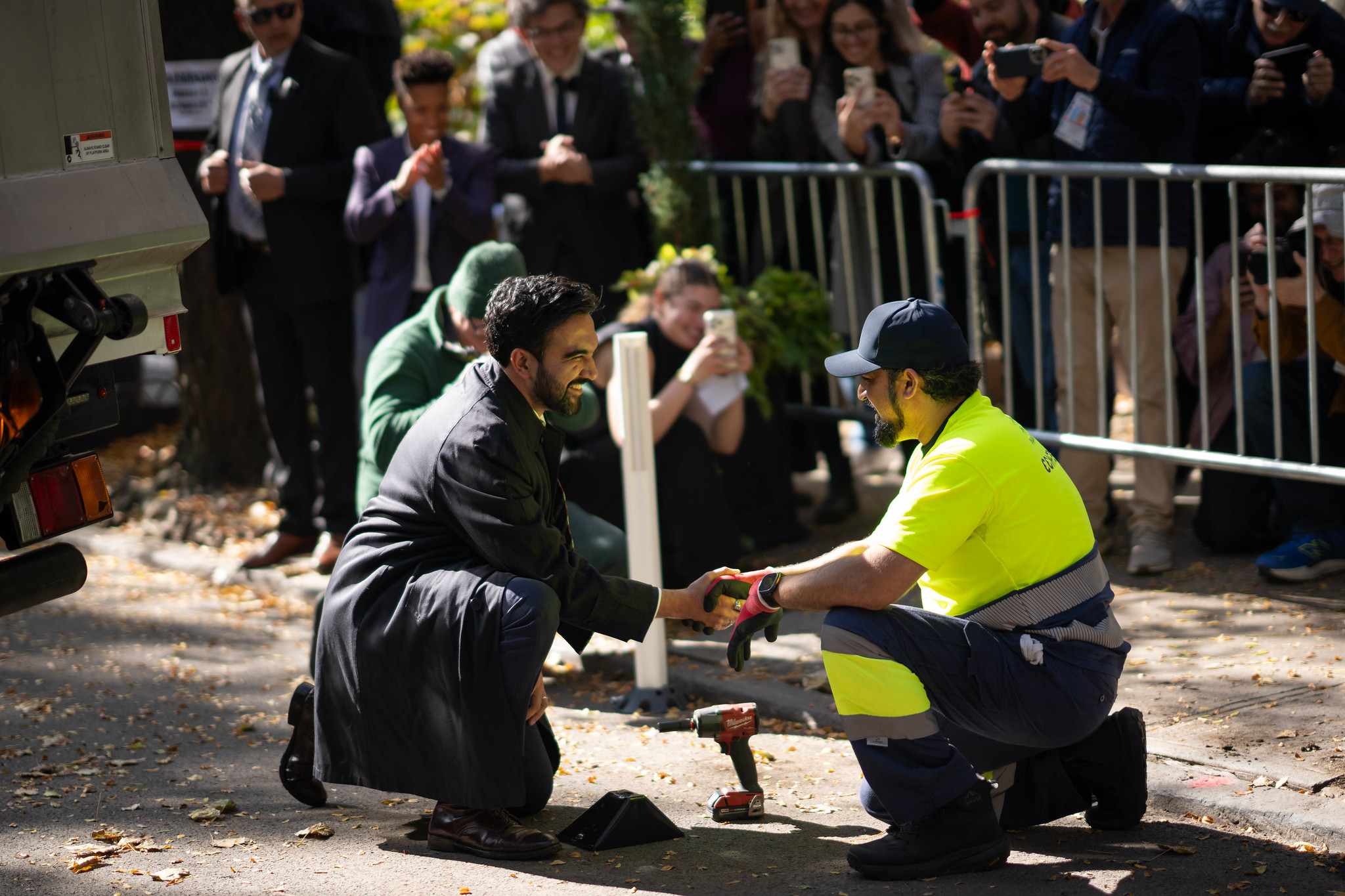
New York City Mayor Zohran Kwame Mamdani and New York City Department of Sanitation (DSNY) Commissioner Gregory Anderson today installed Brooklyn’s first residential Empire Bins in Brooklyn Heights on Thursday, October 29, 2026, taking a major step toward cleaner streets and sidewalks. The stationary, on-street containers will replace massive piles of trash bags across Brooklyn Community District 2, where installation of more than 700 bins is now underway. Michael Appleton/Mayoral Photography Office
“NYC Parks is a four-seasons operation. As soon as summer ended, Parks has been focused on winterizing more than 3,400 drinking fountains to protect our underground infrastructure and preparing our crews and equipment to quickly respond to downed trees and snow-covered sidewalks,” said NYC Parks Commissioner Tricia Shimamura. “We’re proud to work together with our sister agencies to ensure New Yorkers can safely enjoy the winter season and move around the city after a storm, and we’re ready to handle whatever comes our way this winter.”
“As temperatures drop, we are entering what is traditionally one of the busiest times of year for the Fire Department,” said Fire Commissioner Lillian Bonsignore. “We know New Yorkers will be looking for ways to stay warm but some of those methods can create serious safety hazards. We want to remind everyone that taking a few simple safety precautions can mean the difference between life and death. Help us prevent fires and save lives this winter. Visit FDNYSmart.org for important winter safety tips.”
“During periods of extreme weather this winter, the NYPD will be out in full force to protect New Yorkers,” said NYPD Commissioner Jessica S. Tisch. “From answering emergency calls, to responding to people in danger and helping to clear dangerous conditions, the men and women of this department always show up when they are needed. When dangerous conditions require the rest of the city to stay inside, the members of the NYPD will be on call to keep communities safe.”
“The safety and wellbeing of New Yorkers with disabilities are top of mind for the Administration as cold weather approaches,” said MOPD Commissioner Nisha Agarwal. “We are family members, friends, neighbors and co-workers who face additional barriers during the winter months. MOPD is a trusted messenger for people with disabilities, and we work to ensure the needs of people with disabilities are addressed by City agencies on the front lines because everyone deserves to be safe and warm this winter.”
“We can’t prevent cold weather from occurring, but we can all work together to help keep older New Yorkers safe when the temperatures drop,” said NYC Aging Commissioner Dr. Lisa Scott-McKenzie. “Please check in on your family, friends and neighbors to ensure that they are safe and warm. A friendly phone call or a knock on the door can literally save lives. I commend Mayor Mamdani for bringing the full resources and energy of the City together to ensure our fellow New Yorkers are provided with timely information as well as the support to provide assistance when needed. I look forward to continuing our strong collaborations on the behalf of older adults.”
“Every division of HPD stands ready to keep New Yorkers safe this winter, as we embrace new technology and innovative policy to ensure conditions are corrected faster,” said HPD Commissioner Dina Levy. “With a new commitment to investigate every identified heat complaint, HPD will work tirelessly to keep New Yorkers safe and warm.”
“Preparing our developments for the winter is a year-round responsibility, and NYCHA has taken significant steps to ensure residents have reliable heat and hot water throughout the colder months,” said NYCHA Chief Executive Officer Lisa Bova-Hiatt. “From conducting preventative maintenance across every piece of our heating infrastructure and investing in critical equipment upgrades to strengthening our emergency response capabilities and expanding hands-on training for our frontline heating workforce, we are taking a comprehensive approach to winter readiness in service of NYCHA residents across the five boroughs.”
“Thanks in part to sustained educational outreach and strong enforcement of the city’s Construction Codes, we have seen a tremendous improvement in construction work site safety so far in 2026, with worker injuries reaching near record lows and an over 50% drop in work site fatalities compared to 2025,” said Buildings Commissioner Ahmed Tigani. “It is critical that we keep that momentum going as we enter the winter season, so we will be conducting more outreach to the construction industry about preparing their work sites to prevent cold weather-related slips and falls.”
“Preparing for winter starts long before the first snowfall, and we’re already gearing up for inclement weather,” said DCAS Commissioner Yume Kitasei. “From prepping building heating systems to stocking emergency supplies and safeguarding fuel deliveries, DCAS is helping ensure city agencies have what they need to serve New Yorkers through the coldest months.”
“DEP closely tracks winter weather conditions and maintains around-the-clock emergency response teams ready to deploy at a moment’s notice. New Yorkers can count on our dedicated workforce to keep critical water services operating through even the harshest conditions,” said DEP Commissioner Lisa F. Garcia. “Most water main breaks occur during the winter, when repeated freeze-thaw cycles place additional stress on underground infrastructure. Last year’s cold snaps also required staff to thaw frozen hydrants and replace burst outdoor water meters. DEP is prepared for these kinds of challenges so that, no matter the temperature, we can respond quickly, restore service swiftly, protect public safety and keep New York City running.”
“As temperatures drop, no New Yorker should have to choose between staying warm and putting food on the table. The City is helping households access programs that can lower utility bills, including the Energy Affordability Programs and Home Energy Assistance Program, which provides support with heating costs,” said Chief Climate Officer Louise Yeung. “We’re also working with building owners to make buildings more energy efficient and reduce heating costs. Most importantly, we want New Yorkers to know what resources are available and how to access them before the coldest months arrive.”
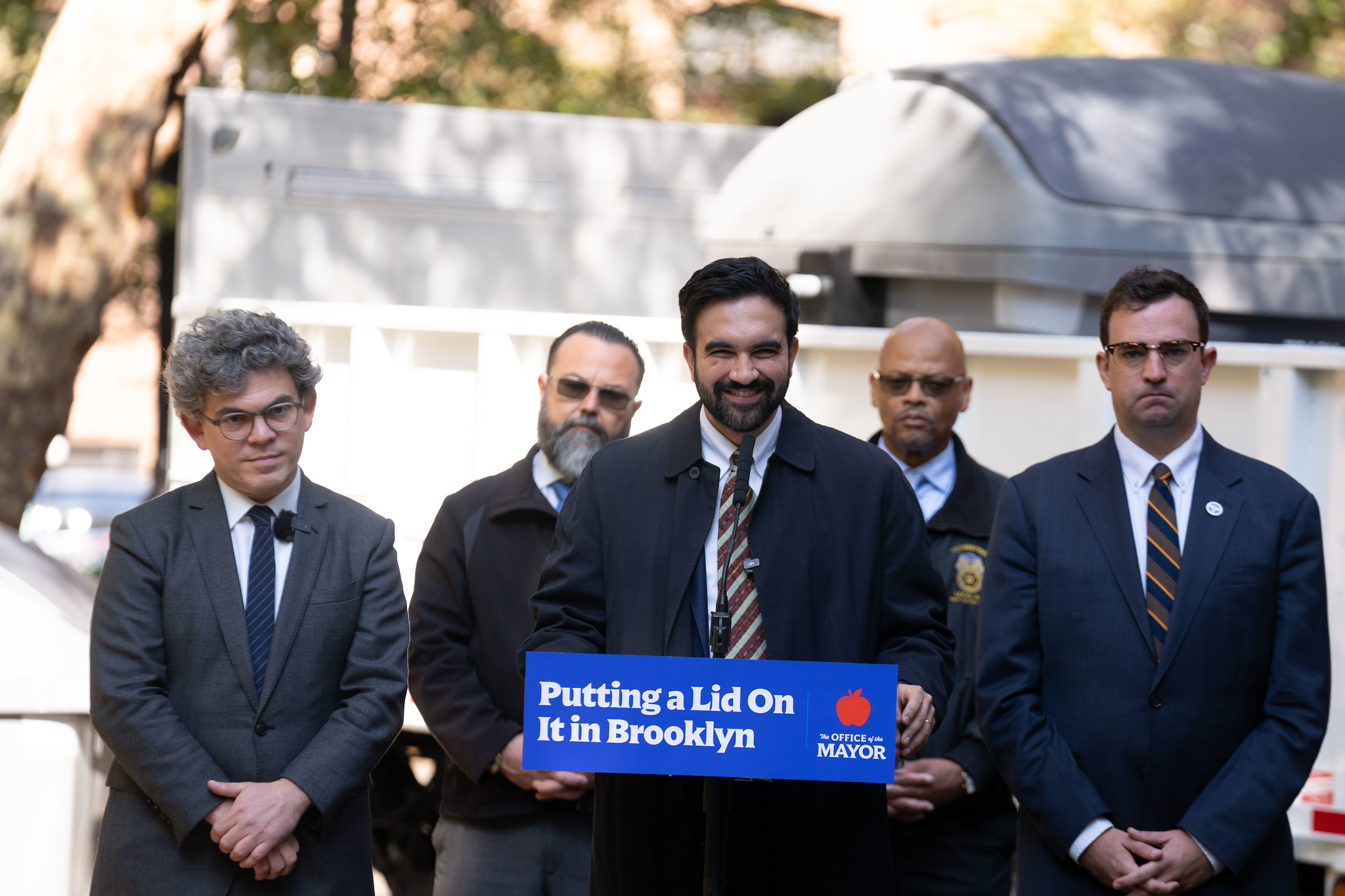
New York City Mayor Zohran Kwame Mamdani and New York City Department of Sanitation (DSNY) Commissioner Gregory Anderson today installed Brooklyn’s first residential Empire Bins in Brooklyn Heights on Thursday, October 29, 2026, taking a major step toward cleaner streets and sidewalks. The stationary, on-street containers will replace massive piles of trash bags across Brooklyn Community District 2, where installation of more than 700 bins is now underway. Michael Appleton/Mayoral Photography Office
Mayor Mamdani Signs Landmark COPA Legislation, Giving Community Groups First Chance to Preserve Affordable Housing
Community Opportunity to Purchase Act will give qualified nonprofits and community groups the first opportunity to buy distressed and affordable multifamily buildings, protecting tenants and strengthening neighborhood stability
NEW YORK – Today, Mayor Zohran Kwame Mamdani signed the Community Opportunity to Purchase Act (COPA), landmark legislation that will give qualified nonprofits and community groups the first opportunity to purchase certain multifamily buildings before they hit the private market.
Sponsored by Council Member Sandy Nurse, COPA gives mission-driven affordable housing providers 145 days to make an offer on eligible properties, along with an additional year during which they can exercise a right of first refusal to match another buyer’s offer. The legislation creates a powerful new tool to preserve affordable housing, protect tenants and prevent buildings from falling into a cycle of disrepair and profit-driven neglect.
“Too many New Yorkers have watched their homes deteriorate while landlords extract profits and tenants are left to fight for the repairs they deserve. That’s not how housing should work. Our homes should be places of stability, not vehicles for speculation. COPA puts power in the hands of the community organizations that have spent years serving our neighborhoods and fighting to keep New Yorkers housed. After six years of organizing, tenants and advocates have won a new tool to protect their homes and keep affordable housing in the hands of those who will care for it,” said Mayor Mamdani. “This is what it looks like to build a more affordable city where every New Yorker can live with stability and dignity.”
“COPA will be a valuable part of our work to preserve and invest in affordable housing across the five boroughs. This is an important tool to ensure buildings at risk are managed by people with a stake in their long-term success,” said Leila Bozorg, Deputy Mayor for Housing and Planning. “Congratulations to Council Member Nurse and her colleagues, tenants, and organizers who have fought for years to celebrate this day!”
“With COPA signed into law, we are entering a new era for affordable housing in New York City: one where organizations rooted in our communities are able to step in and preserve the affordable housing that New Yorkers rely on. Thanks to six years of advocacy by Council Member Nurse, the Progressive Caucus, NYCCLI, and tenants and organizers across the city, we have a powerful new tool in our work to create a fairer, more affordable city,” said Cea Weaver, Director of the Mayor’s Office to Protect Tenants.
“This new law will gate against speculative investment in both distressed and expiring affordable housing by providing not-for-profit housing providers a first opportunity to purchase. This is a great tool to end the cycle of tenants experiencing worsening conditions as their buildings go from one bad landlord to the next. We look forward to implementing COPA and helping keep more New Yorkers in safe, stable housing,” said Housing Preservation and Development (HPD) Commissioner Dina Levy.
“The Community Opportunity to Purchase Act (COPA) is an example of what happens when tenants, community organizations, and progressive legislators take on powerful interests and win. After six years, multiple Mayors, and a veto, COPA is finally signed into law,” said Council Member Sandy Nurse. “Across the city, people overwhelmingly voted for a more affordable life and COPA is a new tool to help deliver that. COPA will preserve affordable housing and give working families a chance to stay in the city we love. I look forward to working with the Mamdani administration to implement it.”
“New York City is facing a housing crisis—not only because we lack affordable homes, but because too many of the homes we already have are deteriorating under cycles of speculation, disinvestment, and neglect,” said Council Member Pierina Sanchez, Chair of the Committee on Housing and Buildings. “The Community Opportunity to Purchase Act gives us a powerful new tool to interrupt those cycles at the point of sale, giving mission-driven nonprofits a fair chance to acquire distressed and affordable buildings and put them on a path toward long-term stability. I am proud to have supported COPA’s evolution as Housing Chair, shepherding it through multiple hearings. I am grateful to Council Member Sandy Nurse for the persistence and work it took to get COPA across the finish line, to the COPA Coalition, led by New Economy Project and NYCLI with tenant organizers across our city, including Our Bronx, who made this victory possible, and to Mayor Mamdani for his support to ensure COPA becomes law.”
Under COPA, the Department of Housing Preservation and Development (HPD) will maintain a list of “qualified entities,” vetted nonprofits, tenant groups, community land trusts and other mission-driven organizations with demonstrated experience acquiring, preserving and managing affordable housing. These organizations must also demonstrate the financial and organizational capacity to purchase and operate eligible properties.
When a covered building is put up for sale, qualified entities will receive an exclusive 145-day window to complete the purchase. If the qualified entity’s offer is rejected and another buyer subsequently makes an offer within the following year, qualified entities will have the right of first refusal to match it.
Covered properties include multifamily buildings with four or more units that are in significant disrepair, as well as buildings with affordability restrictions governed by HPD regulatory agreements. By creating a pathway for responsible community-based ownership, COPA will ensure that these properties are repaired, maintained and operated in partnership with tenants rather than left to deteriorate by negligent owners.
Today’s signing marks the culmination of six years of advocacy by Council Member Nurse, tenants and community organizations. Former Mayor Eric Adams vetoed an earlier version of COPA in December 2025. The Mamdani administration subsequently made the legislation a priority in its Block by Block housing plan, released in May 2026. The City Council passed the bill in October 2026.
With the legislation now signed, HPD will begin implementation, including establishing the qualified entities list and creating a process to notify eligible organizations when covered buildings are put up for sale.
COPA is a part of the Mamdani administration’s broader effort to make New York City more affordable by creating new housing, preserving affordable homes and giving tenants greater power to remain in their communities. The administration’s Block by Block housing plan set unprecedented goals of building 200,000 new affordable homes and preserving 200,000 more over the next decade. In its first budget, the administration committed a historic $22 billion in affordable housing capital over five years.
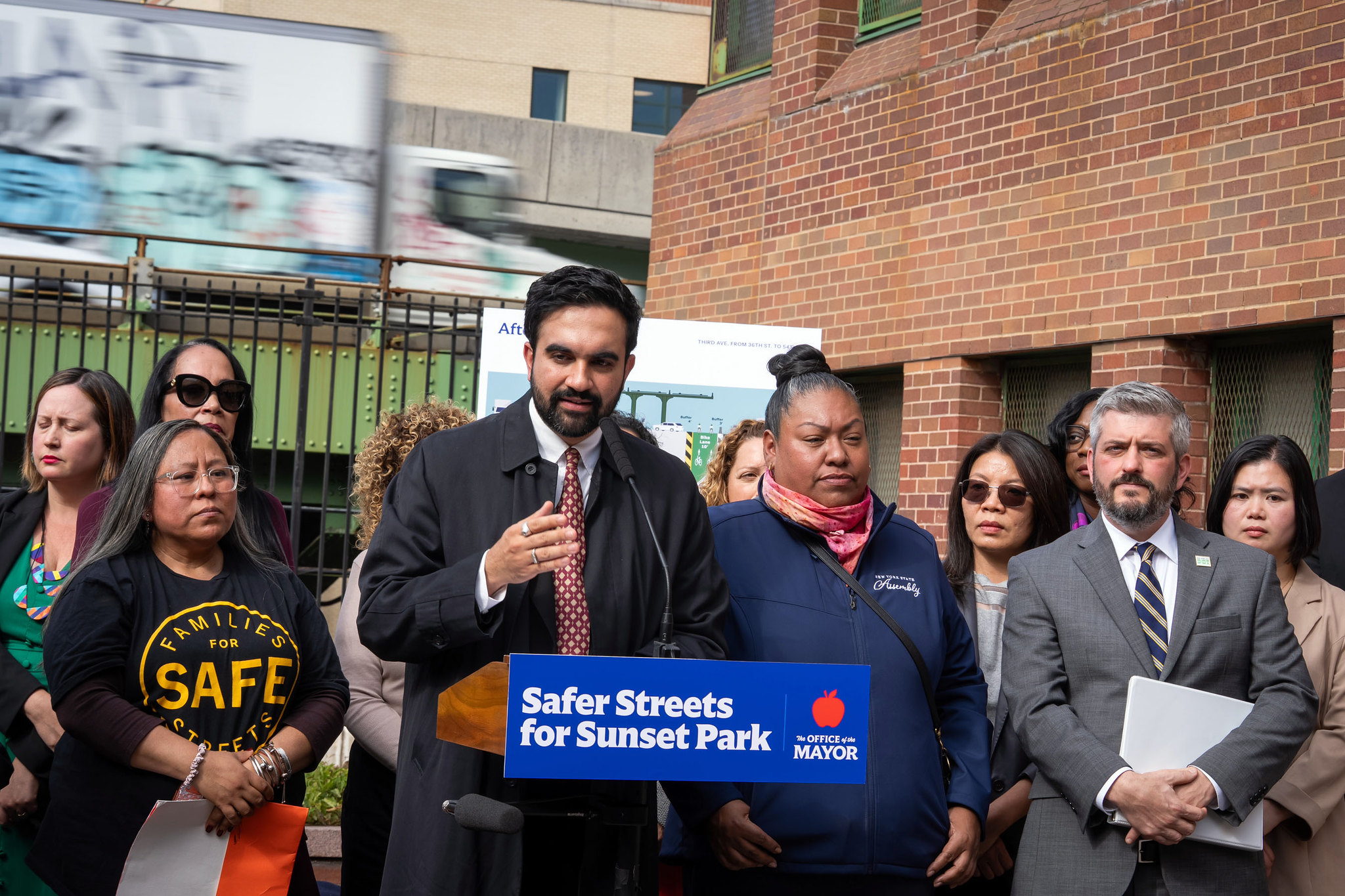
Mayor Zohran Kwame Mamdani and New York City Department of Transportation (NYC DOT) Commissioner Mike Flynn unveil plans to redesign 2.1 miles of Third Avenue in Brooklyn, making it safer to cross, reducing speeding and reckless driving, and creating protected space for cyclists. P.S. 506: The School of Journalism & Technology, Brooklyn. Wednesday, October 28, 2026. Credit: Ed Reed/Mayoral Photography Office.
That investment is part of a comprehensive housing agenda that also includes an ambitious land use strategy, stronger support for organized tenants, new tools to crack down on negligent landlords, renewed investment in public housing and streamlined processes to build and lease affordable housing at the speed that New Yorkers need. Together, these efforts reflect a fundamental commitment to building a city where working people can afford to stay, neighborhoods can shape their own futures and housing serves the people who call New York City home.
“Today’s enactment of COPA is a transformative victory for housing justice—won through years of organizing by community land trusts, tenants, and community groups across the five boroughs,” said Deyanira Del Rio, Executive Director of New Economy Project, which coordinates the NYC Community Land Initiative coalition. “COPA gives communities a powerful new tool to take housing off the speculative market and bring it into permanently affordable community ownership. We thank Council Member Sandy Nurse for zealously championing COPA and Mayor Mamdani for taking bold action to address our city’s affordability crisis by signing this landmark bill.”
“For decades, Bronx tenants have organized against the cycle of neglect, speculation, and displacement that threatens their homes and communities. Today, we celebrate a major victory in that fight,” said Sandra Lobo, Executive Director of Our Bronx. “By signing COPA into law, Mayor Mamdani is helping create new opportunities for nonprofits, community land trusts, and their partners to preserve affordable housing and bring buildings into responsible, community-rooted ownership. At Our Bronx, we are working alongside tenants and the Bronx Community Land Trust to build the infrastructure for permanently affordable housing, resident leadership, and long-term community stewardship. We thank Mayor Mamdani, Council Member Sandy Nurse, and the many tenants and organizations whose years of organizing made this possible. We look forward to working with the City to turn COPA into real opportunities for New Yorkers to remain in the neighborhoods they have helped build.”
“We know from firsthand experience how transformative this legislation will be for tenants and community land trusts,” said Boris Santos, President of the East New York Community Land Trust. “The ENYCLT put in the work to organize tenants and donors to become the first CLT to directly purchase a building privately from a landlord who had neglected his building for years. COPA will help make acquisitions like ours more possible — keeping tenants across NYC in their homes, improving conditions and giving residents the power to collectively run their buildings.”
“UHAB is thrilled that Mayor Mamdani has signed the Community Opportunity to Purchase Act (COPA) into law, a key promise of his Block by Block housing plan,” said Margy Brown, Executive Director of UHAB. “For more than five decades, UHAB has been a leader in preserving and rehabilitating affordable housing in NYC and expanding resident ownership and control. COPA is a powerful new tool to keep housing affordable and in the hands of New Yorkers. We look forward to partnering with the administration as they implement COPA and ensuring that steps are taken to use it to its fullest potential.”
“Cooper Square Committee is so proud of New York City for passing COPA. We want to continue our rich legacy of creating community land trusts,” said Illapa Sairitupac, a Housing Organizer at Cooper Square Committee. “Our organization frequently works with tenants whose lives are upended when their building is sold to a neglectful corporate landlord. COPA will give tenants the ability to facilitate needed improvements and preserve the affordability of their buildings in perpetuity. Such policies have already proven successful in places like San Francisco, and we’re confident New York will use COPA to great effect, to protect tenants from displacement and stabilize our housing stock.”
“A huge congratulations to the community land trust movement and to the City for enacting COPA,” said Valerio Orselli, Project Director of This Land Is Ours CLT. “Two years ago, This Land Is Ours CLT participated in a successful bid to develop 500 affordable homes on the site of a shuttered Catholic church. Among other projects, we are currently working with the tenants of 438-440 West 45th Street and 331 East 14th Street and a Preservation Purchaser to acquire homes previously owned by slumlord Ohebshalom, and we’re at a critical stage in our negotiations with the current owner. COPA will make challenging acquisition processes like these far more efficient.”
“I am deeply moved by the enactment of COPA. Having lived in the same apartment in Hell’s Kitchen for more than forty years and having witnessed firsthand the devastating effects the action and inaction of a predatory landlord has had on my fellow tenants and neighbors, I strongly support letting communities decide for themselves what’s in their best interest,” said Nicholas Latimer, Tenants’ Association leader at 438/440 W. 45th Street, apartment buildings formerly owned by Daniel Ohebshalom, a NYC ‘worst landlord’ as declared by the NYC Public Advocate’s Office. “It does not take an army of outside developers to shape the future of our shared spaces. It takes a village. And the village is ready, willing, and more than able to do the necessary work.”
“COPA’s passage is a true win for Queens,” said Jenny Dubnau, Co-Chair of the Western Queens CLT. “COPA will help Western Queens CLT transform existing housing in Queens so it’s permanently affordable and tenant-controlled.“
“We thank the City Council and Mayor Mamdani for enacting this legislation and giving communities a fighting chance to stay rooted,” said Michelle de la Uz, Executive Director of the Fifth Avenue Committee. “The Community Opportunity to Purchase Act is a vital tool to combat displacement and preserve affordability in our neighborhoods. For decades, the Fifth Avenue Committee has worked to ensure that low- and moderate-income New Yorkers can remain in the communities they helped build. COPA empowers mission-driven nonprofits like ours to compete with speculative buyers and ensure housing remains affordable for community residents for generations to come.”
“With today’s signing of the Community Opportunity to Purchase Act, New York City is taking a major step toward housing affordability and creating new paths to homeownership,” said Christie Peale, CEO and Executive Director of the Center for New York Homeownership. “COPA gives mission-driven nonprofits a fair chance to purchase at-risk buildings and engage tenants to create long-term community ownership. We thank Mayor Mamdani, Speaker Julie Menin, Council Member Sandy Nurse, and all the advocates whose years of work made this milestone possible.”
“This is what it looks like when communities organize, persist, and win. As locals, we know the future of New York City is not only about infrastructure. It is also about whether the communities that actually built this city, neighborhood by neighborhood, can remain here and have a voice in its future,” said Malik Sanders, Executive Director of ReAL Edgemere Community Land Trust. “The enactment of COPA is a major victory for tenants and mission-driven organizations fighting to keep our families rooted here and bring homes into long-term community stewardship. Simply put, we cannot continue losing our homes, families, and neighborhoods to speculation. We thank Council Member Sandy Nurse, the City Council, and the broad coalition that fought to make this victory possible.”
“We commend the NYC Council for passing COPA, a critical bill that we staunchly support,” said Benjamin Warnke, principal of Alembic Community Development. “COPA gives responsible developers and community organizations a new tool to stabilize and preserve truly affordable housing. It will foster partnerships between qualified, mission-driven nonprofits and for-profit developers to efficiently exercise COPA rights. Alembic and CLOTH have participated in joint ventures for years to complete new construction and housing preservation projects in Washington Heights, Hamilton Heights, and Inwood. Our experience points to how these partnerships can fuel COPA’s success, and we are ready to ensure COPA’s effective implementation from day one.”
“We are elated to hear that Mayor Mamdani will finally sign this bill!” said Yvonne Stennett, Executive Director of Community League of the Heights (CLOTH). “For more than seven decades, CLOTH has worked to preserve and develop the housing stock of the Washington Heights neighborhood for low-income families. Enacting COPA into law will bring one more tool to the housing landscape that grants inroads into the affordability crisis and helps to ensure that housing is available to those who need it. Who better to rehabilitate distressed properties than community-based organizations like CLOTH? We know local community stressors, have witnessed the effects of gentrification, and have worked diligently toward housing equity. We commend Mayor Mamdani for signing this law and look forward to a robust affordable housing stock in Upper Manhattan.”
“We thank Mayor Mamdani for signing COPA into law,” said Will Depoo, Senior Campaign Organizer at the Association for Neighborhood and Housing Development. “As we continue to face a housing, homelessness, and affordability crisis, we must prioritize preserving affordable housing for those who need it most. COPA provides our communities with a key tool to fight speculation, move distressed buildings into the hands of responsible community stewards, and ensure that public resources go where they’re most needed.”
“COPA will be a game-changer for neighborhoods in the South Bronx that face severe displacement pressures, such as Mott Haven,” said Matthew Shore, Director of Planning & Development at South Bronx Unite. “Mott Haven ranks amongst the highest in the city for rent burden, evictions, and housing code violations. At the same time, new housing units produced at or above 80% AMI in our community district were double that of units at or below 80% AMI. We know that CLTs and nonprofit developers have a better track record of building and preserving affordable housing development than for-profit developers. We’re overjoyed that we now have COPA to preserve our working-class communities and address our city’s affordability crisis.”
“I started organizing with my neighbors because my building was in disrepair with an unresponsive landlord. For tenants like me, COPA represents an opportunity for a better future and a greater voice in what happens to their homes,” said Ann Maitin, a member of CASA (Community Action for Safe Apartments) and leader of a tenants association in the Bronx. “There is more work ahead. The SAFER Homes Act is another important effort to address severely neglected buildings and hold irresponsible landlords accountable. A safe and dignified home should be a basic expectation, not a privilege.”
“Today is a day for celebration. COPA will let residents like us stay in our homes and keep our neighborhoods from becoming playgrounds for the wealthy,” said John Leyva, a tenant leader at 63 Tiffany Place. “The tenants in this city are at a disadvantage, fighting against millionaires, billionaires, and increasingly, private equity. It’s a David vs. Goliath fight. With the enactment of COPA, we are finally leveling the playing field.”
“Habitat for Humanity New York City and Westchester County is proud to support the Community Opportunity to Purchase Act and celebrate its signing into law. COPA gives qualified nonprofits and community land trusts a meaningful opportunity to acquire at-risk multifamily properties, preserve affordability, protect tenants from displacement, and expand pathways toward permanently affordable, resident-controlled homeownership,” said Sabrina Lippman, CEO, Habitat for Humanity New York City and Westchester County. “We thank Council Member Sandy Nurse for the leadership and coalition-building that brought this legislation across the finish line, and Mayor Mamdani and the Administration for recognizing the essential role mission-driven nonprofits play in addressing New York City’s housing crisis. We look forward to working with the City to pair COPA with the resources nonprofits need to act quickly and preserve these homes for the long term.”
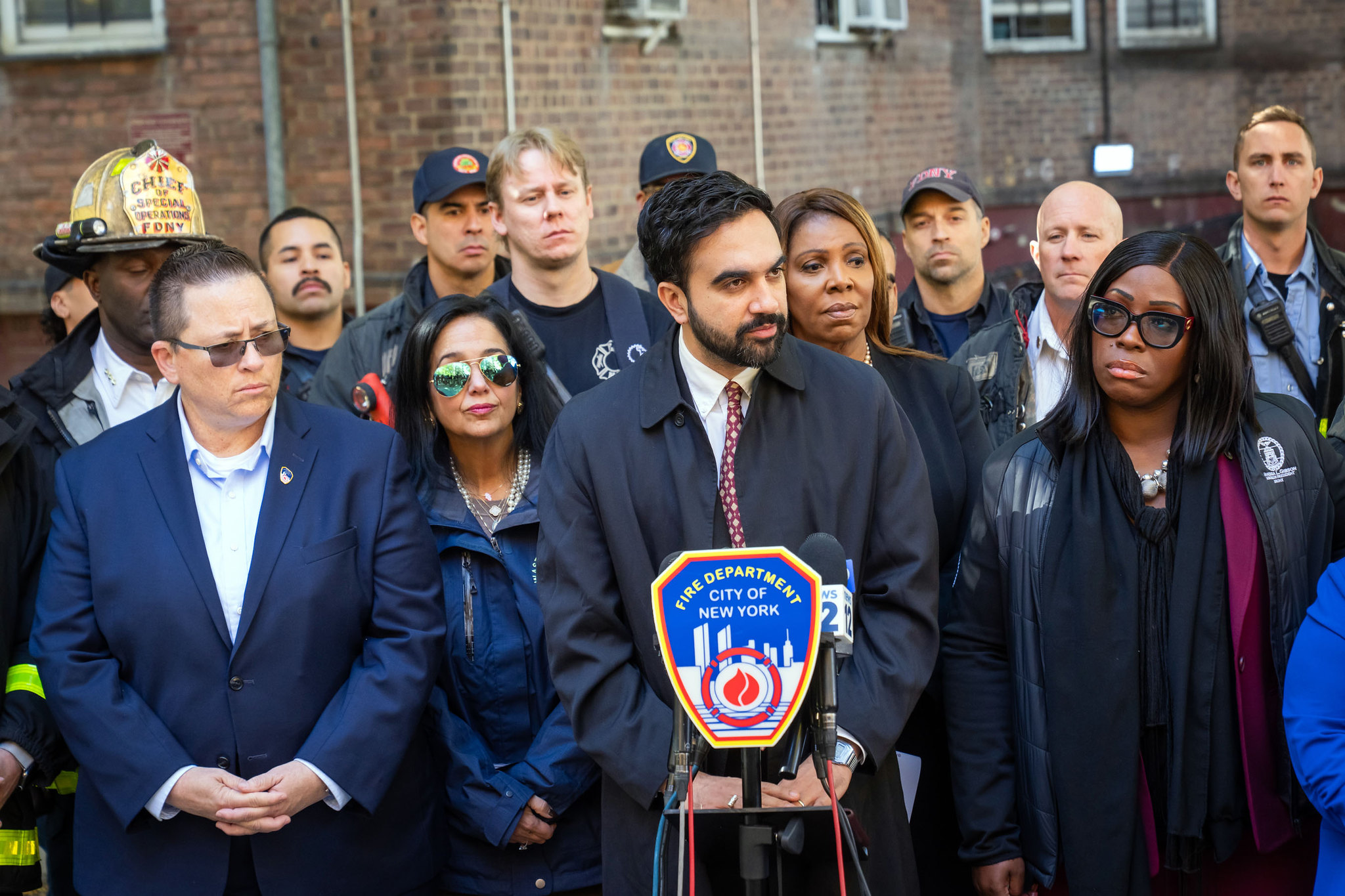
Mayor Mamdani holds a press conference on the Bronx Fire with FDNY Commissioner Lilian Bonsignore. 320 Morris Ave, Bronx. Wednesday, October 28, 2026. Credit: Ed Reed/Mayoral Photography Office.
Mayor Mamdani Releases November Financial Plan, Reduces Budget Gap While Protecting Essential Services
Updated financial plan reflects increased revenue, $683 million in additional savings over two fiscal years and $257 million reduction in the Fiscal Year 2028 budget gap
Investments strengthen public health and safety, protect New Yorkers from extreme weather, address federal funding cuts and make City government more efficient
NEW YORK – Mayor Zohran Kwame Mamdani today released the November 2026 Financial Plan Update, providing an updated picture of the City’s revenues, expenditures and progress towards its savings goal. The plan reflects the Mamdani administration’s commitment to fiscal responsibility by investing in essential services that protect the health and safety of New Yorkers, address federal funding cuts and improve government operations.
The November Financial Plan Update is part of the administration’s ongoing work to strengthen the City’s fiscal health and address structural budget challenges. Upon taking office, Mayor Mamdani confronted one of the largest structural budget crises in modern City history, driven by years of underbudgeting for core services and long-term obligations.
Rather than balance the budget on the backs of working New Yorkers through service cuts, the Mamdani administration stayed focused on savings, established a historic partnership with Albany to achieve new sustainable revenue sources and reverse several longstanding cuts and shifts that had strained the City’s budget, and worked with the City Council to reduce the Unincorporated Business Tax credit for high-income New Yorkers.
“New Yorkers deserve a government that works as hard as they do, and that is as careful with their money as they are,” said Mayor Mamdani. “Our budget proves that fiscal responsibility and public excellence go hand in hand. We are investing in the essential services New Yorkers rely on to protect their health, safety and wellbeing, while pursuing an aggressive savings plan to put our city on stronger financial footing so that our city can deliver for generations to come.”
Strengthening the City’s Fiscal Outlook:
As the administration enters its second budget cycle, the November 2026 Financial Plan Update reflects progress in strengthening the City’s fiscal position while maintaining investments in essential services.
The Fiscal Year 2027 (FY27) budget totals $129.2 billion. Of the $3.3 billion increase from the adopted budget, approximately $1.15 billion is City funds, $1.48 billion is Federal funds and $635 million is State funds. The increase in non-City funds primarily reflects routine budget adjustments that are typically recognized at this point in the fiscal year. The FY28 gap has fallen to $6.2 billion, a reduction of $257 million since the adoption of the FY27 budget in June. Gaps in FY29 and FY30 stand at $8.7 billion and $9 billion, respectively.
The plan also reflects $965 million in additional tax revenue in FY27, driven by increased collections since the June budget adoption and strong performance on Wall Street.
FY27 reserves total $7.8 billion. The administration is also developing a formal methodology for calculating annual deposits into the City’s Rainy Day Fund, consistent with the overwhelming support New Yorkers demonstrated for Proposal 5 from the Mayor’s Commission on Government Efficiency (COGE), which passed with almost 73% of the vote.
Within his first month in office, Mayor Mamdani signed an executive order directing every City agency to appoint a Chief Savings Officer (CSO). The initiative is designed to make government more efficient, streamline service delivery and ensure taxpayer dollars are spent responsibly. During the administration’s first budget cycle, agency CSOs identified $1.77 billion in savings across FY26 and FY27.
In July 2026, Mayor Mamdani announced an additional round of savings targets, directing City agencies to identify 2.5% in savings in FY27 and FY28, as well as in subsequent fiscal years.
In the November Financial Plan, debt service and agency savings total $683 million across FY27 and FY28. Agency savings include consolidating City office space, reducing reliance on outside consultants and bringing services in-house, improving grant claiming practices and reforecasting contract spending.
The administration will provide an additional update on its savings efforts in the FY28 Preliminary Budget. Through these savings, revenue collections and continued fiscal discipline, the administration was also able to make an $845 million prepayment toward FY28 obligations.
Investing in Essential Services:
While strengthening the City’s fiscal outlook, the administration is making targeted investments to protect the health and safety of New Yorkers, address federal funding cuts and improve the delivery of City services across the five boroughs.
Highlights of the November Financial Plan Update include:
Responding to Extreme Weather:
- Strengthen the City’s Code Blue response: Deploying additional outreach teams, nurses and vehicles, while expanding warming site capacity to connect homeless New Yorkers with shelter and support as temperatures fall ($25.2 million in FY27, growing to $25.9 million in FY30).
- Bolstering emergency response coordination: Adding 10 full- and five part-time Citywide incident coordinators to serve among the first City representatives deployed to emergency scenes and connect field operations with City Hall, the Emergency Operations Center and agency leadership. The positions will help meet increased operational demands from extreme weather, large-scale incidents and overlapping citywide activations ($600,000 in FY27, increasing to $1.2 million annually beginning in FY28).
Protecting the Health and Safety of New Yorkers:
- Strengthening juvenile justice facilities, enhancing alternatives to detention, and reducing recidivism: Improving operations and conditions at the Crossroad and Horizon juvenile detention facilities ($48.3 million in FY27, growing to $70.2 million in FY30).
- Strengthening Legionella prevention and response: Enhance the City’s detection, enforcement and response efforts to Legionella bacteria in cooling towers following the Upper East Side and South Bronx community clusters earlier this summer. The investment will support additional laboratory staff to accelerate testing and build on the NYC Health Department’s rapid and aggressive response ($500,000 in FY27, baselined).
- Expanding public health services: Funding the operations at the new Central Harlem Sexual Health Express Clinic, adding community health workers to conduct outreach and help patients maintain insurance compliance, supporting other public health clinic operations ($7.2 million in FY27, decreasing to $6.1 million annually as of FY28).
Addressing Federal Cuts and Improving Government Operations:
- Recognizing SNAP Administrative Costs: Covering increased City costs resulting from H.R. 1, which raises the City’s share of SNAP administrative expenses from 50% to 75% ($61.7 million in FY27, growing to $82.6 million annually in FY30).
- Supporting homeless services providers: Recognizing increasing food and insurance per diems for Department of Homeless Services (DHS) shelter providers ($40.3 million in FY27, growing to $43.9 million in FY30).
- Preventing service disruptions for veterans: Covering disruptions caused by the loss of the New York City Department of Homeless Services (DHS) Veterans Affairs Grant due to terms that would be in violation of state and local laws protecting people from discrimination on the basis of gender ($2.7 million in FY27, baselined).
- Reforming NYC Public Schools procurement: Investing in additional staff and resources to improve procurement practices, increase transparency and strengthen oversight of systemwide and school-level contracts and vendor spending. The reforms are expected to generate $100 million in savings across FY27 and FY28 ($9.6 million in FY27, baselined).
Bringing Services In-House and Reducing Reliance on Outside Contractors:
The administration is continuing to identify opportunities to bring work in-house, reduce reliance on outside consultants and contracts and build the City’s internal capacity.
- Office of Technology and Innovation: Generating savings of $4.6 million in FY 2028 and more in subsequent years by bringing consulting services in-house.
- New York City Law Department: Saving $2 million in FY28 and annually thereafter by reducing reliance on outside temporary attorney service contracts as agency staffing increases.
- Taxi and Limousine Commission: Saving $180,000 in FY27 and $322,000 in subsequent years by ending subscriptions and reducing reliance on consultants.

New York City Mayor Zohran Kwame Mamdani hosts an Italian heritage reception at Gracie Mansion on Tuesday, October 27, 2026. Michael Appleton/Mayoral Photography Office
Mayor Mamdani Announces Overdose Deaths at Lowest Rates Since 2019, Down 58% From 2022 Peak
Overdose deaths fell to 359 in the second quarter of 2026, down from a record 859 in the fourth quarter of 2022
NEW YORK – Mayor Zohran Kwame Mamdani announced today that overdose deaths in New York City have fallen to their lowest levels since 2019, with deaths declining 58% from their historic peak in 2022.
In 2022, New York City recorded 3,070 overdose deaths. From October through December of that year, 859 New Yorkers died of overdoses, the highest quarterly total on record. By the second quarter of 2026, that number had fallen to 359.
“Every overdose death is a life lost, and a reminder of the work we still have to do,” said Mayor Mamdani. “We know what saves lives: connecting people with care and making recovery services accessible to everyone who needs them. We are investing in the peer specialists and community-based organizations doing that work every day. We will keep fighting to bring these numbers down and ensure that no New Yorker is left behind.”
In May 2026, Mayor Mamdani announced a $12 million investment to expand access to life-saving recovery services for New Yorkers at risk of overdose. The investment will fund the certification and employment of peer specialists – people with a history of substance-use disorder who support others in recovery – and strengthen direct outreach efforts across the five boroughs.
Over four years, the investment is expected to create 500 new peer specialist positions through community-based organizations citywide. The announcement built on the City’s HealthyNYC Initiative, which aims to reduce overdose deaths by 25% by 2030.
“The data speaks for itself: expanding access to substance use recovery resources saves lives,” said Deputy Mayor for Health and Human Services Dr. Helen Arteaga. “While the steady decline in deaths is promising, far too many New Yorkers are still dying from overdoses. Our administration will continue making life-saving services accessible to those who need them most and opening more doors to recovery for those seeking help.”
“Every New Yorker we lose to an overdose is one too many, but after years of increases, we’re continuing to see the impact of investing in lifesaving programs that show compassion and reduce harm,” said NYC Health Commissioner Alister F. Martin. “There is still so much work to be done, but every life saved is a testament to the work, our many partners, and service providers who have spent years keeping New Yorkers alive and connecting them to services.”
“At NYC Health + Hospitals, we know that preventing overdose deaths requires meeting people where they are and making it as easy as possible to access compassionate, evidence-based care,” said Omar Fattal, MD, MPH, NYC Health + Hospitals Chief Behavioral Health Officer. “Whether someone comes to us after an overdose, seeks help for substance use, or enters our system for another medical or behavioral health need, we have an opportunity to connect that person to treatment, harm reduction, recovery support, and the services they need to stay healthy and alive.”
“A crisis as profound as the overdose epidemic required that we elevate performance and pursue new approaches including an expanded role for the medical examiner’s office,” said Chief Medical Examiner Dr. Jason Graham. “Our unique relationship of trust with surviving family members prompted the launch of the DIIG program to connect thousands of those at risk with life-saving support services, while our office continues to deliver prompt and accurate data to inform policy. We are cautiously optimistic about the ongoing decline in overdose deaths and grateful for the innovation, partnership and collaboration that brought us to this hopeful point.”
The decline in overdose deaths through the first six months of 2026 continues an annual decline in deaths in New York City from 2022 through 2025, according to new data released by the NYC Health Department. There were 1,873 overdose deaths in 2025, down 39% from 3,070 deaths in 2022.
New Yorkers seeking mental health or substance use support can call or text 988 at any time to speak with a trained counselor and receive confidential referrals to services and resources. NYC Mental Health Connect, an online resource launched last month by Mayor Mamdani, can also help New Yorkers find substance-use recovery services in their neighborhoods.

Mayor Mamdani joins New York City kids to celebrate Halloween in Queens. Friday, October 30, 2026. Credit: Ed Reed/Mayoral Photography Office.
TRANSCRIPT: MAYOR MAMDANI DELIVERS REMARKS AT FLIGHT 587 MEMORIAL
Mayor Zohran Kwame Mamdani: Good morning, everyone. It is an immense privilege to join you as we honor the 265 souls lost in the tragic crash of American Airlines Flight 587.
I come here today alongside leaders both in this community and beyond, and I want to just take a moment to acknowledge them: the event organizer, Belkis Lora, the sister of Jose Francisco Lora; Mary Rodríguez, the widow of the artist who designed this memorial; Pastor Gilford Monrose, who we’ve heard from; as well as our Assembly member-elect, Pesach Osina, who’s joining us today.
Though today marks 25 years since Nov. 12, 2001, I know that many here remember the early hours of that day like it was yesterday. Some of you, like Belkis, were heading to work after hugging a loved one goodbye at the JFK departures terminal. Others were pouring their coffee in Washington Heights after having stayed up late to pack suitcases full of presents for relatives back home in the Dominican Republic. And others who called Belle Harbor home were showing up to their jobs as firefighters and police officers in a city where the air was still choked with the toxic cloud from the Sept. 11 terrorist attacks.
On Nov. 12, 2001, the people of our city were still in mourning. Here in Belle Harbor, residents were still struggling to accept that more than 70 of their neighbors were gone in the aftermath of the attacks. Many who boarded Flight 587 had expressed their apprehension to family and friends about flying so shortly after the horrors of that day. Some, like Felix Sanchez, had worked in the World Trade Center and knew how lucky they were to have survived the destruction of that date.
Not only did the crash of Flight 587 deepen an already open wound, it was a devastating tragedy on its own terms. All 260 people aboard that flight died that day, along with five people on the ground. It remains the second-deadliest aviation accident in American history.
And yet that loss is so much vaster than numbers could ever capture. It is measured in birthdays missed, in grandparents who never got to meet their grandchildren, in meals once prepared by a loved one that will never taste the same.
I’m struck, too, by the added cruelty that, for so many traveling that day, their trip to Santo Domingo was one of homecoming. More than 225 of those aboard Flight 587 were of Dominican descent. They worked as cabdrivers and hairdressers, in factories and on Wall Street. They were traveling to the Dominican Republic to see brothers and sisters, mothers and children, their devotion to their families exemplified by the very act of stepping on that plane.
In Washington Heights, in the days after the crash, cathedral candles were lit on street corners and neighbors hugged in the street, whether they knew the victims or not. Across the five boroughs, as New Yorkers tried to make sense of something that is senseless, I know that many asked the same question: How much can one city handle?
And yet there was another question that was answered that day, and on every day that followed: How much could the people of New York City give to one another?
On Nov. 12, 2001, New Yorkers did not hesitate to do what they had done just two months and one day prior. They rushed to help.
When the engine of the Airbus A300 landed just a few feet away from the gas tank, the gas station owner got out a garden hose and tried to put out the fire. When Red Cross trucks pulled up to 129th and Newport Avenue, residents came out of their homes to hand out snacks and bottles of water. And when relatives in the Dominican Republic and here in New York City sought out information about their loved ones, the travel agents who helped to book flights did everything they could to get answers.
In the wake of immeasurable tragedy, New Yorkers did what they always do: They found solace in each other. They knew the only thing worse than unimaginable grief was having to face that kind of grief alone.
This memorial, 25 years strong, is a testament to how New Yorkers come together and lift one another up in our hardest moments.
Year after year, you all come here to remember those who died. You have watched as toddlers grew tall, as parents became grandparents, as those marked by this grief moved away and yet still managed to find their way back.
Despite the pain that never fades, you have built a community out of this tragedy, one marked by resilience, solidarity and a refusal to forget.
I can think of no better tribute to the victims of Flight 587. It is an honor to be with you, to pay remembrance to those we lost, those who remain with us in our hearts and in the fabric of our city.
Now, to honor those lives, Police Officer Vinny Bosco and Firefighter James Frontera will help us pay tribute. Following the tolling of the bell, we will observe a moment of silence. Thank you.
Banner Image: Mayor Mamdani joins Ofrenda at City Hall. Friday, October 30, 2026. Credit: Ed Reed/Mayoral Photography Office.
NYC Mayor Zohran Mamdani


Zohran Mamdani was sworn in as Mayor of the City of New York on January 1st, 2026. Prior to becoming Mayor, he represented the 36th New York State Assembly District and its neighborhoods of Astoria, Ditmars-Steinway, and Astoria Heights.