


This is part of our series about midwifery care and maternity care deserts in New York and other states. While New York does rank higher than New Jersey in terms of overall maternity care availability and specifically maternal mortality, it provides many fewer options to birthing people overall. In New Jersey, midwife-led birth centers are allowed to open and operate legally in the state. Midwives can also provide homebirths, as they also can in New York. However, due the incredibly burdensome Certificate of Need process, which requires, among other things, reserve cash of $200,000, held in an account for a minimum of two years, as well as rental costs or ownership of the property applying for licensure. This creates an often-insurmountable financial barrier for most midwives. This also doesn’t express the issues related to type of care provider. New York is one of only 11 states that does not allow for the Certified Professional Midwife credential to apply for licensure. This is a non-Masters Degree requiring career path that allows people from a variety of backgrounds to enter the field, rather than only those who have a high income or a large amount of savings. New Jersey allows this credential, and has also seen the opening of many freestanding birth centers, benefiting birthing people all over their state.

During our discussion, several facts came to light. First, obstetrics wards at hospitals, in general, aren’t money makers. So while for some these wings are considered the bread and butter of the hospital, it isn’t because they directly profit the hospital. Instead the goal is to have people come back for other types of more profitable care, such as cardiology and elective surgeries, which is where their real money is made. So the more patients a hospital brings into its building, the better.
But, of course, the patients thus brought in need to have a good experience. If they don’t, they’ll seek care elsewhere when they need it, regardless of the fact that they came to that location first. This is where Alongside Midwifery Units, or AMUs, come in. These units are basically sections in a hospital rather than a freestanding center in itself. The center described in our discussion with the midwife at NYU Langone, which is one of only a handful in the city and state, is an AMU. While freestanding centers are better for some people, others want to be right next door (or inside) emergency care.
An alongside unit fills this space very well, and one of its best benefits for hospitals is in the area of marketing. Bringing in the birthing persons to have their babies in a nurturing, loving environment with a holistic form of care makes it more likely that same patient will remain with an affiliated pediatrician, cardiologist, etc, for future care. People will drive over an hour to get this type of care, particularly if it’s not available nearby.
Susan discussed an example in Ohio, where patients drive one or even two hours to get this type of midwifery care. The same is true of NYU Langone in Brooklyn. They will get the patients that are farther away because they offer something patients want: fewer interventions. Better outcomes. Real connection between mother and baby (including delayed cord clamping and immediate skin to skin). Even hospitals that are considered “mother friendly” or “baby friendly” would not be perceived as such by the community when compared to a location with an AMU (or a freestanding birth center).
We also learned that the burdensome Certificate of Need licensure, which would be much more appropriate if a birth center was owned by a hospital, is not in effect in that situation. Basically, a hospital could open a freestanding birth center tomorrow, whereas a midwife, whose care has been shown again and again to be just as safe if not safer, cannot open one.
Pretty much at all in this state. The board governing the rule making for the midwifery led birth centers has multiple doctors and even a marketing director for ACOG – but not one midwife. This isn’t because there are no vacancies – there are two in fact that could be filled by the governor with a midwife immediately. But the choice was made to keep the board completely medical, with predictable results – onerous and impossible regulations ensuring that it looks great on paper, but in real life, not so much. And best of all, no competition for obstetric hospitals by birth centers – which certainly doesn’t benefit patients who want higher quality one on one type care.
These hospital based birth centers mentioned previously, if they opened, would then employ midwives, but in reality, midwives want to be able to manage their own affairs, outside of the specific purview of conventional medicine with its attendant interventions and high cost.
And finally, we came to the reasoning that birth centers cost insurance companies less. This is not a good thing, because it means the facility (the birth center) doesn’t get paid anything. The practitioner does, but insurance companies won’t pay birth centers equally to hospitals (or in many cases anything at all for their service of providing the delivery space), and thus birth centers that have opened struggle to pay their bills. While they may have less overhead than a hospital, they do have some, and if they aren’t provided with facility fees, they may be unable to provide the care that’s needed.
So the reduction in cost that many discuss as being part of the benefit of a birth center delivery is not actually fair or a good thing. It should be noted that when a hospital owns an AMU or birth center, they will generally bill insurance for the correct facility fee, and thus they not only benefit from the marketing and natural public relations benefits that arise, but also receive the same amount of payment for less costly services. Midwives as a profession cost a hospital less than an obstetrician does, by far. It may even be ten times less. So if they get the same facility fee and pay their attendants less, the rest is purely profit.
As a for-profit medical system that has put many people into debt, this should be something they would want. Better outcomes, lower cost, more money: a win-win. But clearly they don’t see it that way. At least if hospitals opened birth centers, they would exist. Instead of just three in the whole state, there might be a more reasonable and representative number.
And if people are willing to travel two hours to a birth center, I’d be curious to know how many Jersey birth centers are seeing New Yorkers. Why? Not everyone is comfortable going ‘full country’ and giving birth at home, etch is the only option in many places in the state. If they don’t want a hospital birth and NYU Langone is about the same distance as, for example, The Birth Center of NJ in Union, they may just arrange to have their babies in New Jersey instead and avoid the whole drama.
We know for a fact that many midwives have been lost to Jersey. It would be interesting to compile a study of just how much money New York hospitals are losing to New Jersey birth centers. They could easily recover that cost – by building their own birth center. They could also change the regulations for midwife led centers to match physician led centers. But it’s been five years with total lack of progress, and it was five years before that with no progress.
So it seems that New York doesn’t care about women having choices when it comes to delivering their babies. It doesn’t care if they want to give birth in a birth center. Doesn’t care if they want a midwife trained specifically in home based birth as a CPM is. None of these things matter, because it’s not about competition.
When you have an inferior product, making the lawmakers favor your business over your competition unfairly is the name of the game in oligarchic systems, where one type of business dominates and competition is crushed. In New York, the hospitals monopolize birth, disallowing competition and patient choice. Many advocates are pressing for change, particularly in religious communities where midwifery has always played a large role – Mennonites, Orthodox Jews, Muslims, and others are all forced into the same box. Perhaps change will come and New York will start to lead the way in maternity care instead of being left in the dust.
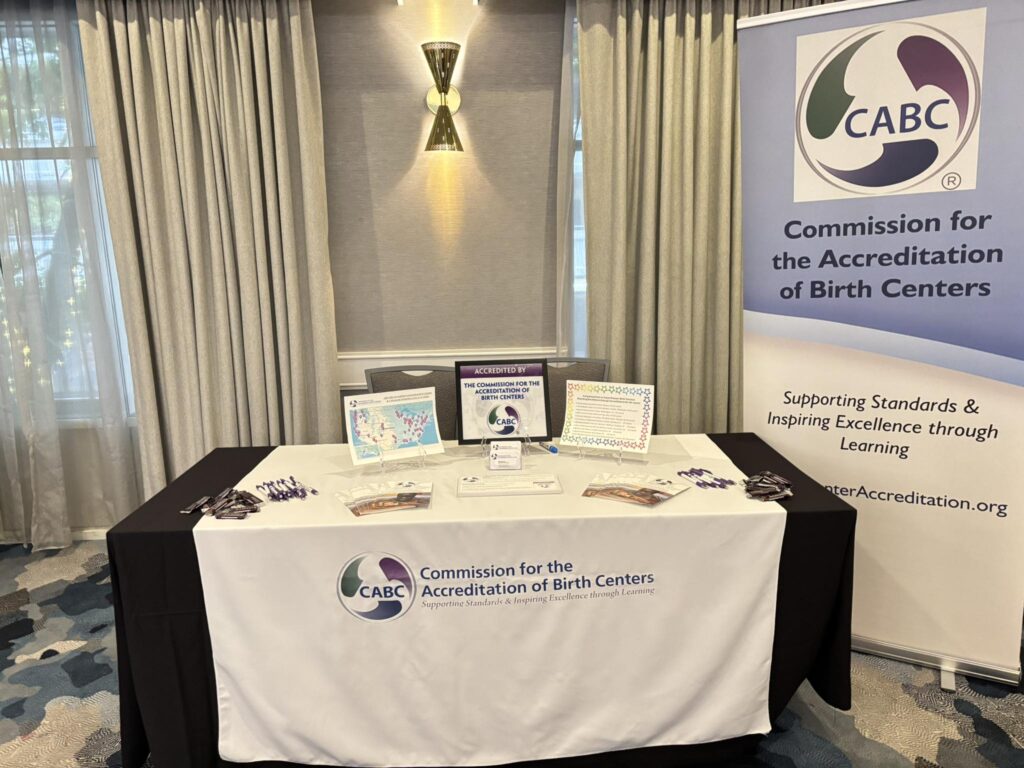
Banner Image: CABC table at event. Image Credit – CABC
Staten Islander News Service Staff Writer


This byline indicates that this article was penned by a member/members of the Staten Islander News Organization office team. Our staff writers are the backbone of our newspaper, performing all sorts of important tasks like conducting interviews, investigating leads, besides writing the news stories you see.