
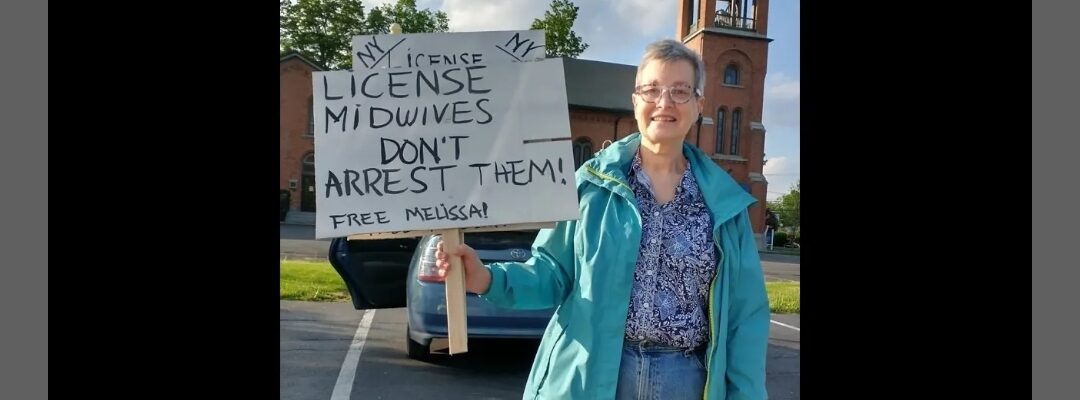
Maternity Care Deserts: While Certified Professional Midwives Are Not A Cure-All, Their Skill, Expertise Can Certainly Reduce Suffering, Travel, Improve Outcomes For Moms, Infants – Particularly In NY’s Minority Religious Communities
Staten Islander News interviewed two midwives legally practicing and licensed in New Jersey, one of whom is also licensed in New York.
We continue the discussion started in the first segment about the way in which the laws regarding the practice of midwifery in New York were changed in 2010 to not only disallow the Certified Professional Midwife credential to become a true path to licensure, but every midwife who had been practicing in the state in a legal pathway to licensing, working on their hours and other requirements, was suddenly shut out without warning or reasoning. While ‘safety’ and ‘liability’ were cited as the reasons to pass this law, it is questionable that there are any real safety concerns.
Midwives around the country, in 38 states including D.C., are presently practicing under this credential – with outcomes improving for moms in these states. Some statistics show that New York has improved moderately, but on the scale of maternal mortality, the CDC shows the opposite. While it is very rare for mothers to die in America, it is on the rise in certain states, particularly those with restrictive abortion laws. New York is not an exception, despite having very welcoming abortion laws.
One of the main points we return to in this discussion is that of infant mortality. While every mother’s death is tragic (and New Jersey’s task force demonstrated that 92% of them were preventable), the infant mortality statistic is even more poignant – and hidden.
The situation in Upstate New York is something that no one is talking about. With much of the present focus on maternal mortality, in particular among BIPOC birthing people who are 5-7 times more likely to die during childbirth and postpartum, there has been a hidden group that has been dealing with infant deaths – regularly.
In Upstate New York, there are six Mennonite communities. One of their traditions is homebirth, which was literally illegal before 2010. So in legalizing homebirth, New York lawmakers decided to restrict the practitioners that could provide midwife services. So these women aren’t breaking the law giving birth at home anymore. But now they don’t have the type of midwife that served their community previously and who specializes in homebirths. Most of the midwives that served these areas moved away in 2010, leaving a void.
As we learned during our viewing of Arrest the Midwife!, in 2019, midwives practicing as CPMs, without a valid license, were followed, pursued, arrested, and eventually either agreed to never practice again or were convicted. This led to a new exodus of even more midwives, leaving the Mennonite women without a trained birth attendant to help them deliver their babies.
The statistic that we discuss comes from the American Heart Association, where it is understood that 1% of all newborns will need extensive assistance breathing. These are the babies that don’t respond to cuddling, stroking, patting, or other non-invasive methods of starting their breathing. 10% of all babies will need a little assistance to start breathing, and those techniques will help them. But that 1%, without trained assistance such as a certified midwife would provide, will die. Due to their own traditions, and the fact that the birthing person never went to a prenatal care visit and didn’t announce their pregnancy publicly, that baby’s death is never recorded. It didn’t happen and doesn’t contribute to the statistics on maternal or infant mortality kept by the state. These are the silent victims of this tragic law change.
As we talked about in our previous article, the real human death toll, estimated based on the presumed populations of Mennonite communities Upstate, is believed to be 47 in the past six years since the arrest of these midwives. Since that time and before, they’ve been fighting, with little avail, to change the law. There aren’t enough hospitals to serve the non-Mennonite people in these rural areas, and the members of these groups will not go to a hospital – even if they should. Without a trusted midwife to tell them to go or that the birth has become unsafe, they won’t know to call for an ambulance.
Even if they were to call an ambulance, neonatal resuscitation is something that regular EMTs aren’t trained in, aside from the fact that by the time they arrive the baby would be past saving. If a midwife were present at the birth, she could help resuscitate the baby or at least keep their blood and oxygen flowing until they arrive at the hospital. These mothers might, however, go to a birth center if one were available and affordable. Since many birth centers cost over $5,000, with no discounts, they would probably still be in the same situation even with birth centers. But there aren’t any of those either (3 have opened in the whole state due to regulations added onto the Birth Center Bill that defeated the entire premise and purpose of that bill, rendering it defunct).
Instead of getting the care they need, the Mennonite women give birth at home still, but without anyone present who can resuscitate a struggling baby. They are in essence catching each other’s babies, without experience or training that would allow them to understand if things are going wrong.
Importantly, the American Heart Association’s solution is to make sure that qualified attendants are present at every birth. New York is very much behind the curve on this one, being part of 11 outlier states that restrict the CPM credential, and one of only eight states that has adopted the Certified Midwife for licensure. This certification causes hiccups in a lot of areas, notably getting paid by insurance. Since it isn’t well known, many insurers won’t pay for claims related to it. In addition, there are very few schools (one in New York) that even offer training in this credential. While discussed as an alternative to the Certified Nurse Midwife credential, it has not resulted in an actual increase in the midwifery workforce.
Advocates, including the March of Dimes, continue to fight for access to care, including that provided by midwives. More birth centers are needed, particularly those led by midwives where outcomes are as good as or better than their hospital counterparts. Even ‘hospital aside’ midwifery clinics can help bring medicine into alignment with helping birthing people to have better outcomes.
One important point is that the presence of midwives in hospitals and birth centers saves the state at least $10-30,000 on hospital fees that are paid by Medicaid and private insurance companies. That’s a huge amount of money, and it can be saved by adding midwives to the birthing workforce. Not only the cost savings, but the better patient satisfaction reported with midwifery services, and the reduction of load in overstretched hospital wards – which many in Upstate New York are. If a patient has to wait an hour after transport in many instances and locations to be seen in the hospital, their resources are definitely stretched thin. Bringing in midwives can help the hospital provide better, more attentive patient care for those higher risk people while midwives relieve some of the burden and strain on the overtaxed system. Advocates are fighting for change in a variety of ways, especially at the political level. Moms and babies may both benefit when there are more maternity care providers for the mothers that need them.
Banner Image: NY CPMs protest. Image Credit – NY CPM



Staten Islander News Service Staff Writer
This byline indicates that this article was penned by a member/members of the Staten Islander News Organization office team. Our staff writers are the backbone of our newspaper, performing all sorts of important tasks like conducting interviews, investigating leads, besides writing the news stories you see.
I want to note that there is a mistake in the article. I don’t believe that home birth was illegal in New York before 2010. If anything it became less restrictive for licensed midwives to attend births because the restriction of a signed practice agreement with a physician was lifted in 2010. The problem in NY is not whether home birth is legal, but as you state in this article that Certified Professional Midwives (CPMs) are criminalized! As of 2011 there was no pathway to licensure due to closing down the only available pathway for CPMs which was an alternate pathway of proving your education to the Department of Education and taking a credentialing exam, which was also removed unless you went to an AMCB school. This is ILLEGAL on the part of NYS, whose structure allows for Certified Professional Midwives to get licensed. It is the State that should be held accountable for this, not the midwives providing life-saving care to communities that need them. The State should allow the NARM exam as the approved exam for CPMs! It is about time that NY State opens access to midwives rather than continuing to close access!
I want to note that there is a mistake in the article. Home birth was not illegal in New York before 2010. If anything, it became less restrictive for licensed midwives to attend births because the restriction of a signed practice agreement with a physician was lifted in 2010. The problem in NY is not whether home birth is legal, but as you state in this article that Certified Professional Midwives (CPMs) are criminalized! As of 2011 there was no pathway to licensure due to the NY Department of Education shutting down the only available pathway for CPMs. This was an alternate pathway of proving your education to the Department of Education and taking a credentialing exam, which was removed unless you went to an AMCB school. This is ILLEGAL on the part of NYS, whose structure allows for Certified Professional Midwives to get licensed. It is the State that should be held accountable for this, not the midwives providing life-saving care to communities that need them. The State should allow the NARM exam as the approved exam for CPMs! It is about time that NY State opens access to midwives rather than continuing to close access!