
Expanded Military/Municipal Housing Preference, Youth Financial Literacy, OneLIC Plan Approved, College For Foster Care Youth, Future of Roosevelt Island, Mental Health Crisis Line, PS School Class Size Reduction: Mayor Adams
Expanded Military/Municipal Housing Preference, Youth Financial Literacy, OneLIC Plan Approved, College For Foster Care Youth, Future of Roosevelt Island, Mental Health Crisis Line, PS School Class Size Reduction: Mayor Adams
Editor’s note: You can see last week’s rundown by the mayor here, along with the op-ed for the week here.
MOST PRO-HOUSING ADMINISTRATION IN CITY HISTORY:
MAYOR ADAMS IMPLEMENTS EXPANDED HOUSING PREFERENCE FOR CITY EMPLOYEES AND MILITARY VETERANS
Adams Administration Expands Portion of Homes on Affordable HousingLottery With Preference for City Employees and Veterans to 10 Percent
NEW YORK – New York City Mayor Eric Adams today marked Veterans Day by announcing the official launch of the expanded Municipal Employee Housing Preference, which now includes military veterans as well. Starting on November 15, 2025, all new affordable housing lotteries listed on the New York City Department of Housing Preservation and Development’s (HPD) Housing Connect website will include a 10 percent preference for eligible city employees and military veterans. Previously, city employees only received a preference on 5 percent of newly constructed affordable homes financed by HPD or the New York City Housing Development Corporation (HDC) and listed on the city’s Housing Connect lottery. But, earlier this summer, Mayor Adams announced the city’s intention to expand the housing preference for city employees and veterans as part of “Housing Week.” By expanding this preference to include military veterans — and increasing the overall share to 10 percent — the city is strengthening its commitment to the workforce that keeps New York City running, while also honoring those who serve the country.
“Municipal workers and veterans should be able to live in the city they love. With this new policy, we’ll make it easier for city employees and veterans to live, raise a family, and retire in the five boroughs,” said Mayor Adams. “This Veterans Day, we’re not only honoring our veterans and public servants with our words; we’re honoring them with our actions, too, and giving back to the people who give their all every day for their city and country.”
“New York City runs on the dedication of over 300,000 municipal workers, the people who keep us safe, clean our streets, deliver clean water, and keep this city moving forward every single day,” said HPD Acting Commissioner Ahmed Tigani. “Today, as we celebrate Veterans Day, we are proud to expand this long-standing preference to include those who have served our country as well. This effort is about recognizing service, whether to our city or our nation, and ensuring that those who give so much to others have a secure, affordable place to call home.”

“Service to city and country deserves the dignity of a stable home,” said New York City Department of Veterans’ Services Commissioner James Hendon. “By expanding the preference to 10 percent of new Housing Connect opportunities for municipal workers and military veterans, we’re turning gratitude into access — so the people who keep New York running, and those who wore the uniform, can find an affordable home in the city they serve.”
Expanding the Municipal Employee Preference to include military veterans supports both the city’s recruitment and retention goals of municipal employees and addresses the unique housing challenges faced by veterans. The initiative also reflects the city’s broader strategy of removing barriers to affordable housing and promoting stability and well-being among New Yorkers who serve their communities and country. The 10 percent preference applies to all HPD- and HDC-financed new construction projects listed on the Housing Connect lottery moving forward.
Applicants must meet one of the following eligibility criteria to qualify:
- Municipal Employees: Applicants currently employed by the City of New York can qualify by answering “yes” to the Housing Connect question about city employment and submitting proof, such as a recent paystub or a tax document.
- Military Veterans: Applicants who have served in the U.S. Armed Forces, National Guard, or Reserves can qualify by answering “yes” to the Housing Connect question about military service and providing supporting documentation, such as a DD214 (Certificate of Release or Discharge from Active Duty), or a Statement of Service.
This expansion is part of the city’s ongoing effort to improve access to affordable housing and promote equity within the Housing Connect system.

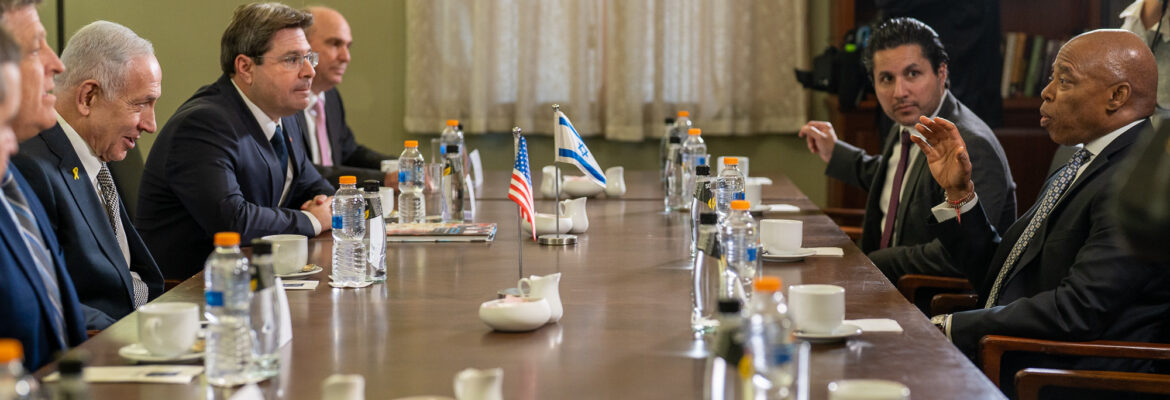
New York City Mayor Eric Adams meets with the Prime Minister of Israel Benjamin Netanyahu. Monday, November 17, 2025. Photo Credit: Benny Polatseck/Mayoral Photography Office
MAYOR ADAMS, DCWP, NYC PUBLIC SCHOOLS ANNOUNCE IN-SCHOOL BANKING PILOT AS PART OF “FINANCIAL LITERACY FOR YOUTH” INITIATIVE
Innovative In-School Banking Pilot Will Bring Safe, Affordable Banking Directly to High Schools Starting in 2026
Announcement First Includes 15 Schools and 12 Financial Organizations Participating in Pilot Program
Builds on Earlier Announcement That Adams Administration Will Put Financial Educators in Every School District to Provide Counseling, Lead Workshops, and Help Create Curricula
Unveiled in State of the City Address Earlier This Year, “Financial Literacy for Youth” Will Ensure Every Public School Student Can Learn How to Save and Spend Money
NEW YORK – New York City Mayor Eric Adams, New York City Department of Consumer and Worker Protection (DCWP) Commissioner Vilda Vera Mayuga, and New York City Public Schools Chancellor Melissa Aviles-Ramos today announced a pilot program to bring safe, affordable banking directly to public school students — the next prong of the Adams administration’s “Financial Literacy for Youth” initiative to make sure that every public school student can learn how to save and spend money by 2030. The pilot program will introduce in-school banking services to students and their families, provide workshops on best banking practices, and, when possible, connect students to career development opportunities in the financial sector — all directly in school spaces starting next year. As part of today’s announcement, Mayor Adams unveiled the first 15 public schools and the first 12 financial institutions to participate in the pilot program: Bank of America, Brooklyn Cooperative Federal Credit Union, Citizens Bank, M&T Bank, Neighborhood Trust Federal Credit Union, PNC Bank, Ridgewood Savings Bank, TD Bank, Santander, Spring Bank, Urban Upbound Federal Credit Union and Wells Fargo will all offer in-school banking services through the program. Mayor Adams also, once again, reiterated his call for more financial institutions to join in the Financial Literacy for Youth initiative and help young people develop healthy financial habits. Through Financial Literacy for Youth — originally announced by Mayor Adams in his State of the City address earlier this year — the Adams administration is also placing a financial educator in every single school district to help teach students about responsible financial habits and exploring additional ways to give students hands-on experience learning about saving and managing money.
“If you don’t teach people how to use their money, they will lose their money. That’s why our administration launched a landmark initiative to make sure every public school student can learn how to save and spend money by 2030,” said Mayor Adams. “With this groundbreaking program, we’ll bring banking services directly to students and give them hands-on experience opening up a safe, affordable bank account, learning about financial products, and starting careers in banking and finance. In-school banking has been called ‘the most promising frontier’ in financial education, and here, in New York City, we are on that frontier. From financial education to cutting-edge apprenticeships, our administration is not only making sure our students succeed in the classroom but giving them the real-world tools to thrive afterwards too.”
“Our young people are our future, and I am thrilled to see the launch of the in-school banking pilot component of our financial literacy for youth initiative,” said Deputy Mayor for Housing, Economic Development, and Workforce Adolfo Carrion Jr. “I am especially grateful to see such an enthusiastic partnership with financial institutions to provide safe and affordable banking access and education to students and their families.”
“From my own struggles to become more financially stable earlier in life to raising two growing children today, I know first-hand how important it is to learn about personal finances; that is why Financial Literacy for Youth is so near and dear to my heart,” said DCWP Commissioner Mayuga. “I am thrilled to begin working with these 15 schools and their students and families on the journey to financial health. I also applaud our initial banking partners for their commitments to help their communities and urge others to join us in our innovative in-school banking pilot.”
“Financial literacy is a lifelong skill that empowers students to make confident, informed choices about their futures,” said New York City Public Schools Chancellor Avilés-Ramos. “By bringing safe, affordable banking directly into our schools, we’re giving young people hands-on opportunities to learn how to manage money, build healthy financial habits, and open doors to new career pathways. This initiative reflects our deep commitment to preparing every student not just for college and career, but for life.”
The in-school banking pilot unveiled today will provide students and their families with real-world exposure to safe and affordable banking options and hands-on experience learning about saving and managing money. In-school banking is recognized by the Federal Deposit Insurance Corporation as one of the “most promising frontiers” in developing young people’s financial skills, particularly among persistently-unbanked communities, like those in the first 15 districts chosen for this pilot program. Research recently released by DCWP found that 238,900 households in New York City — or roughly 7 percent of the city’s population — do not have a bank account, which is higher than the national average of 4.2 percent.
Families without a bank account are forced to rely on costly alternatives like check cashers, which can perpetuate cycles of poverty. The in-school banking pilot aims to address this disparity by bringing accessible financial services and education into school communities. Research shows that in-school banking offers benefits to program participants and financial institutions. For example, students with access to savings accounts are seven times more likely to attend college and are more financially capable overall. In-school banking also provides financial institutions with meaningful opportunities to support community development. Through in-school banking,
financial institutions could meet their Community Reinvestment Act reporting requirement by providing access to savings accounts and financial education to students in low- or moderate-income school districts. The Adams administration is seeking a total of 10 to15 banks or credit unions to participate in the program.
The first 15 public schools that will receive in-school banking services starting in 2026 are:
|
District |
School Name |
| 2 | Urban Assembly Early College High School of Emergency Medicine |
| 3 | The Urban Assembly School for Green Careers |
| 5 | Mott Hall High School |
| 7 | The Laboratory School of Finance and Technology |
| 8 | Longwood Prep |
| 9 | Bronx High School for Medical Science |
| 10 | Fordham High School for the Arts |
| 11 | Bronx Lab School |
| 12 | East Bronx Academy for the Future |
| 14 | High School for Enterprise, Business and Technology |
| 19 | World Academy for Total Community Health High School |
| 21 | John Dewey High School |
| 23 | Brooklyn Collegiate: A College Board School |
| 30 | Long Island City High School |
| 31 | The Eagle Academy for Young Men of Staten Island |
These 15 public schools will also serve as the first schools to receive financial educators. After approximately six months, financial educators will expand their reach to serve additional schools across the district. Financial educators will provide families with one-on-one free financial counseling, lead workshops for students and families, and help develop classroom resources for teachers to build responsible financial habits among students. More than 350,000 public school students and their family members will be served in the first five years of the program.
Financial Literacy for Youth builds on DCWP’s work helping New Yorkers build responsible financial habits, manage debt, and keep more money in their pockets. Since the start of the Adams administration, DCWP’s NYC Financial Empowerment Centers have helped tens of thousands of New Yorkers improve their credit, reduce their debt by over $45 million, and increase their savings by over $5 million through free one-on-one financial counseling services. Financial Literacy for Youth also builds on the Adams administration’s investment in scholarship accounts for college and career training for public school students beginning in kindergarten through the Save for College Program. To date, nearly 280,000 public school students have an NYC Scholarship Account with more than $50 million accumulated for their educational futures. From the Save for College Program and Financial Literacy for Youth to Financial Empowerment Centers and the recently announced college savings and student loan assistance program, New York City now offers a comprehensive, multi-generational financial empowerment strategy to help families thrive. New Yorkers 18 and older can visit DCWP’s NYC Financial Empowerment Center webpage or call 311 and say “financial counseling” to schedule an appointment or for more information.
“This in-school banking pilot represents a pivotal step toward integrating financial literacy into the foundation of our education system,” said New York City Councilmember Kevin C. Riley. “For communities like the Bronx, where access to financial tools and resources has too often been limited, this initiative is vital to empowering students and families to make informed decisions and creating pathways toward stability and generational wealth. I support efforts that make financial literacy a citywide standard, so every school community in every borough has the tools to build a secure financial future.”
“Learning and developing vital financial skills will help students navigate every stage of life with confidence — from saving, budgeting, and building credit to preparing for college and beyond,” said José Tavarez, president, Bank of America New York City. “In partnership with the New York City Department of Consumer and Worker Protection and New York City Public Schools, the Financial Literacy for Youth initiative builds on our commitment to helping the next generation of New Yorkers plan for their financial future.”
“Brooklyn Coop Federal Credit Union is proud to be a founding financial institution for New York City’s new Financial Literacy for Youth initiative,” said Samira Rajan, chief executive officer, Brooklyn Coop Federal Credit Union. “This initiative directly aligns with our mission to further wealth building, opportunity, and resilience in our communities by offering just and affordable financial services. Successfully building generational wealth requires that younger generations are well informed as to how our banking system operates, how to use debt responsibly, and how to invest sensibly. We are looking forward to building a lasting partnership with our neighborhood schools to give our kids the best opportunity possible.”
“At Citizens, we believe that financial empowerment is a critical foundation for long-term success,” said Yajaira Hafley, tri-state metro retail market executive, Citizens. “Our colleagues will visit participating schools to deliver the interactive Citizens Money Essentials workshops and provide opportunities for students and families to gain the confidence and skills they need to make informed financial decisions.”
“Improving access to financial education is a critical step towards advancing socio-economic mobility in our communities,” said Blair Ridder, New York City regional president, M&T Bank. “Bringing this initiative into our schools will help to build confidence and empower our young people to lead rewarding and prosperous lives. At M&T Bank, we believe education and hands-on learning experiences are the best ways to ensure students absorb critical lessons like spending, budgeting, saving, planning and borrowing. The Financial Literacy for Youth initiative will offer best-in-class programming, and we commend the leaders of New York City for executing on this vision. We are proud to participate in this critical program and look forward to its success.”
“At Ridgewood Savings Bank, we believe that financial literacy is essential to lifelong success and to building stronger, more resilient communities,” said Leonard Stekol, chairman, president, and CEO, Ridgewood Savings Bank. “For more than a century, we’ve stood by our neighbors as a mutual, community-focused institution — one that invests in education, opportunity, and financial empowerment. This innovative in-school banking initiative reflects those same values by giving young people the tools and confidence to make informed financial choices. We thank Mayor Adams, the Department of Consumer and Worker Protection, and New York City Public Schools for their leadership and vision in helping students gain skills that will serve them and their families for a lifetime.”
“TD Bank is pleased to join the city’s Financial Literacy for Youth initiative and continue our bank’s long tradition of providing youth with accessible and age-appropriate resources to learn about everyday financial decisions and build confidence in managing money,” said Steven Garibell, vice president of community business development, TD Bank. “We look forward to working with the city and engaging students in NYC Public Schools through this program.”
“Neighborhood Trust FCU is excited to join this initiative,” said Nazarett Perez, marketing and communications officer, Neighborhood Trust Federal Credit Union (FCU). “When we provide our students with financial knowledge, we equip them with the tools to thrive and open the doors to a brighter future.”
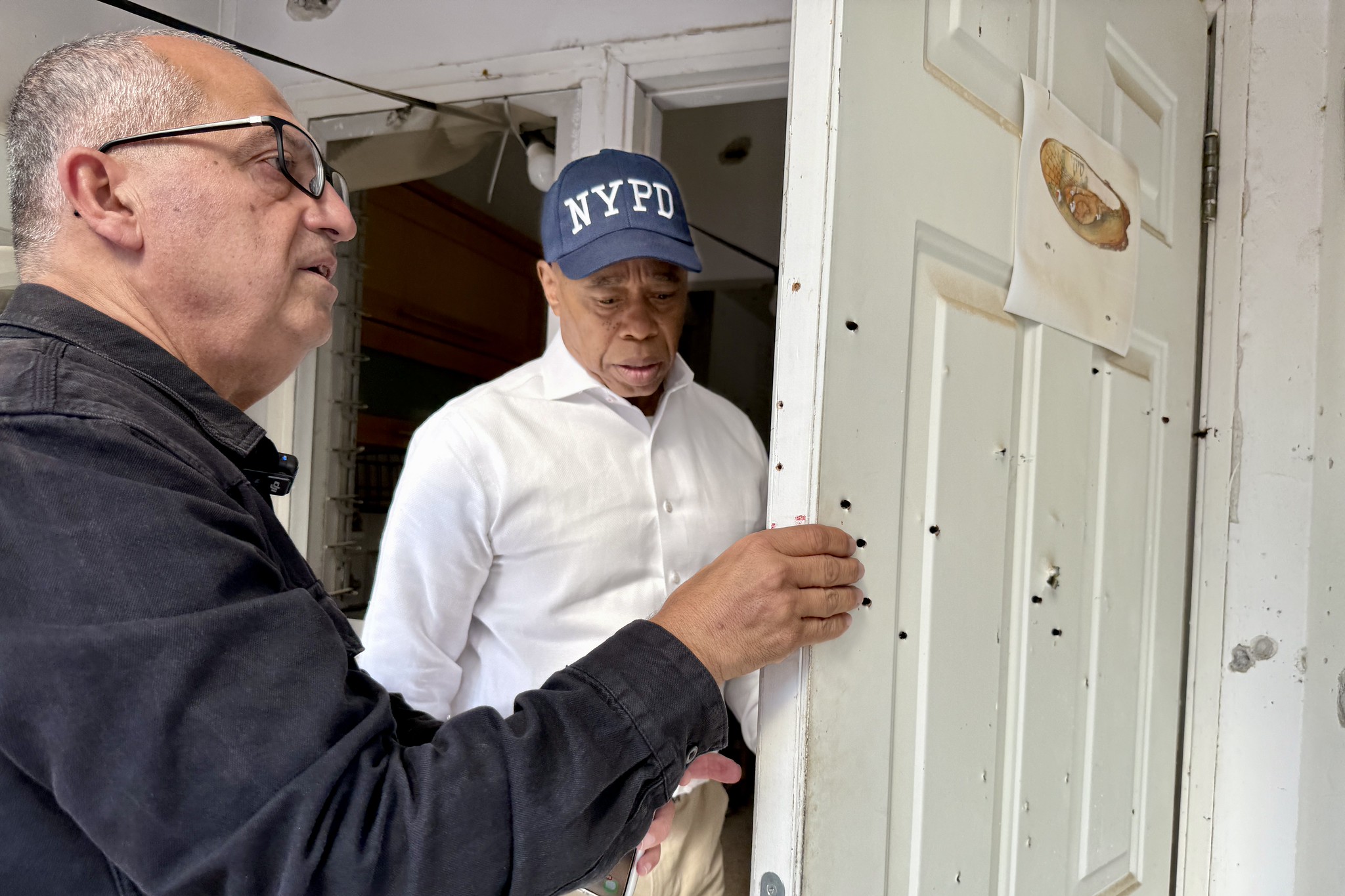
New York City Mayor Eric Adams visits Kibbutz Kfar Aza, which was attacked during the October 7th terrorist attacks on Israel. Tuesday, November 18, 2025. Photo Credit: Benny Polatseck/Mayoral Photography Office
MOST PRO-HOUSING ADMINISTRATION IN CITY HISTORY: MAYOR ADAMS
CELEBRATES PASSAGE OF ADMINISTRATION’S ONELIC NEIGHBORHOOD
PLAN TO CREATE NEARLY 15,000 NEW HOMES AND OVER 14,000 JOBS
Plan Will Deliver 4,350 Permanently Affordable Homes,
Over 3.5 Million Square Feet of Commercial and Industrial Space
Invests Over $650 Million in Community, Including Continuous Public Waterfront,
Parks Under Queensboro Bridge, New Schools, Repair Funds for Queensbridge Houses
Adams Administration Has Now Enabled Over 130,000 New Homes Through
Zoning Actions, Including “City of Yes” and Five Approved Neighborhood Plans
NEW YORK – New York City Mayor Eric Adams and New York City Department of City Planning (DCP) Director and City Planning Commission (CPC) Chair Dan Garodnick today celebrated the New York City Council’s approval of the Adams administration’s OneLIC Neighborhood Plan. This transformative initiative will create approximately 14,700 new homes, including 4,350 permanently affordable homes through the use of Mandatory Inclusionary Housing and city subsidy programs. Altogether, the OneLIC plan will generate the most housing of any neighborhood-specific rezoning in at least 25 years. Additionally, through significant increases in commercial and industrial space, the plan will also help create 14,400 new jobs and bolster opportunities for residents, workers, and business owners alike; the plan is anticipated to generate almost $80 billion in economic activity over the next four decades. To support current and future residents and workers in this part of Queens, the administration has committed to over $650 million in community investments, including significant new public open space along the waterfront and underneath the Queensboro Bridge. When combined with four additional neighborhood plans that have already been passed under the Adams administration, as well as “City of Yes for Housing Opportunity,” the OneLIC Neighborhood Plan will help the Adams administration create, preserve, or plan over 433,000 homes for New Yorkers.
“When we came into office, we promised to turn the page on decades of half-measures and deliver the housing New Yorkers need. Four years later, we’ve done exactly that. With our five neighborhood plans and historic ‘City of Yes’ initiative all passed, we’ve laid the foundation for over 130,000 homes and changed the conversation around housing in our city,” said Mayor Adams. “The OneLIC plan is not only the largest neighborhood rezoning in at least a quarter of a century, but a plan that will deliver the housing, jobs, and public space this vibrant neighborhood needs, while creating a more affordable city for working-class New Yorkers.”
“Long Island City is one of New York City’s most dynamic neighborhoods, with a central location and excellent access to public transit and amenities. But for too long, entire areas have been closed off to new housing and have limited jobs. That changes today,” said DCP Director and CPC Chair Garodnick. “The approval of this plan opens the door for more New Yorkers of all income levels to live and work here — and to benefit from new open space and community investments. Thank you to Mayor Adams, Speaker Adams, Chairs Salamanca and Riley, and especially Councilmember Won for her leadership and partnership on creating a more equitable, vibrant, and welcoming future for Long Island City.”
OneLIC Neighborhood Plan will update outdated zoning and expand access to the waterfront. Image Credit: DCP.
Long Island City is a fast-growing economic and cultural hub with easy access to transit, housing, and commercial and industrial job opportunities. While parts of this neighborhood have welcomed thousands of residents, businesses, and public waterfront space, other areas have remained saddled by outdated zoning that restricted new housing and left large parts of the waterfront neglected and inaccessible to the public. The OneLIC Neighborhood Plan is designed to address these challenges.
The plan’s boundaries stretch from the East River waterfront to Crescent Street and Queens Plaza North to 47th Avenue, with one segment reaching further up to 39th Avenue between 21st Street to 23rd Street.
Building More Affordable Homes
The passage of the OneLIC Neighborhood Plan is a significant milestone towards creating a more affordable and equitable Long Island City for working-class families. The plan will create 14,700 new homes across the neighborhood, the most amount of housing generated by a neighborhood-specific rezoning in at least 25 years. By requiring new developments in Long Island City to include permanently affordable housing via Mandatory Inclusionary Housing and using city subsidies on public sites, the plan is expected to produce roughly 4,350 income-restricted homes — enough to house over 10,000 New Yorkers. That number includes 320 homes for lower-income New Yorkers at 44-59 45th Avenue, where the city currently houses New York City Department of Transportation (DOT) operations.
On top of new housing, this initiative will also dedicate over $200 million to much-needed repairs and upgrades for the nearby Queensbridge Houses, improving the quality of life for the residents of the largest public housing complex in North America. These funds include over $100 million to modernize plumbing and renovate kitchens and bathrooms, as well as almost another $100 million to replace or repair 80 elevators, fix sinkholes, add new playground space, install new interior lighting, and more. Another $5.3 million is dedicated to improvements to the Jacob Riis Community Center.
More Public Space and Schools
The Long Island City community has long called for more open space. Although this area has an extensive shoreline, public access has been disjointed and, in some cases, restricted entirely. The OneLIC Neighborhood Plan will create a new, continuous esplanade for the community from Gantry Plaza State Park to Queensbridge Park, a nearly two-mile stretch that will unify the waterfront and make it easier than ever for New Yorkers to relax along the East River.
The plan will also create nearly five acres of open space under the Queensboro Bridge, including Queensbridge Baby Park, a significant investment that will serve nearby residents of Queensbridge Houses and the broader community for decades to come. This public space was a beloved community resource throughout the 20th century, a role this plan will restore with new landscaping, seating, lighting, and more. Additional public realm commitments include improvements to Queensbridge Park, such as a new playground, upgrades to the fields and courts, a new water play area, reconstructed restrooms, and more. The city will also facilitate the redevelopment of DOT ramps sites in the Court Square area into public space and study the feasibility of public realm improvements around the Queensboro Bridge ramps.
Additionally, the OneLIC Neighborhood Plan invests in public education. Two new elementary schools, with a total of 1,094 seats, are in the works for Hunters Point and Court Square and will open for the 2027 and 2028 school years, respectively. Further, the city will construct a new 600-seat school at 5-46 46th Avenue near Anable Basin, as well as acquire land when the need arises to build two additional 650-seat schools in the neighborhood. Finally, the plan commits to relocating the Baccalaureate School for Global Education to a new, more modern facility.
More Jobs, Better Streets, and a New Community Center
The OneLIC plan will also grow the local economy by creating over 3.5 million square feet of commercial and industrial space, generating approximately 14,400 new jobs across a range of sectors. To support workers, as well as residents and visitors, the plan will fund a series of streetscape and transportation-related enhancements, including a safer 44th Drive for pedestrians, cyclists, transit riders, and truck drivers; a comprehensive lighting study in the Long Island City Industrial Business Zone; pedestrian safety improvements at Queensboro Bridge landing; and $300,000 for services to assist small businesses. To support Long Island City’s cultural landscape, the plan dedicates funds to renovate the Long Island City YMCA Branch, with another $45 million coming to the neighborhood this fiscal year to support local arts and cultural organizations.
Planning with the Community
Building on two years of public engagement, the OneLIC Neighborhood Plan was shaped by close collaboration with community stakeholders, including the New York City Housing Authority Queensbridge Houses Tenant Associations, the Long Island City Partnership, Queens Community Boards 1 and 2, the Queens Public Library, the Jacob Riis Community Center, and the Hunters Point Park Conservancy. During the public review process, the plan received supportive recommendations from Queens Community Boards 1 and 2 as well as Queens Borough President Donovan Richards, and a positive vote at the City Planning Commission.
Most Pro-Housing Administration in City History
OneLIC is the fifth neighborhood plan to be approved under the Adams administration, following passage of the Bronx-Metro North Station Area Plan, the Midtown South plan, the Atlantic Avenue Mixed-Use Plan, and the Jamaica Neighborhood Plan. Together, these five initiatives are expected to deliver nearly 50,000 homes over the next 15 years to New York neighborhoods.
Since entering office, Mayor Adams has made historic investments to create more affordable housing and ensure more New Yorkers have a place to call home. Earlier this year, Mayor Adams announced that his administration has created, preserved, or planned approximately 426,800 homes for New Yorkers through its work through the end of the last fiscal year — a number which has already grown to over 433,250 homes to date. Mayor Adams also announced that, in Fiscal Year 2025, the Adams administration created the most affordable rental units in city history and celebrated back-to-back-to-back record-breaking years for producing permanently-affordable homes for formerly-homeless New Yorkers, placing homeless New Yorkers into housing, and connecting New Yorkers to housing through the city’s housing lottery.
In addition to creating and preserving record amounts of affordable and market-rate housing for New Yorkers, the Adams administration has also passed ambitious plans that will create tens of thousands of new homes as well. Last December, Mayor Adams celebrated the passage of “City of Yes for Housing Opportunity,” the most pro-housing proposal in city history that will build 80,000 new homes over 15 years and invest $5 billion in critical infrastructure updates and housing.
Building on the success of City of Yes for Housing Opportunity, Mayor Adams unveiled his “City of Yes for Families” strategy in his State of the City address earlier this year to build more homes and create more family-friendly neighborhoods across New York City. Under City of Yes for Families, the Adams administration is advancing more housing on city-owned sites, creating new tools to support homeownership, and building more housing alongside schools, playgrounds, grocery stores, accessible transit stations, and libraries.
Further, the Adams administration is actively working to strengthen tenant protections and support homeowners. The “Partners in Preservation” program was expanded citywide in 2024 through a $24 million investment in local organizations to support tenant organizing and combat harassment in rent-regulated housing. The Homeowner Help Desk, a trusted one-stop shop for low-income homeowners to receive financial and legal counseling from local organizations, was also expanded citywide in 2024 with a $13 million funding commitment.
Finally, Mayor Adams and members of his administration successfully advocated for new tools in the 2024 New York state budget that are already helping spur the creation of urgently needed housing. These tools include a new tax incentive for multifamily rental construction, a tax incentive program to encourage office conversions to create more affordable units, lifting the arbitrary “floor-to-area ratio” cap that held back affordable housing production in certain high-demand areas of the city, and the ability to create a pilot program to legalize and make safe basement apartments.
“There is no faster growing community in this country than Long Island City, but that rapid growth requires a plan rooted in equity and sustainability. That is what’s at the heart of the OneLIC Neighborhood Plan, and I commend the City Council for today’s historic vote to approve it,” said Queens Borough President Donovan Richards Jr. “From nearly 15,000 units of housing to 3.5 million square feet of commercial space to nearly 300,000 square feet of community facility space, OneLIC represents our best shot at harmoniously revolutionizing this neighborhood in a way that supports longtime residents and continues to attract families from around the world. I’m proud to have supported this holistic Department of City Planning proposal, and I look forward to working with all our public and private partners to ensure OneLIC is as transformative as we know it can be.”
“Today’s vote passing the OneLIC Plan brings us closer to an integrated Long Island City,” said New York City Councilmember Julie Won. “Over the last three decades, the city has allowed developers to dictate what is built in our neighborhood. These past two years, thousands of residents came together to envision our future. Through our advocacy, persistent community engagement, and disciplined negotiations, we secured a historic investment of nearly $2 billion in LIC, to fund a connected waterfront, a restored park underneath the Queensboro Bridge, over 1,300 new school seats, sewage and plumbing infrastructure, NYCHA investments, and so much more — all that is long overdue. Finally, we will be one Long Island City, for current and future residents.”
“Queens Community Board 2 is proud to have contributed hundreds of unpaid volunteer hours through months of hearings, working groups, and community dialogue that helped shape the OneLIC Neighborhood Plan. Our 37–7 vote in favor reflected broad community support for a plan that delivers more affordable housing, more school seats, better infrastructure, and a stronger, more inclusive Long Island City,” said Anatole Ashraf, chair, Queens Community Board 2. “We thank Councilmember Julie Won, the Department of City Planning, and all who worked with us to ensure this plan reflects the future of Western Queens.”
“Riis Settlement is pleased that the OneLIC rezoning plan will be accompanied by funds for significant improvements and repairs in the Queensbridge Houses and the restoration of the Queensbridge Baby Park,” said Christopher Hanway, executive director, Jacob A. Riis Neighborhood Settlement. “We congratulate and thank Councilmember Won for her efforts on this front and look forward to working with her and all stakeholders as the project moves forward.”
“Hunters Point Parks Conservancy is thrilled that OneLIC has passed after an extensive community process. We’re particularly glad to see the commitments for green spaces and parks, including Baby Queensbridge Park and the connected waterfront,” said Jessica Sechrist, executive director, Hunters Point Parks Conservancy. “We’ve worked for decades to support parks in LIC so we know how important they are for our community. We’re grateful to Councilmember Won, City Planning, and the partners and consultants for ensuring the community was able to come out and that neighborhood priorities were included in the final plan.”
“Today marks a transformative moment for Long Island City. With the City Council’s approval of the One LIC Neighborhood Plan, our community is poised for an exciting new chapter—bringing 14,700 new homes and nearly two acres of vibrant open space to our neighborhood,” said Laura Rothrock, president, Long Island City Partnership. “This milestone reflects years of dedicated community engagement, collaboration, and vision. The Long Island City Partnership extends our deepest thanks to the Department of City Planning for their thoughtful leadership and inclusive approach, and to Councilmember Won for her tireless advocacy in securing $2 billion in investment that will shape the future of Long Island City for generations to come.”
“The OneLIC Neighborhood Plan marks an important step forward for critical housing creation and community investment in Long Island City. Not only will it generate 14,700 new homes — including over 4,000 affordable units — but it will also dedicate more than $200 million to long-overdue repairs at Queensbridge Houses,” said Rachel Fee, executive director, the New York Housing Conference. “The plan’s commitment to open space and a connected waterfront will make the neighborhood stronger and more livable for all New Yorkers for generations to come. We applaud the City Council and administration for advancing this thoughtful, community-driven vision, and we look forward to it becoming a reality.”
“Today’s vote by the City Council is an important step in solving the housing shortage in New York City,” said Andrew Fine, chief of staff and policy director, Open New York. “After an inclusive, two-year public process, the OneLIC plan delivers urgently needed new homes and opens more of the Long Island City waterfront to everyone. The proposal earned broad support from neighbors, winning endorsements from both local community boards and a supermajority of speakers at the Council hearing this fall. In a city where rezonings of this scale are all too rare, Long Island City is fortunate to have Councilmember Julie Won prioritizing thousands of homes that the community and the city need.”
“OneLIC represents the culmination of years of study, community input, and dogged negotiation on the part of Councilmember Julie Won and the Department of City Planning to get our neighborhood a rezoning that works for us and all of our future neighbors. I’m proud to live in a City where the housing shortage and affordability crisis that threaten to displace New Yorkers and fail our promise as a refuge for women, trans people, and queer people across America are taken seriously, not just through words, but through action,” said Community Activist Émilia Decaudin. “As a Hunters Point resident, I’m especially excited to welcome thousands of new neighbors and to enjoy the parks, connected waterfront, and integrated streetscapes that we’ve secured as part of this plan.”

OneLIC Neighborhood Plan would unify the waterfront from Gantry Plaza State Park to
Queensbridge Park, creating a consistent public space for the neighborhood. Credit: DCP.
MAYOR ADAMS, ACS COMMISSIONER DANNHAUSER ANNOUNCE
EXPANSION OF PROGRAMS TO CONNECT YOUTH IN FOSTER CARE
TO COLLEGE FOR FREE, OFFER COACHES, AND CAREERS,
CELEBRATE MILESTONES IN SERVING NEW YORK CITY’S YOUTH
City to Expand Successful Programs That Make New York City
More Affordable and Expand Opportunities for Youth in Foster Care,
Launch New Program for Students Pursuing Vocational Opportunities
City Doubled Number of Youth in Foster Care Enrolled in College for Free Since 2022
Over 4,000 Youth in or Who Have Been in Foster Care or Juvenile Justice System
Now Have Dedicated Coaches, With Plans to Expand by 50 Percent
Programs Deliver on Another of Mayor Adams’ 2025 State of the City Commitments, $163 Million Investment to Reach 8,000 Total Participants Across Five ACS Programs Aimed at Supporting Youth
NEW YORK – New York City Mayor Eric Adams and New York City Administration for Children’s Services Commissioner (ACS) Jess Dannhauser today announced plans to expand a number of key programs aimed at helping youth in foster care connect to college and future career opportunities, fulfilling another commitment in Mayor Adams’ 2025 State of the City address.
First, ACS’ Fair Futures program — which provides one-on-one coaching and tutoring, as well as a range of academic, career development, housing, and independent living for young people in foster care or in the juvenile justice system — is expanding from serving approximately 4,000 youth to approximately 6,000 youth, a 50 percent increase. Additionally, ACS’ College Choice program — which Mayor Adams launched in 2022 to provide college students in foster care with greater support systems, including financial support — is expanding from 430 youth to serve 530 youth. Finally, Career Choice is a new program that will provide financial assistance and a stipend to youth in foster care enrolled in a vocation, trade, or workforce development program in recognition of the fact that a traditional college pathway may not always meet the needs of all youth. Building off the success of College Choice, the new Career Choice program will connect young people in foster care who do not go to a two- or four-year college but are participating in vocational and job readiness training with financial and social support.
“As I often say, while we can’t change the price of bread, we can put bread in your pocket, and, by helping our most vulnerable — our young New Yorkers in foster care — access college and career opportunities, we are putting money back in the pockets of those who need it most: future generations of New Yorkers,” said Mayor Adams. “Our administration is committed to uplifting all children, including our young people living in foster care, and to do that, we must take into consideration all the circumstances of a young person’s life, from birth until after graduation. I am proud our administration is expanding the Fair Futures and College Choice programs, as well as launching Career Choice, to further serve young New Yorkers and ensure their futures are as bright as they are. This is all part of the $163-million investment we announced in this year’s State of the City address to reach 8,000 total participants across five ACS programs. Promises made, promises kept.”
“ACS is committed to making sure our young people in foster care have easy access to the tools they need to be successful,” said ACS Commissioner Dannhauser. “We are proud of the fact that, ever since we launched the Fair Futures and College Choice programs, more young people in foster care have had the opportunity to finish high school and attend college. Today, we’re taking that commitment one step further by expanding these programs and making sure that all young people, not just those who want to go to college, get the support they need to thrive. With the launch of Career Choice, we’re proud of the fact that we’ll be supporting our young people who are attending vocational and trade schools to pursue a range of meaningful and productive careers. All young people deserve our support and, when we deliver for them, they thrive and deliver for their communities.”
“Ensuring our young people in foster care or the justice system have access to programs that brighten their future, provide skills and wages, and promote healthy relationships is critical,” said New York City Department of Youth and Community Development Commissioner Keith Howard. “We are grateful for our partnership with ACS and will continue to work with them and our community partners to provide these kinds of opportunities for New York City youth.”
Today’s announcement works toward fulfilling commitments made in Mayor Adams’ 2025 State of the City address, supported by an investment of $163 million over five fiscal years to support five of its most successful programs — Fair Futures, College Choice, Career Choice, GirlsJustUs, and Assertive Community Engagement & Success — that engage at-risk youth and other young people; reach a total of 8,000 participants; and help connect more New York City youth with counseling, careers, college opportunities, and more.
New York City leads the nation in providing support to youth in foster care. All young people in foster care, ages 11 to 26, have access to a dedicated coach through the Fair Futures program. Due to the courageous and effective advocacy of youth in care, the program began in 2019 and was later expanded by the Adams administration to include young people involved in the juvenile justice system. Through this program, youth receive tutoring and coaching services through collaboration with the Center for Fair Futures and ACS foster care provider agencies. In Fiscal Year 2024, coaches working in partnership with New York City Public Schools helped the majority of 9th grade youth in foster care to enroll in high schools with above average graduation rates. They also helped 116 high school-age youth who dropped out of high school successfully re-engage and re-enroll in a best-fit academic setting. This first-of-its-kind program currently serves more than 4,000 young people. Today’s announcement means that an additional 2,000 youth will be able to be served.
In addition to Fair Futures, in 2022, the Adams administration launched College Choice. Through College Choice, young people in foster care attending a two-year or four-year college receive tuition and room and board assistance, as well as a daily stipend. The program had more than 400 students in the fall of 2024 — up from approximately 200 just two years ago. Approximately 66 percent of the youths coached in the ACS College Choice Program successfully completed the semester with a 2.0 + GPA, up from less than 50 percent before Fair Futures. With today’s announcement, the program will be expanded to serve over 500 students.
The new Career Choice program will support youth in foster care who are enrolled in a formal trade school program or a job and training skills development program. As part of the Career Choice program, ACS is also doubling the capacity of its participation in DYCD’s Advance and Earn program. Youth who participate in Career Choice will receive a stipend and other support, such as coaching, financial assistance for school or program fees, and financial support for housing if needed. Overall, the Career Choice program will serve approximately 400 youth.
“I am deeply grateful to the Adams administration for its steadfast commitment to young people in New York City’s foster care and juvenile justice systems,” said Tracy Jenkins, executive director, The Center for Fair Futures. “Bringing Fair Futures to scale is a monumental achievement that ensures every young person has access to the individualized coaching and tutoring they deserve across all 25 foster care and nine juvenile justice providers. With these supports, thousands of youth will not only achieve academic success but also build the skills and opportunities they need for careers and adulthood. We are proud of the progress made and remain committed to working with ACS, our 34 provider partners, and the community to ensure every young person from 9th grade through age 26 has the chance to thrive.”
“For nearly a decade, The Foundling has proudly supported young people in foster care as they pursue their dreams of attending college,” said Melanie Hartzog, president and CEO, TheNew York Foundling. “What began with 40 students attending select CUNY schools has grown into a transformative initiative serving more than 500 students at colleges and universities across the country – providing tutoring, financial support, and guidance as they navigate coursework and adjust to college life. We are grateful to the Adams administration for its investment in and expansion of College Choice, and we are honored to partner with the Administration for Children’s Services on this critical effort to help young people reach their full potential.”
“With the launch of Career Choice, New Yorkers for Children is honored to work alongside ACS to provide a greater array of vocational opportunities with wraparound services for youth in foster care to successfully make the transition to independent adulthood,” said Alan Yu, executive director, New Yorkers for Children. “We believe in walking with young people and supporting them as they plot out their individual futures, and Career Choice helps make that promise real.”
“Giving our youth the family, love, and sense of belonging they deserve will always be our first priority,” said Jeremy Kohomban, Ph.D., president and CEO, The Children’s Village. “Just as important is ensuring they have the mentorship, education, and opportunities to graduate high school and pursue a vocation they’re passionate about. The launch of Career Choice is truly a game changer for New York City’s youth.”

New York City Mayor Eric Adams tours the City of David during his trip to Israel. Monday, November 17, 2015. Photo Credit: Benny Polatseck/Mayoral Photography Office
MAYOR ADAMS, GOVERNOR HOCHUL ANNOUNCE PLANNING EFFORT FOR FUTURE OF ROOSEVELT ISLAND, AGREEMENT TO EXTEND ROOSEVELT ISLAND MASTER LEASE
Initial 10-Year Extension and Subsequent Long-Term Extension of Lease Will Provide Financial Certainty and Housing Stability for Over 5,500 Residential Units
New Planning and Community Engagement Effort Will Explore Potential for Additional Housing and Supportive Infrastructure on Island
NEW YORK – New York City Mayor Eric Adams and New York Governor Kathy Hochul today announced a new framework to extend the Roosevelt Island master lease as well as a separate agreement to begin a joint planning effort around future development on Roosevelt Island, taking an important step toward ensuring the island’s long-term stability and growth. Subject to final approval by the Roosevelt Island Operating Corporation (RIOC), the state entity that manages the Island, the city and RIOC will extend the master lease on the island by 10 years, from 2068 to 2078. This initial extension will provide greater financial certainty for homeowners and residents, helping them access additional financing and maintain stable housing values. Additionally, the city, state, and RIOC will launch a planning and community engagement process to identify opportunities for potential housing; new infrastructure and amenities to serve the island; and other community priorities. The outcomes of this planning and engagement work will be incorporated into a longer-term extension to the master lease in the years to come, as well as other amendments to the lease to streamline city, state, and RIOC operations on the island.
“Roosevelt Island has had many names and dozens of lives over the years — with this lease extension and new engagement effort, we’ll start planning the next great phase in the island’s story,” said Mayor Adams. “We’ll make it easier for New Yorkers living on the island today to stay in their homes and explore the possibility of adding new homes to welcome even more people to the neighborhood as well. We’ll work with the community to create vibrant spaces and lay the groundwork for a safer, more affordable Roosevelt Island for the decades to come.”
“Roosevelt Island holds some of the best views of New York City’s skyline, but also has a deep and rich history, making it a desirable place for New Yorkers to live and a notable tourist destination,” said Governor Hochul. “This new lease extension will allow for the island’s next chapter — exploring opportunities to build more housing and new infrastructure for the community and visitors to gather, while still providing stability for current residents.”
“Roosevelt Island is a unique and treasured part of our city, and today’s announcement represents a major milestone toward securing its present while planning for its future,” said Deputy Mayor for Housing, Economic Development, and Workforce Adolfo Carrion Jr. “We look forward to conversations with the local community in partnership with RIOC and the state to identify investments that could make the island more livable and enjoyable and explore how the island could support additional housing.”
“Roosevelt Island has undergone remarkable transformation in recent decades that continues to drive economic opportunity for New York City,” said New York City Development Corporation (NYCEDC) President & CEO Andrew Kimball. “This lease extension and new planning and engagement process will ensure that Coler and Roosevelt Island residents will play a role in helping shape the next chapter of Roosevelt Island, as a vibrant, mixed-use community for generations of New Yorkers to come.”
These city and state agreements on the lease are the most significant updates to the master lease since it was originally signed back in 1969. Since 1988, the city has leased Roosevelt Island to the state and RIOC, a public benefit corporation that was created to plan, design, develop, operate, and maintain Roosevelt Island. The RIOC Board of Directors is expected to approve the Master Lease extension at its December meeting.
Today, Roosevelt Island is home to 12,000 residents and over 100 businesses. As part of the planning process, the city, state, and RIOC will engage residents, community leaders, elected officials, and other stakeholders around the opportunity to create more housing and other community amenities on the island and invest in infrastructure to support a larger residential population. The city and state will work together to plan for possible redevelopment of the defunct Roosevelt Island Steam Plant site, which is on land leased to the state. The steam plant previously provided heat to hospitals on the island but was decommissioned in 2014. The city’s demolition of the steam plant will commence shortly, facilitating potential redevelopment of the site.
The planning process will also consider the NYC Health + Hospitals/Coler campus, a 70-year-old skilled nursing facility on the north side of the island, which is a critical part of the NYC H+H System. The city and state will prioritize the needs and input of Coler residents and staff — including the delivery of high-quality care, modernized infrastructure, and resiliency efforts to fortify the island against coastal flooding risks. The planning exercise will seek opportunities to reimagine the Coler campus for additional housing and improved health care facilities, with a briefing for residents and staff soon to provide available information and seek input. The formal planning process will kick off in the coming weeks with additional opportunities for public engagement in 2026. The city and state plan to meet with the Roosevelt Island Real Estate Development Advisory Committee and the Community Board 8 Roosevelt Island Committee to gather feedback on the planning process.
“This planning study and community engagement process, along with a 10-year lease extension, is a vital step in providing greater certainty and stability for residents, building owners, businesses, and educational institutions on Roosevelt Island. I want to thank Governor Hochul, Mayor Adams, and our city and state partners for their leadership and collaboration in making this possible,” said B.J. Jones, president and CEO, Roosevelt Island Operating Corporation. “I look forward to continuing to work with the city to plan responsibly for the island’s future by helping us assess and strengthen the island’s infrastructure, address community needs, and chart a thoughtful path of island stewardship for the next generation.”
“I am pleased to see that the state and the city have been able to reach an agreement for the extension of the master lease. This agreement will secure stability for the historic planned mixed-income community of Roosevelt Island and set the island on the path to a flourishing future,” said New York State Senator Liz Krueger. “This is a critical beginning, enabling a full review and community planning process. I look forward to joining RIOC, community leaders, and island residents in an open and transparent process.”
“The extension of the master lease is an important step toward ensuring long-term stability for Roosevelt Island, but its success depends on meaningful community input. As planning for future development advances, I will continue to advocate for a transparent, inclusive process that centers the voices of residents, local leaders, and Coler families,” said New York State Assemblymember Rebecca Seawright. “From transportation and public safety to health care and open spaces, the islands’ services must evolve with any new growth. It is vital for community priorities to guide every decision and that Roosevelt Island remains a vibrant, livable home for all.”
“Extending the Roosevelt Island master lease and launching a comprehensive planning effort will shape Roosevelt Island’s future for generations to come. I thank Governor Hochul and Mayor Adams for their leadership to support the over 12,000 residents, small businesses and institutions on the island that contribute to its vibrant character,” said New York City Councilmember Julie Menin. “This agreement provides the long-term stability our community deserves and opens the door to critical investments in housing, transportation, open space, and infrastructure. As the Council Member proudly representing Roosevelt Island, I look forward to working closely with the state, city, and the Roosevelt Island Operating Corporation to make Roosevelt Island an even better place to live, work, and visit for all.”
“As chair of the City Council’s Health Committee, I am especially encouraged that this agreement not only secures long-term stability for Roosevelt Island residents but also prioritizes the future of essential health infrastructure like NYC Health + Hospitals/Coler, which serves those with special medical needs,” said New York City Councilmember Lynn Schulman. “This planning effort is an opportunity to modernize critical facilities, strengthen resiliency, and ensure that high-quality care remains accessible for the island’s most vulnerable populations. I applaud Governor Hochul, Mayor Adams, and RIOC for their partnership and vision, and I look forward to a community-driven process that supports a healthier, more sustainable Roosevelt Island for generations to come.”
“We applaud the city and state for working together to ensure a bright future for Roosevelt Island,” said David Kramer, president, Hudson Companies. “Since the city and the state first shook hands in 1968, Roosevelt Island has become a very special part of the New York landscape, and this agreement will help safeguard its bright future. Kudos to Governor Hochul and Mayor Adams for making this happen.”

New York City Mayor Eric Adams prays at the Western Wall in Jerusalem, Israel, on Sunday, November 16, 2025. Photo credit: Benny Polatseck / Mayoral Photography Office.
MAYOR ADAMS ANNOUNCES NEW MODEL TO HAVE NEW YORK CITY’S 911 MENTAL HEALTH CRISIS RESPONSE INITIATIVE, B-HEARD, BE FULLY OPERATED BY NYC HEALTH + HOSPITALS
Under New Model, B-HEARD Teams Will Continue to Respond to 911 Mental Health Calls With Medical and Mental Health Professionals Working Under NYC Health + Hospitals
FDNY EMTs Previously Assigned to B-HEARD Will Be Reassigned to Other EmergencyResponse Units as Part of City’s Efforts to Improve Ambulance Response Times
Announcement Builds on Mayor Adams’ Commitment to Supporting New Yorkers with Serious Mental Illness and Treating Mental Health Crises as Public Health Issue
B-HEARD Teams Have Responded to Nearly 35,000 Calls Since Launching in 2021
NEW YORK – New York City Mayor Eric Adams announced a major evolution of Behavioral Health Emergency Assistance Response Division (B-HEARD) — the city’s health-led response to 911 mental health calls — that will shift the focus even further towards a health-first response by streamlining management to be fully operated and managed by NYC Health + Hospitals in the coming months. As part of the transition, Fire Department of the City of New York (FDNY) emergency medical technicians (EMTs) previously assigned to B-HEARD will be reassigned to other emergency response units as part of the city’s efforts to improve ambulance response times in cases of emergencies. This change will preserve EMTs for the most critical medical emergency responses while enabling B-HEARD to continue featuring medical and mental health professionals for nonviolent mental health 911 calls. After the transition, B-HEARD will continue to send out response teams to nonviolent 911 mental health calls with medical and mental health professionals. The new model is expected to take effect in the spring of 2026. Today’s announcement further builds on Mayor Adams’ commitment to supporting New Yorkers with serious mental illness and treating the city’s mental health crisis as a public health issue.
“Today, we are proud to announce a new model for our city’s response to 911 mental health calls that will be fully operated by NYC Health + Hospitals ,” said Mayor Adams. “This new model for B-HEARD will allow our FDNY EMTs the opportunity to focus further on other emergency response units as part of our city’s efforts to improve ambulance response times and use our resources more efficiently, while still addressing mental health emergencies we continue to see playing out in our city. From day one, our administration’s goal has been to keep New Yorkers safe and to help those struggling with severe mental illness; doing this means we must provide treatment and support to those in crises in the most efficient and compassionate way possible. We are building a culture of compassion in the name of public safety, public health, and the public interest, and we are proud to be delivering just that.”
“NYC Health + Hospitals is proud to be the largest provider of behavioral health services in New York City, and our commitment to the city’s innovative B-HEARD program is unwavering,” said NYC Health + Hospitals President and CEO Mitchell Katz, MD. “We are grateful to our outstanding partners in the program’s first iteration, and we look forward to continuing its evolution as we serve New Yorkers in mental health crisis.”
Launched in 2021, B-HEARD was created as an interagency collaboration between the FDNY and NYC Health + Hospitals with oversight from the Mayor’s Office of Community Mental Health (OCMH). During its initial years of operation, B-HEARD partnered EMTs and mental health clinicians to respond as a team to 911 mental health calls without violence or weapons as the primary concern.
Over the life of the program — between its launch in 2021 through June 2025 — B-HEARD teams have responded to nearly 35,000 mental health 911 calls. Of the patients who received a mental health assessment by a NYC Health + Hospitals clinician, 43 percent were served in the community instead of being transported to a hospital emergency department. B-HEARD teams work to understand each individual’s needs, de-escalate situations, and, whenever possible, connect with family members and the individual’s existing clinicians to determine the best path forward. The program achieved an overwhelming patient-satisfaction rate with 96 percent of survey respondents reporting B-HEARD helped them and 94 percent agreeing that the B-HEARD response was more appropriate for their needs than the traditional emergency response they had previously received. Each B-HEARD response reflects New York City’s commitment to responding to the mental health crisis with the most appropriate care and reducing unnecessary use of a hospital’s emergency department and of police resources.
NYC Health + Hospitals is the largest provider of behavioral health in New York City. The system provides over 60 percent of behavioral health services citywide, serving over 78,000 patients annually across emergency, inpatient, and outpatient care.
Commitment to Mental Health
In 2023, Mayor Adams announced a sweeping mental health agenda, “Care, Community, Action: A Mental Health Plan for New York City,” with $20 million in new commitments that invested in, among other initiatives, an online hub to connect New Yorkers with serious mental illness to care, as well as a substantial expansion of the clubhouse program.
Alongside the Adams administration’s focus on mental health, Mayor Adams also launched “HealthyNYC” in November 2023, an ambitious plan to extend the average lifespan of all New Yorkers by, among other things, reducing the impact of deaths related to mental health, like overdoses, suicide, and homicides, by 2030. Additionally, HealthyNYC expands access to culturally responsive mental health care and social support services, including early intervention for communities of color and LGBTQIA+ youth, and helps address the impact of social media on youth mental health and suicidal ideation to reduce suicide deaths.
Later that month, Mayor Adams announced “Teenspace” — the city’s tele-mental health service available to all New York City teenagers between the ages of 13 and 17 at no cost. In the first six months of the program, the service — created in partnership with online therapy platform Talkspace — allowed more than 6,800 New York City teenagers to connect with a licensed therapist through phone, video, and text for free.
The announcement builds on the work of the Adams administration in addressing the crises of severe mental illness on New York City streets. In August 2025, Mayor Adams launched the “End the Culture of Anything Goes” campaign to highlight the work the administration has done to change the culture and laws that prevented people with severe mental illness from getting the help they needed while making the investments necessary to support outreach, harm reduction, wraparound services, and housing to make lasting impacts in lives and communities. As part of this campaign, Mayor Adams made a series of announcements promoting the administration’s efforts to help New Yorkers struggling with severe mental illness and substance addiction while simultaneously addressing quality of life and public safety on New York City streets, including:
- Announcing a major milestone to connect over 3,500 homeless New Yorkers from streets and subways to permanent housing, including over 1,000 New Yorkers from the subways as a result of Mayor Adams’ Subway Safety Plan, first launched in 2022.
- An expansion of the New York City Police Department’s (NYPD’s) Quality of Life Division, or “Q-Teams,” announced earlier this year, to every precinct and all housing commands citywide. Q-Teams focus on tackling daily issues that impact New Yorkers’ sense of safety and well-being, including cracking down on illegal mopeds, towing abandoned vehicles, cleaning up encampments, addressing outdoor drug use, responding to noise complaints, and more.
- Opening of 13 newly contracted clubhouses — the city’s first procurement of clubhouses in nearly 30 years — to support people with severe mental illness thanks to a $30 million investment by the Adams administration.
- Launching the city’s first-ever Involuntary Transports Dashboard, which allows New Yorkers to track trends in involuntary transports and better understand how the city connects individuals with emergency psychiatric care, while simultaneously upholding the administration’s commitment to transparency.
- Announcing a new proposal to further support New Yorkers’ struggling with substance use disorder and to address public drug use, as well as a $27-million investment focused on improving access to substance use disorder treatment through outreach and enhanced treatment strategies.
- Opening the Bridge to Home facility, a new, innovative support model designed to help patients living with severe mental illness who are ready to be discharged from the hospital but do not have a place to go.
- Opening two additional Extended Care Units in the city’s public hospitals, where patients can stay for up to 120 days after being discharged from an inpatient psychiatric unit, receive psychopharmacological treatment, and pursue rehabilitative activities.
Strong Fiscal Management
In the lead up to the upcoming November 2025 Financial Plan Update, Mayor Adams recently announced a new investment that will increase the uniformed headcount of the NYPD by 5,000 officers, increasing the total number of officers to 40,000 — the highest level in 20 years — by Fiscal Year (FY) 2029. Mayor Adams is making an investment of $17.8 million in the upcoming fiscal year that will increase to $315.8 million by FY 2029 to support the phased-in hiring of the additional 5,000 officers by July 2028.
Today’s announcement follows Mayor Adams’ long history of strong fiscal management, including delivering an on-time, balanced, and fiscally-responsible $115.9 billion Adopted Budget earlier this year, which built on the FY 2026 Executive Budget, often called the “Best Budget Ever.” The Executive Budget doubled down on Mayor Adams’ commitment to make New York City the best place to raise a family by, among other things, investing in “After-School for All,” a $755-million plan to deliver universal after-school programming to families of children in kindergarten through eighth grade; baselining funding for 3-K citywide expansion and special education pre-K to build on the administration’s work to dramatically expand access to early childhood education; investing over $400 million to fully fund the transformation of Fifth Avenue in Manhattan into a world-class, pedestrian-centered boulevard; and revitalizing “The Arches,” the public space on the Manhattan side of the Brooklyn Bridge. The FY 2026 Adopted Budget was also the first to implement Mayor Adams’ landmark “Axe the Tax for the Working Class” plan, which abolishes and cuts New York City’s personal income tax for filers with dependents living at or below 150 percent of the federal poverty line. Because of this plan — which the Adams administration successfully fought to pass in Albany this budget cycle — $63 million will go back into the pockets of over 582,000 low-income New York filers, including their dependents, helping make New York City more affordable for working-class families.

New York City Mayor Eric Adams attends Combat Antisemitism Movement’s reception honoring friendship between Mayor Adams and Israel. Tel Aviv, Israel. Sunday, November 17, 2025. Photo Credit: Benny Polatseck/Mayoral Photography Office
MAYOR ADAMS AND CHANCELLOR AVILES-RAMOS ANNOUNCE NEW YORK CITY PUBLIC SCHOOLS HAS EXCEEDED 60 PERCENT CLASS SIZE REDUCTION MILESTONE AFTER ADMINISTRATION INVESTED $450 MILLION INTO CLASS SIZE REDUCTION
64 Percent of Classes Now in Compliance
NEW YORK – New York City Mayor Eric Adams and New York City Public Schools Chancellor Melissa Aviles-Ramos today announced that New York City Public Schools has surpassed the 60 percent class size reduction milestone originally planned for the 2025-2026 school year. The announcement comes after the Fiscal Year 2026 Adopted Budget funded over 3,700 teaching positions and 100 assistant principal positions across nearly 750 New York City Public Schools, as well as collaborative planning between with United Federation of Teachers (UFT), the Council of School Supervisors and Administrators (CSA), and school leaders across the public school system,
“Smaller class sizes change lives by making it easier for kids to learn, and today’s milestone shows what’s possible when we invest in our students and work hand-in-hand with our union partners and school leaders,” said Mayor Adams. “Thanks to our administration’s investment of $450 million in class size reductions, we’re giving our educators the support they need to build more personalized, nurturing classrooms. Surpassing 60 percent of our class size reduction target for the 2025–2026 school year is a major step forward, and we’re not slowing down. We will continue working with the United Federation of Teachers, the Council of School Supervisors and Administrators, and leaders across our system to ensure we get to 80 percent next school year, and, more importantly, to ensure every child in every borough has the learning environment they need and deserve to thrive.”
“I am proud to share that in partnership with our union partners and school communities, our school system this year continues to be in compliance with the class size law, now with 64 percent of classes in compliance,” said Public Schools Chancellor Aviles-Ramos. “Our priority this past year was to ensure that our school leaders had the support they needed in making the transition to lower class sizes, and we are thrilled to welcome thousands of new teachers and staff towards that end. I am eager to work closely with our district and school leaders as they continue to bring more classes into compliance.”
Understanding that the complexity of this law’s implementation required school and community level input, today’s announcement serves as the result of a school-driven planning process, comprising an over $450-million investment in New York City Public Schools. This investment in the city’s public schools — made up in part by tax levy funds — represents an ongoing commitment to fully funding public schools and supported over 3,700 teaching positions and 100 assistant principal positions across the public school system. In addition to significant investments for class size efforts, the city continues its commitment to equitably funding all public schools, and, as part of that commitment, worked to hold schools harmless this year.
New York City Public Schools will also continue to ensure equitable funding through the Fair Student Funding Formula, through the two newest weights — the concentration weight and the students in temporary housing weight, added after significant public engagement through the Fair Student Funding Working Group — and collectively providing over $120 million of funding to the highest need schools via the formula this year. Notably, schools that received additional teachers through this initiative increased compliance by 27 points, along with significant progress made across the board. Currently, nearly a third of non-compliant classes are only one to three students over the new caps, and the number of classes that were six students or more above the cap has substantially decreased year over year.
Today’s announcement includes an agreement reached by New York City Public Schools, the UFT, and the CSA on exemptions for Specialized High Schools that did not have space to comply, as well as for schools without space to comply that will be positively impacted by planned and sited capital projects. This information and other reporting on the implementation approach is outlined in the Annual Class Size Implementation Report. New York City Public Schools has already announced the launch of the planning process for schools for the 2026-2027 school year. Building on the success of last year’s school-driven approach and the city’s continued commitment to embracing school-level engagement as essential to this implementation, all schools in Districts 1-32 are now working to assess their needed resources and report on what will be needed to support the next system-wide milestone of 80 percent of classes at or below the caps.
Today’s announcement also builds off core educational accomplishments under the Adams administration, including instituting nation-leading dyslexia screening for all students, adding 57 Gifted and Talented programs, cementing new labor contracts for teachers and other education officials, investing $167 million in new funding to secure critical early childhood education programs, dramatically increasing early childhood education enrollment to 150,000 children across the city’s system, and securing mayoral accountability twice in three years while investing $180 million to implement a comprehensive class size reduction plan.
“We applaud our principals and their school leadership teams for all the work that allowed New York City Public Schools to meet this year’s class-size reduction milestones,” said CSA President Henry D. Rubio. “Our school leaders know their students, their enrollment, and their buildings best. We commend the mayor and the chancellor for embracing a school-driven approach, and we thank them for providing the necessary resources to implement plans with care and integrity. We look forward to using this same school-driven process this year as the city identifies and builds new classroom spaces to achieve the law’s goals.”
“The class size law is a success. More than 64 percent of the classrooms across the city are in compliance. Thousands of students are feeling the impact. Educators are sharing they have more individual time with their students. Our job now is to keep moving until all students can benefit from lower class sizes,” said UFT President Michael Mulgrew. “We will continue to work with the DOE, parents, and school communities across New York City to fulfill this promise for our school system.”

New York City Mayor meets with Israeli hostages kidnapped in the October 7th terrorist attacks on Israel who have now returned home, including Yarden Bibas, Bar Kuperstein, and Sagi Dekel-Chen, where he will hear about their experiences and pay tribute to their strength and resilience. Sunday, November 16, 2025. Photo Credit: Benny Polatseck/Mayoral Photography Office
Banner Image: New York City Mayor Eric Adams meets with the Prime Minister of Israel Benjamin Netanyahu. Monday, November 17, 2025. Image Credit – Benny Polatseck/Mayoral Photography Office


[…] note: Readers can learn more about this specific program in this week’s rundown by the mayor which features the information…. A College education can open many doors that would otherwise remain closed, and in the case of […]
[…] note: This is the rundown from the Mayor last week, and here is last week’s op-ed. To learn more about the Citywide Doula Initiative, this is […]