
Great Lakes Restoration Initiative Legislation Introduced To Bipartisan Support For Successful Program Tackling Habitat Loss, Invasive Species, Climate Change Effects
GILLIBRAND, GREAT LAKES LAWMAKERS, INTRODUCE LEGISLATION TO EXTEND GREAT LAKES PROTECTIONS
Bipartisan Bill Extends the Great Lakes Restoration Initiative and Increases Funding Levels
Editor’s Note: From the Great Lakes Restoration Initiative’s official government site:
“Since 2010, the GLRI has provided funding to strategically target the biggest threats to the Great Lakes ecosystem and to accelerate progress toward achieving long-term goals. GLRI Action Plan III was published in 2019 to guide restoration and protection through 2024. Action Plan IV will cover 2025 through 2029.
GLRI has been a catalyst for unprecedented federal agency coordination — through the Interagency Task Force and the Regional Working Group, which are led by EPA.
GLRI resources have been used to fund thousands of projects to improve water quality, to protect and restore native habitat and species, to prevent and control invasive species and to address other Great Lakes environmental problems.
WASHINGTON, D.C. – U.S. Senator Kirsten Gillibrand and members of the Great Lakes Task Force introduced the bipartisan Great Lakes Restoration Initiative Act of 2024, which extends this critical program for another five years through 2031, and increases annual funding levels from $475 million in 2026 to $500 million from 2027 through 2031.
The Great Lakes Restoration Initiative (GLRI) is the most significant investment ever made to restore and protect our Great Lakes and its watersheds, which continue to be stressed by contamination and threats to water quality, and are under increasing pressure from new invasive species, climate change, erosion, and habitat destruction. The Great Lakes Restoration Initiative has focused federal and nonfederal efforts to stop the spread of carp and other invasive species, restore coastline and habitats connecting our streams and rivers, clean up environmentally damaged Areas of Concern, prevent future contamination, and address new and emerging threats to our lakes and waterways.
“The Great Lakes are an important natural, economic, and recreational resource for New York. Not only must we protect the quality of the Great Lakes and connected waterways, but we must strengthen and improve them. The Great Lakes Restoration Initiative is a massive, multi-state investment in the future of the Great Lakes; it devotes significant resources and funding to ecosystem revitalization, which will simultaneously protect our natural resources and create jobs.
“I am encouraged by the progress that Great Lakes Restoration Initiative has already made, and I will partner with my colleagues from New York and surrounding states to reauthorize it and continue laying the foundation for a greener, cleaner future,” said Senator Gillibrand.
Supporters of this popular initiative includes both Democrats and Republicans. In the Senate, the bill is sponsored by Senator Kirsten Gillibrand, Senator Debbie Stabenow, Senator J.D. Vance, Senator Amy Klobuchar, Senator Todd Young, Senator Gary Peters, Senator Tammy Duckworth, Senator Sherrod Brown, Senator Tammy Baldwin, Senator Dick Durbin, Senator Tina Smith, Senator John Fetterman, Senator Chuck Schumer, and Senator Bob Casey. House sponsors include Representative David Joyce, Representative Marcy Kaptur, Representative Bill Huizenga, Representative Debbie Dingell, Representative Gwen Moore, Representative Jack Bergman, Representative John Moolenaar, Representative Claudia Tenney, Representative Bryan Steil, Representative Haley Stevens, Representative John James, Representative Max Miller, Representative Brad Schneider, Representative Elissa Slotkin, Representative Lisa McClain, Representative Raja Krishnamoorthi, Representative Joseph Morelle, and Representative Mike Quigley.
The legislation also shares broad support among Great Lakes advocates, including: Healing Our Waters-Great Lakes Coalition, Great Lakes Commission, Alliance for the Great Lakes, League of Conservation Voters, National Wildlife Federation, Sierra Club, National Parks Conservation Association, The Nature Conservancy, National Audubon Society, American Sportfishing Association, Theodore Roosevelt Conservation Partnership, Great Lakes Fishery Commission, American Great Lakes Ports Association, Environmental Law & Policy Center, Great Lakes Business Network, Citizens Campaign for the Environment, Michigan League of Conservation Voters, Clean Wisconsin, Save the Dunes, Ohio Environmental Council, Ducks Unlimited, and Western Reserve Land Conservancy.
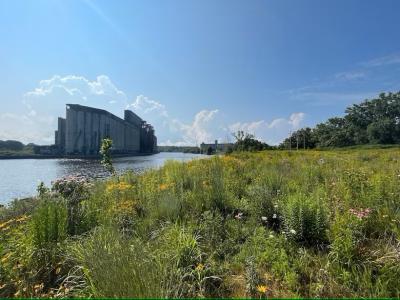
Banner Image: Grasses and flowering plants make up the majority of a riverbank meadow vegetation community along the restored shoreline of the Buffalo River near Katherine Street in Buffalo, New York, Aug. 9, 2023. The U.S. Army Corps of Engineers, Buffalo District completed closeout of the $2.7 million habitat restoration, funded by the U.S. Environmental Protection Agency’s Great Lakes Restoration Initiative. Image Credit – U.S. Army photo by Jane Clark



There are no comments yet
Why not be the first