
NYC DOT Fills 500,000th Pothole, Celebrates Fast Pothole Repair Times; E-bike Trade In Program For Food Delivery Workers
MAYOR ADAMS AND COMMISSIONER RODRIGUEZ CELEBRATE DOT CREWS FILLING ADMINISTRATION’S 500,000TH POTHOLE, INVESTMENTS IN STREET REPAVING AND RECORD-SETTING POTHOLE RESOLUTION TIMES
With Administration’s Strong, Sustained Investment in Street Repaving, Potholes Are Now Forming at Less Than Half the Average of Previous Two Administrations Combined
New Pothole Complaints to 311 Are Addressed in Under Two Days on Average, More Than a Day Faster Than Average During de Blasio Administration and More Than Twice as Fast as During Bloomberg Administration
Editor’s note: We’ve previously covered the expansion of e-bike charging programs where on-street charging cabinets around the city reduce the amount of batteries causing hazards in apartments and homes. We also reported on their pothole filling blitz at the beginning of the Adams administration in 2022.
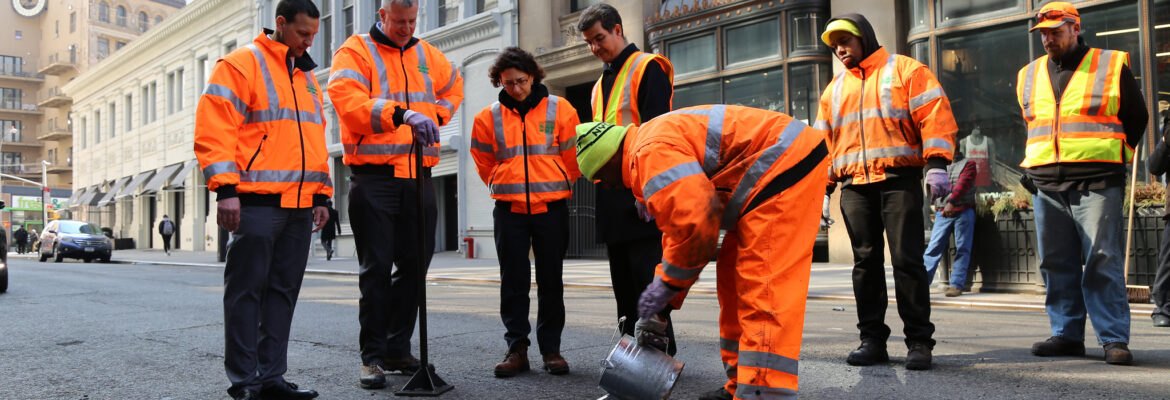
NEW YORK – New York City Mayor Eric Adams and New York City Department of Transportation (DOT) Commissioner Ydanis Rodriguez celebrated the filling of administration’s 500,000th pothole in Prospect Heights and highlighted the record-setting speed at which the city has filled potholes over the last three years. New pothole complaints to 311 are closed in an average of approximately 1.8 days — more than a full day faster than the de Blasio administration’s average of 3.4 days and more than twice as fast as Bloomberg administration’s average of 4.4 days. In the three years of the Adams administration, the city has received and resolved 88,466 pothole complaints made to 311; by this same point in the de Blasio administration, the city had to resolve 147,640 complaints. This decrease in potholes comes as a result of the Adams administration’s sustained commitment to better and more regular repaving. DOT has repaved an average of nearly 1,200 lane miles in each fiscal year of the Adams administration.
“When hard-working New Yorkers pay their taxes, they expect their government to deliver for them,” said Mayor Adams. “And whether it’s generational projects like Willets Point or the Brooklyn Marine Terminal, or the fundamentals like picking up the trash and filling potholes, we’re doing all that, better than ever. We’re filling potholes more than twice as fast as the average time of the two previous administrations combined — and thanks to our commitment to paving, there are significantly fewer potholes forming in the first place. However, cold weather potholes do sometimes happen. That is why we are so grateful to the crews working hard to make sure they get filled fast. If you see them out in the field, give them room to do their important work.”
“When a driver or cyclist hits a pothole, it is not only a cause for frustration, but it can also be a safety hazard,” said DOT Commissioner Rodriguez. “I am proud that pothole requests are on the decline thanks to smart investments we have made in better and more regular paving. Mayor Adams has given our incredible roadway crews the necessary resources to keep our roadways much smoother and safer.”
Potholes are generally caused by water and rock salt seeping into asphalt and are worsened during New York City winters by several factors, including high traffic, ice, snow, and other precipitation. Freeze-and-thaw weather patterns can further exacerbate these conditions, increasing the likelihood of potholes. During pothole season — which generally runs from December through June — DOT dispatches 25 to 75 separate pothole crews daily. The crews work in all five boroughs, responding to 311 complaints and requests from local stakeholders.
DOT produces asphalt at its two plants for both resurfacing roads and filling potholes. While the average pothole uses only a few pounds of asphalt, a completely repaved lane-mile uses 1,000 tons. This fall, DOT announced that it is testing a new asphalt mix containing 50 percent recycled pavement. The new mix will reduce fossil fuel use, save money, and cut down on the amount of used roadway pavement sent to landfills. Nationally, most asphalt mixes are made of 20 percent recycled materials.
New Yorkers who see potholes are urged to report them to 311 or online.

“Today we make historic progress in tackling our city’s potholes. We have filled half a million potholes in half the time it used to take, and through proactive paving of 1,200 miles of lanes, we cut in half the number of potholes needing filling,” said New York State Assemblymember Jenifer Rajkumar. “This is a testament to Mayor Adams’ and Commissioner Rodriguez’s commitment to addressing all of New Yorkers’ quality of life concerns. Filling potholes is also a sound fiscal investment that pays dividends: the average motorist will save $880 dollars per year in repairs, putting more money in their pockets to pay for necessities, and the city will save up to $23 million per year in settlements for damaged vehicles and pedestrian injuries. Through this work, we are paving the way for road safety for everyone.”
NYC DOT OPENS APPLICATIONS FOR E-BIKE TRADE IN PROGRAM FOR FOOD DELIVERY WORKERS
Eligible Applicants Will Receive a New UL-Certified E-Bike and Additional UL-Certified Battery
Trade-In Program Will Enhance Public Safety by Replacing Hazardous Batteries and Devices
NEW YORK – New York City Department of Transportation (NYC DOT) Commissioner Ydanis Rodriguez announced applications are now open for New York City’s e-bike trade-in program for food delivery workers, the first-ever municipal program of its kind. Eligible food delivery workers will be able to trade in an uncertified electric bicycle (e-bike) or non-street legal moped for a safer UL-certified e-bike and UL-certified spare battery at no cost. The program is part of the Adams administration’s Charge Safe, Ride Safe: New York City’s Electric Micromobility Action Plan to promote public safety amid growing e-bike use. The program will help reduce the risk of deadly e-battery fires, often caused by uncertified equipment, and enhance street safety by getting faster and heavier illegal mopeds off our streets.
“Safer e-bikes, batteries, and charging practices are key to a cleaner and more sustainable transportation future and to protecting all New Yorkers from deadly fires,” said NYC DOT Commissioner Ydanis Rodriguez. “Delivery workers have one of the toughest jobs in New York City, and this trade-in program gives them safe, reliable equipment while giving their families and neighbors greater peace of mind. We thank Mayor Adams and his vision for helping New York City become the first municipality to ever launch such a program.”
“The FDNY has been working tirelessly to educate the public about the dangers of lithium-ion batteries for the last three years,” said FDNY Commissioner Robert S. Tucker. “Part of that work has focused on getting uncertified lithium-ion batteries off the streets, and we are grateful to the DOT for their work and partnership on an initiative we know will better protect delivery workers, first responders, and our city.”
The Adams Administration has allocated $2 million to fund the program with the goal of providing over 400 new certified e-bikes and spare batteries through trade-ins in 2025. The trade-in program was established in response to Local Law 131 of 2023 sponsored by Council Member Keith Powers. The e-bikes provided will be UL-certified, the global standard for e-bike quality and fire safety.
Non-UL certified batteries are more likely to catch fire, and when they do, these types of fires spread rapidly, generate intense heat, and are challenging to extinguish.
The application materials are available in English, Spanish, French, Bengali, and Chinese. Applications will be open online from January 27, 2025, to February 17, 2025. During the three-week application period, eligible applicants will be able to receive application support services to help them fill out application forms. For more information on the location and hours of these free technical support clinics, visit the application portal. To receive the e-bike and spare battery, selected participants will have to complete an online safety training course to ensure e-bike users maintain safe riding practices for themselves, for pedestrians, and for other road users.
Who Qualifies?
If selected, an eligible applicant will receive one trade-in e-bike with a spare battery from the City of New York at no cost. To be eligible, applicants must:
be a current New York City Resident;
be at least 18 years of age;
have earned at least $1,500 in 2024 as a food delivery worker at a food service establishment, a third-party food delivery service, or a third-party courier service;
own an eligible device in operable condition.
Currently, many delivery workers use uncertified e-bikes and heavier electric and gas-powered mopeds, some of which cannot be registered with the New York State Department of Motor Vehicles because they do not have a Vehicle Identification Number. Accepting these uncertified and illegal devices in exchange for UL-certified e-bikes and batteries will reduce fire and crash risk while helping participants comply with local and state law.
The program is one of several NYC DOT initiatives to improve e-bike access and foster the growing use of legal e-micromobility options. The agency is working to install wider bike lanes along its busiest routes, expand public e-bike charging options for riders, and educate the public and delivery workers about safe and legal e-bike use.
Charge Safe, Ride Safe.
In addition to the e-bike trade in program, Mayor Adams’ Charge Safe, Ride Safe Action Plan is focused on building a safe, welcoming environment for e-bike riders citywide. To promote the safe use of e-bikes and reduce risk of deadly e-bike fires, often caused by uncertified batteries, NYC DOT will soon allow property owners and tenants to seek approval to install electric micromobility device battery swapping and charging cabinets on sidewalks within the public right-of-way in front of their properties.
NYC DOT has partnered with the New York City Housing Authority (NYCHA) to implement a public e-bike charging program at approximately 173 locations near 53 public housing developments. This work will be funded by a $25 million federal RAISE grant previously awarded to NYCHA. NYC DOT will administer the grant and oversee the program, with charging infrastructure sited on public sidewalks, where they will be publicly available to NYCHA residents and the general public.
Additionally, the FDNY launched a $1 million public education and awareness campaign this summer on the dangers of unsafe lithium-ion batteries, following data showing that 59 percent of 2023’s lithium-ion battery fires started when those batteries were not charging.
“Far too many innocent lives are being lost due to fires caused by faulty lithium-ion batteries used in e-bikes and other micromobility devices,” said Senator Kirsten Gillibrand. “The ‘Charge Safe, Ride Safe’ plan will help bring us one step closer to stopping preventable fires in New York City as e-bikes increase in popularity and convenience, and I applaud the commissioner and council member for prioritizing public safety for both pedestrians and e-bike users, alike, as we make our streets safer for everyone.”
“E-bikes are great tools for green, easy riding, and it’s imperative that the food delivery workers who rely on e-bikes have safe equipment. Allowing delivery workers to trade in uncertified e-bikes and mopeds for UL-certified e-bikes and batteries means that New Yorkers will be at less risk for dangerous battery fires and moped crashes,” said Manhattan Borough President Mark Levine. “I encourage everyone who’s eligible to apply now!”
“This trade-in program is an important step in addressing the dangerous risks posed by uncertified e-bike batteries, which have caused devastating fires in our city. These fires not only endanger the lives of delivery workers but also put their neighbors and first responders at risk,” said Councilmember Shaun Abreu. “By providing food delivery workers with safe, UL-certified e-bike batteries, we’re protecting their livelihoods and setting a model for the nation. This program is a testament to New York’s commitment to public safety, and I hope other cities follow our lead in creating safer, sustainable solutions for workers and the communities they serve.”
“Delivery workers keep our city running, and it is crucial that they have safe equipment,” said Councilmember Oswald Feliz. “I’m proud that NYC is taking meaningful steps to resolve the many challenges that we have seen with defective e-bikes.”
“My district has been deeply impacted by the devastating fires caused by uncertified e-bike batteries, making today’s announcement a critical step forward for public safety,” said Councilmember Jennifer Gutiérrez. “We are thrilled to see so many of the programs the City Council pushed for become a reality, including this e-bike trade-in initiative, which alongside expanded public charging infrastructure and fire safety education, represents a meaningful investment in protecting our residents while supporting the essential workers who keep our city running.”
“I applaud the Department of Transportation for launching the e-bike trade-in program, a crucial step in reducing the risks associated with non-UL certified batteries and saving lives,” said Councilmember Shahana Hanif. “As cycling and other forms of micro-mobility become more popular, prioritizing safety—both on the streets and at charging stations—is more important than ever. I’m especially encouraged that the application materials will be available in multiple languages, and I urge the DOT to expand outreach efforts in these languages to ensure the program reaches the communities it’s designed to serve.”
“My district is proudly home to one of the city’s largest concentrations of deliveristas. Like all workers in our city, they deserve safe working conditions—and that includes access to safe transportation as they spend their days riding around making deliveries,” said Councilmember Sandy Nurse. “Too many lives have been lost to fires caused by faulty e-bikes and batteries. I commend NYC DOT for launching this exchange program as a supportive and long-needed measure to ensure the safety of our essential delivery workers.”
“Worker’s Justice Project and Los Deliveristas Unidos are grateful to NYC Mayor Adams, NYC DOT Commissioner Rodriguez, and the NYC Council for launching the nation’s first e-bike trade-in program. From advocating for Local Law 131 of 2023—mandating a trade-in program for powered mobility devices and lithium-ion batteries—to seeing the administration invest $2 million in the program, this is a historic moment for NYC’s essential delivery workforce,” said Ligia Guallpa, executive director of Worker’s Justice Project, Los Deliveristas Unidos. “This trade-in program will not only help reduce e-bike fires but recognizes delivery workers’ vital role in helping lead our city toward a just and inclusive transition to safer, cleaner, and greener forms of mobility. We’re proud to be partnering with NYC DOT in educating, engaging, and encouraging delivery workers to participate in the program.”
“E-bikes keep New York’s economy rolling. The ECP’s SAFE program demonstrated that exchanging uncertified vehicles for affordable, UL-certified e-bikes reduces fire risk. We are thrilled that the DOT is taking this model forward and are confident that this trade in program will protect lives and livelihoods,” said Melinda Hanson, cofounder, Equitable Commute Project. “We look forward to continuing to collaborate with the city to realize the many benefits that micromobility has to offer.”
“New Yorkers are clamoring for a comprehensive approach to safe and professionalized delivery work that keeps cyclists and pedestrians safe, and today’s announcement is a critical step in that direction,” said Ben Furnas, executive director of Transportation Alternatives. “Delivery workers deserve safe and dignified working conditions — and our streets are no place for unsafe and illegal batteries or heavy, illegal mopeds. We’re very excited to see that applications are now open to connect delivery workers with UL-certified batteries at no cost, something TA has long advocated for. This is an essential step toward fewer fires and safer streets, and we hope to see it complemented with better biking infrastructure, safe charging, and accountability for app companies so that delivery workers and all of New York’s pedestrians and cyclists are protected and safe.”
“This groundbreaking e-bike trade-in program is a crucial step toward safeguarding the lives of New York City’s food delivery workers and the broader community,” said Ken Podziba, CEO of Bike New York. “By replacing uncertified e-bikes and batteries with safer, UL-certified alternatives, this initiative will help prevent deadly fires while enhancing street safety by removing faster, heavier illegal mopeds from our streets. Bike New York applauds Commissioner Rodriguez and the Department of Transportation for their bold leadership in prioritizing safety, equity, and sustainability for our essential delivery workers and all New Yorkers.”
Banner Image: East Village Pothole Repair. Image Credit – NYC DOT



NYC DOT
The New York City Department of Transportation’s (NYC DOT) mission is to provide for the safe, efficient, and environmentally responsible movement of people and goods in the City of New York and to maintain and enhance the transportation infrastructure crucial to the economic vitality and quality of life of our primary customers, City residents.
There are no comments yet
Why not be the first