

Staten Island’s RUMC Receives Donations From Partners In Government, Private Sector To Expand NICU Unit To Better Serve Families
We have covered RUMC on a few occasions in the past, including when Dr. Oz visited with Rep. Malliotakis. The hospital recently cut two ambulance units in their fleet, as did multiple other New York City hospital locations around the same time. This was due in part to financial constraints, but may also be an update to their fleet overall. We will be updating the previous article on the topic of ambulances when more details are received. See our video of Senator Gillibrand’s tour of the NICU at RUMC, which is about to become fully renovated and better serve the needs of their community:
UPDATE: About their practices with regard to breastfeeding, for both premature infants in the NICU and other babies born in this hospital, the following is from their spokesperson, since their website discusses their policies toward regular infants who are rooming-in with their parents:
Breast feeding support is offered to all mothers whose babies are admitted to NICU. Mothers are encouraged to breast feed directly, as soon as baby is stable enough to breast feed.Premature babies are offered mother’s milks (colostrum) as soon as it is available and baby is stable to tolerate feed via a tube placed in the stomach. As they grow and have developed the ability to suck and swallow with coordinated breathing, breast milk is initially offered through bottle, and later direct breast feeding is also encouraged.For premature babies whose mothers are not able to produce enough breast milk or unable to breast feed due to medical conditions, donor human breast milk is provided.
Senator Gillibrand took a tour of the previous NICU and the proposed area for the renovated NICU. Her office along with other partner organizations was able to secure $20 million toward the cost of construction for the new NICU. It will strive for the same standard of care as the previous NICU, but will offer more space to parents to be with their premature infants. Instead of just a large room with the incubators around and parents near to each other due to lack of space, there will be little three-foot-high walls forming little ‘cubicles’ for the parents to be in with their premature infant.
RUMC is a private, not-for-profit hospital serving some of the most underserved communities on the island (including Stapleton, Mariners Harbor, Tompkinsville, and others, where many residents qualify as low-income). It is also the only “Baby-Friendly” certified hospital on Staten Island. [correction from the spokesperson: “While RUMC is no longer Baby-Friendly designated, the hospital continues to provide comprehensive, family-centered maternity and neonatal care, emphasizing breastfeeding support, skin-to-skin bonding, advanced clinical care, and the expertise of its dedicated NICU team.”]
Remaining an independent, privately run hospital is a challenge in the current hospital landscape, and other island hospitals, particularly SIUH North and South, have been absorbed by larger hospital networks. These include Northwell, NYU, and NYC Health + Hospitals (the City-run hospital system).
Best practices are utilized in this hospital, and they have an impressive 99% NICU survival rate, which is not an easy feat. We recently learned that they also practice “Kangaroo Care.” This was a practice started by a physician overseas in Columbia, where the premature infants were dying at an alarming rate. He practiced in the most rural of areas, where the hospitals did not have sufficient incubators or even electricity to run them if they did have them. By strapping the newborn premature infants to their parents’ chest (either one worked, mom or dad), and keeping them there for several hours covered by a blanket, the survival rate was significantly improved. The infants even thrived rather than just survived.
This practice has been utilized at RUMC, and involves at least an hour or more of this kind of cuddling. Not every hospital offers this incredibly beneficial service, so it’s great to see some of its benefits in action. As with many fields of medicine, it is unlikely that the success rate is because of any one single thing that they do, but rather a combination of all of the factors which act in concert to provide the best possible outcomes for the infants in their care. From their spokesperson: “RUMC’s exceptional NICU survival rates are a direct reflection of the combined impact of an experienced neonatal care team, highly skilled physicians and nurses, evidence-based practices, advanced technology, and a longstanding commitment to family-centered care.”
Kangaroo care is not new, and it literally costs practically nothing: five minutes to put parent and baby together, cover with a blanket, move all cords out of the way, leave the room and periodically check on the dyad to make sure they are comfortable. That’s it. But the benefits are massive. Just check on PubMed for “Kangaroo Care,” and you will see so much evidence for this practice. Simple, cost-free, but highly valuable.
Not all infants can be cared for in this exact way, due to their fragility or other issues, but when it is possible, it is utilized.

We had also asked about a Cuddler Program, such as the one hosted at NYU Langone, which we learned about a couple of years ago. In that instance, it was implemented because either they could not extend their visiting hours to a very late time, or because parents were not available to see their babies. Here at the NICU in RUMC (which stands for Richmond University Medical Center), parents can come very late, and even basically stay all night with their baby if they are premature. [correction: This hospital is a teaching hospital, about which their spokesperson said: “Teaching hospitals are staffed by licensed physicians and multidisciplinary care teams and patient care is overseen by experienced attending physicians. We are proud of our role in training future healthcare professionals, many of whom are from Staten Island, while delivering high-quality care to our community.”]
This can be actually having contact with the baby, and the hospital does encourage skin-to-skin contact and breastfeeding whenever possible. Breastmilk is incredibly valuable to such tiny newborns, serving to build their immune system more quickly due to the presence of many co-factors in the milk. Additionally, direct breastfeeding, where it can be practiced, also allows the mother’s body to make the perfect mix for what that baby needs at that moment. Maybe a little higher proportion of protein, maybe certain antibodies if illness is detected by the dual feedback mechanism that exists in the breast tissue. [**we are checking on the availability of breastfeeding for premature infants. Sometimes it isn’t possible due to the earliness of the term that the birth occurred and lack of milk production as a consequence]
See below for information on the exact hours of visiting for parents of infants in the NICU, including break-times and hours when parents are welcome to come to visit their infant, along with their statement about Kangaroo care as available in the NICU:
The hours for the NICU for families to visit are from 8am-6pm, 8pm-9:30pm, 11pm-6am. The Kangaroo Care is available for families to access when they are visiting and is not restricted to certain times. The only restrictions are if a baby has too many central lines, etc. so it is better if they are a little more stable.
See below for some of the photos taken at the NICU, which is being added to in the near future now that funding has been secured. As Rep. Malliotakis has said, there are unique challenges for a private non-profit hospital that cares for a community where many residents are low-income and are unable to pay. For such individuals, they offer payment plans and forgiveness, depending on circumstances. This hospital is a 501(c)3 charity, and all donations are tax-deductible, including corporate and large-scale donations. They serve the community and provide award-winning care, making them a worthwhile investment in the future of Staten Island. We have only three hospitals with emergency rooms on the island, RUMC being one of them.

RUMC NICU tour. Image Credit – Staten Islander News
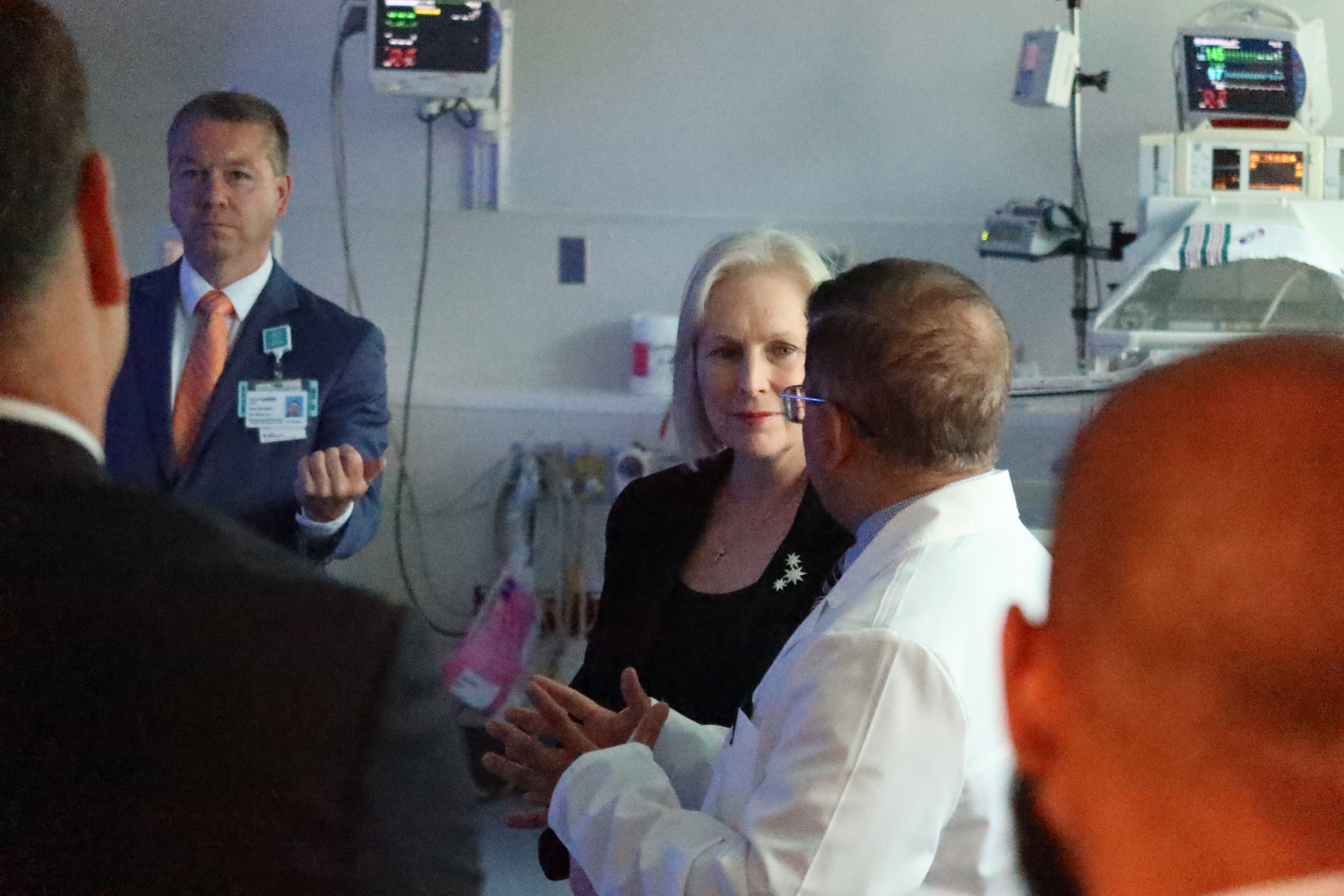
RUMC NICU tour. Image Credit – Staten Islander News

RUMC NICU tour. Image Credit – Staten Islander News

RUMC NICU tour. Image Credit – Staten Islander News
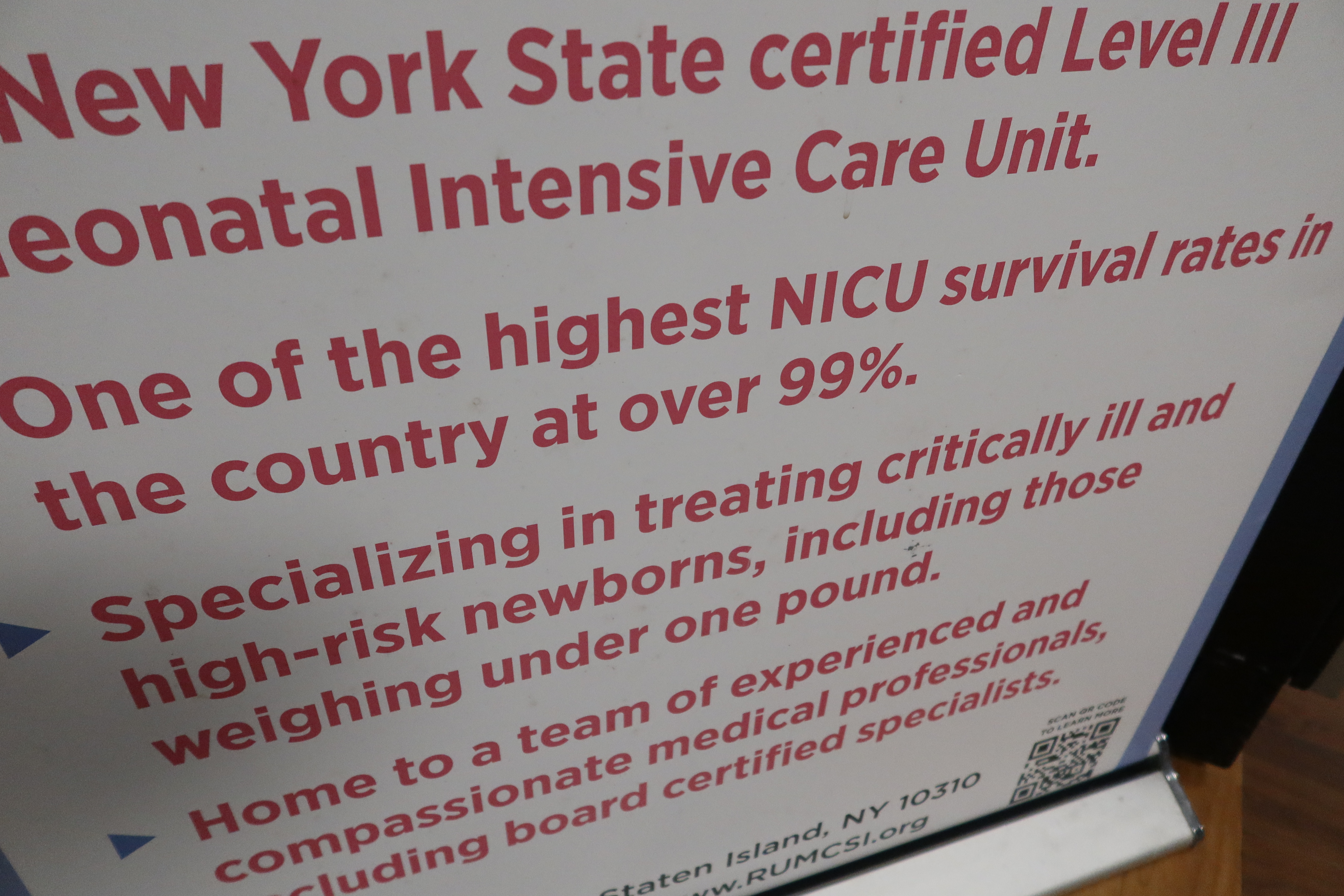
RUMC NICU tour. Image Credit – Staten Islander News

RUMC NICU tour. Image Credit – Staten Islander News
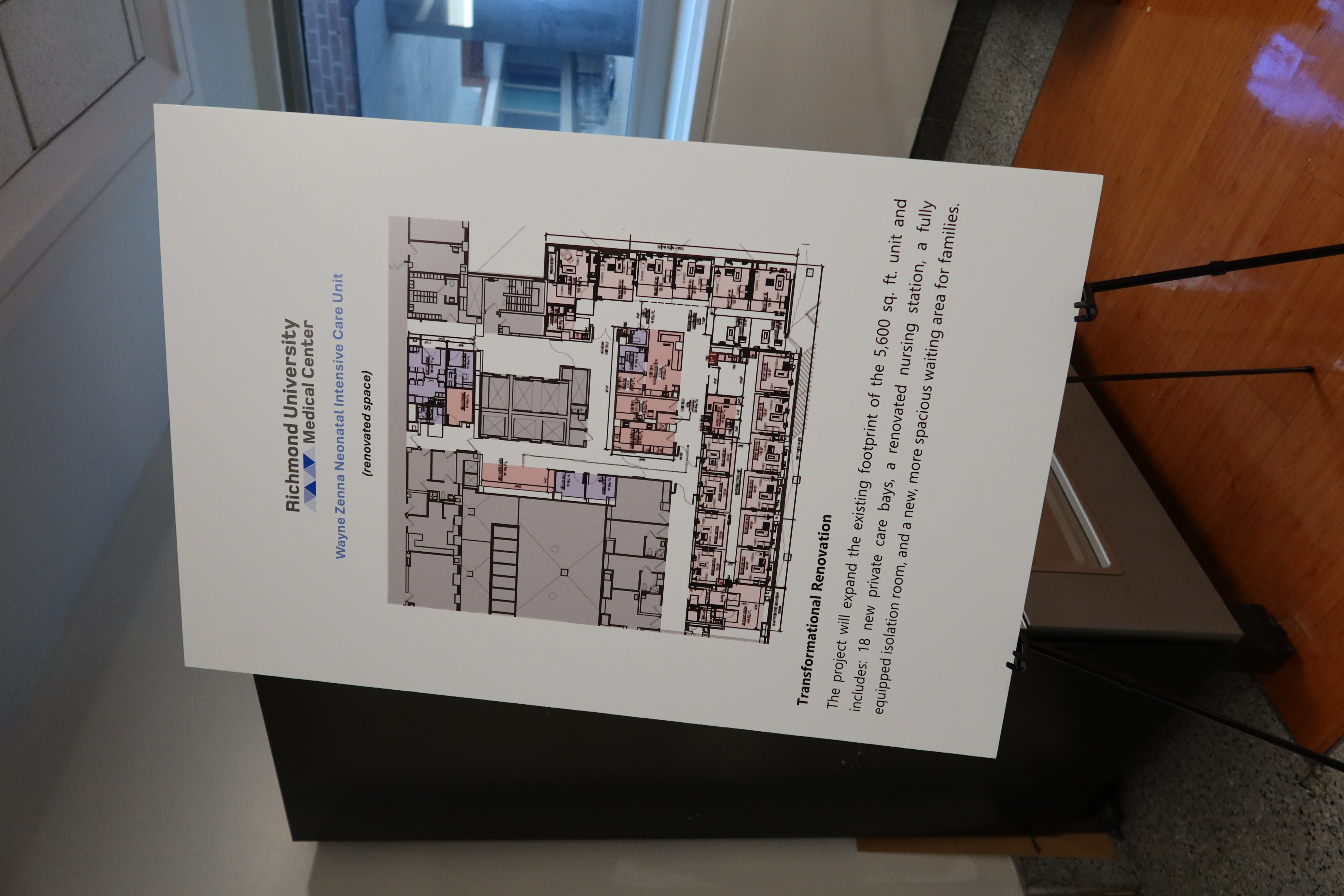
RUMC NICU tour. Image Credit – Staten Islander News
Banner Image: RUMC NICU tour. Image Credit – Staten Islander News


Staten Islander News Service Staff Writer
This byline indicates that this article was penned by a member/members of the Staten Islander News Organization office team. Our staff writers are the backbone of our newspaper, performing all sorts of important tasks like conducting interviews, investigating leads, besides writing the news stories you see.
There are no comments yet
Why not be the first