
“Boomerang Atomic” Must-See Documentary Short Film: France’s Foray Into Nuclear Weapons With Created Testing Sites In Desert Area Of Algeria
Boomerang Atomic Short Film On Algerian Nuclear Testing, Lasting Effects, Nevada Reminiscent
Boomerang Atomic is a must-see film about the French project to test their own nuclear weapons in the Algerian desert. However, similar to what happened in the desert of Nevada where the Native American tribes were relocated to reservations, there were people living nearby. People who still, to this day, are born with terrible birth defects and mild to severe issues.
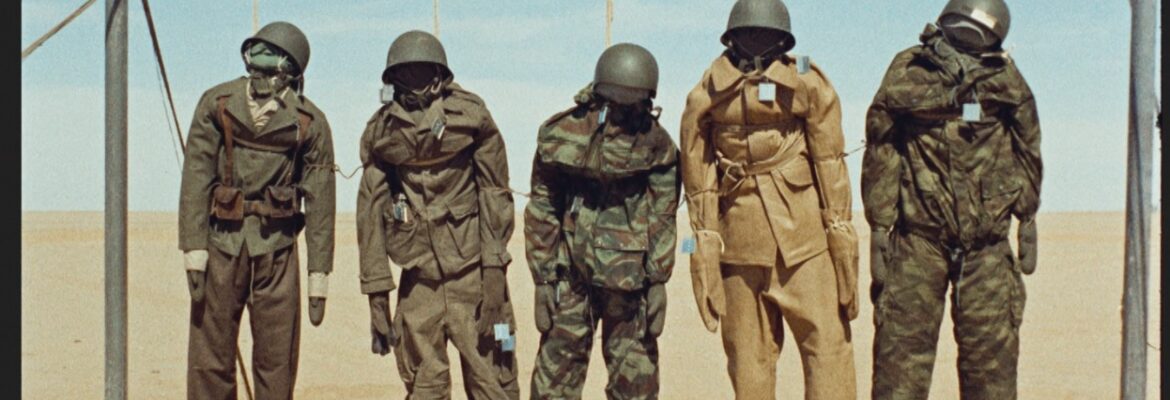
The film primarily details the project itself, and is a testament to the wickedness of colonialism. The building of the dummy town, the placement of the equipment, the bombs exploding, the confinement area, the post-tesr radiation exposure testing for military members.
The people living in Algeria were just collateral damage. Not important or valuable. This was France’s territory after all. They owned it; they could do with it whatever they wanted. Including destroying it by setting off bomb after bomb, with destructive and persistent results. They had very little idea of this during that year. They had very little understanding of the weapons they were making with little thought of the actual devastation they would cause.
While they did have Geiger counters, their understanding was primitive. It seems they didn’t know, or didn’t care, that this radioactive material would persist in that environment for tens of thousands of years. And, of course, it got into the air, soil, and water of the surrounding desert communities. Most of their children now are born with birth defects of varying types and severity, many of which are life-threatening.
The majority of the film focused on the interviews with France’s Prime Minister and the army’s construction of the site, complete with buildings, trucks, and other heavy equipment to monitor the real life effects of these intensely deadly weapons. The explosions occurred and the people in the area were exposed to radiation, including the military personnel, whose families likely also had deadly side-effects.
From the perspective of colonialism, this is eerily similar to what was done in the desert of Nevada, after the Native American tribes had been forced to relocate there. Nuclear test sites in the desert spread that poison all around, and the water in all of the wells is poisonous.
The poison can’t be seen, smelled, or tasted, but it will cause cancer of very deadly types if ingested. So these communities rely on water being delivered to them. Bathing and showering and even most types of cooking are now impossible. They can’t wash the pots and pans easily so it changes what they can prepare. They have a limited supply of water, kind of like being in the most remote parts of Alaska, where people voluntarily live and have a monthly delivery of water to their house – and that’s all they can get. It’s not like Amazon can just deliver to them, since they often reach their homes via private airplane, boat, or helicopter.

But it’s a similar view that colonialism had at that time: this land is ours to do with whatever we wish, regardless of any possible consequences or repercussions. Those people and their lives were expendable.
It did a great job of expressing the absolutely primitive understanding they had of the effects of radiation on the environment and its persistence. Like tens of thousands of years. They didn’t understand that having a slightly radioactive watch was capable of causing serious illnesses in humans and birth defects in their offspring.
What could have used a bit more focus was the aftereffects. There were a few small groups of people with not-so-obvious issues and a small number with obvious effects from the radiation. The government didn’t understand or care about the contamination they were spreading into a population that lived there. Similarly to that in Nevada, there just was no concern for certain peoples. Those living in Algeria were desert people, with an apparently traditional culture, and they were seen as lesser, as possessions. It’s the same with the tribal people in Nevada, where the government used land that had been given to the tribe as a reservation – that’s where the nuclear test site was, denying them the ownership of land promised them.
Overall, this film was excellent, and I would give it five stars.

To learn more about the after-effects of the nuclear detonation testing, both aboveground and below, similar to what was done in the Algerian desert described in this film, we have several videos to share. Some 900+ nuclear tests were conducted at the former Nevada Test Site (located on unceded Western Shoshone territory), between 1951 and 1992. [1, 2] This led to widespread well contamination, and a situation where many Navajo tribes are finally receiving water from atmospheric generators by various charities, instead of water deliveries that they previously relied upon. In a similar fashion, several tribes’ water supplies were damaged or destroyed by mining and other environmental hazards. This video shows the water delivery person who brought water to tribal residents. This describes the DigDeep Navajo water project. This one talks about efforts by another charity, Fundamental Needs, to bring running water to Navajo tribal nation members.
Boomerang Atomic
Director: Rachid Bouchareb
Producer: Rachid Bouchareb, Ruth Yoshie Linton, Bilal Bouchareb
Executive Producer: CADC Muriel Merlin CNC
Synopsis:
In 1960, in the heart of the Sahara Desert, France detonated its first atomic bomb in Reggane (Algeria), forever altering the land and its people. To this day, populations and the environment continue to suffer the consequences in total silence.
Forest Whittaker Joins Rachid Bouchareb’s Boomerang Atomic as Executive Producer Ahead of DOC NYC
New York, NY – Academy Award-winning actor and producer Forest Whitaker has joined Boomerang Atomic, the latest documentary short by acclaimed French-Algerian filmmaker Rachid Bouchareb, as an Executive Producer ahead of the film’s screening at DOC NYC this November. With the film’s New York premiere at DOC NYC, Boomerang Atomic is continuing its international festival run, earning the Audience Award at the 2026 Seoul International Eco Film Festival and bringing renewed attention to the lasting human and environmental consequences of France’s first atomic bomb test in Algeria.
“I was impressed with the historical authenticity and powerful emotional impact. This important documentary made an indelible impact on me and needs to be seen,” said Whitaker. “After seeing Rachid Bouchareb’s documentary, I became aware of the human consequences of the atomic bomb testing in Algeria. Rachid has unveiled the misuse of the testing and its long-range consequences on the local populations and land. The film sheds a necessary light on the devastation and makes you think about what its usage would mean in warfare today.”
Set in 1960 in the heart of the Sahara Desert, Boomerang Atomic revisits France’s first atomic bomb detonation in Reggane, Algeria, on February 13, 1960, and examines the devastating consequences that continue to affect local populations and the environment more than six decades later. Drawing exclusively on French state archives, the documentary presents the nuclear test through the images and commentary originally produced by French authorities, without contemporary narration, inviting audiences to confront both the history captured on film and the human realities left outside the frame.
Directed by Rachid Bouchareb, Boomerang Atomic is part of a larger body of work the filmmaker has been developing around France’s nuclear tests in the Algerian Sahara. The short documentary serves as the first chapter of this project, which will continue with Reggane, a feature film currently in development with American and Japanese co-producers. Moving from archival documentary to fiction, the two films aim to illuminate a largely overlooked history, giving voice to the local populations, soldiers, and workers exposed to nuclear fallout and exploring the enduring consequences of the tests across generations and borders.
“Through this documentary, I aim to revisit the French nuclear test in Reggane on 13 February 1960: France’s first atomic explosion on Algerian soil. This is not only about recounting a historical event, but about giving voice to the archival images of the time and their commentary, while shedding light on the health, environmental and human consequences that remain today,” said Bouchareb.
Bouchareb is a director, producer, and screenwriter who founded 3B Productions in 1990. His body of work explores colonial memory, immigration, exile, identity, and Franco-Algerian history. Several of his films have received international acclaim and Academy Award nominations, including Dust of Life (1995), Days of Glory (2006), and Outside the Law (2010). Throughout his career, Bouchareb has brought overlooked historical narratives to the screen, contributing to ongoing conversations about memory, justice, and post-colonial identity.
Following its selection at the Venice International Film Festival, Boomerang Atomic has screened at festivals internationally, including the Timimoun Short Festival, the Carthage International Film Festival, the Clermont-Ferrand International Short Film Festival, Arab Film Festival Berlin, Millennium Docs Against Gravity, and the Seoul International Eco Film Festival, where it won the Audience Award. Additional selections include Short Shorts Film Festival & Asia, the Paris Science Film Festival, DOC NYC 2026, and the Doha Film Festival. Additionally the film was presented by UNITAR, the United Nations Institute for Training and Research during the Hiroshima commemorations, in a program dedicated to peace, remembrance, nuclear disarmament, and non-proliferation and screened as part of the Hiroshima Peace Film Festival.
Banner Image: Movie poster. Image Credit – Boomerang Atomic



There are no comments yet
Why not be the first