

NYC: Vanderbilt University Revenue Sharing, Horse Drawn Carriages Phase-Out, Violence Intervention Through Work, Worker Advocates For TLC Board, Homes For Public Housing Residents, More 9/11 Records, Other Updates: Mayor Mamdani
Vanderbilt University Revenue Sharing, Landmark Landlord Lawsuit, Horse Drawn Carriages Phase-Out, Violence Intervention Through Work, Worker Advocates For TLC Board, 91 Homes For Public Housing Residents, Closing Rikers Island,More 9/11 Records, Real Estate Broker Repeat Offenders, Public E-Bike Rental Fare Freeze Through 2029: NYC Mayor Mamdani
Editor’s note: We have covered the horse-drawn carriage debate and now law-bound phase-out, where the biggest question in reality, next to the welfare of the horses, in what happens to the workers and the medallion owners. Hopefully, it doesn’t become a debacle like the invasion of the big rideshare companies into New York City, where they were granted multiple exceptions and allowances for their drivers, before finally being classified as for-hire vehicles that needed to be registered and licensed with the TLC and carry commercial insurance, etc, etc. It is also unclear why the horses cannot continue to be owned by their same owners, where they could simply be not allowed to work in any kind of manual labor – like reading to children, for instance, such as what Hank the Horse does at the Kentucky farm where he was rescued to when he was only a foal. Or as a therapy horse, a legitimate therapy and helpful to both the people and the horses when they are treated properly – such as was demonstrated at Eger Nursing Home a few years back. For horses that are in the carriage industry, for some of their companions, they are not just a workable, usable creature that was made for humans to abuse. For some, they show kindness and love to their horses, and they have been building a very deep bond and relationship over years and in some instances decades and sometimes since they were only a foal of a few weeks or months old. This connection is real, and the severance of it will have a potentially devastating effect both on the human and the horse, but quite likely much more on the horse, as they feel much more deeply, and it would be great loss.

Mayor Mamdani hosts Veterans Day Reception. Gracie Mansion. Thursday, November 12, 2026. Credit: Ed Reed/Mayoral Photography Office.
Mayor Mamdani & Vanderbilt University Announce New Revenue-Sharing Agreement to Establish Two Advanced Engineering Labs
Revenue-sharing agreement will give City a stake in technologies developed with public investment, building on administration’s first-of-its-kind partnership with NYU
New labs focused on medical technology and urban mobility will support more than 75 startups and small businesses, create more than 200 Jobs, and upskill nearly 3,000 Workers
NEW YORK – Mayor Zohran Kwame Mamdani and the New York City Economic Development Corporation (NYCEDC) today announced a $15.8 million capital commitment to Vanderbilt University to establish two advanced engineering research laboratories on Vanderbilt’s Chelsea campus. NYCEDC’s investment, matched by Vanderbilt, will establish the Visualization and Testing Environment for Medical Devices (VISE-MED) and the Vanderbilt Center for Intelligent Mobility (V-CITY), accelerating breakthroughs in surgical robotics, wearable technology, urban transit optimization and clean energy while expanding workforce development across the five boroughs.
As part of the investment, NYCEDC and the City will receive a share of revenue generated by intellectual property (IP) developed at VISE-MED and V-CITY. The agreement builds upon the Mamdani administration’s historic, first-of-its-kind IP-sharing partnership with New York University’s Quantum Fabrication Facility (QFab), announced last month.
“When the public invests in new technologies, the public should share in the returns,” said Mayor Mamdani. “From wearable medical devices and advanced surgical robotics to clean energy infrastructure, these are the industries that will shape our future. We want to make sure they are built right here in New York City — creating good jobs and delivering benefits to the people who call this city home. We are proud to partner with Vanderbilt University on its first campus outside Nashville to bring this cutting-edge research and innovation to New York.”
Under the agreement, the City will receive 50% of Vanderbilt’s central administration share of the first $100,000 in annual revenue generated by each technology. For revenue above $100,000, the City will receive 27% of Vanderbilt’s central administration share, in addition to a portion of school and department proceeds.
The agreement is designed to harness academic research to address complex municipal challenges while generating economic opportunities for New Yorkers. By securing a public share in the innovations created at these labs, the City will help ensure that publicly supported research returns to the communities that made it possible, rather than benefitting private interests alone.
The City has secured five seats, one-third of the total, on the labs’ forthcoming advisory board, including dedicated representation for CUNY, City agency partners and labor representatives.
“We want New York at the forefront of the industries that will shape the future. These labs will be sites of innovation and discovery, stimulate good job creation, and promote economic growth,” said Deputy Mayor for Economic Justice Julie Su. “And we will continue to demand that when NYC invests in something, New Yorkers get a real return on the investment through a share of revenue generated.”
“The City’s investment in Vanderbilt is an investment in New York’s future: driving innovation, creating good jobs and preparing New Yorkers for the opportunities that follow,” said NYCEDC President & CEO Anthony Shorris. “Not only will these labs bring cutting-edge research in surgical technology and urban mobility to New York City, but by securing a City share in the innovations created here, we’re ensuring that the benefits of this investment return to the people of New York.”

“Universities have an important role to play in helping cities address complex challenges,” said Daniel Diermeier, chancellor of Vanderbilt University. “Our new home in New York City gives Vanderbilt an opportunity to bring our world-class research and expertise to bear on challenges that matter to New Yorkers, while opening new avenues for our faculty to pursue research and build partnerships in one of the world’s greatest cities.”
Vanderbilt is committing $16.2 million in operational and capital funding to establish the labs, with support from the chancellor, provost and Vanderbilt University School of Engineering. The investment will enable researchers to build teams, launch initial projects and engage local partners from the outset. Vanderbilt anticipates hiring 18 new staff members, including at least 12 faculty and research positions, to operate the facilities.
Both labs, housed within Vanderbilt’s School of Engineering, are in design development phase and are expected to open in the first half of 2028. Together, they will create more than 200 jobs in New York City, train or upskill nearly 3,000 New Yorkers and provide more than 250 new internship opportunities.
VISE-MED: Bringing Surgical Innovation to Patient Care
Supported by a $12.1 million City capital award, VISE-MED will serve as an open-access engineering hub dedicated to designing, prototyping and validating surgical instruments, robotic platforms, wearable devices and mixed-reality systems for immersive medical visualization.
Beyond accelerating research and development, VISE-MED will strengthen New York City’s medical technology ecosystem through four areas of focus: workforce development, next-generation talent pipelines, startup and venture support, and executive and leadership development. The facility will serve as an engine for career advancement and commercialization of new technologies.
VISE-MED will host 140 internships and give engineers and entrepreneurs hands-on experience in device prototyping, surgical robotics and wearable technology. It will also create training pathways for midcareer professionals and residents of the outer boroughs. The facility will offer discounted access for NYC-based and CUNY startups, as well as public and community hospitals seeking health care workforce training.
The lab will connect Vanderbilt researchers with New York City’s deep pool of technical, health care and creative talent, while building partnerships with leading medical institutions, including Memorial Sloan Kettering Cancer Center and Hospital for Special Surgery. Rather than duplicating existing local efforts, VISE-MED will complement regional biodesign initiatives by helping translate clinical ideas into working technologies.
Over its first 10 years, VISE-MED is expected to support the formation or incubation of 10 to 15 new startups, serve 50 small businesses and establish 50 partnerships with industry and other organizations. It will also upskill more than 2,000 health care workers and train 650 executive leaders.
V-CITY: Tackling Urban Mobility and Grid Resilience
V-CITY, funded by a $3.7 million NYCEDC capital allocation, will focus on scalable technologies to reduce traffic congestion, improve public transit reliability and enhance energy grid stability. The lab will adapt and deploy intelligent mobility algorithms across New York’s complex transit systems.
V-CITY will direct its efforts to support Next Stop: Fast Buses, Better Service, the City and State’s July 2026 plan to make NYC buses faster and more reliable, and will optimize road, rail, and waterway use across New York City’s multi-layered transportation network. Its central location in Chelsea will facilitate active coordination with municipal agencies and support nearly 50 public agency projects, giving university and civic partners a continuous place to test and deploy solutions that make an even greater difference in the daily lives of New Yorkers.
Working alongside local academic partners, community training centers and NYCEDC talent pipelines, the labs will connect New York City talent with Vanderbilt’s Master of Science in Business and Technology program to support venture creation and workforce readiness.
Together, VISE-MED and V-CITY will advance research in surgical technology, urban mobility and clean energy while creating jobs, expanding career opportunities and delivering lasting economic and public benefit across the five boroughs. And through the City’s revenue-sharing agreement, New Yorkers will have a stake in the innovations their public investment helps make possible.
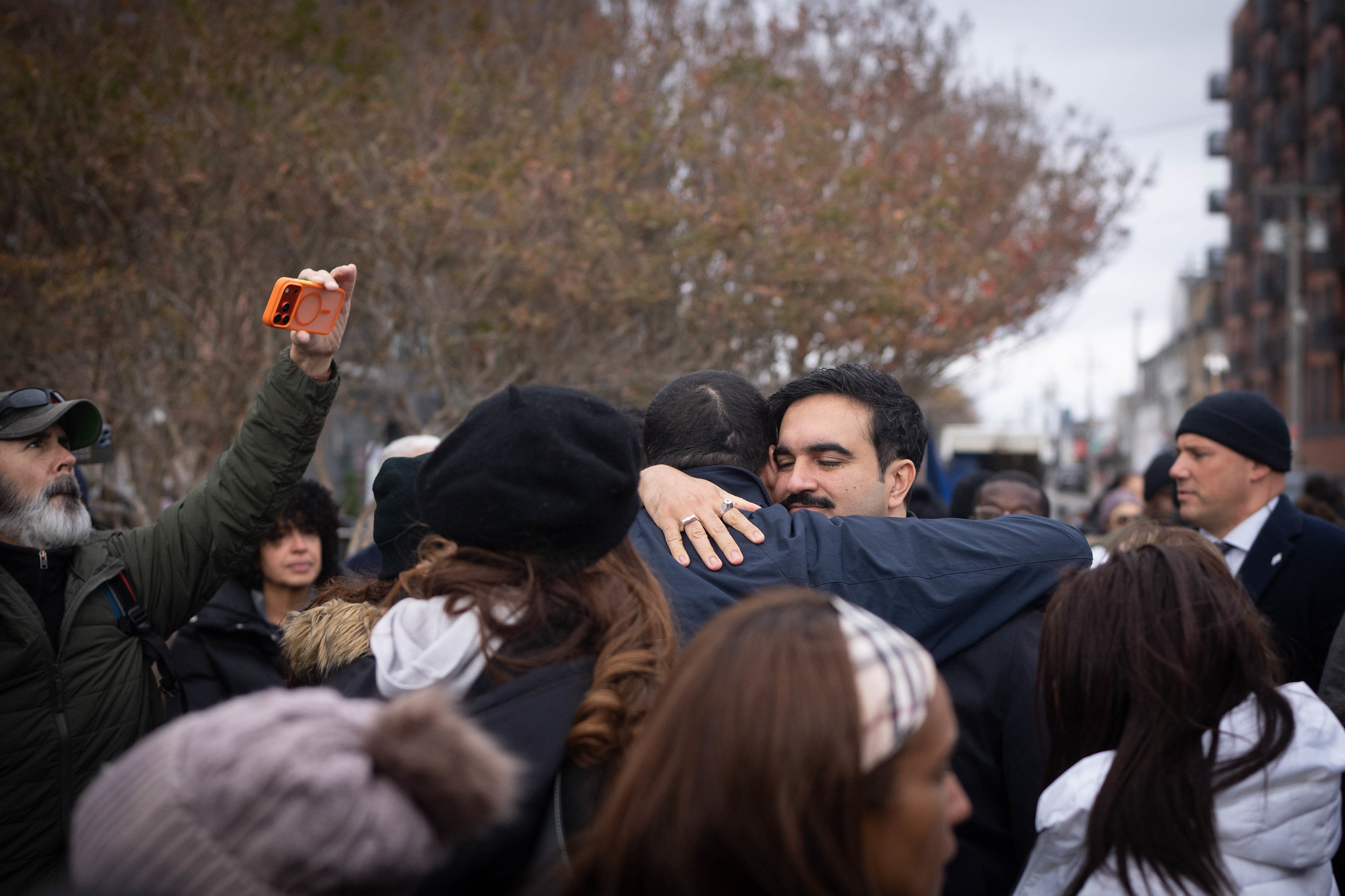
New York City Mayor Zohran Kwame Mamdani deliver remarks at the Flight 587 Memorial on the 25th anniversary of the tragic plane crash on Thursday, November 12, 2026. Michael Appleton/Mayoral Photography Office
Mamdani Administration Takes Notoriously Noncompliant Landlord to Court in First-of-Its-Kind Lawsuit, Seeks More Than $10 Million
Suit uses False Claims Act to hold landlord accountable for years of hazardous conditions and unpaid debts to the City
Legal action is part of administration’s “Fix the City” initiative to crack down on the city’s most persistent code violators
NEW YORK – Today, Mayor Zohran Kwame Mamdani announced that the New York City Law Department has filed a lawsuit seeking to hold persistently neglectful landlord Barry Singer accountable for years of dangerous conditions across 11 buildings in the Bronx and Brooklyn. The lawsuit seeks to compel repairs and recover more than $10 million in damages and penalties.
The filing marks the first time the City has used New York’s False Claims Act to hold a building owner accountable for allegedly evading payments owed to the City for emergency repairs, pest control and judgments resulting from housing code violations. The lawsuit also alleges violations of the City’s Nuisance Abatement Law and New York City Construction Codes. This new strategy was developed in collaboration with the legal advocacy group Housing Rights Initiative.
For decades, Singer has subjected tenants to dangerous conditions while ignoring hundreds of Building Code, Housing Maintenance Code and public safety violations across his properties. Through Fix the City, an initiative outlined in the administration’s Block by Block housing plan and Rental Ripoff Report, the Mamdani administration is deploying escalating legal and enforcement tools to force the city’s most chronically noncompliant landlords to comply with the law — or transfer their properties to responsible owners who will.
“We will not stand idly by while landlords neglect their buildings and leave tenants in dangerous living conditions for decades. When the same old tools fail to deliver results, we will use new strategies to hold noncompliant landlords accountable and win justice for tenants,” said Mayor Mamdani. “Every New Yorker deserves a safe, well-maintained home, and we will use every tool at our disposal to make that a reality across the five boroughs.”
“Every New Yorker deserves a safe, habitable place to live,” said New York City Corporation Counsel Steven Banks. “Ignoring housing code violations and hiding behind shell companies has put both tenants and the public at risk. Using the False Claims Act, we have a powerful new tool to seek relief for tenants and hold landlords accountable for the public nuisances they have created in our communities.”
“Through our ‘Fix the City’ initiative, the Mamdani Administration is using every tool at its disposal to hold noncompliant landlords accountable and stand with tenants demanding safe, livable homes. For years, Barry Singer has neglected his buildings while evading responsibility to his tenants. This new legal strategy brings us one step closer to securing the justice they deserve,” said Leila Bozorg, Deputy Mayor for Housing and Planning.
“We’re sending a clear message to chronically noncompliant landlords: subjecting tenants to hundreds of hazardous conditions is no longer an acceptable cost of doing business,” said Dina Levy, Commissioner of the Department of Housing Preservation and Development (HPD). “By implementing aggressive, innovative tools—like our use of the False Claims Act—the Singer case establishes new methods for the City to advocate for tenants, protect existing affordable housing and hold bad actors accountable.”
“We will not tolerate landlords who put New Yorkers at risk and deny them the safe, decent homes they have a right to live in. Under this administration, we are taking an aggressive approach to holding bad actors accountable, from strategies identified in the Mayor’s Rental Ripoff initiative to new enforcement tactics like this lawsuit,” said Buildings Commissioner Ahmed Tigani. “DOB has taken strong enforcement actions against Mr. Singer for violating city regulations including a criminal court summons, and hundreds of thousands of dollars in penalties. I thank our partners at HPD and the Law Department for using new and innovative tools to escalate this further by bringing forward this important case.”
“In the Mamdani administration, City government is on tenants’ side. Barry Singer has left his tenants in deplorable conditions for years. Now, we are taking action to protect our neighbors, recoup payments for repairs that the City has been forced to make because Singer wouldn’t and send a clear message that this scale of noncompliance is unacceptable,” said Cea Weaver, Director of the Mayor’s Office to Protect Tenants.
Filed in Bronx County Supreme Court, the lawsuit details numerous serious violations and conditions constituting public nuisances, including unauthorized construction, severely cracked and deteriorating building facades, bulging and leaning walls and rusting fire escapes at risk of collapse.
According to the lawsuit, Singer has knowingly and improperly avoided paying the City more than $1.05 million, plus interest, in charges and judgments, including those for emergency repair work and pest control performed after the landlord failed to meet his basic responsibilities. The outstanding amounts also include court judgments stemming from proceedings brought after owners failed to correct violations issued by the Department of Housing Preservation and Development (HPD), as well as judgments from the Office of Administrative Trials and Hearings (OATH).
The City is asking the court to compel Singer to address the public nuisances and impose civil penalties of $1,000 per day for each violation of the Nuisance Abatement Law. The lawsuit also seeks correction of additional violations of the New York City Construction Codes and alleges that the defendants are liable for treble damages and civil penalties of up to $28,619 per violation under the New York False Claims Act.
Examples of the dangerous conditions at buildings included in the lawsuit include:
- 2500 Webb Avenue in the Bronx: The building has 456 violations, including 183 classified as “immediately hazardous.” Conditions include a building facade described in the lawsuit as an “immediate hazard” with “potential to collapse,” inadequate pedestrian protection and an obstructed fire escape.
- 3030 Heath Avenue in the Bronx: The building has been subject to a full vacate order since a four-alarm fire on Jan. 15, 2025. The owner has failed to comply with orders to repair the fire damage. Conditions include missing sections of the roof, water damage, missing windows, a partially collapsed loft area and problems with gas valves. The building has 261 violations, including 105 classified as “immediately hazardous.”
Fix the City is a part of the Mamdani administration’s broader effort to address New York’s housing crisis by protecting tenants, preserving existing affordable housing and building new homes. Through Block by Block, the administration has set a goal of building 200,000 new affordable homes and preserving another 200,000 over the next decade. The plan is backed by a historic $22 billion investment in affordable housing capital over five years, alongside an ambitious land use agenda, reforms to streamline housing development and lower building operating costs, protections for homeowners, and investments in good jobs and worker safety.
“The City should be strongly commended for taking decisive action against landlords who violate critical laws enacted to protect the rights of all New Yorkers. This administration is demonstrating its unwavering commitment to enforcing these laws, holding violators accountable and using every legal tool at its disposal to secure justice,” said Aaron Carr, Founder & Executive Director, Housing Rights Initiative.
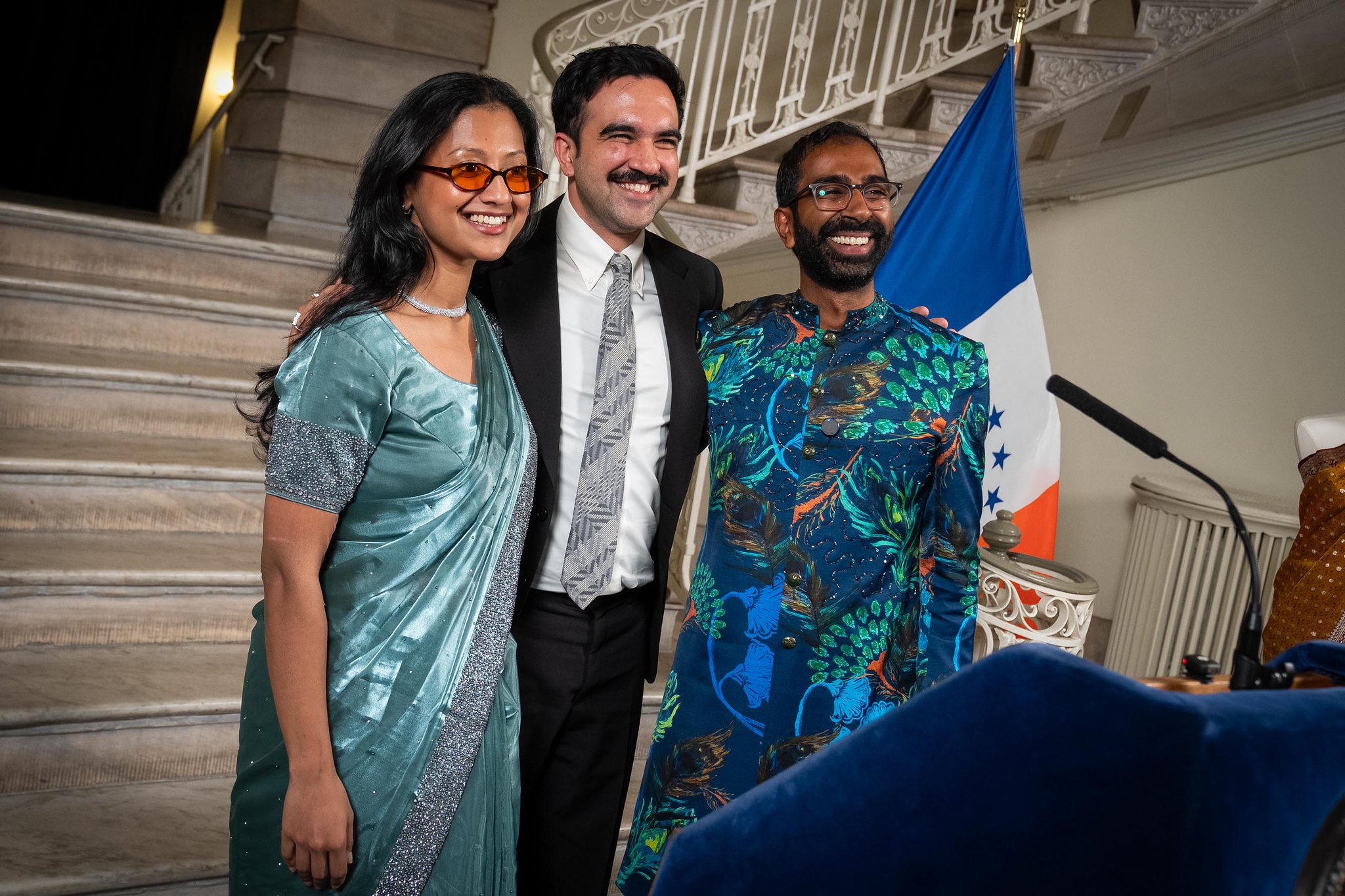
Mayor Mamdani delivers remarks at the New York Historical Society’s Sari Exhibition Reception. City Hall. Friday, November 13, 2026. Credit: Ed Reed/Mayoral Photography Office.
After 150 Years, Mayor Mamdani Signs Landmark Legislation to End NYC’s Horse-Drawn Carriage Industry
Carriages must cease operating on City streets by June 1, 2028
Administration will support 200 affected workers through medallion buybacks, career services and workforce development
NEW YORK – Mayor Zohran Kwame Mamdani today signed into law legislation ending New York City’s horse-drawn carriage industry after 150 years.
Sponsored by Council Member Chris Marte, Romanch’s Law requires horse-drawn carriages to cease operating on New York City streets by June 1, 2028. The law honors the memory of Romanch Mahajan, an 18-year-old who lost his life following a horse-drawn carriage accident in Central Park on June 17, 2026.
“For 150 years, horse-drawn carriages have been a fixture of Central Park. Today, we are bringing that chapter to a close,” said Mayor Mamdani. “This industry will come to an end, and we have a responsibility to the workers whose livelihoods depend on it. We will work alongside them to ensure they have the financial support and career opportunities they need to build their next chapter.”
“This is a truly historic day for New York City, nearly two decades after the Council first considered ending the horse-drawn carriage industry,” said Speaker Julie Menin. “Today, I’m thinking of Romanch Mahajan, who should still be with us and whose tragic, untimely death reminds us why this legislation was so urgently needed. This law will protect the welfare of horses while ensuring that the hardworking New Yorkers who depend on this industry have the support they need to transition to new employment opportunities. I’m proud to have worked alongside Council Member Marte, my Council colleagues, and advocates to make this moment possible, and I thank Mayor Mamdani for signing this historic legislation into law. With this law, we are ushering in a safer, more humane chapter for our city.”
“For nearly two decades, New Yorkers fought to end the horse-drawn carriage industry. Today, that fight has produced a law that protects horses and passengers and requires the city to help carriage workers move into new livelihoods,” said Council Member Christopher Marte. “I am proud to have sponsored Romanch’s Law and built the Council majority behind it. I thank Mayor Mamdani for signing it and working with us on the transition, and the advocates who refused to give up. We cannot bring Romanch Mahajan back, but we can honor his family’s call to prevent another tragedy. Today, New York has made that commitment law.”
“Romanch’s Law marks a historic step forward for animal rights and public safety in New York City,” said Allie Taylor, Director of the Mayor’s Office of Animal Welfare. “As we work to support carriage drivers through this transition, we have sanctuaries and rescue organizations ready to welcome the horses into retirement.”
The Mamdani administration announced Tuesday that it will support the approximately 200 New Yorkers whose livelihoods are affected by the end of the horse-drawn carriage industry, including medallion owners, carriage drivers and stable hands. The plan includes facilitating medallion buybacks for owners and providing workforce development and career support for drivers and stable hands.
The administration will work to engage TWU and horse carriage workers throughout the process to ensure their feedback is integrated into the full plan, which will be released by April 2027.
In partnership with NYC Talent and the NYC Department of Small Business Services (SBS), City Hall will establish a new Horse Carriage Worker Industry Program to help affected workers transition into new careers and advance professionally. The program will provide career advisement, job training, entrepreneurship support, connections to employers, educational opportunities and tuition assistance for carriage drivers and stable hands.
Mayor Mamdani will also direct the Administration to commission a feasibility study examining electric carriages and electric pedal-assist bicycles as potential alternatives for use within Central Park, as well as electric carriages along the park’s perimeter.
“Today’s bill signing marks an important step toward making New York City safer and more humane,” said Council Member Lynn Schulman, Chair of the Committee on Health. “Horse-drawn carriages have been part of New York City’s history since before cars, but our city has changed drastically. Our streets and parks have become increasingly chaotic and overcrowded, creating a massive safety risk for all. In many ways, today is about the tragic death of 18-year-old Romanch Mahajan. This bill was a partnership with the Council and the Mayor, and I want to thank Speaker Julie Menin and Mayor Zohran Mamdani for their leadership and roles in protecting the horses and prioritizing the safety of all New Yorkers.”
“As Vice Co-Chair of the Animal Welfare Caucus, I am especially grateful that we are signing Romanch’s Law today and finally ending the dangerous and inhumane horse-drawn carriage industry,” said Council Member Shahana Hanif. “After nearly two decades of unanswered advocacy, collaboration between our Mayor and City Council have allowed this legislation to be realized. Today, we honor Ryder and Romanch and move toward a safer, more humane city.”
“We are grateful that the end of the horse carriage industry is in sight, ensuring a safer future for the tens of millions of visitors to Central Park each year,” said Betsy Smith, President & CEO of the Central Park Conservancy. “We thank Mayor Mamdani and Speaker Menin for their historic leadership in passing Romanch’s Law, ending this practice after decades of debate and advocacy. We are committed to working with the Mayor and the Speaker on a just and effective transition.”

Mayor Mamdani delivers remarks at the New York Historical Society’s Sari Exhibition Reception. City Hall. Friday, November 13, 2026. Credit: Ed Reed/Mayoral Photography Office.
Mayor Mamdani Launches New Partnership to Put New Yorkers to Work and Strengthen Community Safety
NYC DOT and Office of Community Safety partnership provides supervised work experience to participants in targeted violence intervention program in the South Bronx
NEW YORK — Mayor Zohran Kwame Mamdani today announced the launch of the Atlas HOPE Transitional Employment Partnership, a collaboration between the New York City Department of Transportation (NYC DOT) and the NYC Office of Community Safety (OCS) that connects participants in a targeted community violence intervention program with supervised employment opportunities.
Launched Nov. 16, the partnership provides participants with paid, transitional work experience supporting cleaning, snow removal and maintenance at NYC DOT locations across the city.
Atlas HOPE is a 12- to 16-month community violence intervention program within the Office of Neighborhood Safety (ONS), part of OCS. The program serves men ages 25 to 40 in the South Bronx who meet specific criteria identifying them as being at the highest risk of involvement in violence. It combines cognitive behavioral intervention with transitional employment, job training and job placement to help participants build stability and pursue a different path forward.
“Every New Yorker deserves the opportunity to build a stable future, and every community deserves to be safe,” said Mayor Mamdani. “That means doing more than responding to violence after it happens. It means investing in people, creating pathways to meaningful work and giving New Yorkers the support they need to move forward. Through this partnership, we are connecting participants with real work experience while keeping our parks and streets in top shape.”
“Community safety means investing in people and creating meaningful pathways to opportunity,” said Deputy Mayor for Community Safety Renita Francois. “This partnership connects Atlas HOPE participants with transitional employment and the chance to make a visible contribution to their communities. By bringing together violence intervention services and opportunities to work, we are helping New Yorkers build more stable futures while caring for our public space.”
“Through Atlas HOPE, our Office of Neighborhood Safety brings together cognitive behavioral intervention, transitional employment, and job training and placement to support men at risk of gun violence involvement,” said Commissioner of the Office of Community Safety Dr. Ayesha Delany-Brumsey. “Our partnership with the Department of Transportation puts that approach into practice through supervised work opportunities across our city’s public spaces. We are grateful to NYCDOT, United Way of New York City and the Fortune Society for their collaboration in moving this work forward.”
“Through this partnership we will be connecting in-need New Yorkers with employment to help keep our traffic medians and step streets clean and assist clearing snow this winter season,” said NYC DOT Commissioner Mike Flynn. “NYC DOT is proud to partner with Atlas HOPE to provide these opportunities for New Yorkers, because we know how important consistent employment is for bringing stability and security to one’s life.”
“I am proud to see the Bronx benefit from investments that recognize the importance of meaningful intervention, economic opportunity and community safety. Connecting people to workforce training and transitional employment can change the trajectory of lives, creating long-term stability,” said Bronx District Attorney Darcel Clark. “By investing in people and expanding access to opportunity, we are building a safer, stronger and more resilient Bronx.”
“Safer, stronger communities exist when people have access to the resources and opportunities, they need to build a better future for themselves,” said Grace C. Bonilla, President and CEO of United Way of New York City. “Through Atlas HOPE, we are connecting New Yorkers to meaningful employment opportunities that help them develop valuable skills, gain professional experience, and build pathways to long-term economic mobility. We are grateful to our partners at the NYC Office of Community Safety, NYC Department of Transportation and The Fortune Society for their collaboration and shared commitment to creating opportunities for New Yorkers. Together, we are demonstrating how investments in people, workforce development and community partnerships can contribute to safer, more resilient neighborhoods.”
“Everyone deserves the opportunity to build a better future, and access to meaningful work is often an essential first step,” said Rob DeLeon, President and CEO of The Fortune Society. “What makes this partnership particularly powerful is that participants gain valuable job skills and experience and have the opportunity to make a visible, positive difference in their communities. At Fortune, we see every day what becomes possible when people are given the tools, support, and opportunities they need to succeed.”
Atlas HOPE currently serves approximately 60 participants across its four program phases, including 10 participants in transitional employment phase. These figures represent a point-in-time snapshot and may change as participants progress through the program. Transitional employment is one component of the broader intervention, not a stand-alone workforce opportunity open to the general public.
United Way of New York City (UWNYC) administers the program and serves as the capacity-building partner for the Atlas Initiative citywide. The Fortune Society is the lead implementation partner of Atlas HOPE and is responsible for staffing and supervising the work crews.
NYC DOT will identify mutually agreed-upon locations and coordinate with The Fortune Society to deploy crews of five to 10 participants. Assignments will include snow removal; cleaning step streets, medians, plazas and pedestrian islands; assisting with maintenance at NYC DOT facilities; and painting steel curbs and bollards. Additional services may be included by mutual agreement. Each crew will be overseen by two Fortune Society supervisors, who will coordinate with a designated NYC DOT contact.
OCS coordinates and oversees the City’s community violence intervention, gun violence prevention and related public safety initiatives, including the work of ONS. Through this partnership, OCS and NYC DOT are bringing together violence prevention and employment opportunities to support neighborhood stability and maintain the public spaces New Yorkers share.
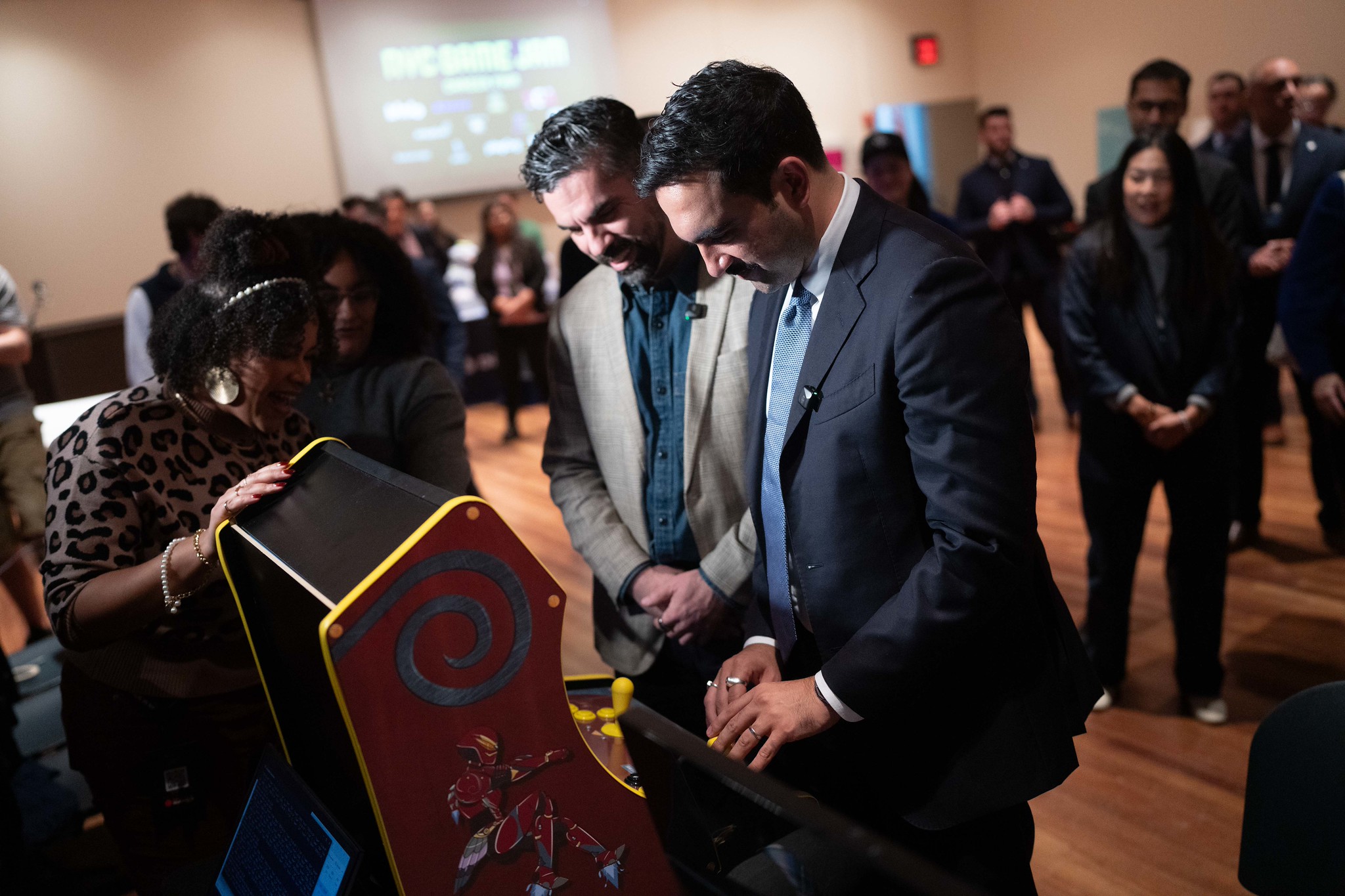
New York City Mayor Zohran Kwame Mamdani stops by NYC Game Jam and career fair at City College on Saturday, November 14, 2026. Michael Appleton/Mayoral Photography Office
Mayor Mamdani Nominates Three Worker Advocates to Fight for Taxi Drivers Facing Rising Costs
NEW YORK – Today, Mayor Zohran Kwame Mamdani nominated Ligia Guallpa, Lorelai Salas and Felicia Singh to serve on the Taxi and Limousine Commission (TLC) Board, subject to City Council confirmation.
“Taxi drivers get up before dawn and work long hours to keep this city moving. They should be able to support their families on what they earn,” said Mayor Zohran Kwame Mamdani. “Ligia, Lorelai and Felicia have spent their careers fighting for working people. Together with Commissioner Valdivia, they will lower costs and secure fairer pay for the people behind the wheel.”
“Drivers have been squeezed by higher vehicle and insurance costs and by app companies that keep per-trip pay out of view,” said Deputy Mayor for Economic Justice Julie Su. “Ligia helped win a minimum pay rate and pay transparency for delivery workers, Lorelai led the City’s consumer and worker protection agency, and Felicia grew up watching her family work these roads. They know how to lower costs and win fairer pay, and the people who drive our taxis will feel the difference.”
“Being a professional driver in New York City is always going to be hard work, but it is harder than it needs to be,” said TLC Chair and Commissioner Valdivia. “Hundreds of thousands of families have built good lives through driving, put food on the table and sent kids to college. We will make sure this industry works for them, for passengers and for our streets. I look forward to working with Ligia, Lorelai, Felicia and the rest of our board to make changes drivers can feel.”
“The City Council should move swiftly on these appointments so that we can have a full and functioning TLC board without further delay,” said Bhairavi Desai, Executive Director of the New York Taxi Workers Alliance, the union that represents over 28,000 NYC yellow taxi, green cab, Uber, Lyft, black car, and livery drivers. “The TLC has power over 180,000 licensed professional drivers and their families and has authority to regulate billionaire corporations that loom large over drivers’ lives, but it can’t do that without a full board. We look forward to working with this new class of pro-worker board members, who are unafraid to hold corporations accountable.”
TLC Board Nominees
“It is an incredible honor to be nominated by Mayor Zohran Mamdani to serve on the New York City Taxi and Limousine Commission Board under the leadership of Chair and Commissioner Midori Valdivia,” said Ligia Guallpa. “As a longtime labor advocate, I have dedicated my career to fighting for living wages and worker-centered policies that advance economic opportunity and prosperity for the people who keep our city running. I look forward to the City Council’s consideration of my nomination and to bringing my experience, commitment, and worker-centered perspective to the TLC Board. Our city works because of its workers, and they deserve policies that recognize their contributions, protect their livelihoods, and ensure they can live and work with dignity.”
“I am honored to be nominated to the Taxi and Limousine Commission’s board under Mayor Mamdani and Commissioner and Chair Valdivia’s leadership,” said Lorelai Salas. “The TLC has broad regulatory authority over many of the companies that operate on NYC roads, employing thousands of New Yorkers, and providing transportation services to many more. I look forward to working with my colleagues on the board to support the development of policies that improve the lives of NYC workers and residents, and that provide opportunities for economic mobility for the TLC licensees. Thank you to the City Council for considering my nomination.”
“I am honored to be nominated by Mayor Mamdani to the Taxi and Limousine Commission board,” said Felicia Singh. “As a proud daughter of a taxi driver, I’ve seen and felt the direct impact corporations have had on families like mine in maintaining self-employment and a livelihood in New York City. From watching my parents advocate in Albany with taxi workers to fighting together against the medallion crisis, it’s about time the TLC board includes more voices of those with lived experiences in the industry. I will honor this role by centering drivers and their families through championing policy that improves the lives of the many who serve this city.”
About the Nominees
Ligia Guallpa is the co-founder and executive director of the Workers’ Justice Project (WJP) and Los Deliveristas Unidos. For more than 16 years, she has organized immigrant and app-based workers to advance labor rights. Under her leadership, WJP launched Los Deliveristas Unidos, a worker-led collective representing 70,000 delivery workers across New York City. Their organizing secured a $22.13 minimum pay rate, pay transparency, protections against unjust deactivations and the country’s first Deliverista Hub.
Lorelai Salas is a senior fellow with The Century Foundation and Protect Borrowers and an adjunct professor at the Colin Powell School for Civic and Global Leadership at City College of New York. She served as supervision director at the Consumer Financial Protection Bureau until February 2025. From 2016 to 2021, she served as commissioner of the New York City Department of Consumer and Worker Protection (DCWP). Before that, she led the legal services departments at Make the Road New York and Catholic Migration Services.
Felicia Singh is the director of external affairs at the Coalition for Asian American Children and Families (CACF), the nation’s only pan-Asian children and families advocacy organization. The daughter of a taxi driver and working-class immigrant parents, she has worked in organizing, policy and politics. She taught for 10 years and served in the United States Peace Corps. She lives in Queens, where she grew up.

New York City Mayor Zohran Kwame Mamdani delivers remarks at DOC NYC’s Union Town screening on Friday, November 13, 2026. Michael Appleton/Mayoral Photography Office
Mayor Mamdani, NYCHA Move to Put 91 Homes in the Hands of Public Housing Residents
New initiative will fund repairs and give eligible public housing residents the opportunity to purchase their homes
NEW YORK – Today, Mayor Zohran Kwame Mamdani, Deputy Mayor Leila Bozorg and New York City Housing Authority (NYCHA) CEO Lisa Bova-Hiatt announced a new effort to help public housing residents become homeowners of 91 properties across Queens, the Bronx and Brooklyn.
NYCHA released a Request for Expressions of Interest (RFEI) seeking partners to rehabilitate the properties and facilitate their sale to existing residents. The initiative marks NYCHA’s first use of the U.S. Department of Housing and Urban Development’s (HUD) Section 32 program, which creates opportunities for public housing residents to purchase the homes in which they live.
The properties are located primarily in Southeast Queens, with additional homes in Brooklyn and the Bronx. The portfolio includes 75 single-family homes, 11 two-family homes, three three-family homes and two four-family homes. Following renovations, eligible residents will have the opportunity to purchase their homes and build the long-term stability and financial security that homeownership can provide.
“Homeownership should not be a privilege for the wealthy few. It should be within reach for any New Yorker who spent years building their life in this city. Through this program, we’re investing in the homes public housing residents already know and building the future they dream of, whether they rent or own,” said Mayor Mamdani.
“This program represents an exciting opportunity to expand the promise of homeownership to NYCHA residents while helping address the Authority’s operational needs—a win for residents and a win for our city. I look forward to working with NYCHA, local leaders, and the partner team to deliver much-needed repairs, and ensure residents can build a more stable future in the homes they know and love,” said Leila Bozorg, Deputy Mayor for Housing and Planning.
“This RFEI builds on NYCHA’s core mission to provide quality, affordable housing options by creating an opportunity for eligible residents to pursue homeownership,” said NYCHA Chief Executive Officer Lisa Bova-Hiatt. “These 91 scattered-site, primarily single-family homes represent a unique challenge within NYCHA’s portfolio, and we look forward to selecting a partner team with the expertise and vision to deliver the significant renovations to transform these properties into quality, affordable homes where residents can proudly live.”
“It’s not enough to just create and preserve affordable housing for our neighbors. Our city must significantly expand affordable homeownership opportunities, especially for public housing residents in Southeast Queens, allowing families the chance to build generational wealth and pass their homes down to future generations,” said Queens Borough President Donovan Richards Jr. “I look forward to working with our public and private partners to advance this mission, as we help unlock the American Dream and create chances at homeownership for our neighbors who need it the most.”
“Homeownership has long been a cornerstone of Southeast Queens, providing families with stability, financial security, and the opportunity to build wealth that can be passed from one generation to the next. I have been working directly with NYCHA since 2024, advocating for these properties to be rehabilitated and made available for purchase, and making this a priority in our broader discussions about housing opportunities in Southeast Queens, including during negotiations surrounding City of Yes and I am encouraged to see NYCHA take this important step with the release of its RFEI to rehabilitate 91 homes and create a pathway to ownership for eligible residents,” says City Council Deputy Speaker Dr. Nantasha Williams. “This effort also reflects the broader commitment we have advanced in the City Council through intentional legislation, investments in homeowner support services, and direct community engagement to expand access to homeownership and protect long-term stability. As this initiative moves forward, ensuring residents have the guidance, resources, and protections to navigate ownership will be essential. Our goal is to create meaningful opportunities for homeownership, preserve community ties, and help more New Yorkers build and sustain generational wealth.”
“Residents of the FHA Homes are excited about the opportunity to finally purchase the home they have lived in for decades,” said FHA Homes Tenant Association President Doreen Goggans. “We are looking forward to these properties getting the investment they deserve.”
“The past year and a half of direct resident engagement has made it clear that residents in NYCHA’s FHA homes want to remain in their homes and have an opportunity to become homeowners, and this RFEI gives us the framework to make that possible,” said NYCHA Executive Vice President and Chief Real Estate Officer Heather Beck. “Today, as we begin the search for a partner, we are committed to selecting a team with the expertise and the ability to build relationships with the community to make homeownership a reality for as many of these families as possible.”
This RFEI represents NYCHA’s first use of the Section 32 program, which is designed to expand homeownership opportunities for public housing residents while maintaining strict affordability requirements. Eligible households that meet income and other program criteria will have the opportunity to purchase the homes in which they currently live, with support from a partner team selected through the RFEI.
NYCHA has been engaging residents of these properties for more than a year, and most households have expressed interest in becoming homeowners. For residents for whom homeownership is not feasible, the selected partner team will work with the resident and NYCHA to identify an alternative, such as a Community Land Trust model. This approach would allow residents to remain in their homes while ensuring the properties receive necessary renovations and repairs.
Known as Federal Housing Administration (FHA) homes, these properties are the final group of more than 700 homes transferred to NYCHA by HUD between 1969 and 1982. Over the past 50 years, NYCHA has worked under HUD’s Section 5(h) rule – the predecessor to Section 32 – to sell or transfer hundreds of these properties to public housing residents and nonprofit organizations for rehabilitation.
Through the RFEI, NYCHA will select a partner team comprising a developer, general contractor and resident support partner. The team will be responsible for completing rehabilitation work and facilitating the homeownership process. The resident support partner must demonstrate experience providing homeownership counseling to residents of one- to four-family homes in New York City.
NYCHA will host a virtual pre-submission conference on Dec. 8 and accept applicant submissions from Nov. 19 through Feb. 18, 2027.
The initiative advances Mamdani administration’s commitment to strengthening for public housing and expanding affordable homeownership as a central part of its housing plan, Block by Block. Mayor Mamdani’s first capital plan includes the largest City capital investment in public housing in recent history. The Mamdani administration will also double the size of the Open Door affordable homeownership program and launch, “Our Home,” a new initiative to convert rental housing to permanently affordable co-ops.
Together, these efforts are part of a broader strategy to confront New York City’s housing crisis, including creating 200,000 new affordable homes and preserving another 200,000 over the next decade, cracking down on negligent landlords and advancing an ambitious land use agenda.
Mayor Zohran Kwame Mamdani signs the Community Opportunity to Purchase Act (COPA), landmark legislation that will give qualified nonprofits and community groups the first opportunity to purchase certain multifamily buildings before they hit the private market. 276 Chestnut St, Brooklyn. Tuesday, November 10, 2026. Credit: Ed Reed/Mayoral Photography Office.
Mayor Mamdani Releases City’s First Comprehensive Plan to Close Rikers Island
Plan lays out path to opening four safer, more humane borough-based jails by 2032, beginning in Brooklyn in 2029
Administration will invest $146 million in therapeutic beds, mental health care, education and job training, while working to reduce case delays and strengthen support for crime victims
NEW YORK – Mayor Zohran Kwame Mamdani today released the City’s first comprehensive plan to close Rikers Island — the City’s notorious jail complex — by 2032, advancing an effort first championed in 1979.
Close Rikers: Strategic Plan details the steps the City will take to build a safer and more humane jail system that treats people in custody with dignity, supports correctional officers, captains, supervisors and civilian staff who work inside these facilities and strengthens public safety for all New Yorkers.
The City will build four borough-based jails by 2032, beginning with Brooklyn in 2029; create hundreds of therapeutic beds for New Yorkers with serious mental health conditions and complex medical needs; invest $146 million next fiscal year in mental health care, substance use treatment, educational and vocational programming both inside jails and in communities as well as victim services; reduce pretrial detention and case delays; modernize the Department of Correction; and plan for the future reuse of the island.
“It is time to finally close Rikers Island,” said Mayor Mamdani. “For decades, New Yorkers have demanded a correctional system that is safe and humane. This plan puts us on a path to deliver just that: closing Rikers, reducing pretrial detention, tackling the case delays that deprives people of their right to a speedy trial and investing $146 million in evidence-based supports that help break the cycles of incarceration. We have a legal and moral obligation to close Rikers. Working alongside the City Council, Courts and nonprofit partners, we will meet it — for the people in our custody, the staff who serve them, victims of crime, and every New Yorker.”
“The era of a justice system that is ‘out of sight, out of mind’ is coming to a long-overdue end,” said NYC Correction Commissioner Stanley Richards. “This plan is a roadmap toward a safer city that lifts up the dignity of the people who live and work in our jails. The Department is proud to support this work in order to reach a future off of Rikers Island.”
The plan includes opening four borough-based jails by the end of 2032, with Brooklyn’s facility opening first in 2029. Located closer to public transportation, courts and the communities where incarcerated New Yorkers live, these new facilities will make it easier for people to maintain relationships with family, access legal counsel and receive support, all of which can lead to more stable and safe outcomes post-incarceration. They will also be designed to make supervision safer and more effective for correctional staff.
The administration will also create an additional 236 Outposted Therapeutic Housing Units (OTHU) in Brooklyn and the Bronx, for a total of 340 therapeutic beds in NYC Health + Hospitals facilities across the city. The City is already transferring incarcerated New Yorkers with serious mental health issues or complex medical needs to therapeutic beds in Manhattan, where they receive specialized care.
In conjunction with the plan’s release, the City Council will introduce legislation to update the legal timeline for ending incarceration on Rikers Island and relocating the jail population in alignment with construction timelines.
The Mamdani administration has already taken significant steps toward closing Rikers and improving conditions across the correctional system. In addition to opening 104 OTHU beds at Bellevue Hospital, the administration revived a previously stalled Just Home supportive housing project in the Bronx for formerly incarcerated New Yorkers with complex medical needs, closed the North Infirmary Command on Rikers Island, revived property transfers between the Department of Correction (DOC) and the Department of Citywide Administrative Services (DCAS) and changed operational policies to phase out long-standing emergency orders.
The strategic plan builds on that work, signals a renewed commitment to fulfilling our legal and moral obligation to close Rikers and plan a sustainable future for the island.
Key highlights of the strategic plan include
Four Borough-Based Jails by End of 2032:
- Closer to courts, families and public transportation: Traveling to Rikers Island can take several hours and consume an entire day. Borough-based jails will be closer to public transportation, making it easier for New Yorkers in custody to see family, make court dates, meet with attorneys and access other support systems — all of which can improve stability and help to ease reintegration post release.
- Jails that are safer and easier to supervise: Fewer beds per housing unit will improve sightlines and allow for more effective supervision, promoting safety for people in custody and DOC staff.
- More privacy, security and space for programming: Individual cells will provide greater privacy and security. Dedicated programming spaces will accommodate vocational training, educational courses, including community college classes, meetings with attorneys and other services designed to help individuals reintegrate into the community faster and more successfully. Every housing unit will also have access to outdoor space.
- Community space open to all New Yorkers: Each facility will include at least 20,000 square feet of separate community space for neighborhood residents. The City will work with local elected officials and community members to determine how the spaces are used, with potential programming including small business support, youth services and senior services.
- Modern, safer and more humane infrastructure: Unlike the deteriorating infrastructure at Rikers, where broken pipes, rusting fixtures and unsafe conditions are commonplace, the new jails will feature comfortable furnishings designed to provide safer, more humane conditions for people in custody and the staff that work there.
- A dedicated facility for women: Following input from formerly incarcerated women and service providers, the City will centralize women in custody at the Queens facility. The location will provide proximity to Elmhurst Hospital, where women in DOC custody who require hospital-level medical attention are transported.
Supporting New Yorkers Inside and Outside Jail:
- More programming for people in custody: The administration will invest $50 million next fiscal year to expand access to vocational training, educational programming, mental health counseling, substance use services and other supports. The investments will respond to significant demand for existing programs and be developed in coordination with the Remediation Manager.
- Expanded community-based release and support: The research is clear that an overreliance on incarceration does not make our communities safer, and time in jail can increase the likelihood of rearrest. In order to make our city safer, we must expand the services that break the cycles of incarceration. The City will invest an additional $76 million next fiscal year in community-based services for New Yorkers. These investments will expand access to reentry services and community diversion programs, such as supportive housing, as well as low-barrier Emergency Stabilization Housing, which provides on-site psychiatric care, behavioral health services, substance use treatment and peer support. The goal is to help people stabilize in their communities, remain close to their families and maintain employment and help reduce recidivism.
- Hundreds of therapeutic beds: For medically vulnerable New Yorkers in custody, a typical jail setting is not an appropriate place to receive the care they need. The City will create hundreds of therapeutic beds to transfer people with serious mental illness or complex medical needs to units within NYC Health + Hospitals’ facilities.
- A simpler way to pay bail: The City will restore its online bail payment portal, which has been unavailable since 2023. The portal’s return will make it easier for families to help loved one’s post bail without unnecessary delays or travel.
Improving Conditions and Support for Correctional Staff:
- More training and support for DOC staff: Correctional staff perform difficult and often unseen work. The administration is committed to ensuring they have the resources, peer training and staff education, building on its initial training programs.
- Safer and more effective staffing: The City is mapping current staffing levels and deployment to better allocate personnel across the Island and improve working conditions for staff. This work is being conducted in coordination with the Remediation Manager and the Federal Monitor.
- Greater accountability and transparency: The administration is strengthening DOC’s processes for investigating, addressing and disciplining misconduct as part of the Remediation Action Plan. The goal is to ensure investigations are consistent, timely and thorough across the jail system.
Reducing Case Delay and Improving Support for Crime Victims:
- Faster evidence discovery: The City will accelerate the processing, sharing and review of evidence, with a particular focus on improving coordination among City agencies, including the New York City Police Department (NYPD), the Fire Department of the City of New York (FDNY) and the Office of Chief Medical Examiner (OCME).
- An interagency task force to address case delays: The administration will work with key partners across the justice system, including the Office of Court Administration (OCA), district attorneys, and the defense bar, to identify the systemic causes of case delays, and develop solutions that support timely resolution.
- Better support for crime victims: The administration is investing an additional $15 million in support services overseen by the Office of Community Safety and $1 million allocated to the Office of the Bronx District Attorney, for victims and survivors, to expand access to mental health care and legal services through Family Justice Centers, the Crime Victim Assistance Program and partnerships with community-based organizations citywide. The City will continue to work with crime victims, victim services organizations and district attorneys to identify gaps in services, barriers to accessing support and opportunities to better meet victims’ needs.
Planning for the Future of Rikers Island:
- Advancing the City’s energy and sustainability goals: The administration, in consultation with local stakeholders, is exploring near-term renewable energy and sustainability projects for Rikers Island while beginning a broader vision-planning process for the island’s future use led by DCAS. We will reconvene the Rikers Island Advisory Committee to inform the vision planning process.
- Phased transition of Department of Correction off of Rikers Island: As facilities open in the boroughs, facilities on Rikers Island can close. The City will continue ongoing review to close jails on Rikers and transition them over to the Department of City Administrative Services (DCAS), to make land on the island available for reuse.
“Closing Rikers Island is an imperative part of building a healthy and just New York City,” said First Deputy Mayor Dean Fuleihan. “Mayor Mamdani is putting an end to the era of neglect at Rikers. This administration is about action and we will move swiftly to improve conditions on the Island and permanently move to close the jail.”
“From the start of his administration, Mayor Mamdani made the safety and well-being of New Yorkers top of his agenda. Today, we are taking an enormous step towards delivering dignity and justice to everyone on Rikers Island,” said Close Rikers Czar Dana Kaplan. “Closing Rikers is not just a legal obligation; it is a moral one. The administration is proud to release this plan and finally close Rikers Island once and for all.”
“I am proud to support Mayor Mamdani’s comprehensive plan to complete the closure of Rikers Island,” said New York Attorney General Letitia James. “I have long fought for substantive reforms to address the rampant sexual assault, violence, neglect, and lack of adequate medical care at Rikers, and have called for stronger protections to keep both incarcerated individuals and correction officers safe. Closing Rikers and transitioning to borough-based jails is necessary for everyone’s safety, and I look forward to a more just and humane future for all involved in New York City’s correctional system.”
“Rikers is a moral blight on our city, and closing it is a moral and legal imperative,” said Public Advocate Jumaane D. Williams. “After the last mayor actively worked against that objective, I’m glad to have an administration committed to both the goal and the work of making closure a reality. The strategy laid out today is a practical plan to get people off of the island and stop sending more New Yorkers there unnecessarily. While we continue toward closure, we need to prevent harmful practices happening on the island today, including by implementing Local Law 42 and restoring key services. This is a public safety issue – Rikers is ineffective and dangerous, and the best way to protect people on both sides of the bars is to finally close it down.”
“Rikers Island is a stain on New York City’s conscience that far too often stands in the way of justice,” said City Comptroller Mark Levine. “Every step forward takes us closer to a future where Rikers Island is no more, and I look forward to seeing the reforms and investments outlined within this plan become reality.”
“We owe every person in custody dignity and humane conditions, and every correction officer and staff member a functional and safe place to work. The plan to replace Rikers with borough-based jails will help achieve that, but we have a long way to go and many obstacles to overcome to do it correctly and preserve the tremendous progress in public safety our city is experiencing. We commend Mayor Mamdani for taking on this challenge and remain committed to working together to build a safer city, and a more humane and effective justice system,” said Bronx District Attorney Darcel Clark, Brooklyn District Attorney Eric Gonzalez, Manhattan District Attorney Alvin Bragg and Queens District Attorney Melinda Katz.
“Delays under previous administrations have made it clear that more time is needed to fulfill the commitment the City Council made to New Yorkers in 2019 when we legislated closing Rikers Island,” said City Council Speaker Julie Menin. “With Rikers now under federal court-ordered oversight, we must bring this troubling chapter in our city’s history to an end once and for all. That means protecting public safety through a responsible transition to borough-based jails, ensuring humane conditions for those in custody, and ultimately ending incarceration on Rikers Island. To achieve this transition, we must reduce court processing times that have impacted the jail population.”
“Rikers Island is a humanitarian nightmare, and a stain on our city. It can’t be fixed, it must be closed. I was proud to be one of the first elected officials to call for closing Rikers (at the urging of the legendary Herb Sturz) and to co-sponsor the Council law that mandated it,” said Congressmember-elect Brad Lander. “When that commitment stalled in the prior administration, as Comptroller I pushed for the long-delayed outposted therapeutic beds, for faster case processing, and for a real plan to get the closure back on track. I’m grateful to Mayor Mamdani for this serious, honest recommitment. It speeds up the outposted hospital units, takes on case delays, commits to reducing the number of people stuck on Rikers for years while awaiting their day in court, and starts tearing down the jails on Rikers Island next year. This is how we finally close Rikers and build a justice system that we won’t have to feel ashamed of.”
“Rikers Island was built to cage and disappear community members that our institutions have failed. For almost a century, it has criminalized poverty and subjected people, most of whom have not been convicted of any crime, to violence, neglect, and psychological torture. Black and brown communities have been disproportionately impacted by inhumane practices that strip them of their dignity and, far too often, their lives. It is well past time we close Rikers for good,” said Congressmember-elect Darializa Avila Chevalier. “It is the law in our city, and it is the only moral path forward. We must stop treating jails and prisons as the solution to every crisis our government refuses to address. New Yorkers have been clear that they want their resources to fund housing, education, mental health care, violence intervention programs, and the services that actually keep our communities safe. Thank you to the families and organizers who have carried this fight for years, and who dared to dream of a city that invests in our communities, not cages. May this new chapter bring us all more safety, dignity, and justice.”
“New York City has a moral imperative to close Rikers Island and finally bring an end to the pain and suffering it was wrought on generations of New Yorkers. I’m proud to have helped pass the plan to close Rikers Island as a Council Member, and thanks to Mayor Mamdani’s leadership, we are finally bringing this plan back on track. I am especially excited by the efforts to accelerate the timeline for activating outposted therapeutic units, and I look forward to working with the Mayor to ensure our local infrastructure, from our healthcare institutions to our CBOs, is supported throughout the implementation of this plan,” said Brooklyn Borough President Antonio Reynoso.
“Rikers Island is nothing more than an inhumane hellhole that destroys futures, ruins lives and steals souls. I have long been clear that this modern-day example of Jim Crow must be closed as fast as possible, and I will work doggedly with the Mamdani Administration to make sure that is exactly what happens,” said Queens Borough President Donovan Richards Jr. “We have the power to prevent countless New Yorkers, both those detained on the moral stain that is Rikers and those who work there, from experiencing unspeakable physical and emotional trauma. And there is never a better time to do the work of making our correctional system infinitely more humane and just for all than right now.”
“For decades, Rikers Island has been synonymous with the failure of government to justly and fairly serve New Yorkers in its care. The inhumane, dilapidated, and dangerous facilities housed at Rikers Island are unworthy of a city that has strived to lead on justice, equity, and human rights – and that, in its own Charter, has committed to repairing past and continuing harms. Today with Mayor Mamdani, we chart a new course, as his administration unveils its strategic plan to close Rikers Island. I’m grateful to Mayor Mamdani, First Deputy Mayor Dean Fuleihan, Close Rikers Czar Dana Kaplan, and my colleagues in state and city government for their leadership and years of persistent advocacy for a more humane and just corrections system,” said Manhattan Borough President Brad Hoylman-Sigal.
“Conditions in Rikers are not just inhumane, abusive, and neglectful – they’re lethal. Nine New Yorkers, that we know of, have lost their lives at Rikers Island just this year. Being in custody should not be a death sentence, but that’s too often the case at this particular jail. I fully support the administration’s plan to finally shut down this shameful facility and invest in proper mental health care, job training, substance abuse programming, victim services, and more both inside jails and in our communities.” said State Senator Julia Salazar.
“For years, the closure of Rikers Island has been discussed, including under the de Blasio administration. I want to thank Mayor Mamdani for pushing this effort forward and prioritizing the implementation of a more humane and rehabilitative correctional system. These investments will expand access to medical care, mental health services, and comprehensive rehabilitative programming, while upholding the health, safety, and dignity of incarcerated individuals. As Chair of the Senate Health Committee, I am hopeful that this change will create greater opportunities for individuals to successfully reintegrate into their communities and have another shot at life. This is an important step forward toward a more restorative approach to criminal justice reform in New York City,” said State Senator Gustavo Rivera.
“We have a moral obligation to close Rikers Island and transform our criminal legal system to reflect the dignity of human life and deliver safety for all communities, including for workers and those detained. This commitment to close Rikers Island will make our city safer and more humane,” said State Senator Kristen Gonzalez. “In my District, the City has already opened Outposted Therapeutic Beds for people with severe and complex medical conditions who would otherwise be detained on Rikers Island without sufficient medical oversight. These beds took years to come online while people needlessly suffered, and I am encouraged to see the Mayor plans to open the remaining beds on a faster timeline. I applaud Mayor Mamdani for his commitment to reducing the jail population, closing Rikers Island, and creating a more humane and just system.”
“Mayor Mamdani’s plan completely correlates with my top two priorities in this space–closing Rikers Island for good and putting meaningful resources behind programs that offer treatment, diversion and empowerment,” said State Senator Cordell Cleare. “Therefore, it has my absolute support.”
“The history of Rikers Island is littered with scandal, abuse, and inhumane treatment. We remember Kalief Browder and countless others who entered our correctional system without access to the tools needed to successfully reintegrate into society,” said State Senator Nathalia Fernandez. “Closing Rikers is an opportunity to turn the page on this painful history and build a system rooted in dignity and rehabilitation.”
“Closing Rikers Island is long overdue. I have visited Rikers multiple times and have seen firsthand the inhumane conditions people are living in and the devastating impact of a system that too often prioritizes incarceration over support and addressing the root causes of harm.
As a longtime advocate for criminal justice and prison reform, I believe we must invest in alternatives to incarceration, expand access to mental health services and supportive housing, and ensure people have the resources and support they need to rebuild their lives. Transitioning to a borough-based jail system is an important step toward closing Rikers for good, but it must be part of a broader commitment to rethinking how we approach public safety and justice. We have an opportunity and an obligation to build a more humane system rooted in dignity, healing, and the well-being of our communities,” said Senator-elect Jessica González-Rojas.
“After years of delays under previous mayors, I am grateful that the Mamdani administration is making the closure of Rikers Island a priority. Importantly, this plan’s inclusion of around $76 million in planned annual funding for programs supporting diversion, reduced case delays, early discharge, and reduced recidivism will help ensure we are not merely shifting the same population to borough-based jails, but genuinely working to shrink our jail population,” said Assemblymember-elect Samantha Kattan.
“I stand with Mayor Mamdani, other elected officials, and advocates, who recognize the need to close the Rikers Island jail complex in favor of a network of borough-based jails,” said Assemblymember Latrice Walker. “We need to reimagine our system of incarceration. We have to strengthen the connections between families and incarcerated New Yorkers, improve safety for detainees and staff, and we need to fortify diversion programs that would help to reduce the jail population. Rikers is dangerous, dilapidated, and needs to be shuttered.”
“Closing the modern-day penal colony of Rikers Island is a key part of building smaller, safer, and fairer jails. Rikers’ isolation and outdated facilities have harmed the people held there and the family members who wish to visit their loved ones. Rikers doesn’t work for anyone. I am thrilled to learn about the plan to begin demolishing Rikers starting in 2027, reduce the jail population, and speed up court-ordered mental competency evaluations. People who are incompetent to stand trial have languished there for years, far longer than they would have if they had been convicted of a crime. Thank you, Mayor Mamdani, for your leadership and for laying out a clear path toward finally closing Rikers for good,” said Assemblymember Jo Anne Simon.
“Today’s announcement—laying out a plan and timeline to close Rikers Island, reduce our jail population, and ensure that people who are incarcerated in NYC have humane living conditions—is incredibly welcome. This news represents over a decade of relentless advocacy from NYC’s incarcerated leaders and their loved ones, as well as a promise delivered by our Mayor,” said Assemblymember Emily Gallagher. “The commitment to redevelop the island into Renewable Rikers is also a reminder that we can, and must, take spaces that have been used to harm our communities and repurpose them into spaces that create good jobs and life-saving benefits. Of course, new jails alone will not undo decades of dehumanization of incarcerated New Yorkers. We must remain vigilant and continue to advocate so the full vision is realized and all New Yorkers, including and especially incarcerated New Yorkers, are able to live with dignity and hope for the future.”
“Closing Rikers Island has been the right goal for years. What’s been missing is a credible, detailed plan to get there, and today New Yorkers are getting one,” said Assemblymember Brian A Cunningham. “By investing in diversion, mental health care, faster case processing and real support for people coming home, Mayor Mamdani is tackling the root of the problem: too many people held in jail for too long. A humane, borough-based system keeps people closer to their families, their lawyers and the services they need. A justice system should keep us safe and treat people with dignity, and this plan moves us closer to both. I’m proud to stand with the Mayor and my colleagues today, and I look forward to working with the administration to see this plan through.”
“Closing Rikers Island is long overdue. We must move toward a system that prioritizes dignity, accountability, and humanity,” said Assemblymember Catalina Cruz. “Our communities deserve a justice system that focuses on rehabilitation over punishment, protects human life, and ensures that the injustices of that have occurred here are never repeated.”
“Rikers Island is a stain on the moral fabric of New York City. I have spent my career as a public defender representing people in our criminal legal system and I have seen firsthand, and in countless ways, how Rikers makes us all less safe. Even a short period of incarceration exacerbates mental health issues, perpetuates violence, and destabilizes families and communities,” said Assemblymember-elect Eli Northrup. “Today the Mayor has announced a realistic plan to achieve the complete closure of all the facilities on Rikers, while shrinking the footprint of the carceral system in New York City. I look forward to working with the Administration to achieve this necessary goal.”
“I want to express my deep gratitude to the organizers inside and outside of Rikers Island who have worked towards closing the jail for decades, and to Mayor Mamdani for answering their call. The Mayor’s announcement is about more than shuttering one facility; it’s about permanently decreasing our jail population by reducing pre-trial wait times, developing alternatives to incarceration, and ensuring every New Yorker’s basic needs are met,” said Assemblymember-elect David Orkin. “The road to decarceration is long, but we can all be proud of this concrete step towards a safer and more just New York City.”
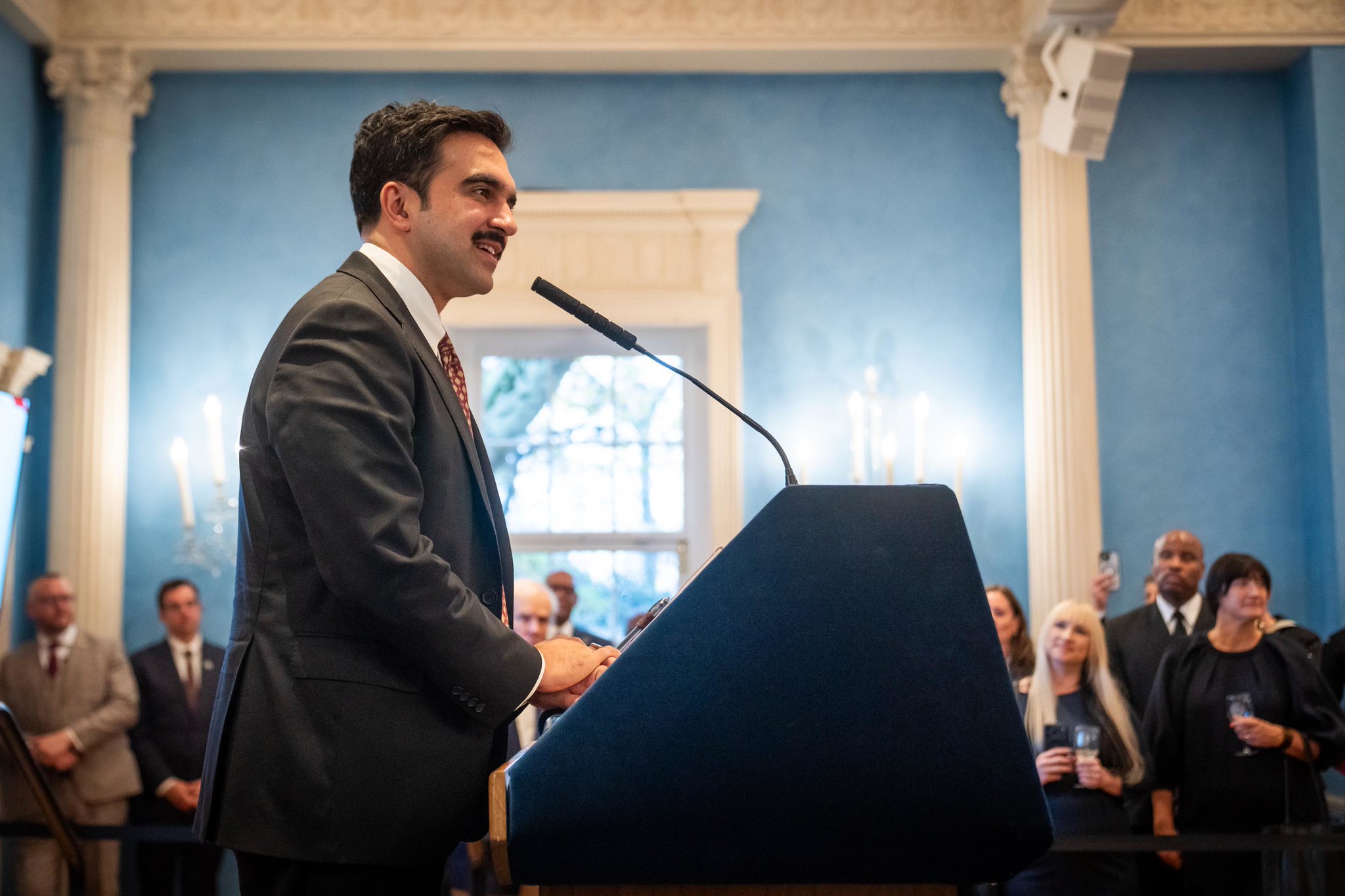
Mayor Mamdani hosts Veterans Day Reception. Gracie Mansion. Thursday, November 12, 2026. Credit: Ed Reed/Mayoral Photography Office.
“I welcome the commitments outlined in the Mayor’s new strategic plan to advance our efforts to finally close Rikers Island,” said New York City Council Chair of the Committee on Criminal Justice Selvena N. Brooks-Powers. “Establishing clear timelines for opening the borough-based jails, alongside meaningful investments to reduce the jail population, is an important step forward. And, this plan’s success will ultimately depend on our ability to turn these commitments into measurable action. That requires sustained coordination and accountability across our criminal justice system, including meaningful engagement from our judges, district attorneys, and other key stakeholders whose partnership will be essential to reducing case delays and meeting the City’s updated timeline. We have a moral obligation to close Rikers Island and build a safer, more humane, and more effective correctional system. I look forward to working with the administration to ensure we deliver on that commitment.”
“Closing Rikers is a moral and legal imperative that is long overdue,” said Council Member Sandy Nurse. “After years of intentional foot-dragging by the previous administration, I am encouraged that Mayor Mamdani is taking actionable steps to improve conditions, staffing, and to decarcerate until we can shut down Rikers once and for all. With an eye towards Renewable Rikers, this plan moves our city to a more humane and resilient future.”
“Rikers Island has been a stain on our city for far too long, and I know that firsthand,” said Council Member Yusef Salaam. “I’m proud to stand with Mayor Mamdani as he lays out a real path to close it for good and build a justice system rooted in dignity, safety and second chances.”
“During my years as a public defender and as a legislator, I have seen that being sent to Rikers Island for any amount of time is a potential death sentence. I commend Mayor Mamdani for recognizing the humanitarian crisis on Rikers Island, after it was all but abandoned by the last administration,” said Council Member Tiffany Caban. “We need to decarcerate and make our city safer. We can accomplish both by investing in care and support for people struggling with poverty, mental health, and substance use and shifting resources away from police, punishment, and incarceration. I look forward to working with the Mayor and his team to ensure that this vision becomes reality.”
“I applaud Mayor Mamdani and his team for putting the closure of Rikers Island back on track,” said Council Member Lincoln Restler. “We had smartly and safely reduced the jail population while strengthening public safety in New York City for three decades prior to the election of Eric Adams and we can and must do so again. By speeding up case processing, investing in alternatives to incarceration, and expanding housing options, we can end the scourge of mass incarceration in New York City and close Rikers forever.”
“NYC must set a precedent for the humane treatment of every New Yorker. That begins with a responsible plan for closing Rikers Island, and treating those in jail with dignity. Our city’s jail system has brought insurmountable harm to working-class black and brown families across our city. We have seen people gravely mistreated and so many heartbreaking deaths for those abused and denied medical treatment. It must come to an end. I applaud the Mayor for finalizing a plan to ensure the closure of Rikers and improving the immediate treatment of those in our jails. Every New Yorker deserves health and safety. I am committed to ensure people have access to resources and support without entering the criminal legal system. We must shrink our bloated system,” said Council Member Alexa Avilés.
“The long-awaited closure of Rikers Island has been kicked down the road far too many times, so I am proud that New York City is delivering on its promise to begin this process immediately,” said Council Member Chi Ossé. “We must continue to set the standard by having our elected leaders take on issues because they are challenging and complex. Closing Rikers Island is among them, and it requires a whole-of-government approach. I look forward to working alongside Mayor Mamdani and the communities impacted by our broken criminal justice system, past and present, to ensure the horrors of Rikers Island remain a relic of history. We must always chart a path forward that pursues racial justice, rehabilitation, and a more humane model of public safety.”
“Closing Rikers must go hand in hand with investing in our communities, expanding access to mental health services, and reducing our carceral population,” said Council MemberJennifer Gutiérrez. “In the last four years, it has felt that we were on a path to nowhere to achieving any of those goals. While we are still many years away from the full closure, I commend the Mamdani administration for taking this legal obligation seriously. Investments like the 144 outposted therapeutic housing beds for Woodhull Hospital, which serves communities across my district and beyond, are a vital part of that transition.”
“Closing the jails on Rikers Island is both an ethical obligation and a key step towards a fairer, safer, and more humane justice system in New York City,” said Council Member Gale Brewer. “I welcome the administration for putting forward a very clear strategic plan to actually close Rikers and move forward with a modern, borough-based system that puts people much closer to their families, their lawyers, and their community support services. I look forward to working with the Mayor, my fellow Council members, and community partners to make sure that the process is transparent, accountable, and delivers real justice reform for all New Yorkers.”
“Our practice of warehousing people not yet convicted of crimes on Rikers Island is a moral stain on our city,” said Council Member Shahana Hanif. “Every day we delay closing Rikers is another day we perpetuate injustice. I applaud the Mamdani administration for advancing a plan to close the jails on Rikers Island, reduce incarceration, and keep people closer to their communities. We must move away from a system rooted in punishment and toward one that prioritizes rehabilitation. The closure of Rikers cannot come soon enough.”
“The administration’s plan to close Rikers Island gives us an opportunity to fundamentally reimagine what justice can look like in New York City,” said Council Member Ty Hankerson. “We can build a correctional system rooted in dignity, compassion, and rehabilitation, one that gives people a meaningful chance to rebuild their lives. We can invest in pathways to stability, strengthen our communities, and demonstrate that public safety and compassion go hand in hand. This is our chance to reckon with the injustices of the past and forge a new path forward for how our city approaches justice.”
“Our team at DDC is proud to be leading the design and construction of the Borough-Based Jails program, and grateful for the trust placed in us and our industry partners to deliver these hugely important projects,” said Paul A. Ochoa, Commissioner of the New York City Department of Design and Construction. “Among the hundreds of active projects we manage across NYC, few carry the same moral urgency or have the potential to make such a lasting difference. Closing Rikers Island is about more than building new jails; it’s about changing how we treat our fellow New Yorkers and creating spaces that better connect people in custody with their families, legal services, programming, public transportation, and the courts. By delivering these four sites using Design-Build, we are bringing the right expertise together, strengthening collaboration among all stakeholders, and moving these projects forward with greater speed and efficiency. We are proud to play this role in helping the City fulfill its commitment to close Rikers Island.”
“For too long, we have relied on a system that jails thousands of New Yorkers who have not been convicted of a crime, allows cases to drag on for months or years, and sends people back into their communities without the support they need to succeed,” said NYC Criminal Justice Coordinator Justine Olderman. “This plan charts a new path forward—one that reduces our reliance on pretrial detention by investing in community-based services and supports, tackles the case delays that leave victims and detained people alike waiting for justice, and strengthens reentry to break the cycle of incarceration. Together, these investments will help us build a system that is both fairer and safer for all New Yorkers.”
“Mass incarceration doesn’t work,” said Mayor’s Office of Criminal Justice Director Deanna Logan. “Instead, this administration is following the research that shows choosing to invest in resources that better-connect people in custody with the communities to which they’ll return results in more stability and better outcomes for people in custody, for taxpayers, and for public safety.”
“In his first 100 days in office, Mayor Mamdani restarted our work, on behalf of our clinically complex patients, to create supportive housing as they leave custody and outposted therapeutic units while they await trial. Today’s announcement accelerates the timeline to move more of our vulnerable patients off Rikers and into new, therapeutic units,” said Dr. Patsy Yang, Senior Vice President for NYC Health + Hospitals/Correctional Health Services. “CHS is deeply honored to be part of an administration that so decisively acts on its fundamental belief in the humanity and worth of every person in this city.”
“We look forward to advancing a vision for Rikers consistent with New York City’s clean energy, sustainability, and resilience goals. Transforming a place of such deep harm for Black and brown New Yorkers into a place of renewal is an important step forward for the City that recognizes the vital work of advocates fighting for a green and just future,” said Chief Climate Officer Louise Yeung.
“Today brings us one step closer to closing the jails on Rikers Island,” said Department of Citywide Administrative Services Commissioner Yume Kitasei. “With the closure, we have a once-in-a-century opportunity to reimagine the future of a 400-acre island for the benefit of all New Yorkers, and we are excited to begin that work.”
“When it comes to public safety, when it comes to justice, when it comes to basic humanity, the jails on Rikers have no place in our City. The Mamdani Administration’s plan lays down a marker: Rikers must and will close. And even better, it will be replaced with a system that is safer, more humane, and fiscally responsible. A system New Yorkers can be proud of. The Independent Rikers Commission is excited to work together with the Mayor, the City Council, and all critical stakeholders to end the stain of Rikers on our great city,” said Judge Jonathan Lippman.
“The Mayor’s renewed commitment to closing Rikers Island, along with the crucial investments and resources needed finally put the City on track to comply with the legal and moral mandate to close Rikers. After years of delays and inaction, impacted people and communities deserve a credible plan with concrete benchmarks to reduce the jail population and permanently shutter this deplorable facility,” said Tina Luongo, Chief Attorney of the Criminal Defense Practice of The Legal Aid Society. “We commend the Mayor and his administration for taking these steps.”
“Ten years ago, when I was recently home from prison and became involved in organizing to close Rikers, so many people said it would never happen. But survivors of Rikers, impacted families, and New Yorkers who believe in justice were not deterred. Today, we welcome the release of Mayor Mamdani’s Strategic Plan to Close Rikers,” said Darren Mack, Co-Director of Freedom Agenda. “While Rikers should have closed long ago, we’re glad to have a mayor who has demonstrated his commitment to getting this done. We look forward to working with Mayor Mamdani to move forward with all possible urgency to invest in real solutions for safety and justice and leave the tragedy of Rikers Island behind.”
“Deplorable and deadly conditions and a culture of violence and neglect have persisted at crisis levels on Rikers Island for decades. Decreasing the population and ultimately closing Rikers must be a paramount priority for New York City,” said Lisa Schreibersdorf, Executive Director of Brooklyn Defenders. “Brooklyn Defenders applauds the Mamdani administration for investing in the supports that help people remain safe and stable in the community: housing, transportation, treatment, peer support, and mental health care. We strongly support the plan proposed by the Mayor’s office and look forward to working with the Mayor’s team to achieve the meaningful and well-thought-out goals contained in the report.”
“No one should have to survive Rikers to get their day in court. We are deeply grateful to Mayor Mamdani for turning a long fight into a real plan to close it. For more than 30 years, Neighborhood Defender Service of Harlem has defended people that jail isolates from their families, communities, and care. Real safety means fewer arrests and less surveillance. Closing Rikers is the promise. Investing in our communities is how we keep it,” said Piyali Basak, Managing Director, Neighborhood Defender Service of Harlem.
“The closing of Rikers Island represents the end of a dark chapter in New York City’s history and the beginning of a new era of justice, dignity, and opportunity. For far too long, we have relied on incarceration to address challenges that demand compassion, care, and community investment. Through strategic investments in mental health services, affordable housing, education, and community-based public safety, we can build a city where every New Yorker is safe, every life is valued, and every person has the opportunity to thrive. We do not have to choose between justice and public safety. We can and must have both,” said Rev. Stephen A. Green, Senior Pastor, Greater Allen AME Cathedral of New York
“The closing of Rikers Island is an opportunity for New York City to confront the failures of its past and make a different commitment to its future. Closing Rikers is not justice in itself, but it is a necessary step toward it. Justice will require us to transform the systems and conditions that made such an institution possible. The plan moving forward under Mayor Zohran Mamdani’s administration aims to replace Rikers with four smaller, borough-based facilities in Manhattan, Brooklyn, Queens, and the Bronx. The vision is to bring these facilities closer to courthouses, families, and essential support services, while investing in mental health care, supportive housing, rehabilitation, and reentry programs,” said Imam Khalid Latif, Executive Director of The Islamic Center Of New York City. “Chaplain Accountability and compassion are not competing values. We must remember that behind every person who experiences incarceration is a human being, a family, and a community. We can protect public safety while recognizing that rehabilitation, restoration, and human dignity must be central to justice. Closing Rikers must be more than a political milestone. It must be a moral commitment. A commitment to investing in people, strengthening families, addressing the conditions that contribute to incarceration, and creating a justice system that recognizes the humanity of everyone it touches. I’m confident that our Mayor and his administration are committed to that and more, and I stand with them in this effort.”
Mayor Zohran Kwame Mamdani signs the Community Opportunity to Purchase Act (COPA), landmark legislation that will give qualified nonprofits and community groups the first opportunity to purchase certain multifamily buildings before they hit the private market. 276 Chestnut St, Brooklyn. Tuesday, November 10, 2026. Credit: Ed Reed/Mayoral Photography Office.
About the Public Design Commission Annual Awards for Excellence in Design
Since 1983, the PDC has recognized outstanding public projects through its Annual Awards for Excellence in Design. The winning projects are selected from more than 700 submissions reviewed by the commission each year and demonstrate how creative, community-centered design can strengthen public spaces and improve civic life.
The PDC reviews permanent structures, landscape architecture and art proposed on or over City-owned property. Its mission is to advocate for innovative, sustainable and equitable design of public spaces and civic structures to improve the public realm and enhance services for New Yorkers across the five boroughs.
“Innovative design enhances our greenspaces and ensures that all New Yorkers have access to world-class public amenities. NYC Parks is thrilled that a diverse variety of our projects were selected as winners in PDC’s 44th Annual Awards for Excellence in Design, showcasing our agency’s incredible work in all five boroughs,” said NYC Parks Commissioner Tricia Shimamura. “From brand-new recreation centers to historic monuments, public art, new parks and playgrounds, and a massive environmental infrastructure initiative, these projects demonstrate the breadth of NYC Parks’ work and the importance of resilient and beautiful design in creating a more livable city. Congratulations to the talented teams at Parks and our partner design firms for earning this honor, and we look forward to bringing more transformative projects to communities across New York City.”
“When given the opportunity, artists shape our public spaces in ways that would otherwise be hard to imagine,” said Cultural Affairs Commissioner Diya Vij. “The Percent for Art commissions being recognized tonight show us that art, at its best, can wake us up to consider where we are: the history we stand on, the neighbors we’re next to, and the futures we might dream up together. We’re immensely proud to work with artists to make their permanent mark on our city’s landscape. Congratulations to all of tonight’s honorees.”
“New York City’s best public spaces do more than serve communities, they inspire. I am excited to see the artwork at two of our design-build projects, the Shirley Chisholm Recreation Center and Mary Cali Dalton Recreation Center, as well as the design of the upcoming Soundview Recreation Center, honored by PDC,” said NYC Department of Design and Construction Commissioner Paul A. Ochoa. “These award-winning projects demonstrate how public infrastructure can strengthen communities, spark creativity and enrich everyday life. DDC is proud to partner with NYC Parks and the Department of Cultural Affairs to deliver spaces that, through art and design, reflect the diversity and spirit of New Yorkers.”
“We’re proud to be recognized by the Public Design Commission for two ambitious stormwater management projects: Kissena Park Cloudburst Management in Queens and Tibbetts Brook Daylighting in the Bronx. These projects show that our investments in climate resilience can do much more than protect our city—they can also create vibrant, accessible public spaces that strengthen neighborhoods, enhance the environment, and improve quality of life for New Yorkers,” said NYC DEP Commissioner Lisa F. Garcia. “This is the transformative potential of design infrastructure that serves a critical public purpose but also gives something meaningful back to the communities it serves.”
“Brooklyn Public Library is thrilled to be recognized by the Public Design Commission along with our partners at MASS Design and Marble Fairbanks,” said Brooklyn Public Library President Linda E. Johnson. “The future New Lots Library will simultaneously memorialize the history of the site and ensure the East New York community has the programs and resources it needs to thrive for generations to come.”
Mayor Zohran Kwame Mamdani announces that, following negotiations with the Trump administration, the U.S. Department of Agriculture (USDA) will delay the start of enforcement of a new rule requiring SNAP-authorized retailers to meet expanded stocking standards. City Hall. Friday, November 13, 2026. Credit: Ed Reed/Mayoral Photography Office.
Mamdani Administration Releases More 9/11 Records, as Portal Surpasses 11 Million Unique Visits
City releases 84,000 additional records in third installment
Portal launched in September makes more than 440,000 pages of records available to first responders, survivors and families
NEW YORK — Mayor Zohran Kwame Mamdani and the New York City Law Department today released an additional 84,000 records, bringing the total to more than 440,000 pages at nyc.gov/sept11docs, as the City’s first public portal for records related to the horrific terror attacks of September 11th surpasses 11 million unique visits.
For years, first responders, elected officials and families of victims of 9/11-related illnesses have demanded the release of records documenting the air toxins, debris and government response in the aftermath of the attacks. In September, Mayor Mamdani launched the City’s first public portal for these records, making materials long sought by New Yorkers, including the Harding Memo and documents known as the “68 Boxes,” publicly accessible.
The Mayor’s FY 2027 budget includes $34 million to create and maintain the portal.
“After the horrific terror attacks of September 11th and the devastating health consequences that followed, New Yorkers across the five boroughs demanded transparency from their government — but were met with silence,” said Mayor Mamdani. “We launched the City’s first public portal to make these records accessible to the people who have waited decades for answers. More than 11 million visits and 440,000 pages later, our work is not finished. We will continue releasing records until survivors, first responders and families have the information and clarity they deserve.”
“This third installment of records represents another step toward fulfilling the City’s commitment to providing New Yorkers with an unvarnished window into the City’s post-9/11 response,” said New York City Corporation Counsel Steven Banks. “We are actively dismantling decades of municipal bureaucracy and delay to make these records publicly available – information that first responders, survivors, and victims’ families have waited 25 years to see.”
Mayor Zohran Kwame Mamdani and New York City Department of Transportation (NYC DOT) Commissioner Mike Flynn announce the completion of the McGuinness Boulevard redesign, delivering parking-protected bike lanes along the entire corridor, from Meeker Avenue to the Pulaski Bridge. Friday, November 13, 2026. Credit: Ed Reed/Mayoral Photography Office.
“The tragedy of September 11 did not end that day, and 25 years later, New Yorkers are still living with its devastating consequences,” said Speaker Julie Menin. “Tens of thousands of New Yorkers have suffered from serious illnesses linked to the toxic conditions in Lower Manhattan, and far too many have lost their lives. While nothing can undo that suffering or bring back those we have lost, we owe survivors, first responders, and their families the truth about the dangers they faced. Today’s release of 84,000 additional records marks another important step toward the transparency and accountability they have fought for over decades. The City Council is proud to stand alongside these tireless advocates in their pursuit of justice, and I thank the Mamdani administration for its partnership in bringing these critical records to light.”
“Every new release helps answer a question that first responders, survivors and their families have asked for 25 years: When did City Hall learn that the air at Ground Zero could make people sick?” said Manhattan Borough President Brad Hoylman-Sigal. “I thank Mayor Mamdani and Corporation Counsel Steve Banks for making another 84,000 records public, and the 9/11 community for insisting that the City bring these records to light.”
This release is the third installment of records being made public under the court agreement between 911 Health Watch and the Mamdani Administration. Additional records will be released in the coming months. New Yorkers can access the September 11th documents portal at nyc.gov/sept11docs.
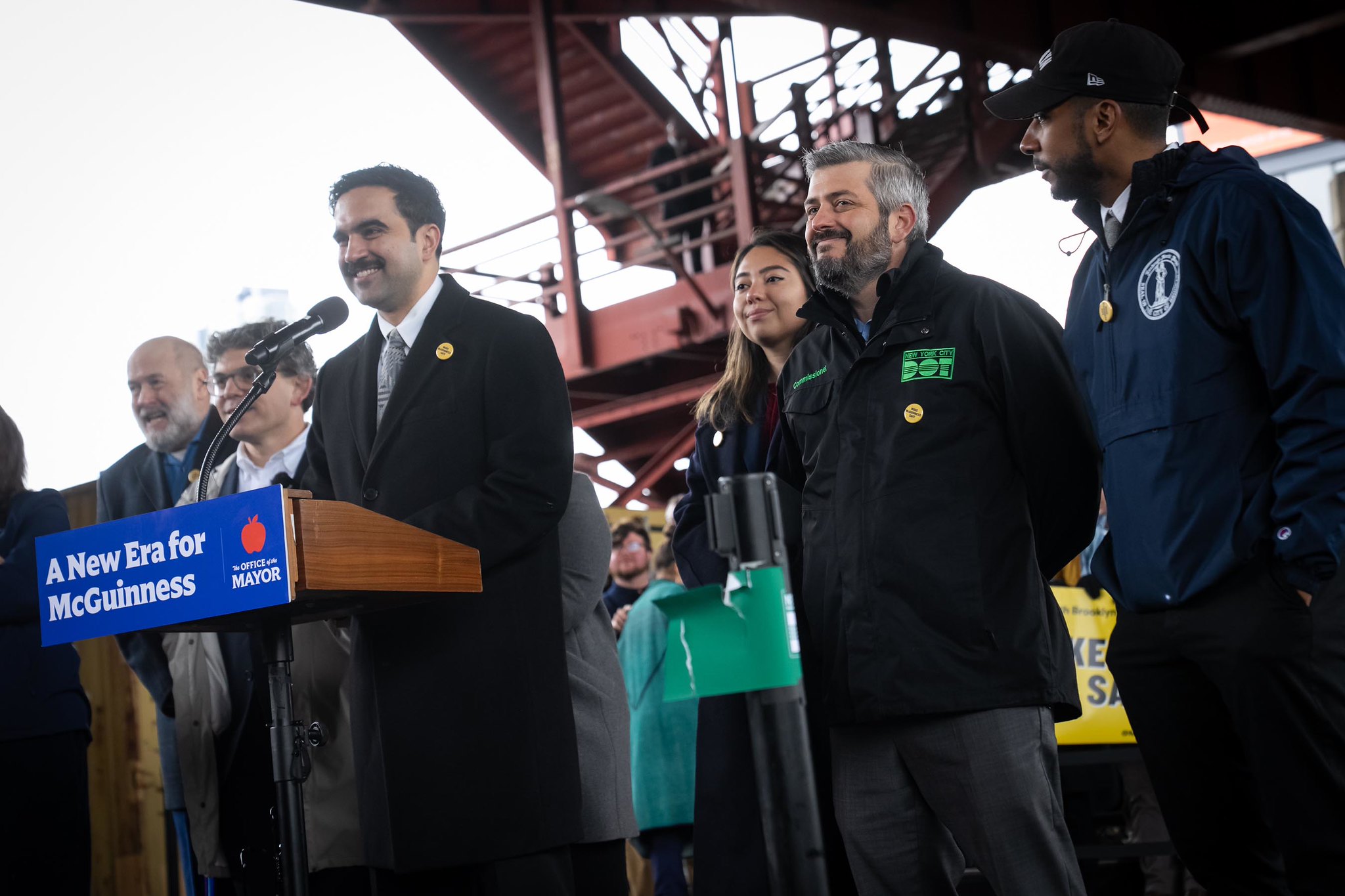
Mayor Zohran Kwame Mamdani and New York City Department of Transportation (NYC DOT) Commissioner Mike Flynn announce the completion of the McGuinness Boulevard redesign, delivering parking-protected bike lanes along the entire corridor, from Meeker Avenue to the Pulaski Bridge. Friday, November 13, 2026. Credit: Ed Reed/Mayoral Photography Office.
Mayor Mamdani Takes Aim at Repeat Offenders in NYC’s Housing Market
For the first time, NYC Commission on Human Rights will seek license suspension and revocation for real estate brokers who repeatedly discriminate against prospective tenants
NEW YORK — Today, Mayor Zohran Kwame Mamdani and New York City Commission on Human Rights Commissioner Christine Clarke announced a new effort to hold real estate brokers individually accountable for repeatedly discriminating against prospective tenants, including on the basis that they receive rental assistance.
For years, brokers accused of discrimination have been able to avoid accountability by simply moving to another brokerage. While the City has taken action against discriminatory brokers and firms, including securing six-figure penalties, financial penalties alone have not been enough to stop repeat offenders.
Now, for the first time, the Commission will refer cases involving licensed real estate brokers who violate the New York State Department of State, which oversees real estate licensing. The referrals will allow the state to independently assess complaints and determine whether disciplinary action is warranted, including suspension or revocation of a broker’s license. The effort is part of the administration’s commitment to ensuring that every New Yorker has a fair shot at finding a safe, affordable place to call home, without facing discrimination along the way.
“When a New Yorker is denied an apartment because they use a housing voucher, that isn’t just an obstacle in their housing search — it is illegal discrimination. Brokers should not be allowed to evade accountability by moving from one firm to another. We’re changing that,” said Mayor Mamdani. “If you repeatedly discriminate against New Yorkers, you shouldn’t be able to do business as usual. We will use every tool available to protect renters and hold repeat offenders accountable.”
“Discrimination in rental housing is one of the most common and harmful forms of discrimination that New Yorkers face in this City,” said Christine Clarke, Commissioner and Chair of the New York City Commission on Human Rights. “For too long brokers have been able to avoid accountability for their discriminatory behavior, which will no longer be tolerated. Finding an affordable apartment in this city is hard enough, discrimination should not make it harder.”
“No New Yorker should be denied a place to call home because of discrimination,” said Julie Su, Deputy Mayor for Economic Justice. “Real estate brokers have a responsibility to follow the law, and when they violate that responsibility, there must be real consequences. A license to do business is not a license to discriminate. This administration will use every tool available to protect New Yorkers, hold bad actors accountable and ensure that everyone has a fair shot at finding a home.”
“Every New Yorker has the right to search for housing without being discriminated against for who they are or their source of income, and we will protect that right with the full force of our Administration. We are ramping up our efforts from every angle to defend fair housing and create a more equitable city, from creating more housing options in more neighborhoods to cracking down on discriminatory behavior by repeat offenders,” said Leila Bozorg, Deputy Mayor for Housing and Planning.
“Housing discrimination has no place in New York City’s housing market. As we work to create a more equitable city, where every New Yorker can find and stay in homes that fit their needs, strong enforcement against those who repeatedly discriminate against our neighbors is a core strategy to achieve our goals,” said Cea Weaver, Director of the Mayor’s Office to Protect Tenants.
Discrimination against New Yorkers who rely on rental assistance remains one of the most common forms of housing discrimination reported to the Commission. Over the last five years, more than 1,500 real estate brokers and brokerages have been reported to the Commission for alleged source-of-income discrimination. At least 264 brokers — nearly one in six — have been reported more than once, accounting for a combined 826 reports of alleged discrimination. That means that at least 37% of reports have repeat offenders.
One brokerage alone was the subject of more than 30 reports.
The Commission is already taking proactive steps to address this widespread problem. In fiscal year 2026, the Commission conducted 272 tests, 152 pre-complaint interventions and filed 54 complaints involving source-of-income discrimination.
The new referral process builds on that work by pursuing accountability beyond financial penalties. By referring repeat offenders to the state, the Commission can help ensure that brokers cannot escape consequences simply by changing firms.
“Source of income discrimination is an all-too-common experience for many New Yorkers, including my constituents,” said Council Member Sandy Nurse, Chair of the New York City Council’s Committee on Civil and Human Rights. “Few of us can imagine the frustration of finally getting a voucher and finding an affordable apartment, only to be rejected by a broker or landlord simply because of where the check is coming from. These bad actors deserve more than a financial penalty. We need real accountability that disincentivizes and eradicates this illegal behavior systemwide. I commend Commissioner Clarke for taking a hard stance against discrimination in our housing market.”
“As evidenced by the FHJC’s more than 180 successful lawsuits brought against brokers, landlords, and other housing providers, too many bad actors refuse to take human rights laws seriously,” said Marie Winfield, Executive Director, Fair Housing Justice Center. “We applaud the Commission for recognizing the need to seek licensure penalties for real estate brokers who have discriminated against prospective tenants. We hope this sends a strong message to brokers who continue to ignore fair housing laws and seek to evade liability.”
“Since 2021, New Yorkers with rental assistance vouchers have reported over 2,300 real estate professionals to Unlock NYC for alleged source of income discrimination,” said Mar Maguire, Report Intake Specialist at Unlock NYC. “Well over half (58%) of these agents have been reported on at least three — and up to 20+ — separate occasions. As documented in Unlock NYC’s Serial Discriminators List initiative, justice looks like meaningful consequences for these ‘repeat offenders’ in particular. This includes license suspension, revocation, and penalties that follow agents across firms. We support the Commission’s efforts to hold real estate agents accountable and deter discriminatory practices.”
“Low-income New Yorkers face innumerable barriers when searching for safe, affordable housing. One of the most rampant barriers is discrimination by landlords and brokers,” said Amy Blumsack, Director of Organizing and Policy at Neighbors Together. “We applaud CCHR’s decision to seek licensure penalties against discriminatory brokers who violate the law. In our years of assisting voucher holders to find housing, we have seen brokers evade punishment for source-of-income discrimination time and again while people with vouchers are left to suffer being homeless. We are hopeful that this new penalty will dissuade brokers from breaking the law, protect tenants’ rights and increase permanent housing stability for voucher holders.”
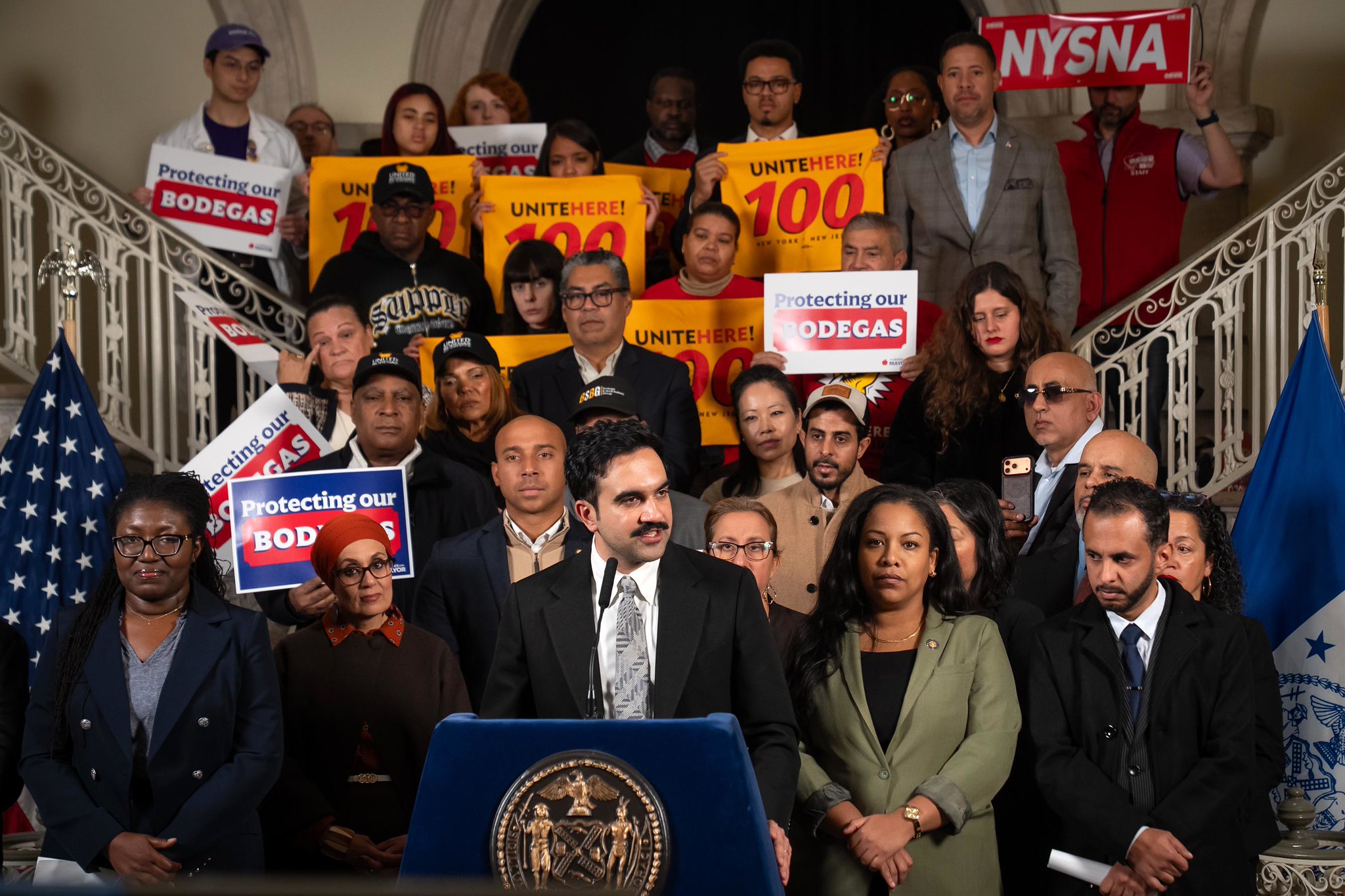
Mayor Zohran Kwame Mamdani announces that, following negotiations with the Trump administration, the U.S. Department of Agriculture (USDA) will delay the start of enforcement of a new rule requiring SNAP-authorized retailers to meet expanded stocking standards. City Hall. Friday, November 13, 2026. Credit: Ed Reed/Mayoral Photography Office.
Mayor Mamdani and Lyft Cap Citi Bike Member E-Bike Fares at $3.65 and Freeze Prices Through 2029
Members and reduced-fare riders will pay no more than $3.65 for e-bike rides up to 45 minutes
Pricing freeze will lock in membership rates, member per-minute e-bike fees and member overages through May 2029
New fare cap takes effect January 19, 2027
NEW YORK – Mayor Zohran Kwame Mamdani, New York City Department of Transportation (NYC DOT) Commissioner Mike Flynn and Lyft today announced an agreement to make Citi Bike more affordable, capping the cost of member e-bike rides and freezing key prices through May 26, 2029, when Lyft’s current contract with the City expires.
Beginning January 19, 2027, Citi Bike members, including participants in the Reduced Fare Bike Share program, will pay no more than $3.65 for an e-bike ride of up to 45 minutes. Shorter rides that currently cost less than $3.65 will remain at their current price. The cap will save riders up to $8.50 each trip, reducing maximum fares by more than two-thirds and giving riders up to 31 minutes of riding at no extra cost.
The price freeze will go into effect immediately, keeping the annual membership fee, member per-minute fee and member overage fees at current rates through May 26, 2029.
“Getting around New York City shouldn’t come with a price tag that keeps climbing by the minute,” said Mayor Mamdani. “For too many working New Yorkers, even a bike ride across the borough can become another expense to worry about. We’re capping e-bike fares at $3.65, freezing prices through 2029 and making it easier for millions of New Yorkers to get where they need to go. Because a more affordable city is one where getting around it doesn’t break the bank.”
“Making New York City more affordable means making it cheaper and easier for New Yorkers to get around,” said NYC DOT Commissioner Mike Flynn. “Capping the cost of e-bike rides delivers on Mayor Mamdani’s affordability agenda and allows New Yorkers to spend more time enjoying their ride and less time worrying about mounting per-minute costs.”
“Every day, New Yorkers choose Citi Bike to get to work, to school and to each other, and this cap gives even more of them the chance to get around their city by bike,” said Patrick Knoth, General Manager of Citi Bike. “From a longer commute to a trip across the neighborhood, members will pay no more than $3.65 for rides up to 45 minutes, and that price won’t change through 2029. At the same time, deploying additional charging stations will mean more fully charged e-bikes waiting at docks, ready when riders need them. We’re grateful to Mayor Mamdani and Commissioner Flynn for working with us to make Citi Bike an even more sustainable, reliable and affordable option for New Yorkers.”
The new cap replaces the existing $5.40 cap on e-bike rides of up to 45 minutes that enter or exit Manhattan, as well as the one-time allotment of 60 e-bike minutes for members.
In addition to the fare cap and price freeze, the City will help Lyft modernize Citi Bike’s operations and reduce operating costs, including by making it faster and easier to install on-site electric charging for Citi Bike stations, beginning with more than 130 Citi Bike charging stations starting in early 2027. Currently, crews drive from station to station to replace low batteries with charged ones. Electrified stations will allow more bikes to charge where docked, keeping more e-bikes available for riders, reducing the need for manual battery swapping and improving sustainability.
Last month, Mayor Mamdani announced the completion of a major Citi Bike expansion, adding more than 230 stations and 3,700 docks across seven neighborhoods in the Bronx, Brooklyn and Queens. Together, the expansion, new fare cap and pricing freeze will make bike share more affordable and accessible to New Yorkers across the city.
“New Yorkers take millions of Citi Bike trips each month, and it’s become an essential part of our broader transit network,” said Speaker Julie Menin. “Citi Bike helps people get to work, school, small businesses and parks — from Midtown Manhattan to corners of the city that the transit system doesn’t adequately reach. Even so, riding a Citi Bike comes at an increasingly high price, an unacceptable burden in our affordability crisis. Today’s announcement drastically reduces these costs, and next Wednesday, the Council will hold an oversight hearing, chaired by Majority Leader Abreu and Council Member Restler, aimed at further improving our Citi Bike network. The City Council looks forward to continuing our partnership with Mayor Mamdani to improve affordability in our transit system.”
“Citi Bike has long been an essential way to get around New York City, but it has become the most expensive bike share program in the world and unaffordable for many New Yorkers,” said Council Member Lincoln Restler. “That’s why I introduced legislation two years ago to cap Citi Bike rides at the cost of a subway or bus fare. Enormous credit to Mayor Mamdani and his team for making our transit more affordable. I love Citi Bike and have taken over 5,000 rides, and now more and more New Yorkers can access this reliable, efficient and affordable form of transit to get around!”
“Citi Bike is a core part of how our city moves, with some days topping 200,000 rides, rivaling the ridership of the PATH train,” said Council Member and Transportation Chair Shaun Abreu. “Thanks to Mayor Mamdani and his administration’s negotiations with Lyft, Christmas came early. More affordable rides mean more New Yorkers will be able to use Citi Bikes to get where they’re going — and keep more money in their pockets. The City Council will always be a partner on transit affordability and securing New Yorkers the best possible deal for years to come.”
“This is a major victory for current and future Citi Bike riders across New York City,” said Ben Furnas, Executive Director of Transportation Alternatives. “For too long, rising prices have made the nation’s best bike share system increasingly unaffordable for the people who love it or depend on it. This agreement is an exciting step toward making bicycling a more affordable transportation option for everyone. Thousands of New Yorkers signed our petition calling for an affordable Citi Bike, and today their voices have been heard. Thank you to Mayor Mamdani for getting this done!”
“Millions of New Yorkers rely on Citi Bike to get around every day. Like the bus and subway, it should be accessible and affordable for everyone. We’re thrilled by today’s announcement, which will give New Yorkers a faster, cleaner, more efficient alternative to driving,” said Sara Lind, Co-Executive Director at Open Plans. “Under this administration, micromobility is flourishing across all five boroughs. Riders of affordable Citi Bikes can use the growing network of protected bike lanes and redesigned streets to get to their destinations safely, conveniently and affordably. It’s a new day for New York’s mobility, and we’re excited to keep up the momentum.”
“The news that the Mamdani administration and Lyft have reached an agreement to cap Citi Bike e-bike surcharges and freeze membership rates is a true game changer for affordable transportation, and something that we have advocated for years,” said Eric McClure, Executive Director of StreetsPAC. “Bringing the surcharge nearer the cost of a transit fare will make using the city’s bike-share system even more attractive than it already is, and the price cap will eliminate the perverse incentive riders have to prioritize speed over safety in trying to get as quickly as possible to their destinations. New York City has had North America’s most expansive and busiest bike-share system since 2013, and now its value will match its utility. We’re grateful to Mayor Mamdani, DOT Commissioner Flynn and Lyft for getting to yes on affordability!”
Banner Image: Mayor Mamdani delivers remarks at the New York Historical Society’s Sari Exhibition Reception. City Hall. Friday, November 13, 2026. Image Credit: Ed Reed/Mayoral Photography Office.


NYC Mayor Zohran Mamdani
Zohran Mamdani was sworn in as Mayor of the City of New York on January 1st, 2026. Prior to becoming Mayor, he represented the 36th New York State Assembly District and its neighborhoods of Astoria, Ditmars-Steinway, and Astoria Heights.
There are no comments yet
Why not be the first