
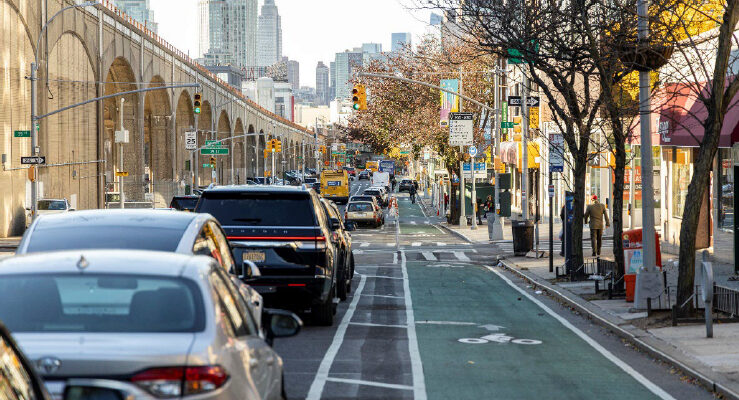
NYC DOT Commissioner Provides Testimony Before City Council Committee On Transportation and Infrastructure Regarding Micromobility, E-Bikes, Other Technologies To Alleviate Transportation Issues
NYC Department of Transportation Testimony Before the City Council Committee on Transportation and Infrastructure
Editor’s note: Staten Islander News recently covered the installation of vehicle fast charging stations have been installed in Brooklyn and the Bronx. There was also a pilot program for delivery drivers that provides them with battery swap and charging stations.
Good morning, Chair Brooks-Powers and members of the Committee on Transportation and Infrastructure. I am Ydanis Rodriguez, Commissioner of the New York City Department of Transportation. With me today are Deputy Commissioner of Transportation Planning and Management Eric Beaton, Assistant Commissioner for Policy Will Carry, and Assistant Commissioner for Intergovernmental and Community Affairs Rick Rodriguez. Thank you for the opportunity to testify on behalf of Mayor Eric Adams on the City’s work to enhance safety for e-bike riders, pedestrians, and all road users.
When I served this body for 12 years, Chaired this Committee for eight, and even now as the Transportation Commissioner, I often said that our work is focused on reimagining the use of public space. This includes reimagining how our streets can be safer, how they can better support our economy, and how they can make our communities vibrant and more livable. To do this, we have to be forward-looking. As our streets and city evolve, we have to meet the moment and address new challenges and seize new opportunities.
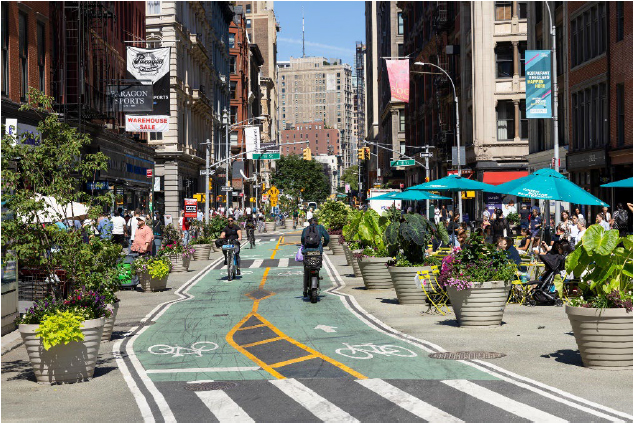
Broadway Vision between 17th and 18th street, Manhattan. Image Credit – NYC DOT
We are in an exciting time in transportation. For far too long, New York City and cities across the country designed streets to suit the needs of cars—endangering the safety of pedestrians and cyclists, increasing air pollution, and threatening the climate. By reimagining our streets to prioritize pedestrians, mass transit, and cycling, we are making our streets safer and the planet greener. These efforts are paying off, as we are in the midst of a cycling renaissance, with ridership hitting record highs year after year.
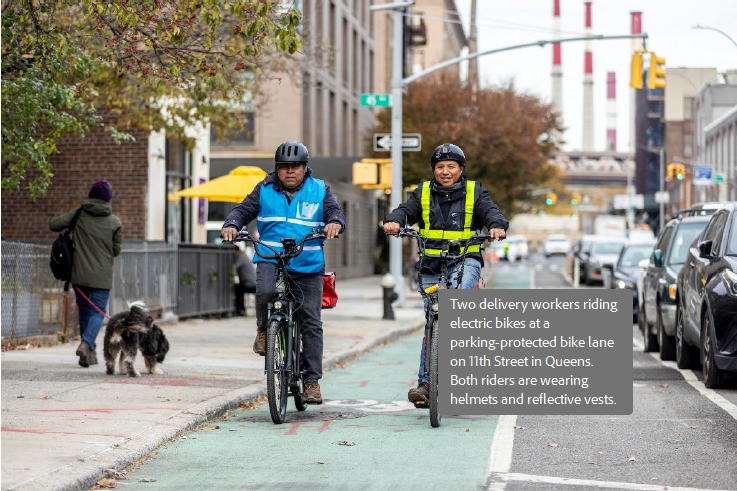
Delivery workers at 11th Street Bike Lane, Queens. Image Credit – NYC DOT
We have also seen that emerging technology is changing how New Yorkers get around our city. New modes of transportation like e-bikes, e-scooters, and shared micromobility services are now widely used on the city’s streets. Last year, the city had 200 million bike trips, with many of those trips on e-bikes, 34.5 million on Citi Bike, and over 1.8 million trips on shared e-scooters. And this year, we had an all-time high of cyclists crossing the East River Bridges for the fourth year in a row, up over eight percent from the previous year, and an over 12 percent increase in cyclists crossing 50th Street. Some of the trips on these devices replace trips in cars or for-hire vehicles, helping to reduce congestion and improve our environment.
These new modes also increase access across the city and make travel easier for many people, including those who live in neighborhoods with limited or no subway service. These include commuters, parents taking their kids to school, older adults for whom a bike trip uphill is now more manageable, New Yorkers and visitors exploring this great city, and, of course, the thousands of delivery workers delivering our food and packages. These riders are from all parts of the city, including all of your districts.
While the adoption of e-bikes and other micromobility has provided additional options for travel around the city, this progress also comes with a range of challenges. Like many of you, we have been hearing about these issues and are hard at work implementing and developing solutions to address them. We understand that there is much more work to do, and we look forward to continuing to partner with the Council to make streets safer for all road users.
Just as we have seen a troubling increase in aggressive drivers speeding, running red lights, impeding crosswalks, and blocking bike lanes and bus lanes, we have also seen a significant number of e-bike riders and micromobility users disobeying traffic laws. Disobeying traffic laws can have deadly consequences and is unacceptable.
While we have come a long way from the days when there were a thousand or more traffic fatalities in a year, this year there have still been 242 traffic fatalities in New York City, far too many. Reckless driving by motor vehicle drivers remains—by far—the biggest threat to pedestrian safety. So far this year, 105 pedestrians were killed by cars or larger vehicles compared to 6 killed in crashes with e-bikes, mopeds, and stand up e-scooters combined. And of the over 8,700 pedestrian injuries this year, nearly 90 percent were injured in crashes with cars or larger vehicles. I say this not to diminish the very real concerns about pedestrian safety from these smaller devices, but to put these concerns in context.
As we strive towards Vision Zero’s goal of zero traffic fatalities, there is more for all of us to do to enhance safety for all road users, particularly for our most vulnerable road users: pedestrians, and especially senior citizens and children. Every road user has a role to play in keeping others safe.
To enhance safety for the growing number of e-mobility device riders, the Administration launched the Charge Safe, Ride Safe action plan in the spring of 2023. The plan seeks to promote the use of legal and certified e-bikes—a sustainable mobility option—while addressing fire and street safety.
The plan focuses on four key areas: promoting and incentivizing safe battery use, increasing education and outreach to electric micromobility users, advocating for additional federal regulation of these devices, and expanding enforcement against dangerous riding. This includes steps DOT is taking to expand bike infrastructure and to encourage safe operation of e-bikes.
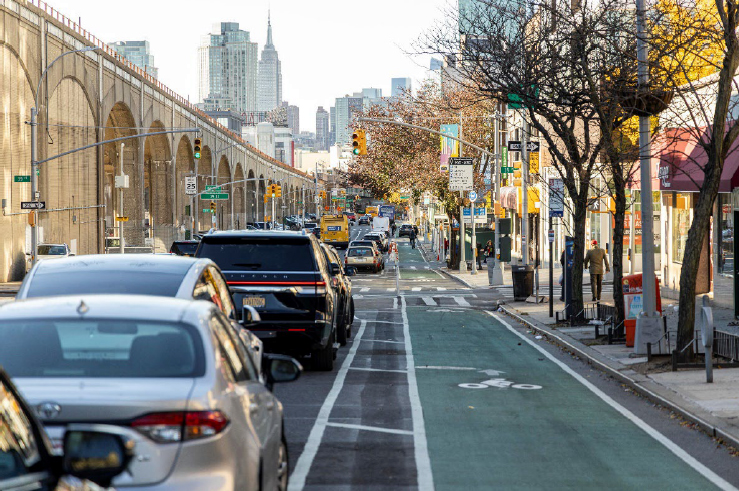
Queens Boulevard Redesign, Sunnyside, Queens. Image Credit – NYC DOT

On street design, DOT is redesigning our streets to meet the moment. The agency is installing wider bike lanes which create more predictable paths and provide more passing separation between bike lane users. Additionally, faster users will be drawn to ride further away from the curb, thus improving the visibility and distance between higher-speed bike lane users and pedestrians.
This summer, DOT began construction for a redesign of Manhattan’s Second Avenue, with dramatically improved bike and bus lanes and pedestrian features. The new design is bringing a wider bike lane to nearly 6,000 southbound cyclists and micromobility users each day. This work follows the installation of wider bike lanes on Third, Sixth, Seventh, Ninth, and Tenth avenues in Manhattan as well as on Queens Boulevard and 31st Avenue in Queens and Willis Avenue and Mosholu Parkway in the Bronx.
The agency is also exploring installing wider bike lanes in additional parts of the city, as well as other treatments to enhance street safety through design, including signal timing modifications,
enhanced delivery bike corrals, and bike boulevards or other new facility types to accommodate these modes.
These redesigns follow best practices from around the world and they bring safety benefits for everyone on our streets—not just bike riders. The installation of protected bike lanes reduces pedestrian deaths and serious injuries by 29 percent. These safety gains from protected bike lanes are even more pronounced for seniors walking on our streets, with these designs reducing deaths and serious injuries by 39 percent. This is because protected bike lanes typically reduce the crossing distance and provide pedestrian refuge islands, reducing the time it takes pedestrians to cross and slowing turns while improving visibility of pedestrians in the crosswalk.
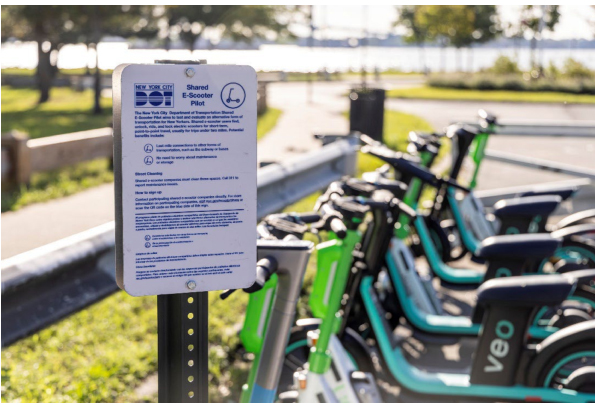
NYC DOT’s Shared Scooter Program with sign in background. Image Credit – NYC DOT
DOT is also directly providing additional modes to improve travel around the city. Through the Citi Bike program, more than half of New Yorkers live within a five-minute walk of a Citi Bike station. And for some areas outside of the Citi Bike service area, the agency is offering a shared e-scooter service, and now nearly 70 percent of the city’s residents have access to bike or scooter share in their neighborhoods.
In June, DOT expanded e-scooter share program to eastern Queens, providing critical connections to major transportation and commercial hubs for roughly 600,000 residents. The program now serves 1.2 million New Yorkers across the East Bronx and Eastern Queens. Since the program launched in 2021, 258,000 riders have taken over 6.1 million trips.
The average shared e-scooter trip is just over one mile, and the vast majority of trips start and end in the same neighborhood, showing that the program is primarily serving local residents. DOT is committed to improving the service based on feedback we receive from elected officials like yourselves and other community stakeholders, and we have already been taking steps to improve the program based on your feedback, including installing scooter corrals.
On enforcement, to address the culture of reckless riding behavior around the use of motorized two-wheeled devices, DOT is partnering with NYPD on an education and enforcement campaign targeted directly at riders engaging in illegal behaviors in bike lanes. NYPD has enforcement authority when road users violate traffic laws, including e-bike riders—enforcement does not require that e-bikes be registered. Enforcement focuses on the most dangerous behaviors such as red light running, and early results of these efforts are promising. NYPD has also conducted illegal device enforcement and has removed nearly 20,000 illegal devices from city streets.
Turning to reducing battery fires from powered mobility devices:
In partnership with the Council, the Administration has advanced meaningful policies to promote the use of safer certified e-bikes and batteries and encourage users to charge and store their batteries outside of their homes. The agency is creating a first-in-the-nation municipal trade-in pilot program to exchange unsafe e-bikes and batteries for new UL certified devices, in response to Local Law 131 of 2023, sponsored by Council Member Powers.
We are also taking steps to expand access to e-bike charging. We are updating our rules to allow building owners to install battery charging cabinets on the sidewalk in front of their properties and are partnering with NYCHA to install public e-bike chargers at roughly 170 locations thanks to a $25 million RAISE grant. We are also working with FDNY to develop and distribute battery safety materials to promote safe battery charging practices and to reduce fire risks.
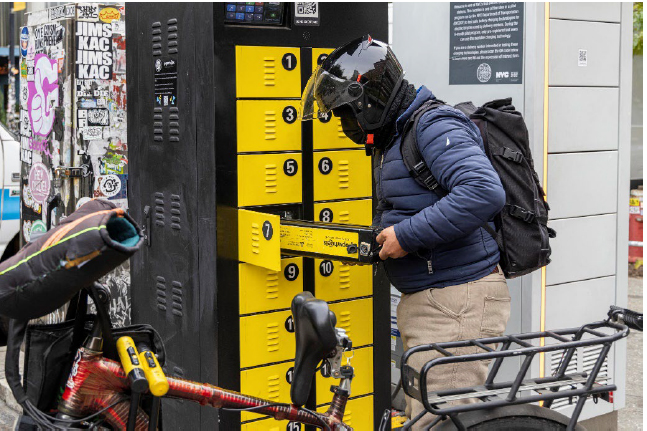
Electric Bikes Charging Stations at Cooper Square, Manhattan. Image Credit – NYC DOT
Despite the progress we are making with these efforts, more needs to be done. Too many e-bike riders are dying on our streets, too many pedestrians fear being hit by e-bikes and mopeds that are breaking the law, and too many fires continue to be caused by uncertified e-bike and moped batteries. The rapid growth of third-party delivery services since the early 2010s has played a major role in driving these problems. According to DCWP, there are currently 75,000 app-based restaurant delivery workers in New York City in any given week. And a 2022 study shows that 46 percent of delivery workers use e-bikes. But let us be clear, the number of delivery workers responds to the demand we put on them to get food to our homes.
The third-party delivery apps should be responsible for mitigating the negative consequences created by their business model, including the increase in battery fires, delivery worker deaths in crashes, and unsafe riding behavior on city streets. These companies currently make little effort to ensure that their contractors are using safe and legal equipment or receive proper safety training.
Their business model forces delivery workers to do whatever it takes—including running red lights or going the wrong way—to shave a minute or two off the delivery time and penalize those who ride safely.
We are encouraged by the City’s ongoing partnership with the City Council on comprehensive legislation to keep all road users safe by curbing unsafe speeding and risky riding behavior by delivery workers, enhancing delivery worker safety, reestablishing order on our streets, and decreasing the risk of deadly battery fires. Such legislation would cover all entities making on-demand deliveries, including apps and brick-and-mortar businesses, creating a level playing field.
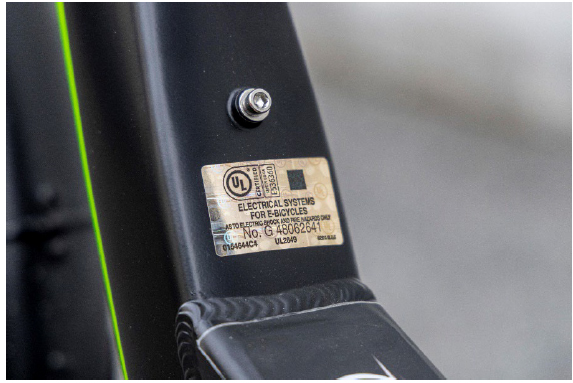
UL-certified Electric Bike. Image Credit – NYC DOT
First, the legislation would require app-based delivery companies to secure a license from the City and to take meaningful steps to create safer conditions for their workers and for all New Yorkers. Licensees would be required to ensure workers are using legal, UL-certified devices and to provide workers with access to these safe devices through trade-in or other programs.
Licensees would also be required to provide safety equipment, ensure delivery workers complete a regular safety training course, and give workers sufficient time for each delivery.
The license would also require the apps to submit robust data on trips and crashes to ensure compliance with these requirements and to inform street infrastructure planning.
Second, the legislation would also update the requirements for brick-and-mortar businesses, requiring them to ensure that their delivery workers use legal devices, as well as provide safety equipment and regular safety training.
Companies who fail to comply would be subject to increasing penalties, including fines and ultimately the loss of ability to deliver in New York City. With this updated regulatory approach, more delivery workers would use certified batteries and legal devices, wear proper safety equipment such as helmets and reflective vests, have sufficient time to fulfill deliveries, and follow the rules of the road.
This would lead to safer riding and fewer deadly battery fires, saving lives and making the city’s streets safer for all New Yorkers. We look forward to working with the Council on this proposal.
Legislation
Now, turning to the legislation before the Council today.
Introduction 606
First, Intro. 606, sponsored by Council Member Holden which would require the registration of e-bikes, e-scooters, and other legal motorized vehicles.
DOT understands that as new modes emerge, there are both new challenges and opportunities. We are currently in that moment with increased micromobility use. As the Mayor has said, e-bikes are a low-cost, zero-emission transportation option, but they can cause safety threats to bikers, pedestrians, and New Yorkers at large. People who misuse them should be accountable for their actions, including the delivery app companies that force faster speeds and reckless behavior to increase their profits. We appreciate and share the Council’s concerns and interest in promoting street safety and accountability in this space.
While DOT supports the intent of the bill and agrees that regulation and enforcement are important pieces of the puzzle, we are concerned with duplicating the State’s Department of Motor Vehicles within DOT. The Administration already has the tools to enforce against illegal behaviors; a license plate is not necessary for enforcement. In addition, this bill would require significant resources, as discussed in the City’s fiscal impact statement.
Registration would also lead to a focus on enforcement against delivery workers, many of whom are just trying to make ends meet and provide for their families. These workers, who have one of the most dangerous jobs in New York City, can lose access to shifts unless they meet strict time windows mandated by the apps. It is that incentive structure that must change.
And as more New Yorkers from all walks of life are choosing to travel by e-bike and e-scooter, we are concerned about increasing barriers for adoption. These sustainable modes of transportation provide users with an affordable and convenient transportation option, and we should be promoting their safe and responsible use.
We share the concerns that lead to this legislation and look forward to future discussions with the Council on a comprehensive legislative solution.
Introduction 1131
Finally, Intro. 1131 sponsored by Chair Brooks-Powers. This bill would create a taskforce to study and propose recommendations for street design and infrastructure to enhance safety. We appreciate the Council’s shared commitment to a comprehensive vision for e-bikes and new micromobility modes. To be even more effective, we encourage the Council to broaden the scope of the task force to include plans for regulation of these modes, rather than just street design and infrastructure. We support this legislation and would like to continue working with the Council and other stakeholders on legislative solutions.
Conclusion
In conclusion, I would like to thank the Council for the opportunity to testify before you today. Thank you for your continued partnership as we work to make this city safer for all road users. We would now be happy to answer any questions.
Banner Image: Queens Boulevard Redesign, Sunnyside, Queens. Image Credit – NYC DOT



NYC DOT
The New York City Department of Transportation’s (NYC DOT) mission is to provide for the safe, efficient, and environmentally responsible movement of people and goods in the City of New York and to maintain and enhance the transportation infrastructure crucial to the economic vitality and quality of life of our primary customers, City residents.
There are no comments yet
Why not be the first