
November 1st 2026 ACA Rates Lock In: Expiring Healthcare Subsidies Will Raise Premiums In Rural New York – US, Mental Health Services For Police, SNAP Benefits & Anti-Hunger Legislation, Averting Medicaid Cuts Imperiling Rural Hospitals, Other Updates: Senator Gillibrand
Expiring Healthcare Subsidies Will Raise Premiums Nationwide Particularly Rural New York, Mental Health Services For Law Enforcement, Restoring SNAP Benefits, October 7th Anniversary, Raising Retirement Age, Landmark Anti-Hunger Legislation, Averting Medicaid Cuts Imperiling Rural Hospitals, Age Discrimination Legislation, World Trade Center Health Program Funding: Senator Gillibrand
Editor’s note: See our previous rundown of the senator’s announcements here. The below video contains the press conference recordings for the first two sections, below, about the impact of rising healthcare costs and the senator’s push for funding to support mental health services for law enforcement personnel:
Can she please send us a statement that is relevant particularly to Staten Island residents regarding the healthcare cuts and why it’s important:
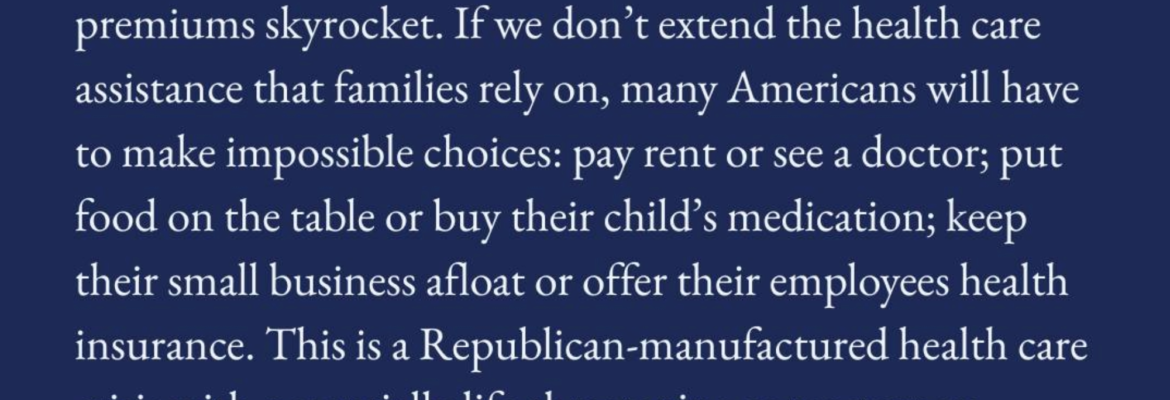
Here is a statement from Senator Gillibrand regarding your question about health care cost increases impacting Staten Island residents: “At least 1.6 million New Yorkers in every corner of our state are on the brink of seeing their premiums skyrocket because congressional Republicans refuse to extend the health care assistance that families rely on,” said Senator Gillibrand. “If Affordable Care Act premium tax credits are not extended, a single individual making $65,000 per year on Staten Island could see their premiums increase by over 150 percent. That is absolutely unacceptable. Most New Yorkers don’t have thousands of dollars to spare every year to cover this cost increase. This is a Republican-manufactured health care crisis that low- and middle-income New Yorkers simply cannot afford. Democrats stand ready to negotiate a bipartisan deal to keep health care costs low and reopen the government, but we need Republicans to come to the table to prioritize American families over billionaires and end this crisis.”
WITH NEW YORKERS’ HEALTH INSURANCE PREMIUMS SET TO SOAR, GILLIBRAND DETAILS THE IMPACT OF RISING COSTS ACROSS THE STATE; RELEASES COUNTY-BY-COUNTY BREAKDOWN OF PREMIUM INCREASES
A county-by-county breakdown of expected ACA premium increases across New York can be found at gillibrand.senate.gov/trumphealthcareincrease
Washington, D.C. – Today, U.S. Senator Kirsten Gillibrand (D-NY) held a virtual press conference to discuss the impact of rising health insurance premiums on New Yorkers across the state and to call on Republicans to extend the health insurance subsidies that help many Americans get care at a price they can afford.
“At least 1.6 million New Yorkers in every corner of our state are on the brink of seeing their premiums skyrocket—all because congressional Republicans refuse to extend the health care assistance that families rely on,” said Senator Gillibrand. “This is a Republican-manufactured health care crisis that low- and middle-income New Yorkers simply cannot afford. Democrats stand ready to negotiate a bipartisan deal to keep health care costs low and reopen the government, but we need Republicans to come to the table. I’m calling on my Republican colleagues to prioritize American families over billionaires and end this crisis.”
Without an extension, Affordable Care Act enhanced tax credits will expire at the end of 2025, causing 20 million Americans to see a sudden increase in their health insurance costs. This includes at least 1.6 million New Yorkers, who will face an average yearly increase of $1,360 in the amount they pay for their premiums, with people in some counties experiencing far greater increases. Gillibrand emphasized the immense strain that this will put on working families and the dire need for Republicans to work with Democrats to address the looming health care crisis and end the government shutdown. Enrollees in New York State are already receiving notices of premium hikes ahead of the start of open enrollment on November 1st, underscoring the importance of extending the subsidies immediately.
Health insurance premiums are expected to increase by double- or triple-digit percentages in all of New York’s 62 counties if President Trump and congressional Republicans fail to extend ACA subsidies. A county-by-county breakdown of the expected premium increases for the lowest-cost ACA plans can be found at gillibrand.senate.gov/trumphealthcareincrease.
Senator Gillibrand prepared this guide to anticipated premium increases if the Senate fails to act
IN PLAINVIEW, GILLIBRAND PUSHES FOR FUNDING TO SUPPORT MENTAL HEALTH SERVICES FOR LAW ENFORCEMENT
Long Island, NY – Today, U.S. Senator Kirsten Gillibrand, a member of the U.S. Senate Committee on Appropriations, visited the Nassau County Police Benevolent Association to highlight the $500,000 in congressionally directed spending (CDS) she is working to secure to expand the mental health services for law enforcement provided by the nonprofit New York Law Enforcement Assistance Program (NYLEAP).

“Police officers, firefighters, and EMTs face unique stressors on the job that increase their risk of developing PTSD and other mental health problems,” said Senator Gillibrand. “At the First Responders Summit that I hosted in July, I heard firsthand accounts from New York first responders about the importance of mental health resources for their communities. That’s why I’m fighting to secure more federal dollars to expand these resources. We owe it to our first responders to give them the support they need, and I’m committed to continuing to expand mental health resources for law enforcement officers in New York and across the country.”
Included in the Senate Appropriations Committee’s Fiscal Year 2026 Labor, Health and Human Services, and Education (LHHS) appropriations bill, the funding that Senator Gillibrand secured would provide critical support for the expansion of mental health services to reach more first responders across New York State, including law enforcement officers, firefighters, and emergency medical services professionals. The bill was approved by the committee on a bipartisan basis and awaits passage by the full Senate and the House of Representatives.
Senator Gillibrand was joined at the press conference by Tommy Shevlin, President of the Nassau County PBA, and Jim Banish, President of the New York Law Enforcement Assistance Program.
“Police Officers have 3 times more of a chance of dying by suicide than being killed by a criminal. It is time we come together and help take care of our police officers who risk their lives for our communities,” said Tommy Shevlin, President of the Nassau County PBA. “We need more peer support and training, and there is no better organization to combat this crisis than NYLEAP. Thank you, Senator Gillibrand, for all your continued support.”
“NYLEAP would like to thank Senator Gillibrand for working with us and making these funds available, so together we can provide much-needed mental health assistance for all first responders in New York State,” said NYLEAP President Jim Banish. “NYLEAP will provide more peer support training and post-critical incident seminars statewide, directly benefiting New Yorkers.”
Senator Gillibrand is a longtime advocate for first responders’ mental health. Earlier this year, she reintroduced the bipartisan First Responders Wellness Act, legislation to establish a national mental health hotline for first responders and expand mental health services for first responders during major disasters. In July, she hosted over 100 New York firefighters, EMTs, and law enforcement officers at her First Responders Summit for a day of panels, workshops, and advocacy on Capitol Hill.
GILLIBRAND STATEMENT ON THE SECOND ANNIVERSARY OF THE OCTOBER 7 ATTACK ON ISRAEL
Washington, DC – Today, on the second anniversary of the October 7 attack on Israel, U.S. Senator Kirsten Gillibrand issued the following statement:
“Today marks two years since Hamas carried out a senseless act of terror, brutally killing 1,200 innocent people, including dozens of our fellow Americans and several New Yorkers. In the single deadliest day for the Jewish people since the Holocaust, we remember the mothers and fathers, sons and daughters, neighbors and friends who were murdered. May their memories be a blessing.
We also cannot forget the approximately 48 hostages still being held by Hamas. Their absence is a daily source of pain and fear for their families and communities, and while the situation remains extremely difficult, we must continue working to bring them home as swiftly as possible. I pledge that I will not rest until they’re back home.”

GILLIBRAND PRESSES Trump on Possible Plans to Raise Social Security Retirement Age
Gillibrand: “Americans deserve to retire with dignity — not spend their retirement struggling to make ends meet.”
There are approximately 3.8 million current Social Security beneficiaries in NY
Washington, D.C. – U.S. Senator Kirsten Gillibrand (D-NY), ranking member of the Senate Aging Committee, is leading the charge to press President Donald Trump directly on his administration’s threats to raise the Social Security retirement age, which would amount to a benefit cut for millions of Americans. This week, she sent two letters to Social Security Commissioner Frank Bisignano to sound the alarm about the dangerous ramifications if this change were to come to fruition.
“Increasing the Social Security retirement age would be devastating for millions of older Americans and for working-age adults nearing retirement, and it would amount to yet another broken promise by the Trump administration,” said Senator Gillibrand. “Americans deserve to retire with dignity, not spend their golden years worrying that this administration will keep raising the bar on retirement. As ranking member of the Senate Aging Committee, I’m demanding answers on whether the White House plans to raise the retirement age, and I’ll fight these efforts if they persist.”
The letters come shortly after Social Security Commissioner Frank Bisignano signaled he would be open to raising the retirement age during a Fox Business appearance. Even before Bisignano’s latest comments, Republican policymakers, including the authors of Project 2025, have sought to raise the retirement age. Bisignano’s comments raise new concerns about whether the administration will enact these proposals, putting retirement benefits at risk.
Senator Gillibrand warned that raising the retirement age would put many low and middle-income workers at risk of economic insecurity. If the retirement age is raised to 69, as some proposals have suggested, a median-age retiree turning 62 in 2034 would ultimately lose nearly $100,000 over a decade of receiving benefits. Even worse, raising the retirement age to 69 would not change the Congressional Budget Office’s projection that Social Security funds would be exhausted around 2034. Actually making Social Security solvent will require the wealthy paying their fair share.
The first letter, co-signed by Senators Elizabeth Warren (D-MA), Chris Van Hollen (D-MD), Richard Blumenthal (D-CT), Tammy Duckworth (D-IL), Tammy Baldwin (D-WI), and Jacky Rosen (D-NV), seeks answers by October 13th on whether the White House is seeking to raise the retirement age. Senator Gillibrand’s solo letter, which also raises concern about his comments on raising the retirement age, additionally asks Commissioner Bisignano to join her at a Social Security field office in New York to discuss the impacts DOGE cuts are having on Social Security Administration operations and his new leadership team’s strategic plans for customer service and workflows.
Senator Gillibrand is part of Senate Democrats’ Social Security War Room, a coordinated effort to fight back against the Trump administration’s attack on Americans’ Social Security. The War Room coordinates messaging across the Senate Democratic Caucus and external stakeholders; encourages grassroots engagement by providing opportunities for Americans to share what Social Security means to them; and educates Senate staff, the American public, and stakeholders about Republicans’ agenda and their continued cuts to Americans’ Social Security services and benefits.
The text of Senator Gillibrand’s solo letter can be found here.
The text of the joint letter can be found here and below:
Dear President Trump:
We write today regarding our concerns that your administration has plans to raise the Social Security retirement age, cutting essential benefits that tens of millions of Americans have earned and need in order to enjoy a secure retirement.
Last week, Social Security Administration (SSA) Commissioner Frank Bisignano indicated in a Fox Business interview that the administration is considering raising the retirement age—only to walk back his comments a few hours later. Commissioner Bisignano’s comments—and immediate about-face—left millions of Americans alarmed and confused about the status of their Social Security benefits.
Specifically, on September 19, 2025, when asked whether he would consider raising the age for full retirement benefits during an interview with Fox Business, Commissioner Bisignano stated “everything’s being considered and will be considered.” His comments quickly made headlines, and shortly after, the Commissioner retracted his statement, saying “raising the retirement age is not under consideration.” Commissioner Bisignano’s wavering comments reflect a lingering question over how your administration will treat retirement benefits. Long before Commissioner Bisignano’s recent comments, Republican policymakers have suggested raising the retirement age. Such policy proposals have also been endorsed by the authors of Project 20256—the policy roadmap that has been highly influential in your decision-making in your second administration. That these proposals have found support in the Republican party is especially concerning given Senate Republicans’ recent willingness to abandon longstanding procedural requirements to push through their unpopular agenda with just 50 votes. This—combined with the Commissioner’s comments—raises fresh alarm that these ideas to cut Social Security benefits could become reality. If the Social Security retirement age is increased under your watch, you would be breaking your repeated promises to protect and preserve Americans’ benefits.
Raising Social Security’s full retirement age would force Americans to work longer, “cut[ting] benefits for nearly three-quarters of Americans” and putting many low- and middle-income workers at risk of economic insecurity “once they leave the workforce.” For example, if the full retirement age was raised to 69—as some proposals have suggested—a “median-wage retiree turning 62 in 2034” would see “their monthly benefit cut between $345 and $741”—and would ultimately “lose between $46,104 and $99,252 after 10 years of receiving Social Security.” These cuts would have the biggest impact on low- and middle-income retirees, who are more likely to rely on Social Security as their retirement income.
Further, these changes would provide little long-term benefits for program stability. The Congressional Budget Office (CBO) estimates that increasing the retirement age to 69 “would not change CBO’s projection that the balance of Social Security’s [Old-Age and Survivors Insurance] and [Disability Insurance] trust funds, were they combined, would be exhausted” around 2034. Social Security is low- and middle-income older Americans’ lifeline during retirement. If you raise the retirement age, you will be cutting these critical benefits—without a guaranteed solution to Social Security’s insolvency. And you will be ignoring other options, including raising the payroll tax income cap so that the wealthy pay their fair share to Social Security, that would protect benefits. Americans deserve to retire with dignity—not spend their retirement struggling to make ends meet.
Following Commissioner Bisignano’s comments, Americans deserve clarity over what will happen to their hard-earned retirement benefits. To help us understand your plans regarding the retirement age, we request answers to the following questions no later than October 13, 2025:
- Were Commissioner Bisignano’s comments on Fox Business consistent with the White House’s stance on raising the retirement age?
- Will you commit to vetoing any legislation passed by Congress that increases the age of eligibility for Social Security?
- Has your administration conducted any analysis on the impact raising the retirement age would have on Americans’ benefits? a. If so, how many people would see their Social Security benefits cut as a result of this increase, and which groups would be the most impacted by this decision?
- Have you considered other ways to address Social Security’s insolvency that do not result in large-scale benefit cuts for millions of Americans?
- Have you or anyone in the White House discussed raising the retirement age with Commissioner Bisignano or other leaders at SSA?
- Did you or anyone in the White House discuss your administration’s stance on raising the retirement age with the Commissioner after the issue was raised during his Fox Business interview?
- Did you or anyone in the White House urge SSA to retract the Commissioner’s comments on raising the retirement age? Thank you for your attention to this matter.
Sincerely,

GILLIBRAND, HOUSE COLLEAGUES INTRODUCE LANDMARK ANTI-HUNGER LEGISLATION
Legislation Would Increase Supplemental Nutrition Assistance Program (SNAP) Benefits And Help Those with Large Medical and Housing Expenses
Currently, 3.5 Million New Yorkers Rely On SNAP Benefits To Put Food On The Table
Washington, D.C. – U.S. Senator Kirsten Gillibrand introduced the Closing the Meal Gap Act of 2025, legislation that would expand and strengthen Supplemental Nutrition Assistance Program (SNAP) benefits and help those with large medical and housing expenses to qualify for SNAP. Representatives Alma Adams (D-NC-12), Jahana Hayes (D-CT-05), Summer Lee (D-PA-12), and Nydia Velázquez (D-NY-07) introduced companion legislation in the U.S. House of Representatives.
Currently, SNAP benefits are based on the restrictive Thrifty Food Plan, which inadequately calculates benefits for low-wage workers and their families. SNAP recipients receive an average of just $6.20 per person per day and rising food costs consistently outpace SNAP benefits each year. The Closing the Meal Gap Act of 2025 switches from the Thrifty Food Plan to the Low Cost Food Plan to calculate SNAP benefits, increasing the average SNAP benefit amount. In addition, the bill raises the SNAP standard medical deduction and SNAP shelter deduction caps, allowing recipients with large medical and housing expenses to access SNAP.
“In the richest country in the world, it is unacceptable that over 40 million Americans, including 15 million children, still face hunger. We must do more to combat hunger in New York and across the nation,” said Senator Gillibrand. “That’s why I’m so proud to lead my Democratic colleagues in introducing the Closing the Meal Gap Act. By enhancing SNAP benefits, this vital legislation will help put food on the table for those who need it most. This is potentially life-saving, commonsense legislation, and I am determined to get it passed.”
“No one in America should have to worry about where their next meal is coming from, but SNAP benefits are simply not enough to put food on the table. As inflation and cost of living continue to rise, we should focus on strengthening SNAP, not making deep, reckless cuts that only worsen hunger in the United States,” said Congresswoman Adams. “The Closing the Meal Gap Act will help tens of millions of people—including seniors, people with disabilities, single mothers, veterans, and children—become more food secure and support their households. Hunger is a policy choice and today, we are choosing to provide for the people who need it most.”
“This legislation treats food as the fundamental necessity that it is,” said Congresswoman Hayes. “Our bill provides a long-overdue update to SNAP, ensuring the program meets the needs of families. Making access to nutritious foods easier, not harder, is a meaningful step towards ending hunger.”
“Hunger is a despicable policy choice in one of the wealthiest countries in the world,” said Congresswoman Lee. “As groceries are breaking budgets and wages remain stagnant, Trump and Republicans are shamelessly gutting SNAP and tearing food assistance from millions of families nationwide. That’s why I’m proud to reintroduce the Closing the Meal Gap Act with my colleagues to make life a little easier for working folks across the country and expand access to food assistance. Every Member of Congress should be taking meaningful steps to address the hunger crisis plaguing our country.“
“At a time when families are being crushed by the rising cost of living, Republicans have chosen to launch heartless attacks on SNAP slashing benefits and making it harder for millions to put food on the table,” said Congresswoman Velázquez. “Hunger is not inevitable; it is the result of failed policies and misplaced priorities. The Closing the Meal Gap Act strengthens SNAP so families, especially those with children, and seniors don’t have to choose between paying rent, affording medicine, or eating dinner. I’m proud to stand with my colleagues to fight back against these cruel cuts and make sure every household has access to the nutrition they need to live with dignity.”
The Closing the Meal Gap Act comes after Republicans in Congress made an unprecedented $186 billion in cuts to SNAP in their One Big Beautiful Bill Act earlier this year – threatening access to the lifesaving food security programs millions of Americans rely on. The budget bill also cuts and restricts future updates to the Thrifty Food Plan, making the Low Cost Food Plan a better option to calculate benefits for SNAP recipients. In addition, it also removes internet service costs as an eligible deduction for SNAP benefits.
Full text of the bill can be found here.

GILLIBRAND LEADS BIPARTISAN BILL TO AVERT FUNDING CUTS TO HOSPITALS THAT SERVE LOW-INCOME PATIENTS
Legislation would prevent further Medicaid cuts to New York hospitals of nearly $300 million annually
Washington, D.C. – Today, U.S. Senator Kirsten Gillibrand (D-NY) and U.S. Senator Jim Banks (R-IN) introduced the bipartisan Save Our Safety Net Hospitals Act to prevent massive cuts to hospitals that serve large percentages of low-income patients. The bill would readjust the calculation that determines how Medicaid Disproportionate Share Hospital (DSH) funding is allocated, ensuring that hospitals in rural and low-income communities get the funding they need to provide care.
The text of this legislation was included in the bipartisan health extenders package introduced in December 2024 that ultimately was dropped from the final government funding bill. This no-cost, commonsense legislation reflects a strong bipartisan, bicameral commitment to addressing an unintended impact of a provision included in the Consolidated Appropriations Act of 2021.
“Safety net hospitals provide critical care to New York’s most vulnerable communities, and we must ensure that these establishments get the funding they need,” said Senator Gillibrand. “This legislation will provide a commonsense fix that will help our state’s hospitals give patients the care they deserve—regardless of income. I’m proud to introduce this bipartisan, bicameral bill and will fight to get this commonsense policy change across the finish line this fall before further cuts go into effect.”
Medicaid DSH funding helps preserve access to care at hospitals and health systems that serve the nation’s most vulnerable patients. All hospitals in New York State receive a certain level of DSH funding to help cover the shortfall of costs, and hospitals that serve large percentages of low-income patients rely on it to keep their doors open. DSH caps determine the maximum amount of federal Medicaid DSH funding that a hospital can receive.
DSH funding caps have historically been based on the financial losses from services provided to: (1) uninsured patients; (2) Medicaid enrollees; and (3) dual eligible-enrollees, which are Medicaid patients that also use Medicare or other third-party coverage to supplement their insurance. However, Section 203 of the Consolidated Appropriations Act of 2021 enacted a significant change in how the DSH caps for specific hospitals are calculated. It removed Medicaid patients with third-party coverage from the DSH cap calculation unless the hospital meets extremely narrow exemption criteria, impacting hospitals in rural and high-poverty areas where a significant number of residents covered by Medicaid are dually eligible for Medicare and depend on it for additional coverage.
By restoring the Medicaid DSH payment formula that existed before Fiscal Year 2022 and allowing states to amend their plans to implement these changes, the Save Our Safety Net Hospitals Act would preserve the level of Medicaid DSH funding available to hospitals that serve a large number of low-income dual-eligible patients.
In New York, this funding boost would benefit the hospitals who need it most, as 85% of the state’s Medicaid DSH spending is directed to public hospitals and others defined as “financially distressed.”
The Save Our Safety Net Hospitals Act would:
- Restore the Medicaid DSH payment formula that existed before Fiscal Year 2022, allowing states to compute DSH payments including low-income dual-eligible patients
- Allow states to spend unspent DSH payments from earlier years
- Permit states to amend their Medicaid plans to implement these changes
Representatives Nick LaLota (R-NY) and Yvette Clarke (D-NY) lead companion legislation in the U.S. House of Representatives.
“Hospitals like Methodist, Schneck, and Reid are struggling because of an unfair federal formula,” said Senator Jim Banks. “This bill fixes that, and helps Indiana hospitals get their fair share of funding.”
“The bipartisan, bicameral Save-Our-Safety-Net Hospitals Act, which I’m proud to co-lead with Senator Gillibrand, protects the very institutions that are the backbone of our healthcare system,” said Rep. Nick LaLota. “Safety-net hospitals like Stony Brook University Hospital in New York provide essential care to our most vulnerable communities. This commonsense legislation safeguards Medicaid DSH payments, ensuring these hospitals can continue delivering the critical services patients rely on. I’m proud to reintroduce the companion bill in the House to strengthen access to care for those who need it most.”
“Across our state, millions of New Yorkers rely on safety net hospitals to reach the healthcare services and support they need to live the lives they deserve. Any potential cuts that would threaten the ability of these hospitals to serve our communities are not only unthinkable and unacceptable, but they demand Congress’ swift action to prevent them. I am proud to support the bipartisan SOS Hospitals Act to keep the doors of our vital safety net hospitals open and ensure our most vulnerable neighbors never lose their access to necessary care,” said Congresswoman Yvette D. Clarke.
The legislation is endorsed by Healthcare Association of New York State (HANYS), Greater New York Hospital Association (GNYHA), Suburban Hospital Alliance of New York State, America’s Essential Hospitals, and the Alliance of Safety-Net Hospitals.
“The Healthcare Association of New York State applauds Senators Kirsten Gillibrand (D-NY) and Jim Banks (R-IN) for their steadfast leadership in introducing the Save our Safety-Net Hospitals Act,” said HANYS President Bea Grause, RN, JD. “This bill will preserve critical Disproportionate Share Hospital funds for hospitals that treat our most vulnerable populations. It’s an important step toward financially stabilizing hospitals delivering healthcare in underserved communities across New York and the nation. HANYS is pleased to support this essential bipartisan, bicameral legislation and we urge its swift passage.”
“Medicaid DSH payments are an essential lifeline for New York’s safety net hospitals, but the current DSH cap calculation will severely harm them financially and disrupt access to care,” said Kenneth E. Raske, President of the Greater New York Hospital Association. “The Save Our Safety Net Hospitals Act will help ensure that safety net hospitals can continue to serve the most vulnerable patients and communities. The entire hospital community strongly supports this bill and thanks Senators Gillibrand and Banks for their advocacy and leadership.”
“Four years ago, a minor change in statute resulted in a sharp cut to the Medicaid DSH funding that public hospitals — including Nassau University Medical Center, Stony Brook University Hospital and Westchester Medical Center — receive. This funding is essential to offsetting the cost of caring for a disproportionate share of uninsured and Medicaid patients. These cuts cannot be sustained, certainly not on top of the $1 trillion in new Medicaid cuts about to be implemented. On behalf of safety net hospitals on Long Island and in the Hudson Valley, I applaud Senator Gillibrand for her leadership on this bill, which would correct a serious threat to the stability of safety net hospitals,” said Wendy Darwell, CEO of the Suburban Hospital Alliance of New York State.
“We thank Senators Gillibrand and Banks for their bipartisan leadership in introducing this important legislation and urge all members of Congress to support it,” said Bruce Sigel, MD, MPH, President and CEO of America’s Essential Hospitals. “Preserving Medicaid disproportionate share hospital (DSH) funding is critical for the future of the safety net and the essential hospitals who serve our nation’s communities.”
“On behalf of Stony Brook University Hospital, we thank Senators Gillibrand and Banks as well as Congressman LaLota for their tremendous leadership in reforming the catastrophic Sec. 203 Medicaid DSH formula. If implemented as written in current statute, Sec. 203 would cost Stony Brook University Hospital $53 million in reduced revenue this year and each year thereafter,” said Carol Gomes, Stony Brook University Hospital CEO and COO. “I am thankful for the Senate and House partnership on this matter, and hope that the Senators, Representatives, and their colleagues will be able to get this bill across the finish line this year to prevent safety net hospitals like Stony Brook from having to make tough decisions just to keep our doors open. Being forced to make these decisions would impede our ability to provide care to the community and negatively impact our contributions to the local economy.”
“America’s Essential Hospitals strongly supports passage of the Save our Safety Net Hospitals Act, which would help strengthen and sustain essential hospitals and the communities they serve,” said Board Chair and Erie County Medical Center CEO, Tom Quatroche. “The bill would fix an unintended consequence of previous legislation that’s hurting hospitals that serve a large pool of dual-eligible patients. These hospitals rely on Medicaid DSH funding for support but have seen that support gutted.”
SENATOR GILLIBRAND INTRODUCES BIPARTISAN LEGISATION TO ALLOW VICTIMS OF AGE DISCRIMINATION TO SEEK JUSTICE AND ACCOUNTABILITY
According to a 2024 AARP survey, 64% of older workers have either seen or experienced age discrimination in the workplace
Washington, D.C. – Today, U.S. Senator Kirsten Gillibrand (D-NY), alongside Senate Judiciary Committee member Lindsey Graham (R-SC), Senate Judiciary Committee Chairman Chuck Grassley (R-IA), and Senate Judiciary Committee Ranking Member Dick Durbin (D-IL) introduced the bipartisan Protecting Older Americans Act, which would invalidate forced arbitration clauses that prevent age discrimination victims from seeking justice and public accountability.
“Age discrimination is a huge problem for older workers, and they deserve the ability to hold perpetrators accountable in open court,” said Senator Gillibrand. “Forced arbitration is a secretive and unfair process that strips hard-working Americans of their constitutional right to a jury trial and makes it more difficult for victims of age discrimination to get justice. The bipartisan Protecting Older Americans Act would enable victims to have their day in court if they so choose, giving them an important avenue to defend themselves against illegal conduct. I am proud to introduce this bipartisan bill with my colleagues, and I am optimistic that we can pass this critical reform in Congress.”
“Americans who suffer age discrimination at work should have a choice whether to participate in arbitration or have their day in court. This bill will guarantee these options,” Senator Grassley said.
“The Protecting Older Americans Act aims to void pre-dispute arbitration clauses for disputes involving age discrimination. Older Americans should not be forced to litigate their claims in arbitration forums that are stacked in favor of their employers,” said Senator Durbin. “No American, especially an elderly victim of discrimination, should ever be denied their day in court.”
Forced arbitration, or pre-dispute arbitration, occurs when a company requires an employee to submit any potential dispute to binding arbitration as a condition of employment. As a result, employees waive their right to sue in court, stripping them of a primary avenue for pursuing justice against age discrimination.
Representative Mike Lawler (R-NY-17) introduced companion legislation in the U.S. House of Representatives. The bill is endorsed by AARP, Lift Our Voices, National Employment Law Project, American Association for Justice, Public Investors Advocate Bar Association, and Public Citizen.
“In New York and across the country, too many older workers face discrimination on the job and are told they have no real way to fight back. That’s wrong,” said Congressman Mike Lawler (NY-17). “No one should have to give up their right to stand up for themselves just to put food on the table. The Protecting Older Americans Act will help ensure older workers, including many here in the Hudson Valley, have a fair shot to hold employers accountable and are treated with the respect they deserve.”
“No worker should be forced into arbitration because of their age. This bipartisan legislation is a critical step toward ensuring older Americans have the same workplace protections we fought to secure for survivors of sexual harassment and assault,” said Gretchen Carlson, Co-Founder of Lift Our Voices. “Lift Our Voices is grateful to Senator Gillibrand for her leadership in championing the Protecting Older Americans Act and for working with colleagues across the aisle to confront age discrimination in the workplace. We are calling on all elected leaders to swiftly pass the POAA and restore fairness and choice for millions of workers.”
“AARP, which advocates for the more than 100 million Americans aged 50 and over, is pleased to support the Protecting Older Americans Act of 2025, legislation that prohibits hard-working Americans from being forced into arbitration to settle age discrimination claims in the workplace,” said AARP Senior Vice President Bill Sweeney. “We greatly appreciate your bipartisan leadership in introducing this legislation to protect the legal rights of older Americans.”
ON THE 24TH ANNIVERSARY OF ONE OF AMERICA’S DARKEST DAYS, SENS. GILLIBRAND, SCHUMER, MCCORMICK INTRODUCE BIPARTISAN LEGISLATION TO FUND THE 9/11 MEMORIAL AND MUSEUM
Washington, D.C. – Ahead of the 24th anniversary of the September 11, 2001 terrorist attacks, Senate Democratic Leader Chuck Schumer (D-NY) and Senators Kirsten Gillibrand (D-NY) and Dave McCormick (R-PA) introduced the 9/11 Memorial and Museum Act. This legislation would authorize the Secretary of Homeland Security to make a one-time grant ranging from $5 million to $10 million to the 9/11 Memorial and Museum for operations, security, and maintenance of its facilities
“The 9/11 Memorial and Museum have played an important role in upholding our sacred promise to never forget our fellow New Yorkers and Americans and others we lost on 9/11 at the hands of murderous extremists. We also pay homage to those who bravely responded to the danger that day and those who gave of themselves in the days and months after the attack,” said Senator Schumer. “That’s why I’m proud to support this legislation that authorizes funding for the operations, security and maintenance of the 9/11 Memorial & Museum to continue honoring those who lost their lives and those who undertook brave acts of heroism nearly twenty-four years ago.”
“As we approach the 24th anniversary of one of the darkest days in our nation’s history, we must continue to honor our promise to never forget,” said Senator Gillibrand. “By providing funds to ensure that the 9/11 Memorial and Museum can sustain itself, this vital legislation would do just that, allowing the memorial and museum to continue educating the public while honoring the victims and the heroes of that terrible day. Our city and nation owe it to the victims to honor their legacies. Let’s get this done.”
“Americans of a certain age will always remember exactly where they were on the morning of September 11, 2001,” said Senator McCormick. “As time passes and wounds heal, it is imperative that we keep alive the memories of those we lost and who acted with unfathomable courage to prevent further tragedy. Providing these security funds to the 9/11 Memorial and Museum will ensure that generations to come will continue to honor the heroes we lost on that day, those who fought in America’s War on Terror, and the remarkable acts of resilience, unity, and selflessness in the years that followed.”
Located at the World Trade Center site, the 9/11 Memorial and Museum serves as a powerful tribute to the victims of the September 11, 2001 terrorist attacks. The memorial features twin reflecting pools set in the footprints of the original Twin Towers, surrounded by the engraved names of the victims. Inside the museum, artifacts, personal stories, multimedia displays, and recovered remnants of the buildings provide an in-depth and moving account of the events, preserving the history of the 9/11 attacks and honoring those who lost their lives that day. The institution also promotes education and remembrance through public programs and special exhibitions.
“The 9/11 Memorial & Museum is committed to educating a new generation about the impact of 9/11 by sharing stories of loss, resilience, service and unity,” said Beth Hillman, President & CEO, 9/11 Memorial & Museum. “In a few days, we read aloud the names of the nearly 3,000 victims killed and recognize the heroism of all those who raced toward danger to save others. We are grateful to Senators Gillibrand, McCormick, and Schumer for their partnership and critical support of the operations and security of this sacred site.“
The full text of the Act can be found here.
In addition to the 9/11 Memorial and Museum Act, Senator Gillibrand leads the 9/11 Responder and Survivor Health Funding Correction Act in the U.S. Senate. The bill would provide permanent and mandatory funding for the World Trade Center Health Program (WTCHP) and updates an outdated funding formula to prevent a future funding shortfall and ensure that survivors and first responders don’t lose access to care.
Banner Image: Senator Gillibrand’s banner image for the government shutdown. All Images Credit – Sen. Gillibrand



[…] note: Readers recently learned from Senator Gillibrand and Rep. AOC about the government shutdown and some…, as well as residents of other states, along with why it is important to Democrats to hold out for […]
[…] Editor’s note: Below, you can watch Senator Gillibrand’s complete virtual press conference, wherein she discussed the impacts of the insurance cost rise set to go into effect on November 1st (though its financial impact will begin to take effect in January without these extensions. Once the rates are locked into the exchange, they cannot be modified. This is set to occur on the 1st of next month. You can view a more detailed press conference, including other charts and input from Representative …. […]
[…] note: We’ve been covering this shutdown as it continues to drag on into a third week, with servicemembers and other government employees still waiting for their paychecks, making it difficult for them to […]
[…] the same time that Americans are bracing for the effects of a loss of food stamp income, or SNAP (Supplemental Nutritional Assistance Program), they’re also preparing to be hit with soaring insurance costs. For many, this will bring […]
[…] already-rising food insecurity that has already been putting a strain on local food pantries, federal funding for SNAP and Medicaid processing is also decreasing, from 50% to 25%. This means that states will have to pay that higher cost in order to keep those that need it in […]
[…] note: This is on top of the cuts to Medicaid that have already affected many New Yorkers who were just above low-income, making it impossible for New York to continue its Essentials Plan, which had the effect of […]