
OPINION: US Supreme Court Stands For Freedom Of Religion – If One Is Christian: Minority Religions Get Little Say, Redress, Equal Protection Under Law
SCOTUS Stands For Freedom Of Religion – Only If One Is Christian: Minority Religions Get Little Say, Redress, Equal Protection Under Law
Editor’s note: As we had previously published, the Supreme Court would not even hear the case of the Native American tribal groups challenging the development of their own ritual and burial grounds, which are set to become a copper mine, completely destroying everything that was there before due to the way that mines are created and used in practice. The highest appeals court ruled against the tribes, even though they can prove that they had held ceremonies at that location for thousands of years as a major part of their religious and cultural practices. Justice Neil Gorsuch disagreed with this refusal to even hear the case, which it may not be too late for them to change their mind on. This same court also recently made it even more the case that “Equal Protection Under the Law” is only true in theory, as those without the means to pay for a lawyer will not be able to defend their rights. This decision made it so that when the government violates someone’s rights, and a person takes them to court and wins, the government doesn’t have to pay that person’s legal fees. Thus, only those who can afford the legal fees on their own will be able to stand up for their rights. This makes it more likely that people’s rights will be trampled since it gives the government carte blanche to do as they see fit with no repercussions. Finally, abortion is banned in all circumstances (including rape, incest, and if a doctor believes the life of mother or fetus is endangered) by only one religion, which is not in the minority: every Christian sect believes that “life” begins at conception, and provide the fetus with greater autonomy than its mother. As a direct result of this decision, and others allowing discrimination on the basis of Christian beliefs, women in states with restrictions on abortion access are being denied care and are suffering from rising maternal mortality. Paradoxically, at the same time, infant mortality rates are on the rise in these same states. In Tennessee, a woman was denied care because she is unmarried and her Christian doctor is morally opposed to this behavior.
Christianity at the Supreme Court: From majority power to minority rights
A movement for religious rights is transforming the place of religion in American public life.
From the 1960s until very recently, liberals successfully argued at the Supreme Court that the tyranny of the majority cannot define the lives and experiences of secular citizens.
For decades, the court regularly ruled that laws imposed by local majorities enforcing school prayer or religious displays on government property violated the Establishment Clause of the First Amendment, which has been interpreted to mean the government is prohibited from endorsing religion or favoring one religion over another.
Those decisions meant that the rights of the non-Christian minority defined the public place of religion in the U.S.
But in the last decade, the reversal of power between religious and secular sides of American culture created a new self-perception among Christians as a distinct minority group. More importantly for legal proceedings, this led to a new strategy: They argue that they are now the minority group whose rights demand protection under the Constitution.
Rise of the Christian minority
Recent Supreme Court rulings demonstrate that the justices tend to agree.
Three major religion cases in 2017, 2018 and 2019 pitted a religious claim against a secular one – a church against the state government, a Christian business against a state agency and an atheist organization against a veterans’ group.
In each case, the secular claim won in the lower courts, which grounded their decisions in the understanding of the First Amendment the high court had developed beginning in the 1960s.
In each case, the Supreme Court reversed the lower courts and ruled in favor of the religious claim. All three cases feature the same split of justices: 7-2 with liberal Justices Stephen Breyer and Elena Kagan joining five conservatives. The only dissenters were Justices Ruth Bader Ginsburg and Sonia Sotomayor.
State money for religious groups
In the first case, the state of Missouri offered playground resurfacing to daycare centers that serve impoverished communities. A center run by Trinity Lutheran Church ranked fifth out of 44 applicants based on the state’s objective criteria.
But the church’s daycare was denied state assistance solely because it was affiliated with a religious institution.
Ginsburg and Sotomayor agreed with that decision. In their view, Founding Father Thomas Jefferson’s “wall of separation between church and state” means that the government cannot intermingle with religious organizations or give the appearance of endorsing religion.
As Justice Sotomayor writes in her dissent, we should avoid “the dangers that result when the two become entwined… by drawing fairly clear lines of separation between church and state.”
The two justices support the court’s 1971 “Lemon Test,” which says that “excessive government entanglement” with religion is a violation of the Constitution. If this standard is followed, the “establishment of religion” includes almost any government involvement with a religious group, meaning all government programs must remain exclusively secular.
But the majority on the current court believes that “the wall of separation” was only Jefferson’s view, not the consensus of the Founders codified in the text of the Constitution, which uses very different language.
By itself, the Establishment Clause’s meaning appears clear: No government involvement with religion. But a second provision in the First Amendment also addresses religion, the Free Exercise Clause, which protects religious practice.

Together, these clauses seem to endorse a balance: government should neither enforce nor inhibit religion. This implies neutrality rather than separation. So the government is not prohibited from touching religion, but only from forcing it on citizens.
The court majority’s view in the Missouri case is that to treat a church daycare differently from a secular one is to discriminate unconstitutionally.
The liberal Justice Stephen Breyer joined the majority opinion. As he phrased it in a 2019 opinion, we must consider “the basic purposes that the Religion Clauses were meant to serve: assuring religious liberty and tolerance for all, avoiding religiously based social conflict, and maintaining that separation of church and state that allows each to flourish in its separate sphere.”
Gay rights and religious rights
The second case began when a gay couple planning a wedding asked for a custom cake from Masterpiece Cakeshop in Lakewood, Colorado in 2012. The owner refused their request. In his view it would mean celebrating a ceremony that violated his deeply held religious convictions.
The Colorado Civil Rights Commission fined the baker for violating the state’s anti-discrimination laws. The Supreme Court reversed the decision, saying the state of Colorado demonstrated “clear and impermissible hostility” toward the baker and his religious beliefs.
Many commentators saw this dispute as a gay rights case. But it is more accurately a religious rights case. The religious side brought the suit, and that side won in a way that expanded religious rights.
“Hostility” is the key word in the Masterpiece Cakeshop ruling. Justice Anthony Kennedy wrote that the state government’s “hostility was inconsistent with the First Amendment’s guarantee that our laws be applied in a manner that is neutral toward religion.”
Religious monuments on public land
The American Legion v. American Humanist case was an old-fashioned religious dispute about a giant cross on public property.
Does the imposing Bladensburg Peace Cross, set in a highway median on the outskirts of Washington, D.C., violate the First Amendment?
The American Humanist Association – a secularism-promoting nonprofit whose motto is “Good Without a God” – brought suit asking that the cross be demolished or moved from public land, where its members would not have to see it while driving on the highway.
The Supreme Court said no. Like Kennedy in Masterpiece Cakeshop, Justice Samuel Alito in the Peace Cross case argued that government hostility toward religion was impermissible: “a government that roams the land, tearing down monuments with religious symbolism and scrubbing away any reference to the divine will strike many as aggressively hostile to religion.”
Majority powers to minority rights
Underneath these victories for religious citizens and institutions is a shift in legal status. Traditional Christians were long perceived to be – by themselves and by the court – the dominant majority. Now traditional Christians argue they are a persecuted minority with rights. The court tends to agree.
Around 2010 the Protestant majority dominant throughout American history up to that point dropped into the minority. Active churchgoers now represent only a third of Americans.
Conversely, Americans with no religious affiliation – the “nones” – have risen dramatically. They are now approximately a quarter of the population, up from around 15% only 10 years ago. About 35% of millennials and 17% of baby boomers are now nones.
Along with these changes has come a shift in perceptions of who is discriminated against.
According to a recent Pew survey, between 2016 and 2019, perceptions of discrimination against blacks, Hispanics, women, and especially Jews have gone up. But so have perceptions of discrimination against Christians.
Among Republicans, the proportion who perceive of “a lot” of discrimination against Evangelical Christians has gone from 21% in 2016 to 30% in 2019.
In constitutional rulings, rights often protect minorities against majorities. Declining numbers can mean less power but rising protections.
A case accepted for the Supreme Court’s 2019-2020 term, Espinoza v. Montana, concerns whether state-funded student aid programs can exclude religious schools.
That case will test whether the court’s transformation of the place of religion in American life continues.
Morgan Marietta, Associate Professor of Political Science, UMass Lowell
This article is republished from The Conversation under a Creative Commons license. Read the original article.
Supreme Court is increasingly putting Christians’ First Amendment rights ahead of others’ dignity and rights to equal protection
Pauline Jones, University of Michigan and Andrew Murphy, University of Michigan
When the Supreme Court ruled in 303 Creative v. Elenis in 2023 that a businessperson could not be compelled to create art that violates their religious beliefs – specifically, a wedding website for a same-sex ceremony – supporters of the decision celebrated it as a victory for freedom of religion and expression.
On the day the ruling was issued, the conservative Family Research Council called it “the latest in a trend of victories for free speech and religious liberty,” while the Foundation for Individual Rights and Expression hailed “a resounding victory for freedom of expression and freedom of conscience.”
But contrary to these claims, the Supreme Court’s decision does not protect the freedoms of all Americans. Rather, it represents the culmination of a decadelong strategy by conservative Christians – known sometimes as the Christian right – to use the courts to limit the freedoms of groups of Americans of whom they disapprove. On issues where the Christian right’s First Amendment claims directly threaten the equal citizenship of sexual minorities, for example, the court left no question about which side it was on.
As experts on religion and politics globally and in the United States, we think the effectiveness of this strategy has the potential to degrade both the quality of American democracy and freedoms of religion and expression.
The First Amendment protects a cluster of core rights and freedoms: religion, speech, press, peaceful assembly, and petitioning the government.
The 303 Creative decision threatens to undermine this crucial set of rights by privileging a particular group’s version of what it means to exercise speech and religion. We believe that will have harmful consequences for sexual minorities’ pursuit of inclusion and full citizenship across a range of domains, from intimate behavior and expression to inclusion in the commercial and economic realms.
Lower courts that ruled against 303 Creative argued that the state has a compelling interest to protect the “dignity” of members of marginalized groups that has been a cornerstone of previous Supreme Court decisions securing gay rights.
By overturning these lower court decisions, the Supreme Court’s ruling upends this standard of human dignity as central to liberty. It may also encourage other groups to seek exemptions from anti-discrimination laws, thus depriving the government of a crucial tool to protect those who face intolerance.
‘Moral majority’ builds a movement
The Christian right emerged during the 1970s in response to a range of cultural and political upheavals in American society, including the civil rights movement, the sexual revolution, and Supreme Court rulings that struck down public school prayer and guaranteed rights to contraception and, later, abortion.
Some scholars have argued that the Christian right’s growth benefited American democracy by mobilizing millions of Americans who had previously felt alienated from the political system, incorporating them into the democratic process.
The movement’s claim to represent a “moral majority” animated its efforts, both legislative and in the courts, to seek political change consistent with its religious convictions on issues like abortion, public school prayer, and homosexuality.
Its embrace of traditionalist conservatism – support for school prayer, outlawing abortion, opposition to gay rights – did not always yield concrete successes, but the movement played an important role in the political process and grew influential within the Republican Party from the 1980s into the 21st century.
By the early 2000s, the Christian right focused its efforts on countering the growing public support for same-sex marriage on both the federal and state levels.
Strategy shifts
By the mid-2000s, the limitations of this strategy were becoming apparent, including a stark rise in support for same-sex marriage and an equally stark decline in religiosity among Americans.
These changes were reflected in Supreme Court decisions like United States v Windsor in 2013, which struck down the Defense of Marriage Act, which had banned federal recognition of same-sex marriage, and Obergefell v Hodges in 2015, which guaranteed same-sex couples the right to marry.
So the leaders of the Christian right decided on a different strategy. Rather than seeking to change laws or policies that conflicted with their religious views, conservative Christians sought to be exempted from following them.
While the movement’s leaders had earlier attempted to secure legislation or court rulings consistent with their moral positions, it now sought exemptions to anti-discrimination law based on their religious opposition to the groups being protected.
Substantively, they moved away from solely invoking their rights to free exercise of religion under the First Amendment. They began, instead, emphasizing their right to creative expression and free speech, also protected by the First Amendment, as the foundation of their claims to exemptions.
This shift can be seen most starkly when 303 Creative is viewed in light of two other recent cases – the Hobby Lobby case in 2014 and the Masterpiece Cakeshop case in 2018. All three cases present legal arguments based on religious grounds, but they present them in different ways.
In Hobby Lobby, the plaintiff claimed that providing employees with insurance that included access to contraception violated the corporation’s right to religious exercise. In Masterpiece Cakeshop, the defendant instead grounded his refusal to bake a cake for a same-sex couple’s wedding on his right to free speech and creative expression. As in 303 Creative, the argument relied on the “compelled speech doctrine,” which prohibits the government from forcing individuals to express ideas with which they disagree.
In ruling for Hobby Lobby, Masterpiece Cakeshop, and 303 Creative, the Court endorsed the exemption-based strategy and the transition from religion to speech as justification for those exemptions.
Snowballing threats
The success of this strategic shift, from seeking to overturn objectionable policies to seeking exemptions from them, threatens to upset the delicate balance among the cluster of core-related rights and freedoms – religion, speech, press, and assembly – protected by the First Amendment.
These core rights and freedoms are placed at risk when anyone is exempted from the constitutional requirement to treat their fellow Americans as equal citizens under the law.
The emphasis on free speech in these Supreme Court decisions, moreover, has obscured the crucial role played by religion as the basis for objecting to anti-discrimination laws. The objection to compelled speech in 303 Creative is about religious convictions – evident in the plaintiff’s complaint that “the state of Colorado told me that I couldn’t speak consistent with my beliefs.”
The Supreme Court’s decision in 303 Creative has another potentially serious consequence for American democracy: It undermines the force of anti-discrimination law, depriving the government of a crucial lever for protecting those who face religiously based hostility while disregarding the burdens that such exemptions place on others.
As Justice Sonia Sotomayor’s dissent in the 303 Creative case makes clear, these burdens include one group of Americans being denied access to goods and services that are otherwise publicly available, and consequently, a loss of dignity for that group.
Sotomayor provides several concrete examples, including one about a gay man going to a funeral home and not being able to bury his husband. Thus his grief is compounded by humiliation based on his sexual orientation.
We are, of course, not the first to point out the tensions between religious freedom and democracy in American history. Anti-discrimination laws are one way to address these tensions because they can level the playing field among citizens of different faiths and between those with and without faith. Liberty pertains to both freedom of and freedom from religion.
But it is increasingly clear from the nation’s highest court that religious objections can invalidate these protections and provide popular intolerance with an end run around the law. Writing before the 303 Creative decision, one observer predicted a Pandora’s box of religious exemptions. That box now seems to be wide open.
Pauline Jones, Professor of Political Science, University of Michigan and Andrew Murphy, Professor of Political Science, University of Michigan
This article is republished from The Conversation under a Creative Commons license. Read the original article.
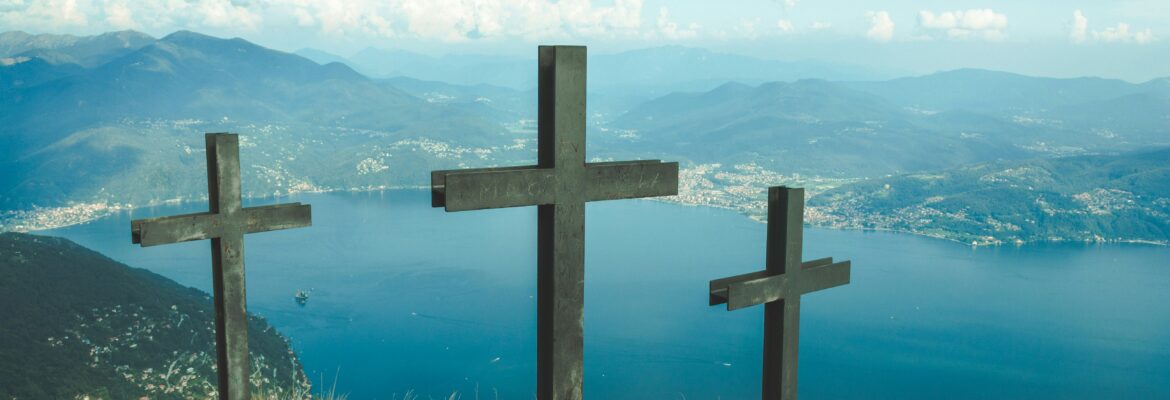
Banner Image: Christianity over-represented by the Supreme Court. Image Credit – Federico Tasin


There are no comments yet
Why not be the first