
Jamaica Neighborhood Plan, Subway Safety, Hear From The Mayor, Capital Of Digital Assets, Protecting Planned Parenthood, Strengthening Investigations For Domestic Violence, Protecting Public Education, Celebrating Diwali: Mayor Adams
Jamaica Neighborhood Plan, Subway Safety, Hear From The Mayor, Capital Of Digital Assets, Protecting Planned Parenthood, Strengthening Investigations For Domestic Violence, Protecting Public Education, Celebrating Diwali: Mayor Adams
MAYOR ADAMS’ STATEMENT AFTER CITY COUNCIL COMMITTEE VOTES TO ADVANCE JAMAICA NEIGHBORHOOD PLAN
NEW YORK – New York City Mayor Eric Adams today released the following statement after the New York City Council Land Use and Zoning Committees voted in favor of the Adams administration’s Jamaica Neighborhood Plan, moving it on to a vote by the full Council:
“With its rich history and diversity, Jamaica represents so much of what makes New York City the greatest city in the world. As a bustling commercial and transit center in Queens, it’s exactly where we should be building new homes and creating high-paying jobs. But unfortunately, Jamaica’s zoning has curtailed new housing opportunities and limited new businesses, making it harder for working-class families to stay in their community. It’s past time we changed that.
“With today’s vote, we’re one step closer to bringing forth an even more thriving and vibrant Jamaica where New Yorkers of all income levels can thrive. Spread out over 230 blocks, this plan will be the largest Mandatory Inclusionary Housing zone ever mapped in New York City, unlocking thousands of new homes, permanently affordable homes, and jobs. Furthermore, this plan reflects our commitment to a more resilient future, investing hundreds of millions of dollars in upgraded sanitary sewer infrastructure to reduce flooding and help this community weather future storms.
“When it comes to housing, our administration is doing more than talking about it. We’re taking action every single day, cleaning up outdated zoning rules to get shovels in the ground and folks into new homes. Whether it’s crafting neighborhood plans like this one, passing the most pro-housing zoning reform in city history, or shattering affordable housing records year after year after year, we are proud to be the most pro-housing administration in city history.
Thank you to Council Speaker Adams, Land Use Committee Chair Salamanca, Jr., Zoning Subcommittee Chair Riley, Councilmember Gennaro, and Councilmember Williams for their support for this important proposal and for working with our administration to build the homes that New Yorkers need. We look forward to a full vote later this month and bringing this ambitious plan to fruition.”
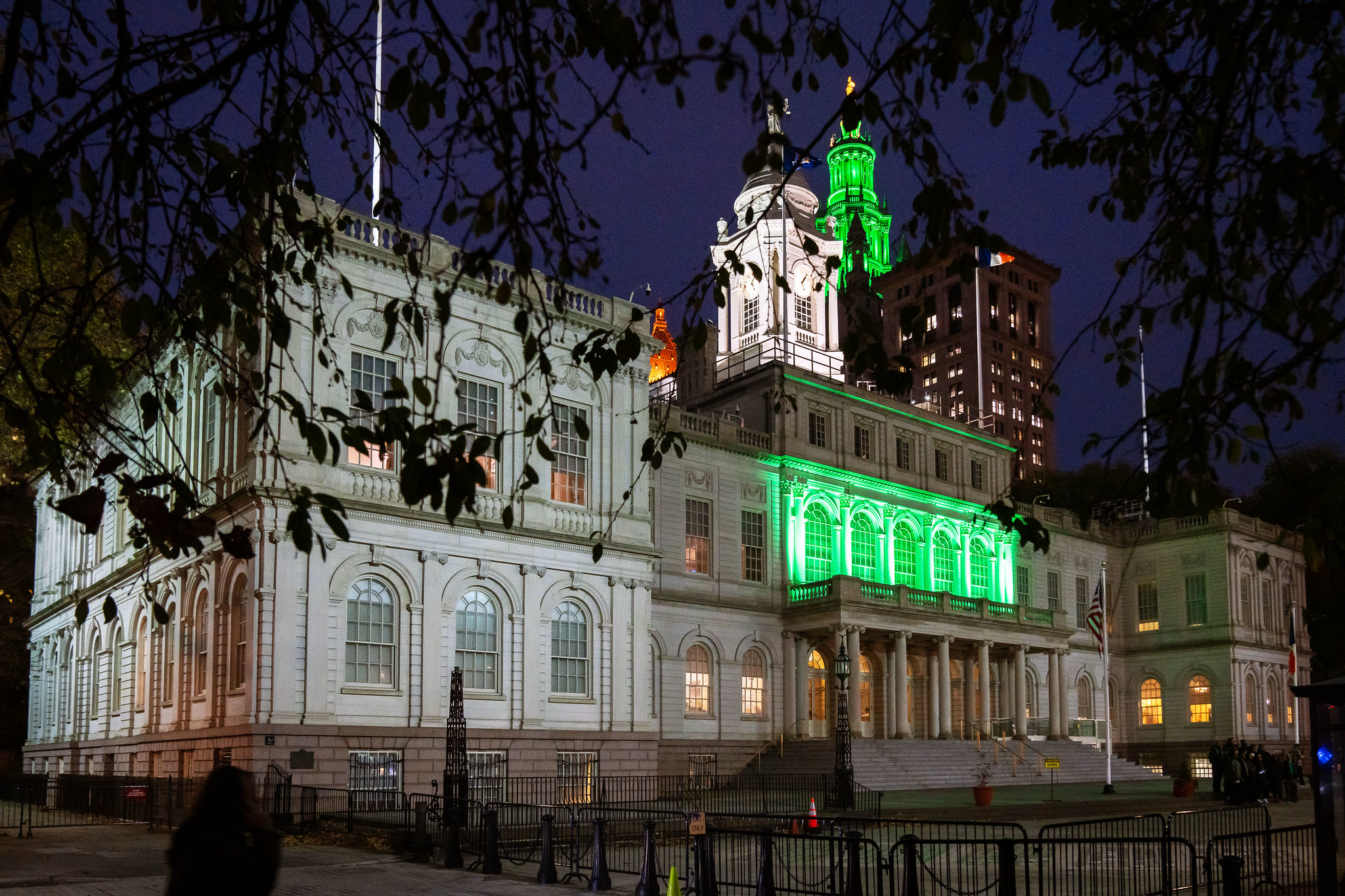
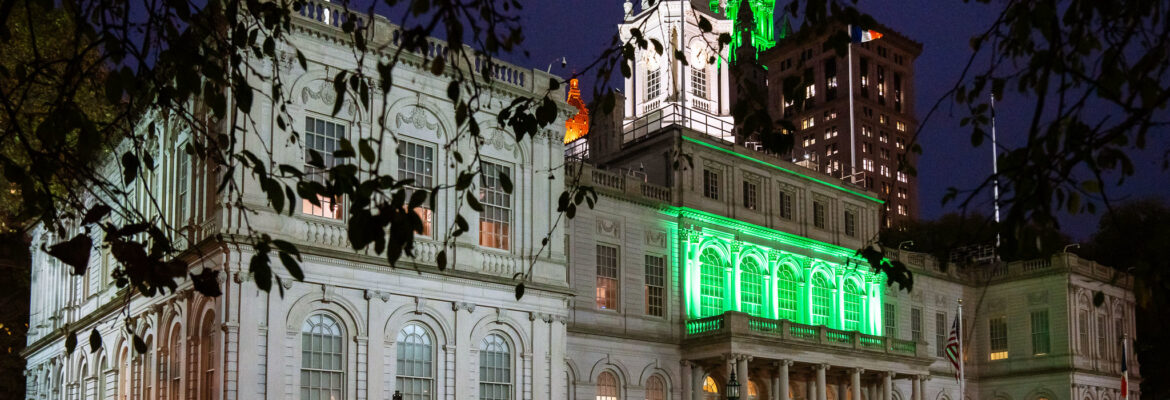
Mayor Eric Adams announces that City Hall and other municipal buildings are lit green as part of “Wear Green Day” to bring awareness to Youth Homelessness, Outreach, Prevention, Education (HOPE) Month. Youth HOPE. City Hall. Thursday, November 14, 2024. Credit: Ed Reed/Mayoral Photography Office.
MAYOR ADAMS CELEBRATES ONE-YEAR ANNIVERSARY OF PATH CO-RESPONSE PROGRAM CONNECTING NEW YORKERS IN NEED ON SUBWAYS TO SHELTER, HEALTH CARE, AND SUPPORT

Over 20,100 Contacts Made, More than 6,100 New Yorkers Received Care
Part of Adams Administration’s Subway Safety Plan, PATH Has Connected Nearly 1,900 New Yorkers Living in Subway System to Shelter
Builds on Mayor Adams’ Historic Investments in Mental Health, Outreach, and Public Safety
Continues Adams Administration’s “End the Culture of Anything Goes” Campaign, Highlighting Mayor Adams’ Efforts to Change Culture, Laws, and Investments That Improve Quality of Life and Prevent Public Disorder on City Streets
NEW YORK – New York City Mayor Eric Adams, New York City Police Department (NYPD) Commissioner Jessica S. Tisch, and New York City Department of Social Services (DSS) Commissioner Molly Wasow Park today celebrated the one-year anniversary of the Partnership Assistance for Transit Homelessness (PATH) program — a public safety and social services co-response outreach initiative, launched in August 2024, to help keep New Yorkers safe and healthy on the subway system. The PATH teams have made over 20,100 engagements with unhoused New Yorkers living in the subway system, delivering critical services — including shelter, meals, medical care, and mental health support — more than 6,100 times. Additionally, NYPD Transit Bureau officers, working alongside PATH clinicians, have removed more than 2,100 individuals from the transit system for various violations of the Metropolitan Transit Authority’s (MTA) rules of conduct or state law.
Today’s announcement builds on Mayor Adams’ “End the Culture of Anything Goes” campaign, the administration’s landmark effort to change the culture and laws that prevented people with severe mental illness from getting the help they needed. This initiative simultaneously makes the investments necessary to support outreach, harm reduction, wraparound services, and housing — to make lasting impacts on lives and communities, and improve New Yorkers’ quality of life. Mayor Adams is bringing the same energy and approach that proved to be successful in carving a new path for people with severe mental illness to address other health crises playing out on city streets, like drug addiction, and he recently laid out plans realize that vision by connecting those suffering with treatment.
“Keeping New Yorkers safe is our number one commitment — especially on the subways, which millions of riders rely on every day,” said Mayor Adams. “Today, we are proud to celebrate the one-year anniversary of our PATH program, which has already connected thousands of New Yorkers in need on our subways to critical services. When we took office, we made it clear: the days of ignoring people in need on our streets and in our subways were over. And since then, our administration has fundamentally changed the conversation on severe mental illness and fought to end the culture of ‘anything goes.’ Our PATH program shows that compassion, public safety, and justice must all go together — and this anniversary marks an important milestone in making New York City just that: more kind, more just, and safer for everyone.”
PATH teams bring together NYPD Transit Bureau officers, New York City Department of Homeless Services (DHS) nurses, and outreach staff from NYC Health + Hospitals to connect New Yorkers to services, including shelter, meals, medical care, and mental health support. From 8:00 PM to 12:00 PM the next day, teams conduct targeted outreach across Manhattan stations and trains, engaging anyone who appears to be unsheltered.
The program is part of the city’s growing use of “co-response” — a crisis response model gaining traction nationally in which clinical professionals are paired with police to engage with members of the public in need of medical care and/or social services. Participating police officers receive specialized training in crisis de-escalation and allow their clinical partners to take the lead once safety is assured. While co-response is not meant to replace traditional outreach conducted without police involvement, in certain situations, the presence of police officers affords clinicians a greater sense of personal safety, enabling more meaningful engagement with those in need. Co-response also greatly enhances the ability of a clinician to initiate transport to a hospital for evaluation in circumstances where an individual exhibits symptoms of mental illness presenting a danger to themselves or others.
Co-response offers tailored support based on each person’s needs — from a hot meal and a bed for the night to medical attention or psychiatric evaluation — improving both the safety and effectiveness of outreach efforts and increasing the changes of connecting people to lasting care.
“Strengthening interagency collaboration through initiatives like PATH is vital to expanding the scope of the city’s outreach efforts and increasing reliance on social workers to ensure meaningful engagements with New Yorkers experiencing homelessness,” said DSS Commissioner Wasow Park. “We are grateful for the dedication of our outreach workers and nurses who always lead with dignity and compassion as they engage New Yorkers who have fallen through every safety net, building trust and connecting them to life-saving supports. We are committed to leaving no stone unturned in our efforts to reach and support some of our most vulnerable neighbors and improve health care and housing outcomes for them.”
“The PATH program is a critical initiative to address homelessness and other quality of life conditions in our subway system, and one year later, the results of this whole-government approach speak for themselves,” said NYPD Commissioner Tisch. “Thousands of New Yorkers are getting access to the resources they need and deserve, and transit crime is at record lows across the city. None of this is by accident — it’s because of the incredible work of the NYPD, DSS, DHS, and NYC Health + Hospitals that have all provided this important care, and Mayor Adams who has always put the safety of our city first.”
“We’ve known all along that more effective mental health outreach and treatment were needed in our subway system to help cut down on transit crime and deal with disorder underground,” said MTA Chair and CEO Janno Lieber. “Thanks to investments from Governor Hochul and Mayor Adams, we’ve made progress on both fronts — as proven out by surging ridership and customer satisfaction.”
Addressing transit crime and homelessness in the subway system has been one of Mayor Adams’ top public safety priorities since taking office. In February 2022, Mayor Adams first launched the Subway Safety Plan to address public safety concerns, protect riders, and connect some of the city’s hardest-to-reach New Yorkers to services. Since the start of the plan, over 8,600 New Yorkers have been connected from the subways to shelter, with over 1,000 now in permanent, affordable housing. These outreach efforts, along with others, such as Subway Co-Response Outreach Teams (SCOUT), encounter a range of people living unsheltered with various needs.
In the fall of 2022, Mayor Adams and New York Governor Kathy Hochul deployed an additional 1,200 police officers to subway platforms and trains each day. Following the end of that deployment, in 2023, Mayor Adams again directed the NYPD to surge an additional 1,000 police officers into the subway system each day to help keep New Yorkers safe and bring overall crime in the transit system down. In January 2025, in partnership with the Adams administration and Governor Hochul, the NYPD began deployment of two police officers on every train during overnight hours, seven days per week.
These safety efforts together are delivering indisputable results: overall transit crime fell 17 percent in September compared to the same month last year — the lowest level for any September in recorded history, excluding the 2020 and 2021 pandemic years. This follows record low major crime in transit for July and August, excluding the pandemic years.
PATH complements the city’s 24/7 above-ground HOME-STAT outreach efforts — one of the most comprehensive outreach programs in the nation — which have also resulted in vital connections to shelter services for thousands of New Yorkers experiencing unsheltered homelessness across city streets, parks, and other public places. As of today, DSS has approximately 400 outreach staff canvassing the five boroughs around-the-clock; this includes a reliable network of contracted outreach workers from not-for-profit human services providers with extensive experience addressing unsheltered homelessness.
Throughout his administration, and as laid out in “Care, Community, Action: A Mental Health Plan for NYC,” Mayor Adams has been committed to taking a public health approach to supporting people with severe mental illness, focusing on prevention and intervention.
That Adams administration has opened 1,500 new low-barrier Safe Haven and stabilization beds for New Yorkers — bringing the total to 4,000 — and invested in innovative mental health programs like SCOUT, the opening of 13 new Clubhouses, and expanded Intensive Mobile Treatment teams.
Additionally, earlier this year, in his State of the City address, Mayor Adams announced a historic $650 million plan to tackle homelessness and support people with severe mental illness by dramatically expanding the city’s capacity to serve people experiencing unsheltered homelessness, as well as offering supportive, home-like environments to patients with serious mental illness who are ready for discharge from the hospital but do not yet have a place to go through “Bridge to Home,” a new innovative transitional housing model.
Finally, the Adams administration also successfully advocated for changes to state law, passed in 2025, that remove barriers to psychiatric care for those unable to recognize their own need for it, alongside increased transparency through public reporting of involuntary hospital transport data.
Building off all this work, in August, Mayor Adams announced a new change he is proposing in the 2026 state legislative session to support people struggling with substance use disorder and address public drug use on city streets that degrades quality of life and leaves a feeling of disorder among many city residents. The “Compassionate Interventions Act” will give clinical professionals the authority they need to bring someone who appears to pose a danger to themselves or others due to substance use disorder to a hospital and allow a judge to mandate treatment if the person is unwilling to enter treatment voluntarily. The change would help put New York in line with 37 other states that authorize involuntary commitment for substance use disorder as it builds on Mayor Adams’ successful work since the start of the Adams administration to address the interwoven crises of severe mental illness, addiction, and homelessness playing out on city streets.
By combining targeted enforcement with compassionate, evidence-based outreach, the PATH program and broader Subway Safety Plan — along with these other public safety, public health, and housing plans — are delivering safer subways, stronger communities, and better futures for New Yorkers.
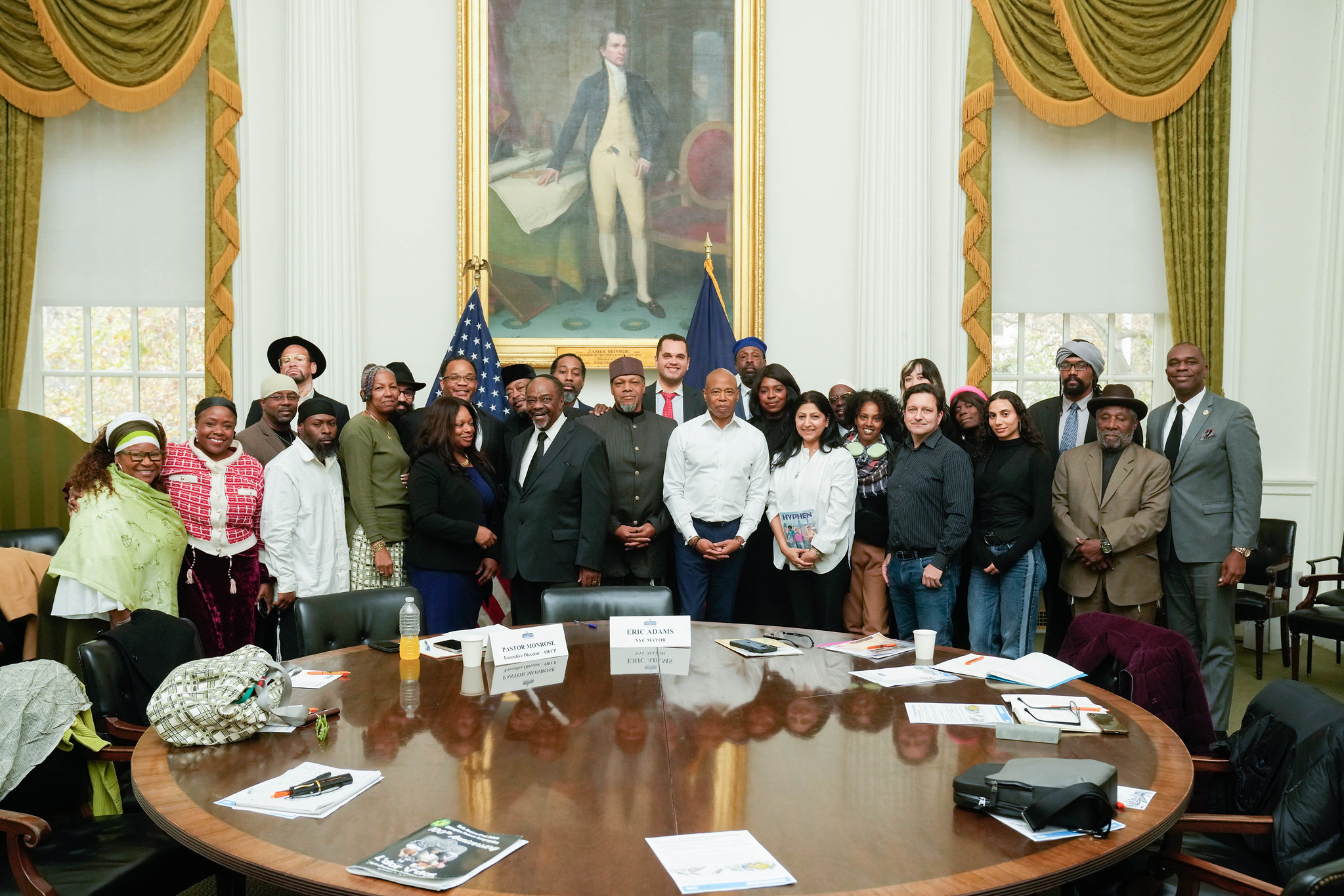
New York City Mayor Eric Adams meets with New York City’s Jews of Color at City Hall on Thursday, November 14, 2024. Michael Appleton/Mayoral Photography Office
MAYOR ADAMS HOSTS “HEAR FROM THE MAYOR” RADIO SHOW ON WBLS 107.5 FM
Gary Byrd: WBLS is proud to welcome the 110th mayor of New York City and the second mayor of color and the first hip-hop mayor in the city’s history. Of course, he is about to join us right now. From 107.5 WBLS, let’s welcome our brother Mayor Eric Adams. Good morning.
Mayor Eric Adams: Hey Gary. How are you?
Byrd: I’m good, my brother.
Mayor Adams: You’re right, there’s a real storm that’s going to hit the area, so those who live in low ground or shore front areas should be prepared, and particularly if you live in basement apartments. And so, we really want to just tell people to be on the lookout and pack a to-go bag as well.
But I’m happy to be on this morning and to all of you, happy Hispanic Heritage Month and welcome back to another episode of Hear from the Mayor, I’m your mayor, Eric Adams. And if this is your first time tuning in, the purpose is just to really have a dialogue with you as we share what we are doing in this city and how we can assist you to get the resources that you deserve.
And listeners, you can give me a call and hear directly from me while we move forward in this broadcast. You can also sign up to hear more from me by visiting NewYorkCity.gov/HearfromEric, and you can sign up on our website to text with Eric and talk with me on WhatsApp. And today, if you are listening, you can call at 212-545-1075.
Really happy today because I think one area of the city that has the most impact in the quality of life you’re going to live is education, and public schools is a vital part of what we are wanting to accomplish here in the city, and you know, growing up with undiagnosed dyslexia and how I struggled in school, this wasn’t professional, it was really personal. And I wanted to make sure our young people can have a great start.
And you have to pick the right leaders to do that, and I’m just really proud of Chancellor Melissa Aviles-Ramos for what she has done. A teacher, former principal, chief of staff, she has witnessed this system all the way through, and she brings with it our 360 degree mindset of how you educate a child. Because they can’t be academically intelligent and not emotionally intelligent.
Not only that, with all the academics and all of the emotional intelligence, what are we feeding them? Are they having a healthy diet? And are we nourishing their minds with breathing exercises, exposing them to meditation and yoga and exposing them to how to get phones out of the classroom, and I want to ask the chancellor how is that going?
But you know, just her full approach, and she lights up whenever she talks about education, she lives and breathes this, and we have been just really blessed to have her as the chancellor. A Latina herself, and so this is a real celebration of Hispanic Heritage Month. So, chancellor, let me bring you into the conversation. First, about the start up of school, how’s it going? Because there’s always bumps, you know, when you do these startups.
Chancellor Melissa Aviles-Ramos, Department of Education: Absolutely, well, first of all, thank you, Mr. Mayor, for having me, sir. And yeah, it’s been the smoothest opening that we’ve had, so we’re super excited. Our principals, I’m meeting with them on a regular basis, and I’m hearing directly from them, they just feel very supported, and so we’re off to a great start.
Mayor Adams: And what’s interesting, I haven’t heard anything, you know. Normally I’m getting these calls, you know, but I have not heard one thing, but not only did you have to open school, you had to open it with the cell phone ban, how did that go?
Chancellor Aviles-Ramos: Yeah, I think a lot of people anticipated it to be a bigger deal, but as you know, over half of our schools were already implementing some sort of a restriction policy, so it was really focusing on the other half that didn’t.
I met with some middle schoolers in the Bronx recently, and they were just going on and on about how excited they are because they’re actually making friends in the cafeteria and talking to each other, and I asked one student, like, how many friends did you make in the first week of school this year versus last year, and he said, you know, “I didn’t make any new friends last year,” and I thought that that was very telling.
Mayor Adams: That’s an indicator, you know, when you think about it. And you know, this journey is not only professional, you hold the capacities and the credentials to do this professionally, but you’re a mom, your daughter is a student in our public schools. How does that feel, you know, knowing that what you’re laying out is also going to impact your daughter?
Chancellor Aviles-Ramos: Yeah, you know, it’s a privilege. I really believe that I sit in the most privileged seat in K-12 education in the country, thanks to that opportunity you gave me, and what I want for my daughter is what I want for, you know, nearly a million of all of our children. And so, there’s that accountability piece, that if it’s good enough for my daughter, it’s good enough for everyone else. And if it’s not good enough for my daughter, then it’s certainly not good for everyone else.
Mayor Adams: And you know, even when the former chancellor was here, I often talked about, if ever there’s a transition, you were always the one that I knew could fill in, and I was happy to have someone, I didn’t have to search, I didn’t have to look, I already knew that you understood the system, and you were going to be there to continue the success that we’re seeing.
But you know, many students face challenges outside the classroom, everything from housing insecurity, to learning differences like dyslexia. How are we preparing, and how are we looking at those students? Because it’s not a one size fits all.
Chancellor Aviles-Ramos: It is not, and you know, I think this is where, you know, our lived experiences, sir, yours and mine, and so many people in this administration, really gives us an added layer of innovation for our young people. We’re no stranger to challenge, and we understand the challenges that our young people go through outside of the classroom.
And that’s why we’ve launched things like New York City Public Schools Cares, and Every Child and Family is Known, because we know if we’re not supporting the children outside of their homes, whether it’s how to support families who are facing housing insecurity and food insecurity, domestic violence situations, you know, those are all things that impact a child in the classroom.
And so that doesn’t mean that we have to lower our academic expectations, it means we have to have this multi-layered, this multi-faceted approach to educating children and making families partners.
Mayor Adams: I think well said, because if you were to just approach this work as, I’m going to teach Johnny how to read, and Judy how to add and subtract, and not understanding, by the time these babies get into a classroom, they’re divided in so many ways. They could come from a community where there was a shooting, a mass fire, may not even have a meal, that’s why it’s so important we have access to breakfast programs and lunch programs.
And we knew that we had to have a 360-degree approach to educating our children, because before you could become academically sound, you needed to address those other issues in our community. One area of focus for me are those chronically absent. You know, after COVID, it seemed like those numbers went up. What are we doing for those chronically absent children?
Chancellor Aviles-Ramos: Yeah, and proud to report that during this administration, we’ve seen a steady decline in chronic absenteeism year after year, so that goes back to this holistic approach of supporting our families and our children.
One of the things that we did differently during my time as chancellor is stop telling parents you’re not sending your kids to school, because they know that they’re not sending their kids to school. We turned that into a question and asked, why aren’t you sending your kids to school? What are the things that are keeping you from doing that?
And that’s when we really leaned into this family connectors piece, which is under the leadership of Dr. Cristina Melendez. She and I really dreamed this up together and said, we want to make parents advocates for other parents and support other parents. And so, all of the agencies are training these parent leaders on how to access resources across New York City. And then we position them in the communities to share those with other parents. And that’s what’s bringing kids back to school.
And even during all the challenges we saw last year with immigration fear and federal government, we still saw a bit of a decrease in our chronic absenteeism and an increase in attendance. And I think that speaks to these holistic approaches.
Mayor Adams: I want to talk about that for a moment because we heard a lot of hoopla around immigration. And what we did by educating 50,000 children, I don’t know what the exact number is now, who are part of the migrants and asylum seekers. And ICE was not in our schools. People need to be clear on that. ICE was not in our school conducting raids on our students. We’ve had some cases where our students were picked up at court and we filed amicus briefs and other support.
But what you did, you and your team, to really embrace and allow these young people to come into the system and get the education they need is really a Herculean task. And we have to thank your entire team for when you see a young person come in not able to speak English. And then a year later, they are not only speaking English, but they are really indoctrinated into our system. That was a huge challenge that the team was able to overcome. What do you think were the key components of that?
Chancellor Aviles-Ramos: I think the key component is remembering that every child who walks into our system is our child. And we don’t ask questions. We don’t care what walk of life you’re from. You’re ours now. You’re our babies. And I see myself as a school mom to all of our children. I call them my kids. I always have.
And so, making sure that we were coordinated with other agencies to get them the resources that they need to make sure that the curriculum is high quality. And now we just launched our next part of New York City Reads, which is now an ENL pilot. So, putting in high quality materials and curriculum in 80 schools where we know they have English as a New Language program because we want to make sure we’re targeting those children as well.
And again, the family piece, partnering with families and centering dignity. Just because you are in temporary housing, just because you are new to this country does not mean that we need to strip you of your dignity. We need to make sure that everything we’re doing, so if we’re handing out food, it is with dignity. We are setting things up that they look like bodegas and they look like shops. People can actually go in and shop because that’s important.
People want to come here and they want to realize the American dream. Who are we to take their dignity away from them? Because we want to feel good about ourselves for helping. That’s not what it is. This isn’t a savior situation. This is community building together.
Mayor Adams: I love that. I love that. At your State of the Schools, I was really impressed when you talked about the AI framework for public schools. We have to really embrace AI. It’s going to be here. And if we don’t embrace it, our children won’t be able to lead from the front. Give us some of your thoughts around artificial intelligence.
Chancellor Aviles-Ramos: Yeah, that framework was really born out of listening to panels of the panel members from the panel for educational policy and our parent leaders and our educators. And it’s a four part component. And two of the main parts are centering safety, because we want to make sure that the tools, the suite of tools we’re using, that they’re protecting our children’s privacy and that they’re also responsive. They’re mitigating bias in the community because we don’t want our kids using tools that are going to perpetuate some of the stereotypes and biases that minoritized families and children have been exposed to.
And the other part of it is making sure that we’re creating strong pathways for children to be producers of technology, not just consumers, and that they’re actually ready to embark on these competitive careers in AI and technology upon graduating.
And the last piece is really making sure that we’re leveraging the right tools to boost productivity and efficiency in our classrooms, because our teachers do a lot. And AI and technology is in no way meant to replace teachers. But how fabulous would it be if teachers actually had the right tools to help them be more productive in the classroom?
Mayor Adams: Well said. I often think about how many hours a teacher uses to go over paperwork and other stuff. If AI can show us how to do that, they’re freed up to now just focus on taking care of that child and giving them the information they need.
Excited about New York City Reads and New York City Solves. The numbers came in. We are moving in the right direction. Tell me about that.
Chancellor Aviles-Ramos: Yeah, well, we were excited, as were you, when we saw those test scores go up. 7.2 percentage points in ELA and 3.5 in math. And I think what’s even more historic is we talk about learning loss in the pandemic, and we beat pre-pandemic numbers. These are the highest scores we’ve seen since 2012. They are also the highest scores we’ve seen in our Black and brown children. Our Black students showed the most growth of any student population, and our Latine students were right behind.
And so, in districts, parts of Brooklyn, parts of the Bronx, we saw double-digit gains. Districts where people, you know, they think that our kids can’t perform, and they think there’s an achievement gap. What we proved is this isn’t an achievement gap. This is an opportunity gap. When we give teachers and parents and kids the right tools, our kids show up and they say, “Let me show you what I can do.”
Mayor Adams: So, when we break it down, New York City Reads is showing we looked at a different way of teaching reading, and New York City Solves showed a different way of teaching math. You know, people hear those terminologies, but I want them to really understand that we took a bold new approach for teaching reading and math. And we’re seeing the results of taking that bold new approach.
Now, we also have impressive internship programs for our young people and other opportunities outside of the school. What is the internship program looking like?
Chancellor Aviles-Ramos: Well, the Pathways Division, when we launched FutureReadyNYC and we started expanding our career in technical education. Future Ready was built upon the foundations of career and technical education, but both still very much exist in the system.
And what I’m so proud of is that kids like you and me, sir, we weren’t necessarily able to take advantage of some of those opportunities because maybe we need to work a couple of extra jobs to support the household. But now kids are earning dollars, over $10 million, you know, have gone back into the pockets of young people while they’re interning and doing apprenticeships in these careers that will provide upward mobility upon graduating from high school.
Mayor Adams: Good stuff, good stuff. So we’re going to take a break and we’re going to be back with our amazing chancellor of the New York City public schools and we’ll fill your calls when we come back.
[Commercial break.]
Mayor Adams: Thank you, thank you so much, Gary. And we’re in the studio or Gracie Mansion with our chancellor. So if you have a question for the chancellor or you want to raise one with me, please dial 212-545-1075, 212-545-1075. Caller, you’re in the air.
Question: Mr. Mayor, hi, this is [Joyce] from Queens. I just want to thank–
Mayor Adams: Yes, how are you?
Question: Hi, I’m doing fine. I just want to thank you for your, I don’t know what to call it, how you dress down the media. I think it was yesterday. Because it was necessary, it was needed from day one. I have always felt that if we had a fair and balanced media, there would be no kind of, I’m trying to think of the right words to say.
You have been the best mayor, in my opinion, I think many of us, you’ve been the best mayor we’ve ever had. We looked at, I’ve looked at the internet many times and I see that based on your accomplishments, based on how you have decreased crime and everything else, you have been the best mayor.
However, I’m sorry, I’m just going to say it, there’s a racial problem in the city and I think that that’s had a lot to do with it, or has a lot to do with it, because you have been great. You have been a wonderful mayor. There is nothing negative I could ever say about what you have done for the city.
I’m going to let you go. However, let me just say this, I am so grateful that you said what you had to say. Did you drop the mic or did you say if you had a mic, you would drop it? But that was necessary. No, because, listen, the media in this city have treated you so badly and I think everyone is aware of it.
But don’t worry about it. My mother always taught me that God don’t like ugly. Your mother, I was in the church with her, would be so very proud of you and just keep your head, walk tall and do what you need to do for the balance of whatever time you have left on this earth, because you were a great mayor. I don’t care what anyone else says, you were a great mayor. That’s all I have to say.
Mayor Adams: Thank you for that. That’s really kind of you. It’s so funny you said that, I was at a gathering the other day with some folks, professional folks, many of them of color. When I came in, there was this chilliness in the air and because they said, “We don’t think you have done enough for people and particularly Black and brown people, Eric.” I started listing our accomplishments and it was almost that the whole room went silent.
They were like, “Wait a minute, we didn’t know this. We didn’t know that you took away the income tax for low-income New Yorkers, that we’re outpacing the state in reading and math, that we build more housing than any mayor in recorded history and we zoned the city for more housing, 426,000 units, more than 12 years of Bloomberg, eight years of de Blasio combined.”
Who needs safety with violence in a Black and brown community? Removing almost 24,000 illegal guns off the street, historic levels of shootings and homicides, free high-speed broadband for NYCHA, dropped the cost of childcare by $200 a month, a universal after-school program, dropped unemployment in the Black and brown community by over 20 percent, $19 billion in procurement to Black and brown and women businesses.
And so, they all went silent because they realized they didn’t know our story. And so, as the sister stated, I don’t blame Black and brown folks for being angry and feeling as though the mayor didn’t produce for us because they hijacked our story. They never reported.
Let’s be clear. Being a mayor, you’re gonna get two fingers. One, a thumbs up to say, “I love you.” Another is the middle finger. And all they reported on was the middle finger. They should have reported on the thumbs up also.
This was a well-coordinated effort of saying “We’re gonna start from day one to make sure this mayor’s story is never told.” I didn’t fit the mold. I was a bald-headed, Black, earring-wearing mayor that was comfortable in hanging out on Wall Street as hanging out on any other street in Brownsville. Never fit the mold.
And all I’m gonna say to my people, read, read. You don’t have to be in DOE to have the New York City Reads to read. Just read. Go look online and look at what we have done. There’s never been a mayor in the history of this city that has done more for Black and brown people and working-class people than I have. And history is going to be kind with me. And all I’m gonna say to everybody, you are going to miss me when I’m gone. Trust me.
But listen, thank you. We had the amazing chancellor. Thank all of you for calling in. And I look forward to the next level of what God has planned for me. Thank you so much.
Byrd: That’s a second mic drop, brother, you know.
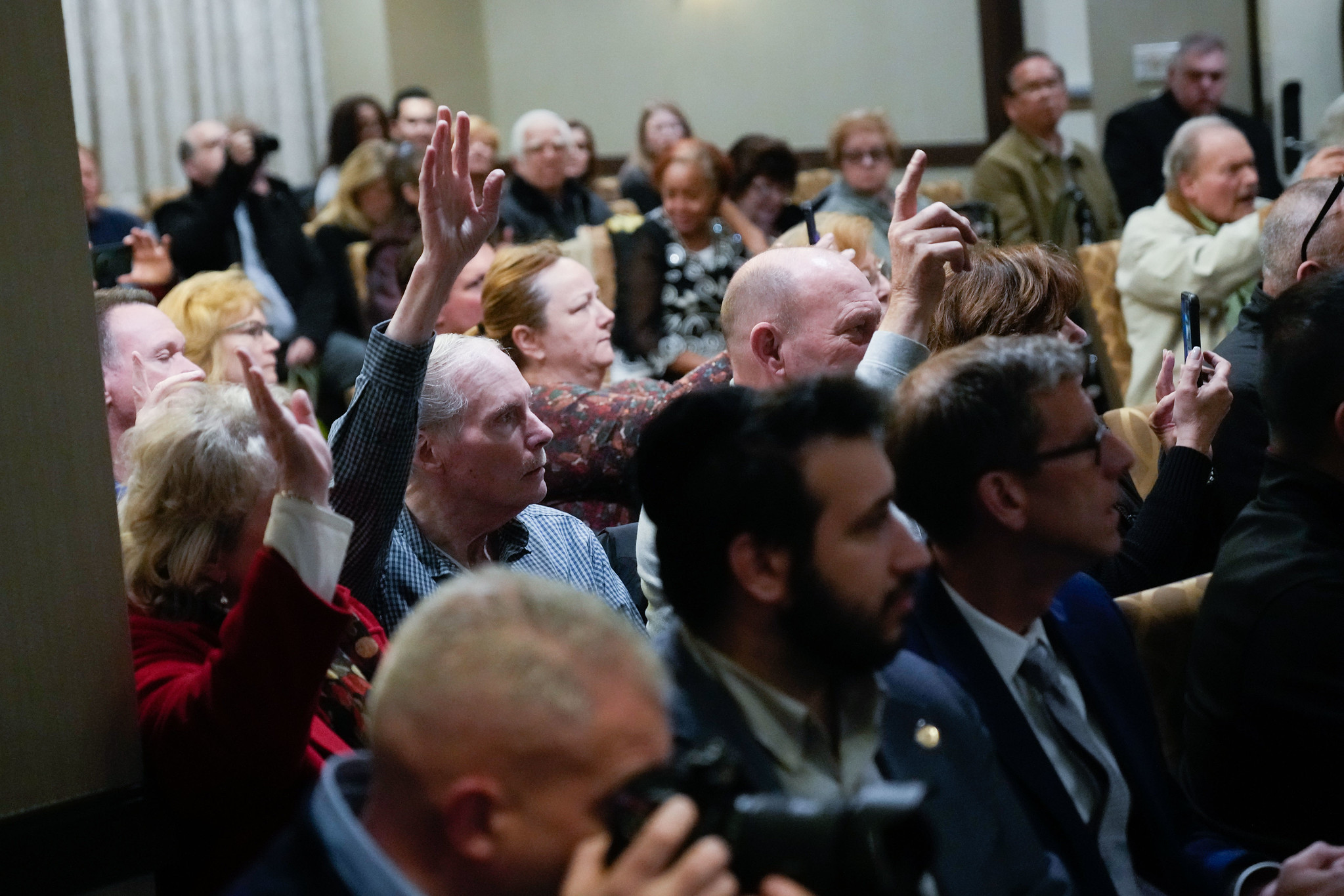
New York City Mayor Eric Adams will deliver remarks at the 109th Precinct Community Council meeting in Flushing, Queens on Wednesday, November 13, 2024. Michael Appleton/Mayoral Photography Office
MAYOR ADAMS TAKES ACTION TO POSITION NEW YORK CITY AS GLOBAL CAPITAL OF DIGITAL ASSETS
Executive Order Creates Nation’s First-Ever Municipal Office of Digital Assets and Blockchain
Moises Rendon Appointed as Executive Director of New Office
NEW YORK – New York City Mayor Eric Adams today signed Executive Order 57 and established the New York City Office of Digital Assets and Blockchain. The first-ever mayoral office of its kind in the nation positions New York as the global capital of digital assets, including cryptocurrency and blockchain technologies. The office will promote the responsible use of digital assets and blockchain technologies, grow economic opportunities for New Yorkers, attract world-class talent, and reinforce the city’s standing as the world’s hub for financial and technological innovation. Mayor Adams also today appointed Moises Rendon to lead the office as executive director. As its first action, Executive Director Rendon will form a commission of leaders in the digital assets space to advise on the office’s work.
“From day one, our administration has kept New York City ahead of the curve because when we embrace technology, we deliver a safer, more affordable city,” said Mayor Adams. “In 2022, I became the first American mayor to convert my first three paychecks into crypto and this past May, our administration hosted the first-ever crypto summit at Gracie Mansion. Today, with the nation’s first mayoral agency focused solely on digital assets and blockchain technology, we continue to signal the opportunities this new form of technology can bring to New York City. Our city has always been the center of innovation, and we’re embracing the technologies of tomorrow today. The age of digital assets is here, and with it comes the chance to grow our economy, attract world-class talent, expand opportunities for underbanked communities, and make government more user-friendly. I’m looking forward to working closer with Moises Rendon as we help make New York City the tech capital of the world.”
“New York City has remained the global center of innovation for decades due to our willingness to embrace new, emerging technologies,” said First Deputy Mayor Randy Mastro. “With the launch of the New York City Office of Digital Assets and Blockchain, New York City is reaffirming its role as a leader in the financial and technology sectors to ensure that working-class New Yorkers are first in line for game-changing economic opportunities of the future and efficient delivery of government services. And Moises Rendon is uniquely qualified to guide New York City through this new frontier of technology, which will, once again, result in New York City growing its economy, delivering real economic benefits to underserved communities, and attracting the world-class talent that makes us the envy of the world.”
“New York City’s future as a global finance center and municipal governance leader depends on our ability to capitalize on the enormous opportunities presented by emerging technologies such as digital assets and blockchain,” said New York City Chief Technology Officer Matt Fraser. “Today’s announcement affirms our place at the forefront of this technological revolution and showcases the mayor’s bold, forward-looking vision to make New York City the crypto capital of the globe. This office ensures that we’re partnering with the brightest minds across the fintech sphere and empowering city agencies to harness the transformative potential of digital assets and blockchain for the benefit of 8.5 million New Yorkers.”
“Mayor Adams’ creation of this new office proves that the future is now for digital assets and blockchain in New York City,” said Mayor’s Office of Digital Assets and Blockchain Executive Director Moises Rendon. “I am honored to lead the nation’s first municipal office dedicated to successfully and responsibly deploying these technologies. I look forward to collaborating with CTO Fraser, city agency partners, and private-industry leaders to develop policies and programs that make our government more accessible, transparent, and innovative for New Yorkers in the years ahead.”
The Office of Digital Assets and Blockchain will promote long-term economic growth, ensuring that digital assets strengthen the city’s economy, including by:
- Fostering innovation and development while guiding the responsible development of cryptocurrency and blockchain ecosystems in New York City.
- Coordinating efforts between the digital asset industry and government, serving as a bridge to encourage responsible innovation and alignment across stakeholders.
- Working in close collaboration with the New York City Office of Technology and Innovation (OTI) while also coordinating citywide efforts across agencies, ensuring alignment of policies, services, and digital asset initiatives.
- Engaging with state and federal partners to promote policies that make New York City more welcoming to blockchain and crypto initiatives that add value and comply with laws and regulations.
- Promoting inclusion and access, particularly for unbanked and underbanked communities, by supporting safer ways to save money, access resources, and build resilience against inflation.
- Educating and protecting the public through initiatives that help New Yorkers understand the risks of digital assets, including campaigns to raise awareness of scams, fraud, and consumer protections.
- Attracting world-class talent and investment, ensuring New York remains globally competitive in financial innovation and technological development.
- Supporting nonpartisan, policy-driven legislation, ensuring the office remains focused on sound policy and the delivery of tangible benefits to New Yorkers across all communities.
Through these efforts, the Office of Digital Assets and Blockchain will help secure New York City’s leadership in the digital economy, expand opportunities for its residents, and build a foundation of responsible innovation, trust, inclusion, and growth. The office will allow New York City to demonstrate its leadership in embracing innovation while safeguarding the interests of its residents.
About Moises Rendon
Moises Rendonis a digital assets and blockchain policy expert with extensive experience advising federal, local, and international stakeholders. He currently serves as policy advisor for digital assets and blockchain at OTI, where he leads citywide research and strategic initiatives to explore blockchain’s potential for improving government operations.
Previously, Rendon served as a director for the Washington, D.C. office of the Americas Society/Council of the Americas and was a policy consultant for the U.S. Department of State, United States Agency for International Development, and private-sector clients on fintech and economic trends. Rendon holds a Master of Laws degree in International Business and Economic Law from Georgetown University Law Center and a Bachelor of Laws degree from Andrés Bello Catholic University in Venezuela.
Executive Director Rendon will report directly to Chief Technology Officer Matt Fraser.
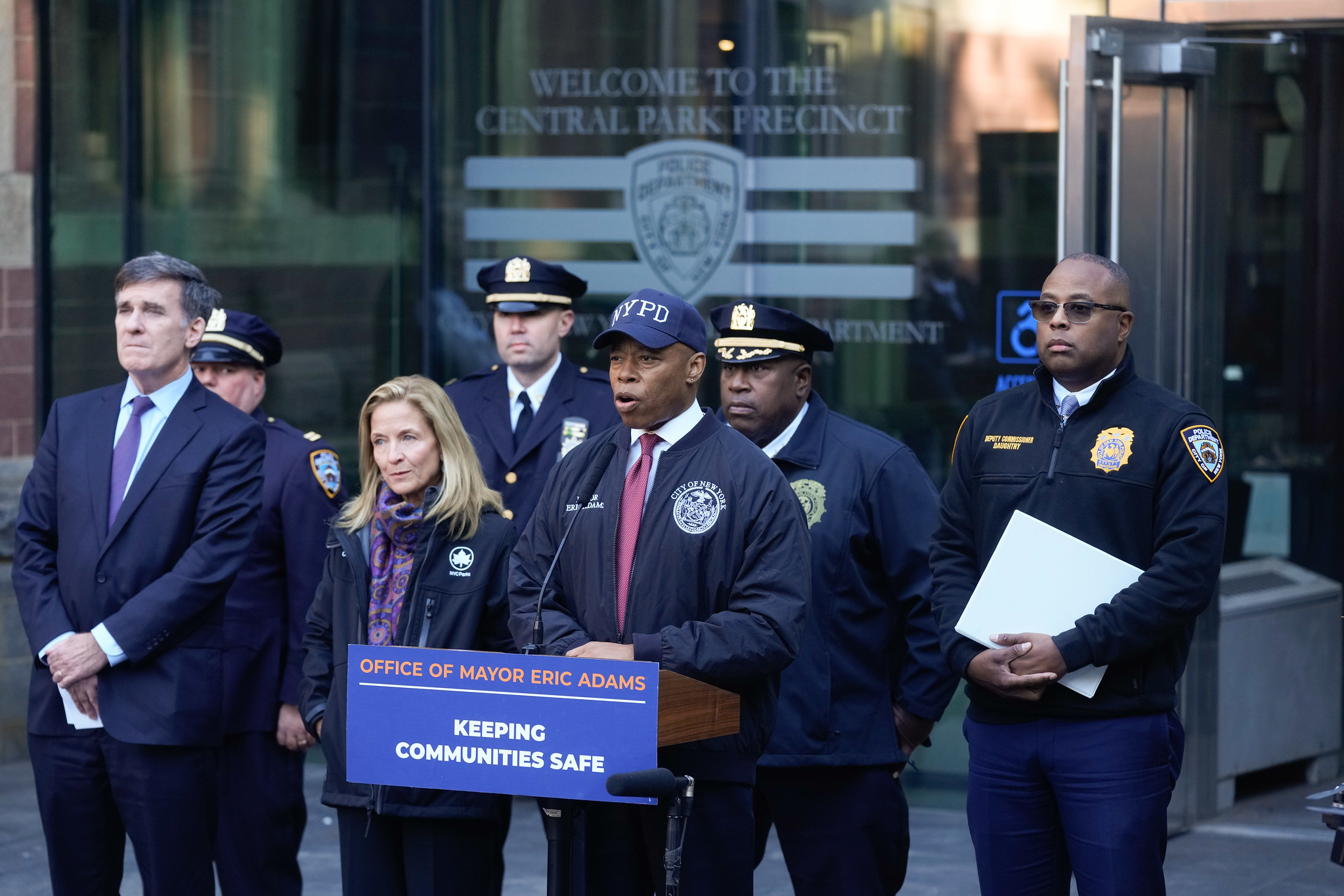
New York City Mayor Eric Adams and New York City Police Department (NYPD) Interim Commissioner Tom Donlon today announced the “Drone as First Responder” (DFR) program, which leverages the latest in aerial autonomous vehicle technology to enhance the NYPD’s emergency-response capabilities as the agency fulfills its mission to keep New Yorkers safe. The DFR program is now operational in five commands in three boroughs, marking a successful expansion of the NYPD’s unmanned aircraft systems initiative the Central Park Precinct on Wednesday, November 13, 2024. Michael Appleton/Mayoral Photography Office
CITY OF NEW YORK TAKES ACTION TO PROTECT FEDERAL FUNDING FOR PLANNED PARENTHOOD
President Trump’s “One Big Beautiful Bill” Defunds Planned Parenthood
Federal Funding Actions Will Prevent Approximately 1 Million Patients from Using Medicaid at Clinics Nationwide
NEW YORK – The City of New York today — as part of a coalition of 22 cities and counties from across the country — has filed an amicus brief to protect federal funding for Planned Parenthood and their affiliated health centers , which provide critical reproductive health care services such as pregnancy tests, educational programs, elective abortions, cancer screenings, and HIV treatment. The coalition strongly supports plaintiffs in Planned Parenthood Federation of America Inc. et al. v. Robert F. Kennedy Jr. et al. who claim they are unlawfully targeted by the “Defund Provision” (Section 71113) of the federal Reconciliation Act enacted over the summer. The act, also known as “One Big Beautiful Bill,” imposes a one-year ban on Medicaid payments to health care centers that offer abortions and received more than $800,000 in federal funding in 2023 — criteria almost exclusive to Planned Parenthood.
“Reproductive health care is health care, and our administration will always fight to protect New Yorkers access to the care they need,” said New York City Mayor Eric Adams. “Planned Parenthood clinics offer vital health care to our communities, and cutting off critical funding only hurts the thousands of low-income New Yorkers, and the nearly 1 million more across the nation, who rely on these clinics. Additionally, by restricting funding to local providers, the federal Reconciliation Act will put a strain on our local budget and negatively impact our economy. This does not make New Yorkers safe but does just the opposite. We must do what is right in ensuring that abortion, and all women’s health services, are protected and safe.”
“The Trump administration has launched yet another assault on public health that will undermine the wellbeing of communities throughout the nation,” said New York City Corporation Counsel Muriel Goode-Trufant. “If the federal government is allowed to unlawfully defund Planned Parenthood, people in need of essential health care will be turned away, diseases will go untreated, and cancers will go undetected. This brief details the profoundly harmful impact this would have on individuals, local governments, and economies.”
In July 2025, the U.S. District Court for the District of Massachusetts granted a preliminary injunction preventing the federal government from applying the Defund Provision against any affiliate of Planned Parenthood. The court held that the provision likely violates the U.S. Constitution’s “bill of attainder clause,” which prohibits Congress and state legislatures from imposing punishments on individuals or entities without trial. In August 2025, the U.S. Court of Appeals for the First Circuit granted the Trump administration’s motion to stay the injunction pending the outcome of the federal government’s appeal.
In the brief — led by the Public Rights Project — the coalition argues that cutting Medicaid funding for Planned Parenthood threatens to undermine public health among substantial portions of the coalition’s residents, as more than half of Planned Parenthood’s patients rely on Medicaid, totaling approximately 1 million beneficiaries nationwide. The brief contends that the cuts will strain local health care systems, which often provide services of last resort when private clinics like Planned Parenthood are at capacity but are not currently equipped to absorb a large influx of patients if these clinics were to close.
The coalition also asserts that cuts to Planned Parenthood will strain local economies. Without Planned Parenthood’s services, local governments may need to divert additional funds to reproductive health services, putting pressure on local budgets. Further, poor health outcomes and reductions in educational services related to pregnancy can decrease participation in the labor force among greater populations. Additionally, Planned Parenthood itself employs hundreds of workers nationwide, many of whom may face layoffs.
The risks to public health and local health care systems extend to the City of New York as well. Planned Parenthood serves close to 8,000 New York City residents every year, and even before these funding cuts, it reported to the City Council that its operations face significant underfunding due to prior Medicaid reductions. Moreover, other reproductive clinics in the city have recently been forced to pare back their operations, with one longstanding clinic recently closing two locations in Brooklyn.
Joining the City of New York and the Public Rights Project were the cities of Los Angeles, Oakland, and San José, California; Evanston, Illinois; Baltimore, Maryland; Minneapolis, Minnesota; Hoboken, New Jersey; Albuquerque, New Mexico; Rochester, New York; Columbus, Ohio; Portland, Oregon; Bellingham, Washington; and Madison, Wisconsin; as well as the counties of Alameda, Marin, Santa Clara, San Francisco, California; Montgomery, Maryland; Allegheny, Pennsylvania; Harris, Texas; and Dane, Wisconsin.
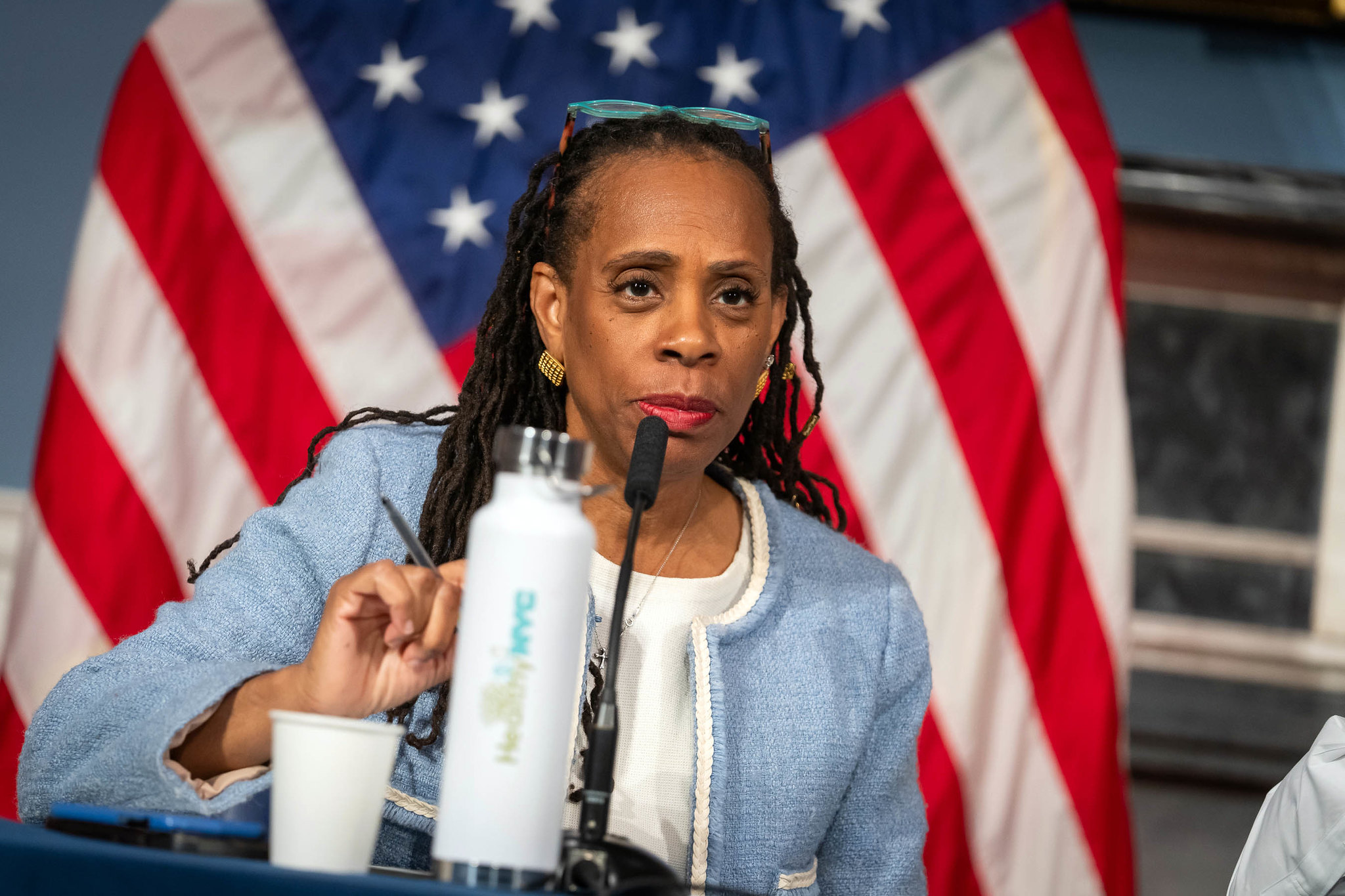
Mayor Eric Adams Hosts a Virtual City Employee Town Hall. City Hall. Wednesday, November 13, 2024. Credit: Ed Reed/Mayoral Photography Office.
MAYOR ADAMS, NYPD COMMISSIONER TISCH ANNOUNCELARGEST-IN-THE-NATION DOMESTIC VIOLENCE INVESTIGATIVE UNIT TO STRENGTHEN SUPPORT FOR SURVIVORS, ENHANCE OFFICER TRAINING, AND DELIVER JUSTICE FOR DOMESTIC VIOLENCE CASES
New Unit to Have Approximately 450 Dedicated Domestic Violence Investigators to Solve Cases Faster, Build Stronger Relationships with Domestic Violence Survivors
Announcement Comes as October Marks Domestic Violence Awareness Month
NEW YORK – New York City Mayor Eric Adams and New York City Police Department (NYPD) Commissioner Jessica S. Tisch today marked Domestic Violence Awareness Month by announcing the launch of the NYPD’s Domestic Violence Unit (DVU) — the largest unit of its kind in the nation that will allow the NYPD to enhance how it investigates domestic violence incidents and train officers while strengthening support for survivors. The new unit will have approximately 450 domestic violence investigators who will be fully dedicated to prevention and investigating domestic violence cases, while building stronger relationships with survivors. The full roll-out will begin next week, and the new unit will operate across all five boroughs.
“Public safety is not limited to our streets and subways, it extends to our homes, too, where we have seen violence against women, domestic violence, and gender-based violence continue to cause pain. Domestic violence rips people’s lives apart, and we have a sacred duty to protect survivors of domestic and gender-based violence,” said Mayor Adams. “With the creation of the NYPD’s Domestic Violence Unit, we are going to make survivors feel safer in their homes. This new investigative unit will handle the entire domestic violence process for victims, which means more resources to help victims and more cops to bring abusers to justice. New Yorkers can rest assured knowing the full force of the law is coming after those who perpetrate these crimes.”
“As we mark Domestic Violence Awareness Month, we are taking nation-leading action to be more supportive and responsive to survivors. The new Domestic Violence Unit at the NYPD will offer more highly-trained officers who are laser-focused on the needs and complexities of domestic violence cases, including more connections to supports for survivors and help for people causing harm,” said Deputy Mayor for Health and Human Services Suzanne Miles-Gustave. “Thank you to the teams at NYPD and the Mayor’s Office to End Domestic and Gender-Based Violence for continuing to pursue novel approaches that address this critical issue. To all those survivors out there, your city stands ready to support you.”
“For the first time in more than 30 years, the NYPD is making fundamental changes to how we respond to, investigate, and follow-through on domestic violence cases,” said NYPD Commissioner Tisch. “Domestic violence is as devastating as it is pervasive, and these complex cases require specialized training, skills, and investigators who will approach them with the care and compassion they demand. This is a survivor-centric, trauma-informed approach that is focused on survivor safety, taking violent predators out of our communities, and preventing the next incident before it’s too late.”
“Centering survivors is critical to addressing domestic violence in our city,” said Mayor’s Office to End Domestic and Gender-Based Violence (ENDGBV) Commissioner Saloni Sethi. “True support is built on trust — and we applaud the NYPD’s investment in additional resources to help build that trust with survivors who choose to engage with law enforcement. Collectively, the changes in the NYPD’s response to domestic violence will ensure a consistent, trauma-informed approach to survivors, reducing barriers so that survivors get the support they deserve. ENDGBV is proud to continue partnering with the NYPD as they implement these changes and make New York City a leader in collaborative, survivor-centered responses to domestic violence.”
“As one of the most common crimes in New York and in the nation, intimate-partner and domestic violence demands innovative, comprehensive solutions,” said Manhattan District Attorney Alvin Bragg, Jr. “Centralizing domestic violence arrests and investigations and supporting the development of expert personnel will help keep survivors safe and ensure more offenders are held accountable. I welcome the NYPD’s announcement this Domestic Violence Awareness Month and look forward to continuing to work alongside Commissioner Tisch and her team to keep New Yorkers safe.”
Today’s announcement sadly comes as domestic violence incidents continue to rise across the nation. Since the COVID-19 pandemic, nearly 40 percent of felony assaults in New York City are related to domestic violence. The NYPD is taking a forward-looking approach to addressing this growing crisis — holding internal and external focus groups, surveying the current roster of officers assigned to domestic violence cases, survivors of domestic violence, and consulting with numerous outside agencies and organizations, including the Mayor’s Office to End Domestic Gender-Based Violence, the Nassau and Suffolk County police departments, and Safe Horizon executives to develop the new DVU.
DVU’s bold, new approach begins with how the department interacts with survivors. Approximately 450 domestic violence police officers and detectives will be reassigned from the Patrol Services Bureau and Housing Bureau to the Detective Bureau, where they will lead domestic violence investigations from beginning to end. Previously, precinct and housing officers — as well as detectives from local precinct squads — were designated to work on domestic violence cases, resulting in duplication of work at multiple points. Through this approach, domestic violence casework will be streamlined — with DVU investigators taking on added responsibility for each case, and with survivors benefiting from consistent support, efficient investigations, and successful case outcomes.
In coordination with survivors and domestic violence organizations, the NYPD enhanced training for all officers in the new investigative unit. Previously, officers received training in survivor interaction, child abuse, human trafficking, and elder abuse investigations, often condensed into a single-day session. Now, the training will be expanded to a mandatory two-day, in-person training, as well as additional virtual sessions, so they can formally learn to advance investigative skills, peer support, and interrogation techniques.
The NYPD is also introducing two new roles to support best practices and support training: domestic violence counsel and domestic violence director of prevention & intervention. The domestic violence counsels will work with the city’s five district attorneys to prioritize the needs of survivors and build successful cases and prosecutions. Then, the domestic violence directors of prevention & intervention will formalize and expand training programs for police officers who interact with domestic violence survivors and offenders.
To assist with apprehensions, the NYPD will also establish Domestic Violence Misdemeanor Investigation Card (“I-Card”) Teams — comprised of eight sergeants and 40 detectives and police officers — to locate and apprehend suspects wanted for domestic violence offenses. This critical intervention tactic acknowledges the complex dynamics of domestic violence incidents and gets help for persons doing harm, while keeping survivors and families safe.
The DVU will be led by Deputy Chief John Corbisiero, who will report directly to Citywide Investigations, led by Assistant Chief Michael Baldassano under Chief of Detectives Joseph Kenny. Corbisiero — a 40-year veteran of the NYPD — rose through the ranks, including as commanding officer of Brooklyn’s 90th Precinct, Narcotics Borough Queens South, and the Chief of Department’s Domestic Violence Unit. In his new position, Deputy Chief Corbisiero will lead the approximately 450 investigators across five borough-based zones.
“The South Asian Women Project applauds this historic step to strengthen support for survivors of domestic violence,” said Rahnum Tasnuva, founder and executive director, South Asian Women Project. “This initiative reflects a significant policy advancement toward strengthening survivor protections, enhancing culturally competent responses, and ensuring equitable access to justice. We look forward to continued collaboration with city leadership and law enforcement to ensure that survivors from all communities, including South Asian immigrant populations, receive the comprehensive and respectful support they deserve.”
“Sanctuary for Families commends NYPD Commissioner Jessica Tisch and Mayor Adams for their leadership in strengthening New York City’s response to domestic violence,” said Judy Kluger, chief executive officer,Sanctuary for Families. “It is our hope that this new initiative will enhance the NYPD’s capacity to build skilled, trauma-informed, and evidence-based investigations that better support survivors. Domestic violence cases are among the most complex and dangerous our city faces, and we look forward to continued collaboration to ensure that every survivor receives the protection and justice they deserve.”
“These smart and strategic enhancements to the NYPD’s domestic violence infrastructure have the potential to make a marked difference in the experience of survivors who interact with the department,” said Liz Roberts, chief executive officer, Safe Horizon. “We applaud Commissioner Tisch and her team for the thorough and thoughtful process that produced this plan. We look forward to collaborating with the DVU through our Crime Victim Assistance Program, which provides client-centered, trauma-informed advocacy on site in every precinct in the city, working side by side with Domestic Violence Investigators every day.”
If you are a survivor of rape, sexual assault, or any domestic violence-related crime, please come forward. Locate a police officer, head to the nearest police station, or call 911.
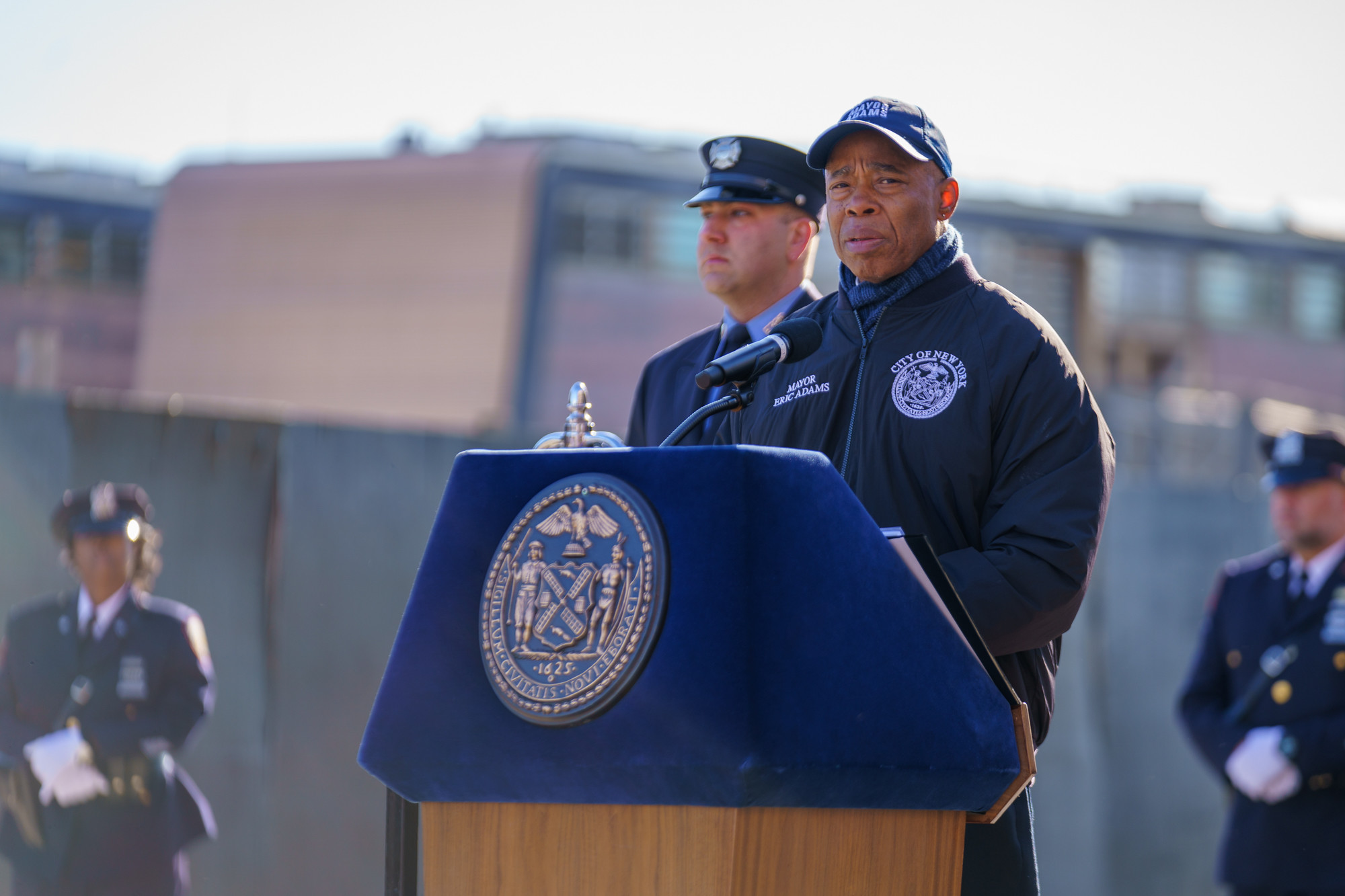
New York City Mayor Eric Adams delivers remarks at a commemoration of the tragedy of American Airlines Flight 587, which crashed in Queens on November 12, 2001. Flight 587 Memorial Park, 200 Beach 116th Street, Rockaway Park, NY. Tuesday, November 12, 2024. Photo Credit: Benny Polatseck/Mayoral Photography Office
CITY OF NEW YORK FILES LAWSUIT AGAINST U.S. DEPARTMENT OF EDUCATION SEEKING TO PROTECT $47 MILLION IN FEDERAL EDUCATION GRANTS FOR NEW YORK CITY PUBLIC SCHOOLS
State and Local Law Mandates Public Schools Give Access to Bathrooms for Public School Students Based on Their Gender Identity
Federal Government is Unlawfully Reneging on Its Obligation to Disperse Funds
New York City Will Continue to Follow All Federal, State, and City Laws
NEW YORK – The City of New York today announced a new lawsuit filed against the U.S. Department of Education (U.S. DOE), U.S. DOE Secretary Linda McMahon, and two other members of the U.S. DOE to protect grant funding that New York City Public Schools is owed by the federal agency after it, last month, sought to block the nation’s largest school system from obtaining $47 million in funds already awarded to the local system. Under a federal program called the Magnet Schools Assistance Program, the city has received five 5-year grants to support 19 New York City magnet schools. In September, U.S. DOE directed New York City Public Schools to violate both state and local law by overhauling its position on bathroom and locker room policies for transgender students in response to an apparent reinterpretation of Title IX under the Trump administration. In the lawsuit, the city argues that U.S. DOE’s decision to discontinue the funding is not only unlawful because they failed to follow the mandatory process required before taking action based on an alleged Title IX violation, but that they are wrong on what Title IX requires, as New York City policy continues to follow local, state, and federal laws, despite U.S. DOE’s attempts to say otherwise.
“The effort by the U.S. Department of Education to strip our school system of this grant funding violates statutorily-required process and conflicts with longstanding legal precedent regarding the interpretation of Title IX,” said New York City Corporation Counsel Muriel Goode-Trufant. “By trying to unlawfully coerce New York City Public Schools into changing its policies and violating local laws, the federal government is showing that it does not have the best interest of students and New Yorkers at heart.”
“With this lawsuit, New York City Public Schools is fighting back against the U.S. Department of Education’s attack on our magnet program and transgender and gender expansive students,” said New York City Public Schools Chancellor Melissa Aviles-Ramos. “U.S. DOE’s threat to cut off tens of millions of dollars in magnet funding unless we cancelled our protections for transgender and gender expansive students is contrary to federal, state, and local law, and, just as importantly, our values as New York City Public Schools. My deepest commitment is to provide our magnet students, our transgender and gender expansive students, and every single student at New York City Public Schools with the ability to thrive academically and socially; to achieve that, my team and I work tirelessly to ensure every student feels seen, supported, and safe. We use every possible tool to do that, as today’s legal action demonstrates.”
The discontinued Magnet School Assistance Program grants were funding 19 different magnet schools in Manhattan, Queens, Brooklyn, and the Bronx, which have historically served isolated, and overwhelmingly low-income Hispanic and Black students, providing curricula in topics such as cutting-edge science, technology, engineering, architecture, and math; multimedia and the arts; performing arts; engineering; journalism; civic activism; and leadership.
In the complaint — filed in the U.S. District Court for the Southern District of New York — the city argues that the U.S. DOE’s purported discontinuation of the grants is being carried out unlawfully, without observing procedures required by Title IX and the federal regulations governing the operation of the grants. These laws and regulations collectively require the U.S. DOE to provide notice, an opportunity for a hearing, express findings on the record, and an opportunity to request reconsideration, among other procedural safeguards — none of which were afforded here. Instead, as outlined in the complaint, the U.S. DOE demanded policy changes within three days to comport with “a novel interpretation of Title IX that is not supported by any law, is contrary to the determinations of multiple federal circuit courts, and is contrary to the New York state Constitution and statute.” The city seeks to restore the schools to the status that they held a month ago by requesting that the grant discontinuation be vacated and set aside as arbitrary and capricious, contrary to law, an abuse of discretion, and as having been undertaken without observance of procedures required by law.
Today’s lawsuit follows a series of letters between the U.S. DOE and New York City Public Schools.
- In the first letter, on September 16, 2025, U.S. DOE listed six steps the federal government expected New York City Public Schools to take in order to comply with its new and inaccurate interpretation of Title IX and therefore be eligible to maintain its Magnet School Assistance Program grant funding. The letter gave New York City Public Schools three business days to comply with the requests or lose funding.
- New York City Public Schools responded on September 19, 2025, requesting additional time to consider how to respond to the demand.
- In an email dated September 20, 2025, the U.S. DOE rejected that request and reiterated its demand that New York City Public Schools revoke its guidelines to support transgender and gender expansive students. DOE extended the deadline to comply with the requested demands to Tuesday, September 23, 2025, at 5:00 PM, without any willingness to recognize the directives contradict both local regulations and state law. New York City Public Schools has continued to stand by the legality of its guidelines.
- Then, as outlined in the complaint, on September 26, 2025, U.S. DOE “compounded their chaotic and unlawful actions by resetting the end of the grants’ performance periods to the next day. The U.S. DOE took all of these actions without warning, well after school budgets had been set, and two weeks after the 2025-2026 school year had already begun.”

New York City Mayor Eric Adams marches in New York City’s Annual Veterans Day Parade. New York, NY. Monday, November 11, 2024. Photo Credit: Benny Polatseck/Mayoral Photography Office
TRANSCRIPT FROM THURSDAY, OCTOBER 16, 2025: MAYOR ADAMS HOSTS RECEPTION CELEBRATING DIWALI
Mayor Eric Adams: Thank you. Namaste. And this is such an important event. We have many events here at Gracie Mansion celebrating the culture, the diversity, the richness, and the contributions that many communities offer to the City of New York. And this community, our Indian community, really personifies how you give back to this city.
When you look at what you do in the medical profession, you were there during COVID to ensure that family members from the entire city received the care that they deserve. You were there during technology. Some of our leading technological advancement is coming out of not only India, but it’s coming out of the community that’s here. And when I appointed Dr. Vasan, one of the first to lead the Department of Health and Mental Hygiene, we saw the contributions. And then we did something that no other mayor was able to do.
We appointed the first Indian American to be a deputy mayor here in the City of New York. And she led the most extensive portfolio on how we dealt with the infrastructure of our city. But out of all those things, being mayor is both substantive, as I always say, and symbolic. The symbolism of turning Diwali into a state holiday is so significant.
It stated that we acknowledge the festival of light. We understand that there’s far too much darkness in our city and in our country and on our globe. And Diwali gives us an opportunity to state; how do we celebrate each other? How do we ensure that we lift each other up in the spirit of Gandhi? When I was in India, at Gandhi’s home, where he was slain, I always talk about looking in the pavement and seeing his last footprints before the assassin took his life. I think about our obligation and responsibility to continue those steps.
We may have lost Gandhi physically, but the emotional and spiritual journey that we are all responsible for, to continue the spirit in which Gandhi lived, we must ensure those steps continue not only in India, but also here in America in general, but specifically in the City of New York.
When you look at Diwali, you understand how our Hindu, our South Asian and Indo-Caribbean neighbors can celebrate a holiday that means so much to them. On the campaign trail, I heard it often, Eric, we would love to have Diwali be a holiday. And we have to take our hat off in her absence to Assemblywoman Jenifer Rajkumar for her pursuit. And many of you joined her in Albany to fight to ensure that we got Diwali as a holiday.
So I’m excited here in the spirit of Rama. And in the closeness of Sita. That is a symbol of love and commitment and devotion. And it is why we know that as long as we work together, we will lift this beautiful city up to the level that is deserved. And I want to thank all of my consul generals and dignitaries who are here for coming out and celebrating with us as we celebrate Diwali.
Tonight, we’re going to honor those from your community. And before we do so, I believe we’re going to make sure that— let me make sure I have my order correctly. We’re going to light the diya before we start. And then we’re going to honor those who are there. Thank you for what you have done for the City of New York and for our entire country. Thank you so much.

New York City Mayor Eric Adams hosts a reception to celebrate Diwali at Gracie Mansion on Thursday, October 17, 2025. Photo Credit: Benny Polatseck/Mayoral Photography Office
Banner Image: Mayor Eric Adams announces that City Hall and other municipal buildings are lit green as part of “Wear Green Day” to bring awareness to Youth Homelessness, Outreach, Prevention, Education (HOPE) Month. Youth HOPE. City Hall. Thursday, November 14, 2024. Image Credit – Ed Reed/Mayoral Photography Office.



[…] note: Readers can see the Mayor’s article from last week here, and the op-ed, about making New York City a more affordable place to raise a family with baby […]