

November 2025 Financial Plan, Int’l Travel Advisory, Sidewalk Sheds, Unversal After-School, Police Commissioner To Remain, Mapping NYC’s Underground, Soccer Fields On Randall’s Island, NYC Increases Life Expectancy, Keys To City Gotham Football Club: Mayor Adams
November 2025 Financial Plan, Int’l Travel Advisory, Sidewalk Sheds, Unversal After-School, Police Commissioner To Remain, Mapping NYC’s Underground, Soccer Fields On Randall’s Island, NYC Increases Life Expectancy, Keys To City Gotham Football Club: Mayor Adams
Editor’s note: This is the rundown from the Mayor last week, and here is last week’s op-ed. To learn more about the Citywide Doula Initiative, this is our coverage of that program. We covered the protest by Facing Fentanyl to raise awareness of unintentional overdoses due to the presence in many street drugs of fentanyl where it should not be. Free naloxone kits are available at two locations on Staten Island.
MAYOR ADAMS RELEASES NOVEMBER 2025 FINANCIAL PLAN UPDATE WITH NEW INVESTMENTS TO MAKE NEW YORK CITY SAFER, MORE AFFORDABLE
Technical Plan Updates Revenue and Savings Since Budget Adoption, Makes Strategic Investments to Support Priority Programs and Services
New Investments Include First Phase of Growing Police Force by 5,000 Police Officers, B-HEARD Transition to NYC Health + Hospitals, and Funding for Housing Vouchers
NEW YORK – New York City Mayor Eric Adams today announced the release of the November 2025 Financial Plan Update with investments that continue to make New York City safer, more affordable, and more livable for working-class New Yorkers. The plan update brings the Fiscal Year (FY) 2026 budget to $118.2 billion and reflects the Adams administration’s ongoing commitment to strong fiscal management by achieving citywide savings and making targeted investments that will support the administration’s public safety efforts, including increasing the headcount of the New York City Police Department (NYPD) by 5,000 officers, additional funding for rental assistance for working-class New Yorkers, expanding New York City Department for the Aging’s (NYC Aging) Caregiver program to support an additional 3,000 participants, and reinforcing other critical programs that deliver for working-class New Yorkers and make New York City the best place to raise a family.
“Over the course of four on-time, annual budgets, our administration has delivered for working-class New Yorkers time and again, and this November Financial Plan Update is another example of how our strong fiscal management is making New York City safer, more affordable, and improving New Yorkers’ quality of life,” said Mayor Adams. “We are making multiple investments to make our city safer, including increasing the headcount of the NYPD by 5,000 officers. We are also continuing to invest in the solutions that make our city more affordable by supporting the city’s 60,000 households who use CityFHEPS vouchers and investing in our most vulnerable New Yorkers living in the city’s shelter system. This $118.2 billion Fiscal Year 2026 budget, once again, demonstrates how our administration has worked relentlessly to make New York the best place to live in and raise a family.”
Investment Highlights (all FY 2026 unless noted)
Keeping Communities Safe
- Addressing quality-of-life and public-safety issues at the Bronx Hub with a multi-agency operation, which includes services for individuals experiencing homelessness and substance use disorder to support their basic life and medical needs, as well as tackle public drug use ($22.7 million).
- Funding for additional staff and other associated costs related to expanded automated red light and bus lane camera enforcement ($17.9 million).
- Hiring to meet the first phased-in increase of up to 5,000 additional police officers by FY 2029 ($17.8 million in FY 2027).
- Adding 93 positions to increase community outreach, inspections, disease surveillance, and laboratory testing for Legionnaire’s disease ($14 million).
- Increasing staffing within the Bronx and Brooklyn District Attorneys’ Offices to address an increased workload due to discovery obligations ($12 million).
- Transitioning B-HEARD to NYC Health + Hospitals ($10 million).
- Funding a portion of replacement costs of 1,000 NYPD vehicles that are past their useful life ($10 million).
- Repairing façades and roofs at various New York City Department of Citywide Administrative Services managed city buildings ($9.1 million).
- Supporting health care — including medical and dental services — for youth in New York City Administration for Children’s Services detention facilities ($6.5 million).
- Expanding programming for Emerge, which aims to improve the re-entry outcomes of justice-involved New Yorkers and at-risk youth by providing free access to vocational trades training and providing direct employment in industries like transportation and logistics ($2.9 million).
- Establishing an LGBTQ+ Emergency Fund that will provide funding to community-based networks that provide direct services to LGBTQ+ New Yorkers ($2 million).
- Providing resources for annual building and waterfront maintenance on Governors Island ($1.5 million).
- Creating a Youth Justice Bureau within the Bronx District Attorney’s Office to more appropriately prosecute youth cases and enhance services to mitigate circumstances that lead to youth violence, including specialized training on youth development, resource coordinators, and partnerships with mental health services ($1.5 million).
- Adding staff to help clear the backlog of complaint cases related to the Citizen Idling Program ($1.5 million).
- Expanding the Office of the Chief Medical Examiner’s genetic testing and counseling capacity to proactively identify genetic causes of sudden death and directly reach at-risk family members for preventative care ($600,000).
- Expanding the body-worn camera program to all 130 New York City Department of Sanitation police officers ($500,000).
- Funding an emergency contract to investigate the New York City Housing Authority partial building collapse at 205 Alexander Avenue ($350,000).
- Increasing staffing to complete additional asbestos inspections in response to growing permit filings and 311 requests, which have increased ($340,000).
Making New York City More Affordable
- Preventing homelessness and keeping vulnerable New Yorkers in their homes with additional support for rental assistance by primarily supporting the 60,000 New York City households who currently use City Fighting Homelessness and Eviction Prevention Supplement (CityFHEPS) vouchers ($400 million).
- Adding support for the city’s homeless shelter system ($150 million).
- Meeting increased state-mandated reimbursement costs for foster parents, adoptive parents, and kinship guardians ($50 million).
- Funding to partially cover the city’s annual contributions to the Metropolitan Transportation Authority driven in part by increased paratransit costs ($15.2 million).
- Expanding NYC Aging’s Caregiver program to support an additional 3,000 participants, bringing the total served to about 8,400, and expanding the agency’s Aging Connect, transportation, and case management programs ($9.3 million).
- Reimbursing owners of qualified 1 to 3 unit properties who purchased wheelie trash bins ($9.1 million).
- Expanding student loan counseling from just New York City employees to every city resident ($6.5 million).
- Maintaining required Medallion Loan Fund reserves that help pay loans for struggling taxi drivers ($3.9 million).
- Funding to support NYC Tourism + Conventions’ marketing ($2 million).
- Reinstating weekend ferry service between Brooklyn and Governors Island during the 2026 May through October high season ($100,000).
Supporting Young New Yorkers
- Funding distribution, maintenance, and wireless service costs through the end of 2025 associated with the purchase of 350,000 Chromebooks for New York City public school students ($24.3 million).
- Supporting programing and additional staffing related to Mayor Adams’ “After-School for All” expansion in New York City ($3.5 million).
Improving Quality of Life
- Funding for printing services, technical support, transportation, and other costs needed to administer early and Election Day voting ($35 million).
- Backstopping the federal Corporation for Public Broadcasting grant that was eliminated in July in order to support 22 staff who operate the city’s radio and television networks ($2.4 million).
- Adding resources for waste containers and collection at some schools in Brooklyn Community Board District 2, and additional container costs in Manhattan Community Board District 9 ($1.5 million).
- Supporting a multimedia campaign by NYC Aging to eliminate bias related to age and foster tolerance across generations ($800,000).
- Supporting the Native American Art fund that will preserve, recognize, and foster a greater appreciation and understanding of the foundational and extraordinary role of Native Americans in New York City by working in close collaboration with Native American curators, presenters, artists, musicians, writers, and other leaders ($750,000).
Ongoing Strong Fiscal Management
With these adjustments, the FY 2026 budget is now $118.2 billion. Out-year budget gaps are manageable and either declined or grew modestly since budget adoption because of a continued focus on saving taxpayer dollars. The FY 2027 budget gap is now $4.7 billion, a reduction of $353 million, or nearly 7 percent, driven by pension and labor savings. The FY 2028 and FY 2029 gaps are both now $6.3 billion.
The plan update reflects $419 million in additional tax revenue in FY 2026 since the budget was adopted in July, driven by stronger than expected personal income tax collections related to the city’s strong economy.

The administration has remained focused on achieving savings to make the best use of taxpayer dollars and balance the budget. This plan reflects total savings of $528 million in FY 2026 and $602 million in FY 2027. The savings achieved in the November Plan Update substantially offset agency expense changes over FY 2026 and FY 2027 that prioritize public safety, meet unfilled needs, and fund critical programs.
Today’s announcement follows Mayor Adams’ long history of strong fiscal management, including delivering an on-time, balanced, and fiscally-responsible $115.9 billion Adopted Budget earlier this year, which built on the FY 2026 Executive Budget, often called the “Best Budget Ever.” The Executive Budget doubled down on Mayor Adams’ commitment to make New York City the best place to raise a family by, among other things, investing in “After-School for All,” a $755-million plan to deliver universal after-school programming to families of children in kindergarten through eighth grade; baselining funding for 3-K citywide expansion and special education pre-K to build on the administration’s work to dramatically expand access to early childhood education; investing over $400 million to fully fund the transformation of Fifth Avenue in Manhattan into a world-class, pedestrian-centered boulevard; and revitalizing “The Arches,” the public space on the Manhattan side of the Brooklyn Bridge; among other major initiatives. The FY 2026 Adopted Budget was also the first to implement Mayor Adams’ landmark “Axe the Tax for the Working Class” plan, which abolishes and cuts New York City’s personal income tax for filers with dependents living at or below 150 percent of the federal poverty line. Because of this plan — which the Adams administration successfully fought to pass in Albany this budget cycle — $63 million will go back into the pockets of over 582,000 low-income New York filers, including their dependents, helping make New York City more affordable for working-class families.

New York City Mayor Eric Adams meets with the President of the State of Israel Isaac Herzog. Monday, November 17, 2025. Photo Credit: Benny Polatseck/Mayoral Photography Office
INTERNATIONAL TRAVEL ADVISORY FOR MAYOR ERIC ADAMS
On Tuesday, November 18, New York City Mayor Eric Adams will travel to Uzbekistan for a multi-day trip to meet with government, business, tech, sports, and religious leaders to discuss how New York City can partner with Uzbekistan to bring innovation, businesses, and jobs to the five boroughs. The mayor will also visit religious sites of importance to the Muslim community.
The mayor will visit the cities of Tashkent and Samarkand, and he will travel back to New York City on Sunday, November 23.
More details on the trip will be forthcoming.

New York City Mayor Eric Adams meets with the Speaker of the Knesset Amir Ohana. Jerusalem, Israel. Monday, November 17, 2025. Photo Credit: Benny Polatseck/Mayoral Photography Office
MAYOR ADAMS UNVEILS NEW DESIGNS FOR SIDEWALK SHEDS AND SCAFFOLDING THAT WILL BEAUTIFY STREETS, MAKE CITY SAFER
Six Better-Looking, Design Options Coming to City Sidewalks
City Announces Recommendations Following Comprehensive Engineering Study on Local Law 11 Façade Inspection Regulations, Reminds Property Owners About New Enforcement Protocols in 2026
Continues Mayor Adams’ Successful Campaign to “Get Sheds Down” by Creating New Tools to Remove Unnecessary Scaffolding, Ramping Up Enforcement, and Creating More Appealing Designs
Total of 15,224 Old Sidewalk Sheds Have Been Removed Citywide Under Adams Administration
NEW YORK – New York City Mayor Eric Adams and New York City Department of Buildings (DOB) Commissioner Jimmy Oddo today unveiled six revamped designs for sidewalk sheds — commonly referred to as scaffolding — that vastly improve the streetscape to be used at construction projects and buildings undergoing façade maintenance across the five boroughs. These new designs are a major improvement from the outdated and clunky green sheds that permeated city streets for decades and serve as a continuation of Mayor Adams’ successful “Get Sheds Down” initiative,” which is improving the aesthetic on city streets while protecting the public from potential overhead hazards around buildings and construction sites.
Additionally, Mayor Adams is also announcing recommendations from a comprehensive engineering study on the city’s Façade Inspection & Safety Program (FISP). This study is the first-ever effort to use evidence-based building science to recommend improvements to the current façade inspection requirements that could potentially reduce the need for sidewalk sheds without negatively impacting public safety. These announcements — along with a new slate of enforcement initiatives, which go into effect early 2026 — deliver key components of Mayor Adam’s transformative Get Sheds Down initiative that has taken major strides to reduce the prevalence of unsightly scaffolding across the five boroughs.
“For too long, scaffolding and outdated and cumbersome sidewalk sheds have blocked sunlight, hurt small businesses, and cluttered our neighborhoods, but today marks a major step forward in our mission to reimagine New York City’s streetscape,” said Mayor Adams. “By introducing these six modern designs and pairing them with the first-ever, evidence-based engineering study of our city’s façade safety requirements, we’re proving that safety and good design can go hand in hand. These reforms — along with the enforcement measures coming in 2026 — advance our ‘Get Sheds Down’ initiative and bring us closer to a city where New Yorkers can enjoy safe, vibrant, and beautiful streets once again.”
“These new sidewalk shed designs and the groundbreaking façade safety study represent exactly the kind of smart, evidence-driven innovation New Yorkers deserve,” said Deputy Mayor for Operations Jeff Roth. “By modernizing outdated rules and giving builders better tools, we’re reducing unnecessary scaffolding while keeping public safety front and center. The enforcement measures launching in 2026 will ensure these improvements are felt in every neighborhood. Under Mayor Adams’ leadership, we’re streamlining operations, cutting visual clutter, and delivering a cleaner, safer, and more welcoming city for all.”
“These new shed designs are leaps and bounds above what we see on sidewalks today and coupled with scientific evidence-based reforms of the city’s façade inspection regulations, they will help us unclog pedestrian spaces for our fellow New Yorkers,” said DOB Commissioner Oddo. “The ‘Get Sheds Down’ plan was the first time an administration fully tackled the issue of how the second order effects of sidewalk sheds are negatively impacting our city. Now, thanks to the thoughtful work of our partners at Thorton Tomasetti, Arup, and PAU, along with the team here at DOB, we are seeing a path forward on initiatives that will benefit the city for years to come.”
“We’re turning an eyesore into an opportunity,” said Chief Public Realm Officer Ya-Ting Liu. “The new sidewalk shed designs demonstrate how the ubiquitous and mundane can reflect New York’s spirit of design, creativity, and care for public spaces.”
New Shed Designs
In February 2024, the city hired two of the city’s leading architecture and design firms — Arup and Practice for Architecture and Urbanism (PAU) — to help reimagine how to protect the public from hazards associated with buildings and construction sites. The two teams were tasked with each delivering three new pedestrian protection designs that simultaneously improve the pedestrian experience, beautify the streetscape, and keep costs reasonable for building owners, all while improving public safety. The firms were also charged with coming up with designs that use cost-effective materials that are readily available to contractors to reduce barriers to adoption. The six innovative designs are a major improvement upon the current hunter green pipe-and-plywood sheds that are seen in neighborhoods across the city today, and which are the source of frequent public complaints.
PAU’s team includes LERA Consulting Structural Engineers, Tang Studio Architect, LLC, Fisher Marantz Stone, RWDI, Dharam Consulting, and Langan. Arup led a team that includes KNE studio, Core Scaffolding, and Reddymade.
Design #1 “The Speed Shed” – Designed by PAU
Potential Use Case: A light duty shed that it is quick to deploy and quick to move. Good for short-term projects and emergency repairs. The design features an angled roof with netting, allowing natural light on to the sidewalk.

Design #2 “The Rigid Shed” – Designed by Arup
Potential Use Case: A heavy duty shed for major projects, like tower crane operations and high-rise construction. The design features a small footprint on the sidewalk and minimal obstruction for pedestrians.

Design #3 “The Baseline Shed” – Designed by PAU
Potential Use Case: A versatile shed that comes in both heavy and light duty variants, adaptable to building and sidewalk dimensions on a wide variety of projects. The design features an angled transparent roof, allowing light to shine on the sidewalk.
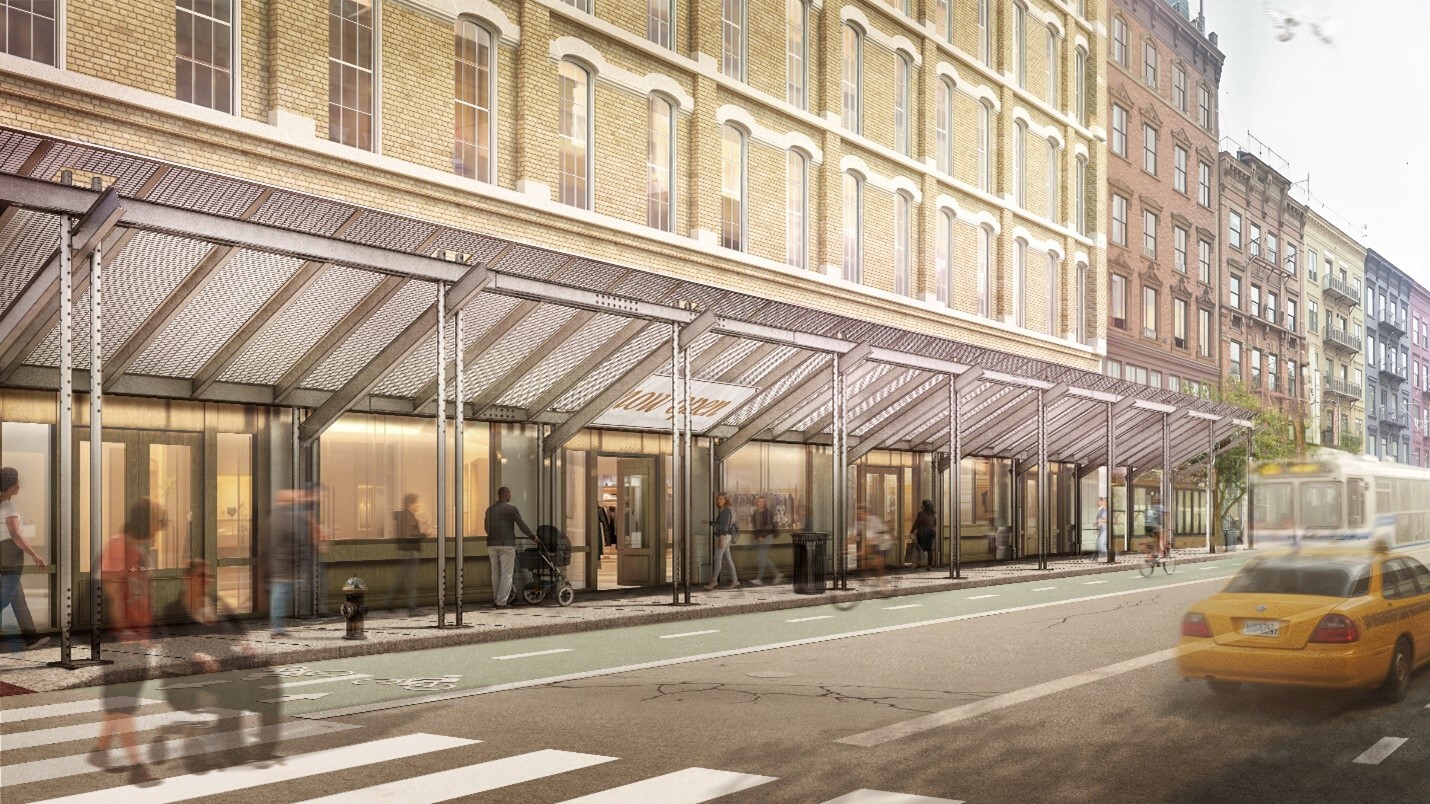
Design #4 “The Air Shed” – Designed by Arup
Potential Use Case: A light duty shed that is completely lifted off the ground and anchored into the building for façade repair and window replacement projects. The cantilevered design is reminiscent of a balcony, with virtually no impact on pedestrians below.
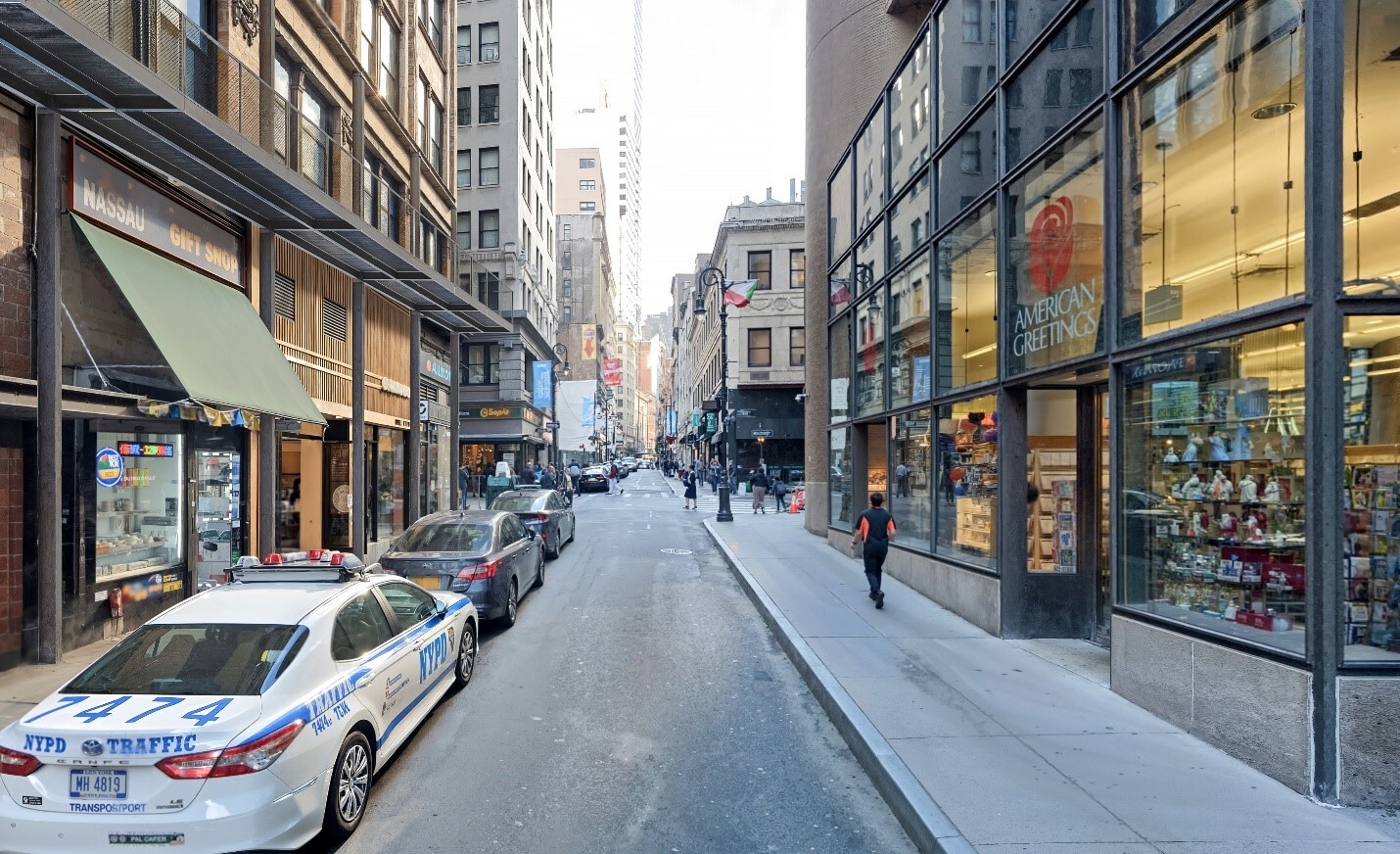
Design #5 “The Wide Baseline Shed” – Designed by PAU
Potential Use Case: A heavy duty shed for major projects perfectly suited for wide sidewalks on major thoroughfares. The design features heavy duty columns spaced far apart to minimize obstructions on the sidewalk.
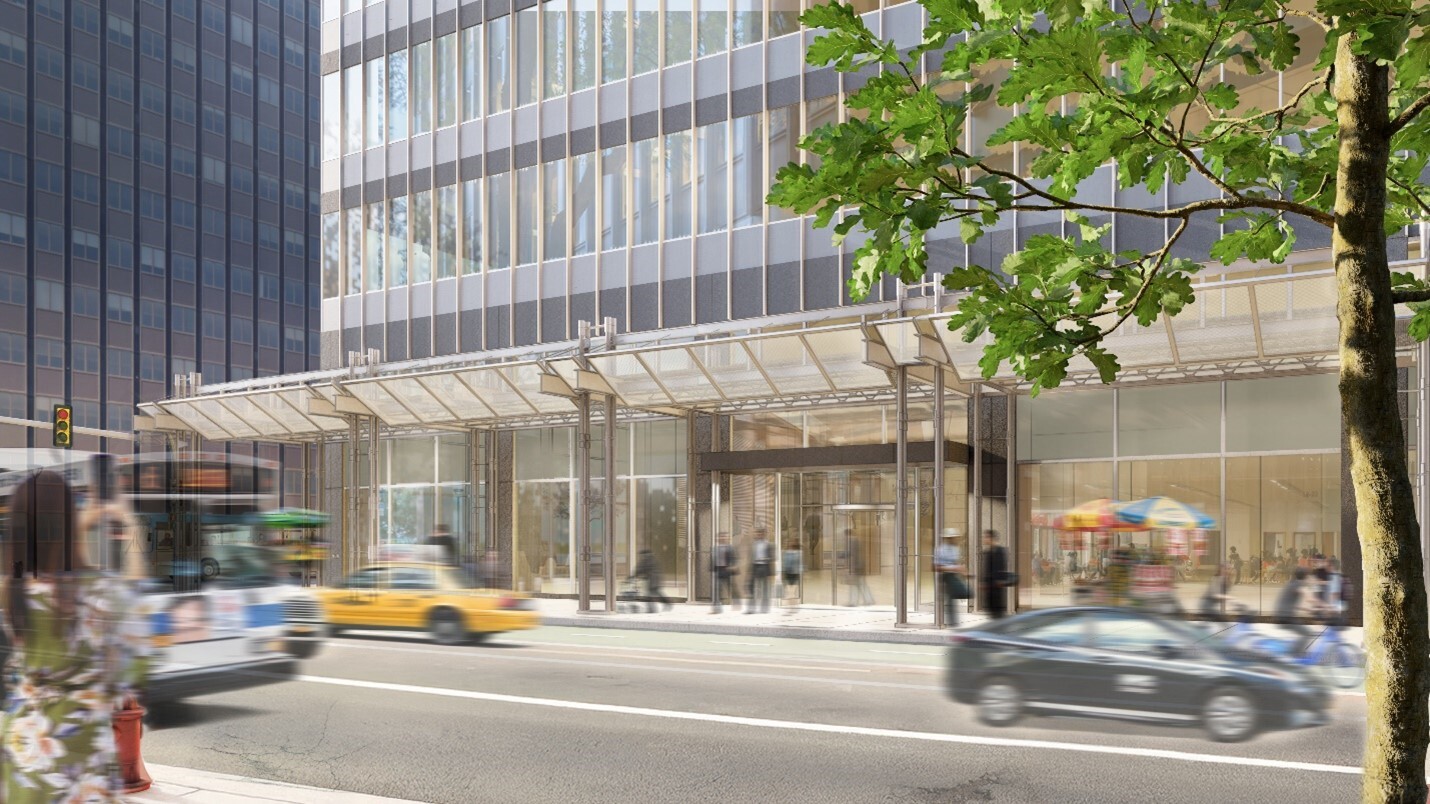
Design #6 “The Flex Shed” – Designed by Arup
Potential Use Case: A light duty shed good for maintenance work and emergency repairs. With easily adjusted roof heights and column placement, the design features a small footprint on the sidewalk that can be modified to work around unique building elements, as well as sidewalk obstructions like street signs and bus stop shelters.
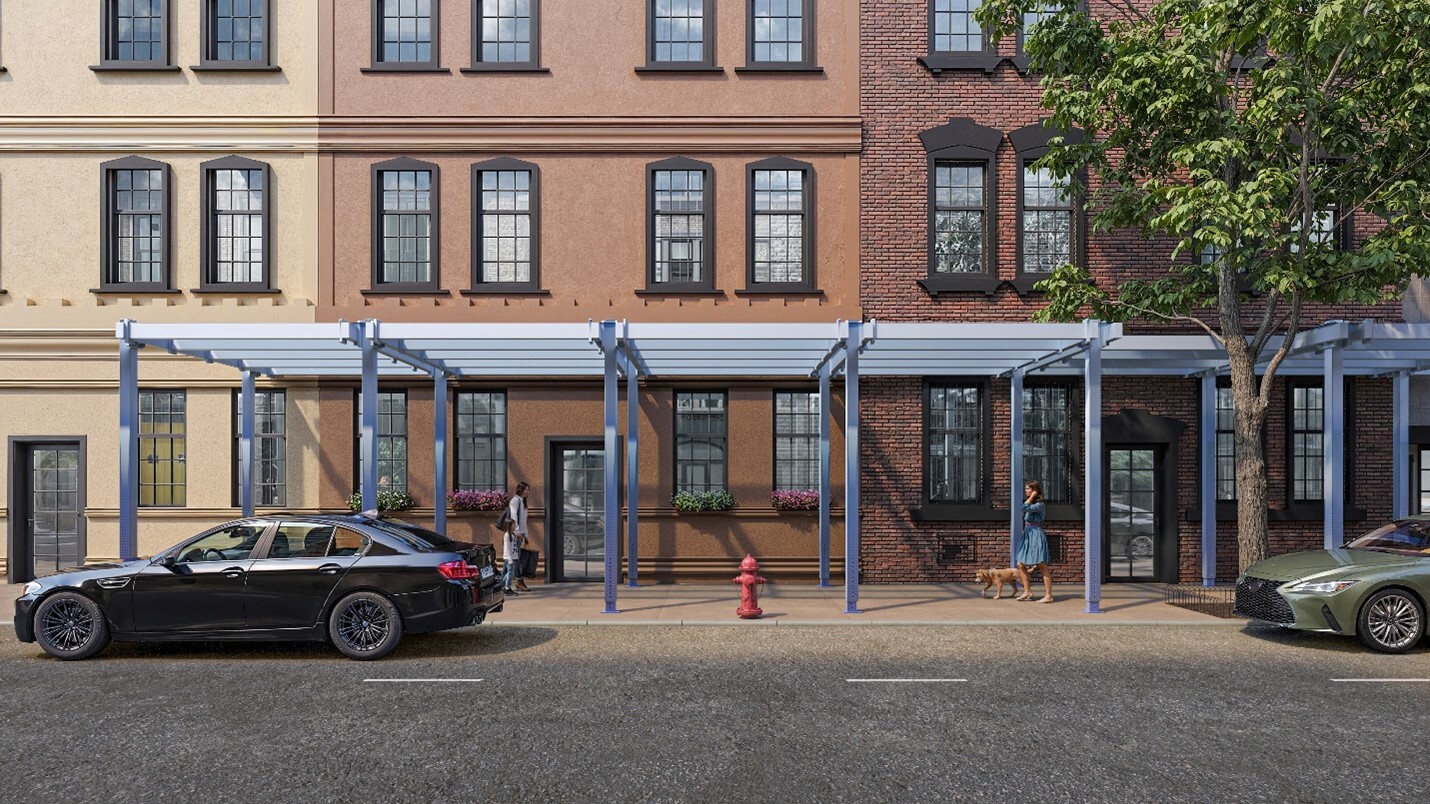
Going forward, DOB will be working with PAU and Arup to make all six of these designs available for public use through the agency rulemaking process. Registered design professionals will be able to easily obtain permits for these designs through DOB’s Professional Certification program , much in the same way that they currently obtain permits for the old hunter green pipe-and-plywood sheds. Additionally, allowing every design professional and contractor the ability to utilize these new designs further drives down costs for building owners through competition. The city expects to see these new designs on city sidewalks as early as 2026.
“PAU’s designs reflect a radical rethinking of the form and materiality of sidewalk sheds, demonstrating that it is possible to have bright, inviting, and safe sidewalks and storefronts, while still providing the necessary protections that sheds offer pedestrians,” said Vishaan Chakrabarti, founder, PAU. “PAU was established to design for the public and I can’t imagine a more impactful intervention than making Gotham’s sidewalks — the most defining aspect of our city’s public realm — safer, more egalitarian, and more beautiful.”
Achieving Mayor Adams’ Get Sheds Down Vision
Today’s announcement is yet another step in achieving Mayor Adams’ Get Sheds Down initiative to ensure sidewalk sheds —intended as temporary pedestrian protections — no longer linger for years due to delayed repairs. Mayor Adams launched his Get Sheds Down plan in July 2023, a sweeping overhaul of rules governing sidewalk construction sheds and scaffolding to remove these eyesores from city streets more quickly, while redesigning and reimagining those that are needed. Long-standing sheds crowd city streets and darken sidewalks, negatively impacting tenants, pedestrians, and business owners. The Adams administration and Mastercard have found that sidewalk sheds can cost Manhattan businesses between $3,900 and $9,500 in consumer spending each month.
Since the launch of Mayor Adams’ Get Sheds Down initiative, DOB has helped remove 429 long-standing sheds across the city that were previously standing in place for five years or more. Currently, all sidewalk sheds in the city that are over three years old are enrolled in DOB’s Long-Standing Shed program , subjecting the property owners to stronger enforcement scrutiny, greater outreach, and court actions when the owners refuse to make repairs. Since the initiative’s launch, in July 2023, over 15,200 total sheds have been removed, including 1,663 that have been up for three years or more — representing a 10 percent net reduction across the five boroughs. The Adams administration has been leading by example on this issue; thanks to completed building repair projects, 1,453 sidewalk sheds have been removed from city-owned buildings since July 2023, including 88 long-standing sheds that previously were up for over five years.
Beginning in 2026, new enforcement measures signed, advocated for by the Adams administration and signed into law by Mayor Adams, will hold property owners accountable for timely façade and construction work. These include monthly Public Right of Way Penalties of up to $6,000 for sheds standing longer than 180 days, milestone penalties for owners of FISP buildings who miss repair deadlines, and an expanded Long Standing Shed Program that now targets sheds in place for three years or more with stricter enforcement and potential court action. Additionally, sidewalk shed permit durations will be shortened from one year to 90 days, requiring quarterly permit renewals with proof of progress on the underlying building repair work. Supported by new resources and a partnership with the New York City Council, the DOB is engaging property owners citywide to accelerate shed removal.
About Local Law 11 Study
In May 2024, the City of New York partnered with globally recognized engineering firm Thornton Tomasetti to conduct the first-ever comprehensive scientific review of the city’s FISP requirements for building owners, also known as Local Law 11 inspections. The 18-month study analyzed tens of thousands of inspection reports, reviewed international best practices, and gathered extensive stakeholder feedback to modernize regulations that have remained largely unchanged for 45 years. The findings confirmed that FISP has significantly improved public safety but identified areas for reform, including overuse of sidewalk sheds at buildings posing minimal risk and inconsistencies in how façade conditions are classified.
Key recommendations from the study, which will be posted in its entirety on the DOB’s website in the coming days include adjusting inspection frequencies for all buildings to six years; clarifying definitions of unsafe conditions; only requiring a sidewalk shed at a building for truly hazardous conditions and not just because of a missed repair deadline; introducing tailored requirements for lower-risk buildings, including less frequent hands-on inspections; reducing the number of hands on inspections required for each inspection; creating an option for stricter standards for specific buildings with a history of chronic deterioration; exploring ways to expand the use of drone technology for façade inspections; and improving guidance for privately contracted façade inspectors through the creation of a help desk and inspection guides. DOB is now developing updated FISP rules and a comprehensive industry guide to ensure consistent standards, enhance safety, reduce compliance-related costs, and reduce unnecessary sidewalk sheds.
“Scaffolding sheds serve an important role in protecting pedestrians from overhead construction, but they shouldn’t diminish the experience of walking through our city’s streets,” said Seth Wolfe, Principal, Arup. “Our designs have fewer obstructions to overcome the tunnel-like feel of current sheds, bringing light and life back to New York City sidewalks.”
“These recommendations draw on extensive stakeholder feedback, materials research, and a comprehensive study of best practices in New York City and other major markets, as well as decades of our own experience in facade repair and restoration,” said Gary Mancini, P.E., managing principal, Thornton Tomasetti. “The goal of this initiative is to enhance public safety while also addressing one of the most visible challenges in our streetscape: the excessive use of sidewalk sheds. By modernizing the program, we can allocate resources where they’re truly needed and improve the experience at street level.”

New York City Mayor Eric Adams meets with Jerusalem Mayor Moshe Lion. Monday, November 17, 2025. Photo Credit: Benny Polatseck/Mayoral Photography Office
MAYOR ADAMS ANNOUNCES NEXT STEP OF AMBITIOUS UNIVERSAL AFTER-SCHOOL WITH 10,000 ADDITIONAL SEATS FOR NEXT SCHOOL YEAR
75 New Schools and 11 Community Centers Will Host New /After-School Programs as Part of 20,000 Total New Seats by Fall 2028
5,000 More Seats to Come by Fall 2027
5,000 New Seats Across 40 Schools Already Added This School Year Support Adams Administration’s Commitment to Making New York City Best Place to Raise a Family
Unprecedented $331 Million New Investment Will Bring “After-School for All” Total Funding Up to $755 Million, 184,000 Total Seats by Fall 2027
Universal After-School First Announced as Part of Mayor Adams’ “Best Budget Ever”
NEW YORK – New York City Mayor Eric Adams and New York City Department of Youth and Community Development (DYCD) Commissioner Keith Howard announced the next step in delivering Mayor Adams’ vision of “After-School for All,” with 10,000 additional seats to be added by the fall of 2026. The 75 New York City Public Schools locations and 11 community centers selected to fill these 10,000 seats in high-need areas have been selected based on economic need and service gaps in those communities. In September, the city took a significant step toward universal after-school programming by launching the first 40 new after-school sites ― the largest expansion of city-funded after-school in more than a decade. The initial $21-million investment for 5,000 K-5 seats in the Fiscal Year (FY) 2026 Adopted Budget, which builds on Mayor Adams’ FY 2026 Executive Budget — often called the “Best Budget Ever” — marked the first step for After-School for All. In the 2027-2028 school year, another 5,000 seats will be added, bringing after-school programming to a total of 184,000 students. The ambitious $331-million After-School for All commitment made by the Adams administration will bring the total investment for after-school programming to $755 million annually by the fall of 2027; that funding will be baselined starting in FY 2028.
“Today, we’re delivering on our promise to make New York City the best place to raise a family by starting with our children,” said Mayor Adams. “By opening 40 new after-school sites and adding 5,000 seats this school year — the largest expansion in over a decade — we’re giving young people the opportunities they deserve and telling hard-working parents: we see you and we’re investing in your future. But we aren’t resting on our laurels. We’re also giving providers their first pay raise in 10 years, creating 10,000 more seats for 2026, and strengthening programs at 75 additional schools. This is the first big step toward our vision of ‘After-School for All’ that will help us create a city where every child has a safe, enriching place to grow beyond the classroom.”
“Expanding after-school programming has been a top priority since the moment I stepped into my role as deputy mayor, and I’m incredibly proud of the work we have done to make this vision a reality,” said Deputy Mayor for Strategic Initiatives Ana J. Almanzar. “Building better after-school access means creating more seats and opening more opportunities. I am confident that every after-school program represents a child who is learning, thriving, and building confidence — and a parent who can work knowing their child is safe and supported. This next phase of ‘After-School for All’ brings us closer to a city where every family has what they need to succeed.”
“At more than 30 community town halls, New Yorkers sent us a message loud and clear: we need more after-school programming. With the most significant expansion of COMPASS after-school in more than a decade, this is a ‘promises made, promises kept’ moment. The first 5,000 of 20,000 new seats are already benefiting young people this school year, and DYCD has released two requests for proposals to enhance programs, increase provider rates, and bring on new providers to oversee this exciting growth,” said DYCD Commissioner Howard. “Mayor Adams has entrusted DYCD and our community partners to carry out a lasting legacy that will benefit young people and families from this day forward.”
Families can find the new 75 selected locations being announced today — as well as the original 40 sites from the current school year —on DYCD’s after-school sign up webpage. Families can locate their nearest after-school program through discoverDYCD, or reach out directly to providers for information on availability and how to apply.
Two Requests for Proposals (RFPs) released in October were the first in a decade to enhance and improve programs for New York City youth, as well as raise provider rates to stabilize the non-profit organizations leading these programs and better support the workforce that serves the city’s youth. Nonprofit providers interested in applying for the RFPs can visit DYCD’s Contracting Opportunities website for instructions and deadlines.
Recently, the Adams administration formed a commission for universal after-school by engaging providers and community stakeholders to develop a sustainable, long-term system that ensures non-profit organizations are able to continue to hire and train staff and deliver quality programming.
This investment adds to the Adams administration’s historic investments in young people, and supports both the Summer Youth Employment and Summer Rising programs to serve record numbers of youth, and increases spending on young adult career success programming by 25 percent, as announced in “Pathways to an Inclusive Economy: An Action Plan for Young Adult Career Success,” a forward-thinking roadmap to build inclusive pathways for the city’s young people to discover their passion, receive hands-on career experience, and, ultimately, enter the workforce.
Over the last three years, the Adams administration has been focused on making New York City more affordable for families through popular and essential programs like early childhood education. Recently, Mayor Adams announced a child care pilot for 0 to 2 year olds that puts New York City on the path to universal child care for low-income families, if the pilot is successful, and a $167-million long-term investment and commitment to funding 3-K and special education pre-K programs annually. Under the Adams administration, a record 150,000 children are enrolled across the early childhood education system today, the out-of-pocket costs of child care subsidies have been reduced from $55 per week in 2022 to $5 per week today, and the administration met its commitment to offer a seat to every child who applied for 3-K on time — the first time this has ever been done in the city’s history.
Over the FY 2025 budget cycle, Mayor Adams protected more than $600 million in key, long-term education programs that had been previously funded with expiring stimulus dollars by making investments in Summer Rising, a citywide 3-K expansion, special education pre-K, community schools, social workers, and arts education. Additionally, the Adams administration invested $20 million to ensure that every student on a 3-K waitlist was offered a seat, and $55 million to provide more than 700 new seats for three- and four-year-olds with special needs.
Today’s announcement also builds off two years of core educational accomplishments under the Adams administration, including instituting nation-leading dyslexia screening for all students, adding 57 Gifted and Talented programs, helping 13,658 students complete work-based learning experiences for the 2024-2025 school year through FutureReadyNYC, cementing new labor contracts for teachers and other education officials, investing $167 million in new funding to secure critical early childhood education programs, and securing mayoral accountability twice in three years while investing $180 million to implement a comprehensive class size reduction plan.
Additionally, 186 schools across 14 districts implemented Mayor Adams’ signature curricula, NYC Reads and NYC Solves, for the first time this year, bringing high-quality, evidence-based foundational reading and math curricula to middle school students across the five boroughs. These comprehensive programs also provide targeted resources, professional development, and curriculum enhancements for educators. As a result, the Adams administration and New York City Public Schools recently celebrated the release of new state test data revealing a substantial increase in reading and math scores for public school children in the city, between grades 3 through 8, in the 2024-2025 school year.

New York City Mayor Eric Adams co-hosts a procession and fan zone celebrating the New York Gotham Football Club 2025 National Women’s Soccer League (NWSL) champion on Monday, November 24, 2025. Michael Appleton/Mayoral Photography Office
MAYOR ADAMS’ STATEMENT ON POLICE COMMISSIONER TISCH CONTINUING INTO MAMDANI ADMINISTRATION
NEW YORK – New York City Mayor Eric Adams today released the following statement after Mayor-elect Zohran Mamdani announced that he would keep New York City Police Department (NYPD) Commissioner Jessica Tisch on as police commissioner in his administration:
“When I ran for office, I made public safety and reducing crime my North Star because public safety is the prerequisite to prosperity. Coming into office, crime was out of control and shootings were skyrocketing. In the first weeks and months of our administration, we zeroed in on these crimes by announcing our ‘Blueprint to End Gun Violence’ and ‘Blueprint for Community Safety,’ launching our Neighborhood Safety Teams, and forming a Gun Violence Prevention Task Force to go after illegal guns and bring down the number of shootings across our city — and it worked. Today, because of the policies we put in place nearly four years ago and the tireless efforts of the brave men and women of the NYPD, we are in our eighth straight quarter of declining crime across the city and we have removed more than 24,000 illegal guns from our streets. Commissioner Tisch, like her predecessors before her, has continued that stellar work and is implementing the policies and initiatives the Adams administration has pushed for four years. She was a star at the Sanitation Department and has done incredible work at the NYPD. In choosing her to stay on as police commissioner, Mayor-elect Mamdani is recognizing our public-safety efforts were right and that they will continue into the future. We all want a safer city, and keeping Commissioner Tisch in place and supporting our police officers every day with the policies we have implemented, is exactly how we do that.”
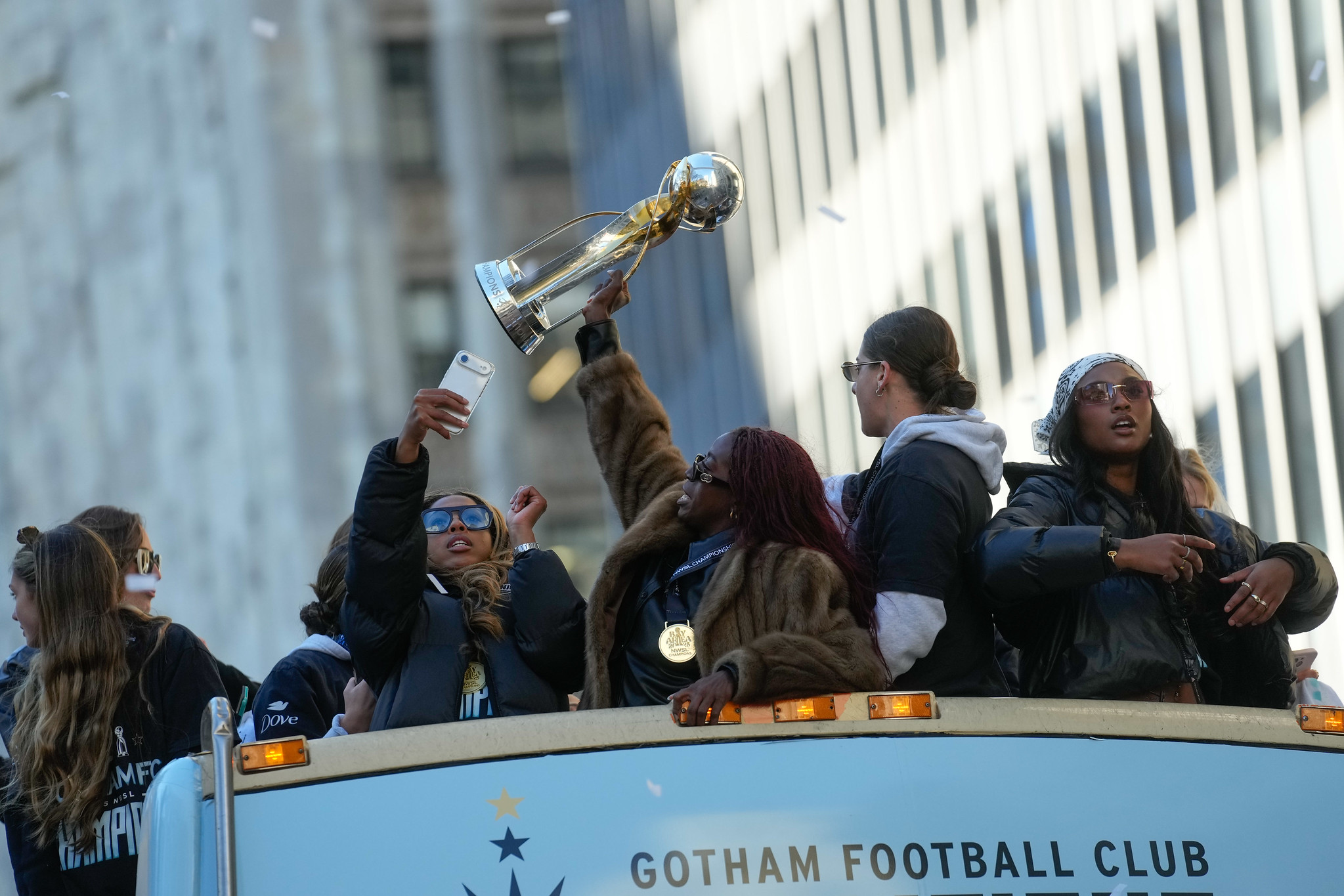
New York City Mayor Eric Adams co-hosts a procession and fan zone celebrating the New York Gotham Football Club 2025 National Women’s Soccer League (NWSL) champion on Monday, November 24, 2025. Michael Appleton/Mayoral Photography Office
MAYOR ADAMS ANNOUNCES $10 MILLION PLATFORM TO MAP NEW YORK CITY’S UNDERGROUND, SHARE DATA AMONGST CITY AGENCIES AND UTILITY COMPANIES TO KEEP NEW YORKERS SAFE AND IMPROVE CAPITAL PLANNING
Platform Will Visualize Underground Built Environment Across New York City to Better Coordinate Future Emergency Responses and Facilitate Quicker Development Above Ground
Public-Private Partnership Amongst New York City Agencies, Utility Companies, Universities to Leverage Latest in Technology for Mapping Efforts
New York City Becomes First in U.S. to Launch Citywide Data Sharing Initiative
Aligns New York City with Global Leaders Like Singapore, Tokyo, and U.K.
NEW YORK – New York City Mayor Eric Adams today announced the launch of 3D Underground (3DU), a cutting-edge program to develop a highly secure, 3D-data-sharing platform for New York City’s underground built and natural environment. The platform will help government agencies and utility companies securely share and access information about what lies below New Yorkers’ feet, such as water and sewer pipes, gas lines, electrical conduits, fiber optic cables, and soil composition.
“Keeping New Yorkers safe doesn’t just mean understanding what is happening above ground, but also what is happening below ground. The web of pipes, cables, and lines that are below our feet are crucial in helping our city run and respond in emergencies, and, for too long, the city has not had a complete picture of how all these pieces work together,” said Mayor Adams. “Today, we are launching a groundbreaking $10 million initiative that will allow the city and its partners to anticipate delays in construction and improvement projects, while also enabling the city to better respond to emergencies. This new data sharing initiative is laying the foundation for a smarter, more coordinated, and more resilient New York City, and is another example of how we are using technology to keep New Yorkers safe, now and into the future.”
“Our ability to build and maintain critical infrastructure starts with knowing what’s beneath our feet,” said Deputy Mayor for Operations Jeff Roth. “This initiative strengthens our partnerships and helps us deliver projects faster, safer, and smarter.”
Born out of lessons learned during the recovery from the September 11, 2001 attacks in Lower Manhattan, the idea for the 3DU initiative was born after 9/11 to meet the critical need for precise mapping recognized during those efforts, including the detection and remediation of dangerous freon tanks. The platform will be designed to enhance the city’s ability to respond to emergencies, analyze emerging threats, and more effectively plan and deliver capital projects to New Yorkers.
As part of this effort, the New York City Office of Technology and Innovation will create a comprehensive map of the city’s soil by digitizing geotechnical reports already submitted to the New York City Department of Buildings and partnering with Columbia University to estimate what the soil is like in areas without direct data. Understanding soil composition is important for planning construction projects, maintaining infrastructure, managing stormwater, and anticipating and responding to emergencies. The city will also start collecting soil samples digitally to make the underground soil model even more accurate over time.
Key goals of 3DU include:
- Improving emergency response and preventative threat analysis capabilities for underground infrastructure failures.
- Modernizing capital project planning and delivery through better data sharing to reduce costs and schedule overruns.
- Supporting climate adaptation and stormwater management.
- Minimizing disruption to businesses, residents, and transit.
Funded through a $10 million U.S. Housing and Urban Development Community Development Block Grant for Disaster Recovery in the wake of Hurricane Ida, the city anticipates to launch the platform for users in early 2028. The platform will leverage an earlier mapping effort that included ground scanning, conducted by the city in partnership with utility companies and New York University’s Tandon School of Engineering.
Today’s announcement aligns with Mayor Adams’ broader “Getting Stuff Built” agenda, which focuses on streamlining project delivery, cutting red tape, and investing in 21st-century infrastructure for all New Yorkers.
“The New York State Department of Public Service values opportunities for the state’s regulated utilities to engage with local governments on innovative projects like New York City’s 3D Underground initiative,” said Rory M. Christian, CEO, New York State Department of Public Service. “This project will strengthen the city’s ability to respond to emergencies and emerging threats and will benefit both taxpayers and utility ratepayers by improving the coordination of large capital projects.”
“Whether there is a focus on supporting safe excavation procedures in London or improving the resilience of city infrastructure and preparedness in New York City, providing access to authoritative information about underground infrastructure has become a crucial enabler that directly benefits citizens,” said Carsten Roensdorf, product manager, United Kingdom’s National Underground Asset Register. “It’s great to see private and public sector actors come together, efficiently share data and collaborate based on a common understanding of the infrastructure beneath our cities.”
“A significant component of New York City’s effort to map its underground is the detailed description of the soil properties in three dimensions. This is important for future digging and excavation, maintenance and operation of existing underground lifeline infrastructure, as well as safety and security reasons,” said George Deodatis, professor of earth and environmental engineering, Columbia University. “Columbia University’s partnership with New York City is turning decades of soil data into actionable knowledge. By developing a citywide 3D soils model grounded in advanced statistical methods, we are helping to build a more resilient and sustainable New York—from its infrastructure and transportation networks to its future urban development.”

New York City Mayor Eric Adams host a celebration ceremony and present Keys to the City to members of the Gotham Football Club at City Hall on Monday, November 24, 2025. Michael Appleton/Mayoral Photography Office
MAYOR ADAMS UNVEILS RESTORED SOCCER FIELDS ON RANDALL’S ISLAND AFTER MAKING $5 MILLION INVESTMENT
Former Site of Humanitarian Emergency Response and Relief Center Serving Migrants Has Been Transformed Into Four Soccer Fields With New Synthetic Turf and Pathways
New York City Has Helped More Than 87 Percent of Migrants Move Out of Shelter, Take Next Steps in Their Journeys Towards Self Sufficiency
NEW YORK – New York City Mayor Eric Adams, New York City Department of Parks and Recreation (NYC Parks) Commissioner Iris Rodriguez-Rosa, and the Randall’s Island Park Alliance today announced the re-opening of four restored soccer fields at Randall’s Island Park. Funded with a $5 million city capital investment by Mayor Adams, the restoration project transforms the former site of the Randall’s Island Humanitarian Emergency Response and Relief Center (HERRC) that once served the city’s migrant population with new synthetic turf and pathways — fully revitalizing the area to serve New Yorkers and the surrounding community.
“Today marks yet another a milestone in demonstrating the immense progress we have achieved in turning the corner on an unprecedented humanitarian effort, and delivering this vital public space back to the community. Randall’s Island Park is a premier destination for sports and recreation, and the restoration of these highly used fields marks the return of this important city resource. I’m proud to reopen these restored soccer fields with $5 million in improvements for all to use,” said Mayor Eric Adams. “While the Randall’s Island Humanitarian Emergency Response and Relief Center was key to helping manage the unprecedented migrant crisis and care for more than 240,200 migrants — over 25,000 of whom were sheltered at this one site alone — we have effectively managed our operations and helped more than 87 percent of asylum seekers take the next steps towards lives of self-sufficiency. Now, thanks to the partnership of NYC Parks and the Randall’s Island Park Alliance, we are bringing this park back to life, allowing it to serve a new role where children and families can gather, play, and create lasting memories.”
“Parks and open spaces are the heart of our communities — places where people come together to play, connect, and recharge — and we’re so proud to welcome New Yorkers back to these beautifully restored soccer fields on Randall’s Island,” said NYC Parks Commissioner Rodriguez-Rosa. “Thanks to Mayor Adams’ investment and our partnership with the Randall’s Island Park Alliance, these new fields will once again serve tens of thousands of athletes, families, and visitors each year. This project is a powerful reminder of how our city continues to transform and reinvest in spaces that support recreation and connection for all New Yorkers.”
“We are thrilled to reopen these fields and welcome back kids and sports leagues in time for the fall season,” said Deborah Maher, president, Randall’s Island Park Alliance. “These fields serve tens of thousands of children each year and act as a recreational space for kids to get outdoors and play, one of the many reasons why Randall’s Island Park is a vital resource for our city. As an island connecting three boroughs, the park serves more than 4 million visitors a year from near and far. We appreciate the partnership of Mayor Adams and NYC Parks in restoring these fields and look forward to continued collaboration on future improvements to Randall’s Island Park.”
Thanks to the $5 million investment by the Adams administration, the fields have been outfitted with brand-new goals to enhance the playing experience for athletes of all ages. Adjacent to the fields, picnic areas and lawns were also restored this past spring by the Randall’s Island Park Alliance and NYC Parks Maintenance and Operations.
The restoration of soccer fields 82, 83, 84, and 85 was completed by William A. Gross Associates under a NYC Parks citywide services contract. As part of the extensive work, crews removed the old turf and repaired worn pathways and fixed fences. The project also included re-grading and leveling the subsurface to create a safer and more durable foundation for play, followed by the installation of new, state-of-the-art synthetic turf designed to withstand heavy use while reducing long-term upkeep.
The new fully restored field has officially been reopened to the public. The HERRC on Randall’s Island opened in August 2023 and closed at the end of February 2025 and helped provided shelter to over 25,500 asylum seekers.
Since the first asylum seekers arrived in the spring of 2022, New York City has continued to focus on the support needed to help migrants take their next steps towards self-sufficiency. The city’s Asylum Application Help Center — a first-in-the-nation entity — helped complete more than 140,000 applications for work authorization, Temporary Protected Status, and asylum. New York City Department of Small Business Services and their workforce development teams have connected this population to hundreds of job opportunities, and the administration’s case management and resettlement teams — in conjunction with teams across multiple city agencies — continue to find creative ways to assist recent arrivals through direct outreach, resource fairs, and onsite English as a second language courses at shelters, to name a few examples.
Over 90 percent of eligible adults in the city’s care either have or have applied for work authorization thanks to the Adams administration’s efforts. The city has also purchased more than 67,200 tickets to help migrants reach their preferred destinations and help reduce long-term costs for New York City taxpayers. Additionally, staff have conducted nearly 1 million case management sessions with migrants, dedicated to helping them identify self-sufficient pathways out of city shelter, in addition to implementing the city’s 30- and 60-day notice policies.
As a result, more than 208,200 migrants who requested services from the city in the last three years have taken the next steps in their journeys towards self-sufficiency. Since intensive case management services began in October 2023, 71 percent more families with children in humanitarian relief centers each week have taken their next steps. Finally, Mayor Adams successfully achieved more than $7.1 billion in asylum seeker savings over three fiscal years.

New York City Mayor Eric Adams host a celebration ceremony and present Keys to the City to members of the Gotham Football Club at City Hall on Monday, November 24, 2025. Michael Appleton/Mayoral Photography Office
MAYOR ADAMS ANNOUNCES ADMINISTRATION’S SIGNATURE HEALTH INITIATIVE SURPASSES 2030 GOAL EARLY AS CITYWIDE LIFE EXPECTANCY JUMPS TO 83.2 YEARS
Adams Administration Launched Ambitious HealthyNYC Plan in 2023 to Increase New Yorkers’ Life Expectancy to 83 Years by 2030
New York City Reaches Highest-Ever Level of Life Expectancy
NEW YORK – New York City Mayor Eric Adams and New York City Department of Health and Mental Hygiene (DOHMH) Acting Commissioner Dr. Michelle Morse today celebrated the two-year anniversary of the launch of the administration’s ambitious HealthyNYC Plan, and announced that New Yorkers’ provisional 2024 life expectancy rose to 83.2 years, exceeding the 2030 goal the administration set. HealthyNYC — first launched by Mayor Adams in 2023 — aims to build a healthier city that improves and extends the lives of all New Yorkers. The campaign set ambitious targets to address the greatest drivers of premature death, including chronic and diet-related diseases, screenable cancers, overdose, suicide, maternal mortality, violence, and COVID-19. While new data shows that New York City has now exceeded its original goal to extend the overall life expectancy of New Yorkers to 83 years by 2030, stark inequities still persist.
“As I have always said, it’s not just what’s in your DNA, it’s also what’s in your dinner. And, as someone who went from pre-diabetic to plant-based, I know that New Yorkers can improve their health, life expectancy, and quality of life if given the right tools,” said Mayor Adams. “When our administration came into office, the COVID-19 pandemic was still having major impacts on the health of our city, but we focused our energy on public health, and four years later, we are showing how our strategies and commitments are paying off. We are thrilled to have broken the record for the highest life expectancy in our city’s history at over 83 years old, five years ahead of our HealthyNYC schedule. Congratulations to the Department of Health and Mental Hygiene and all of our partners who are changing lives and making our city healthier.”
“HealthyNYC served as our North Star to equitably raise New Yorkers’ life expectancy to its highest level of 83 years. Today, the city has reached its goal of raising the life expectancy of New Yorkers to its highest-ever level of 83.2 years. This is an enormous victory,” said DOHMH Acting Commissioner Dr. Morse. “Although we have met this goal, our work is not done, as extreme racial inequities persist among other causes of death in our city. To address this, intentional and targeted public health investments are necessary to ensure longer, more equitable, and healthier futures for every New Yorker who calls our city home.”
Provisional 2024 Data
New Yorkers’ life expectancy rose from 80.7 in 2021 to 83.2 years in 2024 — an increase of 2.5 years. This has surpassed the high of 82.6 years from 2019 and 2023.
The overall increase of life expectancy is largely attributable to a sharp decline in COVID-19 death rates across all racial and ethnic groups, although major racial inequities persist among other leading causes of death. The decline in COVID-19 related deaths did not happen on its own; it was a result of a complete citywide government response to the pandemic, significant investments to reduce racial inequities, and a groundbreaking COVID-19 vaccination campaign, among other interventions.
Between 2021 and 2024:
- COVID-19 deaths declined by 93.1 percent.
- Screenable cancer deaths increased by 0.7 percent.
- Among females, screenable cancer death rates are highest among non-Hispanic Black individuals, followed by non-Hispanic white individuals.
- Among males, non-Hispanic Black screenable cancer death rates remain highest by a large margin.
- Heart-and diabetes-related deaths decreased by 3.4 percent. Rates remain highest among non-Hispanic Black individuals.
- Suicides decreased by 2.3 percent. The highest suicide rates are among non-Hispanic white individuals.
- Homicides decreased by 26.4 percent. Rates are highest among non-Hispanic Black individuals, followed by Hispanic individuals.
- Overdose deaths decreased by 18.2 percent. Rates are highest among non-Hispanic Black and Hispanic individuals.
HealthyNYC is supported by Local Law 93-A, which ensures that HealthyNYC is a permanent feature of civic planning in New York City, with the HealthyNYC population health agenda required to be reported on and updated every five years. HealthyNYC’s goals extend beyond life expectancy and demonstrate New York City’s commitment to advancing the health of all New Yorkers. Addressing the key drivers of death not only increases life expectancy but highlights the core work accomplished daily to promote and protect the health for New Yorkers.
Delivering Results for New Yorkers
Today’s announcement builds on the work the Adams administration has done to keep New Yorkers healthy. Other achievements include:
- Created the DOHMH’s Public Health Corps, a community health worker-led initiative focused on vaccine outreach in priority neighborhoods to ensure that people of color received the information about and access to vaccines. Today, the Public Health Corps ensures community members are connected to services that reduce chronic disease.
- Educated New Yorkers on staying safe from COVID-19 and flu through yearly citywide paid media vaccination campaigns and community outreach .
- Distributed more than 300,000 naloxone kits and more than 54,000 fentanyl test strips.
- Provided approximately 39,000 harm reduction services to more than 8,000 participants through syringe service programs that operate Overdose Prevention Centers — reducing the risk of overdose and infectious disease and providing referrals to treatment and other health and social services.
- Announced $4 million in annual funding for nine outpatient and opioid treatment programs citywide to increase access to methadone and buprenorphine. Also, contracted for the expansion of the number of hospitals participating in DOHMH’s emergency department-based, nonfatal opioid overdose response program called Relay.
- Provided more than 20,000 families with nurse-home visiting and doula support for pregnant and postpartum New Yorkers since 2021 . The Citywide Doula Initiative is also a key part of the Adams administration’s “ New Family Home Visits Initiative,” a $34 million initiative that offers support to pregnant and parenting families by having trained health workers — such as doulas, nurses, social workers, lactation consultants, and community health workers — make in-person or virtual visits to the homes of expectant and new parents.
- Released the citywide chronic disease report in collaboration with 22 city agencies and offices, which lays out a series of proposals for how to lower heart- and diabetes-related deaths, as well as screenable cancers, especially in communities with the highest burden of disease.
- Operated Neighborhood Health Action Centers, which are located in neighborhoods with the highest rates of premature death in the city and are a critical part of driving resources to areas with the highest need.
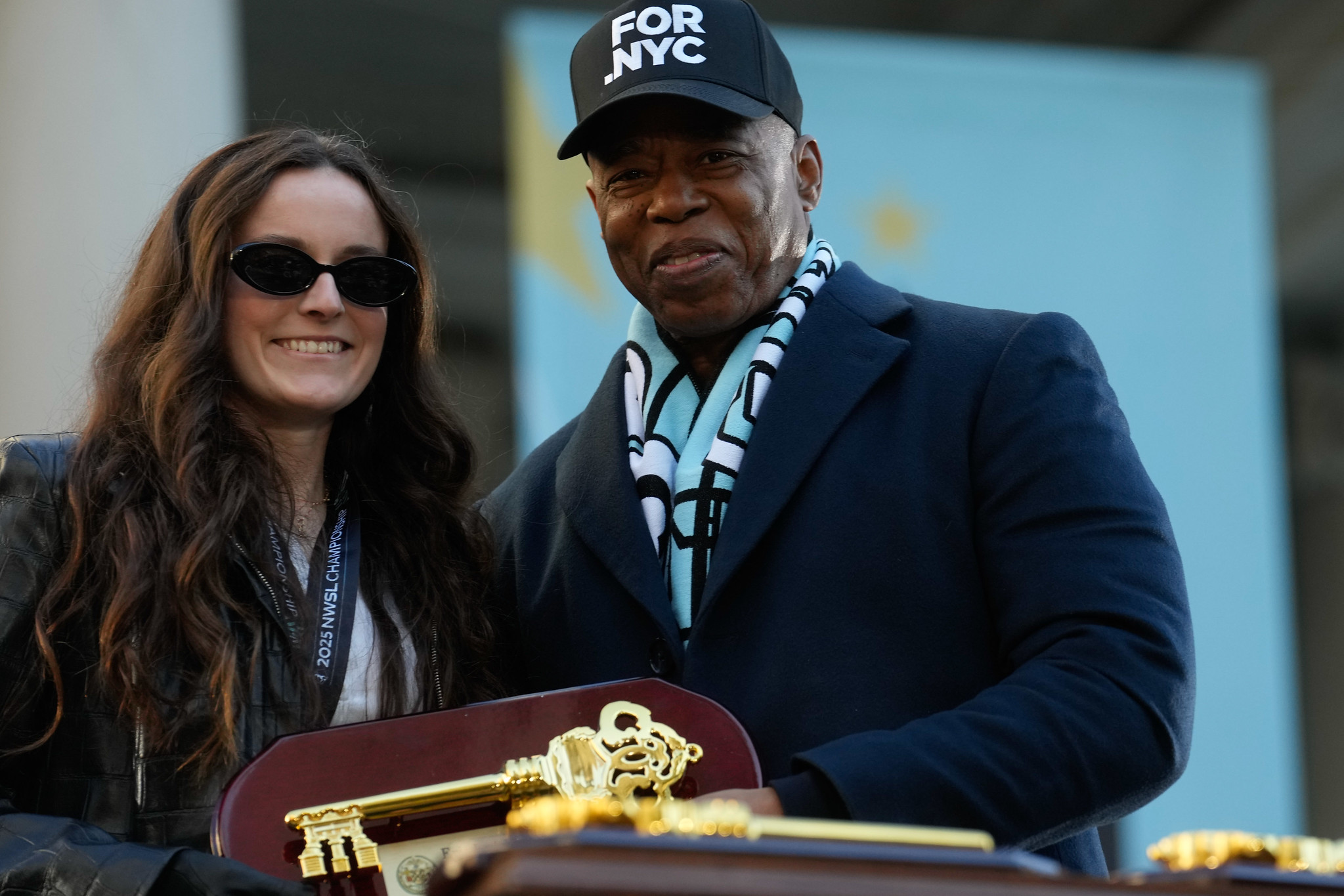
New York City Mayor Eric Adams host a celebration ceremony and present Keys to the City to members of the Gotham Football Club at City Hall on Monday, November 24, 2025. Michael Appleton/Mayoral Photography Office
MAYOR ADAMS AWARDS KEY TO THE CITY OF NEW YORK TO NATIONAL WOMEN’S SOCCER LEAGUE CHAMPIONS GOTHAM FOOTBALL CLUB
Mayor Adams Also Announces City Hall, Other City Buildings to Be Lit Gotham FC Sky Blue Tonight in Honor of Champs
Photos from Procession and Ceremony Available Online
NEW YORK – New York City Mayor Eric Adams today honored the National Women’s Soccer League (NWSL) champion Gotham Football Club (FC) with the Key to the City of New York at a City Hall ceremony after the Gotham FC won the NWSL championship Saturday evening. Additionally, Mayor Adams today announced that City Hall and other municipal buildings will be lit up in Gotham FC sky blue tonight.
“Gotham Football Club have inspired thousands of soccer fans and young girls and boys to believe in themselves, to be brave, to be bold, and to be fierce — fueled by the team slogan: ‘Always Building, Never Finished,’” said Mayor Adams. “In a city that never settles for less, Gotham FC reminds us of what it means to fight for greatness, to defy expectations, and to win with heart. Their victory is more than a championship; it’s a statement that women’s sports belong on the biggest stage. New York doesn’t just watch history; we make it, and we will celebrate the women who are redefining it.”
“We are so proud to be recognized with this special honor at City Hall,” said Carolyn Tisch Blodgett, governor, Gotham FC. “This team earned a championship through the very grit, boldness, and excellence that defines this region, and we loved the opportunity to celebrate our championship with our Gotham FC community.”
The festivities celebrated the second NWSL championship victory in three years for Gotham FC, which has become a global powerhouse in women’s professional soccer thanks to its domestic and continental success. Led by U.S. Women’s National Team stars Rose Lavelle, Jaedyn Shaw, and Emily Sonnett, the 2025 NWSL champions defeated their archrival Washington Spirit 1-0 in the NWSL final, completing one of the most successful seasons in American women’s soccer history.

Representing New Jersey and New York with top global talent, Gotham FC is one of 16 clubs in the NWSL. The club won its first NWSL championship in 2023. Two years later, Gotham FC captured the first continental club trophy in North American women’s soccer history by winning the inaugural 2024-25 CONCACAF W Champions Cup, earning qualification for the first editions of the FIFA Women’s Champions Cup and the FIFA Women’s Club World Cup.
Rebranded as Gotham FC in 2021, the club plays its home matches at Sports Illustrated Stadium in Harrison, N.J. Originally founded in 2007 as Sky Blue FC, the team won the inaugural Women’s Professional Soccer Championship in 2009 and has been a founding member of the NWSL since the league’s launch in 2013.
In addition to City Hall, the following city buildings will be lit up sky blue tonight in honor of the Gotham FC:
- Brooklyn Borough Hall: 209 Joralemon Street, Brooklyn, NY 11201
- The David N. Dinkins Manhattan Municipal Building: 1 Centre Street, New York, NY 10007
- Queens Borough Hall: 120-55 Queens Blvd, Kew Gardens, NY 11424
- Staten Island Borough Hall: 10 Richmond Terrace, Staten Island, NY 10301
The Key to the City of New York was first awarded in 1702 by New York City Mayor Phillip French, when he offered “Freedom of the City” to Viscount Edward Cornbury, governor of New York and New Jersey. By the mid-1800s, it became customary to award the Key to the City of New York as a direct symbol of the city’s wish that a guest feel free to come and go at will. Today, the Key to the City of New York is a beloved symbol of civic recognition and gratitude reserved for individuals whose service to the public and the common good rises to the highest level of achievement.

New York City Mayor Eric Adams host a celebration ceremony and present Keys to the City to members of the Gotham Football Club at City Hall on Monday, November 24, 2025. Michael Appleton/Mayoral Photography Office
Banner Image: New York City Mayor Eric Adams host a celebration ceremony and present Keys to the City to members of the Gotham Football Club at City Hall on Monday, November 24, 2025. Image Credit – Michael Appleton/Mayoral Photography Office



[…] note: Readers can see last week’s rundown by the Mayor here, and the weekly op-ed is here. Last week, the Mayor presented the Keys to the City to the Gotham […]