Is There Any Evidence In Torah Connecting Noah’s Flood And Moses Parting Of Waters In Egypt? Noah Didn’t Pray For His Generation- Moses’ Prayers Brought Mercy
Editor’s note: If you are unfamiliar with Nachson ben Aminadav (mentioned in the commentary below), this is the brother-in-law of Aaron (the high priest) and prince of Judah of the tribes of Israel. Before Moses lifted his staff to part the seas, the order came from Hashem to go forward. In faith and devotion, Nachson jumped into the sea. Then Moses was ordered by Hashem to raise his staff and part the waters, from translation and commentary provided by Chabad.org:
“When Israel stood facing the Sea of Reeds, and the command was given to move forward, each of the tribes hesitated, saying, “We do not want to be the first to jump into the sea.”
Nachshon saw what was happening—and jumped into the sea…
Moses replied, “Master of the world, what am I to do?”
Said G‑d, “You lift your staff and spread your hand over the seas, which will split, and Israel will come into the sea upon dry land.”
This particular person is also not present in the scenes describing the parting of the waters in either of the two popular films on the subject (The Ten Commandments with Charlton Heston and the animated film Prince of Egypt).
Question: Is there any evidence in the Torah connecting the Flood of Noach and the Splitting of the Yam Suf?
Yes there is, as seen from the following numerous similarities between the two sets of episodes:
Testimonial:
“Rav Edery’s innovative approach to Torah presents fascinating insights and again proves that the Torah’s “measure is longer than the earth and broader than the sea.” He has the unique ability to uncover even more of the Torah’s infinite wisdom.”
Rabbi (Dayan) Pruzansky,
Past President of the Vaad Harabonim (Rabbinical Board) of Queens.)
1) Both episodes involve a mix of two populations – one evil and one good:
a) The evil people of Noah’s generation were mixed with the righteous Noach and his family.
b) Similarly, the evil Pharaoh and the Egyptians were mixed with the Bnei Yisrael.
2) Both Noach’s generation and Pharaoh refused to repent after ample time and warnings were given to them:
a) For 120 years while Noach made the ark, his generation was warned that they either repent or a flood would wipe them out. They did not repent.
b) Similarly, Moshe warned Pharaoh to let Bnei Yisrael out – but Pharaoh refused to repent and send Bnei Yisrael out of Egypt.
3) In both episodes Hashem decided to destroy All the evil population while saving the good population:
a) Hashem told Noach “ ….I am about to bring the flood waters upon the earth to destroy All flesh…” (Genesis 6-17).
He then tells Noach that only his family will survive: “ But I will establish my covenant with you…” (Genesis 6-18).
b) Similarly, Hashem tells Moshe that He will destroy all the Egyptian army “…and he (Pharaoh and all his army) will pursue them, and I will be glorified through Pharoah and through his entire army…” (Shemot 14-4).
And of course: “…Hashem saved Israel from the hand of Egypt…” (Shemot 14-30).
4) Both Noach and Moshe were the leaders of their respective populations.
5) In both episodes the expression “on that very day” (בְּעֶצֶם הַיּוֹם הַזֶּה) is used to commence the salvation of Noach and family/ Moshe and Bnei Yisrael – by entering or exiting a particular place:
a) Regarding Noach, the verse reads: “On that very day ( בְּעֶצֶם הַיּוֹם הַזֶּה) Noach came…. into the ark” ( Genesis 7-13).
b) Similarly, for the exit from Egypt it also reads: ” ….and it was on that very day בְּעֶצֶם הַיּוֹם הַזֶּה that all the legions of Hashem left Egypt.” (Shemot 12- 41).
6) The above expression also indicates that in both episodes the event occurred in public view during day time.
a) That is, Bnei Yisrael left at day time, not at night as would thieves that are escaping.
b) Similarly, for the flood, Noach entered the ark in public view to counter the potential future claim of the population – that Noach only succeeded in entering the ark because it was night, but if he would have tried during the day time they would have killed him.
7) In both episodes water ( מַיִם ) is used as the destructive agent:
a) The Mabul/flood in Noach’s generation destroyed the population, as per: “… I am about to bring the flood waters ( מַיִם ) upon the earth…” (Genesis 6-17).
b) Similarly, in the Yam Suf: “The water (הַמַּיִם) came back and covered the chariots…” (Shemot 14-28).
8) In both episodes heat is used in the destruction:
a) At the Mabul the water was very hot.
b) While, at the Yam Suf, heat was used against the Egyptians in making the mud hot.
9) In both episodes Hashem stopped the evil people from reaching the good people once they had already entered the ‘safe area’:
a) In the Mabul some people tried to get into the Ark (safe area) once Noach and his family had already entered, but Hashem blocked them with wild animals. This is as per the explanation of the verse: “…Hashem closed off in front of them.”(Genesis 7-16).
b) Similarly, at the Yam Suf the Egyptians were blocked with the cloud and fire from getting into the Yam Suf (dry land-safe area) once it had already split and the Bnei Yisrael had already entered. This is seen in the verse: “It (cloud) came between the camp of Egypt and the camp of Israel…and the Bnei Yisrael came within the sea on dry land…” (Shemot 14-20).
10) Both episodes are concerned with the subject of FAITH regarding entering the place of salvation before or after the water begins:
a) In the episode of the Mabul, Noach enters the ark only after the rain had started. This was because of his lack of faith as explained by Rashi in his comments to the verse: “went into the ark because of the waters of the flood“ (Genesis 7-7).
b) The opposite occurred when Nachson ben Aminadav of Yehuda entered the water before it split, causing it to split because he had faith. This is as per the verse that reads: “ why do you cry out to me“ (Shemot 14-15), where Rashi comments that Hashem is telling Moshe that Bnei Yisrael should just walk into the sea because: “…the faith they had in me when they went out of Egypt are sufficient to split the sea (Rashi)”.
11) Both Noach and Bnei Yisrael were safe in dangerous waters:
a) Noach in the Ark on top of the waters as per: “.…and the ark drifted upon the face of the waters.” (Genesis 7-18).
b) While Bnei Yisrael was safe inside the walls of water as per: “…and the water was a wall for them on their right and on their left.”(Shemot 14-22).
12) Hashem’s רוּח (spirit-wind) is used in both episodes to control the waters:
a) In the Mabul, the ‘Rouach’ is used (as per the simple meaning) to decrease the water as per: “and G-d caused a spirit (רוּחַ) to pass over the earth“( Genesis 8-1). Rashi comments that this means “a spirit of consolation….“.
b) In the Yam Suf, a ‘Rouach’ is used to split the water as per: “and Hashem moved the sea with a strong east wind (בְּרוּחַ).”
13) We also see the same order of the Hebrew words “Charva“ and “Yavash“ in both episodes:
a) The Mabul episode:
“…and behold the surface of the ground had dried (חָרְבוּ).” (Genesis 8-13).
And then in (Genesis 8-14) it reads: “ and in the second month on the 27th day of the month the earth was dried (יָבְשָׁה).“(Mesiach Ilmin) explains (Charva means damp land while Yavash means totally dry land).
b) The Yam Suf episode:
(Shemot 14-21) reads: “He turned the sea to damp land (לֶחָרָבָה) and the water split.“ Then in (Genesis 14-22) it reads: “the children of Israel came within the sea on dry land (בַּיַּבָּשָׁה).”
14) In the Mabul episode the above ‘charva’ and “yavash’ words above are separated by nine words while in the Yam Suf by eight words – almost identical.
15) In both episodes the land first became damp, and then only later when it became dry, did Noach and Bnei Yisrael walk on it:
a) For the Mabul it reads: “the earth was dried“ (Genesis 8-14), and then in (Genesis 8-15) Hashem commands: “ go forth from the ark….“ .
b) Similarly, in the Yam Suf episode it reads: “the children of Israel came within the sea on dry land (בַּיַּבָּשָׁה) .” (Shemot 14-22).
16) The same Hebrew word “baka“ is used in both episodes to create the Mabul and the Yam Suf :
a) The Mabul episode reads: “…all the fountains of the great deep (tehom) Burst forth (נִבְקְעו).” (Ber. 7-11).
b) While in the Yam Suf it reads: “ and the waters split (וַיִּבָּקְעוּ) .“
(This is also noted by Gur Aryeh).(Shemot 14-21)
We can also note that the opposite occurred. That is, in the Mabul, the “Baka” resulted in water covering the dry land ( i.e. the flood) – while in the Yam Suf it caused the sea to split and the dry land to be exposed.
17) In both episodes, waters from the deep (תְּהוֹם) destroyed the evil people:
a) The mabul reads: “….all the fountains of the great deep (תְּהוֹם) burst forth.” (Genesis 7-11).
b) Similarly, in the Yam Suf in the ‘song at the sea’ (Shemot 15-5) it reads: “ Deep waters`( תְּהֹמֹת) would cover them….“ .
18) Both Noach and the Bnei Yisrael did not want to leave the place of the salvation:
a) Noach did not want to leave the ark.
b) While, again, Bnei Yisrael did not want to leave the area of the Yam Suf because they were collecting valuables at the site. This is as per Rashi’s comment on the verse: “Moshe caused Israel to Journey (from the Yam Suf)…” (Shemot 15-22).
The language “caused” indicates that Moshe pressured them to voyage on.
19) Both episodes involve the subject of Forcing animals/people away from the ark/Yam Suf:
a) That is, Hashem told Noach after the flood to: “…have them go out with you…” (Genesis 8-17). Rashi comments on the language of the verse saying that it means that Noach is to take them out if they don’t want to go out.
b) Similarly, for the Yam Suf, (as noted in #18 above), Moshe pressured them to voyage on.
20) Both Noach and Bnei Yisrael now have a new lease on life and a promising future:
a) Noach is to repopulate the Earth.
b) Bnei Yisrael is to get the Torah at Har Sinai.
21) Both Noach and Bnei Yisrael soon misuse their potential and sin with liquid:
a) Noach gets drunk and his son castrates him, etc. as per: “And Noach, the man of the earth debased himself and planted vineyard and he Drank ( וַיֵּשְׁתְּ) from the wine and got drunk….” (Genesis 9-20).
Rashi comments on his sin that: “he made himself profane for he should have engaged in a different planting.” That is other less harmful plants (Mizrahi).
b) While Bnei Yisrael’s next stop is Marah where they sin by complaining in an aggressive manner about lack of good drinking water as per: “The people complained against Moshe saying ‘what shall we drink (נִּשְׁתֶּה).” (Shemot 15-24).
Rashi again comments on the liquid related sin saying: “for they did not consult with Moshe using gracious language …rather they complained.” In addition they soon descend from the exalted level of Har Sinai with the Golden calf and immorality.
22) It is interesting to note that the Yam Suf episode was already linked to the Mabul episode by Chazal (our sages). They explain that Pharaoh decided to kill the Bnei Yisrael by throwing them into the Nile because he reasoned that since Hashem had promised after the Mabul never to destroy again with a flood, and in addition that since Hashem only punishes Midda Keneged Midda (punishment matches the sin), then Hashem won’t be able to punish him for killing the Jews with water.
POTENTIAL MEANING OF THE CONNECTIONS
See Part 2 of this chapter (not included here) that shows the connections between the Mabul and the Cheit Haegel. The combined analysis of both parts are below:
TWO TIKKUNIM: EMUNAH THEN PRAYER
Analysis of the above parallels and opposites indicates that it’s quite possible that two sets of reparations (tikkun) were effected by Moshe during the above two described episodes involving Moshe – the Yam Suf and the Cheit Ha Eigel – which acted to repair at least two errors committed by Noach in the Mabul episode. A first tikkun was effected in the Yam Suf episode which led to a second tikkun in the Chet ha Eigel episode:
To explain:
1) As mentioned, Noach did not have faith that the Mabul would occur for sure (see Rashi). And maybe, it’s precisely because he did not fully believe that the Mabul would occur, did Noach not pray to Hashem to save the generation. Therefore as a result of his lack of Faith in what Hashem had told him – that He would destroy the world – did Noach not pray and so the world got destroyed. So, to repair this sin of lack of faith in Hashem’s word, Nachson ben Aminadav had to do an action opposite of Noach`s, showing his faith. While Noach did not enter the ark until After it started raining (destructive water), Nachson, because of his faith, entered the Yam Suf (destructive water) Before it split. This inverse indicates a possible tikkun.
Thus, this act of faith may have repaired Noach’s act of unfaithfulness.
2) Then, as explained above, a second tikkun is effected – where Moshe`s prayers to save Bnei Yisrael from the impending destruction due to the sin of Golden calf – act as the tikkun for Noach’s lack of prayer for his generation, which led to their destruction.
3) And maybe that is one reason Hashem tells Moshe in Shemot 14-15:
“Why do you cry out to me, speak to Bnei Yisrael and let them journey.” Rashi comments on this verse, “ this verse teaches that Moshe was standing and praying, (when) Hashem said to Moshe Now is not the time to prolong prayer for Israel is in distress“. So we see that Hashem told Moshe that now is not the time for long prayers as Moshe was praying at that time (Mishmeret Hakodesh).
We then see that one reading of this could be; ‘why are you praying to me now; now is not the time to make a tikkun through prayer, now is the time to first make the tikkun for the lack of faith that Noach displayed when he only entered the ark after it started raining’. This lack of faith later led to Noach`s lack of prayer for his generation. So “speak…and let them journey“. Rashi comments on this verse that Bnei Yisrael’s faith will split the sea -so they should just walk.
4) Later, at the Cheit Ha Eigel, will be the time for Moshe to make the second tikkun by praying for his people. And support for this is seen in Shemot 39-10 where Hashem actually encourages Moshe to pray for the people after the Cheit Ha Eigel when He then says “And now desist from me….“ which Rashi explains means that Hashem informed Moshe of the idea of praying to save the people“.
So at the Yam Suf Hashem tells Moshe to Not Pray but at the Chet Ha Eigel He informs him To pray!
5) We see that the matching forty days and forty nights could be part of the tikkun; that is Moshe must pray to save the people during this forty day time period in order to repair the death and destruction that was wrought by forty days and nights of rain because of a lack of prayer.
Or alternatively, Moshe received the Torah from Shamayim/Heaven for forty days because since the Torah is likened to water and gives life it can then repair the forty days of destructive rain that came from Shamayim due to Noach’s lack of prayer.
6) In addition, Moshe possibly repaired Noach’s not listening and going into the ark for the seven day period before the forty days of rain started, by ascending Har Sinai for seven days at G-d’s command before the forty day period began.
7) In addition, the opposite way in which the same word “baka- split” was used in both episodes as described above, also supports the idea of a tikkun. That is, in the Mabul the “split” led to a flood and the destruction of the world that Noach did not pray for, while in the Yam Suf the “split” of the Yam Suf, which was caused by emunah, led to the salvation of Bnei Yisrael.
8) Support for the above idea that Moshe is doing a tikkun for Noach is that indeed, Arizal states in Sharei Hagilgulim (ch.19) that Moshe is a gilgul/reincarnation of Noach! And oftentimes, the reason for a gilgul is to effect a tikkun.
THE PREDICTIVE POWER OF PARALLELS:
.
After writing the above (many years ago) I learned that the Arizal actually does teach that Moshe’s prayers at the Chet Ha Eigel effected a tikkun for Noach’s lack of prayer in the Mabul- exactly the proposed tikkun set forth above!
Thus, significantly so, it seems that the above described parallel scriptural episodes with their matching words and themes act as a valid scriptural support for what the Arizal has taught us (not that he needs it, of course). In addition, I noticed that the Torah commentary Meam Loez, parsha Noach, Genesis 7:5 makes it clear that Noach sinned in two main ways: displaying a lack of emunah and not praying – just as described above – and got punished for those sins by getting his health damaged aboard the ark. Also Midrash Devarim explains that Moshe rebuked Noach for not praying and sacrificing himself for his generation like he did. Additionally, we can note, that the self-sacrificing request of Moshe to “erase” him from the book if Hashem does not forgive Bnei Yisrael is the opposite of Hashem’s “erasing” of the world due to Noach’s lack of praying- which again supports the above concept of a tikkun.
Importantly the above chapter validates to a certain extent the power of Parallels analysis (a sort of gezerah shavah) to derive and support certain claims and teachings of our great Rabbis.
MUSSAR – ACT OR PRAY?
We have to realize that in our daily lives some situations call for Emunah (and action- just walk, don’t extend prayers) and some situations call mostly for prayer, and we have to determine the appropriate option. In addition, in order to effectively pray we need to have first worked on our emunah. If we have weak emunah – If we don’t believe that Hashem is going to keep his word (send the Mabul or other punishments that He said He would give us for certain sins) then we will not be motivated to pray and do teshuva if we fail in certain areas. For that matter, we may even not be motivated to pray for our basic needs as we will not have the emunah that He will keep his word about being responsive to our prayers.
Avraham Edery is an author, researcher, and lecturer. He is the author of the acclaimed Jewish Torah book called Parallels in the Torah.
This book demonstrates that apparently unconnected episodes in the Torah are actually inherently related. These 'Parallel episodes' often have
over 15-20 significant matches including matching words and actions in the same order! This can not be by chance. Avraham Edery
has a B.Sc. and an MBA from McGill University. You can visit www.ParallelsintheTorah.com to learn more about the book
or order a copy from Amazon.com.

Is There Any Evidence In Torah Connecting Noah’s Flood And Moses Parting Of Waters In Egypt? Noah Didn’t Pray For His Generation- Moses’ Prayers Brought Mercy
Avraham Edery 0 Editorials, Faith On Staten Island, Inspiration, Morality and Ethics, Staten Islander Exclusive
Moshe and Noach – tikkun of emuna and tefilla
Editor’s note: If you are unfamiliar with Nachson ben Aminadav (mentioned in the commentary below), this is the brother-in-law of Aaron (the high priest) and prince of Judah of the tribes of Israel. Before Moses lifted his staff to part the seas, the order came from Hashem to go forward. In faith and devotion, Nachson jumped into the sea. Then Moses was ordered by Hashem to raise his staff and part the waters, from translation and commentary provided by Chabad.org:
“When Israel stood facing the Sea of Reeds, and the command was given to move forward, each of the tribes hesitated, saying, “We do not want to be the first to jump into the sea.”
Nachshon saw what was happening—and jumped into the sea…
Moses replied, “Master of the world, what am I to do?”
Said G‑d, “You lift your staff and spread your hand over the seas, which will split, and Israel will come into the sea upon dry land.”
This particular person is also not present in the scenes describing the parting of the waters in either of the two popular films on the subject (The Ten Commandments with Charlton Heston and the animated film Prince of Egypt).
Question: Is there any evidence in the Torah connecting the Flood of Noach and the Splitting of the Yam Suf ?
Yes there is, as seen from the following numerous similarities between the two sets of episodes:
Testimonial:
“Rav Edery’s innovative approach to Torah presents fascinating insights and again proves that the Torah’s “measure is longer than the earth and broader than the sea.” He has the unique ability to uncover even more of the Torah’s infinite wisdom.”
Rabbi (Dayan) Pruzansky,
Past President of the Vaad Harabonim (Rabbinical Board) of Queens.)
1) Both episodes involve a mix of two populations – one evil and one good:
a) The evil people of Noah’s generation were mixed with the righteous Noach and his family.
b) Similarly, the evil Pharaoh and the Egyptians were mixed with the Bnei Yisrael.
2) Both Noach’s generation and Pharaoh refused to repent after ample time and warnings were given to them:
a) For 120 years while Noach made the ark, his generation was warned that they either repent or a flood would wipe them out. They did not repent.
b) Similarly, Moshe warned Pharaoh to let Bnei Yisrael out – but Pharaoh refused to repent and send Bnei Yisrael out of Egypt.
3) In both episodes Hashem decided to destroy All the evil population while saving the good population:
a) Hashem told Noach “ ….I am about to bring the flood waters upon the earth to destroy All flesh…” (Genesis 6-17).
He then tells Noach that only his family will survive: “ But I will establish my covenant with you…” (Genesis 6-18).
b) Similarly, Hashem tells Moshe that He will destroy all the Egyptian army “…and he (Pharaoh and all his army) will pursue them, and I will be glorified through Pharoah and through his entire army…” (Shemot 14-4).
And of course: “…Hashem saved Israel from the hand of Egypt…” (Shemot 14-30).
4) Both Noach and Moshe were the leaders of their respective populations.
5) In both episodes the expression “on that very day” (בְּעֶצֶם הַיּוֹם הַזֶּה) is used to commence the salvation of Noach and family/ Moshe and Bnei Yisrael – by entering or exiting a particular place:
a) Regarding Noach, the verse reads: “On that very day ( בְּעֶצֶם הַיּוֹם הַזֶּה) Noach came…. into the ark” ( Genesis 7-13).
b) Similarly, for the exit from Egypt it also reads: ” ….and it was on that very day בְּעֶצֶם הַיּוֹם הַזֶּה that all the legions of Hashem left Egypt.” (Shemot 12- 41).
6) The above expression also indicates that in both episodes the event occurred in public view during day time.
a) That is, Bnei Yisrael left at day time, not at night as would thieves that are escaping.
b) Similarly, for the flood, Noach entered the ark in public view to counter the potential future claim of the population – that Noach only succeeded in entering the ark because it was night, but if he would have tried during the day time they would have killed him.
7) In both episodes water ( מַיִם ) is used as the destructive agent:
a) The Mabul/flood in Noach’s generation destroyed the population, as per: “… I am about to bring the flood waters ( מַיִם ) upon the earth…” (Genesis 6-17).
b) Similarly, in the Yam Suf: “The water (הַמַּיִם) came back and covered the chariots…” (Shemot 14-28).
8) In both episodes heat is used in the destruction:
a) At the Mabul the water was very hot.
b) While, at the Yam Suf, heat was used against the Egyptians in making the mud hot.
9) In both episodes Hashem stopped the evil people from reaching the good people once they had already entered the ‘safe area’:
a) In the Mabul some people tried to get into the Ark (safe area) once Noach and his family had already entered, but Hashem blocked them with wild animals. This is as per the explanation of the verse: “…Hashem closed off in front of them.”(Genesis 7-16).
b) Similarly, at the Yam Suf the Egyptians were blocked with the cloud and fire from getting into the Yam Suf (dry land-safe area) once it had already split and the Bnei Yisrael had already entered. This is seen in the verse: “It (cloud) came between the camp of Egypt and the camp of Israel…and the Bnei Yisrael came within the sea on dry land…” (Shemot 14-20).
10) Both episodes are concerned with the subject of FAITH regarding entering the place of salvation before or after the water begins:
a) In the episode of the Mabul, Noach enters the ark only after the rain had started. This was because of his lack of faith as explained by Rashi in his comments to the verse: “went into the ark because of the waters of the flood“ (Genesis 7-7).
b) The opposite occurred when Nachson ben Aminadav of Yehuda entered the water before it split, causing it to split because he had faith. This is as per the verse that reads: “ why do you cry out to me“ (Shemot 14-15), where Rashi comments that Hashem is telling Moshe that Bnei Yisrael should just walk into the sea because: “…the faith they had in me when they went out of Egypt are sufficient to split the sea (Rashi)”.
11) Both Noach and Bnei Yisrael were safe in dangerous waters:
a) Noach in the Ark on top of the waters as per: “.…and the ark drifted upon the face of the waters.” (Genesis 7-18).
b) While Bnei Yisrael was safe inside the walls of water as per: “…and the water was a wall for them on their right and on their left.”(Shemot 14-22).
12) Hashem’s רוּח (spirit-wind) is used in both episodes to control the waters:
a) In the Mabul, the ‘Rouach’ is used (as per the simple meaning) to decrease the water as per: “and G-d caused a spirit (רוּחַ) to pass over the earth“( Genesis 8-1). Rashi comments that this means “a spirit of consolation….“.
b) In the Yam Suf, a ‘Rouach’ is used to split the water as per: “and Hashem moved the sea with a strong east wind (בְּרוּחַ).”
13) We also see the same order of the Hebrew words “Charva“ and “Yavash“ in both episodes:
a) The Mabul episode:
“…and behold the surface of the ground had dried (חָרְבוּ).” (Genesis 8-13).
And then in (Genesis 8-14) it reads: “ and in the second month on the 27th day of the month the earth was dried (יָבְשָׁה).“(Mesiach Ilmin) explains (Charva means damp land while Yavash means totally dry land).
b) The Yam Suf episode:
(Shemot 14-21) reads: “He turned the sea to damp land (לֶחָרָבָה) and the water split.“ Then in (Genesis 14-22) it reads: “the children of Israel came within the sea on dry land (בַּיַּבָּשָׁה).”
14) In the Mabul episode the above ‘charva’ and “yavash’ words above are separated by nine words while in the Yam Suf by eight words – almost identical.
15) In both episodes the land first became damp, and then only later when it became dry, did Noach and Bnei Yisrael walk on it:
a) For the Mabul it reads: “the earth was dried“ (Genesis 8-14), and then in (Genesis 8-15) Hashem commands: “ go forth from the ark….“ .
b) Similarly, in the Yam Suf episode it reads: “the children of Israel came within the sea on dry land (בַּיַּבָּשָׁה) .” (Shemot 14-22).
16) The same Hebrew word “baka“ is used in both episodes to create the Mabul and the Yam Suf :
a) The Mabul episode reads: “…all the fountains of the great deep (tehom) Burst forth (נִבְקְעו).” (Ber. 7-11).
b) While in the Yam Suf it reads: “ and the waters split (וַיִּבָּקְעוּ) .“
(This is also noted by Gur Aryeh).(Shemot 14-21)
We can also note that the opposite occurred. That is, in the Mabul, the “Baka” resulted in water covering the dry land ( i.e. the flood) – while in the Yam Suf it caused the sea to split and the dry land to be exposed.
17) In both episodes, waters from the deep (תְּהוֹם) destroyed the evil people:
a) The mabul reads: “….all the fountains of the great deep (תְּהוֹם) burst forth.” (Genesis 7-11).
b) Similarly, in the Yam Suf in the ‘song at the sea’ (Shemot 15-5) it reads: “ Deep waters`( תְּהֹמֹת) would cover them….“ .
18) Both Noach and the Bnei Yisrael did not want to leave the place of the salvation:
a) Noach did not want to leave the ark.
b) While, again, Bnei Yisrael did not want to leave the area of the Yam Suf because they were collecting valuables at the site. This is as per Rashi’s comment on the verse: “Moshe caused Israel to Journey (from the Yam Suf)…” (Shemot 15-22).
The language “caused” indicates that Moshe pressured them to voyage on.
19) Both episodes involve the subject of Forcing animals/people away from the ark/Yam Suf:
a) That is, Hashem told Noach after the flood to: “…have them go out with you…” (Genesis 8-17). Rashi comments on the language of the verse saying that it means that Noach is to take them out if they don’t want to go out.
b) Similarly, for the Yam Suf, (as noted in #18 above), Moshe pressured them to voyage on.
20) Both Noach and Bnei Yisrael now have a new lease on life and a promising future:
a) Noach is to repopulate the Earth.
b) Bnei Yisrael is to get the Torah at Har Sinai.
21) Both Noach and Bnei Yisrael soon misuse their potential and sin with liquid:
a) Noach gets drunk and his son castrates him, etc. as per: “And Noach, the man of the earth debased himself and planted vineyard and he Drank ( וַיֵּשְׁתְּ) from the wine and got drunk….” (Genesis 9-20).
Rashi comments on his sin that: “he made himself profane for he should have engaged in a different planting.” That is other less harmful plants (Mizrahi).
b) While Bnei Yisrael’s next stop is Marah where they sin by complaining in an aggressive manner about lack of good drinking water as per: “The people complained against Moshe saying ‘what shall we drink (נִּשְׁתֶּה).” (Shemot 15-24).
Rashi again comments on the liquid related sin saying: “for they did not consult with Moshe using gracious language …rather they complained.” In addition they soon descend from the exalted level of Har Sinai with the Golden calf and immorality.
22) It is interesting to note that the Yam Suf episode was already linked to the Mabul episode by Chazal (our sages). They explain that Pharaoh decided to kill the Bnei Yisrael by throwing them into the Nile because he reasoned that since Hashem had promised after the Mabul never to destroy again with a flood, and in addition that since Hashem only punishes Midda Keneged Midda (punishment matches the sin), then Hashem won’t be able to punish him for killing the Jews with water.
POTENTIAL MEANING OF THE CONNECTIONS
See Part 2 of this chapter (not included here) that shows the connections between the Mabul and the Cheit Haegel. The combined analysis of both parts are below:
TWO TIKKUNIM: EMUNAH THEN PRAYER
Analysis of the above parallels and opposites indicates that it’s quite possible that two sets of reparations (tikkun) were effected by Moshe during the above two described episodes involving Moshe – the Yam Suf and the Cheit Ha Eigel – which acted to repair at least two errors committed by Noach in the Mabul episode. A first tikkun was effected in the Yam Suf episode which led to a second tikkun in the Chet ha Eigel episode:
To explain:
1) As mentioned, Noach did not have faith that the Mabul would occur for sure (see Rashi). And maybe, it’s precisely because he did not fully believe that the Mabul would occur, did Noach not pray to Hashem to save the generation. Therefore as a result of his lack of Faith in what Hashem had told him – that He would destroy the world – did Noach not pray and so the world got destroyed. So, to repair this sin of lack of faith in Hashem’s word, Nachson ben Aminadav had to do an action opposite of Noach`s, showing his faith. While Noach did not enter the ark until After it started raining (destructive water), Nachson, because of his faith, entered the Yam Suf (destructive water) Before it split. This inverse indicates a possible tikkun.
Thus, this act of faith may have repaired Noach’s act of unfaithfulness.
2) Then, as explained above, a second tikkun is effected – where Moshe`s prayers to save Bnei Yisrael from the impending destruction due to the sin of Golden calf – act as the tikkun for Noach’s lack of prayer for his generation, which led to their destruction.
3) And maybe that is one reason Hashem tells Moshe in Shemot 14-15:
“Why do you cry out to me, speak to Bnei Yisrael and let them journey.” Rashi comments on this verse, “ this verse teaches that Moshe was standing and praying, (when) Hashem said to Moshe Now is not the time to prolong prayer for Israel is in distress“. So we see that Hashem told Moshe that now is not the time for long prayers as Moshe was praying at that time (Mishmeret Hakodesh).
We then see that one reading of this could be; ‘why are you praying to me now; now is not the time to make a tikkun through prayer, now is the time to first make the tikkun for the lack of faith that Noach displayed when he only entered the ark after it started raining’. This lack of faith later led to Noach`s lack of prayer for his generation. So “speak…and let them journey“. Rashi comments on this verse that Bnei Yisrael’s faith will split the sea -so they should just walk.
4) Later, at the Cheit Ha Eigel, will be the time for Moshe to make the second tikkun by praying for his people. And support for this is seen in Shemot 39-10 where Hashem actually encourages Moshe to pray for the people after the Cheit Ha Eigel when He then says “And now desist from me….“ which Rashi explains means that Hashem informed Moshe of the idea of praying to save the people“.
So at the Yam Suf Hashem tells Moshe to Not Pray but at the Chet Ha Eigel He informs him To pray!
5) We see that the matching forty days and forty nights could be part of the tikkun; that is Moshe must pray to save the people during this forty day time period in order to repair the death and destruction that was wrought by forty days and nights of rain because of a lack of prayer.
Or alternatively, Moshe received the Torah from Shamayim/Heaven for forty days because since the Torah is likened to water and gives life it can then repair the forty days of destructive rain that came from Shamayim due to Noach’s lack of prayer.
6) In addition, Moshe possibly repaired Noach’s not listening and going into the ark for the seven day period before the forty days of rain started, by ascending Har Sinai for seven days at G-d’s command before the forty day period began.
7) In addition, the opposite way in which the same word “baka- split” was used in both episodes as described above, also supports the idea of a tikkun. That is, in the Mabul the “split” led to a flood and the destruction of the world that Noach did not pray for, while in the Yam Suf the “split” of the Yam Suf, which was caused by emunah, led to the salvation of Bnei Yisrael.
8) Support for the above idea that Moshe is doing a tikkun for Noach is that indeed, Arizal states in Sharei Hagilgulim (ch.19) that Moshe is a gilgul/reincarnation of Noach! And oftentimes, the reason for a gilgul is to effect a tikkun.
THE PREDICTIVE POWER OF PARALLELS:
.
After writing the above (many years ago) I learned that the Arizal actually does teach that Moshe’s prayers at the Chet Ha Eigel effected a tikkun for Noach’s lack of prayer in the Mabul- exactly the proposed tikkun set forth above!
Thus, significantly so, it seems that the above described parallel scriptural episodes with their matching words and themes act as a valid scriptural support for what the Arizal has taught us (not that he needs it, of course). In addition, I noticed that the Torah commentary Meam Loez, parsha Noach, Genesis 7:5 makes it clear that Noach sinned in two main ways: displaying a lack of emunah and not praying – just as described above – and got punished for those sins by getting his health damaged aboard the ark. Also Midrash Devarim explains that Moshe rebuked Noach for not praying and sacrificing himself for his generation like he did. Additionally, we can note, that the self-sacrificing request of Moshe to “erase” him from the book if Hashem does not forgive Bnei Yisrael is the opposite of Hashem’s “erasing” of the world due to Noach’s lack of praying- which again supports the above concept of a tikkun.
Importantly the above chapter validates to a certain extent the power of Parallels analysis (a sort of gezerah shavah) to derive and support certain claims and teachings of our great Rabbis.
MUSSAR – ACT OR PRAY?
We have to realize that in our daily lives some situations call for Emunah (and action- just walk, don’t extend prayers) and some situations call mostly for prayer, and we have to determine the appropriate option. In addition, in order to effectively pray we need to have first worked on our emunah. If we have weak emunah – If we don’t believe that Hashem is going to keep his word (send the Mabul or other punishments that He said He would give us for certain sins) then we will not be motivated to pray and do teshuva if we fail in certain areas. For that matter, we may even not be motivated to pray for our basic needs as we will not have the emunah that He will keep his word about being responsive to our prayers.
YOU CAN GET A COPY OF THE SEFER PARALLELS IN THE TORAH ON AMAZON.CA.
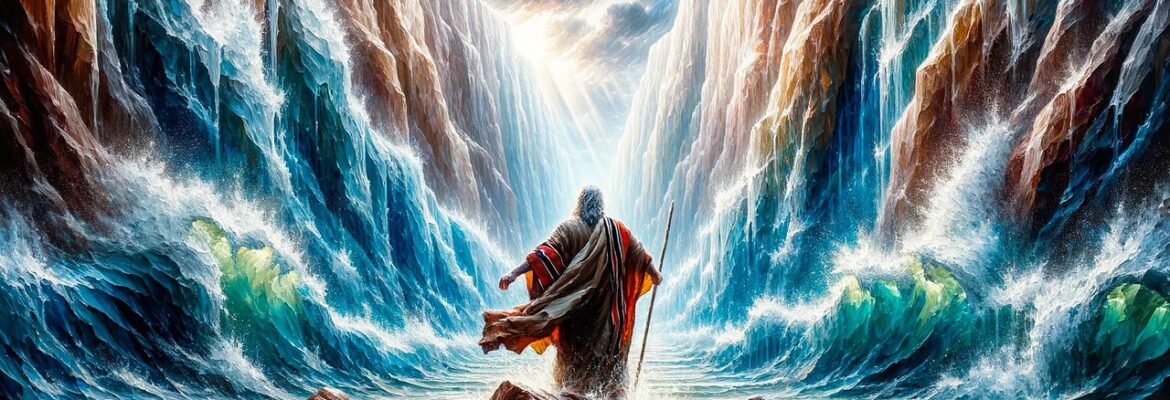
Banner Image: Moses parts the waters. Image Credit – CharlVera
Tags: action, exploration of the torah, exploring judaism, faith, Jewish culture, Jewish studies, judaism, moses, moshe, noach, noah, obedience, obey G-d, parallels in the Torah, pray for the generation, Prayer, prayer and faith, Shavuot, step out in faith, talmud, Torah, torah commentary, torah explanations, Torah parallels, when to pray
Related posts
Staten Island’s Wagner College Holocaust Center To Plant Sapling Of Horse Chestnut Outside Anne Frank’s Window During WWII
ShareTweetStaten Island’s Wagner College Holocaust Center To Plant Sapling Of Horse Chestnut Outside Anne Frank’s…
Bayonne’s Annual Holocaust Memorial Program Set For Monday, April 13th: Survivor Maud Dahme Will Speak
ShareTweetBayonne’s Annual Holocaust Memorial Program Set for Monday, April 13th; Survivor Maud Dahme Will Speak Editor’s…
About The Author
Avraham Edery
Avraham Edery is an author, researcher, and lecturer. He is the author of the acclaimed Jewish Torah book called Parallels in the Torah. This book demonstrates that apparently unconnected episodes in the Torah are actually inherently related. These 'Parallel episodes' often have over 15-20 significant matches including matching words and actions in the same order! This can not be by chance. Avraham Edery has a B.Sc. and an MBA from McGill University. You can visit www.ParallelsintheTorah.com to learn more about the book or order a copy from Amazon.com.
There are no comments yet
Why not be the first