
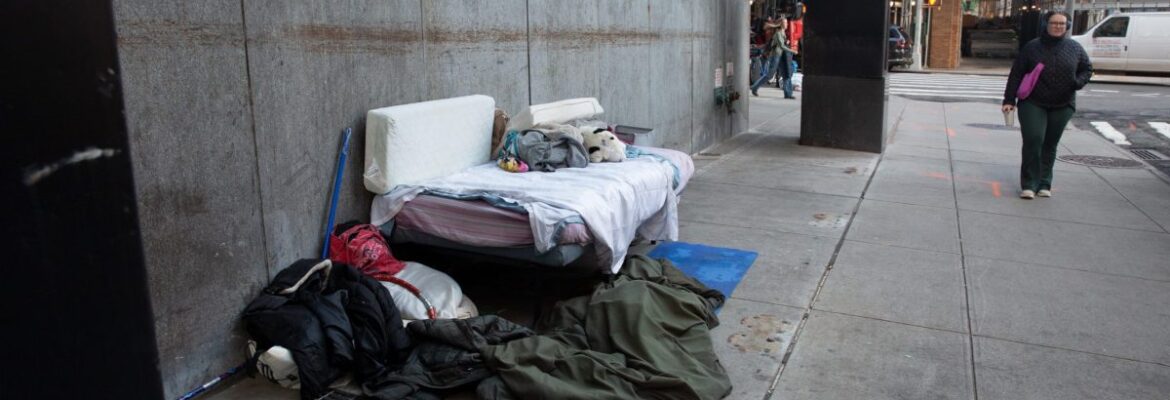
On Staten Island, Lowest Rates Of Homeless But Still Many NYC School Students In Shelter: Charleston Neighborhood Inappropriate For Transitional Housing
According to data obtained from the NYSED (NY State Department of Education) by the Association For the Children of NY (AFC), on Staten Island, one in 18 children in school is homeless. That is compared to Manhattan and the Bronx, where roughly one in every six kids is homeless. For this group, slightly less than half of them are in the shelter system and the other half are “doubled up” with family members or friends. Some other alarming facts from the study showing that we’re presently failing these kids:
- More than half of all students in temporary housing and two out of three students in shelter were chronically absent, meaning they missed at least one out of every ten school days.
- Only 22% of students in shelter in grades 3–8 scored proficient on each of the New York State English Language Arts (ELA) and math exams; in both subjects, these proficiency rates were less than half those of permanently housed students.
- One in eight students in shelter dropped out of high school—more than three times the dropout rate of their permanently housed peers—and only 62% graduated in four years.
- A recent study from the Center for Innovation through Data Intelligence (CIDI) found that NYC students who resided in shelter during high school and did not graduate in four years were 2.3 times more likely to experience homelessness again as young adults, compared to students who were in shelter and did graduate. [emphasis added)


NYC’s Unsheltered Homeless Population Reaches Highest Number in More Than a Decade
Volunteers and city staffers counted 4,140 people sleeping on the streets and subways during the overnight annual count on Jan. 23.

An estimated 4,140 people were counted sleeping on New York City streets and subways during a federally-mandated annual survey, the highest number of unsheltered homeless people tallied in more than a decade.
The number of unsheltered homeless people counted this year during the HOPE count (Homeless Outreach Population Estimate) was up slightly from last year, when 4,042 people were counted, though each year advocates caution the figure is a rough estimate — and likely far less than the actual number of people living on the streets.
!function(){“use strict”;window.addEventListener(“message”,(function(a){if(void 0!==a.data[“datawrapper-height”]){var e=document.querySelectorAll(“iframe”);for(var t in a.data[“datawrapper-height”])for(var r=0;r<e.length;r++)if(e[r].contentWindow===a.source){var i=a.data[“datawrapper-height”][t]+”px”;e[r].style.height=i}}}))}();
This year, teams of volunteers and city workers fanned out on Jan. 23, at a time when the city’s long-standing “right to shelter” protections had collapsed for adult migrants and securing a cot in the city’s shelter system could take more than a week. Hundreds of migrants spent days in overnight waiting rooms with no beds, while hundreds more were thought to have turned to the streets and subways, according to an internal city survey.
Department of Social Services Commissioner Molly Park, who oversees the annual count, pointed to the city’s ability to hold the line, with just a two percent increase in street homelessness, at a time when the number of people living in shelters had soared to unprecedented heights.
“I think it’s really a reflection of the hard work that has been happening to make sure that we are doing consistent 24/7 outreach, that we have a continuum of services that we can offer people,” Park said, adding the administration had placed 2,000 people living on the streets into permanent housing over the past two years, including 500 who had been living on the subways.
But Natalie Druce, a staff attorney at the housing advocacy group Safety Net Project, said she thought the HOPE count figures showed certain Adams administration policies – like persistent encampment sweeps or hospitalizing homeless people against their will – weren’t working.
“The various policies that effectively criminalize street homelessness, it demonstrates from our perspective this doesn’t cause people to move out of street homelessness,” she said. “If anything it’s increased the street homeless population, the numbers demonstrate that.”
Shelter Beacon
City officials also pointed out that compared to other major U.S. cities, a relatively low proportion of New York City’s homeless population live outdoors. In Los Angeles last year 52,000 of 72,000 homeless people were living outdoors (72%), whereas the unsheltered homeless in New York City is around 5% of the 124,000 who are unhoused in total.
That discrepancy in large part is due to New York City’s unique “right to shelter” protections that require the city to house anyone who requests it. The Adams administration spent almost a year in court fighting homeless rights advocates in an effort to roll those protections back. A settlement in March sets stricter limits on the time adult migrants can stay in shelters.
“The right to shelter is absolutely fundamental to the work that DHS does,” Park said. “It’s the bedrock of everything that we do.”
Over the past two years, New York City’s shelter system became a beacon to newly arriving migrants crossing the southern U.S. border in unprecedented numbers, in the absence of any meaningful federal support.
New York City saw the largest increase in homelessness of any city in the country between 2022 and 2023, according to an April report from the U.S. Department of Housing and Urban Development. And now more than 120,000 people live in the city’s vast shelter system, including more than 65,000 migrants, city officials said.
Critics have blasted the Adams administration for strict 30- and 60-day time limits set on some migrant shelter stays, which have driven untold numbers into tenuous situations like overcrowded mosques or commercial spaces.
“The increased street homelessness count is the clear result of the Administration’s cruel and counterproductive shelter eviction policies,” said Councilmember Shahana Hanif (D-Brooklyn), who has introduced a bill that would end the administration’s time limits on migrant shelter stays. “When we kick people out of the shelter system, it is inevitable that they will be forced to sleep on the streets and subways.”



Staten Islander News Service Staff Writer
This byline indicates that this article was penned by a member/members of the Staten Islander News Organization office team. Our staff writers are the backbone of our newspaper, performing all sorts of important tasks like conducting interviews, investigating leads, besides writing the news stories you see.
[…] note: We have covered the other concerns the borough president has raised about this homeless shelter, which would be the first and only city-run homeless shelter on the island. It may be the only […]
[…] to push back against this plan, which he says is bad for the area and bad for the island. Our initial reporting on this issue discussed the actual homeless population on Staten Island, which, although it is lower than the other boroughs, it is not zero. That includes street homeless […]