
Planned Political Violence Averted, Municipal Worker Childcare Pilot, Scholarship Program, Connecting Fmr. Rikers Residents To Jobs, Childcare Parent Survey, Improving Sewers Citywide, City Worker Innovation, Preliminary Budget, Childcare Map, Snow Operations & Composting Facilities In Brooklyn: Mayor Mamdani – UPDATED
Planned Political Violence Averted, Municipal Worker Childcare Pilot, Scholarship Program, Connecting Fmr. Rikers Residents To Jobs, Childcare Parent Survey, Improving Sewers Citywide, City Worker Innovation, Preliminary Budget, Childcare Map, Snow Operations & Composting Facilities In Brooklyn: Mayor Mamdani
Editor’s note: Below is video from the b-roll at the Riker’s Island event detailed below. And see Mayor Mamdani’s previous week’s rundown here.
STATEMENT FROM MAYOR MAMDANI ON THREAT TO NERDEEN KISWANI
NEW YORK – In response to news of an arrest made in connection with a threat to Nerdeen Kiswani, Mayor Zohran Kwame Mamdani released the following statement:
A member of an offshoot of the Jewish Defense League — designated by the FBI as a “known violent extremist organization” — was allegedly building explosive devices to target the home of Nerdeen Kiswani in a chilling act of political violence. The defendant reportedly planned to flee to Israel following the attack.
This comes amid an alarming rise in threats and violence across the country targeting Palestinian human rights advocates.
I am thankful that the NYPD and FBI thwarted this plot, which could have endangered Nerdeen’s life and those of other New Yorkers.
Let me be clear: We will not tolerate violent extremism in our city. No one should face violence for their political beliefs or their advocacy. I am relieved that Nerdeen is safe.
Our city must meet hate with solidarity, and meet fear with an unshakable commitment to justice and to one another.
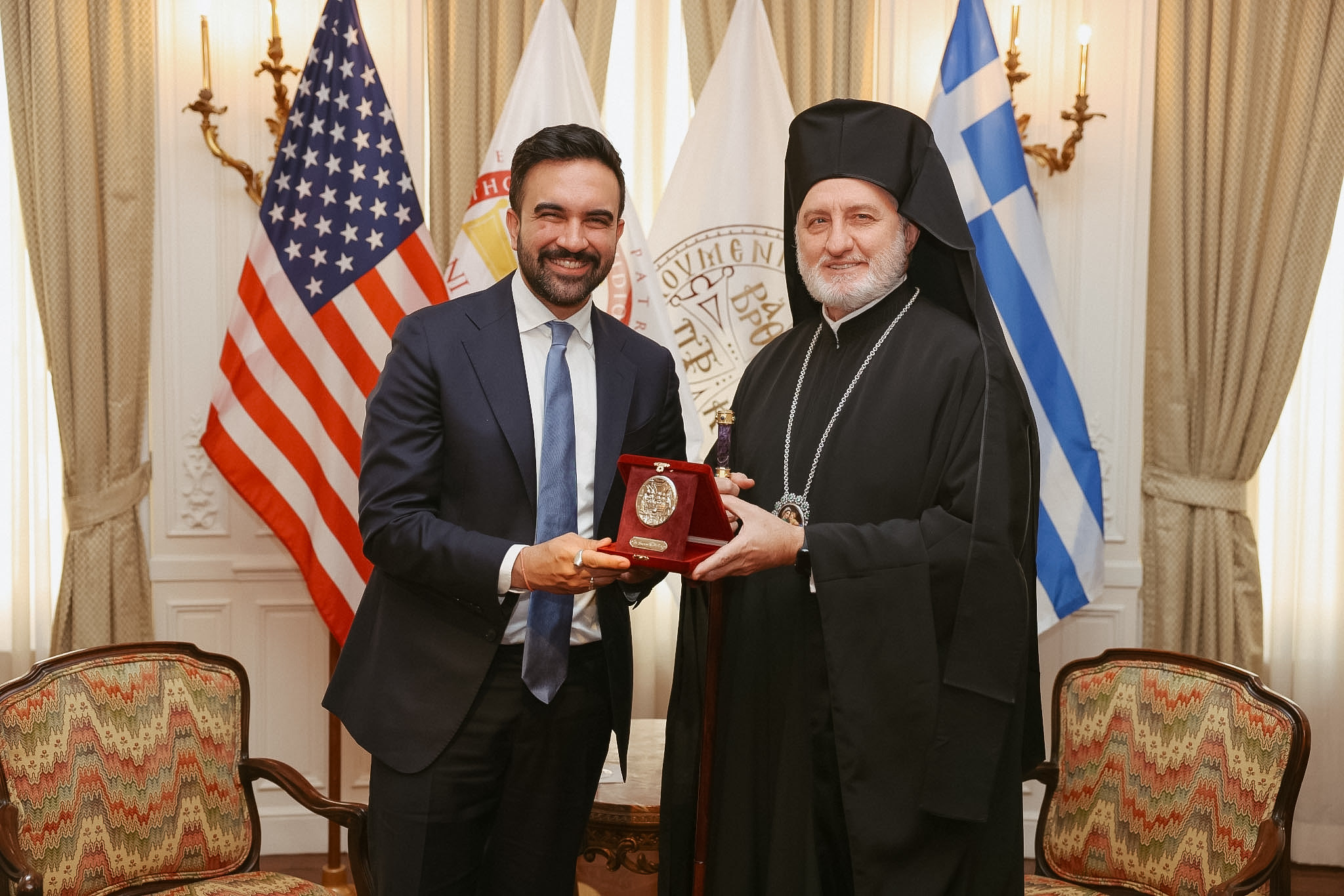
New York City Mayor Zohran Mamdani meets with Archbishop Elpidophoros of the Greek Orthodox Archdiocese of America

MAYOR MAMDANI ADVANCES NEW YORK CITY’S FIRST FREE CHILD CARE PROGRAM PILOT FOR MUNICIPAL WORKERS
Approximately 40 children ages 6 weeks to 3 years will receive free, year-round childcare 8 AM to 6 PM Monday – Friday
All City workers based out of the David N. Dinkins Municipal Building are now eligible in addition to all DCAS employees regardless of work location
Applications will launch on April 30; Program will kick off this fall following the completion of $10 million renovation of 4,000-square-foot facility
NEW YORK — Today, New York City Mayor Zohran Kwame Mamdani and Department of Citywide Administrative Services (DCAS) Commissioner Yume Kitasei announced that the City’s first free, on-site child care pilot program for City workers will open applications on April 30, 2026.
Under Mayor Mamdani, the program has been expanded to include all City workers based at the David N. Dinkins Municipal Building at 1 Centre Street in addition to all DCAS employees regardless of work location. The Municipal Building, one of the largest government office buildings in the world, houses more than 2,000 employees across a dozen municipal agencies.
The program will operate on the ground floor of the building’s North Tower and provide year-round care Mondays through Fridays from 8 AM to 6 PM. The $10 million renovation is underway to construct a 4,000-square-foot child care facility, with completion expected this fall.
The brand-new center will serve approximately 40 children ages 6 weeks to 3 years and offer an evidence-based, developmentally appropriate curriculum designed to support early learning, socialization and growth.
By expanding access to free, on-site child care, the City is putting upwards of $20,000 a year back in the pockets of working families. The program is also expected to improve the retention of top talent, boost productivity and strengthen job satisfaction among working parents.
“Change begins at home. As we deliver universal child care to New Yorkers, that work must include the public servants who keep this city running,” said Mayor Mamdani. “We are bringing year-round, no-cost child care right here to Lower Manhattan — not just saving families money, but giving them back hours of their time. No parent should have to spend hours commuting just to ensure their child is safe and cared for.”
“As Mayor Mamdani has made clear, every family in New York City has a right to childcare, and that includes the families of the public workers who serve this city every day,” said Deputy Mayor for Operations Julia Kerson. “This program will provide free, full-day, on-site care, helping children get a strong start while easing the burden on working parents.”
“At DCAS, we are focused on transforming our workplace for the future, namely, how can we make life more affordable, ease burdens and foster a more supportive workplace for our staff,” said DCAS Commissioner Yume Kitasei. “We see this project as an answer to these questions — that by meeting workers where they are and providing on-site, free childcare, you will have City workers who are less stressed, healthier and better able to serve New Yorkers. We hope this will be transformative for the people that work here at 1 Centre Street, and we can’t wait to open this center in the fall.”
Applications will open on April 30, 2026. To be eligible, employees must:
- Be a full-time DCAS employee regardless of work location or a full-time City employee who is assigned to 1 Centre Street.
- Be a parent or legal guardian of a child between the ages of 6 weeks (as of Sept. 1, 2026) and 3 years old (as of Dec. 31, 2026).
Families may submit one application per child. Full eligibility details will be available on the DCAS website when applications open.
Selected participants will be notified in June. Families not selected will be placed on a waitlist and contacted if space becomes available.
Design and construction of the facility are being managed in house by DCAS, with a target opening date this fall. The program will be operated by a contracted child care provider, to be announced later this spring.
“Under the leadership of Mayor Mamdani, Deputy Mayor Kerson and DCAS Commissioner Kitasei, New York City is taking a meaningful step to support the public servants who keep our city running,” said Manhattan Borough President Brad Hoylman-Sigal. “Every day, thousands of City employees come into the Municipal Building balancing the demands of work and raising a family, and I know members of my own team are among those who could benefit from this pilot. By providing free, high-quality child care right where they work, this program will ease financial strain, reduce stress and give parents more time with their children. I’m grateful to the Mayor and his team for recognizing that supporting working families is essential to building a stronger, more effective City workforce.”
“This new on-site child care center at the David N. Dinkins Municipal Building is a smart investment in our workforce and in the families who serve New Yorkers every day,” said Department of Finance Commissioner Richard Lee. “By expanding this pilot to serve all City employees working in the building and making it free of charge, we are putting real money back into the pockets of working parents. Just as important, we are creating a supportive, high-quality early learning environment steps from the workplace. This initiative will reinforce our commitment to making City service a place where talented public servants can build both their careers and their families.”
“When we talk about supporting the workforce, we have to mean the whole person and the whole family. Reliable child care can be the difference between constant stress and real stability,” said Department of Veterans’ Services Commissioner Yesenia Mata. “This pilot removes a major hurdle for working veteran families who serve this city and shows what is possible when government recognizes child care as essential support.”
As part of the City’s commitment to universal child care, and with funding from Governor Kathy Hochul, New York City will launch an initial 2,000 2-K seats this fall. Earlier this month, Mayor Mamdani announced more than 1,000 new 3-K seats in high-demand neighborhoods and launched 2,000 free 2-K seats across four communities.
The City will continue expanding 3-K capacity for fall 2026 through additional partnerships with community-based and home-based providers.
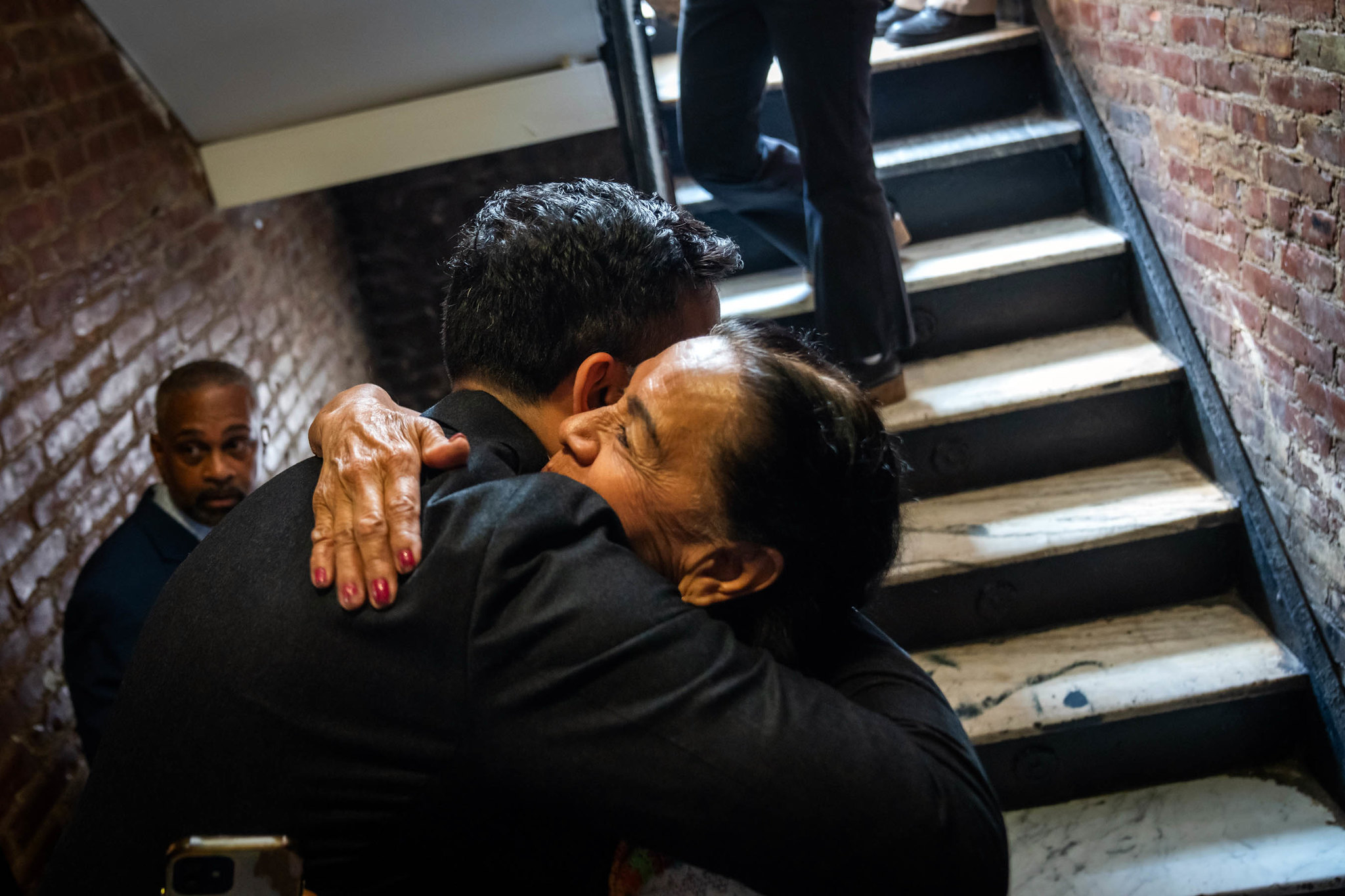
Mayor Mamdani delivers right to organize materials to tenants in East Harlem. Thursday, March 26, 2026. Credit: Ed Reed/Mayoral Photography Office.
MAYOR MAMDANI LAUNCHES CITY’S FIRST UNDERGRADUATE SCHOLARSHIP PROGRAM FOR MUNICIPAL WORKERS
The Mayor’s Scholarship Program builds on 60 years of success connecting City employees with graduate scholarships
Applications for undergraduate scholarships are open March 30 through April 27; graduate applications scholarships to open mid-September
NEW YORK — Today, Mayor Zohran Kwame Mamdani and Department of Citywide Administrative Services (DCAS) Commissioner Yume Kitasei launched the City’s first undergraduate scholarship program for municipal employees, with applications opening March 30.
The new undergraduate track expands the longstanding Mayor’s Graduate Scholarship Program, which has provided financial assistance to City employees for more than 60 years. Both programs will now operate under the rebranded “Mayor’s Scholarship Program,” overseen by DCAS.
The Mayor’s Scholarship Program gives full-time New York City government employees the opportunity to pursue undergraduate and advanced degrees at participating colleges and universities across the region. The addition of undergraduate scholarships responds to sustained demand from City workers seeking support to earn bachelor’s and associate degrees.
Applications to the graduate program have surged in recent years, increasing more than 30% over the past two years. Participating institutions collectively award between $360k and $530k in scholarships to City employees every year.
“Our city moves when our workers do,” said Mayor Mamdani. “For more than 60 years, this program has shown that when you make education accessible, working people seize the opportunity. By expanding it to include undergraduate degrees, we are investing in a new generation of public servants who act ambitiously, think creatively and believe firmly in government’s power to deliver for the many.”
“Education is one of the most powerful tools we have to open doors, expand minds and build the skilled workforce our city needs to solve today and tomorrow’s challenges,” said Deputy Mayor for Operations Julia Kerson. “The new undergraduate scholarship will help remove financial barriers for City workers, creating pathways to professional growth and development.”
“Education is a powerful investment in our employees and the future of city government,” said DCAS Commissioner Yume Kitsaei. “By expanding the Mayor’s Scholarship Program to include both undergraduate and graduate degrees, we are opening the doors for professional growth and building an even stronger workforce for New York City.”
The undergraduate scholarship program launches in partnership with 10 colleges and universities, with additional institutions in the pipeline. The graduate program has grown to include more than 30 participating schools, including Adelphi University, Columbia University, Baruch College, New York University and others.
All scholarships are awarded and funded directly by participating institutions. The Mayor’s Scholarship Program does not provide direct funding.
The initial cohort of undergraduate partner institutions includes:
- Adelphi University
- Albertus Magnus College
- Columbia University School of General Studies
- CUNY School of Labor and Urban Studies
- Fordham University
- Lehman College
- Montclair State University
- Marist University
- Metropolitan College of New York
- Purchase College, SUNY
“Adelphi University is honored to serve New York City through the Mayor’s Scholarship Program, creating meaningful pathways for city employees to advance their education and careers,” said Shawana Singletary, Chief Enrollment Officer, Adelphi University. “With a beautiful Garden City campus on Long Island, just 45 minutes from New York City, and a new Manhattan Center located at Fifth Avenue and 44th Street in Midtown, Adelphi offers students both accessibility and excellence. Our programs in social work, education, healthcare, psychology and business are designed to strengthen the workforce and support the communities that make New York thrive.”
“The CUNY School of Labor and Urban Studies is proud to partner with the Mayor’s Scholarship Program, an initiative that reflects New York City’s deep commitment to investing in the people who power our public institutions,” said Shannon Clarke, Chief Enrollment Officer, CUNY SLU. “Rooted in the history and enduring legacy of the labor movement, SLU is dedicated to advancing public service and social justice, equity and opportunity through education. We believe that expanding access to undergraduate and graduate study for municipal employees not only supports individual career mobility but also strengthens the collective capacity of our public workforce to lead with fairness, dignity and impact. This partnership represents more than a scholarship opportunity; it is an investment in workers, in communities and in a stronger, more just and inclusive city. We are honored to support city employees as they continue their educational journeys and deepen their contributions to New York City.”
“Purchase College, SUNY is proud to partner with New York City through the Mayor’s Scholarship Program to expand access to higher education for New York City’s public servants,” said Purchase College President Michael E. Steiper. “Through a substantial tuition reduction, we are opening pathways to our distinctive undergraduate and graduate programs in the arts, liberal arts and sciences. As Westchester’s only comprehensive public college, public service is at the heart of our mission. We look forward to welcoming these new students and supporting them as they pursue their academic and professional goals.”
“Lehman College is proud to support the program, affirming our support of NYC’s municipal workforce and the role these employees play in ensuring a prosperous future for all New Yorkers,” said a Lehman College spokesperson.
“Columbia University School of General Studies is thrilled to participate in the Mayor’s Undergraduate Scholarship Program,” said a Columbia University spokesperson. “The expansion of this program to support full-time New York City employees seeking undergraduate education aligns perfectly with the School of General Studies’ mission to attract and educate the most talented nontraditional students. We are excited to expand on our recent efforts to ensure that New York City’s best students can access a Columbia University education.”
The Mamdani administration is continuing to expand workforce development initiatives and create new pathways for career advancement. Based on a recent sampling of approximately 100,000 City employees, nearly half did not hold an undergraduate degree.
The application period for the first undergraduate cohort will run from March 30 through April 27, with selected participants expected to begin their studies in fall 2026. Applications for the graduate scholarship cohort application will open in mid-September.
City employees must apply through their agency personnel offices and meet the admissions requirements of participating institutions. Additional information is available on the Mayor’s Scholarship Program website.
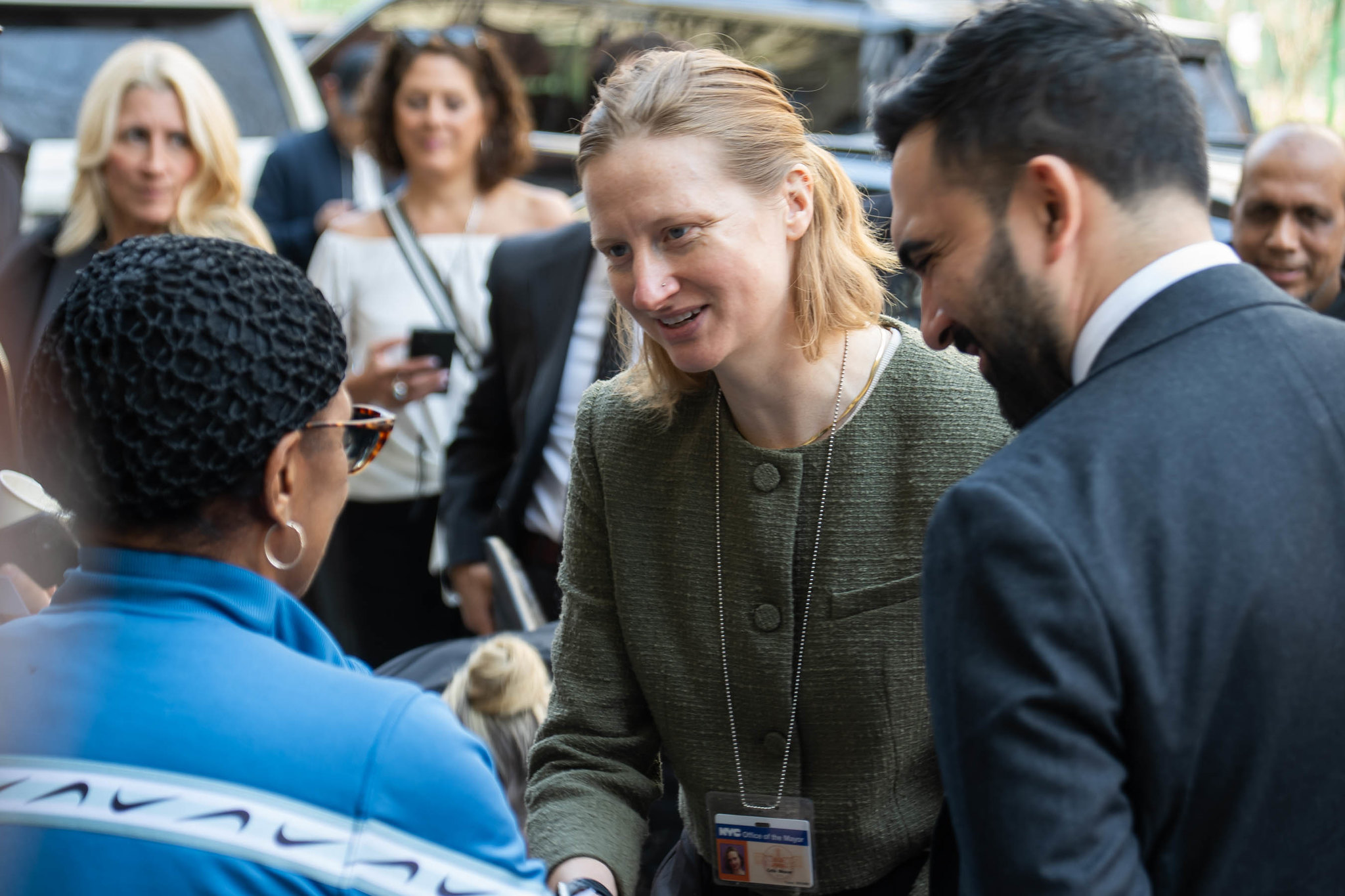
Mayor Mamdani delivers right to organize materials to tenants in East Harlem. Thursday, March 26, 2026. Credit: Ed Reed/Mayoral Photography Office.
MAYOR MAMDANI ANNOUNCES EXPANSION OF “NEXT MILE NYC” TO RIKERS ISLAND, CONNECTING INCARCERATED NEW YORKERS TO HIGH-PAYING JOBS
Program Expands Job Training, Reduces Recidivism & Invests in Opportunities Over Costly Incarceration
Participants Will Begin Commercial Driver’s License Training While in Custody and Complete Certification After Release
NEW YORK – New York City Mayor Zohran Kwame Mamdani, Mayor’s Office of Criminal Justice (MOCJ) Director Deanna Logan and Department of Correction (DOC) Commissioner Stanley Richards today announced the expansion of the City’s successful “Next Mile NYC” Commercial Driver’s License (CDL) training program to people in custody on Rikers Island.
Through a partnership with Emerge Career, eligible participants will begin a 40-hour online training while in custody and complete hands-on instruction and testing after release, creating a direct pathway from incarceration to stable employment. Three participants who began training while in custody have already received conditional job offers.
“Expanding Next Mile NYC to Rikers Island will create real pathways from incarceration to stable, well-paying jobs,” said Mayor Mamdani. “This effort reflects our administration’s belief that public safety comes from opportunity and investment in people — not just incarceration —while restoring dignity through meaningful work and building a safer, more just city.”
“Stable employment is one of the strongest predictors of success upon returning to community,” said MOCJ Director Deanna Logan. “We already see positive impact from Next Mile NYC. By equipping participants with in-demand skills and connecting them directly to employers, individuals are exiting cycles of incarceration and returning to neighborhoods with a stronger workforce foundation that results in safer communities across New York City.”
“Our goal is to invest in the people who come to us so they return to their communities with the support and opportunities they need to succeed,” said New York City Department of Correction Commissioner Stanley Richards. “Returning home after time away can be challenging, but when individuals have a plan, a clear pathway, and — most importantly — hope for a better future, they are empowered not just to move forward, but to truly flourish.”
“We are thrilled to partner with NYC DOC and MOCJ to bring real, tangible second chances — rooted in careers, not just credentials — to incarcerated individuals at Rikers Island,” said Zo Orchingwa, co-founder and co-CEO of Emerge Career. “Our vision is to harness technology to open pathways to skilled trades careers that begin before release, not just after. This isn’t a checkbox initiative or training that leads nowhere. Next Mile NYC is a real jobs and reentry program, built to change lives and change outcomes.”
The expansion includes a $2.9 million investment in Fiscal Year 2026 and will serve up to 290 additional participants, building on a 2025 pilot that served 20 people.
Since launching in 2025, the program has delivered strong early outcomes: 266 participants earned Commercial Learner’s Permits and 99 obtained CDLs.
- 93 participants received job offers and 64 secured full-time employment, with an average salary of $90,200.
- No participants have reported being rearrested. All participants who completed driving training obtained a CDL and received a job offer within six months.
The expansion launched in February 2026 at the Rose M. Singer Center Enhanced Supervised Housing (RESH) Annex, with additional sites planned at the Eric M. Taylor Center and the Rose M. Singer Center.
Next Mile NYC addresses two critical challenges: expanding access to economic opportunity for justice-involved New Yorkers and meeting workforce demand. By connecting New Yorkers to stable, high-paying careers before they leave custody, the program reduces recidivism and strengthens public safety.
According to the U.S. Chamber of Commerce, formerly incarcerated people face persistently high unemployment — more than 13 times the national unemployment rate — while industries like trucking face major worker shortages.
MOCJ — through its Community Innovations team — uses data to guide its programming and outreach. Research shows that limited access to employment and vocational training are major drivers of incarceration and recidivism. Programs like Next Mile NYC are designed to break that cycle by connecting participants to careers that provide immediate, family-sustaining wages.
Next Mile NYC builds on a broader set of education and workforce programs on Rikers Island, including high school equivalency and college-level courses, horticulture, barbering, barista, cosmetology, culinary arts, food handling, and OSHA training.
MAYOR MAMDANI LAUNCHES UNIVERSAL CHILD CARE PARENT SURVEY
Parents and caregivers can make their voices heard here
NEW YORK — Today, Mayor Zohran Kwame Mamdani announced the launch of the New York City Parent Survey, a first-of-its-kind effort to give families a direct role in shaping the future of universal child care.
As Mayor Mamdani takes historic first steps toward delivering universal child care across the city – beginning this fall with 2,000 free 2-K seats and more than 1,000 new free 3-K seats – the survey will play a central role in gathering input from families and incorporating it into program design.
Over the next two weeks, families will receive postcard invitations to participate. The survey will also be available online at nyc.gov/parentsurvey. All families with young children are encouraged to respond. The survey opens March 31 in English and Spanish and will remain open through April 13. A summary of results will be released later this year.
“Last year, New Yorkers made it clear: universal child care is not a luxury, it’s a necessity and it cannot wait. The same spirit of community-driven decision-making will guide how we build this system,” said Mayor Zohran Kwame Mamdani. “Every parent and caregiver deserves a voice in shaping the care their families rely on.”
“When families have access to quality care and education from the very beginning, children arrive at kindergarten ready to thrive,” said Schools Chancellor Kamar Samuels. “This survey is an opportunity to make sure the system we are building truly reflects what our families need, and I encourage every parent and caregiver to take a few minutes to make their voices heard.”
The survey is a project of the New Practice Lab at New America and is funded by the Robin Hood Foundation. It is expected to be the largest representative survey of New York City parents of young children to date. It asks parents and primary caregivers about their current child care arrangements, preferred schedules and settings and priorities for early childhood education.
“If we’re going to build a child care system that works for New York families, we have to start by listening to them,” said Richard R. Buery Jr., CEO of Robin Hood. “As a father, and as someone who helped lead the rollout of Pre-K for All, I understand how important it is to hear directly from parents — their needs, their concerns, their hopes for their children — before we design a system meant to serve them. At Robin Hood, we believe affordable child care is foundational to economic mobility, and this survey will help ensure parent voices drive better outcomes for families. I encourage every parent of a young child to participate.”
“Smart policy design begins by listening to the people it is meant to serve,” said Tara Dawson McGuinness, Executive Director of the New Practice Lab. “Asking parents what they want not only helps to tighten the link between government and people but provides critical data needed to ensure program delivery is responsive to the needs of New Yorkers.
About the Survey
The survey takes about 15 minutes to complete and covers topics including current child care arrangements, parental leave preferences and preferred types and hours of care.
Households that receive a postcard can visit nycparents.norc.org and enter their PIN to access the survey and receive a digital payment for completing it. Other families can visit nyc.gov/parentsurvey for a chance to participate.
All responses are anonymous and voluntary. Data will be kept strictly confidential, and no personally identifiable information will be shared with the Administration. Sampling and data collection are led by NORC at the University of Chicago, a nonpartisan research organization.
The New York City Parent Survey is part of a nationwide effort by the New Practice Lab to strengthen connections between policymakers and families of young children.
###
About Robin Hood
Robin Hood is NYC’s largest local poverty-fighting philanthropy and since 1988, has invested $3 billion to elevate and fuel New Yorkers’ permanent escapes from poverty. In 2025, through $140 million in grantmaking to 295 community partners, Robin Hood created pathways to opportunity through strategic partnerships on child care, child poverty, jobs, living wages, and more. Robin Hood is scaling impact at a population level for the more than two million New Yorkers living in poverty. Robin Hood believes your starting point in life should not define where you end up. To learn more, follow us on X @RobinHoodNYC or visit robinhood.org.
About the New Practice Lab
The New Practice Lab is a team of designers, social scientists, policy experts, and technologists building tighter links between policymakers and the families they serve. Part policy research group, part technology product developers, part pro bono consultancy, the New Practice Lab works alongside government partners across the country to build and improve policies, public service delivery systems, and technologies to better support families with young children. The New Practice Lab’s work to date has supported more than 2.8 million Americans. New Practice Lab is a project of New America. Learn more at: newamerica.org/new-practice-lab.
MAYOR MAMDANI INVESTS $108 MILLION TO IMPROVE SEWER PERFORMANCE CITYWIDE, ENHANCING NEIGHBORHOOD RESILIENCY
City will replace more than 6,700 catch basins over the next decade
Spending builds on $20 million purchase of 40 modernized catch basin cleaning trucks
Modernized catch basins feature bike-friendly redesigns and improved water drainage
NEW YORK — Mayor Zohran Kwame Mamdani and NYC Department of Environmental Protection (DEP) Commissioner Lisa F. Garcia today announced that the City is investing $108 million to upgrade and replace more than 6,700 catch basins over the next decade to ensure the City’s street drainage network is resilient in the face of more frequent and intense rain events. This investment follows the City’s $20 million purchase of 40 new catch basin cleaning trucks — ensuring neighborhoods are better protected as extreme weather becomes more frequent.
“Investing in resiliency is an affordability strategy we cannot take for granted,” said Mayor Mamdani. “By investing in our sewer system, we’re protecting our neighborhoods from the destruction and devastation severe storms bring. These new and improved catch basins are a recognition that climate preparedness must be built into every feature of our City.”
“This administration is making smart, targeted investments in the infrastructure New Yorkers rely on every day,” said Deputy Mayor for Operations Julia Kerson. “By combining data-driven inspections, modern equipment and long-term capital upgrades, we are improving sewer performance citywide while delivering faster service and greater accountability to the public.”
“As we modernize our water and sewer infrastructure and advance major projects, we’re also investing in local improvements that make a real difference at the neighborhood and block level. No project is too small when it comes to protecting New Yorkers,” said DEP Commissioner Lisa F. Garcia. “We’re seeing more intense rainfall than ever, and these investments in catch basins, more commonly known as storm drains, and specialized cleaning trucks will help keep streets passable, protect communities from flooding, and ensure our stormwater system is ready for climate challenges.”
New York City has more than 150,000 catch basins, also known as storm drains, that are an important part of the City’s 7,500‑mile sewer network. These curbside grates channel stormwater into underground pipes that carry it to one of DEP’s 14 wastewater resource recovery facilities or directly into local waterways.
When catch basin grates become blocked by litter or debris, they cannot drain properly, increasing the risk of street flooding. Designs vary across the five boroughs due to evolving standards over time.
$108 MILLION FOR FULL REPLACEMENTS OVER THE NEXT DECADE
A full replacement involves rebuilding or replacing the entire underground catch basin structure. DEP will invest $108 million to replace 6,708 older catch basins that no longer meet modern standards. Work will begin this July in Queens.
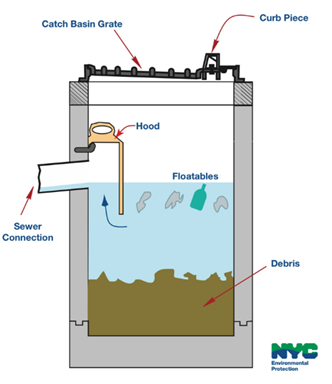
Section diagram of a catch basin
$1.5 MILLION ANNUALLY TO MODERNIZE EXISTING BASINS
Catch basin modernization focuses on upgrading existing components, such as grates, to improve performance and reduce blockages.
Since July 2024, DEP has upgraded 3,273 catch basins and will invest $1.5 million annually to continue this work. The agency expects to upgrade approximately 1,700 basins by June and has already completed 1,176 of those improvements.
The upgrades pair improved catch basin grates in the road with slotted manhole covers on sidewalks. If the grate becomes blocked, the slotted cover provides an alternate path for stormwater to reach the basin below. DEP has already installed 427 slotted manhole covers and 298 bike-friendly catch basin grates citywide since 2024.
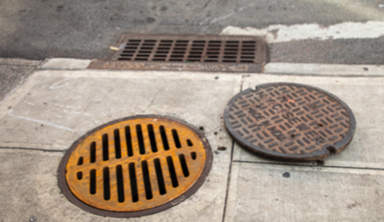
New bike-friendly grate (background) and slotted manhole cover (foreground)
FORTY NEW CLEANING TRUCKS
DEP is modernizing its fleet of catch basin cleaning trucks — specialized vehicles used to clear blockages within underground basins.
The agency has ordered 40 new trucks, nine of which have already been delivered, with another four expected by December. DEP plans to fully replace its 47-truck fleet by June 2029.
Over the past decade, DEP has adopted a data‑driven, proactive approach to sewer system maintenance. Its inspection program prioritizes flood‑prone areas and has significantly reduced response times. Catch basin and street flooding complaints are now resolved within three days of a 311 request — well below the legally mandated eight business days.
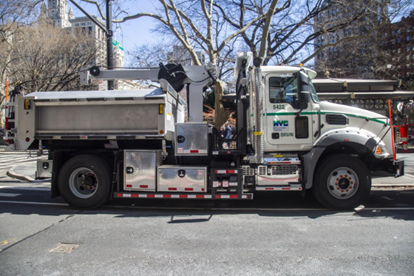
New specialized catch basin cleaning vehicle

New York City Mayor Zohran Mamdani performs in the Annual Inner Circle Show at the Ziegfeld Ballroom in Manhattan on Saturday, March 29, 2026. Michael Appleton/Mayoral Photography Office
TRANSCRIPT: MAYOR MAMDANI INVESTS $108 MILLION TO IMPROVE SEWER PERFORMANCE CITYWIDE, ENHANCING NEIGHBORHOOD RESILIENCY
Mayor Zohran Kwame Mamdani: Good afternoon, Sunset Park. It is a pleasure to be here, here in Sunset Park in Brooklyn, and I want to just first say it’s a pleasure to be here alongside Council Member Alexa Avilés, as well as our DEP Commissioner, Lisa Garcia, who is here with us. And I also want to acknowledge the second vice chair of CB7, Cynthia Felix Jeffers, who’s here with us, as well as all of the community members and leaders that we have joining us for today’s announcement.
Now, I want you all to just join me for a little bit of a journey through time. In 2015, Brooklyn rapper 2Milly introduced the term “Milly Rocking.” Now, if you believe as I do that Milly might be short for Milwaukee and, in fact, that this might be a reference to the fact that Milwaukee pioneered sewer socialism many years ago, today we may too be Milly rocking as we speak about the importance of delivering sewer socialism across the five boroughs of the place that we call home.
Because today is a day when we are delivering the very kinds of public goods and public excellence that, too often for New Yorkers, have been missing in their day-to-day lives, especially in the moments where we see rainfall exceed the kinds that this city had anticipated many, many years prior when our sewage system was first put together. Now, when we’re talking about catch basins in this city, we’re speaking about an essential part of a 7,500-mile sewer network. There are more than 150,000 catch basins in our city. They channel stormwater into DEP’s 14 wastewater facilities or directly into our waterways.
And when basin grates are flooded — when the basin grates are blocked, rather — neighborhoods are flooded. And so, what we are here to do is to talk about the importance of cleaning and ensuring that catch basins are protected against flooding, extreme weather, and keeping streets in good condition. And so, I’m proud to be here alongside our intrepid City Councilwoman, our DEP commissioner, to announce that City Hall is going to be investing $108 million to replace and modernize older and outdated catch basins across our city.
Now, this builds on $20 million that has already been invested for 40 new catch basin cleaning trucks because what we’re speaking about in actuality is DEP replacing more than 6,700 catch basins over the next decade, starting in Queens and then moving to Brooklyn, Staten Island, as well as the Bronx. This is going to begin in July of this year. And what we’re talking about is building upon the work the DEP has been doing, which has upgraded 1,776 basins since last year across our city and 350 grill replacements, curb pieces, bicycle-friendly grates, and slotted manhole covers added since this January alone.
Now, we are going to continue to invest about $1.5 million per year for basin modernization. We’re also going to be speeding up the catch basin cleaning. I’m proud to say that DEP has now managed to exceed the eight-business-day requirement for catch basin cleaning and is reporting being able to do so within three days of a complaint being filed with the city. Now, from 1910 to 1912, the Mayor of Milwaukee, Emil Seidel, once said, “Yes, we wanted sewers in the workers’ homes, but we wanted much, oh so very much more than sewers.”
We are here today to talk about one part of what City government must do, but when City government can show that when it rains in the city it doesn’t have to flood, it also shows New Yorkers that we can dream of a tomorrow that is better than today. So, thank you all so much for joining me, and with that being said, I’m going to pass it over to our incredible new commissioner, Lisa Garcia.
Commissioner Lisa Garcia, Department of Environmental Protection: All right. Thank you. Thank you so much, Mayor Mamdani. It’s a pleasure to be here in Sunset Park. ¡Buenas tardes! Sunset Park. I’m Lisa Garcia, the commissioner of DEP, as the Mayor mentioned, and we know that New York City’s most intense rainstorms have all come in the past four years. Many of us have felt them and have seen some of the flooding that follows that. That means our infrastructure has to work harder and smarter.
Today we are here to talk about the ways we are modernizing the first line of defense against street flooding, catch basins, or, more commonly known as storm drains, right, where the water goes when it rains. New York City has more than 150,000 catch basins, the curbside grates that drain rainwater off the streets into our sewer system. When they are working properly, they keep the streets passable and reduce flooding during those storms and heavy rain. When they are blocked or outdated and not catching the debris, they unfortunately create ponding on the streets and flood intersections.
That’s why we are investing, as the mayor said, $108 million to improve the street drainage system that protects our neighborhoods across all five boroughs. Beginning in July, we’ll be fully starting to replace over 6,700 catch basins. As the mayor mentioned, these replacements modernize underground structures to increase capacity and take in more water. And as the storms continue to increase, we are seeing more rainfall and more water. And that’s not all we’re doing. We’re not just upgrading the catch basins, [and] the storm drains, we’re upgrading the vehicles that service them.
This $108 million investment in catch basins or storm drains builds upon the city’s $20 million purchase of the catch basin trucks, which help us clean out those drains. And nine are already online, with four more expected over the rest of the year. You’ll actually get to see a truck in action later today when we try this out over here in Sunset Park. These investments are in addition to the $1.5 million that DEP spends every year to upgrade existing catch basins. We’ve already installed more than 400 slotted manhole covers to provide an alternative drainage path if catch basins are blocked with litter or leaves. And we’ve made nearly 300 catch basins bike-friendly. I’m a biker, so I appreciate that. So, when your bike goes over one of them, you don’t dip into it. You actually can glide through on our wonderful bike paths.
At DEP, we’re always looking [for] ways to efficiently improve our service. That’s why we’re embracing a proactive data-driven approach to catch basin inspection and maintenance. This will allow us to perform better. As a result, our storm drains and catch basins and street flooding complaints are now resolved within three days. As the mayor said, please call 311. If you see a clogged catch basin, call 311. We are here to serve. We’re committed to building a more resilient, reliable, and climate-ready city.
Neighborhood by neighborhood, block by block, and basin by basin. We can’t control the weather. We can’t control many things. But we can control how we prepare. So, New York, let’s prepare for flooding and hurricane season together. If you see a drain that is blocked, please call 311. But DEP is out there already clearing and preparing for hurricane and flooding season. So, I want to say a big thank you to Acting COO Anastasios Georgelis and to Mike Farnan, acting deputy commissioner of the Bureau of Water & Sewer Operations, and all of their staff for doing all this work and continuing to help us prepare for each storm. So again, gracias, Sunset Park. We are here to serve. Y ahora, with that, I’m so pleased to introduce Council Member Alexa Avilés. Thank you.
Council Member Alexa Avilés: Hola, Sunset Park. So, I am so excited to be here to host the mayor and to host our new commissioner at the Department of Environmental Protection, Lisa Garcia. Thank you both for your incredible leadership. Catch basins, you know, not sexy, but something we talk about all the time. We have community members who do 311 walks because as an environmental justice community that deals with the burdens of polluting infrastructure here in our community and persistent flooding, we know how important catch basins are.
So, I’m just truly delighted that the city continues and will invest in not only renewing the catch basins but also making sure that we have the equipment that we need to make sure that our infrastructure works. So again, thank you to all the staff at DEP who work so hard. Thank you to the mayor and thank you to everyone who made sure that today happens.
Let’s continue to be engaged in our community because when we make sure that we are working together, right, clearing those catch basins and telling your neighbors, “Don’t throw trash in the catch basins; that’s for water.” These are all really important investments and steps in the right direction. Gracias a todos.
Question: I just wanted to ask, how are you deciding which catch basins will be targeted first? Is this based off 311 call volumes? Is it based off areas that have been prone to flooding in the past? What is that process going to look like for actually zeroing in on the specific locations of the catch basins?
Mayor Mamdani: So, we are beginning in Queens in July. This will be guided by DEP, and I’m really glad to have our DEP commissioner who is here with us today. It is going to be over the course of a decade intensifying the work that’s been done. Before I just get a little bit further into your question, I just want to lay [it] out. If you can see this right here, this is the entirety of a catch basin. Oftentimes, this is considered to be all the catch basin is, but it extends all the way down.
There have been upgrades that have been made to catch basin grates, as the commissioner was speaking about, making them bike-friendly. We’re also talking about the entirety of the catch basin as a whole, which is critical because our sewage system was built for the rainfall that was anticipated more than a century ago. And as we know, rainfall now is of a very different scale in this city.
And as the councilwoman said, New Yorkers are well aware of that. We need to have City government also be well aware of it. But ultimately, it’s going to be DEP that guides the question of where do we deliver this, and how is it in line with the needs of New Yorkers? I don’t know if you want to add anything.
Commissioner Garcia: I’ll just add quickly. We do test the catch basins annually or biannually, so we know which ones we need to fix or repair right away. And then also, we also have flood sensors throughout New York City. And so, we’re also aware of chronic flooding areas, and so those will help us prioritize areas. But the goal is to get to all of them and make sure everything is working well.
Mayor Mamdani: And part of the reason we’re here in Sunset Park is because we’ve also seen a persistent issue when it comes to flooding. And I appreciate the council member for having been an advocate of this neighborhood and this community so that City Hall is well aware of what’s going on.
Question: Your commissioner mentioned bike safety. I have a bike safety-related question on that. You know, you’ve restarted several street safety projects that your predecessor either stopped or sabotaged in some way, yet the Bedford Avenue bike lane project hasn’t been conspicuously absent from that list. You know, you committed to finishing this when I asked you about it on the campaign. Several of these projects, including this one, and the conditions there are as dangerous as ever. So, I wanted to hear from you why you haven’t announced this project yet, and do you still commit to restoring the protected bike lane on Bedford Avenue?
Mayor Mamdani: Can you say the last part of the question one more time? Sorry.
Question: Do you still commit to restoring the protected bike lane on Bedford Avenue like you did on the campaign?
Mayor Mamdani: So, I’m going to follow up with DOT and then get back to you on the specifics of the delay and the implementation. And what I will say when it comes to the announcement that we’re making today, [is] every single one of the investments that are being made when it comes to the replacement of these catch basins is going to be with a bike-friendly grade.
Question: Government officials use TikTok [and] have TikTok accounts. I wanted to know if any technology or information security officers in your CTO or the NYPD cybersecurity have given you anything about how to make sure, you know, data is safe, [and if] they’re not tracking movements, physical locations [or] things like that.
Mayor Mamdani: So, when it comes to TikTok usage, there [are] going to be specific procedures, and also it will be authorized users who will be able to use this on city devices. Now, just to remind everyone, the concerns around privacy had to do, as was stated, with the prior ownership of TikTok. That ownership has now changed. We see the federal government is using TikTok. Our goal is to communicate with as many New Yorkers as possible. This is one way that many New Yorkers are engaging with the world around them.
Question: So, my question is, Governor Kathy Hochul briefly proposed allowing robotaxis earlier this year, and even though it is not in the budget anymore, it is a debate that doesn’t seem to be going away. Some people think autonomous vehicles are inevitable.
Do you think that robotaxis should be allowed in New York City? And when Waymo reapplies for its testing license in New York City, which it appears to likely do once the state program is reauthorized, will your administration approve it?
Mayor Mamdani: Look, if a company like Waymo finds itself in New York City, what they will also find is a City government that is committed to delivering for the workers who keep the city running, and those workers also include our taxi drivers who, for far too long, have been sold a dream of being able to work their way to the middle class, only to have the rug pulled out from under them.
Question: So, you’re continuing your predecessor’s practice of charging the Water Board a rental payment of more than $300 million, which means you have $300 million that you can’t — that DEP can’t invest into projects like this. So, my question is, why are you continuing that practice that he resurrected, and how much do you think it will impact the water rate this year?
Mayor Mamdani: There haven’t been any final determinations that have been made about this year. This is a practice that is based upon DEP’s use of city infrastructure as part of its delivery of a lot of the essential things that New Yorkers rely upon it for. I don’t know, commissioner, if you want to add anything. No? Okay.
Question: Court records show former NYPD Sergeant Edouardo St. Fort has been arrested on bribery and conspiracy charges. His security company has received millions in contracts, and they were mostly awarded on an emergency basis. The Comptroller’s Office found these types of emergency contracts are a waste of taxpayer dollars. Is your office still using emergency contracts?
Mayor Mamdani: I can get back to you on that. I will tell you, however, any allegation and finding of improper behavior and action by a public servant is immensely concerning, and we will be following up on that.
Question: Do you plan on — that shelter provider, BHRAGS, still has $200 million in city contracts. In light of these indictments, will your administration cancel those contracts? What’s kind of the next step?
Mayor Mamdani: We’ll definitely be looking into these, because any allegation, especially if it’s being substantiated, of improper action and behavior is one that has to be followed up on. Thank you.
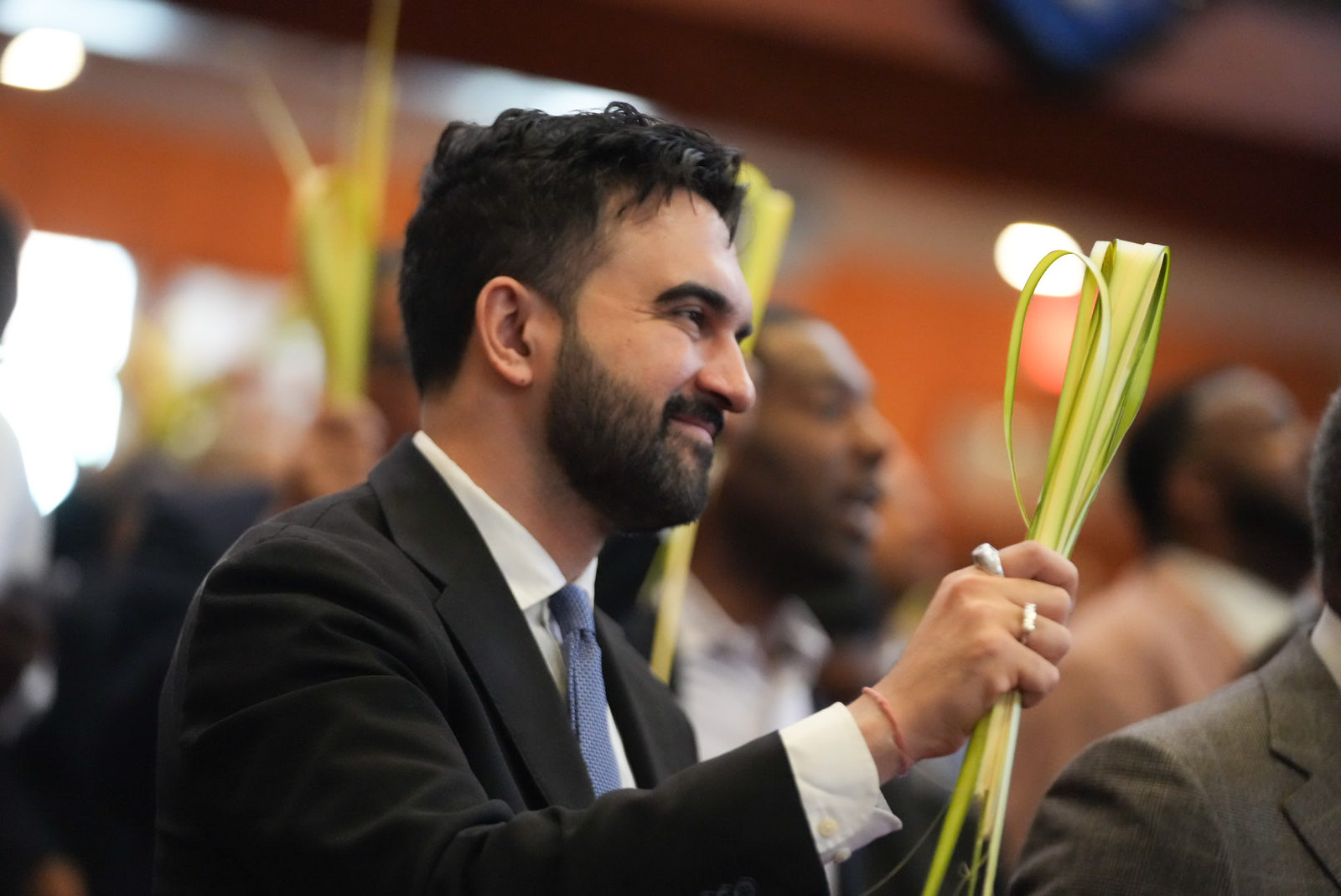
New York City Mayor Zohran Mamdani performs in the Annual Inner Circle Show at the Ziegfeld Ballroom in Manhattan on Saturday, March 29, 2026. Michael Appleton/Mayoral Photography Office
MAYOR MAMDANI, CTO GELOBTER AND FREDERICK O’REILLY HAYES PRIZE FOUNDATION HONOR FOURTH ANNUAL HAYES INNOVATION PRIZE WINNERS
Award recognizes innovative City workers who are delivering for all New Yorkers
Awardees measured the impact of the City’s congestion pricing program, strengthened food oversight in homeless shelters, modernized cemetery management at Hart Island and provided 24/7 access to lifesaving overdose supplies
NEW YORK — Today, Mayor Zohran Kwame Mamdani, Chief Technology Officer (CTO) and Office of Technology and Innovation (OTI) Commissioner Lisa Gelobter and Jonathan Weiner, president of the Frederick O’Reilly Hayes Prize Foundation, honored 12 public servants with the fourth annual NYC Hayes Innovation Prize for their cutting-edge efforts to reimagine government and deliver tangible results for New Yorkers.
The winning projects — spanning eight City agencies — represent breakthroughs in affordability, government accessibility and public safety. Honorees were selected from 74 nominations across more than 30 agencies. Each winner received a $1,000 cash prize funded by the foundation. OTI and the Frederick O’Reilly Hayes Prize Foundation co-sponsored the awards.
“Delivering public goods requires public excellence, and the public servants we honor today embody that excellence — not as an abstract ideal, but as daily work in service of 8.5 million New Yorkers. Across our City government, workers are finding new ways to make this city more affordable, more accessible and more just. The recipients of the Hayes Innovation Prize show what it means to build a government that works for working people,” said Mayor Mamdani. “I’m proud to recognize their service and grateful for the care they bring to this city every day.”
“Public servants are the backbone of our city, and this award recognizes the innovative and substantial work they have accomplished to make a real difference in New Yorkers’ lives,” said Deputy Mayor for Operations Julia Kerson. “The recipients of the Hayes prize embody government excellence, and what is possible when public servants go above and beyond for the people they serve. Today, we celebrate their example.”
“There is no challenge too big for New York City’s amazing public servants,” said CTO and OTI Commissioner Lisa Gelobter. “Thanks to their bold vision and leadership, this year’s Hayes Prize winners achieved remarkable results that made our city more affordable, our government run better and our streets safer for New Yorkers. In addition, our honorees deserve acclaim for raising the bar for government excellence and inspiring their colleagues to pursue their own greatness. Congratulations to all of our Hayes Prize winners!”
“Great work in public service is seriously under-recognized in our society,” said Jonathan Weiner, President, Frederick O’Reilly Hayes Prize Foundation. “The Fred Hayes Prize Foundation congratulates this year’s Prize winners for their remarkable work relatively early in their careers in our City’s service and is enormously pleased to recognize their efforts. We welcome them into the distinguished company of those who have been awarded the Prize going back to 2005. Like these former Prize winners, their projects have been innovative and marked by talented and deep use of analytics. Named after Fred Hayes, the City’s brilliant budget director in the Lindsay administration, the Prize Foundation is solely supported by those who have worked with Fred and are delighted to see first-rate commitments to public service in succeeding generations.”
OTI and the Hayes Prize Foundation launched the Hayes Innovation Prize in March 2023 to recognize excellence in public service. To date, 68 public servants have received the award. For the second consecutive year, winners were recognized in two categories: Innovation and IT Leadership. A distinguished panel of past recipients of the Frederick O’Reilly Hayes Prize, which started in 2005, and recipients of the Technology & Innovation Award selected this year’s winners.
This year’s prize winners are (in alphabetical order):
INNOVATION
Roxanne Anderson of the Department of Health and Mental Hygiene (DOHMH), who implemented the City’s first Public Health Vending Machines (PHVMs) that provide 24/7 access to lifesaving harm reduction supplies conveniently and anonymously to address the overdose crisis meet the goals outlined in the mental health plan for NYC. Since June 2023, the City’s first four PHVMs have been utilized over 42,000 times and dispensed 4,500 nalaxone kits, in addition to other harm reduction and health and wellness resources.
Pavel Ilin of the NYC Mayor’s Office for Economic Opportunity, who spearheaded the complete rebuild and launch of the new My File NYC, a digital platform that gives New Yorkers a safe and secure place to store their vital documents and share them when applying for City services. My File is currently in use by families applying for shelter through the Department of Homeless Services’ Family Intake Center – Prevention Assistance and Temporary Housing (PATH). My File will be introduced to the Department of Housing Preservation and Development’s Set Aside Housing program later this year.
Shawn Inshan and Mallory Rutigliano of the Office of Management and Budget (OMB), who pioneered a first-of-its-toolkit with a Resiliency Exposure Inventory and Resiliency Exposure Forecast designed to understand whether communities, infrastructure and environments are sufficiently protected from climate risks. This initiative serves the City’s Broader Climate Budgeting effort, which includes climate considerations across investment decisions, and is already being used to assist with policy and project planning with the Mayor’s Office of Climate and Environmental Justice, the Parks Department and the Economic Development Corporation.
Joel Owhe of the Fire Department of the City of New York (FDNY), who led the development of the FDNY Job Safety Analysis (JSA) application, a groundbreaking internal tool that digitized and standardized the process for documenting, reviewing and analyzing safety practices across training operations. Joel transformed a once paper-heavy and reactive system into an agile, digital platform that enhances the department’s ability to train, evaluate and safeguard its members.
Caleb Wendling and Julia Klauss of OMB, who expanded the flood insurance coverage of overlooked City-owned buildings with a pathbreaking approach — using mapping software, Python scripts and direct outreach — to create a new and fully comprehensive list of all City assets. Their work has helped double the number of City-owned buildings covered by the National Flood Insurance Program (NFIP) from 212 at the start of 2024 to more than 430, with hundreds more expected.
Kenyatta (Kym) Williams of the NYC Human Resources Administration (HRA), who managed the Cemetery Management and Tracking System — a modern, integrated platform to manage burial records, plot mapping and public access for burial operations at Hart Island, the City’s municipal cemetery and the final resting place for more than 1 million New Yorkers. As a result, families can now more accurately search burial records dating back to the 1970s, visualize the burial site on a digital map, schedule visits online and receive automated confirmations and reminders — features that did not exist before.
Matthew Yarri of the Metropolitan Transportation Authority (MTA), who developed a real-time performance dashboard and data analytics framework for New York City’s congestion pricing program — one of the City’s most transformative transportation initiatives in a generation. Matthew’s dashboard equipped MTA leadership with the systemwide insights — not just MTA operations, but cars, buses, bridges and tunnels — needed to monitor impacts, communicate results and build public trust from day one as traffic patterns began to shift.
IT LEADERSHIP
Claire Boyd of the Department of Finance (DOF), who transformed the Property Modeling Group’s technical capabilities at DOF to enhance efficiency, analytical rigor and long-term sustainability across operations. In addition to expanding the scope and effectiveness of DOF’s core IT capabilities, Claire’s leadership strengthened the City’s capacity for fair, data-driven property tax assessment.
Elan Carmel of the Department of Social Services (DSS), who directed the execution of a citywide initiative to strengthen oversight of food and nutrition services within Department of Homeless Services (DHS) shelters. Working closely with the Office of the Medical Director and DHS Food Services, Elan designed and implemented a new module within the Building Compliance System that digitizes the process for tracking food ordered, received, discarded and evaluated for quality — improving the dining experience for shelter residents by ensuring meals meet quality standards and client expectations.
Mike Kutzma of the MTA, who led the design and implementation of the MTA Data Lake Program, a suite of infrastructure and applications that serve to enable analytics at scale across the MTA. The platform that Mike and his team built was responsible for the MTA’s ability to provide accurate, next-day reporting on the new congestion pricing program within days of the program’s launch.
The finalists for this year’s awards include:
- Janelle Blount and Raja Pathuri of HPD
- Chris Gettings and Emily Torem of DOHMH
- Ayesha McHugh of NYC Housing Authority (NYCHA)
- Momina Min of NYC Public Schools
- Theodore Mullally of DOHMH
- Dana Nelson of NYC Emergency Management (NYCEM)
- Matthew O’Malley of Department of Small Business Services (SBS)
- Jayabalaji Rubalingam of the MTA
- Bharti Sharma of NYC Health + Hospitals
- Courtney Yu of NYCHA
- Khusro Zafar and Brunnell Velazquez of the Taxi and Limousine Commission (TLC)
“Public health is too often described as ‘invisible,’ including innovative programs like our public health vending machines that put essential health supplies like naloxone kits directly in the hands of New Yorkers with no questions asked,” said NYC Health Commissioner Dr. Alister Martin. “Mission-driven staff like Roxanne are the backbone of the lifesaving work happening every day at the NYC Health Department as we continue our efforts to reduce overdose deaths across New York City. This prize is well-earned and helps make the work of public health heroes, like Roxanne, more visible to the people we serve.”
“Building a government that works for the people of New York City takes public servants who are undaunted by the serious challenges before them. This year’s Hayes Prize winners have shown that creative approaches, new technology, and dedication to the work can lead to transformative outcomes that make life better for New Yorkers,” said DSS Commissioner Erin Dalton. “Congratulations to all of this year’s winners, especially Kym and Elan who have done so much to improve DSS services by leveraging technology to improve data collection and client experience. I look forward to building on this incredible progress and exploring how we can continue to enhance services with new technologies.”
“The Hayes Innovation Prize recognizes Claire Boyd’s leadership in tackling a key Department of Finance challenge: improving access to data for property valuation models used to assess over 1.2 million New York City properties annually,” said Department of Finance Commissioner Richard Lee. “Through her leadership, Claire streamlined data sharing across siloed systems using tools that are more efficient, transparent and reliable, while enhancing our ability to evaluate model accuracy across property types. These advancements are dramatically improving how we deliver fair, data-driven property tax assessments for New Yorkers. Together with her fellow honorees, Claire’s work highlights a broader commitment to innovation across this administration — one rooted in practical solutions and a strong sense of public service. Celebrating the achievements of these city employees is important, as it underscores how new ideas in government can meaningfully enhance the services people rely on every day. Congratulations to Claire and all of this year’s honorees on this well-earned recognition.”
“The FDNY congratulates Firefighter Joel Owhe on this well-deserved recognition from the Hayes Prize Foundation,” said FDNY Commissioner Lillian Bonsignore. “His work reflects the innovative thinking that makes the FDNY stronger every day. His application has improved a critical safety process within our department, helping us better evaluate training operations and protect our members.”
“We are thrilled that Pavel is being recognized for his leadership on the launch of the newest version of My File NYC,” said Carson Hicks, Executive Director of the Mayor’s Office for Economic Opportunity. “Pavel’s work is modernizing how New Yorkers can prove eligibility for City benefits and services, streamlining internal agency operations and strengthening collaboration across agencies to better serve New Yorkers.”
“The MTA has upped its game in embracing cutting-edge technology to communicate better with our customers and harnessing deeper data engineering and analytics to improve service and enhance productivity,” said MTA Chief of Strategic Initiatives Jon Kaufman. “I’m glad to see recognition for Matt and how his team’s work brought to life the magnitude and multitude of benefits from the Congestion Relief Zone — and how Mike’s data engineering team truly helps MTA leadership make better, faster decisions that help our riders.”
About the Frederick O’Reilly Hayes Foundation
The Frederick O’Reilly Hayes Prize Foundation is supported by private donations from former city employees and officials, many of whom worked for or with Frederick O’Reilly Hayes, the city’s budget director in the late 1960s. Fred was a visionary who encouraged innovation, analysis, and commitment to the excellent management and delivery of public services. He was also dedicated to recruiting and mentoring young talent in city government.
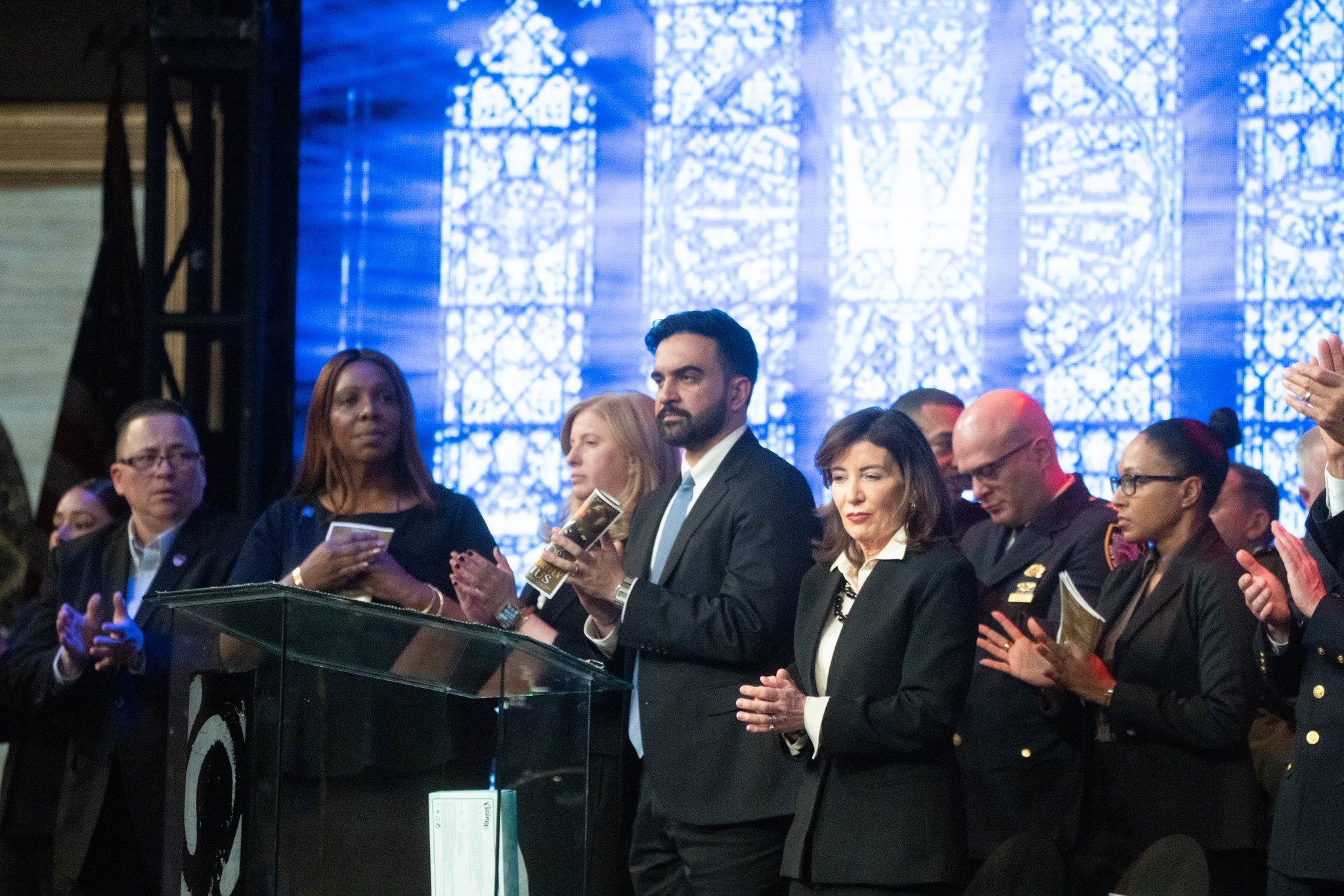
New York City Mayor Zohran Mamdani attends the funeral of Police Officer and U.S. Army National Guard Major Sorffly Daviuswho died March 6, 2026, while serving with the 42nd Infantry Division at Camp Buehring, Kuwait, at the Christian Cultural Center in Brooklyn on Friday March 26, 2026. Michael Appleton/Mayoral Photography Office
MAYOR MAMDANI LAUNCHES FIRST-OF-ITS-KIND CHILD CARE WEBSITE AND INTERACTIVE MAP
New tool helps families find and compare child care options across all five boroughs
Includes personalized questionnaire to match families with the right programs
NEW YORK – Today, Mayor Zohran Kwame Mamdani announced the launch of a new online child care map and resource center designed to make it easier for families to find, understand and choose child care programs that meet their needs.
For the first time, families can visit nyc.gov/childcare to search for child care options citywide using a single platform. The site allows users to filter by location, age group and cost, and provides key details about providers, including services offered, eligibility requirements and contact information.
The new tool builds on the Mamdani administration’s commitment to universal, accessible child care. It follows the addition of more than 1,000 new 3-K seats in high-demand neighborhoods and the launch of 2,000 free 2-K seats in four communities across the city.
“Parents already carry so much. For too long, finding child care has meant hours of searching, cross-checking lists and relying on word of mouth. In New York City, finding care for your child shouldn’t feel like a second job,” said Mayor Mamdani. “This tool is about making government work for people — simple, clear and accessible — so every parent can make the best decision for their child.”
“Today’s announcement underscores this administration’s commitment to using technology to make essential government services and benefits more accessible to the New Yorkers who need them most,” said CTO and OTI Commissioner Lisa Gelobter. “This game-changing child care online map and resource center, featuring 10,000 providers across the five boroughs, provides our NYC families with an invaluable resource to help them locate and select child care that meets their needs so they don’t waste valuable time searching for and sifting through information on dozens of websites. Thank you to all our tireless child care providers across the city and the Office of Child Care for bringing city and state partners together to give families the priceless peace of mind that comes with reliable child care.”
The first-of-its-kind interactive map — developed with input from parents at every stage — brings together provider information from across the five boroughs into one searchable platform. It offers a streamlined, easy-to-use layout that helps families understand their options and take full advantage of the free and affordable care. The website is available in multiple languages and is fully accessible on mobile devices.
In addition to the map, the website offers tools to support parents at every stage of the child care search. These include:
- Clear, plain-language guides to each seat-types – including 3-K, 2-K, pre-K and other early child care options, so families can understand what’s available.
- A short questionnaire to help parents identify providers that best match their needs, schedules and preferences.
- Transparent information on 10,000 child care programs families rely on, including health and safety inspection records, walking and transit directions, and contact details.
- Live support by phone or email, in partnership with Child Care Resource Centers — trusted, multilingual community organizations with a long track record of helping families navigate the system.
The platform was developed through multiple rounds of engagement with parents and child care advocates – including focus groups and usability testing — to ensure the information is both clear and accessible. The City will continue to gather feedback and improve the site over time.
“For years, parents have had to scramble and stress to find child care – relying on Facebook groups and Google spreadsheets just to figure out what was available. Today, that era comes to an end. This website will let parents understand New York’s child care options at a glance, making it easier for families to find the free and affordable care they deserve. And with 2-K on the way, the timing couldn’t be better. This is what it looks like when an administration truly invests into social services – not just expanding child care programs, but making sure parents actually know about them,” said Kellan Calder, Parent and Community Organizer for New Yorkers United for Child Care.
“The NYC Child Care Resource & Referral Consortium (NYC CCR&R) is proud to partner with the Mayor’s Office of Child Care in this meaningful step forward for NYC’s families. By creating a single entry point to help families navigate the child care system, this platform reduces barriers and makes it easier to access care. As a consortium of community-based organizations, we will continue to serve as a trusted point of contact for families seeking one-on-one support in finding and securing child care that meets their needs,” said the Executive Directors of the Day Care Council, Chinese-American Planning Council, Committee for Hispanic Children and Families, and Child Development Support Corporation.
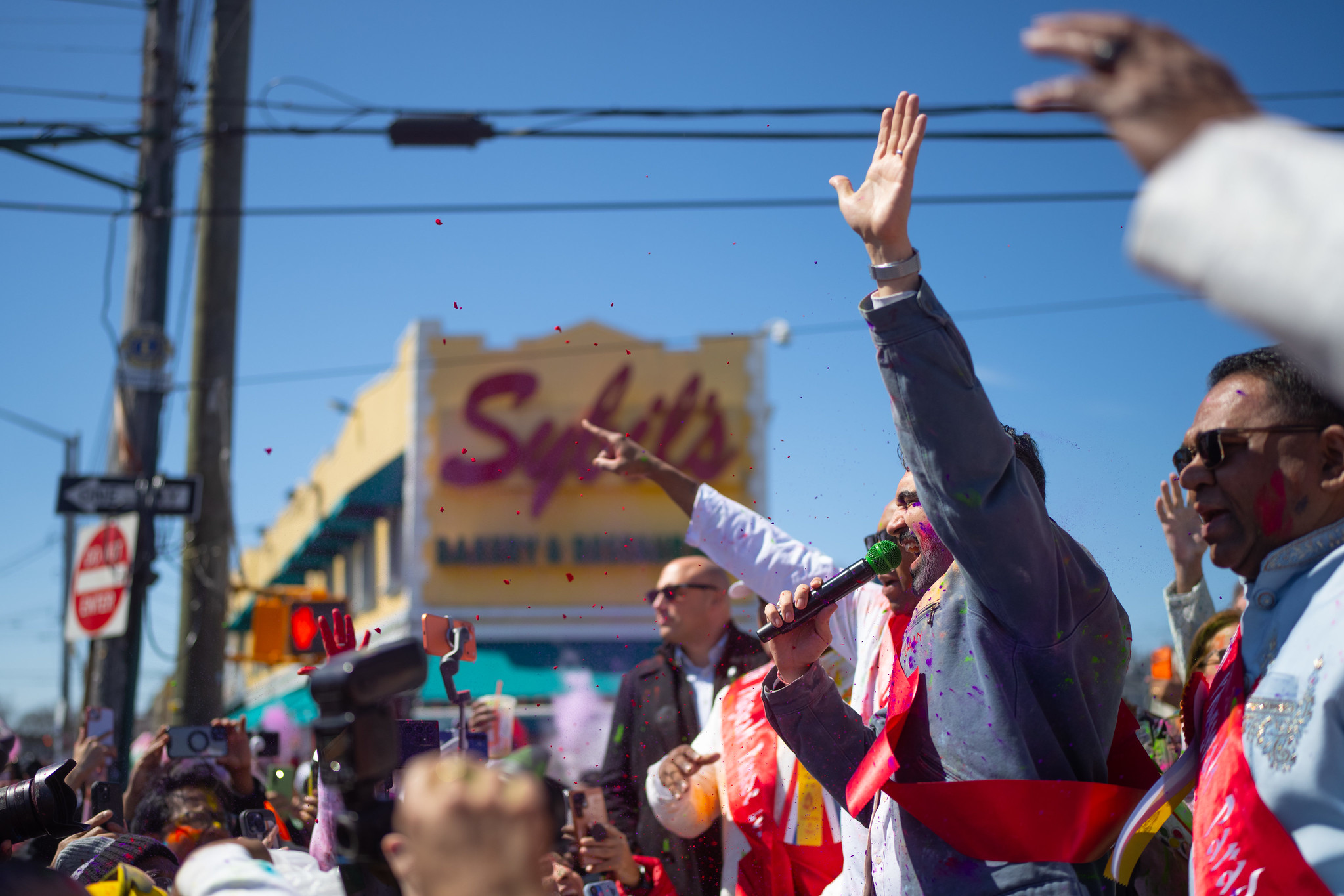
New York City Mayor Zohran Mamdani attends the 38th Annual Phagwah (Holi) Parade in Queens on Sunday, March 29, 2026. Michael Appleton/Mayoral Photography Office
Mamdani Administration Completes $24 Million Snow Operations and Composting Facilities in Brooklyn
Investment strengthens winter preparedness, expands year-round composting and advances major sewer infrastructure to protect Gowanus Canal
NEW YORK — Mayor Zohran Kwame Mamdani, Department of Environmental Protection (DEP) Commissioner Lisa F. Garcia and Department of Sanitation (DSNY) Commissioner Gregory Anderson today announced the completion of $24 million in new snow operations and composting facilities in Gowanus, Brooklyn.
Funded, designed and constructed by the DEP, the DSNY facilities make way for critical sewer infrastructure, including an underground storage tank that will intercept and store up to 4 million gallons of sewage that would otherwise flow into the Gowanus Canal during rainstorms.
The 7,600-square-foot snow operations facility can store 6 million pounds of road salt — a first line of defense against dangerous conditions. Salt slows snow accumulation, improves plowing and helps keep New Yorkers moving safely during winter storms.
Built to support that capacity, the facility includes a reinforced underground support structure to distribute the weight, as well as storage for up to 75 plow blades and brine tanks. Rooftop solar panels generate 79,600 watts of renewable energy to power lighting and equipment on-site.
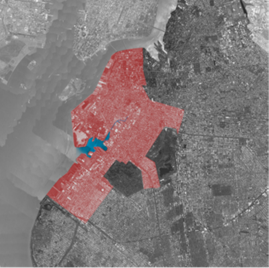
Area served by DSNY Gowanus Snow Operations Facility
The composting facility, operated by Big Reuse, can process 600,000 pounds of food scraps, yard waste and wood chips each year, turning waste into a resource for New York City communities.
“There’s no better way to close out a tough winter than by opening a facility capable of storing six million pounds of road salt and 75 plow blades,” said Mayor Mamdani. “This is what public service looks like: the year-round, often unseen labor of City workers who make our streets safer and our environment healthier. Through collaboration between DEP and DSNY, this site offers a laundry list of public goods, from rooftop solar panels to a composting facility that can process 600,000 pounds of waste each year.”
“Built by DEP, DSNY’s new snow and composting facilities are public excellence at work, showing what is possible when city agencies collaborate efficiently and effectively,” said Deputy Mayor for Operations Julia Kerson. “These facilities will ensure our neighbors in Brooklyn are prepared for the next blizzard while advancing our work to reduce pollution in our waterways and expand composting citywide.”
“Every season now tests our resilience, and New York City is meeting that challenge with smart, climate ready investments,” said DEP Commissioner Lisa F. Garcia. “The new snow operations facility will ensure Brooklynites are protected before, during and after snowstorms and extreme cold like we saw in February, while renewed composting operations in the Gowanus community will help curb harmful greenhouse gas emissions. Also, once complete, the new wastewater infrastructure will significantly reduce sewer overflows into the Gowanus Canal, protecting the waterway against more frequent rainstorms.”
“Expanded composting capacity and a new crown-jewel of snow operations mean that New Yorkers will have safer streets and greener gardens,” said Sanitation Commissioner Gregory Anderson. “From the beginning, we were clear that cleaning up the Gowanus Canal could not come at the expense of critical Sanitation services. DEP heard this message, and they delivered. I am proud to cut this ribbon alongside so many partners and advocates today.”
The design of the snow operations facility reflects Gowanus’ industrial character, incorporating sculptural concrete and textured metal. The project followed extensive public engagement to ensure it aligns with the neighborhood’s history and community priorities.
Construction was sequenced to maintain uninterrupted winter service during the 2024-25 season using a temporary salt storage facility. Since the facility’s completion in January, sanitation crews have continued to deliver seamless, reliable service through one of the largest snowstorms in recent history.

Completed facilities viewed from the Gowanus Canal’s 6th Street Turning Basin

Completed snow operations facility
“Today is a powerful example of what it looks like when a community fights for climate infrastructure and wins,” said Council Member Shahana Hanif. “The return of composting at the Salt Lot builds on years of organizing and ensures that food waste is turned into a resource that stays right here in our neighborhood. And beneath our feet, critical investments like the CSO tank will help keep sewage out of the Gowanus Canal and make our infrastructure more resilient. This is exactly the kind of environmental and community-centered investment we pushed for during the Gowanus rezoning, and we will keep working to make sure every promise is delivered.”
“I’m thrilled to celebrate the completion of the new sanitation and composting facilities, which also allows us to install the second CSO tank. This is a win-win, as the new facilities and tank will not only improve the water quality in the Gowanus Canal, but also strengthen our city’s ability to manage snow operations and expand composting. I am grateful to the Mayor’s Office, DEP and DSNY for their work and partnership in bringing this project to completion,” said Assembly Member Jo Anne Simon.
“Big Reuse is excited to reopen our community composting site in Gowanus! Big Reuse has worked over the last decade in partnership with DSNY to develop and operate innovative composting programs and systems to support parks, communities, and green infrastructure. We are thrilled by the remarkable efforts of the entire team at DEP, who collaborated with the community to rebuild and enhance the site so we can continue this vital work,” said Justin Greene, Executive Director of Big Reuse. “Additionally, we are grateful for NYC Council’s ongoing support that makes community composting possible across the city. We look forward to continuing our relationship with community partner Gowanus Canal Conservancy to bring their essential programming to the new location.”
“The Salt Lot has long been the eco-infrastructural heart of Gowanus — a site that was full of volunteers, students, community members, environmentalists, horticulturalists, composters, artists and boaters. With the re-opening of the Salt Lot compost facility this spring, we move a step forward in its future — where public space, education and ecological diversity will be knit together with critical resiliency infrastructure like the sewage tank and a salt marsh restoration,” said Andrea Parker, Executive Director of Gowanus Canal Conservancy. “Gowanus Canal Conservancy is excited to also be returning to the Salt Lot as well, re-activating it as a hub for environmental stewardship, processing neighborhood garden waste locally and using compost created there to enrich our street trees and nursery soils. DEP, who supported a robust community design process, has seen the importance and potential of this site, which is reflected in the habitat restoration, water access, educational spaces and community respite all included as part of the long-term site plan. Today the Gowanus community regains access to the Salt Lot, and we all move forward towards a greener Gowanus.”
“This is the kind of progress Gowanus was promised and deserves. The completion of the composting facility and of the salt shed, and great progress on the CSO facility represent real advances in infrastructure that will serve Brooklyn for years to come,” said Michael Racioppo, District Manager of Brooklyn Community Board 6. “DEP’s willingness to work alongside the community made a difference. Equally important, this progress has been shaped through meaningful public engagement, ensuring these facilities reflect Gowanus itself: its history, industrial character and the surrounding community.”
The project clears the way for the Owls Head Combined Sewage Overflow (CSO) Facility, part of the Superfund cleanup of the Gowanus Canal. The facility includes a 4‑million‑gallon underground tank and support systems to capture and manage storm-related overflows. DEP recently completed deep underground perimeter walls for the tank, with excavation set to begin this spring.
Future phases will restore Gowanus Canal Conservancy’s public education outpost and construct two acres of waterfront open space, including restored tidal wetlands and a kayak launch, designed by SCAPE Landscape Architects.
A second project, the Red Hook CSO Facility, will add another 8 million gallons of storage capacity. Together, the two systems will capture up to 12 million gallons of combined sewage overflow during storms — a major step toward reducing pollution in the Gowanus Canal and strengthening neighborhood resilience.
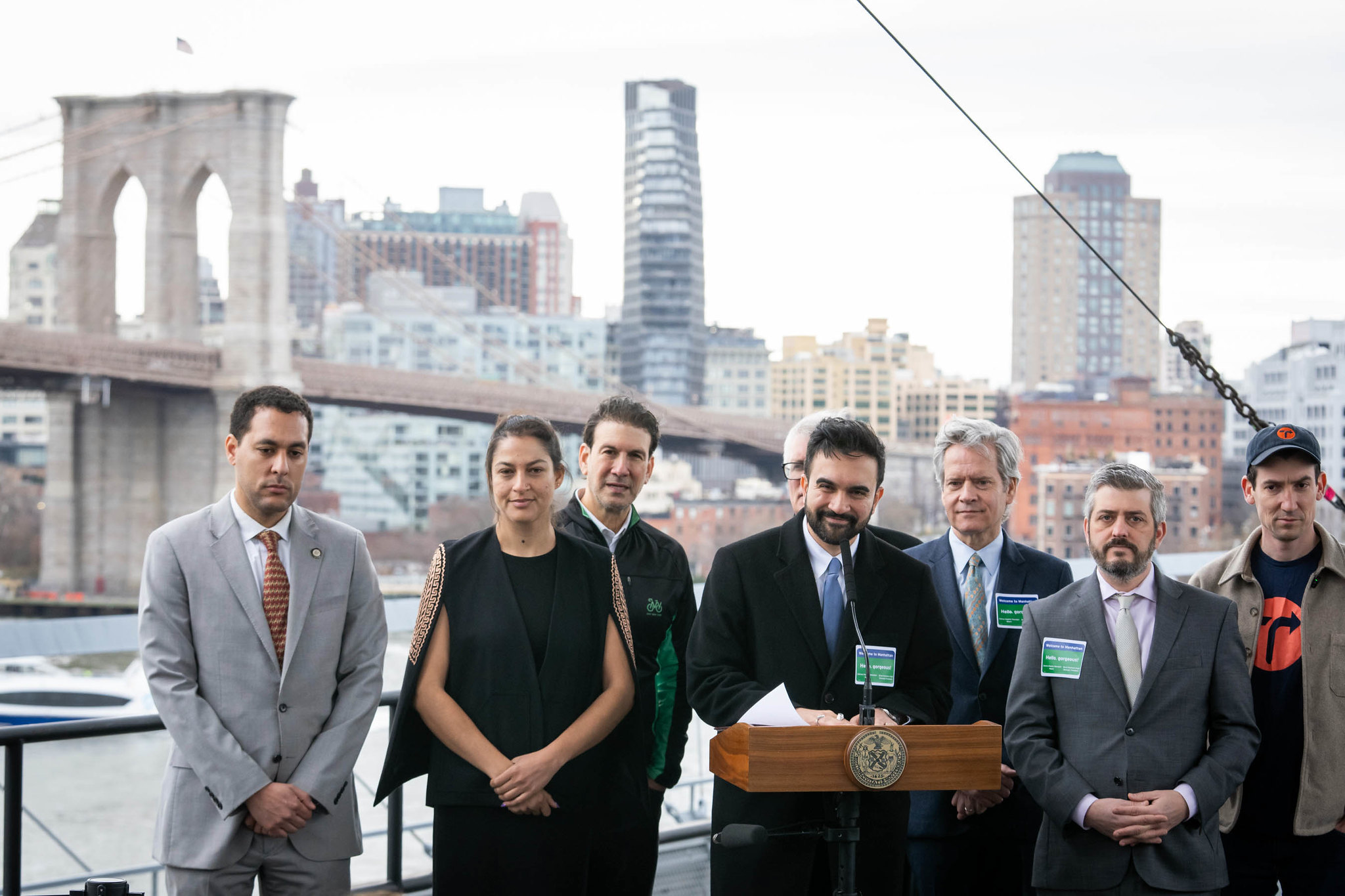
Mayor Zohran Kwame Mamdani and New York City Department of Transportation (NYC DOT) Commissioner Mike Flynn announce that the City will begin a critical street redesign project this spring to permanently improve bike and pedestrian access to the Brooklyn Bridge in Manhattan. Pier 17; 89 South Street, Manhattan. Friday, March 27, 2026. Credit: Ed Reed/Mayoral Photography Office.
STATEMENT FROM MAYOR ZOHRAN KWAME MAMDANI ON CITY COUNCIL’S PRELIMINARY BUDGET RESPONSE
NEW YORK – Today, Mayor Zohran Kwame Mamdani released the following statement in response to the City Council’s preliminary budget response:
Speaker Julie Menin’s preliminary budget proposal would result in slashing billions of dollars from agency budgets, which would force the City to cut services. Double counting previously identified savings, overestimating revenues, and exaggerating debt service savings does nothing to close a deficit.
This $6 billion proposal asks Albany for just one action – class size mandate relief. It refuses to address the deeper structural imbalance between the City and the State, or to increase taxes on the wealthiest New Yorkers and most profitable corporations. It effectively ensures this structural deficit will continue indefinitely.
Any proposal that claims we can close this gap without significant new revenue is unrealistic.
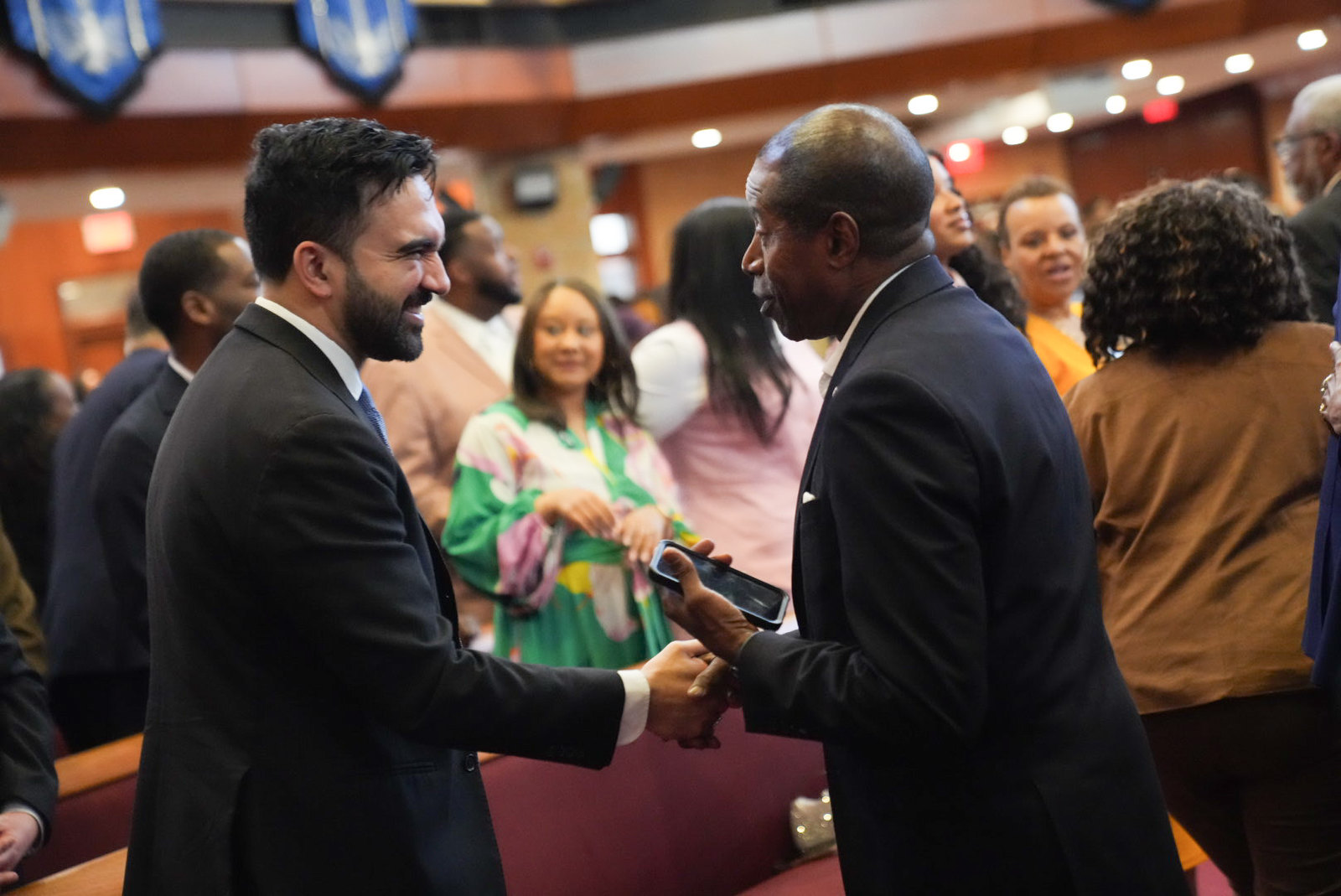
Mayor Mamdani Delivers Remarks at The Greater Allen A.M.E. Cathedral of New York for Palm Sunday. Jamaica, NY. Sunday, March 29, 2026. Credit: Ed Reed/Mayoral Photography Office.
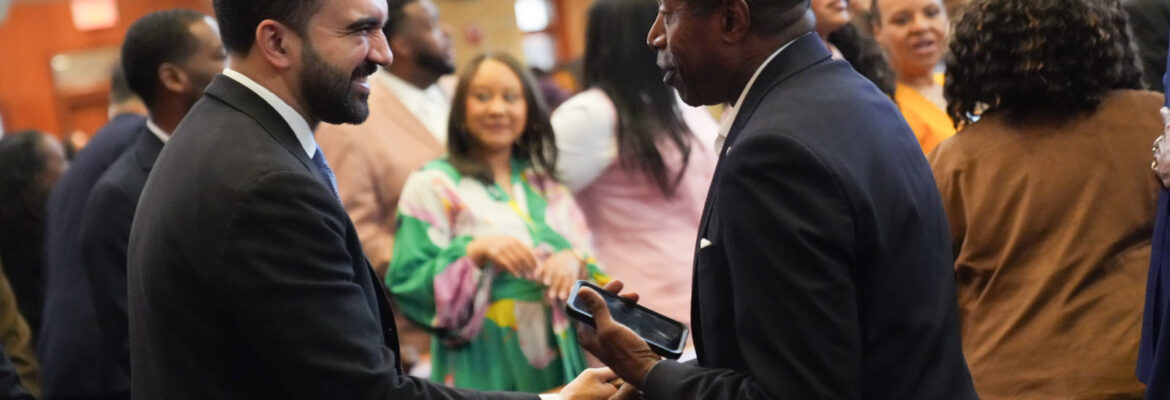
Banner Image: Mayor Mamdani Delivers Remarks at The Greater Allen A.M.E. Cathedral of New York for Palm Sunday. Jamaica, NY. Sunday, March 29, 2026. Image Credit- Ed Reed/Mayoral Photography Office.

NYC Mayor Zohran Mamdani
Zohran Mamdani was sworn in as Mayor of the City of New York on January 1st, 2026. Prior to becoming Mayor, he represented the 36th New York State Assembly District and its neighborhoods of Astoria, Ditmars-Steinway, and Astoria Heights.
There are no comments yet
Why not be the first