
In NYC, Albany For National Small Business Week: Meetings With Local Business Owners, City Councilmembers, Assemblymembers,
Staten Islander News sat down with Ramel Lee of RDL Security Solutions to discuss the recent study by Goldman-Sachs about small businesses and how important they are to local economies. Ramel discussed some of the concerns that many small business owners share, including the need for access to capital, reliable workforce development, AI integration, and more. See the interview below, and more details about available help and options, along with the original Goldman-Sachs release, follow below:
During the conversation, we talked about the possible unintended consequences that regulation can sometimes bring. An example of that was the Dodd-Frank Act that was passed after the 2008 mortgage crisis. This law has caused a situation where homeowners are stuck in homes that are valued at less that $100K. No banks will take those loans. Since banks won’t write these loans, such properties are restricted to cash only purchasers or those with home equity to create a larger loan with. This leads to people being unable to afford to buy homes in their own neighborhood if they aren’t already well-off enough to have $67K in cash to buy a home. It also has the consequence of trappingn people in their homes, since they can’t sell them at will, which can cause values to fall simply due to lack of liquidity (a term referring to the ease of disposing of an asset for its cash value. With fewer buyers available, the assessed value of a home can decrease as well since others will lower prices just to sell, affecting the value of surrounding homes). While not an issue in places like New York, where homes aren’t valued at less than $300K anywhere, this can be a serious problem in rural areas such as North Carolina, Oregon, and other places where home values aren’t high.
The following was generated by AI regarding the availability of assistance to small businesses in purchasing reasonably priced, affordable health insurance plans for their employees:
Navigating health insurance for a small business in New York City is famously tough. Because New York State law strictly regulates the small-group market (1 to 100 employees) with “community rating” rules, insurance companies are legally forbidden from offering a discount to one small business over another based on health status, age, gender, or group size.
Because of this specific law, true “association health plans”—where a chamber pools members to get cheaper baseline premiums—essentially do not exist in the traditional sense for small groups in New York. However, associations do offer immense value by giving you access to private exchanges, administration assistance, and plan flexibility that you cannot get on your own.
Here are the best organizations, private exchanges, and specialty groups available for an NYC-based business, followed by the current cost breakdowns for 2026.
1. Organizations & Private Exchanges to Join
For a business with 20 or fewer employees, joining these organizations gives you the infrastructure to offer robust corporate-level choices without the logistical nightmare.
General Business & Regional Chambers
-
Greater New York Chamber of Commerce: They provide direct access to health insurance resources and specific small-group brokers. Their annual dues for a small business with under 15 employees run roughly $300 to $400 per year, comfortably fitting most budgets.
-
The Business Council of New York State: A massive statewide organization. Their small business membership tier starts at $300 per year for under 15 employees. While their main Insurance Fund directly handles group life, vision, and dental, they provide small business members with managed access and navigated enrollment for competitive small group health plans.
-
Brooklyn Chamber of Commerce: Even if your physical location is Staten Island, any NYC-registered business can join. Their membership dues start under $400 per year for small teams. They have historically been one of the most active chambers in developing direct healthcare access partnerships (such as their current collaboration with direct-pay and specialized care networks like FixCare) and offer extensive small-business benefits counseling.
Specialized & Freelancer Organizations
-
The Freelancers Union: Free to join. While originally designed for solo independent contractors, they now offer a structured program called Solo Health Collective (managed via the Healthy Business Group). If your small business relies heavily on freelancers, 1099 contractors, or if you are a corporate entity looking for a flexible captive framework, they allow you to establish custom PPO health plans using your company’s Federal Tax ID (EIN).
-
Graphic Artists Guild: Membership ranges from $200 to $350 per year depending on your business status. They provide their members with designated insurance brokers who specialize in navigating small-group plans for creative agencies and solo shops.
The Private Exchange Route: HealthPass New York
While not a traditional “membership club” like a chamber, HealthPass New York is an NYC-specific private insurance exchange that functions exactly like what many small businesses are looking for.
-
How it works: Instead of you picking one insurance company for your 20 employees, you write one check to HealthPass. Your employees can then log in and individually choose from a wide menu of plans across different carriers (like Oxford/UnitedHealthcare, Healthfirst, and EmblemHealth).
-
The Cost: They charge a highly reasonable administrative fee per employee per month (which fits cleanly into your budget parameters) and allow an employer to contribute as little as 10% toward an employee’s plan, with a low 20% minimum participation requirement.
2. Expected Group Insurance Rates (Via an Org/Exchange)
When purchasing through a private exchange like HealthPass or a Chamber-vetted broker, your premiums won’t necessarily be “slashed” (due to NY state community rating laws), but you gain severe cost-containment strategies. You can set a Defined Contribution (e.g., you give each employee exactly $500/month), and let them pick the tier that fits their budget.
Small group premiums in the NYC market for 2026 face significant upward pressure (with state-approved small group market increases averaging roughly 13%). The general monthly premium ranges per employee across the metal tiers look like this:
| Tier | Coverage / Network Style | Estimated Monthly Premium (Per Employee) |
| Bronze | High deductible ($6,000+), covers catastrophic events. | $600 – $750 |
| Silver | Moderate deductible ($3,000+), good balance for regular care. | $750 – $900 |
| Gold | Low deductible ($1,000–$2,000), broad copay options. | $900 – $1,150 |
| Platinum | $0 or minimal deductible, low copays, premium networks (e.g., Oxford Freedom). | $1,150 – $1,400+ |
3. Buying Directly (No Organization)
If you bypass chambers or private exchanges and go entirely on your own—either directly to a carrier or through the NY State of Health Small Business Marketplace (SHOP)—the base premiums are nearly identical to the table above. However, the real-world costs change dramatically due to two factors:
The Participation Trap
If you go out on your own directly to a major carrier, most will enforce a strict 75% participation rule. If you have 12 employees, 9 of them must sign up for your plan (unless they have a valid waiver like a spouse’s insurance or Medicare). If you can’t hit that number, the carrier will reject your business. Joining an exchange like HealthPass drops that requirement down significantly (often to 20%), saving you from being disqualified if your employees prefer to opt out.
The Tax Credit Advantage (SHOP Exclusive)
The only major financial benefit to going strictly on your own without a private exchange is using the official state SHOP marketplace to claim the Small Business Health Care Tax Credit.
-
The Rule: If you have fewer than 25 full-time equivalent employees, pay an average annual wage below approximately $67,000, and contribute at least 50% toward their premiums, you can qualify for a tax credit worth up to 50% of your employer contribution for two consecutive years.
Summary Recommendation
Because New York prevents carriers from giving true “volume discounts” on base premiums to chambers, your goal shouldn’t be finding an organization that promises a cheaper abstract rate. Instead, look for administrative relief.
If you want your 20 employees to have multiple choices of networks so you don’t get stuck paying for a premium plan that only two people want, HealthPass New York or a broker connected through the Greater New York Chamber will give you the administrative flexibility to control your bottom line.
NY Small Business Owners Advocate in Albany and NYC During National Small Business Week
Goldman Sachs 10,000 Small Businesses Voices celebrated National Small Business Week by convening nearly 100 New York small business owners in Albany and New York City to advocate for policies that address the challenges of running and growing a business in the Empire State.

On Wednesday in Albany, small business owners met with members of the state legislature and heard from Matthew Golden, Assistant Deputy Comptroller at the Office of the New York State Comptroller, and Hope Knight, President, CEO and Commissioner of Empire State Development. The afternoon was rounded out with the small business owners gathering on the Assembly and Senate floors for a proclamation and a resolution commending Goldman Sachs 10,000 Small Businesses for supporting entrepreneurs, job creation, and local economies.
“It’s an honor and pleasure to recognize the extraordinary impact of Goldman Sachs 10,000 Small Business Voices and the important role it continues to play in strengthening businesses and local economies across New York State, particularly in my assembly district in lower Manhattan. Through education, strategic support and advocacy, this program has helped entrepreneurs grow, create jobs, and ensure that small business leaders have a true seat at the table in shaping our economic future,” said Rep. Charles Fall, the sponsor of the proclamation in the Assembly.
“Small businesses are more than just engines of our economy, they are the heart and soul of our communities. From neighborhood storefronts to growing enterprises, they create jobs, drive innovation, and reflect the diversity and determination that define New York. I’m especially proud to note that in my district, several of these businesses are part of the Goldman Sachs 10,000 Small Businesses Voices cohort, a program that provides critical support, advocacy, and resources to help small businesses grow and succeed across our great state,” said Sen. Kevin Parker, the sponsor of the resolution in the Senate.
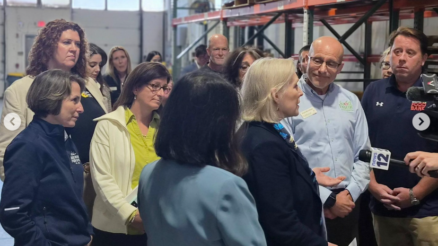
On Thursday, the small business owners were in New York City for meetings to discuss local priorities with City Councilmembers. The day also featured fireside chats between Goldman Sachs executives, including President and COO John Waldron, and NYC leaders: U.S. Congressman Ritchie Torres; NYC Council Speaker Julie Menin; NYC Council Deputy Speaker Dr. Nantasha Williams; NYC Council Small Business Chair Shanel Thomas-Henry; Assistant Commissioner Sherri Lane of the NYC Small Business Services Department; and Department of Labor Commissioner Roberta Reardon.
This week’s events came on the heels of a new Goldman Sachs 10,000 Small Businesses Voices survey showing New York small businesses are poised for growth but face significant obstacles — across workforce, access to capital, regulation, and AI adoption — and want a seat at the table to help shape solutions.
The survey also identified actions that NY policymakers could take right now to better support small businesses, which the entrepreneurs shared with policymakers during their meetings:
- Support offering competitive employee benefits (health care and retirement): 71%
- Increase access to affordable capital: 53%
- Reduce overly burdensome regulations: 49%
- Provide education on artificial intelligence (AI) and digital tools: 46%
Small businesses are the backbone of New York’s economy – representing 98.9% of all New York businesses, collectively employing nearly 4 million people, and generating nearly $1 trillion in sales and revenue (state comptroller report).
The National Small Business Week events in New York capitalized on the moment and gave small business owners a seat at the table to elevate these issues. Goldman Sachs 10,000 Small Businesses Voices and its community of entrepreneurs are committed to continuing to work alongside leaders in Albany and New York City to develop and implement policy that supports small business growth.
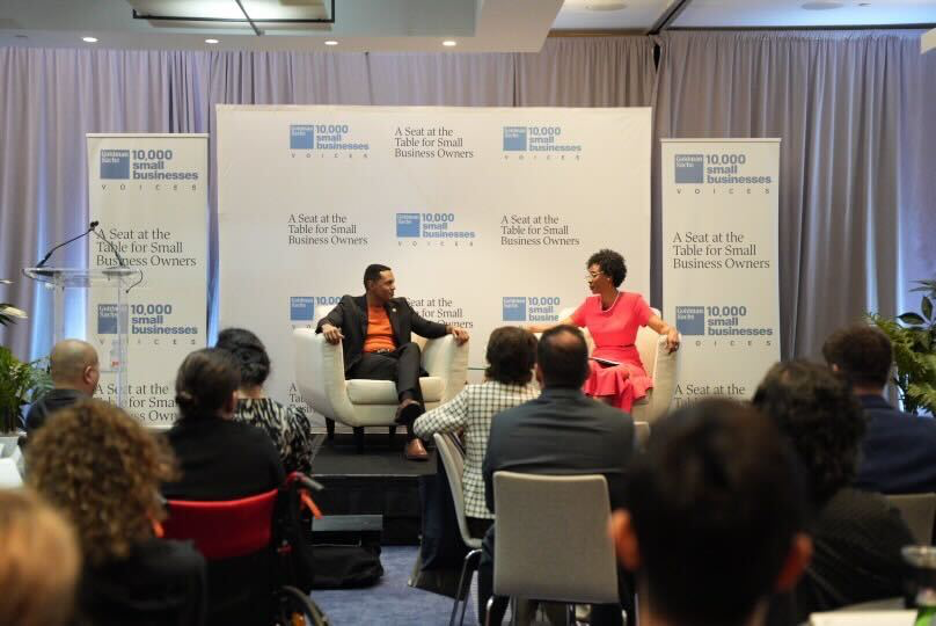
Small Business Advocacy in City Council
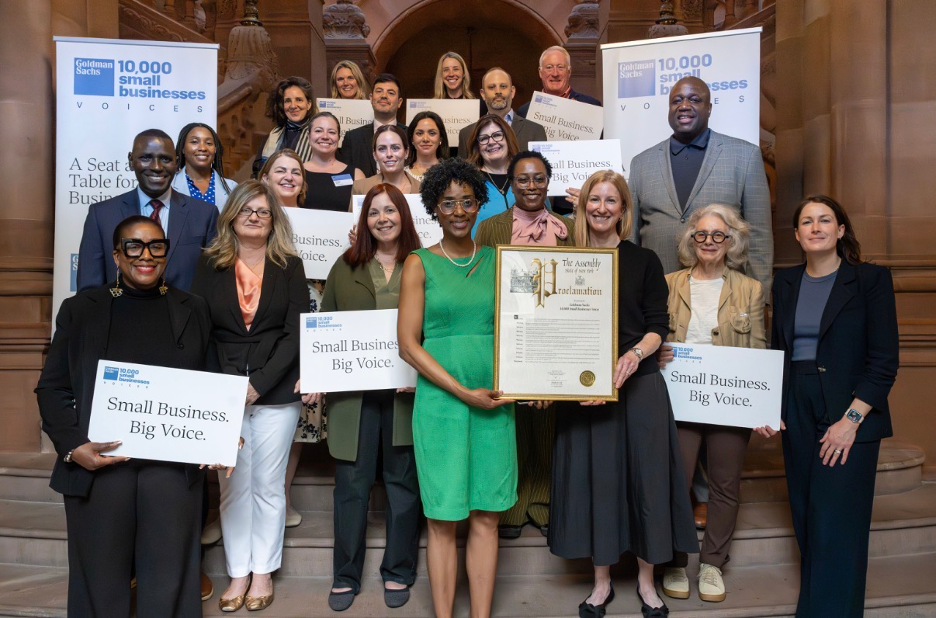
Small Business Advocacy in Albany
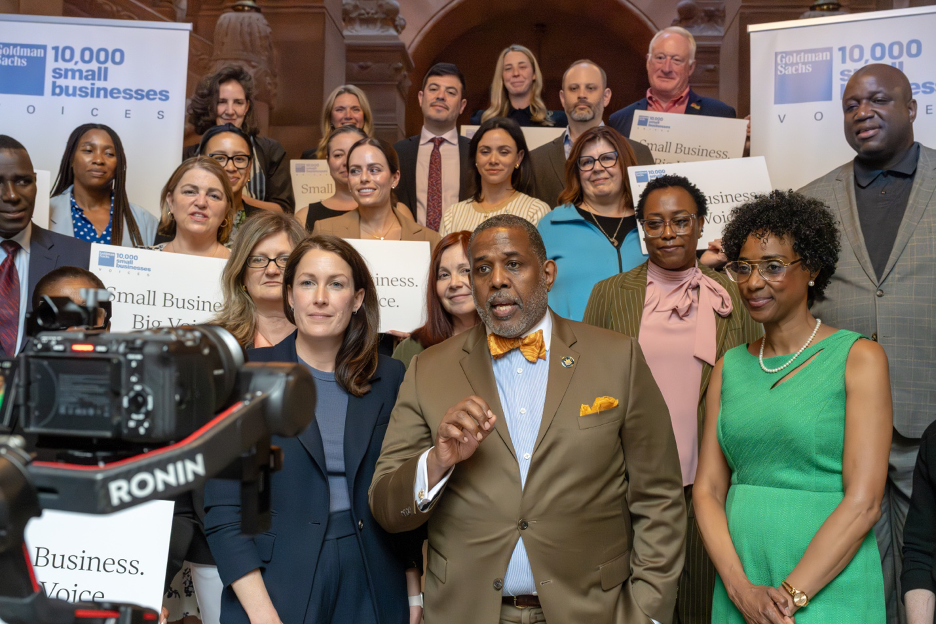
Small Business Advocacy in Albany
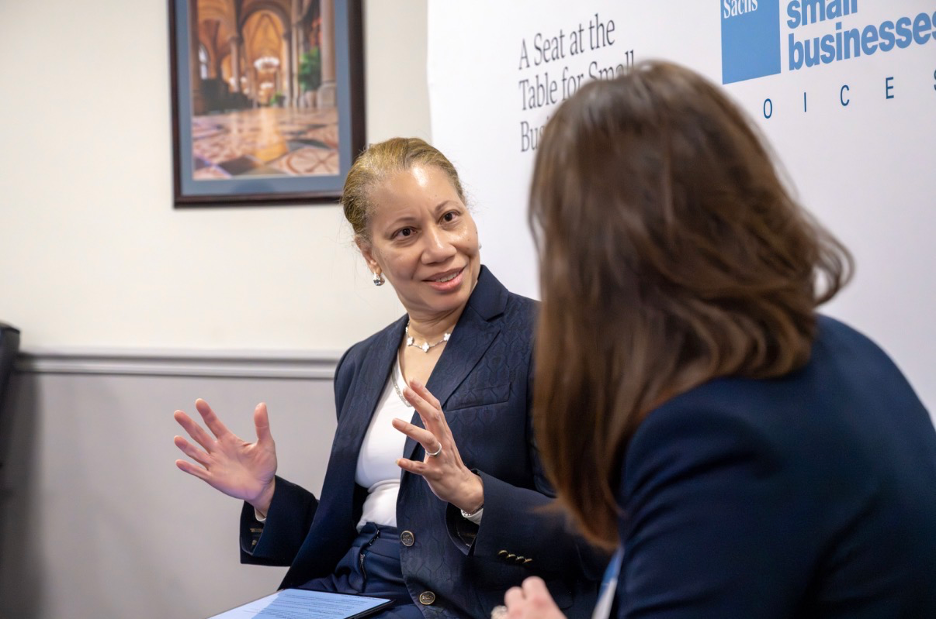
Small business Advocacy
Banner Image: Small Business Week. Image Credit – SBA


Staten Islander News Service Staff Writer
This byline indicates that this article was penned by a member/members of the Staten Islander News Organization office team. Our staff writers are the backbone of our newspaper, performing all sorts of important tasks like conducting interviews, investigating leads, besides writing the news stories you see.
[…] article with the new info once received. As AI tools have become more widely available, it’s become necessary for businesses to explore the opportunities it provides, which they often need help understanding, and if they don’t they could be left far behind by […]