
Staten Island Hunger Task Force June Meeting Was Tuesday, Minutes From May, April, March
Editor’s note: The NYS Food Summit event is on June 16th and is for stakeholders, food pantry executives, activists and advocates and others interested in learning and contributing to what’s being planned to help New York State’s most vulnerable communities. These are the minutes released previously for the previous several months ending in February. Our previous coverage included information about available programs and food pantry assistance for New Yorkers, as well as clothing sources for those that need clothes for themselves or their kids, particularly as seasons change and the school year ends.
SI Hunger Task Force June 1st, 2026, at 3:30pm
Agenda
Welcome & Opening: Welcome and quick overview of today’s meeting
Approval of outstanding meeting minutes
Committee Updates
Food For All – Terry Troia
Data- Heather Butts on Columbia Fellows
Guest Speaker: City Harvest on Staten Island
Pantry Spotlight : Rabbinical Alliance
(Looking for a pantry to spotlight in Sept)
Announcements and Adjournment

Staten Island Hunger Task Force Meeting Minutes May 4, 2026
Food Locker Program at St. John’s University
Mary Elizabeth Sable, Director of Residential Education and Basic Needs at St. John’s, presented their food locker program, which began in September of the previous year to increase food access for students with dignity and convenience. The program serves 110 enrolled students, with about 40 using it consistently, sometimes 3-4 times a week.
Bell and Howell Food Locker System
- St. John’s chose Bell and Howell lockers, influenced by their partner, Bread and Life in Bed-Stuy.
- The lockers integrate with the “Smart Choice” point-of-sale system, allowing students to order food online.
- System Features:
- The “Cooltrax” admin system monitors the 16 individual refrigerated lockers.
- Automated email and text notifications are sent when orders are ready.
- The kiosk is customizable, offers multiple languages, and includes an audio jack and ADA-compliant lockers for accessibility.
- Installation & Logistics:
- Installation took half a day and required a concrete pad and dedicated power; St. John’s uses a cellular data connection.
- A 24/7 camera requires a designated contact for alerts (e.g., temperature issues, open doors).
- Cost: The 16-locker unit cost over $80,000, excluding site preparation. Costs are expected to increase.
- Timeline & Support: There was a significant lead time from order to delivery. The contract includes limited in-person service calls, and the software has a learning curve.
Student Usage and Experience
- Placement: The lockers are placed next to Amazon lockers with minimal branding to reduce stigma.
- Workflow: Students shop online, staff pack and load the order, and the student is notified. 75% of students retrieve their food in under one minute.
- Success & Feedback: The program has a 94% student satisfaction rating and is more popular than in-person pantry pickup, especially for graduate students needing 24/7 access.
- Highly Requested Items: Fresh produce, milk, canned protein (beans, salmon), rice, and fresh bread are most popular. Shelf-stable milk is provided due to limited refrigeration.
- Program Support: The program has received significant donations of food and personal care items. A campus dietitian helped create an electronic cookbook to assist students with using ingredients like canned chicken.
Food Locker Initiatives and Regulations
Staten Island Social Care Network (SCN) Lockers
- SCN has established refrigerated and frozen food lockers at several locations (Health for Youths, A Chance in Life, Central Family Life Center).
- They are currently funded for Medicaid members with chronic diseases, providing a solution for those who cannot be home for deliveries or need off-hours pickup.
- The long-term goal is for local CBOs to take ownership of the lockers for broader community use.
Refrigeration and Regulations
- Responding to temperature alerts is a key requirement, though Mary Elizabeth has not been asked for temperature logs.
- Dawn from City Harvest noted that lockers attached to a nonprofit pantry would likely be treated as a client-choice distribution method and will follow up with her team for specifics.
College Hunger and Community Response
Campus Hunger Initiatives
- Attitudes towards campus food pantries have shifted positively, with administrative and community support now widespread. College food pantries are the fastest-growing type in the US.
- Speaker 3 from Columbia University discussed the Hunger-Free Campus Act and ongoing research.
- A connection was suggested between Mary Elizabeth (St. John’s) and Robert Key (College of Staten Island) to share resources.
- Help for Youth has expanded its Clementine Collective to three locations at CSI to address student hunger.
- There is interest in expanding pilot projects with Wagner, CSI, and St. John’s to study the intersection of food insecurity and Medicaid status among students, building on the “Fair Start” project.
Locker Turnaround Time
- St. John’s has the flexibility to extend pickup times for its mostly shelf-stable items.
- The university has two daily pickup windows: 12:00 AM to 12:30 PM and 12:30 PM to 12:00 AM. A standard process for higher-volume operations would involve clearing uncollected orders before loading the next batch.
Federal and State Policy Updates
Federal Policy: The Farm Bill and SNAP
- An update from the Anti-Hunger Policy Conference indicated the Farm Bill has passed the House and is now in the Senate.
- Key Concerns:
- The bill may eliminate the USDA’s annual food security report after 2024.
- It locks in several SNAP changes for five years, including:
- Limiting eligibility for refugees and asylees.
- Expanding work reporting requirements for adults 55-64 and those with children over 14.
- Reducing benefits over time by limiting updates to the Thrifty Food Plan.
- A significant cost shift for SNAP administration and benefits is expected to fall on New York State, which is being penalized earlier for improving its payment error rate. This potential cost vastly exceeds funding for all of New York’s emergency food programs.
State of Hunger in New York
- Nearly 3 million New Yorkers (including one in five children) face food insecurity, a 36% rise since early 2022.
- Grocery prices have increased 21% in five years.
- Food banks report a 70% increase in demand compared to 2019, while SNAP utilization has declined by about 150,000 people in the past year.
Upcoming Community Events
- A guest chef cooking demonstration will be held on Sunday, May 24, 2026, from 11:00 AM to 12:00 PM at 120 Victory Boulevard (Health for Youth space). The demo will feature three healthy meals using dried chickpeas and shelf-stable ingredients.
Staten Island Hunger Task Force Meeting Minutes April 6, 2026
· Topic Title: Confirmation of Meeting Timing and Board Introductions
o Description:
§ Opening remarks clarified it is the April meeting, not May.
§ Attendance recorded at 14 participants.
§ Board introductions: Chair is Antoinette Donegan; Alex is VP; Stephen is Secretary.
§ Emphasis on the community impact of budget cuts and the importance of updates.
o Conclusion:
§ Meeting proceeded with the VP facilitating.
· Topic Title: March Meeting Minutes Status
o Description:
§ Approval is planned at the next general meeting in May.
o Conclusion:
§ Distribution and approval deferred to the May meeting.
· Topic Title: Guest Presentation: New York State Food Summit and Food as Medicine
o Description:
§ Guest: Beth Richardson, affiliated with the New York State Food as Medicine Coalition; also works with the Alliance for Hunger Free New York.
§ New York State Food Summit scheduled for June 16; registration opening the week of the meeting; event runs 8:00–5:30.
§ Summit tracks: Food as Medicine; Advocacy for hunger prevention/nutrition security; Strengthening the safety net for frontline pantry work.
§ Format updates: Added networking time; will offer a virtual option and recordings afterward.
§ Food as Medicine framework: Nutrition interventions for prevention/treatment, focusing on obesity, diabetes, and heart disease.
§ NYS 1115 Medicaid waiver: Provides pantry stocking, food prescriptions (medically tailored groceries), medically tailored meals, nutrition education, and cooking supplies; can address barriers like missing can openers or refrigerators.
§ Terminology notes: “Food as medicine” is commonly used; “food is health” is less adopted.
o Conclusion:
§ Attendees expressed interest in virtual access; recordings will be made available.
· Topic Title: Practical Pantry Strategies and Education Resources
o Description:
§ Feedback trends: Appreciation for availability of foods that support health; more detailed recipient survey forthcoming.
§ Cooking classes and education: Some pantries offer recipe-of-the-month and filmed chef demos using pantry items (e.g., turnips, lentils, quinoa).
§ SNAP-Ed resources: Cooking class videos exist via SNAP-Ed New York; efforts underway to preserve and share materials despite program changes.
§ Dietitian resources: EatRight.org (Academy of Nutrition and Dietetics) offers free, reproducible one-pagers on low-sodium practices and food safety.
§ Sodium management: Rinsing canned goods can significantly reduce sodium; many pantries balance dignity of choice with health guidance.
§ Divergent pantry supply contexts: Some receive primarily low-fat/low-sodium items via government programs; others rely on private donations with higher-sodium goods.
o Conclusion:
§ Agreement to share education resources and leverage existing materials to support clients.
· Topic Title: Serving Immigrant Communities and Eligibility Constraints
o Description:
§ Concern raised about clients without immigration status who cannot access SNAP.
§ Coalitions (Food as Medicine Coalition; Alliance for Hunger Free NY) do not provide direct services; they aggregate feedback for advocacy.
§ Group discussion invited on programs serving non-SNAP-eligible populations.
o Conclusion:
§ Noted ongoing service provision by pantries; further sharing of specific programs encouraged.
· Topic Title: Resource Sharing: Allergen-Friendly Foods and Sourcing
o Description:
§ Securing Safe Food: Organization offering free allergen-friendly items; onboarding is straightforward.
§ Cereal and milk sourcing: Some pantries use CFC/Schreier contracts; milk competitively priced; cereal availability varies across providers.
o Conclusion:
§ Link shared in chat for Securing Safe Food; interest in exploring CFC sourcing options.
· Topic Title: Pantry Spotlight: Project Hospitality Programs with United Way of NYC
o Description:
§ Locations: Pantry at 205 Canal Street; community kitchen at 211 Canal Street in Stapleton.
§ Connect to Care: Preventive screenings (A1C, glucose, blood pressure) provided by SOMOS nurses; events in Dec and monthly Jan–Mar; ~200 people served.
§ Impact example: Client discovered stage 2 hypertension and received care; improved outcome.
§ Connect to Food: Eligibility via self-attestation of food insecurity plus hypertension or diabetes; $80/month benefit for fresh food via Mercado; citizenship not required.
§ Advocacy: Participated with United Way in Albany to support program continuation and scaling.
§ Ongoing services: Client-choice pantry open Tuesdays and Thursdays; 150–250 households per pantry day; ~200 meals served each pantry day.
o Conclusion:
§ Cohort ended in April; hopeful for continuation; program demonstrated strong proof of concept.
· Topic Title: Advocacy Updates: CFC and National Policy Context
o Description:
§ National Anti-Hunger Policy Conference in Washington, D.C. at the end of April; discussions expected on SNAP and WIC.
§ CFC rally schedule change: City Hall rally canceled for April 7; rescheduled to April 16, 1:00–2:00 p.m.
§ Communication channels: Equity Advocates, Roundtable, and Food Bank sending updates.
§ Funding ask: Increase CFC baseline funding to $100 million annually to offset federal reductions and maintain food access.
o Conclusion:
§ Members advised not to attend on April 7; to monitor communications and support the April 16 action.
Staten Island Hunger Task Force Meeting Minutes March 2, 2026
Opening & Minutes Approval
- Chair Antoinette Donegan opened the meeting and introduced board members Alex Hughes (Vice Chair) and Stephen Kaufman (Secretary).
- Stephen Kaufman noted approval of minutes was missing from the agenda.
- Previous meeting minutes were presented and adopted.
Data Committee Update
- Chris reported Heather and college students are compiling annual data from pantries for a report to City Harvest; 2022 data received, 2023 expected soon.
- Dr. Buds (Heather) noted students are conducting a literature review and preparing an IRB proposal at Columbia for a formal survey.
- Conclusion: The survey aims to assess whether Staten Island pantries improve food security from a health perspective to advocate for healthier food distribution policies.
Legislative Breakfast Recap
- Reverend Troya recapped the February 20th event: 60 in-person, 15 on Zoom (75 total), successful despite rain; featured on the OTDA website.
- Capacity was reached; a larger venue is needed next year.
“Chef to Community” Tax Credit Bill (S8719 / A09055)
- Chris presented the bill by Assemblyman Charles Fall offering up to a $10,000 annual NYS tax credit per restaurant location (50% of fair market value, capped at $7 per meal) for meals donated to 501c3 nonprofits, with potential federal credits up to $50,000.
- Members were encouraged to contact state representatives to support the bill.
Federal Policy Update Plans
- Federal policy updates will occur during the Food For All committee’s Zoom on Friday, March 20th at 3:00 PM, covering the Farm Bill and changes in HR1.
- A federal legislative presentation will be prepared for the next hunger task force meeting.
Impact of HR1 on SNAP Benefits
- Krista Hestorfer (Hunger Solutions NY) outlined HR1’s $187B SNAP cuts over ten years via expanded work reporting requirements, restricted access for immigrant families, and gradual benefit reductions.
- Focus on ABOD work rules: apply to ages 18–64 not living with a child under 14; HR1 expands to adults 55–64 and adults with children aged 14+, removes exemptions for veterans, people experiencing homelessness, and youth aging out of foster care.
- State waivers now limited to unemployment >10%; NY no longer qualifies. Rules began rolling out statewide March 1, 2026; gradual implementation as caseworkers screen individuals.
Exemptions and Compliance Options
- Individuals believing they qualify for exemptions should contact local social services offices or HRA.
- Possible exemptions: pregnancy, caring for a young child, disability benefits, health conditions preventing 80 hours/month of work; students; participation in addiction treatment programs; or working 30 hours/week.
- Compliance options: work 20 hours/week, engage in approved job skills activities, or perform community service.
Resources and Advocacy Efforts
- NOEP has 86 SNAP Navigators statewide to assist with applications and new rules; resources at foodhelpny.org.
- Programs without work requirements include WIC, universal free school meals, Summer EBT, and CACFP.
- Advocacy targets: current Farm Bill proposal that enables privatization of eligibility determinations; urging Representatives Josh Riley and John Mannion to vote no.
- State-level pushes: funding to offset federal cuts to the SNAP navigator network and increased WIC funding.
SNAP Work Requirement Exemptions: OTDA Medical Statement Template
- Discussion of an OTDA medical statement template to secure exemptions from SNAP work requirements; user-friendly and does not require a specific diagnosis.
- Acceptable signers include doctors, nurses, social workers, psychologists, and counselors in rehab/counseling; intended for healthcare professionals, not community center staff.
- Link shared; Speaker 8 will email it to Alex for distribution.
SNAP for All Coalition Proposal
- Coalition (led by Equity Advocates and United Neighborhood Houses) is narrowing focus to:
- Group 1: Households with children, including mixed-status families where children are eligible but immigrant parents are not.
- Group 2: Refugees, asylees, and other humanitarian immigrants excluded from SNAP under HR1.
Pantry Spotlight: JCC Pantry Organization
- Tour highlighted new storage racks and systems; micro-grants funding clear bins; whiteboards on cold storage to list contents, reducing door openings and preserving temperature; comprehensive labeling to aid rotating volunteers.
Pantry Shelving and Donations
- Faith United Methodist Church, affected by water damage, asked about heavy-duty shelves; JCC uses Uline racks (expensive).
- Alternatives suggested: Costco, BJ’s; openness to donations of excess shelving from other pantries.
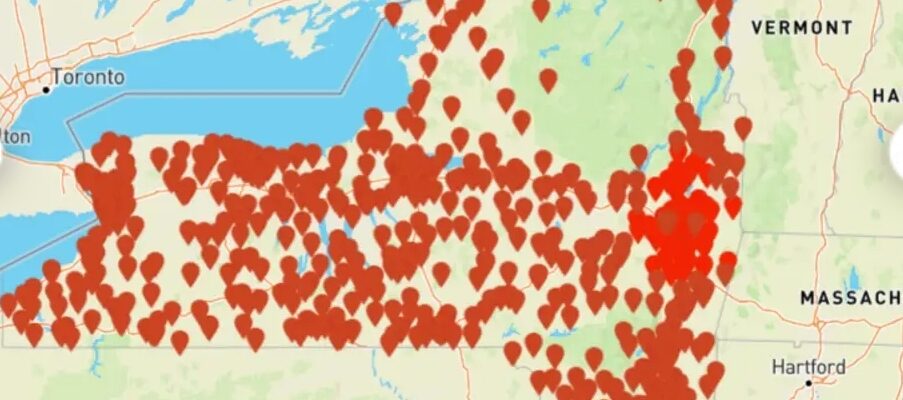
Banner Image: Map of food pantries around New York. Image Credit – Food Pantries for the Capital District



SI Hunger Task Force
The SI Hunger Task Force is not a pantry. Instead, we connect community members to pantries and pantries to community and government resources.
There are no comments yet
Why not be the first