
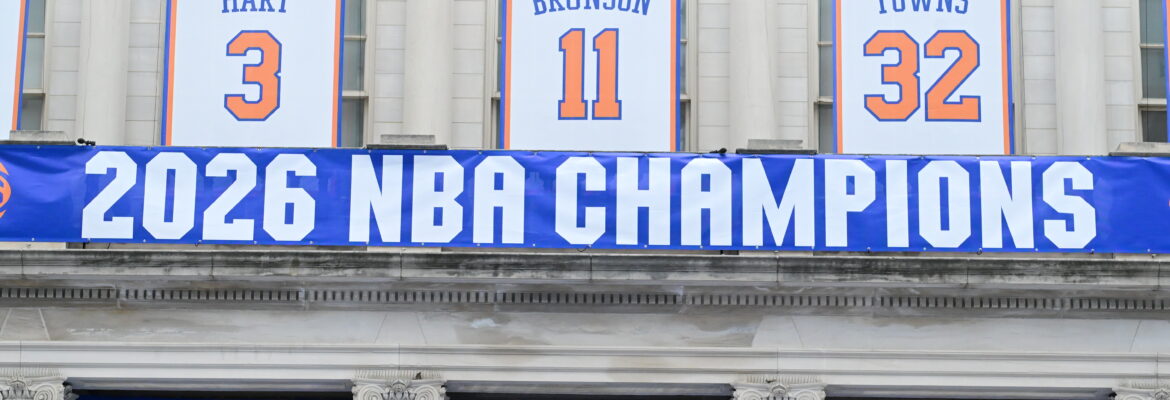
New York Knicks Ticker Tape Parade Through Canyon Of Heroes, Keys to The City Awarded
Our photographer, Sean Fitzpatrick, attended the ceremony at City Hall that followed the ticker tape parade where the players and management of the New York Knicks were each awarded Keys to the City of New York by Mayor Mamdani. This historic championship win, where the team has not won for 53 years, created an infectious joy felt all across the city. Neighbors hosted impromptu watch parties, the games were on in every bar and restaurant, along with the City’s official kiosks, and people who had never watched a single game of basketball in their lives found themselves transported by the fever of winning that gripped the City – with a climax to match the excitement as the winning basket was quite a feat to accomplish. The game and everything that led up to it will certainly be remembered by generations as the days that the City came together to cheer on New York’s basketball team, the Knickerbockers!
Mayor Mamdani Awards Key to the City of New York to New York Knicks Following Historic Ticker Tape Parade
Mayor Mamdani also invited special guests who embody New York City’s love of basketball
NEW YORK – Mayor Zohran Kwame Mamdani today awarded Keys to the City of New York to the New York Knicks and honored them at both a ticker-tape parade along the “Canyon of Heroes” and a City Hall ceremony. The parade, which started near Battery Park and traveled to City Hall, marked the first ticker-tape parade in Knicks’ history.
“The Knicks did not just win for New York City — they won like New York City. What is New York if not your back up against the wall, a dream that feels just out of reach, a rent payment you don’t know how you will ever make? What is New York if not 99.6 percent of the world stacked against you? And who are New Yorkers if not people who hear those odds and smile? Who look at a 0.4 percent chance of success and ask: ‘why’re you giving me a head start?’ said Mayor Mamdani. “This is our city. This is our team. For 53 years, we watched. For 53 years, we waited. Now, we’ve won.”
Mayor Mamdani also invited several guests to join the City Hall ceremony who embody the city’s deep love for basketball and the spirit that carried the Knicks to this historic victory.
These New Yorkers reflected the many communities that have waited 53 years for this moment:
- Parks Department “blacksmiths” who repair the basketball hoops at NYC Parks.
- 32 year-old “Good Samaritan” Balladoli Mieses who made headlines for intervening and preventing destruction during the Knicks celebrations last week.
- Four avid young basketball players who grew up in NYCHA, including one young player who lives in the same housing complex – Pomonok Houses – that Jose Alvarado spent part of his childhood.
- Four members and the coach of The City University of New York (CUNY) wheelchair basketball team.
- A city worker at the Office of Technology and Innovation who was hired in 1973, the last time the Knicks won the NBA Championship – and has been working for 53 years.
- Five older adults who have been lifelong Knicks fans.
This championship belongs to the people of New York City. Today’s guests represent the workers, athletes, dreamers and fans who make this the greatest basketball city in the world.
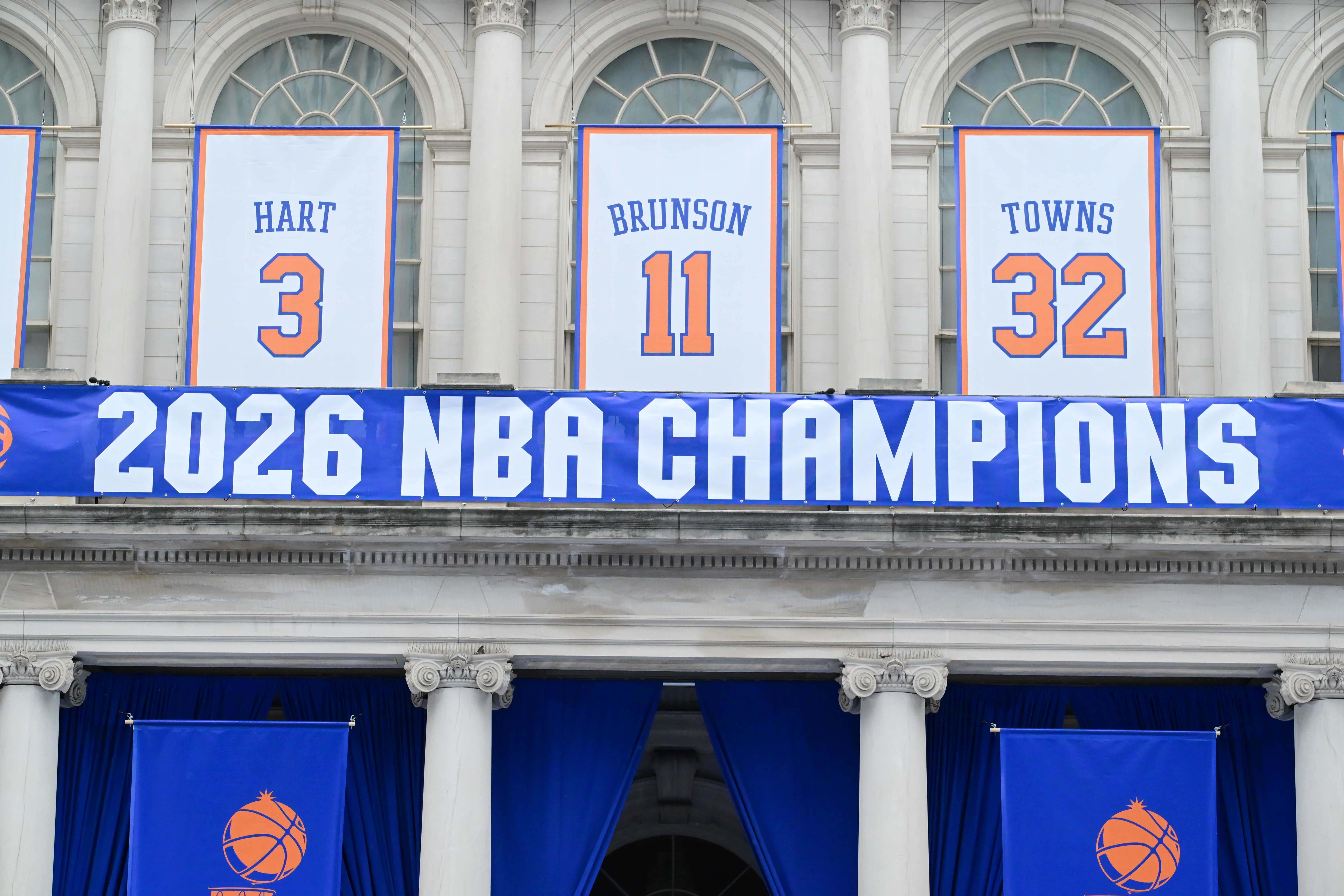
New York Knicks champions. Image Credit – Sean Fitzpatrick
Mayor Mamdani Awards Key to the City of New York to New York Knicks Following Historic Ticker Tape Parade

Mayor Mamdani also invited special guests who embody New York City’s love of basketball
NEW YORK – Mayor Zohran Kwame Mamdani today awarded Keys to the City of New York to the New York Knicks and honored them at both a ticker-tape parade along the “Canyon of Heroes” and a City Hall ceremony. The parade, which started near Battery Park and traveled to City Hall, marked the first ticker-tape parade in Knicks’ history.
“The Knicks did not just win for New York City — they won like New York City. What is New York if not your back up against the wall, a dream that feels just out of reach, a rent payment you don’t know how you will ever make? What is New York if not 99.6 percent of the world stacked against you? And who are New Yorkers if not people who hear those odds and smile? Who look at a 0.4 percent chance of success and ask: ‘why’re you giving me a head start?’ said Mayor Mamdani. “This is our city. This is our team. For 53 years, we watched. For 53 years, we waited. Now, we’ve won.”
Mayor Mamdani also invited several guests to join the City Hall ceremony who embody the city’s deep love for basketball and the spirit that carried the Knicks to this historic victory.
These New Yorkers reflected the many communities that have waited 53 years for this moment:
- Parks Department “blacksmiths” who repair the basketball hoops at NYC Parks.
- 32 year-old “Good Samaritan” Balladoli Mieses who made headlines for intervening and preventing destruction during the Knicks celebrations last week.
- Four avid young basketball players who grew up in NYCHA, including one young player who lives in the same housing complex – Pomonok Houses – that Jose Alvarado spent part of his childhood.
- Four members and the coach of The City University of New York (CUNY) wheelchair basketball team.
- A city worker at the Office of Technology and Innovation who was hired in 1973, the last time the Knicks won the NBA Championship – and has been working for 53 years.
- Five older adults who have been lifelong Knicks fans.
This championship belongs to the people of New York City. Today’s guests represent the workers, athletes, dreamers and fans who make this the greatest basketball city in the world.
Some comparisons between the 1986 Mets World Series surprise win from Gemini and the subsequent dissolution of the team and other issues preventing any further championship wins. The most similar sporting event to the recent Knicks win in New York City history might be the 1986 World Series, where the New York Mets won their first Series title ever, and in this case, it was their last. The Knicks can avoid the pitfalls they faced by not trading off their team members too soon, allowing the spirit of teamwork to continue to grow and possibly keep the chances high for another championship win in the years to come.
Why haven’t the Mets won a World Series since 1986?
The Mets fell victim to a mix of bad luck, institutional instability, and meeting historically dominant opponents at the wrong time:
- The 1988 Missed Opportunity: The 1988 squad was actually arguably more talented than the 1986 team, winning 100 games. However, they suffered a shocking upset in the NLCS to Orel Hershiser and the underdog Los Angeles Dodgers.
- The Subway Series (2000): The Mets built a fantastic team around Mike Piazza, but ran directly into the buzzsaw of the late-90s New York Yankees dynasty at the absolute peak of their powers.
- The 2006 Heartbreak: Boasting a powerhouse roster with Carlos Beltrán, David Wright, and José Reyes, they lost Game 7 of the NLCS to the St. Louis Cardinals when Beltrán struck out looking with the bases loaded in the 9th inning.
- The 2015 Fall: A young, electric pitching staff (Jacob deGrom, Matt Harvey, Noah Syndergaard) carried them to the World Series, but defensive miscues and a relentless Kansas City Royals offense crushed their title hopes. [1, 2]
Comparison: 1986 Mets vs. The 2026 NY Knicks
The Knicks winning the 2026 NBA Championship is the closest thing New York has felt to the 1986 Mets mania in decades, though the environment around the wins looks entirely different. [1, 2]
| Feature [1, 2, 3, 4, 5] | 1986 Mets | 2026 NY Knicks |
|---|---|---|
| City Vibe | Rowdy & Intimidating. The ’86 Mets mirrored a gritty, dangerous 1980s New York. Fans literally tore up the Shea Stadium turf after Game 7. | Euphoric & Unified. The Knicks’ title broke a 53-year drought. The energy was celebratory, fueled by an entire generation that had never seen them win. |
| The “Watch” Culture | Local Bars & Living Rooms. There were no centralized city-wide outdoor watch parties. People packed local neighborhood taverns or stayed glued to the couch with family. | Massive Public Screenings. Thousands of fans packed areas outside Madison Square Garden, local parks, and dedicated watch parties all over the five boroughs. |
| Media Ecosystem | Word of Mouth & Newspapers. If you missed a game, you waited for the morning edition of the Daily News or New York Post. Rumors about the players’ wild antics spread slowly via local gossip. | Instantaneous Social Media. Every single possession, courtside celebrity reaction, and post-game block party was broadcast instantly to millions on TikTok, X, and Instagram. |
The Numbers: How many people were watching?
Because entertainment was completely consolidated around three or four major television networks in the 1980s, the actual number of people watching television simultaneously back then was staggeringly higher than today. [1, 2]
- 1986 World Series (Game 7): An estimated 55 to 60 million people tuned in live on NBC. Roughly 39% of every single household in the United States had the game on. In Boston and New York, local TV ratings hovered near an unbelievable 55% share. It remains the most-watched single World Series game in human history.
- 2026 NBA Finals (Game 5): The Knicks’ historic, title-clinching victory over the San Antonio Spurs averaged 24.5 million viewers, peaking at 33 million. While this smashed a 28-year NBA broadcast record, it highlights how modern streaming and fragmented media split modern audiences. [1, 2, 3, 4, 5]
The Bottom Line: In 1986, it truly felt like everyone was watching the same screen because they had no other options. Today’s Knicks championship generated louder, more visible public noise because of social media and public watch parties, but the 1986 Mets dominated the literal eyeballs of the country on a scale that modern television will likely never see again. [1, 2, 3, 4]
The perception that the game was on multiple channels stems from how modern sports media packages its games across different platforms, streaming services, and alternative broadcasts. While a single traditional cable channel held the exclusive broadcast rights, viewers accessed it through a vast web of different providers, applications, and custom broadcasts. [1, 2, 3]
Why people felt it was on “various channels”
The historic Game 5 was produced by Disney, which distributed the game through multiple avenues simultaneously: [1, 2]
- Traditional Broadcast TV: The primary game broadcast aired over-the-air on ABC.
- Cable and Digital Sports Packages: The feed was simultaneously simulcast and broadcast via ESPN networks and the ESPN app.
- Streaming Multiplicity: Millions of viewers watched the exact same game through vastly different “channels” on their smart TVs, including DirecTV, Fubo, Hulu + Live TV, YouTube TV, and ESPN Unlimited. Because every provider has its own interface and dedicated channel number, viewers flipping through different apps felt like the game was everywhere. [1, 2, 3, 4, 5]
Why it felt like “nothing else was on”
The sentiment that television was completely taken over comes down to the sheer cultural dominance of the Knicks ending a 53-year championship drought. [1, 2]
- The Ratings Peak: During the final moments of the fourth quarter on Saturday night, the national audience peaked at a massive 33 million viewers. [1, 2]
- The “Bar Car” and Public Monopoly: In the New York metropolitan area, commercial establishments, bars, and restaurants effectively turned off all alternative programming. If a screen was turned on in public on Saturday night, it was legally or socially mandated to be showing Jalen Brunson and the Knicks. [1, 2]
While the 1986 Mets technically captured a higher percentage of traditional household televisions because there were only a handful of broadcast networks available, the 2026 Knicks completely monopolized the modern, highly fragmented digital landscape on Saturday night. [1, 2]
Modern broadcasts use official social media streams, alternate fan-casts, and digital platforms to capture a massive secondary audience that did not exist during the 1986 Mets championship era. [1]
While traditional television metrics track exactly who is watching on a living room screen, the total digital and social engagement tells an entirely different story about how the country consumed the Knicks’ historic title win. [1]
Social Media Video Combinations
The NBA did not broadcast the full live game for free directly on social feeds, but they used a multi-platform digital “funnel” that generated staggering video numbers: [1]
- The 15-Billion-View Record: The NBA announced that the 2026 Finals generated a record-breaking 15 billion views on social media (across TikTok, Instagram Reels, X, and YouTube). [1]
- The Game 5 Viral Boom: Game 5 alone accounted for over 4 billion social media clip views. Fans who weren’t near a television watched the game via near-instantaneous highlight clips, real-time court-side reactions, and locker room celebration live streams uploaded seconds after the final buzzer. [1]
- Official Alternate Streams: ESPN leveraged its digital landscape by airing NBA Finals All-Access with The Pat McAfee Show as an alternate telecast. This single streaming/cable hybrid option averaged 1.1 million viewers, breaking the record for the most-watched alternate NBA presentation in history. [1]
The New York City Local Market
Because the Knicks play in the country’s largest media market, local viewership in the tri-state area distorted the national numbers completely: [1]
- The Local Share: While the national television share was a staggering 38.3 (meaning nearly 40% of all people watching TV in the U.S. had the game on), the percentage of households in the New York market spiked far higher during the 4th quarter. [1]
- The “Out-of-Home” Boost: Modern Nielsen ratings now use upgraded “Big Data” that factors in smart TVs and out-of-home viewing. This means the millions of people crammed together watching the game in NYC bars, restaurants, hotel lobbies, and public spaces were actually counted toward that 33 million peak audience—something traditional ratings in 1986 completely missed. [1, 2]
Total Viewership: 1986 vs. 2026
When combining traditional television with the platforms we did not have in the 1980s, the comparison highlights a major cultural shift in how media is digested.
1986 World Series (Game 7) [==================================================] 60M (All on Traditional TV) 2026 NBA Finals (Game 5) [====================] 24.5M Average TV Viewers [===========================] 33M Peak TV Viewers [======================================================================] 4B+ Social Media Views- In 1986: Audiences were highly concentrated. With only a few major networks, up to 60 million people watched the Mets on the exact same channel at the exact same time. The experience was singular, but limited only to those sitting in front of a television box.
- In 2026: Audiences are fragmented but infinitely larger in total reach. While the traditional live TV broadcast peaked at 33 million viewers, billions of additional interactions occurred simultaneously via digital channels, social streams, and smartphone devices that transformed the game into a global web experience. [1, 2, 3]
People who felt like “nothing else was on” were completely right. Whether looking at a cable box, scrolling through an app, or walking past a local storefront, the digital architecture of modern media ensured the game was unavoidable.
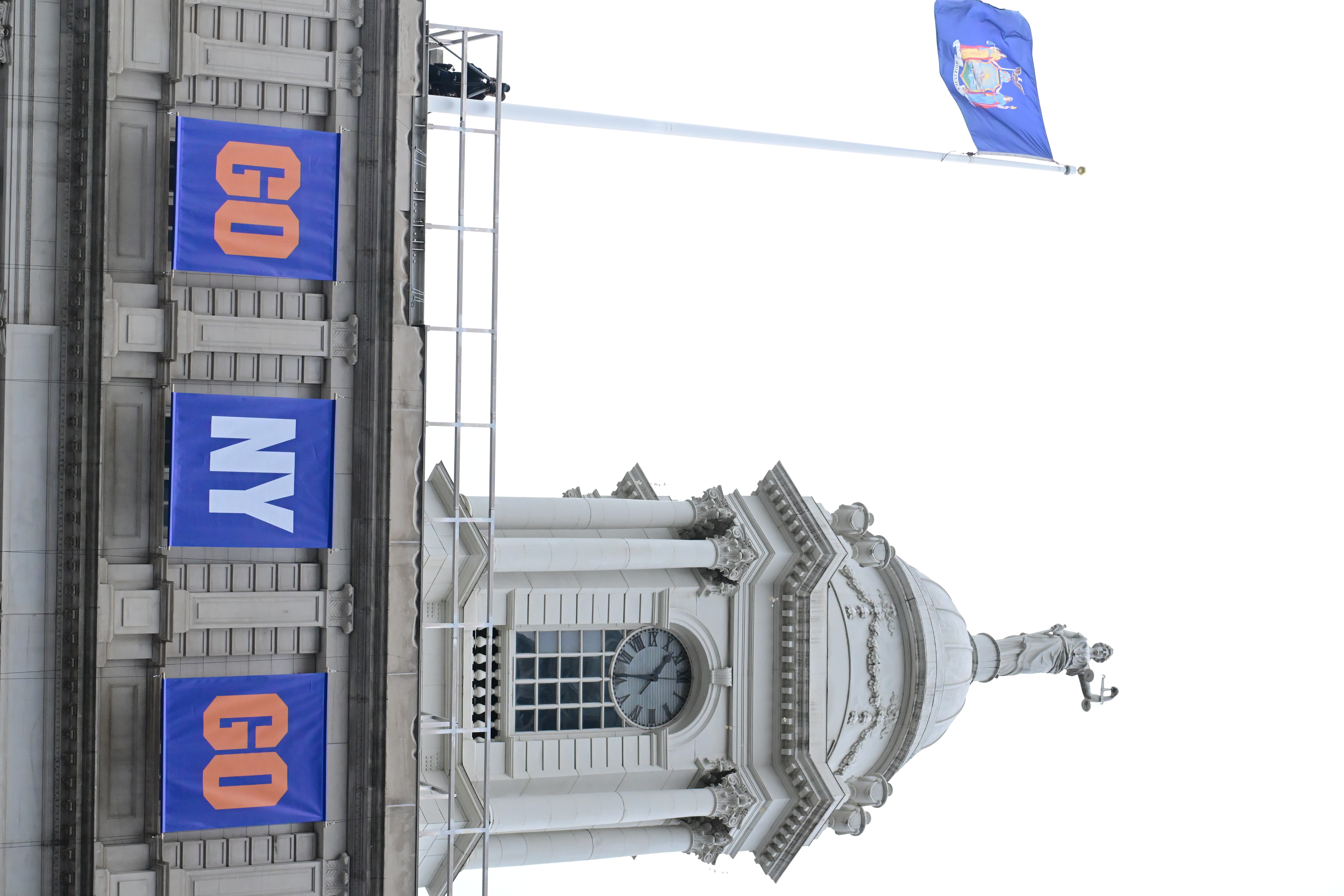
New York Knicks champions. Image Credit – Sean Fitzpatrick
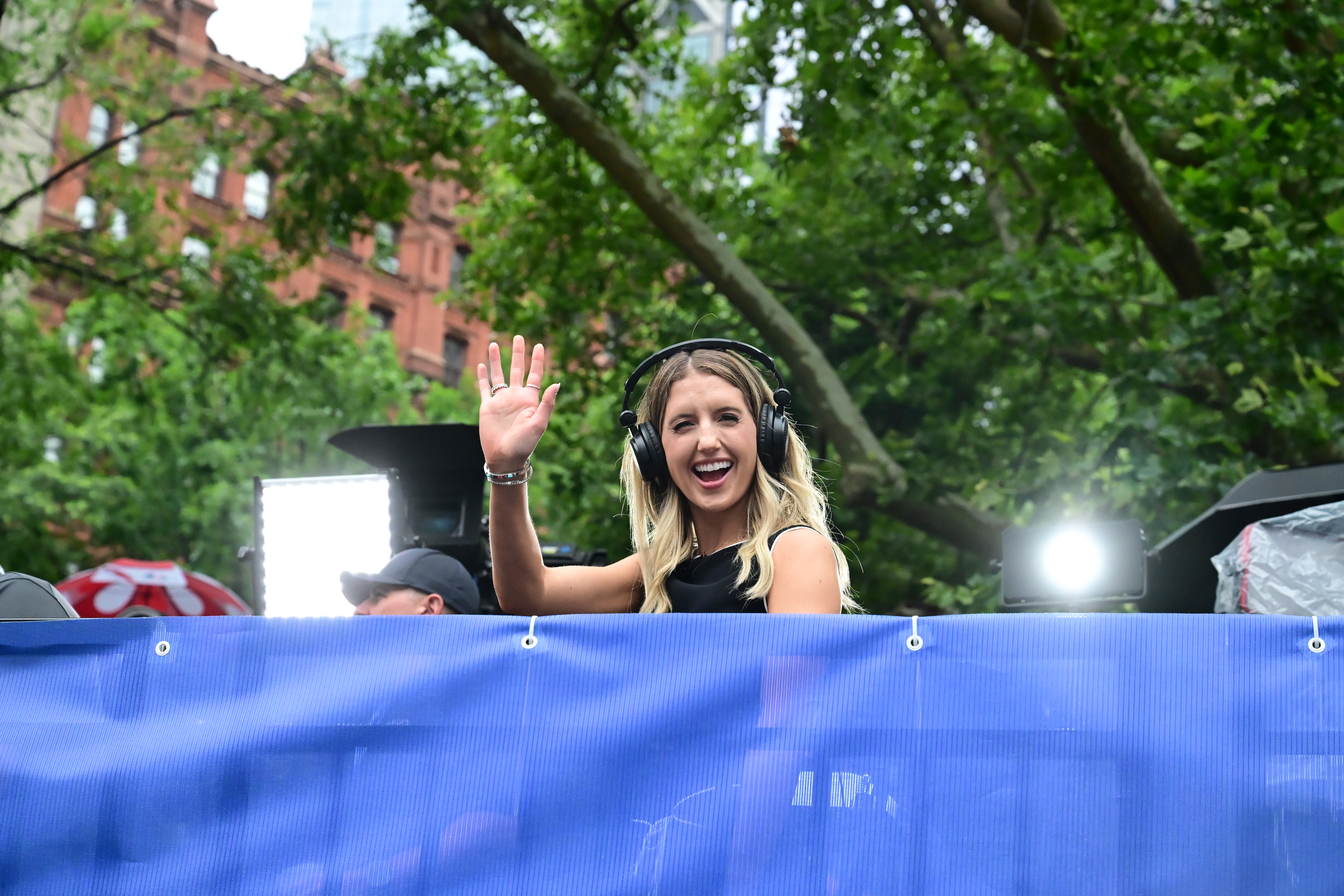
Banner Image: New York Knicks champions. Image Credit – Sean Fitzpatrick


The Staten Islander News Organization Editors
This is the shared editors' account for the Staten Islander news organization. To locate the account of a particular editor, please search using their screen name.
There are no comments yet
Why not be the first