

Staten Island Once Had Small Movie Houses – Must-See Movie “The Last Picture Show” Explores Phenomenon Of Closures, Remaining Sites In Western US
Staten Island Once Had Small Movie Houses – Must-See Movie “The Last Picture Show” Explores Phenomenon Of Closures, Remaining Sites In Western US
If you’ve noticed movie theaters have closed year after year in your local area, you’re not alone. Staten Islanders used to have at least two double screen movie theaters on the island, but they closed decades ago when the new multiplex cinemas came to the area. Then Covid came, and one of the last remaining multiplexes closed, but then a new theater opened in the Mall. There are now two theaters on Staten Island, along with a theater that has a small number of screens and shows classic films and some new one. This is a draft house, so not the same as the small town, little movie theater type of place described in this film with movies as its only purpose.
In the Midwest, the relics of many of these old theaters still stand and haven’t been torn down. Not only that, but there’s a small group of dedicated movie and theater lovers who have restored, reopened, or continued the operation of their small town movie theater.
According to the film, there were tens of thousands of theaters back in the 1960s. Today there are only 3,000 left. It’s very hard for a theater to run on just movies. Especially a small theater with one or two screens, as the rooms with the screen and seats are called. A small theater has to do the same thing as the larger multiplex theaters, without intelligent exceptions due to their limited pool of an audience, most of whom go every week.
So when a film is released that they want to show, they have to pay a certain fee along with a percent of the proceeds. Critical to understanding the problem is the simple fact that they MUST run that film for a certain number of weeks, usually two or three. If a small town movie theater with a limited pool of residents is playing the same film, and only that film, for multiple weeks, people aren’t going to see it again. So they’ll stay home. But that’s not the only issue.
On top of that, at a certain point, in about 2015, film studios converted to digital. Across the board, no ifs, ands, or buts. They didn’t want to hear it. If a theater couldn’t afford the upgrade, anywhere between $150,000 to 500,000, depending on the location where the theater found itself (also called real estate market – which has a large effect on costs), they were out. No longer a theater, no exceptions made.
So a lot of theaters that had survived everything else were forced to close. Then came Covid. In many cases, theaters were forced to close for 72 weeks in the midwest. This destroyed some of the last groups. A small, not organized group of people across multiple states have individually decided to save their town’s movie theater and bring back that neighborhood’s culture.
Because that’s what movies are, and why going to movies is so important. It’s our culture, and it’s a habit to be formed. If younger generations don’t learn about that experience, this trend will continue. As one of the owners points out, going into town to see a movie is cultural. Sitting home to watch a movie is not, as you’re by yourself.
It doesn’t help that film studios won’t provide any flexibility to the small town single and double screen theaters that built Hollywood. It wasn’t a thing to see movies before they came along. All they’d have to do is make a few special packages just for such theaters. For instance, two for one deals, where they have two films to run in tandem at the theater for a reduced price. One film at 7, the other at 9, the first again at 11, and so on, with the order switching the following week.

Because it’s also imperative to remember that the pandemic nearly killed Hollywood too. Without those opening weekend ticket sales, they will not make enough money to survive. It’s just not the same price point with streaming. Here’s why:
Streaming a film costs a family of five $8 most of the time, maybe a little more, for the first few months. The studio gets about 70% of that. Theater goers pay about $25 per adult, $15 per kid. So a family of five, with three kids, would cost about $95 or more. The studio gets at least 35% of that cost, with sometimes up to 50% or more, plus the additional flat rate licensing fee charged to the theater. So that same family is worth $5 vs. $33.25 or $47.50. That’s a significant difference and puts studios who don’t partner with theaters to make less money, ensuring most movies are a loss, which makes it harder for the industry to survive.
So given these price realities, the fact that film studios have not returned to pre-pandemic release schedules has been detrimental to Hollywood studios as well as to the small movie theaters. But it’s not too late.
Most theater owners have realized that they had to diversify in order to survive. They allow people to pay to screen movies on the big screen that they have in their possession for one night of theatrical style watching with the ultimate surround sound and experience. Some host concerts, musical acts, and performances at times when the movies aren’t playing. Others have kids parties in the venue space. All of these different methods have allowed the few remaining theaters to stay standing and remain a theater.
But if there is to be true long term stability – and if movie making as a whole is to survive – it has to be brought back into the culture.
Streaming and dvd sales should wait six months to a year after the theatrical release so that there is time for it to make that crucial cost outlay back and become a profitable film. If the studios continue at their current pace, they’ll soon find themselves making movies that no one is in the habit of watching. Or they’ll just be on streaming, significantly hampering the ability for movies to be profitable at all.
In the meantime, these beautiful theaters that are being supported by their own small towns – usually as fundraising nonprofits supported by their own communities – will hopefully continue to plug along until a new era of filmmaking – where consideration is given to the small movie house- finally dawns, as it must if films want to not just survive but thrive in the new economy.
As far as Staten Island: maybe someone could reopen the cinema on New Dorp Lane (The Lane), which had become a comedy club. The other two screen theater on Hylan was torn down long ago and replaced by shopping centers. For many of these theaters, forming a nonprofit to save the location has worked well. It’s part of this culture that is essential.

Lane Theatre Staten Island. Image Credit – Ken Roe licensed by CC
The film tells the stories in a beautiful fashion. The people are presented as three dimensional and real, and their lives age experiences have helped shape their communities. Seeing the vital place that movie houses occupy in society is essential. The music was also excellent, and the weaving together of past and present was really well done in this film.
This film is excellent, and I would give it five stars, and recommend it as a must-see movie:

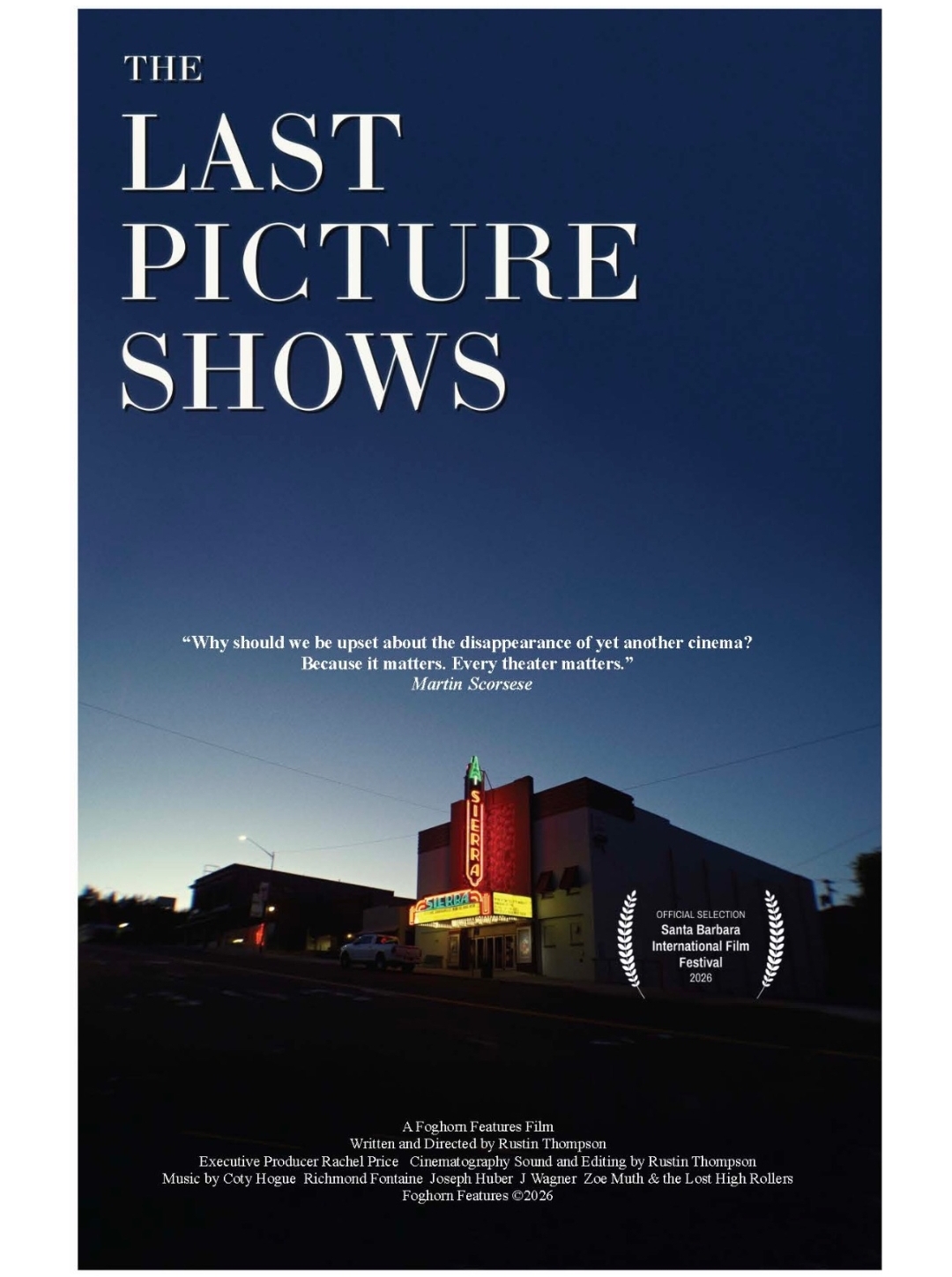
Details about the film:
A journey into the American West on a search for traces of what was once a center of small-town life: the movie theater
SYNOPSIS
Ten states. 10,825 miles. 123 theaters.
Filmmaker Rustin Thompson journeys into the American West on a search for traces of what was once a center of small-town life: the movie theater. On the trip, he finds long abandoned and forgotten cinemas; movie houses that have fallen into disrepair; theaters recently closed, theaters struggling to hold on, and theaters that—thanks to their thoughtful caretakers—are not only surviving but thriving. Between the stops along the way, Rustin poetically intersperses excerpts from Peter Bogdanovich’s 1971 classic film The Last Picture Show, as well as reflections on past and present hardships facing the film exhibition industry. The Last Picture Shows is not only a timely portrait of an industry in crisis, one facing the headwinds of consolidation, streaming, and the diminishing theatrical experience, but it also reminds viewers that even in vast cinema deserts, there are oases of community and gathering that remain, where the movie house continues to be a place of wonder, contemplation, and connection

[…] to bring in those Hollywood movies that islanders enjoy. Readers might be interested in our review of The Last Picture Show, where the filmmaker visits some of the last remaining independently-owned movie theaters in the […]