
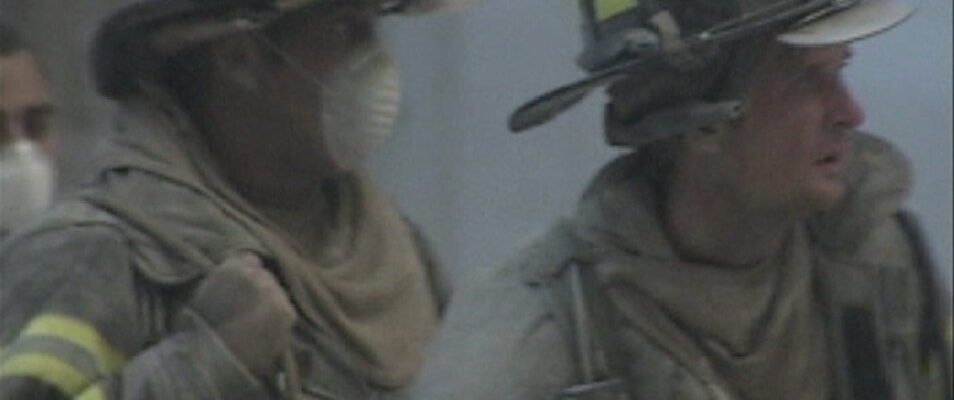
Brooklyn Firefighter Filmed By Journalist On 9/11: Still Looking For Him 25 Years Later
Editor’s note: Below is a video of about five minutes of footage from September 11th and September 12th, filmed by Nina Vishneva. Pictured in the video, as well as below the article, is the firefighter she still hasn’t been able to identify all these years later:
Women’s shoes were lying everywhere. People had kicked them off while running.
For weeks, the rescue workers worked in that dust. At the time, nobody knew exactly what those weeks would cost them.
I interviewed retired firefighter Robert Serra. He had graduated from the fire academy only one day before September 11. That day was supposed to be his day off.
He was driving to hockey practice when he saw the North Tower burning. He went home, put on the brand-new turnout gear he had received the day before, and went to the World Trade Center. He told me, laughing, that he was still pulling the tags off his gear on the way there because it had never been used.
Years later, I asked him what he remembered most.
“The smell,” he said.
I remember Eric Robertson, a firefighter from California who drove across the country with his search-and-rescue dog, Porkchop. All commercial flights had been grounded, so they drove. Eric spent weeks at Ground Zero searching through the gray dust. When human remains were found, he marked the location. Years later, he developed multiple cancers and serious lung disease. But when he talked to me, he didn’t talk about himself first. He talked about the people they were trying to bring home.
There were many people they could not bring home.
Lenny Ragaglia was one of them.
And that is how I came to another September 11 story – on Staten Island.
Before the attacks, Wendy Pellegrino lived across from a small, abandoned piece of land. She told me that there was nothing there. “Here was nothing. It was just dirt.”
On September 11, Wendy learned that her husband, who worked in one of the World Trade Center towers, was there. He managed to escape. That night, Wendy went outside. She put a candle on the empty piece of land for the people who had died. She put up American flags and a sign:
“God Bless Our Heroes.”

The next day, someone brought the first photograph. Then another photograph appeared. Then another. People began calling Wendy because everyone in the neighborhood knew she lived there. They asked her to turn photographs of their loved ones toward the street so they could see their faces as they drove by. Wendy began to understand what they needed. Their relatives were gone. In many cases, their remains had not been recovered. But they needed somewhere to see them. The little piece of land gradually became a memorial.
Wendy calls it Angels’ Circle.
She eventually decided that the memorial would be for people whose remains had never been found. She calls them angels. For many families, it became the place where they could come to remember someone they could never bury. There are photographs everywhere. There are candles and flowers. Over the years, the memorial has develo
Over the years, I kept coming back to the same stories.
To Lenny’s family, who never got his remains.
To the firefighters who survived September 11 and then spent years fighting illnesses caused by what they breathed at Ground Zero. To the families who created their own memorials because there was nowhere else to go. I remember what one firefighter told me about those first months. The first six months after September 11 felt like one long week. They couldn’t tell the days from the nights anymore. They only came back to reality when they went to funerals. And the funerals didn’t stop.
That is probably why I still think about this firefighter from Engine 205. He is there for only a moment in our footage. He looks directly into the camera, and then he disappears back into the smoke. Twenty-five years later, I still don’t know who he was.
Maybe someone reading this will recognize him. Maybe someone from Engine 205 will remember him.
I would really like to put a name to the face I’ve remembered for twenty-five years.

September 11th firefighters. Image Credit – Nina Vishneva

September 11th firefighters. Image Credit – Nina Vishneva

September 11th firefighters. Image Credit – Nina Vishneva
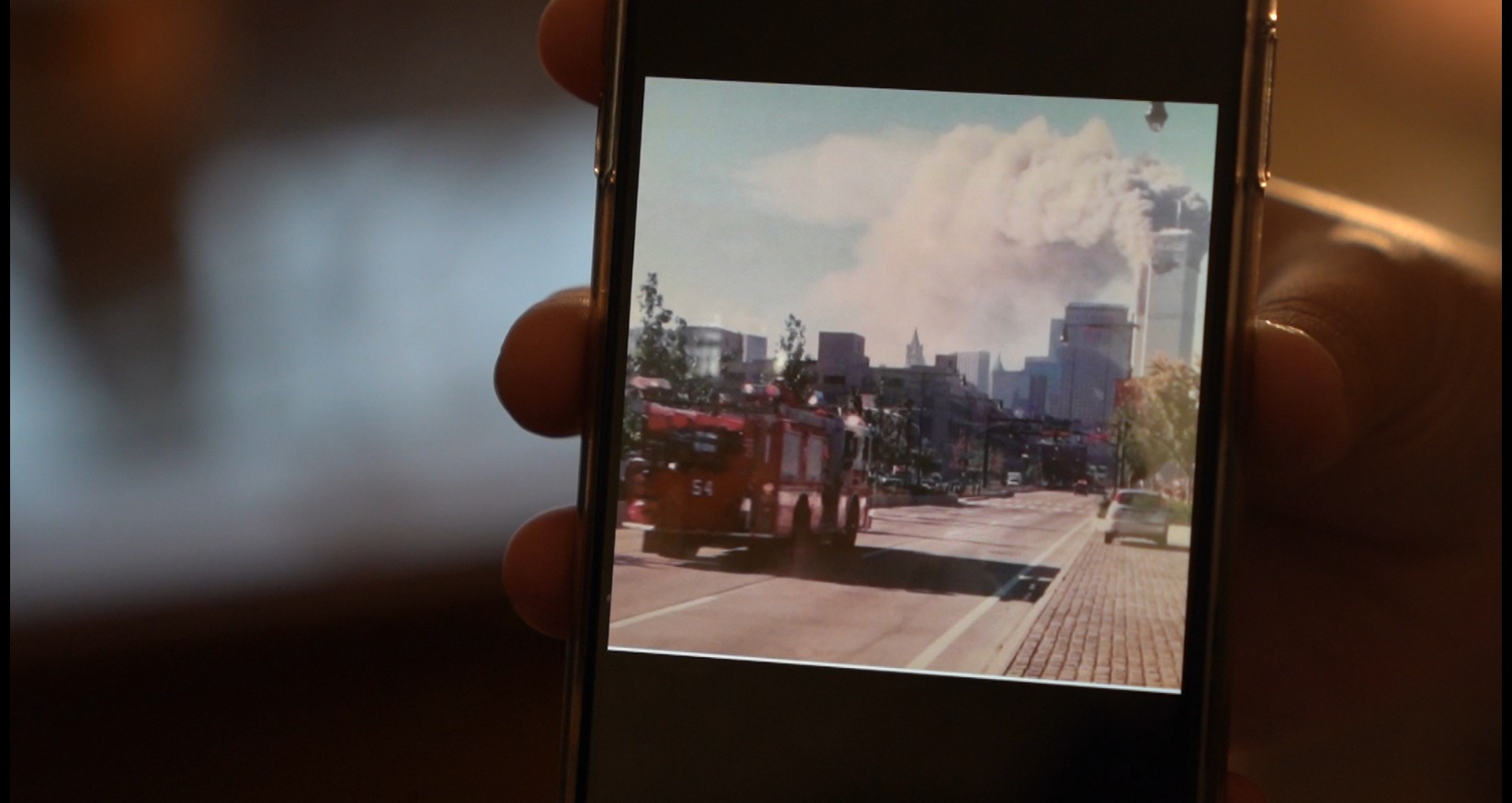
September 11th firefighters. Image Credit – Nina Vishneva

September 11th firefighters. Image Credit – Nina Vishneva

September 11th firefighters. Image Credit – Nina Vishneva
Banner Image: Unknown firefighter on 9/11. Image Credit – Nina Vishneva
Nina Vishneva
Nina Vishneva is an award-winning New York-based journalist, producer, and cultural commentator with over two decades of international reporting experience. Her work spans presidential campaigns, UN summits, civil rights movements, and cultural revolutions, with a focus on how politics, identity, and memory intersect. She has reported for outlets including Voice of America (VOA) — covering everything from breaking news to in-depth stories that bridge global events and personal narratives. Her work has been recognized with an International Emmy for coverage of 9/11. Fluent in Russian and English, Nina brings a global, cross-cultural perspective to every story — whether she's reporting from the streets or behind the scenes.
There are no comments yet
Why not be the first