
NYC’s Austrian Cultural Forum Sustainability Photographer Discusses Project, Harsh Environments, High Tech Solutions To Self Sufficiency
See the interview with Gregor Sailer below about sustainability, severe environments, and more:
From the biography in the beginning of the book written by his colleaugue, David McClements:
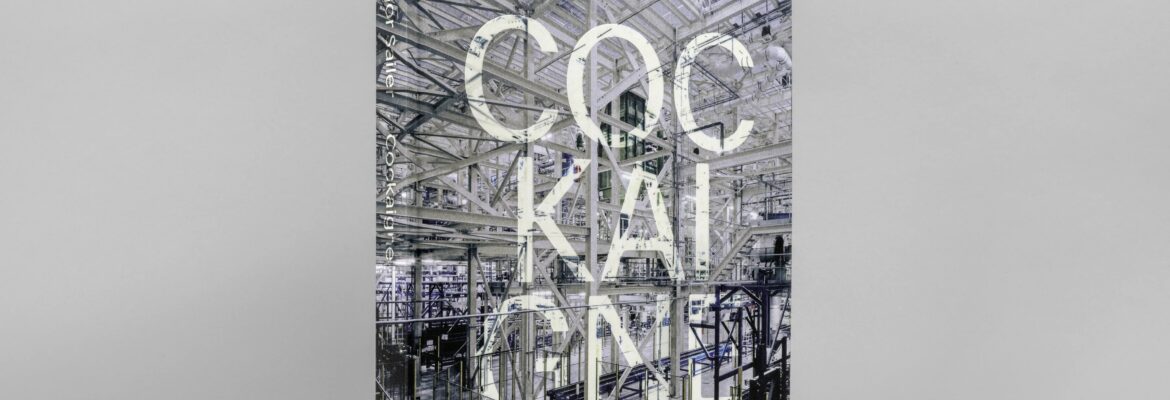
Gregor Sailer is an Austrian photographer whose work challenges the way we see and understand our constructed environments. His previous works, including Closed Cities (2012), The Potemkin Village (2017), and The Polar Silk Road (2021), have focused on humanity’s attempts to adapt to and control an often hostile planet through images of diverse architectural constructions. Gregor takes up some of these themes, as well as several new ones, in his new book Cockaigne. This work showcases the innovative ways humans have found to sustain themselves, presenting striking images that reveal diverse and often unfamiliar methods of food production, processing, and distribution. From small-scale traditional farming to large-scale futuristic industrial manufacturing, his work shows how humans living in vastly different environments with different skills, experiences, and resources solve the complex problem of feeding themselves, their neighbors, and the world (and maybe even other worlds). His photographs highlight the creativity, ingenuity, and resilience of individuals, as well as the high level of control of our food system by unseen powers.
The following is from the introduction to his book and describes what we were going to be discussing in the interview above. David McClements also wrote the following:
Gregor’s new book takes its inspiration from the Land of Cockaigne, a mythical utopia prevalent in medieval Europe, where food and pleasure are abundant, and work is unnecessary. It is believed that peasants used this myth to obtain some respite from their poverty and arduous daily struggles. Centuries later, we seem to be living in Cockaigne. Our supermarket shelves are stacked high with an array of delicious and inexpensive foods. We do not need to till the ground, plant the seeds, harvest the crops, grind the flour, and bake the bread. We do not need to raise and slaughter animals or catch fish— it is all done for us. But is our modern land of plenty simply another illusion we use to find relief from the poverty of our everyday lives?
The Success of the Modern Food Industry Food plays a central role in all our lives. It provides us with sustenance, pleasure , and community. It influences our health and well-being. It affects the quality and sustainability of our environment. However, few of us really understand how the foods we consume are produced, processed, and distributed by the modern food industry, as well as the impact of this vast interconnected system on our health and environment. We take it for granted that there will always be safe, affordable, convenient, and desirable foods within our supermarkets, shops, cafes, and restaurants, but we do not appreciate how they got there, or the environmental and social costs involved. The stunning images in Gregor’s new book help us to better understand the modern food industry and its critical role in our lives.
Many of the following questions were asked of Gregor during our interview. Some were skipped, as their information had already been covered in prior answers:
- What was the inspiration for this photography project?
- Please talk about the most remote place you visited
- What did you find most surprising on this journey?
- What is the importance for any remote community of being self sustaining and sustainable, able to provide food and other necessities for themselves without relying on imports

- Please talk about the Narvik project in Canada (in the snow)
- Please talk about the Icelandic and German algae farms, including where they’re located
- Please tell us about the hydroponic farms you saw and what makes them unique, and how are they similar?
- What are the most effective ways you’ve seen for operations like these hydroponic farms to make themselves energy neutral or using the ambient energy of the earth or the sun to derive power
- Can you talk about some of the urban underground farms producing mushrooms and other plant based protein sources
- Please tell us about the plant based meat factories and the sustainable practices they employ and how they work with their respective environments to produce their products
- Tell us a little about Solein
- The EDEN Initiative at the German Aerospace Center in Bremen is researching how humans can be supplied with fresh fruit and vegetables during space mission. Can you tell us about this project?
- Are the data centers you visited growing their own food or do they bring it in from outside?
- Kakuma Refugee Camp, Kenya Kakuma is in northwest Kenya, near the border with South Sudan and Uganda. Home to 300,000 people, it is one of the largest and oldest refugee camps in the world. Please tell us about how they are decreasing reliance on food aid in this camp.
- Please talk about the Inraren Food Forest, Morocco An edible forest nestles in the High Atlas Mountains of Morocco, enclosed by archaic, dry, and desert-like conditions. An answer to the question of long-term and sustainable food production is to be found here amidst lush vegetation.
- Anything else you’d like to add
Banner Image: Cockaigne cover. Image Credit – Gregor Sailer

There are no comments yet
Why not be the first