
Staten Islanders: The Legal Problem Waiting To Happen Sitting In Your Driveway
The Legal Problem Sitting in Your Staten Island Driveway
By Gary C. Angiuli, Esq.
There are probably few things Staten Island families share more casually than cars.
Your daughter’s car is in the shop, so she takes yours. Your son needs to run to the store. A relative is visiting and needs wheels for the afternoon. Your neighbor asks to borrow the SUV because he’s picking up something that won’t fit in his car.
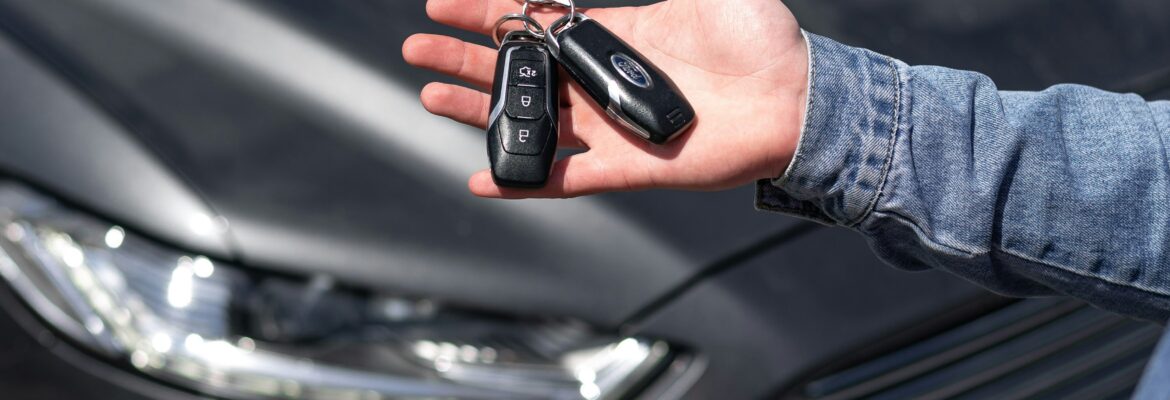
You hand over the keys.
Nobody says, “Before you leave, let’s review the insurance implications of this arrangement.”
Nor should they, probably. You’d be unbearable.
But after practicing law for as long as I have, I sometimes think about what is attached to that very ordinary act of handing someone a set of car keys. Usually, a lot more than the people standing in the kitchen realize.
The family car is an interesting thing because we tend to think of it almost as communal property. Legally, of course, somebody owns it. Somebody registered it. Somebody insured it. Inside a family, those distinctions can become blurry very quickly.
There is Dad’s car, except Mom drives it most of the time. There is the car registered to Mom that their 22-year-old son takes to work four days a week. There is Grandma’s old sedan that a granddaughter has been driving since college, even though nobody ever got around to changing the title or insurance. There is the extra car sitting in the driveway that everybody uses when their own car is unavailable.
This is completely normal family life.
Until there is an accident.
Then details that seemed unimportant the day before suddenly become central. Who actually owned the vehicle? Who was driving it? Did that person have permission? Did he live in the household? Was she a regular user of the car or just borrowing it for the afternoon? Was the insurance carrier aware of how the vehicle was really being used? What liability coverage was in place? Were there any exclusions or restrictions that suddenly matter now?
I’ve seen enough accident cases to know that people are often surprised by how quickly the conversation changes after a serious crash.
Before the accident, the car was “ours.”
After the accident, everybody wants to know exactly whose it was and exactly who was allowed to drive it.
That is not because lawyers and insurance companies enjoy making simple things complicated. It is because a serious automobile accident can create consequences far beyond a dented bumper or a repair bill.
Imagine your 24-year-old son borrows your car to meet friends. On the way home, he looks down for a second, enters an intersection against the light and causes a collision.

Hopefully, everyone walks away.
But suppose they do not.
Dad’s vehicle is available, so somebody takes it to work. Mom’s SUV is better in bad weather, so the son uses it. One car has a parking permit, another has more cargo room, another happens to be blocking the driveway. The keys sit on the counter. Nobody holds a family meeting.
That is exactly where the difference between what a family thinks of as “borrowing the car” and what an insurer might view as regular household use can become important. If somebody is using the same vehicle several days a week, commuting in it, or relying on it as their practical day-to-day transportation, that arrangement may look very different after a crash than it did when everybody casually referred to the car as Dad’s.
The same issue appears at the other end of life.
An older parent may still own a vehicle but drive less frequently. One of the adult children begins using it to take the parent to appointments. Then the child starts using it for errands. Eventually, everybody in the family thinks of the vehicle as basically belonging to the child even though the title, registration and insurance still tell the story from five years ago.
Again, nobody is doing anything sinister.
Life simply changed faster than the paperwork did.
That happens constantly.
There is another very Staten Island version of this problem: lending a car to a friend or neighbor.
This is still the kind of place where people do favors for one another. Somebody needs a pickup truck for two hours. Somebody’s car will not start. A friend needs to move a piece of furniture. A neighbor has relatives visiting and is one vehicle short.
“Take mine.”
Two words. Keys tossed across the room.
Most of the time, the car comes back, the favor is returned someday, and nobody gives the transaction another thought.
But the legal consequences of a favor do not disappear simply because the favor was generous or informal. If that borrowed vehicle is involved in a serious collision, questions about permission, coverage, and responsibility can become very important very quickly.
That is why I think every household should occasionally do something extremely boring.
Look at the cars in the driveway and ask who actually drives them.
Then look at the amount of insurance you are carrying.
People understandably focus on premiums. Automobile insurance is expensive, and most families are trying to control costs wherever they can. But price is only one part of the equation. The cheapest coverage available may feel like a bargain right up until there is a catastrophic accident and the losses are far greater than the protection that was purchased.
That does not mean everybody needs the same policy limits or the same insurance structure. Families have different assets, different vehicles and different risks. It simply means that coverage should be an informed decision rather than an automatic renewal nobody has looked at in years.
There is a larger lesson here that applies to far more than automobiles.
Families are informal.
The law is not.
We lend things. We share things. We make arrangements without contracts because these are people we know, love, and trust. Most of the time, that is exactly how family life should work.
The difficulty comes when an ordinary arrangement runs into an extraordinary event.
A serious accident can do that in seconds.
So I am certainly not suggesting that parents stop lending cars to their children, or that Staten Islanders become suspicious every time a neighbor asks to borrow the SUV.
I would not dare.
I am suggesting something much simpler.
If several people in your family regularly use the vehicles sitting in your driveway, make sure the insurance and paperwork still reflect the life you are actually living.
Because cars get shared casually.
The consequences do not.
And after an accident, everyone is going to want to know exactly who was driving, who owned the vehicle, and what protection was really there.
Banner Image: Car keys. Image Credit – Ivan Kazlouskij



Gary Angiuli
Gary C. Angiuli is the Managing Partner and founder of Angiuli & Gentile LLP, serving Staten Island and New York City families since 1984. With more than four decades of experience in real estate, business law, and acquisitions, he has been admitted to practice before the U.S. Supreme Court and multiple federal district courts.
There are no comments yet
Why not be the first