
Legal Questions: Staten Island Families Where Multiple Generations Share Space: When Maintenance, Renovations, Other Shared Expenses Complicate Ownership, Inheritance, Expectations
The below article looks at something especially relevant to Staten Island families: what happens when the family home becomes a source of conflict.
Gary explores how multigenerational living, adult children contributing to household expenses, home renovations, and caregiving can create unexpected legal complications when ownership and inheritance expectations aren’t clearly established.
It’s a local, relatable look at how families can protect both their homes and their relationships by having difficult conversations before disagreements arise.
On Staten Island, the Family Home Is Often More Than a House. That Can Get Complicated.
By Gary C. Angiuli, Esq.
There is a particular kind of conversation I suspect happens in Staten Island kitchens all the time.
An adult son or daughter needs a place to live for a while. Maybe a marriage ended. Maybe rent has become ridiculous. Maybe they’re trying to save enough money to buy something of their own. Mom and Dad have room, so the answer seems obvious.
Come home.
Sometimes “for a while” turns into five years. Sometimes ten.

Then life happens.
The son finishes the basement because that’s where he’s living. A daughter starts contributing toward the mortgage or taxes. Somebody puts $30,000 into a new kitchen. An elderly parent begins needing help, so one of the children becomes the person who handles doctor’s appointments, groceries, and everything else.
Nobody thinks too much about the legal consequences because nobody thinks of these arrangements as legal arrangements.
They’re family.
That distinction makes perfect sense around the kitchen table. It can make considerably less sense later.
I’ve practiced law on Staten Island long enough to know how important the family home can be here. For many families, it isn’t simply their largest asset. It’s the thing everyone built their lives around.
Children grew up there. Grandchildren know which cabinet has the cookies. There may be pencil marks on a doorframe showing how tall everybody was at age eight. The mortgage may have taken 30 years to pay off.
And today, that house may be worth far more than anyone imagined when it was purchased.
That’s where emotion and economics can become a difficult combination.
Suppose Mom owns the house and has three adult children. One lives in New Jersey and visits regularly. Another lives across the country. The third has lived with Mom for the last twelve years, helped pay expenses, and increasingly became her caregiver.
Ask those three children what should happen to the house after Mom dies and you may get three very different answers.
The child who provided the care may say, “I’ve been taking care of Mom and this house for twelve years.”
Another may respond, “It’s still Mom’s house, and there are three of us.”
Neither reaction is difficult to understand.
That’s exactly the problem.
Families tend to operate on understandings. The law tends to operate on documents, ownership, and evidence.
Those aren’t always the same thing.
I’ve seen variations of this issue enough times to know that the real trouble often begins with a sentence like, “But Mom always said…
“Mom always said I could stay here.
“Dad always said the house would be mine.
“They told me I’d get my money back for the renovations.
Was it an investment?
Was someone paying rent?
Were they contributing to household expenses?
Did a parent intend to give a child an ownership interest, or did the child simply assume that years of contributing would eventually mean something?
These questions sound awfully cold when everyone is getting along.
They don’t sound nearly as cold once people aren’t.
Divorce can complicate things further. So can debt. So can illness. A new marriage late in life can change expectations overnight. Suddenly the family home isn’t just connected to parents and children. There may be a new spouse, stepchildren, or creditors in the picture.
That’s why I think families need to become more comfortable having uncomfortable conversations.
I don’t mean everyone needs to turn Sunday dinner into a legal conference. Please don’t. You’ll ruin the pasta.
But if an adult child is putting substantial money into a parent’s property, everyone should understand what that money represents. If one child is going to inherit the house differently from the others, saying so clearly while everyone is alive can prevent enormous resentment later.
If parents have strong feelings about who should live in the house or whether it should eventually be sold, those wishes shouldn’t exist only as family folklore.
Clarity isn’t an insult to trust.
Quite often, it’s a way of protecting it.
There is another reason these conversations matter more today. The numbers have changed.
A Staten Island house purchased decades ago may now represent a family’s most significant source of wealth by a very wide margin. What once might have been a relatively modest disagreement can now become a dispute over a very valuable asset.
That raises the stakes for everyone.
And yet people will spend months researching which refrigerator to buy and approximately twelve minutes discussing what should eventually happen to a house worth hundreds of thousands of dollars.
Just make sure everyone knows who is holding the net.
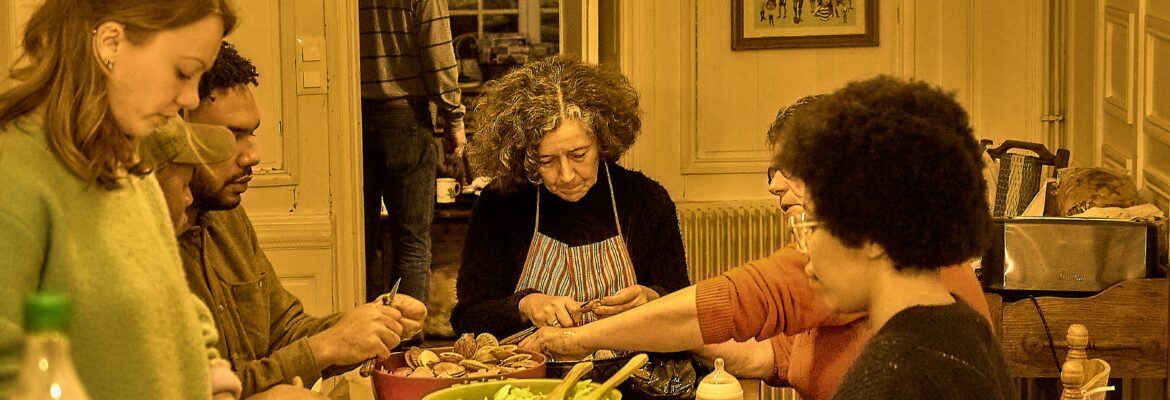
Banner Image: Family dinner. Image Credit – Kwami Fattah Al Sissi



Gary Angiuli
Gary C. Angiuli is the Managing Partner and founder of Angiuli & Gentile LLP, serving Staten Island and New York City families since 1984. With more than four decades of experience in real estate, business law, and acquisitions, he has been admitted to practice before the U.S. Supreme Court and multiple federal district courts.
There are no comments yet
Why not be the first