
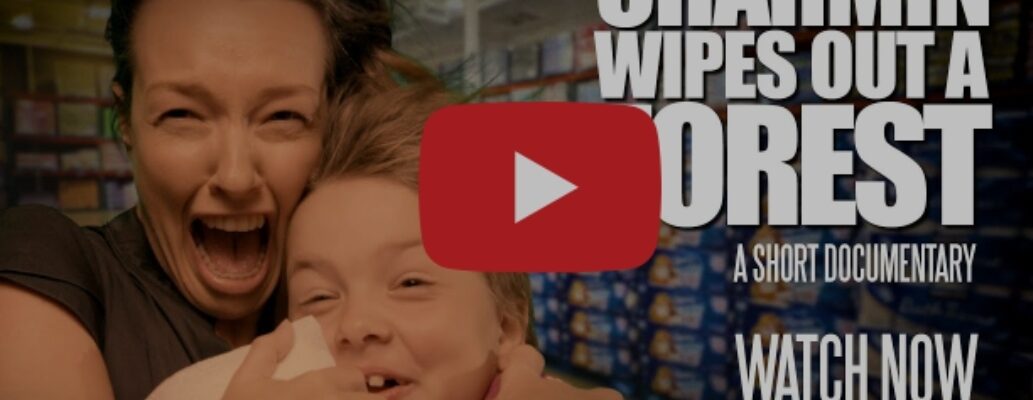
In NYC Tomorrow: “Charmin Wipes Out A Forest” Documentary On Billboard Truck – Movie Review
CHARMIN WIPES OUT A FOREST
ARRIVES IN NYC NEXT WEEK!
THE FILM’S 23-CITY TOUR IS MAKING ITS WAY TO NYC JULY 22!
This film offers an in-depth and lighthearted look at a very serious issue: the continued and continuous destruction of Canada’s boreal forest, all the while touting sustainability that isn’t real.
One of the main points the movie seeks to make is that the manufacture of this toilet paper is a relic or a throwback of a forgotten era, the era where deforestation is still ok, and the environmental movement stagnated and has no say. Unfortunately, the reality is that these actions have consequences on this and future generations.
Insisting on refusal to do new research and develop for a brand new product that isn’t reliant on virgin wood (which can only really be found in old growth forests) has not met with much backlash from consumers – mainly because the wool has been pulled over the eyes of shoppers.
In this film, which is peppered with comedic vignettes to make a serious issue more engaging, we learn about the certification deal relied on by Procter and Gamble: the ‘forest certification seal.’ Basically, the nonprofit that sets the standards that consumers rely on to demonstrate a lack of negative environmental impact has been co-opted. The film tells us it is no longer real or valid. Their standards have been completely watered down.
Picture this:
An old growth forest stands tall. That’s truly sustainable. Then you watch as the forest is clear cut. Then it’s sprayed with dozens of poisonous agricultural chemicals designed to kill everything alive in the soil, whether plant, animal, insect, or microbe. Then neat rows of tiny saplings are planted, which are fertilized and sprayed with pesticides and sometimes herbicides daily.
According to the group that sets the standards for environmental sustainability, these two images are completely identical – legally and environmentally! But in reality, they’re quite different.
The old growth forest is a real ecosystem. The soil is teeming with life. You can learn more about this and how if affects the birds and small mammals from our interview with Douglas Tallamy.
An old growth forest also has some resistance to forest fires. These fires may take hold, but the abundance of low brush and other aspects of a wooded area can slow down such a fire. But that is not so with a plantation of new trees.
First, the newly planted forest has little resilience. It also will not really replace the ancient forest cut down for at least 100 years. And when a fire comes through, it burns everything. In fact, those crazy forest fires in Canada a couple of years ago were so bad because of this practice of clear cutting and planting new plantations of trees. They go up like matchsticks: the fire quickly spreads through a giant area and eventually engulf even the old growth forests.
But for those concerned about the environment, the starkest issue is that of the caribou. You see, caribou can ONLY survive on old growth forests. What they eat is the matter found at the bottom of the canopy – the brush and other material there. When those forests are removed and replaced, the caribou cannot forage there. It’s not that they don’t want to (they are quite hungry after all). They simply can’t find anything suitable to eat. And so their populations are declining.
They are already endangered, but unlike other more successful public information campaigns, the caribou has not rebounded despite public education and protections. Why is that? Probably because the protections they receive aren’t what they actually need. What they really require is a protected, fully functioning forest ecosystem. The planted tree farms are not ecosystems. They are not self sustaining.
So when they say that Charmin wipes out a forest, they mean it’s literally in the midst of doing so right now. It’s also a pun for how people wipe their butts with Charmin and Charmin is wiping away the forest.

This is because the pulp they use for their toilet paper is made only from virgin tree fiber. The way it is woven together makes it the softest bath tissue available. But its dark secret is still there: the forest is being destroyed so that you can use the softest toilet tissue.
Instead, the company could spend money on researching an alternative method of production that uses recycled paper or another material such as bamboo or hemp, both of which are much more sustainable and can replenish themselves in a year or two rather than a hundred years.
Such alternatives are already produced by other companies in the US, and consumers who are concerned about the environment buy them. As more and more people learn about this datk secret, they’ll become more so. Even if it’s more expensive, which it may be due to development costs, there are many who will pay more willingly.
Right now people buy Charmin due to its image of sustainability. But Millennials are too savvy for this to continue.
Not just that, but in an echo of Laura Trevelyan’s push to get her family to take responsibility for the enslavement they had participated in hundreds of years earlier by making a difference, the descendants of Mr. Gamble are trying to get the company to change. 88 of these descendants signed a letter to the company demanding that the practices become truly sustainable, and that they honor their founders by honoring the environment. This was undoubtedly unexpected, since they’ve been around for such a long time and continued to press on. But the time for change may be here, and consumers are demanding companies and products that don’t just give lip service to environmental friendliness, but are actually truly sustainable.
One final thing to point out that wasn’t mentioned in the film. P & G remains one of the largest participants in animal testing, subjecting thousands of rabbits, mice, and rats to painful, often useless tests for their new products. PETA has been working to bring attention to this issue for many years, and while some of their products have been certified, many of their items still utilize animal testing.
The film makes it clear that their goal isn’t to destroy the company – rather it’s to bring P & G into the modern era in a long lasting way that will stand the test of time. They have the best selling products – including their toilet tissue and paper towels (which, incidentally are also made from virgin fiber). Who wants to destroy a forest just to wipe their butt? As consumer awareness rises, so does pressure to do the right thing.
This documentary was extremely well made. It was engaging from start to finish, putting a lighthearted spin on a complex situation with a simple request: make a change. I would give this film five stars.

Below is the film’s promotional release info:
A surprisingly comic in-depth expose of the massive deforestation required to deliver the nation’s most popular bath tissue brand, CHARMIN WIPES OUT A FOREST is delivering a shocking, yet hopeful message directly to the consumers who can take action: this is a big problem and you can do something about it.
Filmed on location in the boreal forest of Canada and featuring an array of scientists, experts and members of the descendants of the family that founded the company that manufactures Charmin, the film presents a tight, entertaining story designed to reach mainstream consumers with a story that can easily have a happy ending.
Come see the video truck in action next week and learn more about the project!
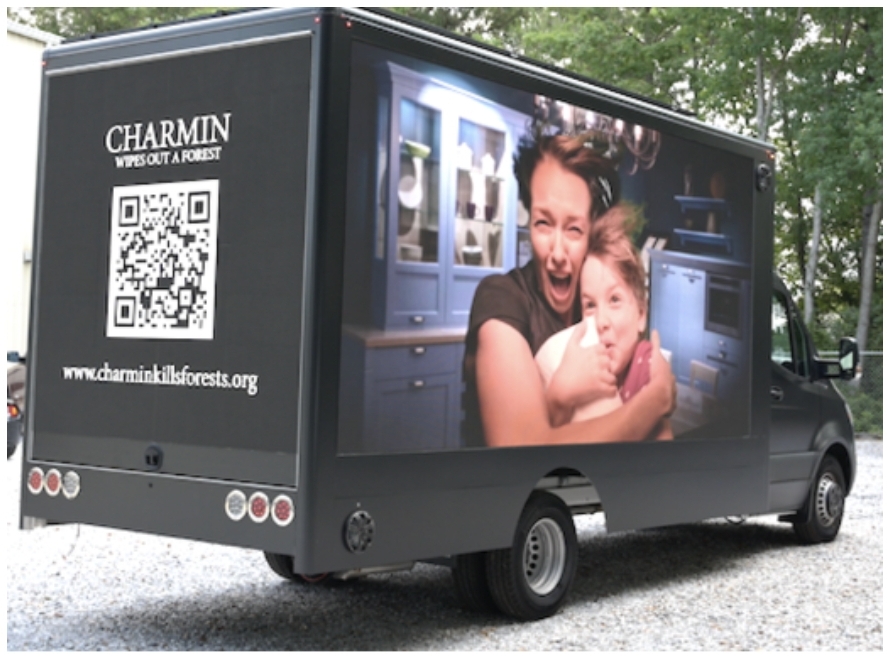
For more information visit: www.charminkillsforests.org
Banner Image: Video promotional graphic. Image Credit – Falko Ink


[…] extraction. It should be noted that there are entire ecosystems involved in forests, and that companies like Charmin and other toilet tissue and paper towel manufacturers destroy living ecosyste…, turning them into paper products. As humanity continues its relentless destruction of the […]