
Now Streaming On Prime: Novel Approach To Reducing Climate Change With Soil Microbes, Regenerative Agriculture: Kiss The Ground
Readers may remember our review of Groundswell, the final film in this trilogy of regeneration. We interviewed Rebecca Tikell, one of the filmmakers who traveled around the globe to make this movie
While Groundswell is by far the most inspirational of the three, the first movie in the trilogy, Kiss the Ground, gives readers a firsthand lesson in regenerative agriculture. It beautifully sums up WHY regenerative agriculture is important, along with its four basic tenets that anyone can adopt, in any farm or garden setting.
No tilling, no chemicals, rotation of species, and presence of cover crops. These things work together to prevent the soil from eroding over the course of a planting season, and they prevent groundwater runoff and the destruction of microorganisms. Instead of working against the soil, farmers and gardeners work with it, building dense microbial networks of mycelium and bacteria that feed nutrients to the food crops in the ‘food forest.’
One thing that may inspire more farmers to try this was the results. Gabe Brown, a regenerative farmer in the midst of conventional farms, extracts a whopping $100 per acre in profit. This is compared to a measly $3 per acre for most conventional farms, including those who are his neighbors.
It’s difficult financially to do this transition normally, but not for Gabe. He had complete crop loss two seasons in a row, followed by another high but not complete loss, to where the bankers wouldn’t loan him money for what he calls ‘inputs.’
Those are the chemical fertilizers and pesticides needed for conventional agriculture. Why is it needed? Because the farmer intentionally destroys the soil as he starts the planting season. Kind of like shooting yourself in the foot just before a race. He kills all the life, all the mycelium networks, all the worms and bugs there to help produce…. whatever. They produce everything, let’s just say, food and otherwise. Without them, the farm is crippled from day one.
However, there are the subsidies to think about. A conventional farmer gets subsidies from the government to plant corn, soy, wheat, and other crops the conventional way. It amounts to a meager living for many, particularly if they don’t get a large amount of produce out of the farm. And when using conventional agriculture, that can be a big challenge. These farms don’t produce much anymore, and it gets less every year.
Even with lots of chemicals, tilling, fertilizer, etc., there’s a small profit for the farmer. Stop going that way and the subsidies stop as well. Farmers have to be prepared for a season or two of possible difficultly while the soil builds up. But once it does, and it doesn’t take long, the profits are rewarding, as is the knowledge you’re not exposing yourself to toxic chemicals that have been demonstrably shown to cause severe deleterious health effects. Not just that, but farmers are the group with the highest amount of suicides per capita. And it’s not getting better as it gets harder and harder to make a living as a farmer, with more and more farms going bankrupt and selling to ever larger conglomerates.

And why might a farmer want to choose regenerative agriculture? In the first film, we learn that the earth’s atmospheric warming changes to cooling, paradoxically in the summer. Not as you would expect, not in the winter or spring. But as soon as the plants start growing across the globe, the global temperature drops, and you can see it on a map. It is staggering the amount of heat plants absorb just by existing with soil.
According to the films, the best way to reverse climate change and prevent or reverse desertification (a real problem around the world) is regenerative agriculture. Using ancient wisdom combined with modern technology.
The best part is that there is a much lower cost in terms of money associated with this type of agriculture. No more spraying of chemicals which cost a lot of money. It just takes human labor. Digging the trenches to capture water in a desert. Throwing down seeds of multiple species of plants at the same time. And some of the farms use four legged animals to keep their soil fertile.
But these are small herds kept on grassland, grazing on different plots on different days. No more feedlots with atrocious conditions. Much more agrarian and what we all thought farms looked like.
Most people seeing a conventional farm would just see the equipment. With a regenerative farm they’ll see plants and animals coexisting in harmony, bringing back our bees and butterflies and bird populations. We can bring it all back, sequester the carbon in the atmosphere, reduce groundwater pollution, and heal the planet. It’s a tall order, but it is seeming that regenerative agriculture can fit that bill.
As the world moves away from intensive chemical use back to ancient methods, it might just be possible to heal the earth and restore barren ecosystems. These farmers from around the globe are banding together to take on this momentous task. They’re not waiting for government to catch up, they’re already running down the hill. And remember that everyone, no matter how small or large their garden or farm, has a part to play in this movement of restoration. It’s not too late to turn back, and that’s what regeneration is about.
In Common Ground, the second film of the trilogy, there’s a rancher they talk to who was grazing his cattle on national parkland. Parkland that was barren and desertified to a large extent, and that was at a difficult altitude. It was non-productive land, basically. When grazing by cattle on national park land is done the normal way, this is destructive. The normal way means just let them graze wherever they want, and this causes destruction of the parkland by overgrazing.
Populations of wolves would also prey upon their herds doing it this way. So they came up with an ingenious wolf hack: never be in the same place more than a day. So they start doing that, and suddenly their barren land…. becomes alive. Grasses start growing. Bushes, trees, flowers, everything you can think of. Then he talks about the birds. And then he says something to the effect of, ‘And I don’t know how, but the beavers knew.’
That was very funny, but so true. You see a little beaver carrying dam-building materials down the hill to their rivers. So when the beavers came, they restored the waterways. Brought back salmon spawning grounds and other fish and restored the river. Built their dams in such a way that the water was purified and became alive.
One important point here I would like to make, which is relevant to all of the films. Contrary to what animal rights activists have said, cows DO belong to us. We made them, bred them from other bigger cow like animals to be domesticated and fat and happy. We, as humans, are fully responsible for caring for these creatures…forever. They CANNOT live on their own. There is no natural habitat in which they would be able to care for themselves. There simply isn’t. They are totally domesticated prey animals. If you abandoned any herd to the wild and to fend for itself, all of the members would be picked off in a few weeks. By wild cats, wolves, coyotes, lions, and any other predators that happen to be in the area. They would come night after night until there was no one left. So, they are an animal that humans MUST care for.
However, we don’t actually have to eat them. We could keep them and just…keep them. Hug them, cuddle them, kiss their faces, love them, and just live with them. We could let them have and keep their babies and forget that anyone ever invented veal. Their populations would normalize eventually, especially as they breed in a natural way and are not being artificially inseminated all the time. Just keep one bull in the herd, or if you don’t, problem solved. Overpopulation will never happen because there would be no babies. If you keep one bull, they will have babies in a normal way, which is not every single season for every single cow. Cows are extremely intelligent and compassionate animals. They have even been known to help their own captors in multiple situations, because their level of compassion is highly evolved.
When you look in the Bible, the people were discouraged from eating animals, being made to survive on herbs, seeds, and plants. This has been forgotten but it’s still there. Revolutionary concept, I know. Not eating cows. Getting more than enough protein from plant based nutrition. But talk to the vegan bodybuilders about that (there are quite a few and they have won awards and made names for themselves).
So, Common Ground is also a great film. You can learn all about farming regeneratively, along with how good it is for your health. One of the farmers they followed in the film had been diagnosed with Crohn’s disease. Then he switched to regenerative agriculture and away from chemicals, and the doctors had to double check that they were looking at the right scans, because his disease was gone. Getting out of the chemical pits and feeding a good microbiome, both within and without, were the keys to that change.
All three of the films are excellent, and they are each so different from one another. Watch them in any order, as they all stand alone and at the same time add to the larger picture they paint together. The voice actors are all great. Their voices are each so unique and add to the larger tapestry of these films. All of the films are rated five stars, and are highly recommended. Free with Prime can’t be beat, either😄:

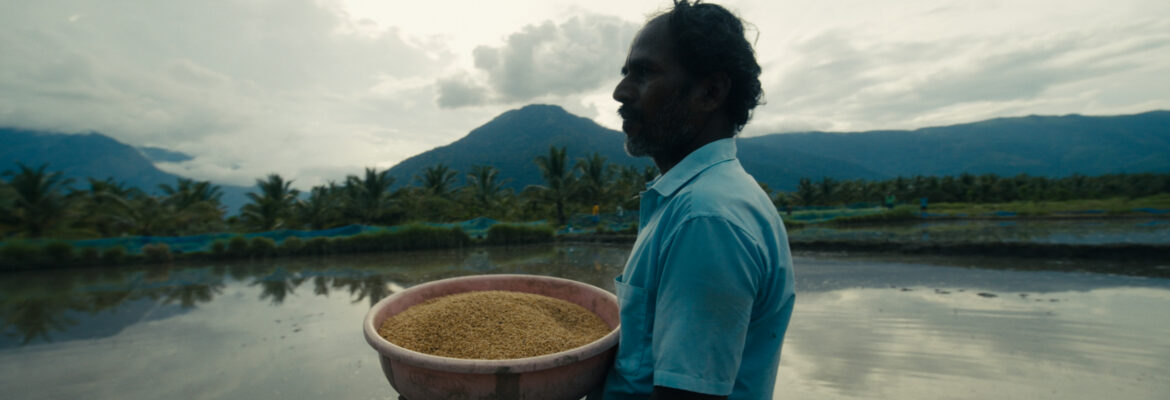
Banner Image: Farmer. Image Credit – Amazon MGM Studios


[…] connects with another recently reviewed film where we spoke with the filmmakers: Groundswell and Kiss the Ground. If Mr. Whipple converted his farm into regenerative agriculture, he could contribute to […]
[…] who watched any of the Kiss The Ground trilogy films will recognize the name of Rodale Institute, who featured prominently in these films, as they have […]