
Hear From The Mayor Show: New Schools Chancellor Speaks, Caribbean Pepperpot Radio, Remarks At FIAO Columbus Day Parade, New Co-Response Operation Focused On Unhoused New Yorkers, Saloni Sethi Appointed Commissioner Of Mayor’s Office To End Domestic, Gender-Based Violence
Editor’s note: In this article, readers will learn about what New York City’s mayor has been doing this week. Meet our new Schools Chancellor, replacing outgoing Chancellor Banks, join the mayor for a discussion on Caribbean PepperPot Radio, learn about the co-response team addressing homelessness, the remarks at the FIAO event, and more.
MAYOR ADAMS HOSTS “HEAR FROM THE MAYOR” RADIO SHOW
Gary Byrd: Time to wake up everybody. Well, each and every second Sunday of the month, WBLS is proud to welcome the 110th mayor of New York City, the second mayor of color, and the first hip-hop mayor in the city’s history. It’s time for us to hear from our mayor, Mayor Eric L. Adams on 107.5 WBLS. Mr. Mayor, good morning and welcome.
Mayor Eric Adams: Hey, brother, how are you? Good morning to you and your listeners, and welcome back to another episode of Hear from the Mayor. I’m your mayor, Eric Adams. If this is your first time tuning in, the purpose of this show is really to engage in a dialogue with everyday New Yorkers, and so feel free to reach out. The listeners can give me a call, hear directly from your mayor on what we are doing to build a better New York City.
You can sign up to hear more from me by visiting nyc.gov/hearfromeric. You can sign up on our website to text with Eric and talk with me on WhatsApp. But today, as we do the show, you can call in 2-1-2-5-4-5-1-0-7-5, 2-1-2-5-4-5-1-0-7-5, and I’m really excited about today’s show.
As we move into Hispanic History Month, I want to introduce our audience to the incoming New York City Public Schools Chancellor, Melissa Aviles-Ramos. She’s cycling in handpicked by the prior chancellor, Chancellor David Banks. She is going to just continue some of the good stuff we’re doing, but I want to be clear that Melissa is not new to this. She’s true to this. She has seen firsthand our public school system through nearly every lens, teacher, principal, deputy chancellor, chancellor, and perhaps what I like to say the most important role you can have.
She’s a parent of a public school student, so she’s deeply invested, and Melissa is bringing her full self to this role and has a proven track record behind her. What impressed me the most is this: In her first year as principal, she increased her projected graduation rate from 23, the projected graduation rate from 23 percent to 68 percent by the end of the school year, and what did she do for [an] encore? In her second year, she increased it again from 68 percent to 83 percent with approximately 71 percent of English language learner students being deemed as college ready.
Did you hear that number? 71 percent of English language learner students deemed as college ready, and so folks, that is what getting stuff done looks like, and I just really want to welcome a really dynamic person. Melissa, congratulations. I know it’s exciting as we move to Hispanic History Month, and you are a proud daughter of a Puerto Rican single mom. How did your mother and upbringing inspire you to become an educator today, and why don’t you give us some background growing up in the BX, right? Love it.
Schools Chancellor Melissa Aviles-Ramos: That’s right, sir. Thank you for having me. I did grow up in the Bronx, single mom, Puerto Rican, first generation. She was born in Arecibo, Puerto Rico. She was, my mom has a very interesting story. She actually met her husband on her wedding day when she was nearly 15 years old, and the purpose of that arrangement was so that way she could escape a very violent, domestic violence and abusive situation at home.
My grandmother had four other children, and she figured let’s get the eldest out of the house, and maybe she’ll have a better life by marrying someone who’s 10 years her senior. So by the time she was 18 years old, she found herself a wife and a mother of two small children, and so having been yanked out of school in the ninth grade, my mother always longed for an education, and she was an avid reader and writer. She was also a really gifted artist, and so when it came time to educate her children, she turned to the New York City public school system.
Unfortunately, my brother and sister didn’t do so well. Public schools in the Bronx in the 80s are not what they are today, and they both ended up dropping out and getting GEDs. They went on to do amazing things, but school was not the bridge between home and a new life. So when it came time for me to go to school, she put me in Catholic school. She worked my tuition off in the Catholic school. She went to the principal, and she was like, look, I don’t have an education. I don’t know much, but I’ll do whatever you want me to do so that way my daughter can come here, and so that set the stage for me, right? Like, I saw how important it was for my mother to invest in my education, and what I say to the community is: people should be able to make all the choices they want about their children’s education, but it shouldn’t be because the schools in our neighborhood, the public schools, are not an option, and that’s where my commitment started.
Mayor Adams: So I know that inspires you when you look at what your daughter is doing now in public school, and you came up through the system, you know, for the different roles that you had that really prepared you for this moment. How did it prepare you for this moment?
Chancellor Aviles-Ramos: I’ve been honored to be a teacher since 2007. I still consider myself a teacher. To me, a teacher is a facilitator of learning, and so having been a teacher at Harry S. Truman High School and working with different populations of students from new arrivals to English language learners and students with IEPs and different parents, it was a really great learning experience, which then taught me what’s most important, which is really connecting with families and making sure that they and their children are at the center of everything that we do. So that was excellent preparation for me for this role because that’s what continues to center me.
Mayor Adams: And you turned around schools. I mean, to have graduation rates go from the levels that they were to you moving into 83 percent graduation rate from 23 percent, that is a lot. And what was it? What was your style? What did you see to make that transformation?
Chancellor Aviles-Ramos: Always a collaborative leader. I believe when you are a leader, you are of service to others. And so for me, it was working with my team and identifying the different strengths and weaknesses that we all had, and putting a plan together that really took into account everyone’s strengths and growth areas so that way we could get together and make these moves very quickly.
I mean, when I got there, we found out that only about 14 students were on track to graduate, and the worst part of it is that up to 40 students thought that they were on track, but they were programming issues. So I had to tell parents, sorry, I know you thought your kids might graduate at the end of this year or that they would graduate, but the likelihood is that they will not. And so the team very quickly had to work together. But this was a place where you had to leave egos aside. This wasn’t about me walking in and saying, I’m the principal, I know best. You know, we had to all work together and figure out how we were going to get as many kids to graduation at that point.
Mayor Adams: And so now you are no longer in charge of just one school, you’re in charge of all the schools. What’s the vision? How do we look? Are we starting from new or are we continuing? How do you see being at the helm, and what’s the future?
Chancellor Aviles-Ramos: I’m uniquely privileged, sir. Having worked with you and Chancellor Banks over the last two and a half years, we’ve done some amazing things together from the pathways work to early childhood, New York City Reads, supporting our newcomers of Project Open Arms. Those great things will continue. There’s no need for them to not continue. And I’ve said to many people, who doesn’t want kids to read and write? Who doesn’t want kids to have bright starts and bold futures? That work will remain. What I think is most important is for us to, in addition to those things, double down on families and kids. How do we continue to strengthen our community and make sure that children are safe and with an overall sense of wellness?

Mayor Adams: No, well said. And it’s about developing the full personhood of a child. And what I like about what Chancellor Banks and you as one of his partners, what you were able to accomplish is that it’s more than our children being academically smart. They have to be emotionally intelligent. They have to be prepared for the future.
What you’re doing around teaching them meditation, breathing exercises, financial literacy, how you and the chancellor lean into children with disabilities and dyslexia screening. You’ve gone beyond just a traditional method of dealing with children. And one thing that interests me is also how you talk about absenteeism. You want to focus on that. Can you share more with the audience?
Chancellor Aviles-Ramos: Absolutely. Schools are well-equipped to monitor attendance. They make calls, they have attendance teachers, they have school counselors and social workers who help. But what we really need to do is connect with our families and really figure out what are the barriers that are keeping kids from coming to school. Everybody wants their kids to come to school, but sometimes there are barriers. And I know this firsthand, right? Sometimes we didn’t know where our meals were going to come from. I didn’t have a coat at one point. The community helped us get coats and food. And so we need to figure out what those barriers are and work family to family and help families bring the kids to school. I always say when I was a teacher, I was not a mother. When I was a principal, I was the mother of an infant toddler. And now in these current roles, I’m the mother of a school-age child in New York City Public Schools. So I know a lot more about what that looks like.
Mayor Adams: And what has been amazing is how the DOE has, the New York City Public Schools, I should say, have also focused on job readiness. And I assume you want to continue that because it’s about when you finish school, what are we preparing you for? And talk about some of the job readiness ideas.
Chancellor Aviles-Ramos: We’re so proud of the Future Ready work. We already have so many students in over 100 schools who are already connected to careers and starting that while they’re in high school. Over $8 million was put into students’ pockets already. This is very important for us because what we don’t want is for our children to go to school and not have a plan after.
I was very lucky. I saw all the advertisements for New York City Teaching Fellows as I was riding the train from some random job that I had, and I was able to become a teacher. But how do we also equip our students to understand the myriad of careers that are out there so that way they can be creative and find a place that meets their passions and their interests?
Mayor Adams: And that is when I talk about the development and the full personhood of children, we understand that these children are facing so many challenges. And one of the things I heard when we had our youth town hall is dealing with mental health. What are some of the focus that you would look at to deal with the mental health of our children, particularly coming out of COVID?
Chancellor Aviles-Ramos: Absolutely. Well, thanks to all the work that we’ve done under your administration and funding from City Council, every school has access to a mental health clinic or a social worker, which is huge. When I was a principal, I couldn’t afford a social worker. I used to have to share a social worker with another principal on the campus who was kind enough to share resources with me.
Nobody should be in a position to do that. And this administration, again, thanks to you and your leadership and funding from City Council, we’ve been able to accomplish that. And so, again, I want to double down on that. How do we reallocate our resources to make sure that children have access to mental health support?
Because we talk so much about the end product, the manifestation. So if there’s some sort of a fight or violence or attendance issue, many times that is a symptom of a mental health issue. If it’s not a barrier that’s keeping families from sending students to school, sometimes it’s a student suffering from mental health themselves, right, from a mental health issue. How do we support them?
Mayor Adams: So true. And I often talk about it, the fact that by the time a child reaches a classroom, they have gone through so many different issues. And if it was only about teaching children one and one equals two, anyone could do that. But by the time that child is getting there, they may be dealing with housing insecurity. They may be dealing with issues around food insecurity, domestic violence, all of those things that children bring into that classroom.
And that’s why it’s such a commendable job to be an educator, particularly [in] economically challenging communities. It takes a special person to be an educator. And growing up in the Bronx, you know that many of our children are dealing with so many barriers. And by the time they get in that classroom, the need is so high. Being able to identify, how does a teacher identify that little Johnny or little Jose, something is going on with him? What is that skill?
Chancellor Aviles-Ramos: That’s a great question, sir. And so a couple of things. One is that sometimes the student who makes the most noise is the student that needs the most attention. And teachers typically see that as a flag. And so if Melissa is running all over the place and she’s purposely trying to find some trouble, they’re going to pay attention to Melissa.
But sometimes Michael may retreat to a corner, and he’ll show up with a hood over his head and sit in a corner and he won’t want to talk to anyone. And he just distances himself. And too often we leave those students alone. And that’s where the danger comes in because that’s also a cry for help. So we also need to support our teachers because our teachers are doing a lot of things every single day. But we help them identify that sometimes the noisiest students who are crying for help, yes, they need it. But sometimes the ones who don’t cry for help are still sending those signals.
Mayor Adams: You know, we hear this talk about all the time, AI, AI, AI. You know, instead of being afraid of it, you know, I know the Chancellor and yourself, you’ve been leaning into artificial intelligence. What does that look like for us in the future so that our children are ready to fill these jobs?
Chancellor Aviles-Ramos: Absolutely. And when we first started talking about about AI not too long ago, a lot of people were saying we can’t have this. Kids will be cheating and this isn’t the way. And what we said is we’re going to create an inequity if we have that mindset, because other school systems are embracing it. So if our Black and brown students are not at the table to really learn how to use AI, then we are bridging. We are not going to bridge a gap. We’re going to create a gap.
Mayor Adams: No, so true. Speaking of gaps, that’s the music that’s telling us we have a gap in the program. So we’re going to take a break and we’re going to come back and hear directly from you, New Yorkers. So feel free to pick up your phones, call in as you communicate with us on today’s show. Again, the number to call in is 2-1-2-5-4-5-1-0-7-5. We’ll see you on the other side of the break.
Byrd: It’s hear from the mayor. Good morning to you all. And the mayor wants to hear from you. 2-1-2-5-4-5-1-0-7-5. Here’s our mayor, Eric Adams.
Mayor Adams: Thank you. Thank you so much, Gary. And really excited to hear from our incoming chancellor. Melissa has really shared some of her vision and you’re going to be seeing a lot of her. So this is not the first time. But why don’t we go to our callers right now? 2-1-2-5-4-5-1-0-7-5. Let’s hear from our callers if they’re on the air.
Question: Hi. Good morning.
Mayor Adams: Good morning. How are you? You’re on the air.
Question: Mayor Adams, good morning. I thought I was going to be free. Good morning, everyone. Good morning to you. From Jamaica, Queens calling you.
Mayor Adams: Oh, you need to stop. South side is always outside.
Question: Hey, good morning. Thank you always for your time on with us weekly on the radio. And I’m calling because I’m requesting a town hall for us for New York City. We’re all concerned. Many of us are concerned of the investigations going on. And I am all my prayers are with you to prevail. And we, I really think we New Yorkers, taxpayers, consumers, and voters, we need a town hall.
That’s why the FBI continues to be here and overreaching, overstepping their authority and really dismantling our our administration that we taxpayers, consumers, and voters are the ones paying for [it, are] responsible, and can hold accountable for it. So I’m requesting a town hall, please, Mr. Mayor. And good luck with all with everything.
Mayor Adams: Thank you so much. And you know, you must be you must have ESP because we are doing a town hall in South Jamaica, Queens. I think that’s our next town hall. We’ve done over 31 town halls because we like to speak directly to the voters. And it is so tempting for me to go into the full details of my perspective of this investigation in federal action.
But, you know, the lawyers say, Eric, I need you to have discipline. This is going to be fight in the courtroom. What you must do is continue to run the city. And since this investigation became known to us, we continue to move the city forward. The numbers are clear. Everything from our economy to housing, to educating our children, to building our infrastructure, to driving down crime. We have not missed a beat.
And so when people say, Eric, well, you seem distracted. I said, well, tell me, where’s the distraction? Because this success has been overwhelming with [what] this administration has been doing. But we are coming to South Jamaica, Queens. I spoke with the team last week to hold the town hall. And I look forward to you becoming aware of it and being part of the audience. Next caller, you’re on the air.
Question: Oh, hi, mayor. How are you?
Mayor Adams: Quite well. And yourself?
Question: Okay. I’m in the area. I live in Laurelton, and we’re going to be covered by the new precinct, 116. I don’t know if it’s official or not. But anyway, what I would like to see, if the pre, when the precinct opens, that the community affairs officer, I think that office should be expanded. I don’t think covering the, you know, the three areas of Rosedale, Laurelton, and Springfield Gardens. I think they would be more helpful to the captains. So do you have any ideas how that office can be expanded for the eyes and ears of the community? And I’ll hang up and listen.
Mayor Adams: Thank you. Thank you so much. And you know, just I always love when we get public safety community interest questions, such as what you just offered. That new precinct is going to be a real additive to the public safety in the community. And we will find out, let me check on exactly what the community affairs and what the span of their outreach, but they partnered with neighboring precincts also. Commissioner Stewart has done an amazing job of dealing with the whole issue around making sure our community affairs are proactive. He’s teaching children golf. He’s teaching them how to fly planes, how to get their real estate license. He goes after those young people who have young children to give them the early supplies they need when they have a newborn.
So he has changed the face of community affairs. We’re going to continue to do that. And so let me find out those precincts that are involved, but I look forward to that precinct doing what I believe, making sure that public safety is a community law enforcement partnership. So let me look into that. But I see today is Queen’s day, Laurelton, South Jamaica, I guess Cambridge Heights is next, you know, but we’re looking to that for you.
That sounds like my music that’s coming on, you know, great being on the air with you. And we look forward to being on next month. So much to do. But as we say in our administration, let’s stay focused, not be distracted and grind. And that’s the message that incoming chancellor is sharing with all of us. Melissa, we wish you well. Good luck to you with a million school children. We know that you’re going to bring the fullness of your entire life experience to this job. Congratulations to you.
Chancellor Aviles-Ramos: Thank you, sir.
Byrd: We are giving thanks this morning for our monthly broadcast with Mayor Eric Adams, Hear From the Mayor, the second Sunday of each and every month.
TRANSCRIPT: MAYOR ADAMS CALLS IN FOR LIVE INTERVIEW ON CARIBBEAN PEPPERPOT RADIO
Neville Bushell: Mr. Mayor you are live.
Mayor Eric Adams: Hey how are you, you know, and I’m glad you said that about the city because this is the greatest city on the globe. There’s no other city like it and with all of the challenges of running [a] city of this magnitude, it is great being the mayor of it.
Bushell: And you are doing a fantastic job as far as we are concerned.
Sam Clarke: Yes, yes. Mr. Mayor.
Mayor Adams: You’re a smart man.
Bushell: And we’ve been following you from God knows how long. You know, so we know that you’re a good man and you love the city and you love your people. And we expect, despite the fact of the trials and tribulations, that you got to stand there and fight like hell to keep your job, because… Go ahead.
Mayor Adams: And you said something that’s so important, that I’m constantly reminding people of. As I stood at the African burial ground last week, trials and tribulation is really part of our narrative, and how we overcame trials and tribulations through our lives, really fortifies to be able to really function in trials and tribulations while they’re taking place.
Cause we’ve never been a people who threw up our hands and said, well, we just surrender. No, we’ve been just the opposite, and the triumph of the human spirit statue is a reflection of how we endure difficult times.
I mean, look at who I am, this ordinary working class blue collar person that had this real learning disability as a child and overcame those obstacles to become the mayor of the most important city on the globe.
I didn’t get here by throwing up my hands when I reached difficult times, just as the Caribbean mother who left loved ones at home and at home and came here and went to school at night to become a nurse, went to school at night to open a small business, had to withstand all sorts of obstacles navigating the immigration system. If they would have given up, we would not have who we have right now running this city. So you gotta push through this stuff and just believe in yourself, believe in God, and believe in your family.
Clarke: Yes, Mr. Mayor. This is Sam Clarke here. We are talking about your City of Yes and affordable housing. Can you tell us about it?
Mayor Adams: We had a racist housing policy in this city. We haven’t changed our zoning laws since the 60s. Our city is divided by what’s called community boards. We have 59 of them. them. Out of the 59 community boards, 10 of them have built more affordable housing than the other 49 combined, just think about that.
And so that’s why you see Crown Heights, Bedford-Stuyvesant, other parts of the city, where you’re getting gentrification and movement and changing communities. Because they’re communities that have good schools, good housing, good access to transportation, good hospital care. What I said, we don’t want to build the affordable housing in our area.
So City of Yes, under Commissioner Garodnick, is saying let’s build a little more housing in every community so that we all can be part of the affordable housing pursuit that we’re doing. This is something that must be done. Brothers, we have a 1.4 percent vacancy rate. Because we don’t have a lot of inventory, it drives the prices. You know, the whole basic supply and demand. If the supply is low, the demand is high, the cost is high. We got to build more housing in our city.
Clarke: Now, Mr. Mayor, with education policy, can you give us some highlights and stuff about the education policy?
Mayor Adams: They’re an amazing chancellor, Chancellor David Banks, that came in and revolutionized our educational system in a real way. A Bright Starts, Bold Futures. And this is what we did. Our educational system historically, it basically focused on, okay, are the children academically smart?
These children would leave school and say, why did I spend all of these years in this place? So what we said, we have to develop the full personhood of the child. What does that look like? We’re teaching them now mindfulness, meditation, breathing exercises. How do they deal with the stresses of being a young person?
Listen, I look at young people now and I say, Good Lord. From everything from social media to some of the violence that they’re seeing around them, we got to give them the tools to deal with some of the mental stress that they’re dealing with. And that’s why we have something called TeenSpace, Dr. Vasan put in place where they can get 24 hours, seven day a week, mental health support using their phones to dial in to a mental health professional.
So not only we’re dealing with the mental, we’re dealing with the physical, where we are changing the food that our children are eating and giving them healthier food choices so we don’t be the healthcare crisis that our children, children, childhood obesity, etc.
Almost 70 percent of 12 year olds have early signs of heart disease. I mean, that’s unimaginable. Heart disease is the number one killer in this country. And so we are now giving them better food choices while they are in school. And then last, the academics. We’ve changed the reading curriculum. We changed the math curriculum. We’re now doing the screening for dyslexia. So 30 percent of our inmates that are at Rikers Island are dyslexic, because they believe they can’t learn.
We are now focusing on children with disabilities to give them the support that they need. And we started earlier with our early childhood program, where we’re placing them on a pathway prior to coming to school to get those foundational tools that they need.
So I mean, we have just changed the educational game and because of that, we are outpacing the state in reading and math. We’re outpacing the state, we had an improvement in math this year, English, we took a slight downturn a little, but we’re still on course because we’re doing this new curriculum on both areas. So we’re educating our children, we’re doing internships, we’re introducing them to a corporation so that they can learn earlier about the professional development that they use.
We’re teaching them financial literacy so that they don’t get caught up. One of the most important things that can impact your life is not knowing how to budget your money. So we are developing the full personhood of children so they could be prepared for the future.
Bushell: And I also like to give you a lot of credit and I admire your Police Department under your tutelage that the crime has gone down tremendously and the subway crime and so on, and when I hear somebody commit a murder or get away from this or that I come out and say I usually tell my friend, man, that person is going to be arrested within a month or so even if they have to go to Guyana and them is going to find these people, and I got to give you a hell of a credit for that for sure man and this city is rough but you are not playing, you know what I mean? Your department is not playing with the crime at all, and I gotta really thank you for really trying to bring that crime down as much as you have brought it down.
Mayor Adams: Yeah I inherited a city that had a 40 percent increase crime, January 1st, 2022. And we zeroed in on gun violence and other violent crimes. We call them predatory crimes, that are crimes against people that impacts them. And we zeroed in on it. And so you’re seeing over almost 9,000 illegal guns removed off our streets.
You’re seeing a decrease in homicide, decrease in shooting. Do you know July and August are unusually very challenging times for gun violence. August was the lowest gun violence in recorded history in this city.
On our subway system, January 2024, we had a slight uptick in subway violence. My partner[ship] with the governor, we deployed police officers there. We’ve had nine straight months of decrease in crime in the surface and below ground on our subway system.
Robberies in our subway system is the lowest robbery count in recorded history in this city. So you’re seeing public safety. And not only that, we went after some of those feeders of crimes, like the ghost cars. There’s something in the city called ghost cars. No registration, no plate or paper plates. They’re not connected to our system, so you can never identify who the owners are. They were being used in robberies, shootings, and other terrible things.
We’re now driving around the city at night identifying these cars and removing them off our streets. Within two weeks, we took over 1,000 off our streets. And you add that to what we’ve done around cannabis, we closed over 1,100 illegal cannabis shops. So those who out there that like a little weed every once in a while, you gotta go to the legal places to get it so you know what you’re smoking and not smoking something that’s bad. So we are functioning on all cylinders to deal with the quality of life and public safety that goes together.
Bushell: Yes, I give you a little tell you a little about myself, but I happen to work at WLIB, WBLS for around 30 years and I know about from Mayor Dinkins all the way back here to with you, and I tell you something I know the plight that he also went through as a Black mayor. Okay, it is not being easy being a Black mayor in this town.
And you and Mayor Dinkins, I don’t know after you when we will see another one. But I find that the Black mayors really, really go through a lot of changes. I remember the days when Rudy Giuliani used to be getting the Police Department to really disrespect Mayor Dinkins, you know, and I got to say this, he is one of the most racist mayors that I have ever seen since I’ve been in this town, and I’ve been, I’m an immigrant from Barbados.
I’ve been living here since 1964 and I’ve been working with [Percy Sutton.] I have become very politically conscious of what’s going on. And I also happen to know that Mayor Koch was the first person that hired the first Black Police Commissioner in this town and I mean I go way back so I know your history.
I’m well aware where you came from, the police force and all of that, and I’m very proud to see where you have reached and you’re really juggling not a easy city at all especially with the immigrants that coming into town, that you have to pay a bond [inaudible] or where to put all of these immigrants. That is not an easy task at all.
Mayor Adams: No, well said, well said. I love when I speak with folks like you who have been present in this city, because when you talk about WLIB, you talk about those years. Many people who cover me in me and journalism of, they are new to knowing my history in the city. One reporter asked me when I was telling about the days of 100 Blacks in Law Enforcement, he said, what is that? Who is that? And how do you cover a mayor without knowing the history of that mayor or the history of that figure?
And those of you who have been around and have covered or have done their research, you realize that I’m not new to fighting on behalf of working class people. I’ve been doing this for so many years. And the consistency of doing it, and you’re right, what David Dinkins went through. And when you look at what I did, I’m building on with David Dinkins.
David Dinkins introduced a real initiative around women and minority-owned business to get from the city, I’m building on that. We put over $2 billion into women and minority-owned business getting contracts in the city. And a lot of people are not pleased with that, but we knew that women and minority-owned businesses were being denied.
And we said we want to change that. And so the percentage we’re getting ready to roll out is going to show you the major impact we have made. And our overall plan of how do you employ locally. Because our employment is four times, when we came into office, brothers, Black unemployment was four times the rate of white unemployment.
We’ve now witnessed a 30 percent decrease in Black and Hispanic unemployment, because we put money into MWBEs who have hired locally. And then we went out and communicated to the communities what jobs are available in city government and private sectors. So we have really zeroed in on those communities that have historically been denied in this city.
Clarke Mr. Mayor, can you talk to us about your health care and the rat mitigation process? I hate rats, man.
Bushell: I know you have a rat czar. Tell us about the rats, man. Tell us about the rats, man, they’re really, really something else, eh?
Mayor Adams: Yeah, you know what, because I don’t think anything can impact the quality of life of a person than if they are dealing with the rat issue in their home, on their block, in their community. You know, I remember in my early days of policing, people used to alter the time and day that they will go outdoors because of violence, and they want their children to be safe.
So when I hear people say in the communities when I visit them, that nighttime they don’t want to be outside because there are rodents running around, our quality of life should not be impacted based on our failure to address the rodent problem in this city. And so we hired a rat czar, did a real analysis of what produces the problems of rodents in our city. And we found three basic things.
One, the plastic bags, real issue, real problem. Rats go in and out of them. And so we put in place a very aggressive initiative to containerize our garbage. Come the middle of November, 70 percent of our garbage is going to be in containers. The last line of it is in one to nine unit housing where we’re giving people, people are purchasing these rat-proof containers to put their garbage in.
Second, it’s what we do around our own space. People are becoming more and more knowledgeable about what burrows, what rat droppings, all of these things that add to rat infestation and how to really secure your home.
And third, which is very important, is our Rat Pack. This is a real system of educating everyday New Yorkers to be part of rat-proofing their communities, it has been really successful. And our rat czar has been at the forefront of moving this initiative, we’re seeing a decrease in rat sightings, decrease in rat complaints, particularly in rat mitigation areas.
So we’re really excited about what we are seeing. And we’re moving the city towards being a rat-proof city and the quality of life of it. You don’t want a rat running [over] your foot when you go put out your garbage. You don’t want to see one popping out of your toilet or when you go use the restroom. So we want to make sure we do our job and New York[ers] are joining us on this.
Bushell: That’s why I keep my toilet seats down just in case. The funny thing is that a guy showed me, sent me a video where I have this big rat running down a cat, and the cat is hauling his behind, the cat is hauling his ass down the street. Well, the rat is so big, you know what I mean?
Clarke: Mr. Mayor, your administration had a lot of achievements. Can you tell us, this community, about your achievements during your three years so far?
Mayor Adams: Oh man, and you’re right, so many. And no, it’s interesting, when I share those achievements with people, people often say, wow, I didn’t know that. And it’s unfortunate, because in the journalism business, they say if it bleeds, it leads. And having a successful achievement, they don’t bleed.
So they normally don’t lead, and oftentimes, you don’t even read about them. But we want to continue to do what we’re doing now by speaking with grassroots communications like this important station. Because people need to know the achievements we’ve had. Everything from, when I was borough president, I acknowledged that many of the NYCHA residents, those in public housing, did not have access to high-speed broadband, did not have access [for] the children, were not able to go and do remote learning. Family members were not able to do telemedicine.
So we used our ability to do Big Apple Connect. Now, every NYCHA resident has access to high speed broadband for free. We are excusing medical debt. You know, medical debt is one of the number one causes of bankruptcy in our city. We are going to excuse billions of dollars [of] medical debt for everyday New Yorkers, so they don’t have to live in fear. If they have a major medical issue, they [won’t] have to worry about it bankrupting them. We’re paying the college tuitions of foster care children and giving them life coaches until they’re 21, and giving them a stipend, because historically 6,700 foster care children aged out every year, and they did not, they were not getting the support that they needed.
We’re seeing a substantial increase to those who are enrolling in schools right now. We dropped the cost of child care from $55 a week to less than $5 a week, can you imagine that? That is an additional $200 that’s going back into the pockets of everyday New Yorkers. We call it Money in Your Pocket, $30 billion, we’ll put it back in the pockets of New Yorkers.
We can’t bring down the cost of bread, but we can give you some bread to put in your pocket. And that includes, we do spare MetroCards for low-income New Yorkers, and dealing with housing. Brothers, do you know in year one and year two, we financed more affordable housing in those two individual years [than] in the history of the city in a one year period?
We moved more people out, right? We financed more affordable housing in year one and year two, in single year periods, in the history of the city. We moved more people out of shelters into permanent housing in one and two years [than] in the history of the city. And we have a voucher program where people use vouchers for subsidizing housing. More people use those vouchers to find housing in the history of the city in year one and year two.
And then look at the economic. Do you know we have [more] small businesses operating in this administration [than] in the history of New York City? More small businesses are up and operating in the history of the city, and that impacts the Caribbean community. Because our brothers and sisters from the Caribbean, they believe in opening their small businesses. We’ve given them pathways and support to open those small businesses.
And you’re judged by what’s called bond ratings. They look at how well you’re financing the city, and they determine if they’re going to increase your bond rating that makes you an attractive city. They increased our bond ratings. And every year, they double down on saying, we still believe this administration should have an increase in bond rating because of the way this mayor has managed this city.
And then look at the decrease in crime that we’ve done. Tourism is the fourth largest in the history of the city. You start looking at what we’re doing around things like the containerization that I talked to you about, what we’re doing around education, and how we’re improving our students. I mean, there’s just so many lists and areas of what we’ve accomplished. And you know what we’ve done that’s more significant than others?
We’ve done it with a diverse administration, first Trinidadian deputy mayor, first Filipino deputy mayor, first East Indian deputy mayor, first African American first deputy mayor in the history of this city, first woman police commissioner, first Spanish-speaking police commissioner. I mean, you can go down the list, first Korean to have small business services. You go down the list, and you see the diversity of the city. This administration looks like the people that we are providing goods and services for, and it sends the right message that we can manage the most important city on the globe.
Clarke: Mr. Mayor, man, thank you very much for giving us the time of your day. We know you’re a busy man. We really appreciate it because oftentimes we don’t get this narrative. You hear all kinds of stuff, but we want to hear the successes, and telling the real New Yorkers what it’s like over here.
Bushell: And we really would like to thank you tremendously, Mr. Mayor, for finding some time out for us here, caribbeanpepperpotradio.com and 106.3 FM. I would also like [you] to know that we are 110 percent behind you.
Mayor Adams: Thank you very much, brother. It’s so important to communicate using a platform like yours, because without your platform, people would never know the facts, they would know the fantasy. We wanna make sure they know the facts. All right.
Bushell: Right on.
Clarke: Getting stuff done.
Bushell: Right on. And the reason for that is because we do respect you, and like I said before, I know your history from the time you were a policeman or right up to you being a mayor of this fine city, and you have played a big big role, and you are going down in history as the second Black mayor of New York City.
Mayor Adams: Thank you, brother. Good to speak with you.
Mayor Adams Delivers Remarks At Federation of Italian American Organization’s Annual Columbus Day Parade
New York City would not be the city it is today without our Italian community!
So great to join the Federation of Italian American Organizations of Brooklyn for their annual Columbus Day Parade, renewing our shared bonds as New Yorkers for an even brighter future for all.

Mayor Eric Adams delivers remarks at FIAO’s 42nd Annual Columbus Day Parade in Brooklyn. Saturday, October 12, 2024. Image Credit – Ed Reed/Mayoral Photography Office

Mayor Eric Adams delivers remarks at FIAO’s 42nd Annual Columbus Day Parade in Brooklyn. Saturday, October 12, 2024. Image Credit – Ed Reed/Mayoral Photography Office

Mayor Eric Adams delivers remarks at FIAO’s 42nd Annual Columbus Day Parade in Brooklyn. Saturday, October 12, 2024. Image Credit – Ed Reed/Mayoral Photography Office

Mayor Eric Adams delivers remarks at FIAO’s 42nd Annual Columbus Day Parade in Brooklyn. Saturday, October 12, 2024. Image Credit – Ed Reed/Mayoral Photography Office
MAYOR ADAMS ANNOUNCES NEW “CO-RESPONSE” OPERATION FOCUSED ON SERVING MORE NEW YORKERS IN NEED ON NEW YORK CITY SUBWAYS
Over 1,500 Contacts Made, 500 New Yorkers Received Care in First Month of Program
Adams Administration’s Subway Safety Plan Has Connected More Than 7,800 New Yorkers Living in Subway System to Shelter
Builds on Record Achievement in Subways with Transit Crime Down 5.1 Percent Year to Date
NEW YORK – New York City Mayor Eric Adams, New York City Police Department (NYPD) Interim Commissioner Thomas G. Donlon, and New York City Department of Social Services Commissioner (DSS) Molly Wasow Park announced a new public safety and social services outreach initiative to help keep New Yorkers safe and healthy on the subway system. The initiative — known as Partnership Assistance for Transit Homelessness (PATH) — brings together members of the NYPD Transit Bureau, New York City Department of Homeless Services (DHS), and NYC Health + Hospitals to connect New Yorkers living unsheltered in the subway system with shelter and care. Launched in August, PATH teams consist of DHS nurses and outreach staff working alongside NYPD transit police who conduct outreach overnight at subway stations across Manhattan from 8:00 PM to 12:00 PM. While in the field, the interagency PATH teams engage everyone they see who appears to be unsheltered, offering individualized support based on the person’s expressed or observed challenges. The program will be expanded in the months to come.
PATH is a major advancement in the city’s embrace of “co-response” — a crisis response model gaining traction nationally, in which police are paired with clinical professionals to engage with members of the public in need of medical care and/or social services. Participating police officers receive specialized training in crisis de-escalation, and allow their clinical partners to take the lead once safety is assured. While co-response is not meant to replace traditional outreach conducted without police involvement, in certain situations, the presence of police affords clinicians a greater sense of personal safety, enabling more meaningful engagement. Co-response also greatly enhances the ability of a clinician to initiate transport to a hospital for evaluation in circumstances where an individual exhibits symptoms of mental illness presenting a danger to self or others.
“Keeping New Yorkers safe on our subways and maintaining confidence in the transit system that each day moves over 4 million people is key to ensuring that New York remains the safest big city in America,” said Mayor Adams. “When we came into office, we said the days of ignoring people in need — on our streets and in our subways — were over. Since then, we have continued to make mental health and public safety a focus of our administration, and have delivered real results. The subways continue to be safer and safer. Year-to-date, subway crime is down over 5 percent, with an almost 9 percent decrease in September alone.
With today’s announcement of PATH, we are, once again, demonstrating our responsible approach to addressing the concerns of New Yorkers. Since launching less than two months ago, PATH has already made contact with over 1,500 unhoused New Yorkers, and delivered services to over 500 people. This is not only the compassionate thing to do, but the right thing to do. All this work builds on our efforts over the last three years to connect thousands of people experiencing unsheltered homelessness to permanent housing citywide. We will continue to make New York City a safer and more affordable city, and today’s announcement is another example of how we are achieving that vision and delivering significant results.”
“Since the beginning of our administration, we have been laser focused on creating outreach opportunities and supportive connections with people living in unsheltered environments whether in our streets or on our subways,” said Deputy Mayor for Health and Human Services Anne Williams-Isom. “These efforts include a focus on those with severe mental illness and helping folks get the care they need, even if they may not recognize their needs at a given moment. Our PATH teams are another tool to do this work with response teams including NYPD, social service professionals, and nurses from our public hospital system. We look forward to building on these efforts and reaching every New Yorker in need.”
“The men and women of the NYPD are proud to be part of the significant advances we are making to ensure that all New Yorkers — especially those within our most vulnerable populations — can readily access the city services they require and deserve,” stated NYPD Interim Commissioner Donlon. “As we continue to drive down crime on our streets and in the nation’s largest subway system, we are committed to building more trust and strengthening more relationships with all the people we serve.”
“Our around-the-clock outreach efforts and robust expansion of Safe Havens and stabilization beds have helped more than 2,000 New Yorkers who were experiencing unsheltered homelessness move into permanent homes,” said DSS Commissioner Wasow Park. “As we build on this important progress, this new interagency initiative will further enhance the presence of outreach staff and trained clinicians in the subway system to ensure that we are not missing any opportunity to meaningfully engage some of our harder to reach New Yorkers who are in critical need of quality care in safe and stable settings.”
“We are proud of our tremendous frontline staffers — from outreach workers to case managers — who each played a critical role in helping thousands of New Yorkers experiencing unsheltered homelessness stabilize their lives last year,” said DHS Administrator Joslyn Carter. “But we absolutely cannot do this important work alone, and this new initiative will help strengthen and expand the scope of our interagency outreach efforts in the subway system. We are grateful for our ongoing partnership with NYC Health + Hospitals, the Department of Health and Mental Hygiene, and the New York City Police Department as we work collaboratively to serve and support some of our most vulnerable New Yorkers.”
“NYC Health + Hospitals is the largest provider of behavioral health in New York City, and all of our hospitals offer emergency psychiatric care 24/7,” said NYC Health + Hospitals President and CEO Mitchell Katz, MD. “Our doors are open any time you need support. We are grateful to our colleagues at the Department of Homeless Services and at the NYPD for their efforts to connect people to our care.”
Since its launch, members of the co-response PATH team have engaged with over 1,550 unhoused New Yorkers, with over 500 New Yorkers directly connected to services, ranging from shelter, meals, and medical help. Additionally, continuing to address the quality-of-life concerns of New Yorkers, members of the NYPD issued 18 summonses and removed 190 people from the transit system for various violations of the Metropolitan Transit Authority’s (MTA) rules of conduct or state law.
The PATH program supplements Subway Co-Response Outreach Teams (SCOUT), an initiative the city operates in collaboration with the MTA’s internal police department. In March 2024, Mayor Adams and MTA Chair and CEO Janno Lieber announced plans to expand SCOUT to 10 teams operating in daytime hours throughout the subway system by the end of 2025. That expansion is underway and on schedule. While there is a difference in the focus of the two programs, the combination and coordination of PATH and SCOUT will allow for the implementation of co-response at more hours and with greater coverage of the extensive subway system.
Additionally, in February 2022, Mayor Adams launched the Subway Safety Plan to address public safety concerns and support people experiencing homelessness and severe mental illness on New York City’s subways. Since the start of the plan, over 7,800 New Yorkers have been connected to shelter, with over 640 now in permanent, affordable housing.
PATH builds on the Adams administration’s numerous investments in evidence-based solutions to reduce the population of New Yorkers experiencing unsheltered homelessness. Efforts are focused on engaging and building trust with unsheltered individuals in all corners of the city — whether in parks, subways, or on street corners — while ensuring the safety of all neighborhoods. Since the start of the Adams administration, DSS has doubled the number of outreach staff and aggressively expanded its inventory of low-barrier safe haven and stabilization beds. Thanks to these important investments, the Adams administration has connected more than 2,000 people experiencing unsheltered homelessness to permanent housing citywide.
This work is also supported by other efforts the Adams administration has undertaken to address the needs of New Yorkers with serious mental illness. As described in “Care, Community, Action: A Mental Health Plan for NYC,” the administration is committed to taking a public health approach to supporting people with severe mental illness, focusing on prevention and intervention, including by:
- Expanding access to mobile treatment capacity with five more Intensive Mobile Treatment teams that went live in December 2023 to serve people with high service needs.
- Expanding access to clubhouse services through awards that will serve up to 3,750 additional clients.
- Releasing the city’s first ever State of Mental Health Report and Special Report on Social Media and Mental Health.
- Promoting 988, the National Suicide Prevention Hotline and crisis line for all.
- Developing a single-access system in collaboration with New York state to consolidate and streamline how New Yorkers with severe mental illness access services, which is expected to go live early next year.
- Expanding hospital-based response initiative to support people who have experienced a nonfatal overdose.
Among Mayor Adams’ top public safety priorities has been addressing transit crime and homelessness in New York City subways through enhancements in both social services and traditional law enforcement. In addition to launching the Subway Safety Plan, in the fall of 2022, Mayor Adams and Governor Hochul deployed an additional 1,200 police officers to subway platforms and trains each day. Following the end of that deployment in 2023, earlier this year, Mayor Adams directed the NYPD to surge an additional 1,000 police officers into the subway system each day to help keep New Yorkers safe and bring overall crime in the transit system down. And earlier this year, when announcing an expansion of the SCOUT program, Mayor Adams additionally announced a pilot program to utilize new technologies designed to detect weapons carried by travelers into the transit system.
These safety efforts are paying off, with overall crime in the subway system down 5.1 percent year to date, with a 8.7 percent drop in September and double-digit decreases in six months of this year. And last year, overall crime in the transit system fell by nearly 3 percent compared to 2022, as the number of riders increased by 14 percent.
Additionally, in March, the NYPD announced “Operation Fare Play,” an initiative to ensure riders pay their fare when entering the subway system by deploying 800 more police officers into the subway system to crack down on those evading paying their fare as they commit other crimes. The successful operation has helped correct behavior and keep the subway system safe.
“I am pleased that Mayor Adams has announced the new ‘co-response’ operation aimed at addressing the needs of New Yorkers experiencing homelessness in the subway system,” said New York State Senator Roxanne J. Persaud, chair, committee on social services. “The PATH initiative is a crucial step forward in the commitment to ensuring the safety and well-being of all residents. I commend the Adams administration for prioritizing both public safety and the urgent needs of our unsheltered population, and I look forward to seeing the positive impact of PATH as it expands.”
“Our new PATH initiative will bring hope to hundreds of unsheltered New Yorkers in the subway system, many with untreated mental illness,” said New York State Assemblymember Jenifer Rajkumar. Teams of DHS staff and NYPD transit officers will provide compassionate social services outreach to unsheltered New Yorkers, bringing dignity and safety to the subway system. We will provide people with the help they need to stabilize their lives, so that the subways are always a means to a destination and never a final stop. This builds upon our successful Subway Safety Plan, which has already resulted in seven consecutive months of lower transit crime and outreach to over 7,800 unsheltered New Yorkers. Together, we will make the world’s largest subway system the safest it has ever been.”
“Helping homeless individuals is more complex than just calling 911,” said New York City Councilmember Lynn Schulman, chair, health committee. “It requires a comprehensive response that includes mental health and social service professionals, who are best able to help New Yorkers in need. That is why today’s newly-announced initiative to assist unsheltered individuals in the city’s subway system is such an important step. Similar to the city-state program, called SCOUT, which has been a great success, I look forward to seeing comparable results for the PATH program.”
MAYOR ADAMS APPOINTS SALONI SETHI AS COMMISSIONER OF MAYOR’S OFFICE TO END DOMESTIC AND GENDER-BASED VIOLENCE
NEW YORK – New York City Mayor Eric Adams announced the appointment of Saloni Sethi as commissioner of the Mayor’s Office to End Domestic and Gender-Based Violence (ENDGBV). Sethi has served as acting ENDGBV commissioner since February 2024, and will continue the office’s work of supporting survivors of domestic and gender-based violence, enhancing prevention efforts, and developing innovative and responsive programming to assist survivors on their journey to stability and healing.
“Saloni Sethi has worked to address gender-based violence for the past decade by directly working with survivors as a social worker as well as by ensuring coordination across city agencies and community-based service providers. I am proud to appoint her today as commissioner to continue the important work at the Mayor’s Office to End Domestic Violence,” said Mayor Adams. “I am confident that under Saloni’s leadership, ENDGBV will continue to be a survivor-centric organization committed to reaching every person and family in need.”
“Saloni Sethi’s exceptional work in championing programs and strategies to support survivors and their families over the years has been the epitome of public service,” said First Deputy Mayor Maria Torres-Springer. “Through Saloni’s tireless efforts, we have made significant progress in driving critical change, and I am thrilled to see her take on this new role to ensure that New York remains a leader in safety, equity, and justice.”
“The Mayor’s Office to End Domestic and Gender-Based Violence develops policy, delivers training, builds partnerships, and operates a network of Family Justice Centers across the city,” said Deputy Mayor for Health and Human Services Anne Williams-Isom. “ENDGBV is a resource and support for every individual and family touched by these issues, and is a catalyst for structural change as we work toward a world free of domestic and gender-based violence. Saloni Sethi has deep knowledge of the office and of the issues at hand. Saloni is a compassionate, thoughtful leader who centers her vision on the safety, stability, and agency of survivors. Over the last few years, I’ve worked closely with Saloni, and I’ve seen her responsiveness and care in action with both individual cases and in her policy approach. I look forward to continuing to work with her and the ENDGBV team to address both the needs of survivors and the root causes of these issues.”
“Serving New Yorkers impacted by domestic and gender-based violence over the past six years has been an honor for me both personally and professionally,” said ENDGBV Commissioner Sethi. “I am proud of the strides we have made to expand access to resources and support for survivors and thrilled for the opportunity to lead ENDGBV’s work in partnership with its incredibly talented and dedicated staff. I look forward to deepening our collaborations with community-based providers, city partners, law enforcement, and survivors to ensure that diverse groups of survivors have what they need to heal from abuse and live lives free of gender-based violence.”
“Our administration is laser-focused on building a safer city, especially for our most vulnerable New Yorkers,” said Chief of Staff Camille Joseph Varlack. “Saloni will build on the important work being done every day by the Office to End Domestic and Gender-Based Violence to support survivors and keep families safe. Her leadership will ensure that New York City continues to become a safer, more equitable, and more inclusive city for all.”
“Congratulations to my colleague Saloni Sethi on her well-deserved appointment as commissioner of the Mayor’s Office to End Gender-Based Violence,” said Assistant Deputy Mayor for Public Safety Chauncey Parker. “Commissioner Sethi has dedicated her career to supporting crime victims in New York City for many years, and in her new position, she will be able to continue leading, expanding, and strengthening this vitally important work.”
“Saloni Sethi has been a staunch advocate for survivors of domestic and gender-based violence, and has worked tirelessly to advance evidence-based, human-centered reforms to the city’s services for survivors and their families,” said New York City Department of Social Services Commissioner Molly Wasow Park. “We’ve appreciated the opportunity to work with Saloni on novel initiatives to support survivors and expedite connections to housing, and are pleased to see her appointed as commissioner of ENDGBV. We look forward to continuing to work together to prevent and address domestic and gender-based violence across New York City.”
“On behalf of the Administration for Children’s Services, I am so pleased that Saloni Sethi has been appointed commissioner of the Mayor’s Office to End Gender-Based Violence,” said New York City Administration for Children’s Services Commissioner Jess Dannhauser. “Her dedication and commitment to championing programs and supports for survivors has made New York City a better place, and I look forward to our continued collaboration on behalf of the city’s families.”
“Saloni Sethi is an exceptional leader who has dedicated her career to advocating for survivors of gender-based violence. Her inclusive approach ensures that no one is left behind — promoting safety, justice, and long-term stability for survivors across all communities,” said New York City Chief Equity Officer and Mayor’s Office of Equity and Racial Justice Commissioner Sideya Sherman. “I am thrilled to continue working with Saloni and the ENDGBV team to support our city’s mission to end gender-based violence and build a more just and equitable New York City, where everyone can live free of fear and harm.”
During her time at ENDGBV, Sethi has overseen the consolidation of the city’s resources for those impacted by crime under one office to help streamline access to and improve quality of services for survivors. Additionally, through “Women Forward NYC” — a strategic plan first announced in Mayor Adams’ 2024 State of the City address with the ambitious goal of helping make New York City the most women-forward city in the United States — Sethi is working with other agency partners on innovative strategies to reduce felony domestic violence assaults by 25 percent and to reduce homicides involving women victims by 30 percent. Initiatives under Women Forward NYC include the launch of Respect First — an abusive partner intervention program for young people who have caused harm in relationships — and the introduction of chat functionality to the city’s domestic violence hotline, both forthcoming in the winter of 2024- 2025. Further, during Sethi’s tenure, ENDGBV has helped place more than 1,200 survivors — a historic high — in permanent housing by increasing the number of rapid rehousing programs available to New Yorkers and increasing access to the use of emergency housing vouchers. Sethi — a social worker by training — has more than a decade of experience serving survivors of domestic and gender-based violence, including experience providing direct service to survivors that continues to inform her work today.
Domestic and gender-based violence includes intimate partner violence, family violence, sexual violence, stalking, human trafficking, female genital mutilation/cutting, and other forms of gender-based violence. Those seeking support can call 800-621-HOPE (4673) or visit NYC Hope’s website for more resources.
About Saloni Sethi
Saloni Sethi has 20 years of experience working across private, non-profit, and public sectors, and has been serving as acting commissioner of the Mayor’s Office to End Domestic Violence and Gender-Based Violence since February 2024. Sethi has spent six years working for ENDGBV, serving as first deputy commissioner, director of policy, and deputy director of policy and training. At ENDGBV, Sethi has been instrumental in coordinating a citywide response to domestic and gender-based violence. The office collaborates with city agencies and community stakeholders to ensure access to inclusive services for survivors of domestic and gender-based violence. ENDGBV oversees intervention and prevention programming and the New York City Family Justice Centers, which receive over 42,000 client visits annually.
Before working at ENDGBV, Sethi was the deputy executive director of the Office of Crime Victim Supports at the Mayor’s Office of Criminal Justice, where she founded the Office of Crime Victim Supports —the first municipal office of its kind in the country.
Between 2014 and 2016, Sethi served as deputy director for the economic empowerment program at Sanctuary for Families.
Sethi is a graduate of the University of Chicago and holds a Master of Social Work from New York University.
Sethi will report to Deputy Mayor Williams-Isom.
“I have had the good fortune to work with Saloni Sethi, and know that she has the expertise, focus, and commitment to move anti-violence work forward,” said New York Governor Kathy Hochul’s Deputy Secretary for Public Safety Marcos Soler. “My team and I look forward to working with her, the city’s district attorneys, and service providers to implement Governor Hochul’s initiative to make New York City safer for anyone who has been affected by intimate partner and gender-based violence. The Mayor’s Office to End Gender-Based Violence is in excellent hands.”
“As someone who has spent years working with domestic violence survivors, I welcome Saloni Sethi as our new ENDGBV Commissioner.,” said New York State Assemblywoman Jenifer Rajkumar. “She is eminently qualified, bringing to the role over a decade of experience empowering survivors and aiding crime victims. I am a staunch ally of the survivors of gender-based violence. I have advocated for $35 million in financial support for survivors in our annual budget, and I look forward to partnering with Sethi. Our partnership will include addressing the underreported issue of domestic violence in immigrant communities. Together, we will root out gender-based violence in every community, empower survivors, and foster a society where all women will reach their full potential.”
“A longtime practitioner and close partner in this work, Saloni Sethi is an excellent choice for ENDGBV commissioner,” said Manhattan District Attorney Alvin Bragg, Jr. “Intimate partner sexual violence and other forms of gender-based violence are some of the most significant public safety and public health crises facing our city. These deeply entrenched challenges require innovative, survivor-centered solutions, and we look forward to continuing to collaborate with Sethi in this critical role.”
“It takes a village to end domestic violence, and no one knows that better than commissioner Saloni Sethi,” said Staten Island District Attorney Michael McMahon. “Working in lockstep with my office and the Staten Island Family Justice Center, Commissioner Sethi has long been a tireless advocate for survivors of intimate partner violence on Staten Island and across New York City, and it is only fitting that she be tasked with leading the Mayor’s Office to End Domestic and Gender-Based Violence. I along with the men and women of my office are grateful for Commissioner Sethi’s leadership, and we look forward to partnering with her in the months ahead to ensure that survivors of domestic and gender-based violence in our borough continue to receive the vital supportive services and justice they deserve.”
“Saloni Sethi brings with her more than a decade of experience working with and for survivors of domestic and other forms of gender-based violence,” said New York State Office for the Prevention of Domestic Violence Executive Director Kelli Owens. “The New York State Office for the Prevention of Domestic Violence admires her dedication, and we look forward to furthering our partnerships with the New York City Mayor’s Office to End Gender-Based Violence under her leadership.”
“Our city must support the survivors of gender-based violence and work hard to prevent gender-based violence from affecting more victims,” said New York City Council Majority Whip Selvena N. Brooks-Powers. “While I am proud of the steps we have taken at the council to confront gender-based violence, including through Local Law 21, which has empowered survivors to fight for justice, there is more work to be done. Having previously worked for this agency, I look forward to partnering with Sethi and the Mayor’s Office to End Gender Based Violence to strengthen our city’s response to domestic and gender-based violence and to ensure every New Yorker can live free from fear and harm.”
“The New York State Unified Court System congratulates Saloni Sethi on her appointment as commissioner of the Mayor’s Office to End Gender-Based Violence,” said Deputy Chief Administrative Judge for Justice Initiatives in the New York State Unified Court System Hon. Edwina G. Richardson. “We look forward to working with the commissioner across a range of important matters, including: reviewing the collection of domestic violence data; establishing listening sessions with survivors and stakeholders; ensuring procedural justice in our domestic violence courts; and creating new initiatives around orders of protection. It is work that we will propel forward with urgency.”
“Saloni Sethi has been an invaluable partner in the work that our New Destiny does to ensure that domestic violence survivors are safe, stably housed, and empowered to rebuild their lives,” said Nicole Branca, executive director, New Destiny Housing. “Her vocal support helped launch Project Home, a new pilot program to provide housing navigation services to families living in the New York City shelter system, and under her leadership, ENDGBV launched its landmark microgrant program for domestic violence survivors, which is set to provide over $1 million in readily available grants this year. It’s critical that survivors, and the providers that support them, have such a fierce advocate leading ENDGBV. We look forward to our continued work with Commissioner Sethi and her incredible team in meeting our shared goal of providing the resources and support survivors most need to heal and thrive.”
“I had the pleasure of working with Saloni Sethi during my time as senior advisor with the Mayor’s Office to End Domestic and Gender-Based Violence, and I can think of no one better to serve as commissioner,” said New York State Office of Victim Services Director Bea Hanson. “She is experienced and compassionate, keeps victims and survivors at the center of her work, and values partnerships and collaboration. The city is lucky to have her in this role, and I look forward to working with her to further improve access to services and safety for all victims and survivors.”
“Safe Horizon, the nation’s largest nonprofit victim assistance organization, congratulates Saloni Sethi for being named Commissioner of the Mayor’s Office to End Domestic & Gender Based Violence,” said Safe Horizon CEO Liz Roberts. “We have long admired Sethi for her belief that a world free of domestic and gender-based violence is possible. Her profound dedication to helping survivors heal, and her history of partnership with community-based providers who respond to survivors each and every day, exemplify her strong qualifications for this important role. We thank Mayor Adams for selecting Sethi for this position, and we look forward to working closely with her and her team to help survivors find safety and healing in every community.”
“We are proud to congratulate Saloni Sethi, a former Sanctuary for Families staffer, on her appointment as Commissioner of the Mayor’s Office to End Domestic and Gender-Based Violence,” said Sanctuary for Families CEO Hon. Judy Harris Kluger. “Sethi has demonstrated an unwavering commitment to advancing the rights of survivors and addressing the systemic challenges that perpetuate abuse. Her leadership comes at a critical time, and we are confident that under her guidance, ENDGBV will continue to shape a safer future for all New Yorkers. We look forward to supporting her in this vital work.”
“Urban Resource Institute (URI) applauds the appointment of Saloni Sethi as the new Commissioner of the New York City Mayor’s Office to End Domestic and Gender-Based Violence,” said Urban Resource Institute CEO Nathaniel Fields. “Sethi possesses a wealth of knowledge and a profound commitment to holistic approaches in survivor support, reflecting a shared dedication to comprehensive care that has been a cornerstone of our partnership. Our collaboration with former Commissioner Cecile Noel was incredibly fruitful, and URI is confident our shared progress will continue under Sethi’s leadership. We look forward to deepening our work together, enhancing the array of services available to survivors, their families and their communities, and collectively tackling the challenges of domestic and gender-based violence across New York City.”
“The Korean American Family Service Center (KAFSC) would like to extend our warmest congratulations to Commissioner Saloni Sethi on her appointment,” said Korean American Family Service Center Executive Director Jeehae Fischer. “KAFSC greatly values her unwavering commitment to addressing and eradicating domestic violence and gender-based violence within our community, particularly her focus on shedding light on the challenges faced by immigrant survivors. Commissioner Sethi’s dedication to amplifying the voices of these vulnerable individuals is crucial in our collective efforts to create a safer environment for all. We look forward to collaborating closely with her and her team to strengthen our longstanding partnership with The Mayor’s Office to End Domestic and Gender-Based Violence. Together, we aim to ensure that New York remains a sanctuary for all survivors, free from violence and equipped with the resources they need to thrive.”
“While’s she’s been serving in an acting capacity over the past several months, Saloni Sethi and the ENDGBV team have been an invaluable support to our team at the Family Justice Centers and the diverse communities we serve,” said Arab-American Family Support Center Vice President Danny Salim. “The Arab-American Family Support Center has worked with her as a partner for several years as her thoughtful leadership has helped to expand the work that organizations like ours—with particular linguistic and cultural competency in our work to end all forms of domestic and gender-based violence—are able to do in our communities. We look forward to continuing our productive relationship with Sethi and her colleagues.”
[Note: Readers can view our interview with the Executive Director of the Arab-American Family Support Center in our video about NYC Kids Rise]
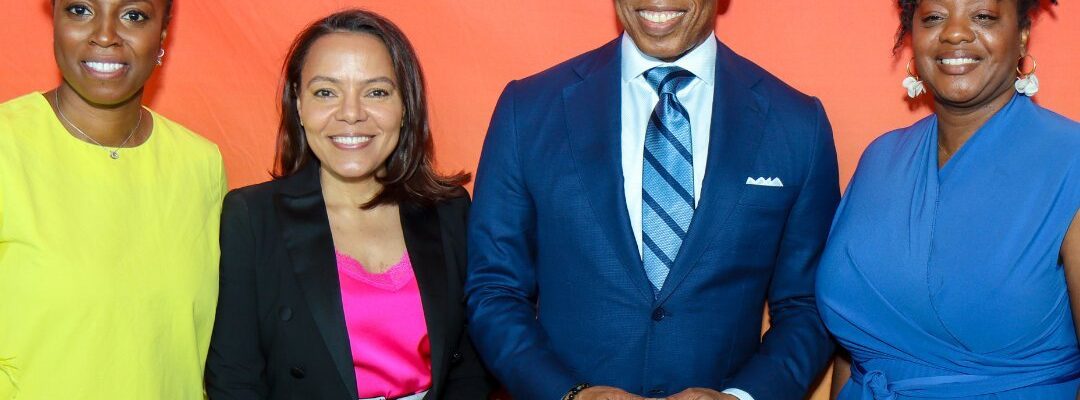
Banner Image: Mayor Adams at International Day of the Girl event. Image Credit – NYC Mayor’s Office



There are no comments yet
Why not be the first