
Addressing Healthcare Access Racial Disparities, Universal Paid Family Leave, Refunding Tariffs For Small Businesses, Aging Committee On Safety Of Foreign Prescription Drugs: Senator Gillibrand
Addressing Healthcare Access Racial Disparities, Universal Paid Family Leave, Refunding Tariffs For Small Businesses, Aging Committee On Safety Of Foreign Prescription Drugs: Senator Gillibrand
Editor’s note: Readers may remember that Senator Gillibrand often discusses these issues, as well as introduces legislation to address them. Some of her constituents argue that it is not the place of government to take care of these issues, but clearly she believes that this is the best way to solve at least some of the problems faced by residents of New York and the nation at large. She fights for the rights of women to have paid medical leave when they are ready to have a child or when a family member gets sick. This would allow the rest of the country to follow New Jersey, New York, and a few other states that have paid parental leave (New Jersey provides this for new dads as well to allow them to bond with their newborn, albeit for a little while before returning to work). We published the previous aging committee hearing, which dealt with age discrimination in the workplace, along with binding arbitration and non-disclosure agreements and how these documents can ruin people’s careers.
GILLIBRAND INTRODUCES LEGISLATION TO ADDRESS RACIAL DISPARITIES IN HEALTH CARE ACCESS
Bill Would Help Provide High-Quality And Affordable Preventative Health Care In Medically Underserved Communities Across The Country
Black Americans Are More Likely To Suffer From Diabetes, Heart Disease, And Other Serious Chronic Conditions — Disparities Made Worse By Limited Access To Preventative Care
Washington D.C. – Today, U.S. Senator Kirsten Gillibrand (D-NY) announced the introduction of the Health Access Innovation Act, legislation to fight racial disparities in health outcomes by expanding access to preventative health care in underserved communities. The bill would establish a new grant program to provide federal funding to faith- and community-based organizations located in medically underserved areas. Grants would help cover the cost of providing preventative care – including free or low-cost health screenings, vaccinations, family planning services, and mental health services – hiring community health workers, and expanding capacity. Gillibrand is calling for $50 million for this program to be included in the Fiscal Year 2026 government funding bill. Representative Nikema Williams (D-GA-05) introduced companion legislation in the U.S. House of Representatives.
“Far too many New Yorkers are unable to access the health care they need,” said Senator Gillibrand. “Trusted community and faith-based organizations play a vital role in helping to fill these gaps, providing the services that build healthier communities and helping to address racial disparities in health outcomes. I am proud to lead the Health Access Innovation Act to ensure these institutions have the resources they need to continue doing this critical work.”
“Too many families still struggle to get the care they need in the neighborhoods they call home. The Health Access Innovation Act begins to invest in a key solution to the crisis of access to care, putting resources directly in the hands of faith and community-based organizations that people already know and trust. Whether it is a church that stepped up during the height of COVID-19 or a non-profit that opens its’ doors to provide routine care, these local leaders are on the frontlines of addressing health disparities. Providing the resources to expand care helps us ensure working families can lead healthier lives–no matter their ZIP code or bank account,” said Congresswoman Williams.
Social determinants of health drive inequities in health outcomes seen across racial and ethnic groups. A lack of access to high-quality health care has long fueled health disparities affecting Black Americans. Black Americans are disproportionately affected by conditions like asthma, high blood pressure, diabetes, heart disease, and Alzheimer’s disease. Black women are over three times more likely than white women to die from pregnancy-related complications, and Black infants face the highest mortality rate of any group. During the COVID-19 pandemic, Black individuals were hospitalized and died at significantly higher rates than white Americans. To help address these persistent health inequities and chronic disease challenges, it is vital to expand access to culturally and linguistically appropriate care to meet diverse communities’ needs.
The Health Access Innovation Act would help address the lack of access to care by awarding grants to faith- and community-based organizations with a proven track record of addressing health inequities. Eligible organizations would be located in federally designated Medically Underserved Areas (MUAs) or Health Professional Shortage Areas (HPSAs), geographic areas and populations that have limited access to primary care services.
“The Health Access Innovation Act is a transformative step in ensuring that trusted community and faith-based organizations like ours can continue to deliver life-saving care to communities that need it most,“ said Rev. Kimberly L. Williams, President & CEO of Choose Healthy Life, a nonprofit that delivers health services through the Black church. “This legislation empowers us all to expand our reach and deepen our impact, and we are profoundly grateful to Senator Gillibrand and Congresswoman Williams for their leadership.”
Gillibrand is a longstanding advocate for racial equality in health care. Notably, she champions of the Black Maternal Health Momnibus Act, a package of 13 bills, including her Moms Matter Act, that would help address the Black maternal mortality crisis as well as racial and ethnic disparities in maternal health care. The legislation would invest in social determinants of health that influence maternal health outcomes; diversify the perinatal workforce; extend WIC eligibility in the postpartum and breastfeeding periods; promote maternal vaccinations, and more.
SENATOR GILLIBRAND, REP. DELAURO, COLLEAGUES INTRODUCE FAMILY ACT IN FIGHT FOR UNIVERSAL PAID LEAVE
Legislation would create a permanent, national paid family and medical leave program
WASHINGTON, D.C. – Today, U.S. Senator Kirsten Gillibrand (D-NY) and U.S. Representative Rosa DeLauro (D-CT-03) held a press conference to announce the introduction of the Family and Medical Insurance Leave (FAMILY) Act. The FAMILY Act would guarantee up to 12 weeks of partial income for workers who have to take leave for serious medical and family events. Paid medical and family leave is especially helpful for new parents and older Americans, who are more likely to have health issues or caregiving obligations for older relatives.
“Without universal paid leave, millions of Americans are forced to make devastating choices between their livelihood and the health of themselves or their families,” said Senator Gillibrand. “By guaranteeing up to 12 weeks of paid leave for workers who have to take time off for a major life event, the FAMILY Act will end these impossible decisions. I am proud to have led the fight for paid leave alongside Representative DeLauro for over a decade, and I’ll continue fighting for this program for as long as it takes so we can give every worker the flexibility and dignity they deserve.”

“Today, working families are stretched to the breaking point in this cost-of-living crisis, yet the U.S. remains the only industrialized nation without paid leave. Paid family and medical leave has been my life’s work since I beat ovarian cancer in 1986 and helped write the Family and Medical Leave Act with Senator Chris Dodd. But unpaid leave was never meant to be the destination – it was just our first step. The FAMILY Act is our next step forward: a national and comprehensive program that never makes Americans choose between their health or their family, and their paycheck,” said Congresswoman Rosa DeLauro. “I am proud to introduce this needed legislation with Senator Kirsten Gillibrand and with strong support from our Democratic colleagues.”
Gillibrand and DeLauro’s FAMILY Act delivers a key solution to the country’s public health and economic challenges and is modeled on successful state programs. Currently, 73 percent of American workers do not have access to paid leave despite a large body of research showing that paid leave improves workers’ mental health, boosts employee retention and productivity, and helps businesses. Additionally, working families lose $22.5 billion per year in wages due to a lack of paid family and medical leave.
The FAMILY Act would provide workers with paid leave for a range of major life events, including:
- Recovering from their own serious health condition;
- Caring for a family member with a serious health condition;
- Bonding with a new child—whether newborn, adopted, or placed through foster care;
- Handling responsibilities related to a family member’s military deployment;
- Taking “safe leave” to respond to domestic violence, sexual assault, or stalking.
Senator Gillibrand and Rep. DeLauro were joined at the press conference by Senators Ron Wyden (D-OR) and Andy Kim (D-NJ), as well as Reps. Richie Neal (D-MA-01), Lauren Underwood (D-IL-14), and Sarah McBride (D-DE-AL).
“Our country is forcing workers to make impossible choices between caring for their families and keeping a paycheck,” said Senator Ron Wyden. “Instead of investing in resources like paid leave to help new moms and working parents, Republicans gave another round of tax breaks to their billionaire buddies at the expense of working families. I’m all in to make sure paid leave is the law of the land for every single worker in America, and Senator Gillibrand’s FAMILY Act is the bill to get it done.”
“Paid family leave should be a right, not a luxury, for every worker. You should be able to spend those first days with a new kid or take care of an aging parent without having to worry about putting your job on the line,” said Senator Kim. “Those are the moments that matter most, and the least we can do is making sure you can be there for them.”
“Rep. DeLauro and Sen. Gillibrand have been tireless partners in the fight for paid family and medical leave since they first introduced the FAMILY Act more than a decade ago. We are grateful for their support of this important and necessary legislation,” said Jocelyn Frye, president of the National Partnership for Women & Families. “In the United States of America — the richest nation on earth — every person should have the ability to care for their loved ones without needing to jeopardize their financial stability. The FAMILY Act would finally put our country on the path toward providing every worker with access to meaningful and guaranteed paid leave benefits.”
“It is astounding that in 2025, the U.S. still lacks a comprehensive paid family and medical leave program, lagging behind numerous other countries that consider these protections a fundamental right,” said Inimai Chettiar, president of A Better Balance. “Without paid leave, Americans are constantly being forced to choose between their financial security, and being there for their loved ones as they navigate health crises, or accessing the treatment they need during medical emergencies, or taking the time they need to welcome a new baby. The FAMILY Act is the real, robust paid family and medical leave program that families nationwide need and deserve.”
This legislation is also cosponsored by Senators Angela Alsobrooks (D-MD), Tammy Baldwin (D-WI), Michael Bennet (D-CO), Richard Blumenthal (D-CT), Lisa Blunt Rochester (D-DE), Cory Booker (D-NJ), Chris Coons (D-DE), Tammy Duckworth (D-IL), Dick Durbin (D-IL), John Fetterman (D-PA), Ruben Gallego (D-AZ), Maggie Hassan (D-NH), Martin Heinrich (D-NM), Mazie Hirono (D-HI), Andy Kim (D-NJ), Amy Klobuchar (D-MN), Ben Ray Luján (D-NM), Edward Markey (D-MA), Jeff Merkley (D-OR), Chris Murphy (D-CT), Patty Murray (D-WA), Alex Padilla (D-CA), Jack Reed (D-RI), Jacky Rosen (D-NV), Bernie Sanders (I-VT), Brian Schatz (D-HI), Adam Schiff (D-CA), Chuck Schumer (D-NY), Jeanne Shaheen (D-NH), Elissa Slotkin (D-MI), Tina Smith (D-MN), Chris Van Hollen (D-MD), Raphael Warnock (D-GA), Elizabeth Warren (D-MA), Peter Welch (D-VT), Sheldon Whitehouse (D-RI), and Ron Wyden (D-OR).
The full text of the bill can be found here.
GILLIBRAND, SENATE DEMOCRATS INTRODUCE LEGISLATION TO REFUND SMALL BUSINESSES FOR TRUMP TARIFFS
Legislation Would Help Support the 2.3 Million Small Businesses Across New York, Many of Which Are Struggling to Keep Up with Rising Costs Caused By Trump’s Tariffs
Washington, D.C. – U.S. Senator Kirsten Gillibrand, alongside Democratic Leader Chuck Schumer (D-NY) and Senators Ed Markey (D-MA), Angela Alsobrooks (D-MD), Richard Blumenthal (D-CT), Martin Heinrich (D-NM), John Hickenlooper (D-CO), Mazie Hirono (D-HI), Mark Kelly (D-AZ), and Mark Warner (D-VA), introduced the Small Business RELIEF Act to exempt small businesses from global baseline and reciprocal tariffs and to provide refunds to the small businesses that were forced to pay them. The senators introduced the legislation as U.S. consumers experience the highest overall tariff rate since 1934, and a recent survey found that 30% of small business owners plan to increase their prices.
On August 29, 2025, the U.S. Court of Appeals for the Federal Circuit ruled that President Donald Trump’s so-called “Liberation Day” tariffs were illegal, setting the stage for small businesses to receive relief from the crushing “Liberation Day” tariffs. The Supreme Court agreed to consider whether these tariffs are legal and will hear the case in November. However, the tariffs will remain in place until the Supreme Court makes a decision.
“Small businesses are the backbone of the American economy, but they are especially vulnerable to President Trump’s tariff policies that are suffocating our economy,” said Senator Gillibrand. “Millions of small businesses are already struggling to keep up with rising costs. That’s why I will keep fighting to push back against these reckless tariffs, so every small business has the resources and stability it needs to thrive.”
“Small businesses are feeling the brunt of the Trump administration’s economic carnage,” said Senator Schumer. “Tariffs are raising costs, pushing away tourists, slowing down manufacturing, and forcing many businesses to close their doors altogether. Trump’s disastrous economic policy must be stopped, and Congress must pass the Small Business RELIEF Act to protect our economy and small businesses across the country.”
“Small businesses are the backbone of Maryland – making up 99% of businesses and employing over 1 million people in our state,” said Senator Alsobrooks. “I will always fight for these businesses whether it’s working to lower costs, cutting taxes, or standing up against Trump’s devastating tariffs.“
“Small business owners and workers should not have to bear the brunt of the Trump Administration’s misguided tariffs,” said Senator Blumenthal. “This legislation protects hardworking entrepreneurs, mom and pop shops, and the small businesses that are the cornerstones of our communities from the devastating economic wound of the Trump tariffs. While President Trump and Republicans in Congress are handing out massive tax breaks to the wealthy, I will continue to fight for every-day Americans and provide relief for small businesses in Connecticut and across the country.”
“Small businesses shouldn’t be collateral damage in Trump’s reckless and illegal trade war,” said Senator Hickenlooper. “As a former small business owner who’s met with Colorado entrepreneurs, I know these senseless tariffs are crushing entrepreneurs and increasing prices across the board. Small businesses deserve the chance to weather this storm.”
“Trump’s sweeping tariffs have done nothing but wreak havoc on businessowners and entrepreneurs, hiking costs and threatening the survival of many small businesses in Hawaii and throughout the country,” said Senator Hirono. “I am proud to support this legislation that would not only help to shield small businesses from these harmful tariffs, but also require the administration to rightfully compensate these businesses for any increased costs associated with them. Our small businesses are vital to the economy and they should not have to pay the price for Trump’s recklessness.”
“While the courts continue to battle over the legality of Trump’s ‘liberation day’ tariffs, small businesses cannot wait and never should have been part of this terrible policy,” said Senator Markey. “My Small Business RELIEF Act would not only exempt small businesses from the reckless, wide-sweeping reciprocal and global baseline tariffs, but importantly will also require the President to give refunds to small businesses who have paid these tariffs within 90 days of enactment. We must continue to show up for small businesses and ensure they are not left to bear the burden of these harmful tariffs. They need relief now.”
“Trump’s tariffs have hit small businesses particularly hard as they struggle to absorb the increased costs,” said Senator Warner. “The Small Business RELIEF Act will help make sure that Trump’s reckless taxes don’t cripple small businesses in Virginia and across the country.”
“Arizona’s small businesses shouldn’t be collateral damage in Trump’s reckless trade policies. I’ve heard directly from business owners across the state who tell me these tariffs are driving up costs, squeezing already thin margins, and in some cases forcing them to shut their doors,” said Senator Kelly. “I’m working to make sure small businesses get the refunds they’re owed and aren’t left to shoulder the burden of policies that make it harder to compete and grow.”
“Small businesses were the ones hit hardest by the Trump-era tariffs — paying higher prices on everything from raw materials to the tools they need to keep their doors open,” said Richard Trent, Executive Director of Main Street Alliance. “If the Supreme Court overturns these tariffs, the fair thing to do is refund small business owners for the extra costs they were forced to pay. They shouldn’t be punished for decisions made in Washington that drove up their costs and squeezed their margins. Refunding small businesses would put money back into local economies, help create jobs, and level the playing field after years of unfair trade policy.”
“Small businesses make up more than 99 percent of all U.S. companies, employ nearly half of the private-sector workforce, and contribute more than 40 percent of GDP,” said Todd McCracken, President & CEO of the National Small Business Association (NSBA). “Yet, unlike their larger counterparts, they often lack the financial cushion and in-house resources to absorb sudden policy shifts. Imposing emergency tariffs without exemptions for small companies threatens their survival, undermines local economies, and weakens supply chains upon which countless communities are built. By exempting small firms from these duties and providing timely refunds, the Small Business RELIEF Act acknowledges both their unique vulnerability and their vital role in driving economic growth.”
“Tariffs are placing unprecedented pressure on American small businesses, and we’re encouraged to see leadership and legislation that would provide much-needed relief from these burdensome policies,” said Shaundell Newsome, Co-chair of Small Business for America’s Future and Founder of Sumnu Marketing in Las Vegas, Nevada. “We’ve heard countless stories from entrepreneurs across the country whose operating costs have abruptly increased due to tariffs and their erratic implementation, a major blow to businesses operating with tight margins and little wiggle room for error. These businesses are already making devastating choices: cutting jobs, canceling expansion plans, and struggling to keep their doors open. The retroactive relief included in the Small Business RELIEF Act could be the lifeline many small importers desperately need to recover from months of unexpected costs. Main Street is bearing the brunt of policies that failed to consider the real-world consequences for small businesses. Without action, we’ll continue to see economic consequences that devastate not just individual businesses but entire communities.”
“Widespread tariffs imposed on most imported goods have caused significant pain for small businesses, as evidenced by Small Business Majority’s most recent polling that found 60% are experiencing higher operating costs due to tariffs,” said Alexis D’Amato, Director of Government Affairs at Small Business Majority. “This is no surprise given that 26% of businesses surveyed said they import goods directly, while nearly half said they buy from American suppliers that import from other countries. Cost increases have led small businesses to take a range of drastic actions that include raising prices and pausing expansion plans. The best way to bring small businesses immediate relief is to refund import duties that they have already paid and exempt them from tariffs going forward.“
In April, Senator Gillibrand announced her support for the bipartisan Trade Review Act, which would require congressional oversight of the president’s implementation of tariffs. At the time, she also signed a letter to Commerce Secretary Howard Lutnick demanding that he immediately work to repeal Trump’s tariffs, which will cost the average New York household approximately $2,400 this year alone.
Full text of the bill can be found here.
GILLIBRAND, SCOTT HOLD Aging Committee Hearing on America’s RELIANCE on Foreign-Manufactured Generic Drugs
***Watch the hearing here***
Washington, D.C. – Today, Senators Kirsten Gillibrand and Rick Scott—ranking member and chairman of the U.S. Senate Special Committee on Aging—held a hearing to discuss the serious threats posed by quality issues in foreign-manufactured generic drugs, as well as the risks that vulnerable pharmaceutical supply chains present to America’s public health and national security. The committee focused on the ways by which quality failures in these medications disproportionately endanger older Americans.
The witnesses at the hearing were: Peter Baker, former Food and Drug Administration (FDA) inspector and president of Live Oak Quality Assurance; George Ball, PhD, associate professor and Weimer Faculty Fellow at the Kelley School of Business at Indiana University; Brandon Daniels, chief executive officer at Exiger; and Ronald T. Piervincenzi, chief executive officer of U.S. Pharmacopeia. They testified about the urgent need for stronger FDA oversight, including more support for inspectors and foreign inspection parity, as well as the importance of reshoring the production of essential medications here in America. This hearing is an important first step to address generic drug shortages and quality issues. The hearing also spotlighted tragic cases of adverse events linked to substandard generics and highlighted solutions to protect the health and safety of aging Americans.
Below is Senator Gillibrand’s opening statement as prepared for delivery:
Chairman Scott, thank you for calling today’s hearing. Thank you to our witnesses for being here today.
Combating drug shortages and supporting high-quality generic drug production is one of the most important issues currently facing Congress. In 2023, I heard from countless New Yorkers who struggled to access chemotherapy treatment due to shortages of essential generic cancer drugs, including cisplatin and carboplatin. When you are fighting a disease as devastating as cancer, the last thing you want to worry about is whether these life-saving drugs will even be available.
Another issue that is extremely concerning is the quality of generic drugs, especially those that we import from overseas. I have heard time and time again the difficulties FDA foreign inspectors face when they are inspecting these foreign facilities. This can include basic logistical support or a third-party translator. When an inspector is abroad for months, in a place where they may not speak the language, it can be very disheartening. Inspectors can also be put in a position where they must recommend the closure of a facility, but this can have a cascading effect of domestic generic shortages.
The FDA needs adequate funding and support from Congress to ensure that they can not only conduct thorough inspections but also enforce violations to protect the health and safety of the American public. We also need to work on solutions that promote transparency and quality benchmarks in the generic drug supply chain. The pharmaceutical supply chain can be very long and opaque, where several countries and companies are manufacturing various ingredients at various levels of quality. Purchasers need to be incentivized to purchase high-quality drugs that have a proven reliable supply chain. Hospitals and practitioners are spending millions of dollars a year due to drug shortages.
Ultimately, it is the health and safety of patients, and our constituents, that is being put at risk. I am looking forward to working on bipartisan solutions to promote a safe and reliable supply chain for our generic drugs industry.
GILLIBRAND, SCOTT DEMAND FDA INVESTIGATION INTO THE Safety of Foreign-Manufactured Generic Drugs, Request Answers on Ties to Forced Labor in China
Washington, D.C. – Following a Senate Aging Committee hearing earlier this week, Ranking Member Kirsten Gillibrand and Chairman Rick Scott sent a bipartisan letter to Food and Drug Administration (FDA) Commissioner Martin Makary raising concern and requesting information about FDA’s oversight of foreign drug manufacturing and how it may threaten the quality and safety of drugs marketed and sold in the United States. This letter follows the committee’s hearing on America’s overreliance on foreign-manufactured generic drugs and the risks this poses to our seniors and national security.
“Ensuring that all drugs imported into the United States fully comply with our laws and regulations is crucial to keep Americans safe,” said Senator Gillibrand. “I am deeply concerned by the FDA’s pattern of allowing foreign generic drugmakers to export drugs to America even when their facilities have been found to fall below our standards. This is a threat to our seniors and our national security. We must provide better oversight to ensure that all Americans are protected, and I’m committed to pressing the FDA on this issue.”
“We’ve seen the FDA impose import bans on foreign drug manufacturing facilities for violating basic quality and safety standards, only to later issue exemptions, waivers, and carve-outs that allow drugs from those same facilities to still be imported simply because they’re on a shortage list. That means the FDA may be allowing potentially unsafe, low-quality drugs into American homes, and our seniors are especially at risk. That’s unacceptable,” said Senator Scott. “This week, I, alongside Ranking Member Kirsten Gillibrand, sent a letter to Commissioner Makary requesting information and answers to this ongoing problem. I’m deeply concerned that the FDA’s enforcement decisions are being overridden to address short-term shortages while ignoring long-term consequences. We need transparency, accountability, and a serious commitment to strengthening domestic manufacturing and ensuring every drug, whether made here in the U.S. or abroad, meets the same high standards Americans deserve.”
In the letter, the chairman and ranking member highlight a troubling pattern in which the FDA’s Center for Drug Evaluation and Research appears to override safety-related enforcement actions recommended by the agency’s own Office of Inspections and Investigations, allowing drugs from facilities potentially in violation of the FDA’s standards to be imported into the U.S., putting seniors at risk of purchasing low-quality and potentially unsafe generic prescription medications. This includes cases such as Sun Pharma, a major generic drug manufacturer in India, where imports have continued despite repeated violations. The senators also questioned the FDA’s potential noncompliance with the Uyghur Forced Labor Prevention Act, pointing to the possibility that pharmaceutical suppliers operating in China’s Xinjiang region may be linked to forced labor. The chair and ranking member asked the commissioner to look into this and provide answers to the committee.
The letter can be found HERE or below:
Dear Commissioner Makary:
Thank you for your service overseeing the safety of our nation’s food, drugs, and cosmetic products. The Senate Special Committee on Aging is examining how vulnerable pharmaceutical supply chains present a risk to public health and national security. The Food and Drug Administration (FDA) plays a critical role in ensuring the products Americans buy are safe and effective, certifying that products made in and imported into the United States fully comply with all laws and regulations. Given this essential responsibility, we write to request information regarding exemptions made to import bans on pharmaceutical products.
The United States relies on the import of key starting materials, active pharmaceutical ingredients, and finished dosage form drug products to help ensure every American has access to the lifesaving medications they need. FDA holds a unique role in being charged with both ensuring the safety and efficacy of all drugs sold in the U.S. and preventing and mitigating supply disruptions and shortages of medically necessary drugs. This dual responsibility creates a unique tension between the FDA’s Center for Drug Evaluation and Research (CDER) and the FDA’s Office of Inspections and Investigations (OII).
Recent reporting and Aging Committee interviews with former FDA inspectors have detailed incidents of OII employees issuing a Form 483, where investigators note any observed conditions that may indicate violations of the Food, Drug and Cosmetic Act and related Acts, and recommending an import ban from the facility. However, decisions were made at CDER, or its Office of Drug Shortage, to exempt products from that facility or provide a carve-out from an import ban, potentially to help avoid a disruption in supply. The challenges at Sun Pharma, a major generic drug manufacturer in India, exemplifies this dynamic. In 2014, FDA found violations at their manufacturing facility for sterile injectables. In 2025, eleven years later, the FDA continues to find impurities and dirty equipment, yet allows the facility to continue operations under an exemption.
Another concern is the ongoing use of forced labor and genocide of the Uyghurs in China. Due to these crimes against humanity, Congress passed the Uyghur Forced Labor Prevention Act of 2021 (Public Law No. 117-78) to ensure goods made in the Xinjiang region, presumably with forced labor, do not enter the United States. However, several Chinese companies operating in the Xinjiang region supply either active pharmaceutical ingredients or key starting materials to companies. The importation of these drugs would be a violation of the Uyghur Forced Labor Prevention Act.
These exemptions undermine the goals of U.S. policy, threaten the safety of drugs, and place Americans’ health at risk. As we work together to address these concerns and protect the health and safety of American families, we would like to request the following information by October 15, 2025:
- How many classifications has CDER downgraded or reclassified from the FDA’s Office of Inspections and Investigations recommendation? Please list this for each year from 2020 to 2025.
- How many import alert exemptions or carve-outs have been issued by CDER since 2020?
- Please provide a complete list of products and their manufacturing companies that were provided exemptions or carve-outs.
- How many regulatory meetings for Official Action Indicated (OAI) classified inspections has CDER held in lieu of issuing a warning letter or import alert since 2020?
- How many drugs carved out or exempted from import bans since 2020 were in shortage or considered to be at risk of a shortage?
- What was the market share of the manufacturer’s drug that was exempted/carved out?
- What definition and metrics does CDER use to define a drug in shortage or at risk of being in shortage when making reclassification decisions?
- What metrics does CDER reference when considering the implications of a potential shortage when issuing a downgrade, exemption from an import ban, or other reclassification
- How does CDER’s Risk-Based Site Selection Model determine which facilities will be prioritized for surveillance inspections?
- How many of the companies inspected since January 2024, as a total number and percentage of all companies inspected, were producing lowrisk products?
- Since 2010, how many companies have received an exemption for over five years and still have not passed or applied for reinspection? a. What is the longest a company has received an exemption without passing a reinspection?
- The FDA has Mutual Recognition Agreements (MRA) in force with the European Union, Switzerland, and the United Kingdom. In these MRA countries, what is the longest amount of time the FDA has allowed a company to operate without a surveillance inspection? If over a decade, please explain why.
- Is there a public-facing database for pharmacists, pharmacy benefit managers, group purchasing organizations, or patients to determine if a drug or company is imported under a waiver from an import ban or other safety-related actions?
- Does the FDA report to U.S. Customs and Border Protection which pharmaceutical products contain or may contain parts, such as key starting material or active pharmaceutical ingredients, manufactured in the Xinjiang Uyghur Autonomous Region?
- Has the FDA investigated if Sinopharm, Zhejiang Shindai Chemical Group, Zhejiang Chemicals Export Corp, or other Chinese state-owned entities that have documented connections to forced labor are manufacturing pharmaceutical products that are imported into the United States?
We look forward to hearing from you and finding solutions to secure the United States pharmaceutical supply chain and protect the health of American families.
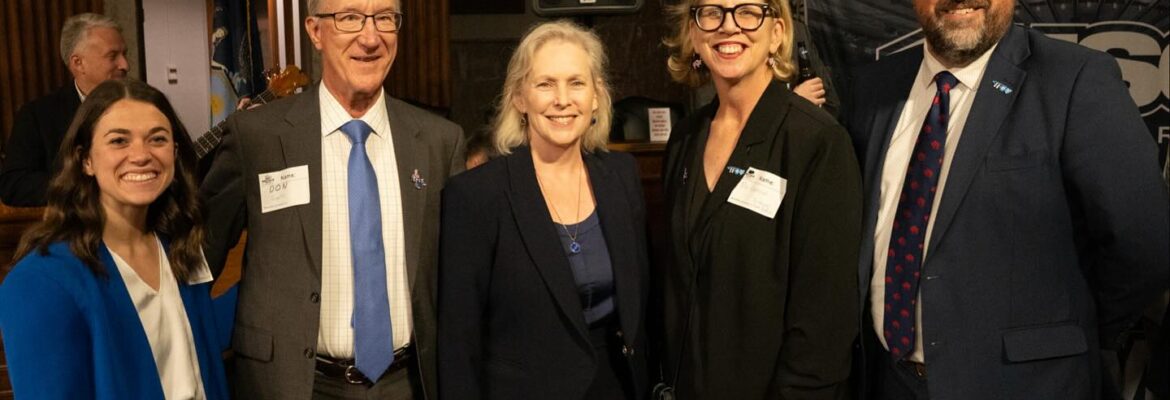
Banner Image: Buffalo Nite in Washington. Image Credit – Sen. Gillibrand


[…] note: In our last rundown of Senator Gillibrand’s announcements, tariffs were mentioned once again, this time in regard to their effects on small businesses of all types. Tariffs tend to raise […]