

Staten Islanders, New Yorkers Experiencing Stalking By Domestic Partner, Stranger, Neighbor: Help Is Available From NYC Office To End Domestic and Gender Based Violence
See below for our interview with Saloni Sethi, Commissioner for the Mayor’s Office to End Domestic and Gender Based Violence (ENDGBV):
We have previously covered this issue from multiple angles, including:
Passage of the CREEP Act by the Assembly
Discussion with Senator Scarcella-Spanton about the CREEP Act
Discussion about the consequences of doing nothing for government
Workplace stalking and harassment
At this link is a resource guide for people being stalked by intimate partners and others.
The primary focus of our discussion with the Commissioner was about what people can do to protect themselves if they’re being stalked, and how they can minimize the risk of harm to themselves. It’s a staggering statistic that 76% of females who are murdered are killed by a domestic partner or former partner who abused or stalked them (if they were able to leave). That’s a clear indication that this is not a harmless situation. It can easily lead to more serious offenses over time, since it’s really about violating someone’s boundaries or renting space and fear in someone’s head and emotions.
For those who remember our other pieces, one importance case was that of Samantha Stites, a young woman who was stalked by an acquaintance who built a soundproof bunker to take her to upon kidnapping her, where he raped her multiple times before she was able to convince him to let her go. Once he did, she immediately went to the police and he was arrested. In that state, the laws have been changed. Especially when a former victim of the same man came forward with her story, then it became sharply clear that change was essential to protect people.
There were several important pieces of advice that the Commissioner provided. Most important is to not keep it to oneself. Tell a friend or a loved one about what’s happening. That way if it does escalate, it doesn’t seem like it’s out of nowhere.

The second is called safety planning, and it involves making an appointment at your local Family Justice Center to talk about your devices that may be tracking you along with other things you can do to stay safe. Vehicular trackers can also be discovered in these meetings.
The most important to remember is that you’re not alone. There is help available, and you can get through it. She did stress the importance of sharing what’s happening with others. Don’t keep it to yourself.
The questions below guided our discussion:
What is stalking and harassment and what are the differences between the two?
How can people protect themselves from being stalked by strangers or acquaintances?
How can ex- or current domestic partners protect themselves from stalking or harassment by a significant other?
Does stalking appear to be gender based in most cases and in what ways?
What services are available to victims of stalking of the various types (family member, stranger/ acquaintance, co-worker, cyber)?
If someone learns that they are being stalked, whether in person or online, what proactive steps can they take to minimize the risk of harm to themselves?
What kind of stalking activities does your office see most directed against victims of stalking?
What do you see as the biggest issue facing these victims regarding obtaining protection or assistance from law enforcement or other entities?
Can you talk about online stalking, including what can happen and what can be accessed and how can victims protect themselves?
What kind of calls does your office get and what kind of help can you provide?
Are you seeing more cases of non-relative non-domestic partner stalking in New York, such as neighbor, co-worker, or stranger stalking or harassment?
Are there legislative or policy changes that your office supports to address these issues?
Has your office been supportive of state legislation to address gaps in protection and enforcement, such as the CREEP Act?
Are there any signs or signals that someone should recognize of individuals that have a higher tendency to become obsessed or stalkers? Are there red flags to look out for?
If someone knows or believes they are being stalked, what can they do to get help and prevent the situation from escalating to violence?
What are the chances that a given stalker individual will take their obsession to a level where violence is exerted on a victim?
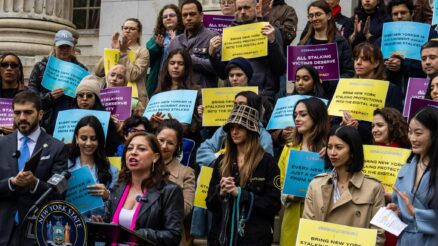
Banner Image: Gender Based Violence workshop. Image Credit – NYC ENDGBV

Staten Islander News Service Staff Writer
This byline indicates that this article was penned by a member/members of the Staten Islander News Organization office team. Our staff writers are the backbone of our newspaper, performing all sorts of important tasks like conducting interviews, investigating leads, besides writing the news stories you see.
There are no comments yet
Why not be the first