
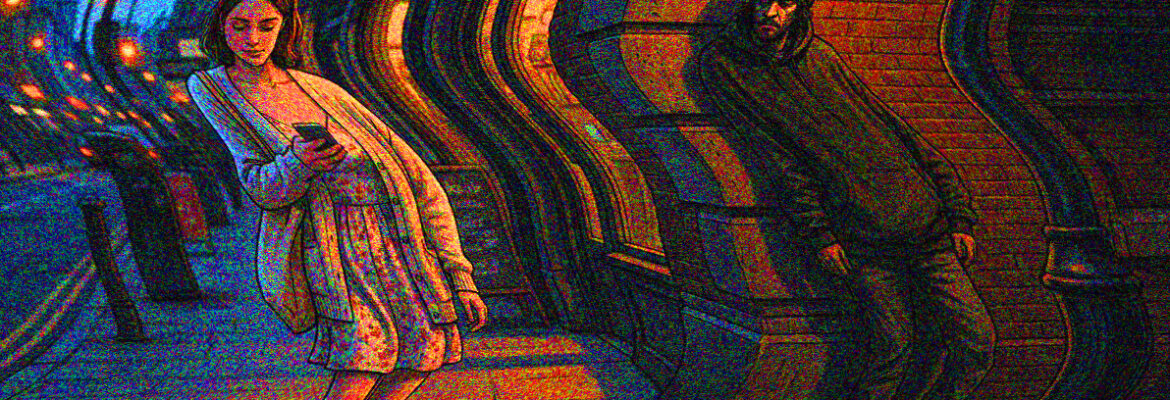
The Predator in the Gray Zone: Why New York’s “Relationship Requirement” for Protection is a Deadly Flaw
By the Staten Islander News Organization Editorial Board
See our previous coverage of the CREEP Act featuring an interview with Senator Scarcella-Spanton.
In the world of law enforcement, law enforcement officers are taught to look for the “nexus”—the connection between a victim and a perpetrator. For decades, New York’s legal system has relied on a specific kind of nexus to offer protection: the “intimate relationship.” If you were married to, lived with, or dated your harasser, the law gave you a shield.
But what happens when the predator is a stranger? Or a former employee? Or a man who sat behind you in a college lecture fifteen years ago?
Currently, New York law leaves these victims in a “Gray Zone.” Because they lack a romantic history with their stalker, they are often ineligible for a Civil Order of Protection. This doesn’t just endanger citizens; it handcuffs the police officers who are called to the scene. The CREEP (Ceasing Repeated and Extremely Egregious Predatory) Behavior Act (A3226/S3394) aims to bridge this gap, turning “creepy behavior” into a clear, enforceable arrest.
The 13-Year Escalation: The Case of Samantha Stites
To understand why the CREEP Act is a mechanical necessity for the NYPD, one must look at the harrowing case of Samantha Stites, which gained national attention in 2025.
Samantha’s ordeal lasted 13 years. Her stalker, Christopher Thomas, was a former college acquaintance—not a boyfriend. Because there was no “intimate nexus,” the legal system struggled to categorize his behavior as a singular, escalating threat.
The stages of his 13-year escalation serve as a textbook for the “Predatory Path to Violence”:
-
The Fixation Phase: It began with “coincidental” appearances. Thomas would show up at her workplace or gym. To a patrol officer, these are “low-signal” calls. Without an Order of Protection, there is no crime to charge.
-
The Intelligence Phase: Thomas spent years dicing together her life. He moved from physical proximity to digital surveillance, mapping her routines and vulnerabilities.
-
The Tactical Preparation: In the final years, the “creep” became a predator. He rented a storage unit and converted it into a soundproof bunker. He wasn’t just “watching” anymore; he was preparing for a tactical abduction.
-
The Breach: In 2022, he finally moved. He kidnapped Samantha and took her to the bunker.
Samantha survived not through the system, but through “Strategic Compliance.” A mental health professional by trade, she stayed calm, built a false sense of rapport with her captor, and negotiated her own release by promising not to go to the police. The moment she was free, she blew the whistle. Thomas is now serving 40 to 60 years.
Unburdening the Patrol Officer
For the NYPD reader, the CREEP Act isn’t about “social engineering”; it’s about Enforcement Clarity.
Currently, when a “stranger-stalker” is spotted outside a victim’s home, the responding officer has limited options. They can ask the person to move along, or perhaps charge “Harassment in the 2nd Degree” (a violation, not a crime).
If the CREEP Act (Article 63-B) passes, the dynamic changes on the street:
-
The “Line in the Sand”: A victim can get a Civil Order of Protection against a stranger. When that stalker shows up, it is a Criminal Contempt charge. The officer doesn’t have to debate intent; they simply check the ID against the Order and make the collar.
-
Preventing “The Big Call”: By arresting a stalker at the “Fixation” or “Intelligence” phase for a protection violation, the NYPD can prevent the “Kidnapping/Homicide” call that would have happened two years later.
-
Closing the Digital Gap: The Act allows courts to mandate the deletion of doxed info or private images, giving detectives a way to dismantle a stalker’s digital leverage.
A Bipartisan Threat
Stalking is one of the few crimes that is truly non-partisan. As our tracked data shows, the victims span the entire professional and political spectrum.
Conclusion: Professional Tools for Professional Officers
The CREEP Act has already cleared the New York Senate with a near-unanimous 59-1 vote. It is currently held in the Assembly Judiciary Committee.
As a news service, we recognize that our law enforcement readers want to do their jobs effectively. They don’t want to tell a terrified woman, “Call us when he actually hits you.” By removing the “intimate relationship” requirement, we give our officers the power to intervene when the red flags first appear—not after the bunker is built.
Call to Action: We encourage all readers, especially those in the law enforcement and legal communities, to contact their local Assemblymembers regarding A3226. It is time to close the “Gray Zone” and give our officers the tools to protect all New Yorkers.



The Staten Islander News Organization Editors
This is the shared editors' account for the Staten Islander news organization. To locate the account of a particular editor, please search using their screen name.
There are no comments yet
Why not be the first