
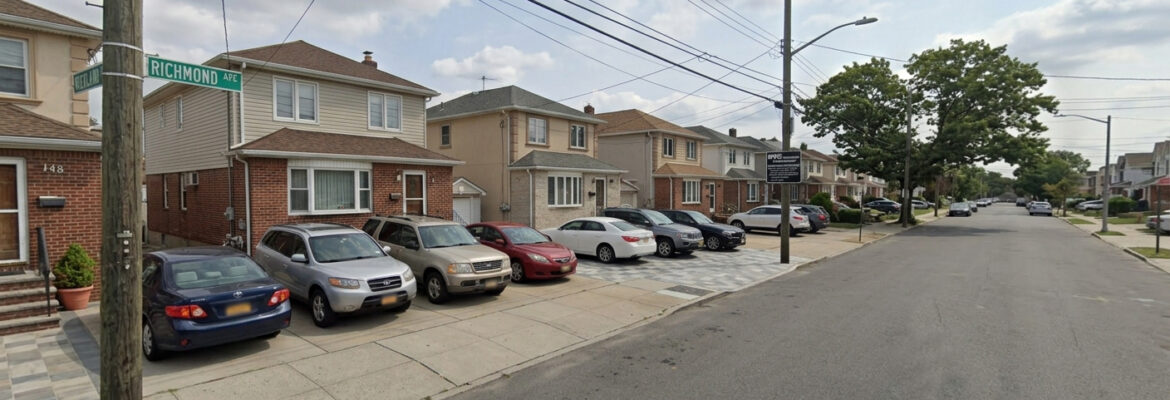
The Suburban-to-Urban Transition: Impervious Surface Proliferation and Its Ecological Consequences on Staten Island
The Suburban-to-Urban Transition: Impervious Surface Proliferation and Its Ecological Consequences on Staten Island
Abstract This inquiry examines the escalating trend of “yard hardening” on Staten Island—the systematic replacement of turfgrass and permeable biomass with impervious concrete, asphalt, and porcelain tiling. By synthesizing urban climatology, hydrological modeling, and sociological observations, this article posits that individual property modifications are precipitating a borough-wide environmental crisis. The shift from green space to paved infrastructure fundamentally alters the local runoff coefficient, intensifies the Urban Heat Island (UHI) effect, and prioritizes private vehicular storage over collective climate resilience.
I. Hydrological Disruption and Surface Runoff Dynamics
The fundamental environmental liability of replacing organic ground cover with concrete lies in the total elimination of subsurface infiltration. In a naturalized residential landscape, the soil-root matrix functions as a primary bioswale, absorbing and filtering precipitation before it enters the municipal infrastructure. When these surfaces are sealed, the runoff coefficient—the ratio of runoff to total precipitation—approaches a value of 1.0, signifying near-total surface retention and rapid lateral transport.
Research published in the Journal of Hydrologic Engineering indicates that as impervious cover increases, the “time of concentration” (the duration required for runoff to reach a drainage outlet) is drastically reduced. On Staten Island, where several neighborhoods are situated within flood-prone glacial till plains, this creates a “flash flood” typology during heavy rain events. The New York City Department of Health and Mental Hygiene (2021) notes that impervious surfaces, including concrete and even hard-packed dirt, reflect and retain heat while simultaneously overwhelming combined sewer systems, leading to increased discharge of untreated effluent into the borough’s surrounding maritime ecosystems.
II. Thermal Degradation and the Micro-Urban Heat Island
The proliferation of “hardened” yards contributes significantly to the intensification of the Urban Heat Island effect at a granular, block-by-block level. Concrete and porcelain tiles possess high thermal mass and lower albedo compared to vegetative cover, meaning they absorb shortwave solar radiation during daylight hours and continue to emit longwave thermal radiation long after sunset.
A 2024 study by Climate Central highlighted that New York City’s built environment makes temperatures approximately 9.7°F hotter for the average resident than they would be in a natural setting. Specifically, the NYC Department of Health (2021) found that between 6:00 PM and 9:00 PM—when the UHI effect is most pronounced—green spaces such as grass and shrubs were the most critical factors in reducing ambient temperatures. Conversely, neighborhoods that have systematically replaced lawns with paving blocks or concrete create “hot zones” where the loss of evapotranspiration removes a natural cooling mechanism. This creates a feedback loop of increased energy consumption for indoor climate control and elevated risks for heat-exacerbated mortality, which accounts for over 500 premature deaths annually in New York City (NYC Health Department, 2025).
III. The Sociological Pivot: Aesthetic Hardening and “Parking Lot” Urbanism
While the environmental consequences are quantifiable through climatology and hydrology, the phenomenon is driven by a sociological shift toward utilitarian land use, specifically the demand for off-street parking. Residents frequently utilize paved frontages to “stack” multiple vehicles, effectively converting the residential streetscape into a contiguous parking lot.
While proponents may argue that such modifications fall under the purview of private aesthetic preference, the cumulative visual and structural result is the “hardening” of the public realm. The New York City Zoning Resolution (Section 37-10) attempts to regulate these “lower density growth management areas” on Staten Island to maintain streetscape quality, yet the trend persists as a response to suburban density. This transition signifies a prioritization of the private automobile over the borough’s ecological health. The aesthetic impact is not merely a matter of visual “softness”; it represents a permanent structural retreat from the “Suburban Borough” ideal toward a de facto industrial-utility typology that offers zero ecological services to the community and clearly, is out-of-phase with the needs of Staten Islanders, at large.
IV. The Loss of Often Unacknowledged Vital Staten Island Habitat
Believe it or not, hidden within your shrubbery, trees, and flowerbeds are countless living organisms. You’ll find everything from birds to insects, amphibians, reptiles, and even smaller mammals.
There might be squirrels and even groundhogs. Some of us have skunks, raccoons, wild cats, muskrats, and even beavers. Don’t forget about the deer and foxes if your property abuts the woods!
These creatures live quietly alongside us in our human world on Staten Island, though we rarely see them. Eliminating what seems like a small piece of green space on a single property, “practically nothing,” deprives wildlife the place to live and exist. It’s certainly not nothing when you aggregate all the tiny areas of green space across all the front, side, and back yards on a block. It adds up.
V. The Pedestrian Hazard of Parking Cars Side-By-Side-By-Side…
Of course, pedestrians navigating streets with multiple homes, each with multiple cars in driveways spanning the entire front of the property encounter a very real walking hazard.
When pedestrians see a driveway, they are rightly cautious. But how do you walk cautiously past ten cars in a row? Any one of the could suddenly pull out of a driveway. It’s like walking in a parking lot directly behind a row of parked cars. That wouldn’t be the best idea, would it? Here,the pedestrian is left to navigate a similar hazard, an unnecessary peril we can avoid.
How could the drivers even see you? And what about kids walking or on bikes or rollerblades? It’s even more of a hazard because the sidewalk is often so close to the back of the cars.
VI. Not All Areas of the Island Are Shifting In This Manner
We’ve all witnessed the slow and steady transformation of many island neighborhoods and towns over the decades. Photo archives do not lie; we once had far more open space. Staten Island retains a certain character, a certain aesthetic, to this day. We have a plethora of beautiful homes, impeccably maintained. And, just as much accompanying green space, be it in the form of flower gardens, shrubbery, trees, or front or backyard lawns. Eliminating all of the latter takes away half our equation for such an aesthetically-incredible enclave. In reality, many of the urban North Shore main thoroughfares are already devoid of much “incidental” green space, with most adjacent properties zoned as commercial, which makes sense. Conversely , most luxury homes on Staten Island sit on larger properties and retain a significant amount of green space.
This issue concerns multiple types of neighborhoods on the island. Primarily, though, the areas people might describe as more “Middle Class”, or “Working Class,” have been most greatly affected. The properties of issue are single family, duplex, and multiple-unit-attached-dwellings. Most have a modest, to extremely minimal, amount of front-yard space, to begin with. This new trend has taken root in some neighborhoods, and on certain blocks, the resulting look is a street with rows and rows of cars lined up in front of otherwise clean, well-maintained, homes. However, even in Port Richmond or Stapleton, homes on main streets, and even side-streets, retain a good amount of residential green space. These are the sorts of residential buildings most frequently shifting to a less-green footprint. And, even in the more exclusive areas, some properties are smaller, and owners elect to tear out the grass in the front, trees, and even the entire backyard lawn, in favor of stonework or expensive tile. Even so, the trend in such areas is still to retain as much green space as is possible, while judiciously balancing brickwork or stone additions.
VII. The Nocturnal Radiation Trap and Anthropogenic Feedback Loops
A critical, yet often overlooked, dimension of yard hardening is the alteration of the nocturnal cooling cycle. Natural biomass and permeable soils possess low thermal inertia, allowing them to cool rapidly once solar forcing ceases. Conversely, the high volumetric heat capacity of concrete and porcelain tiling ensures that these surfaces function as thermal reservoirs. Throughout the diurnal cycle, these materials sequester vast quantities of energy, which is then liberated as longwave thermal radiation well into the nocturnal hours.
This prevents the local microclimate from reaching its natural thermal baseline, a phenomenon that necessitates the prolonged operation of residential HVAC systems. These units, in turn, reject “waste heat” directly into the immediate ambient environment, creating a localized anthropogenic feedback loop. This cycle not only increases the carbon footprint of the individual household but also elevates the ambient temperature for the entire block, effectively robbing the community of the physiological recovery period typically afforded by the evening dip in temperature.

VIII. The Hydrological Paradox: Flash Flooding Amidst Urban Desertification
The systematic elimination of groundwater recharge zones on Staten Island has precipitated a hydrological paradox. By sealing the surface, the borough is rendered “water-vulnerable” during precipitation events due to the aforementioned surge in runoff, yet it simultaneously undergoes a form of “urban desertification.” Because the subsurface strata are bypassed by engineered drainage systems, the deep-soil moisture required to sustain the remaining canopy of “Old Growth” trees—for which Staten Island is renowned—is never replenished.
As the water table fails to recharge, the remaining urban forest experiences increased drought stress, leading to premature leaf senescence and a reduction in the very canopy cover that could mitigate the heat island effect. This creates a state of permanent ecological instability where the landscape is perpetually oscillating between the extremes of hydraulic surfeit and subterranean drought.
IX. Toward the Codification of Permeability: Reforming Zoning and Land Use Mandates
The persistent “hardening” of Staten Island’s residential landscape necessitates a transition from voluntary environmental stewardship to mandatory regulatory compliance. While the concept of “private property” often evokes a sense of absolute autonomy, New York City’s Zoning Resolution (ZR) has long established that individual land use decisions must not impose undue negative externalities upon the collective community. Just as zoning laws restrict the height of structures to preserve light and air, there is a burgeoning legal argument for “permeability mandates” to preserve hydrological and thermal stability.
The Legal Precedent for Environmental Mandates
The City has already laid the groundwork for such restrictions through the Lower Density Growth Management Area (LDGMA) regulations, specifically within Article III of the Zoning Resolution. Current statutes, such as ZR Section 37-90, already mandate “parking lot landscaping” for commercial entities to mitigate heat and runoff. Extending these “green infrastructure” requirements to private residential yards is a logical evolution of the NYC Stormwater Management Program (SWMP). By codifying a minimum “Permeability Ratio” for every residential lot, the City would not be infringing upon the right to property, but rather enforcing a duty of care to ensure that one homeowner’s parking convenience does not result in a neighbor’s flooded basement or heat-exacerbated health crisis.
Economic Disincentives: The “Stormwater Utility Fee”
A secondary, non-prohibitive approach involves the implementation of a Stormwater Utility Fee, a model successfully utilized in cities such as Austin, Nashville, and Philadelphia. Under this framework, property owners are charged a recurring fee based on the total square footage of impervious surface area on their lot. This “polluter pays” principle internalizes the cost of municipal sewer maintenance and flood mitigation. As noted by the C40 Knowledge Hub (2025), such fees incentivize the removal of concrete by offering “permeability credits” or rebates for the installation of porous pavers and rain gardens, effectively using market mechanisms to restore the island’s natural absorption capacity.
The Aesthetic of Accountability
Ultimately, the transformation of Staten Island’s streetscapes from “parking-first” to “percolation-first” requires a shift in the legal definition of community character. If the courts recognize “thermal equity” and “flood resilience” as fundamental components of public safety, the act of paving a front yard can be legally reclassified as a nuisance rather than a mere aesthetic choice. This would empower the New York City Department of Buildings (DOB) to issue violations for unauthorized yard hardening, ensuring that the “Garden Borough” maintains its namesake through enforced ecological integrity.
X. Conclusion
The “reloving” of grass in favor of concrete on Staten Island is not a benign landscaping choice but a significant contribution to urban environmental degradation. By increasing runoff and elevating local temperatures, these modifications undermine the borough’s ability to withstand the increasing frequency of extreme weather events. Future policy must reconcile private property rights with the collective necessity for permeable, cooling green infrastructure to ensure the long-term habitability of the urban landscape. The transition from the “Garden Borough” to a “Paved Province” represents a profound misalignment between private utility and public ecological safety. Mitigating this trend requires a rigorous reevaluation of the “right to pave,” favoring instead green-infrastructure mandates that recognize soil not as a maintenance burden, but as a critical municipal utility.
XI. Addendum Notes
The sections on local habitats and pedestrian hazards were added on April 30, 02026. These sections did not appear in the original version published on April 12, 2026.
References
- Brosnan et al. (2020). Comparative Thermal Analysis of Turfgrass vs. Synthetic and Impervious Surfaces. (As cited by OSU Extension Service).
- C40 Knowledge Hub (2025). Flooding: How to Increase Your City’s Permeability through Stormwater Fees and Mandates.
- Climate Central (2024). The Urban Heat Island Effect: How Built Environments Intensify Heat in 65 Major U.S. Cities.
- Environmental Protection Agency (EPA) (2024). Regulatory Frameworks for Green Infrastructure: Using Zoning to Manage Urban Heat and Runoff.
- New York City Department of City Planning (2024). New York City Zoning Resolution, Article III, Chapter 7: Special Urban Design Regulations.
- New York City Department of City Planning (2026). Zoning Resolution: Article II, Chapter 3 (Residential Bulk Regulations in Lower Density Growth Management Areas).
- New York City Department of Environmental Protection (2026). Rules of the City of New York, Title 15: Stormwater Management and Permeable Surface Requirements.
- New York City Department of Health and Mental Hygiene (2021). The Urban Heat Island Effect in New York City: Block-Level Temperature Monitoring and Mitigation.
- New York City Department of Health and Mental Hygiene (2025). Heat Mortality Report: 2018-2022 Data and Provisional 2024 Findings.
- NYC Mayor’s Office of Climate and Environmental Justice (2025). PlaNYC: Getting Sustainability Done – Progress Report on Green Infrastructure and Heat Mitigation.
- New York State Department of Environmental Conservation (2025). Stormwater Management Design Manual: Impacts of Impervious Cover on Aquifer Recharge.
- Oke, T. R. (2021). Boundary Layer Climates: Thermal Storage and the Nocturnal Urban Heat Island. Routledge.
- U.S. Environmental Protection Agency (2024). Using Trees and Vegetation to Reduce Heat Islands: The Role of Evapotranspiration in Urban Cooling.
- Wachter, H. (2020). Understanding the Environmental Consequences of Concrete: Runoff and Thermal Mass. Experience Life Magazine.
This study was conducted by The Health Sciences Research Education Learning Center, with full funding and support provided by the Assertive Kids Foundation.



Assertive Kids Foundation
The Assertive Kids Foundation is a Registered 501(c)3 nonprofit. We work across various domains of activity to help bridge the gap between Staten Islanders and the community help they need. We help the Staten Island community and beyond. We actively fight ageism in all its forms. Our many programs span a diverse set of social issues, but the common thread linking all is the aim of fostering assertiveness in our fellow citizens. The Assertive Kids Foundation also supports vital Health Research Studies undertaken by the Health Sciences Research Education Learning Center.
I am a mechanic and I love cars but I don’t like what I’m seeing. We are starting to look like BK or Queens in some spots. And no way this looks good. I don’t care if you have a BMW, a Mercedes, and a Tesla out there. You transformed your property into a parking lot. If you have a driveway that fits 6 cars, good for you. If you don’t, sell your house and find one that does. Don’t go digging up your lawn.
Yooooooooooo, Paul….
I am 100% behind your words. This is making the island disgusting.
Not to mention for older people this is a walking hazard.
Hate to say this but move back to Brooklyn if you want to live like this.
I think this looks gross. And with all the valid science as to why not to do this, I can’t see that some kind of law won’t get passed, eventually. Probably by the time it is too late.
Well, young lady, you’re just passing the buck, then. haha
If this matters to you, do something about it.
My take?
If you want to operate a parking lot, get a permit and an attendant. Otherwise, remember you live in a home, not a business location.
Some blocks out my way are obscene at this point. I hope the Boro Pres. Fosella looks into this insanity.
We can’t walk on some blocks. You have to literally weave in and out of parked cars sticking out.
I know this adds to my exercise, but the risks do not outweigh the extra steps we take walking.
Where are people supposed to park? It’s bad enough out here that there is no parking anywhere and people get bothered when you park in their precious space in front of their house. Why do you get the right to dictate what other families can do? What if they cannot afford to pay for a rented garage? Moving to Staten Island was an eye opener to say the least.
Why not let them park in your driveway?
You’ve got to be kidding me. Your lefty mentality is the problem. Go back to Williamsburg or whatever hipster spot you’re from. We don’t need your attitude. People can find spaces. Trust me. I do. And I live by a school and the teachers hog all the spots but that just means you have to walk farther and that isn’t terrible unless it’s raining or cold. You make me laugh with your BS comment there. How is it that you don’t care about the environment? That is so way off. You are just being a contrarian. You lefties don’t like that the island is beautiful. You define beautiful as skyscrapers and no grass. Well I will tell you something. Go back to where you feel better about your surroundings. I want the right to not have to live in the middle of an endless parking lot for as far as the eye can see! That is your ideal. You want to make SI Williamsburg the hip spot and then claim you did it.
I am an avowed Democrat and have only voted blue and I can say I moved to the island to get away from the congestion Queens and I do not like the idea of transforming the island into Queens. You are assuming every liberal islander thinks like this woman. I think we have to realize that families move here because there is so, nothing unique about the island. So no you are not right I don’t want a parking lot on my street either.
Well I moved from Bay Ridge and the parking is better in my neighborhood now on the island.
Back in Bay Ridge it was horrible. Parking is a nightmare! I get it about making an eyesore. We did not move here to end up back in Brooklyn. Our town home has such a small front yard there isn’t much grass to remove.
Each neighborhood and borough has it’s character. So I say pass the law and let’s make sure Staten Island stays at least how it is now.
Your house. Your look. American means Freedom.
Namesake?
The Garden Boro?
Wishful thinking.
NJ already got the Garden State.
But I get it Boro of Parks isn’t about our lush yards. lol