
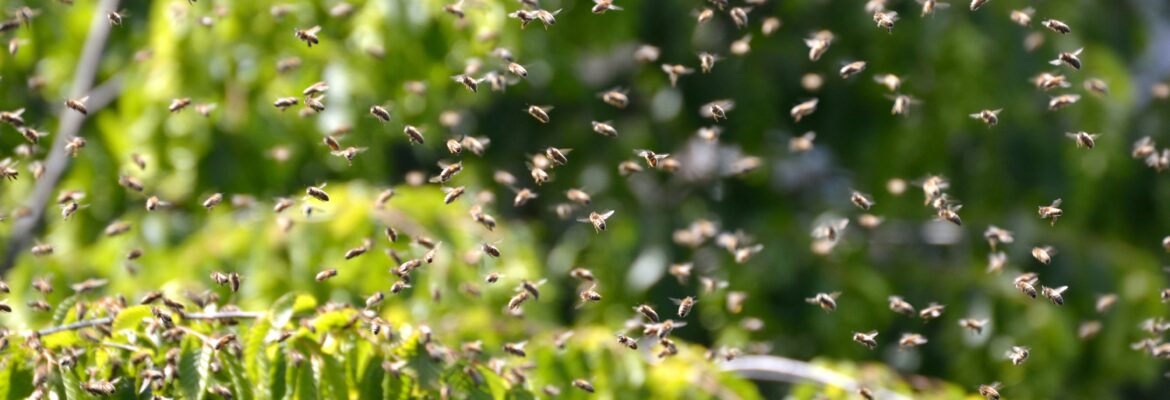
Staten Island Locations To Be Sprayed With Broad-Spectrum Insecticide Tonight: Monarch Butterflies, Dragonflies, Praying Mantids, Bees Also Affected
Editor’s note: We have recently reported on other mosquito spraying events, including the recent larvicide spray, which is much more effective at targeting mosquitos and only mosquitos. Applications of broad spectrum insecticide are counterproductive. In about two weeks, the mosquito population will rebound and explode since their predators (dragon flies, praying mantids – which are endangered, and spiders) will also be wiped out. However, unlike mosquitos, who are prey bugs and thus make endless amounts of new eggs and new babies, dragon flies and other predators are severely limited in their reproductive capacity. As a result they can’t catch up to their prey since they’ll have all been destroyed. This is also antithetical to all forms of regenerative agriculture and anyone attempting that on the island will have their crops and soil contaminted. This spraying is also devastating to monarch butterfly and bee populations, since it’s an indiscriminate killer. At least the larvicide is targeted at just mosquitos, and it’s use could be expanded in lieu of these Aerial applications that lack long-term, or even single-season, effectiveness.
Next Scheduled Events
July 22
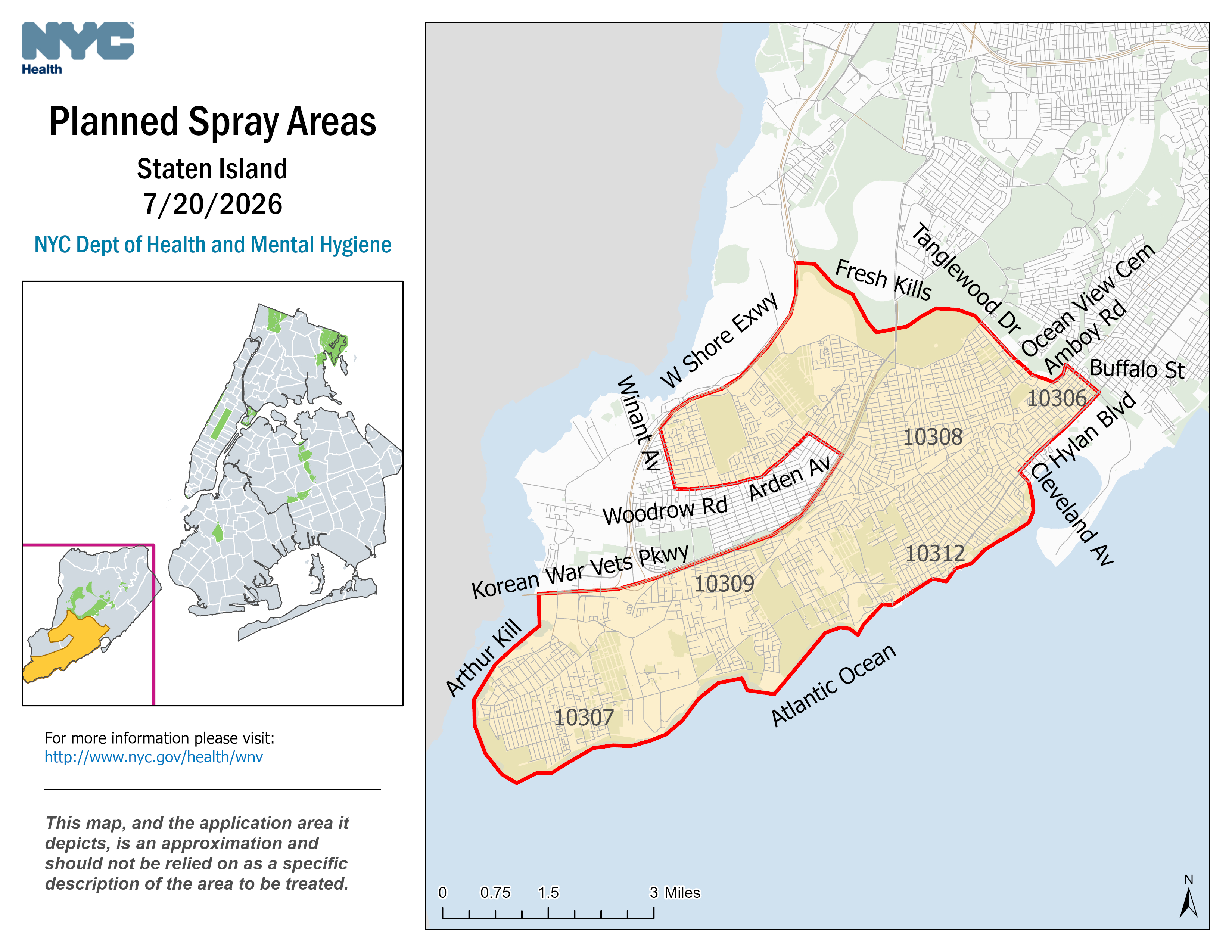
Notice of July 22 Mosquito Spraying in Staten Island (PDF, posted July 17)
- Borough: Staten Island
- ZIP Codes: 10306, 10307, 10308, 10309, 10312
- Neighborhoods: Annadale, Arden Heights, Aspen Knolls, Bay Terrace, Eltingville, Freshkills, Great Kills, Oakwood, Oakwood Heights, Pleasant Plains, Prince’s Bay, Richmond, Rossville, Tottenville, Village Greens, Woodrow, and Woods of Arden
- Map: Locations of July 22 Mosquito Spraying in Staten Island (JPG)
The Health Department monitors mosquito populations and applies pesticides during the summer to reduce the number of mosquitoes and lessen the risk of mosquito-borne diseases, such as West Nile virus.
Residents are required to eliminate standing water (PDF) from their property to help prevent mosquitoes from breeding.

TO REDUCE RISK OF WEST NILE VIRUS, NYC HEALTH DEPARTMENT TO CONDUCT MOSQUITO CONTROL IN STATEN ISLAND
Trucks Will Spray Parts of Staten Island the Night of July 22, Weather Permitting
EPA-Approved Treatment Targets Adult Mosquitoes While Minimizing Risk to People, Pets, and Wildlife
Health Department Urges All New Yorkers to Prevent Mosquito Bites as West NileVirus Activity Increases Across the City

NEW YORK, NY — To reduce mosquito activity and the risk of West Nile virus, the NYC Health Department will apply ground-based pesticide spray by truck on Wednesday, July 22, to parts of Staten Island between 8:30 p.m. and 6 a.m. the following morning. In the event of inclement weather, treatment will be delayed until Thursday, July 23, during the same hours.
No human cases of West Nile virus have been reported in New York City this year. However, mosquito surveillance in the city indicates that virus activity has increased substantially. To date, the Health Department has detected nearly twice as many West Nile virus-positive mosquito pools citywide as during the same period last year. These findings indicate increased virus activity and reinforce the importance of taking precautions to avoid mosquito bites.
The Health Department conducts comprehensive mosquito surveillance throughout the five boroughs by monitoring mosquito populations and routinely testing mosquito pools for West Nile virus and other mosquito-borne pathogens. Surveillance data guide mosquito control decisions and help identify areas where the risk of virus transmission is elevated. Recent warm weather, intermittent rainfall, and seasonal high tides have created favorable conditions for mosquito breeding and virus amplification.
The Health Department will spray very low concentrations of Duet®. The risks of pesticides applied by the Health Department for mosquito control are low for people and pets. Individuals who are particularly sensitive to spray ingredients may experience temporary eye or throat irritation or a mild rash. People with respiratory conditions may also wish to take simple precautions to minimize exposure during the application period.
To stay safe during spraying:
• Stay indoors, whenever possible.
• Air conditioners can remain on. While not necessary, you may wish to close air conditioner vents or choose the recirculate function.
After spraying:
• Wash skin and clothing exposed to pesticides with soap and water.
• Always wash fruits and vegetables with water.
Last week, the Health Department issued an advisory to healthcare providers in New York City to consider and test for West Nile virus from now through October. No human cases of West Nile virus have been reported in New York City this year. However, the Health Department has detected an increase in West Nile virus-positive mosquito pools citywide compared to the same period last year, reinforcing the importance of taking precautions to avoid mosquito bites.
Reducing Exposure to Mosquitoes
New Yorkers are encouraged to mosquito-proof their homes and take precautions when spending time outdoors. Recommendations to reduce exposure to mosquitoes include:
• Use an EPA-registered insect repellent containing DEET, picaridin, IR3535, or oil of lemon eucalyptus (not recommended for children younger than 3 years).
• Make sure windows have properly fitted screens and repair any tears or holes.
• Eliminate standing water on your property and dispose of containers that collect water.
• Keep roof gutters clean and draining properly.
• Clean and chlorinate swimming pools, outdoor saunas, and hot tubs. Keep them covered when not in use. Drain water that collects on pool covers.
• When possible, wear long sleeves and long pants when outdoors in areas with high mosquito activity.
• Report standing water by calling 311.
For more information about West Nile virus and mosquito prevention, visit the Health Department’s Mosquito Control page or call 311.
Banner Image: Swarm of bees. Image Credit – Niklas Stumpf



NYC Dept of Health and Mental Hygiene
The New York City Department of Health and Mental Hygiene is the department of the government of New York City responsible for public health along with issuing birth certificates, dog licenses, and conducting restaurant inspection and enforcement. The New York City Board of Health is part of the department. Its regulations are compiled in title 24 of the New York City Rules (the New York City Health Code). Since March 2022, the commissioner has been Ashwin Vasan.
There are no comments yet
Why not be the first