
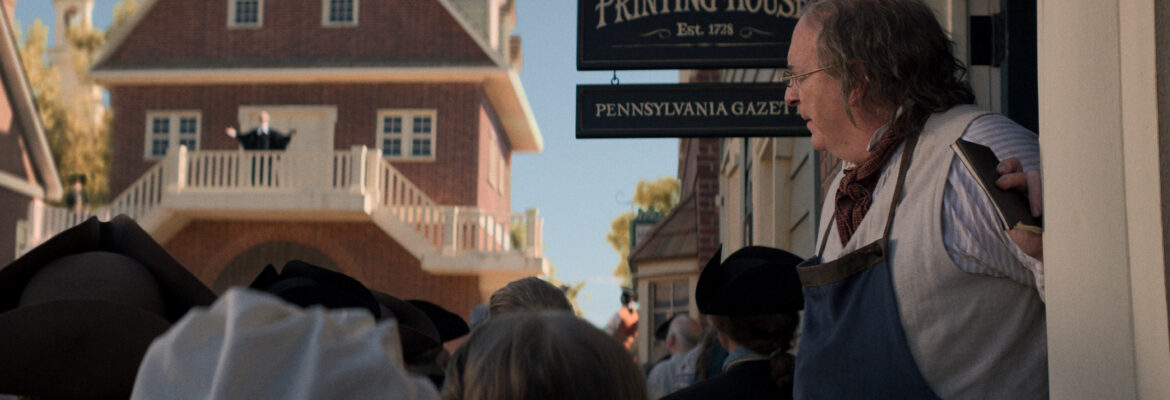
Must-See Movie “A Great Awakening:” Excellent Bio of True American Ben Franklin, Birth Of Evangelicism In America
Must-See Movie: “A Great Awakening” Reminds Us What It Is To Be American With Real World View Of Early Colonies
Benjamin Franklin wasn’t a devout or church going Christian; he was an agnostic. He was raised by a Puritan father, with 12 other siblings in his family. Always independent minded and wanting something other than a life of faith. He may have believed in Jesus too, but he strongly believed that God leads each of us in our own way and others shouldn’t interfere. He also never says so one way or the other. But he does declare his belief in God at the end in his speech before the convention.
His father, who we met in the film, had hoped that this son, who he called his “tithe,” or gift to God, would become a person of faith such as a preacher. But he was a good father, and was able to recognize who his son ACTUALLY was, and he found him a job with his brother the printmaker.
And so his world-changing life began. Don’t get me wrong; his life was world changing. If anyone was responsible for the beauty of the feeling of freedom and the desire for revolution and release from England, it was Ben Franklin. Not the guy only the most religious evangelicals have even heard of, whose biography this film also covers. Ben Franklin set the sparks for the discovery of electricity – and bifocal eyeglasses. And his books, newspapers, the Poor Man’s Almanac, etc, etc. He was a printer and an inventor and always interested in new things and living the best life possible.
Ben Franklin believed quite strongly in a higher power, but he was humble enough to acknowledge that he didn’t know the answer. He knows God exists, but thinks that maybe man has tried to put Him in a box that He doesn’t fit in.
George Whitefield? Completely the opposite. He believes he was called by God to preach to the poor masses, and that he knows who God is and what He wants, and he’s quite sure of it. Not because he had a miraculous vision, because he didn’t. He reads the Scripture and believes he knows what it means and understands everything. Trust me when I say he might not. In fact, his hypocrisy is quite upsetting to Ben Franklin.
However, the reverend is a very kind and magnanimous person in many ways. While some may not like his message, he seems to be the kind of persistent person that sort of grows on you. I could see how Franklin continued to be friends with and admire him a lot, though there were many aspects of his personality he found grating. He also does really strive to do God’s will in his life and to follow where he is led, which is a very good quality. The reverend also downplays the faith and spirituality of Ben, largely because he is not a part of a church or outwardly spiritual himself. .
Throughout this film, I was struck by what an irritating personality the Reverend has. He reminds me of many evangelical Christians I’ve met who insist that you must go to their church and worship in the same way they do. They’re unable to recognize anything else. Not all of the people in this group are like this, but some are, to the point it’s almost a meme. It can be noted that the reverend’s friends who introduced him to Christianity in the first place weren’t like this themselves. They wanted to exemplify the kindness and compassion of Jesus, but George wanted to take it so much further. Fasting for forty days until he nearly died and would have if his friend had not broken through the door to his room (according to the doctor), as one of many examples.
He would always take it many steps beyond. Like when they visited the prison to wash the feet of the prisoners, George had to wash every single person’s feet THAT day to show them the love of Jesus. So it was certainly a noble endeavor. But in spreading this message, he took abuses that many, including Ben Franklin, thought were unnecessary. When people threw stones, he allowed himself to be struck in the face, with broken teeth and blindness in one eye to prove it. Whereas Ben Franklin jokes that he also needs to learn to duck – for self preservation of this person who was here to preach and bring Christ’s message for as long as possible, if for no other reason.

And this individual appears to be the source from which Evangelicalism came in the first place. He believed himself to have been anointed to deliver the message of freedom to all the people of the world, rich and poor, free and slave. This ordination was self-proclaimed, but many people followed him, and he is quite sincere, even going so far as to pray that is name be torn down if necessary in favor of God’s glory. In this time and place, he was abe to draw crowds 25,000 strong, and his booming voice carried across city blocks so that all could hear him.
This film can be referred to as a history of the evangelical branch of the Anglican church in America, with Rev. Whitefield at the helm. He is very strongly confident in his own view of reality and religion, and often insists that Ben Franklin needs to join his church and his version of Christianity, as he believes it to be the correct one.
The reverend believes that he must save Ben Franklin’s soul – to which Ben replies that he doesn’t need this saving, and he is, in fact, quite bothered by the constant and unceasing insistence of his good friend. And he might be right.
In the whole film, you are shown who Ben Franklin really is – a compassionate, kind person who really cares for the poor and for the colonists – all of them. Who isn’t a hypocrite about owning slaves. He knows it’s wrong and doesn’t pretend that it’s right. He becomes a staunch abolitionist, and after his death, all of his own slaves are set free.
On one occasion, when Rev. Whitfield was being particularly forceful in his insistence that Ben actually “convert,” and follow the Reverend, Ben Franklin slaps him in the face proverbially – with his own sins. First he insists that George not try to change him and force him to follow that same religion, regardless of his own inclinations and knowledge. But then he gives the real slap: George’s own hypocrisy.
There is an orphanage he often talks about. It is his legacy that he built to care for children. But it was built and run by slaves. The very slaves that George believes and says are the co-inheritors of the Kingdom of God, fully loved by Jesus Christ. But he made an idol of the orphanage and Ben wants him to know it. It’s unfortunate that this argument was the last time he’d see his friend – and you can see he knew it.
The death of Reverend Whitefield is in 1770, many years before the actual start of the American Revolution in 1775 and the signing of the Declaration Of Independence in 1776. However, according to the film, in the days during the Constitutional Convention, around the year 1783, Ben and his grandson rediscover Whitefield’s books and writings, and he is inspired to write a speech. Throughout the film, he feels a need to know if the sun on George Washington’s chair in the chambers is rising or setting. After he is recognized and orates in the chamber, he realizes that the sun is indeed rising on this new and novel form of government, one where the people have the power, and where the states maintain control over the rules and laws governing their own specific populations. This was well before Manifest Destiny and westward expansion, which was also considered ordained by religion.
One scene that was particularly a stark reminder of how religion can be used to illuminate truth or to hide darkness is when Ben Franklin visits the admiral of the King’s Navy in London. The admiral starts talking about the story in the Bible of the Prodigal Son, which many Christians know very well. In it, the son comes back to the father and is forgiven and celebrated. But looking at it from another perspective, the colonists were given everything they could have wanted by the king of England, and they squandered it. Now they seek to escape from British rule to seek the same vices as that biblical personage, but it is only a matter of time before they, too, come crawling back like the Prodigal Son. As if the King is equated with the Heavenly Father, which in England prior to this time, there had been the Divine Right Of Kings.
It is here that he also threatens to violently quash this newfound rhetoric of freedom and prosperity for all in America. Reminding Ben that such a large proportion of the colonists are indentured servants, which included prisoners emptied from cells in England, along with vagrants rounded up from the streets of England and dumped across the ocean. This was in contrast with the slaves, who were not indentured but were already very much a part of colonial America.
This film could more rightly be referred to as the biography of Ben Franklin and Rev. Whitefield – since that’s what the whole film is about. He never ‘awakens’ or ‘saves’ Ben Franklin, and everything Ben says and does is from a place of great faith and great humility – that he doesn’t pretend to understand. And I liked Ben Franklin before, but now I see him as the true hero that he was.
It’s also clear that he has slaves but treats them well. And other writings have demonstrated that he became an abolitionist, seeing his own hypocrisy, and upon his death the slaves he did own were ordered to be freed by his will.
This film was very well set, actually. It wasn’t afraid to show early America for what it was – raw, unfiltered, and dirty as well. Only the wealthiest people had access to semi regular baths, and even they appear to not take advantage of that privilege. Their hair is messy, stringy, and oily, their clothes look unwashed – as do their faces- and the streets are not clean either.
The person we follow, George Whitefield, seems tangential to the full story of the American Revolution, and it mostly follows his personal conversion. Where he wants to be like Jesus and fasts for forty days, demanding to know of heaven why it’s not working – whatever it is he’s expecting. Because he’s not Jesus, and he soon comes to a conversion of a sorts with his baptism. After which, he begins making waves in the Anglican Church in England, holding sermons outside and getting himself expelled from the official king’s church. He is unfazed, and rides on his horse from town to town, even visiting mines and other unexpected places to preach to them the doctrine of freedom in Christ.
He creates this ornate little personal preaching stand, which he hitches to his horse and brings from town to town. He could have easily fashioned for himself a shield of lashed together branches covered with leaves to block the rocks thrown at his face during his sermons, which usually stopped once people listened to his actual words. But the injuries were real. Eventually, he joins a ship headed to the Americas, and find Ben Franklin there, quite coincidentally on his first day in the city where Franklin lives.
Pilgrims were fleeing religious persecution. Protestants were pursuing wealth and prosperity. And the “indentured servants” were seeking a better life, they just didn’t understand that 80% of them wouldn’t survive two years, making their indenture lifelong servitude.
One oddity about early America though: the care of ordinary citizens for the poor. Ben Franklin appeared to look compassionately upon the ragged poor children being given the throw away materials from the local restaurant. This is something never really mentioned in history books, and it’s heartening to see. And they were caring for one another in ways that modern Americans would think is wrong.
Pull yourself up by your own bootstraps as they say. But many don’t know that the original vision for America was a classless society where rich and poor mingled together and cared for one another – where anyone could be exceptional – it’s what’s inside that counted.
Another oddity is how George Whitefield ended up at Oxford University to meet the Christians in the first place. Back then, there was a way to attend an expensive university such as Oxford – by agreeing to be the servant of the men who could afford to pay. And boy did they treat George like a third class citizen or even a slave, throwing their food on the floor and ordering him to pick it up. It wasn’t until the Christian group at the university befriended him did he even start to enjoy his time there. He was studying to be an actor, by the way. But then, due to meeting these Christians, he instead decided to use his strong orator’s voice to bring people to his own church, a breakaway from the mainstream Anglican / Protestant church in England. Finally, he came to America, where he met Ben Franklin on the first day he arrived in Boston. And a business partnership was formed- followed closely by a truly close friendship.
I really liked this film, and I was quite surprised by it. Since it’s made by a religious film company, my eyes were alert for any sign of historical inaccuracy, for overly representing that Christianity was this giant influence on the Constitutional Convention and all of that.
But there was none. It was a pretty honest representation of what those people were really like and what the convention must have been like to those who were there. Actually, having read biographies of John Adams and George Washington and Ben Franklin, this movie did a good job of representing their personalities. This is very likely what they were really like if you had been around them. They put a great deal of attention, clearly, on historical accuracy. Considering how many Americans consider these men to be our heroes, that’s a good thing.
Additionally, you might be struck by what a great casting choice they made for the Reverend George Whitefield. Looking at the older version in the film, fully wigged, side by side with the painting of Whitefield from his time in Mansfield College, they are quite similar-looking:
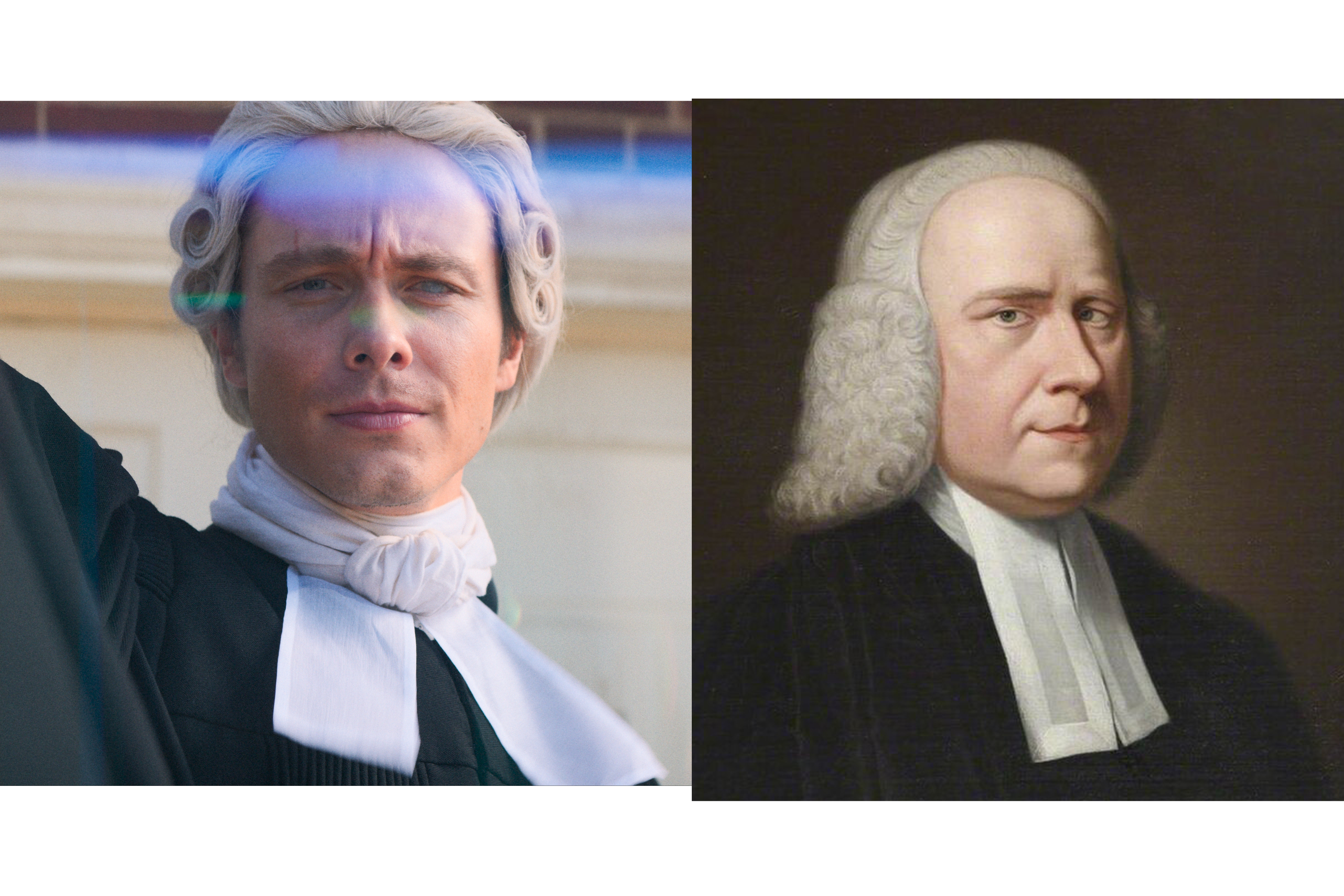
Actor Jonathan Blair in A Great Awakening (left) with Robert Hunter’s painting of Reverend George Whitefield (1714–1770), MA – 72 – Mansfield College
Since the time of the convention, when the deadlock was finally broken, the prayer service that Ben Franklin instituted has been something that many different denominations and faiths have been invited to participate in – though that is a recent phenomenon. However, they were always of various different denominations of Christianity, and new chaplains were assigned as temporary contractors, in a sense. They had their own staff and their own office in the Capitol building, and this still persists today. The official one is almost always a denomination of Christianity, but there are ‘adjunctive’ preachers who come in for specific purposes or simply more temporarily.
It was also mentioned that prayer services were held before the Revolution and during it, as well as during the formation of the Articles of Confederation, and that forgetting God in their Constitutional Convention was a mistake they needed to rectify, and it seemed they were right as the Constitution resulted from it.
It’s important to remember, as Ben Franklin reminded us, that man is not able to do everything on his own, without the assistance of a Higher Power – but the naming is less important. Bringing that Spirit back into their government was definitely critical. Our money even says ‘In God We Trust.’ It doesn’t say which form of God, but shows clearly that Force isn’t forgotten in the founding and sustenance of America.
According to a Jewish philanthropy website, regarding the religious affiliation of the officially appointed chaplains for Congress (who had a paid salary and staff), they were all Christian of various denominations but often had guest chaplains, who could be of other faiths:
“Having guest chaplains is ‘a great message against the Establishment Clause that there’s no official religion established,’ Howard Mortman, author of When Rabbis Bless Congress, told eJP. Guest chaplains occur when the official chaplain has another commitment or when Congress wants to highlight diversity. The most common way to be asked to lead prayers is to sow relationships with local politicians. Chaplains have included Sikhs, Muslims, Hindus, Indigenous Americans, Hawaiian priests, among others.
Guest chaplains began appearing in the 1850s, and by 1860, there was a Jewish guest chaplain, Swedish-born Rabbi Morris Raphall, who prayed for unity as the Civil War loomed close. ‘You can either say, like, why did it take so long [to get a Jewish chaplain],” Mortman said. ‘Or, my goodness, that was really fast.’”
Altogether I would give this film five stars and highly recommend it. It has strong Christian themes regarding the pastor’s life, which is to be expected, but was very beautifully filmed, with an incredible soundtrack to accompany it. The devices used in various parts of the film were expertly added – such as the ear ringing when the news of George Whitefield’s death arrives to him. Whitefield dies before the Revolutionary War is even fought, but he still had an enormous influence on the establishment of his church in America, and he had an influence on Ben Franklin through his writings, the publication of which was part of their business agreement – as was the promotion of his sermons where he raced on horseback from town to town to give them, which sold a lot of papers (the Pennsylvania Gazette, the real newspaper printed by hand without electricity. As Ben Franklin said at one point in response to Whitefield, he’s made a lot of money from God, rather than for Him (or the church). Even though the film is over two hours, it passes quickly and is quite captivating.

Below is the full text of the speech Ben Franklin gave that day in 1783, when the Constitutional Convention was deadlocked, and he was recognized by George Washington to speak:
Mr. President:
The small progress we have made after 4 or five weeks close attendance & continual reasonings with each other — our different sentiments on almost every question, several of the last producing as many noes as ays, is methinks a melancholy proof of the imperfection of the Human Understanding. We indeed seem to feel our own want of political wisdom, since we have been running about in search of it. We have gone back to ancient history for models of government, and examined the different forms of those Republics which having been formed with the seeds of their own dissolution now no longer exist. And we have viewed Modern States all round Europe, but find none of their Constitutions suitable to our circumstances.
In this situation of this Assembly groping as it were in the dark to find political truth, and scarce able to distinguish it when presented to us, how has it happened, Sir, that we have not hitherto once thought of humbly applying to the Father of lights to illuminate our understandings? In the beginning of the contest with G. Britain, when we were sensible of danger we had daily prayer in this room for the Divine Protection. — Our prayers, Sir, were heard, and they were graciously answered. All of us who were engaged in the struggle must have observed frequent instances of a Superintending providence in our favor. To that kind providence we owe this happy opportunity of consulting in peace on the means of establishing our future national felicity. And have we now forgotten that powerful friend? Or do we imagine that we no longer need His assistance.
I have lived, Sir, a long time and the longer I live, the more convincing proofs I see of this truth — that God governs in the affairs of men. And if a sparrow cannot fall to the ground without [H]is notice, is it probable that an empire can rise without [H]is aid? We have been assured, Sir, in the sacred writings that “except the Lord build the House they labor in vain that build it.” I firmly believe this; and I also believe that without [H]is concurring aid we shall succeed in this political building no better than the Builders of Babel: We shall be divided by our little partial local interests; our projects will be confounded, and we ourselves shall be become a reproach and a bye word down to future age. And what is worse, mankind may hereafter from this unfortunate instance, despair of establishing Governments by Human Wisdom, and leave it to chance, war, and conquest.
I therefore beg leave to move — that henceforth prayers imploring the assistance of Heaven, and its blessings on our deliberations, be held in this Assembly every morning before we proceed to business, and that one or more of the Clergy of this City be requested to officiate in that service.
SIGHT & SOUND FILM ‘A GREAT AWAKENING’ DEBUTS WITH RARE A+ CINEMASCORE® AND STRONG NATIONWIDE OPENING WEEKEND
Acclaimed Faith-Based Film Earns Audience Praise and Impressive Box Office Performance
LANCASTER, Pa. (April 6, 2026) – The highly anticipated faith-based film A GREAT AWAKENING made a powerful debut in theaters nationwide this weekend, earning a rare A+ CinemaScore from audiences and grossing more than $2 million.
“We are overwhelmed at the response of this film and the testimonies of impact that continue to be shared,” said Joshua Enck, Director of A GREAT AWAKENING and President & Chief Story Officer of Sight & Sound. “We set out to tell a story that would inspire, challenge and uplift and seeing audiences connect with it in such a meaningful way is truly rewarding. We cannot wait to see how the Lord continues to use this story and awaken hearts of every generation.”
From the storytellers known for five decades of immersive, faithcentered productions, A GREAT AWAKENING illuminates a gripping and often overlooked chapter of American history: before the Revolution, there was a Revelation. Set in the tense years leading up to the fight for independence, the film uncovers the spiritual movement that reshaped hearts, unified communities, and helped forge the identity of a nation.
At the center of this awakening is George Whitefield, the bold, charismatic preacher whose voice carried across colonies and class divides. His preaching became the “tiny candle” that sparked a sweeping wave of renewal. The film also explores his unlikely friendship with Benjamin Franklin, a transformative bond of intellect and faith that helped shape emerging American ideals.
A GREAT AWAKENING opened April 3, 2026, and is exclusively in theaters nationwide. Find showtimes and more at agreatawakening.com.
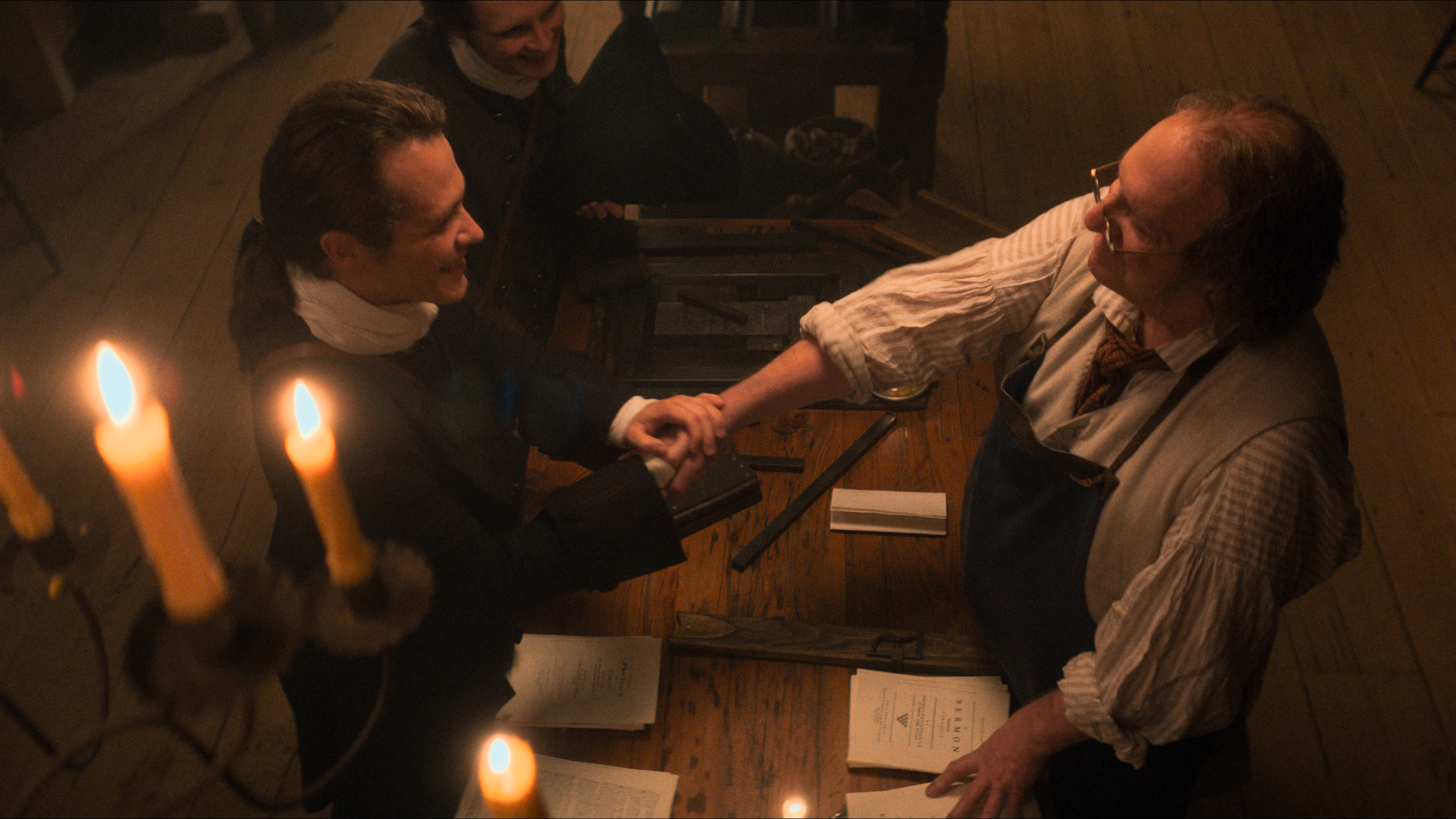
Film still. Image Credit – Sight & Sound
From the original acquisition release:
Set to release Easter 2026, A GREAT AWAKENING, tells the true story of an unlikely friendship between the Reverend George Whitefield and Benjamin Franklin that resulted in one of the most defining moments in American history.
With the colonies on the brink of collapse, the Reverend George Whitefield ignites the first Great Awakening, uniting an entire generation with his thundering and faithful sermons and proclamations of liberty. In a miraculous turn of events, one of Whitefield’s closest friends and greatest promoters becomes none other than Benjamin Franklin. With the nation’s freedom hanging in the balance, the founders discover true liberty cannot only be written into law – it must be awakened in the hearts of the people.
Produced by Sight & Sound’s in-house team of writers, designers, and artists, and supported by a top-notch crew of industry professionals, A GREAT AWAKENING reflects the same epic scale and meaningful storytelling that has made Sight & Sound’s stage productions world renowned—complete with massive sets, original scores, and a focus on creative excellence audiences have come to expect.
“Our mission is to bring powerful stories of redemption to life on stage and screen, and this film highlights a profound event in our nation’s history that united a generation with the belief that faith and liberty are undoubtably intertwined.” said Joshua Enck, President of Sight & Sound and director of A GREAT AWAKENING. “Partnering with Roadside Attractions for a 2026 cinematic release allows us to share this timely message amid America’s 250th year, when the topic of liberty will be at the forefront of conversation.”
Sight & Sound’s first feature film, I HEARD THE BELLS, was released in 2022 through Fathom Entertainment. Originally slated to be only a four-day theatrical event, the release was extended to eight weeks with additional locations added due to high demand, far exceeding expectations. In total, I HEARD THE BELLS, grossed $5.6 million in box office sales and landed a #6 ranking in movie theaters during its opening weekend. NOAH, also a Fathom release, debuted in the top 10 box office. The upcoming partnership with Roadside Attractions builds on that momentum, combining Sight & Sound’s devoted base of millions with Roadside’s expertise in specialty distribution. Among its many successes, Roadside was pivotal to the success of Jon and Andrew Erwin’s breakout hit I CAN ONLY IMAGINE.
“Sight & Sound brings with it an extraordinarily large and devoted audience, and we’re thrilled to expand that reach into a nationwide theatrical experience,” said Roadside Attractions CoPresidents Howard Cohen and Eric d’Arbeloff. “Their ability to translate the passionate following built through their live shows into powerful cinematic storytelling makes them an ideal partner. Paired with the film’s uplifting message and the milestone of our nation’s 250th anniversary, we are eager to share A GREAT AWAKENING with audiences across the country this coming Easter 2026.”
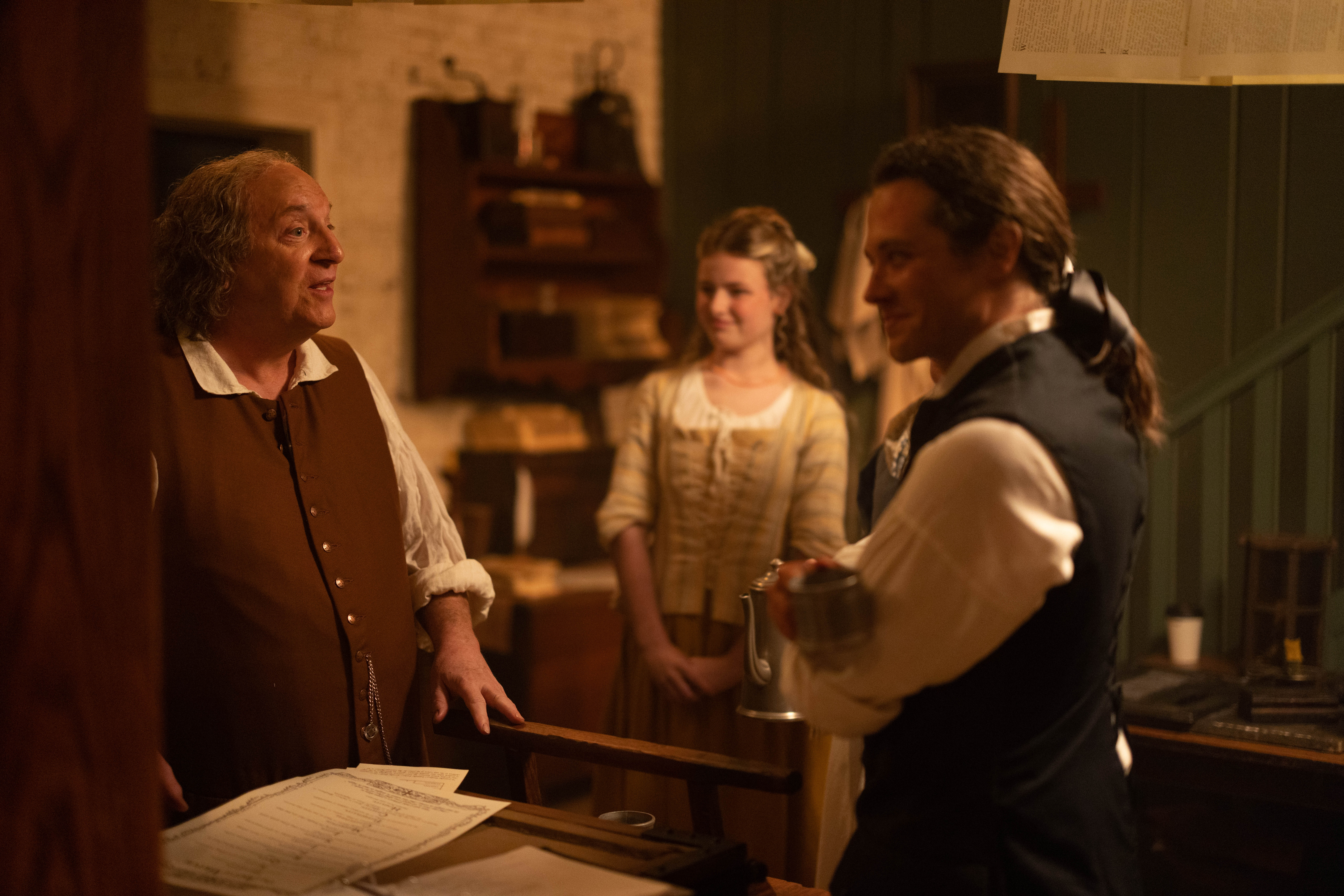
Film still. Image Credit – Sight & Sound
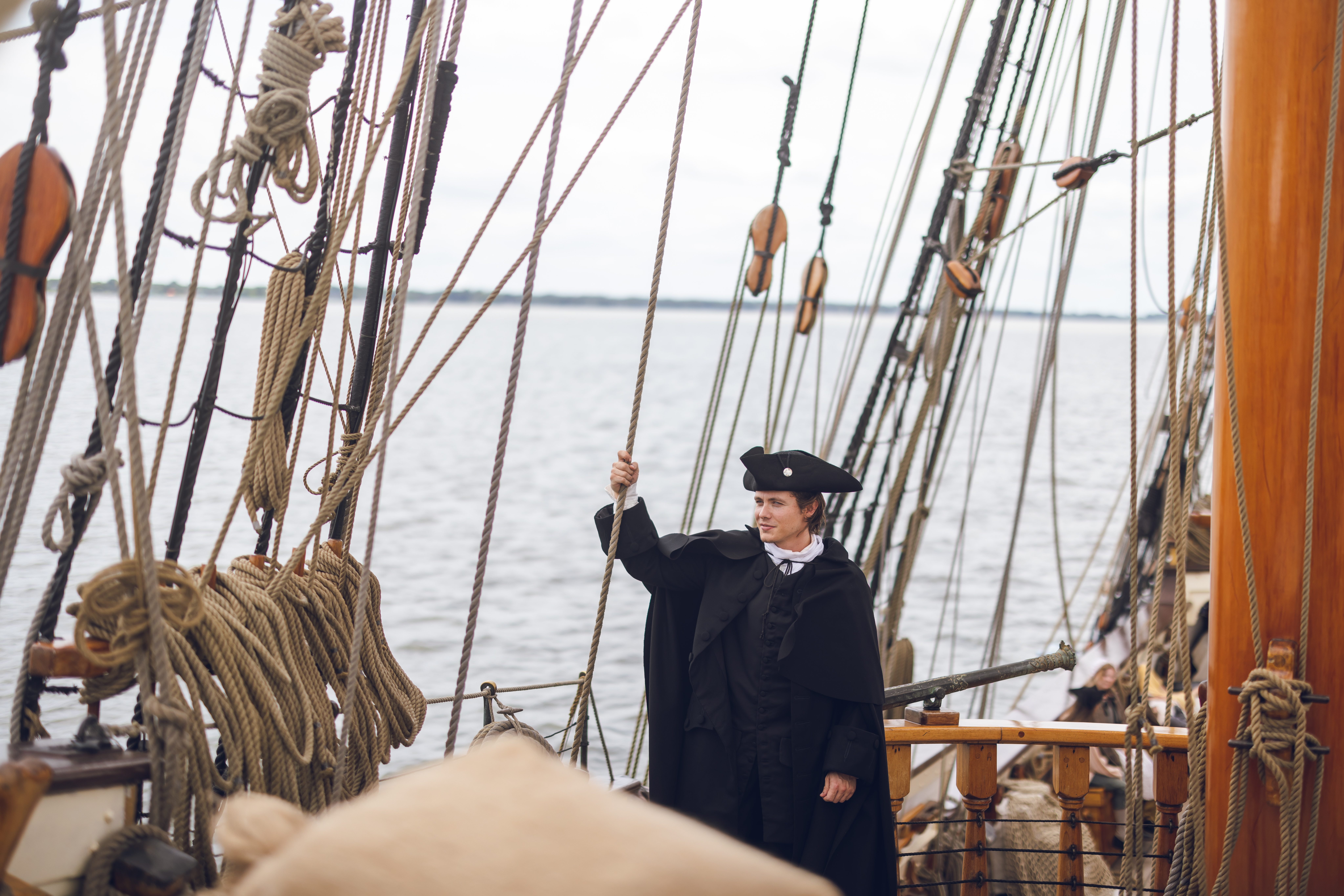
Film still. Image Credit – Sight & Sound
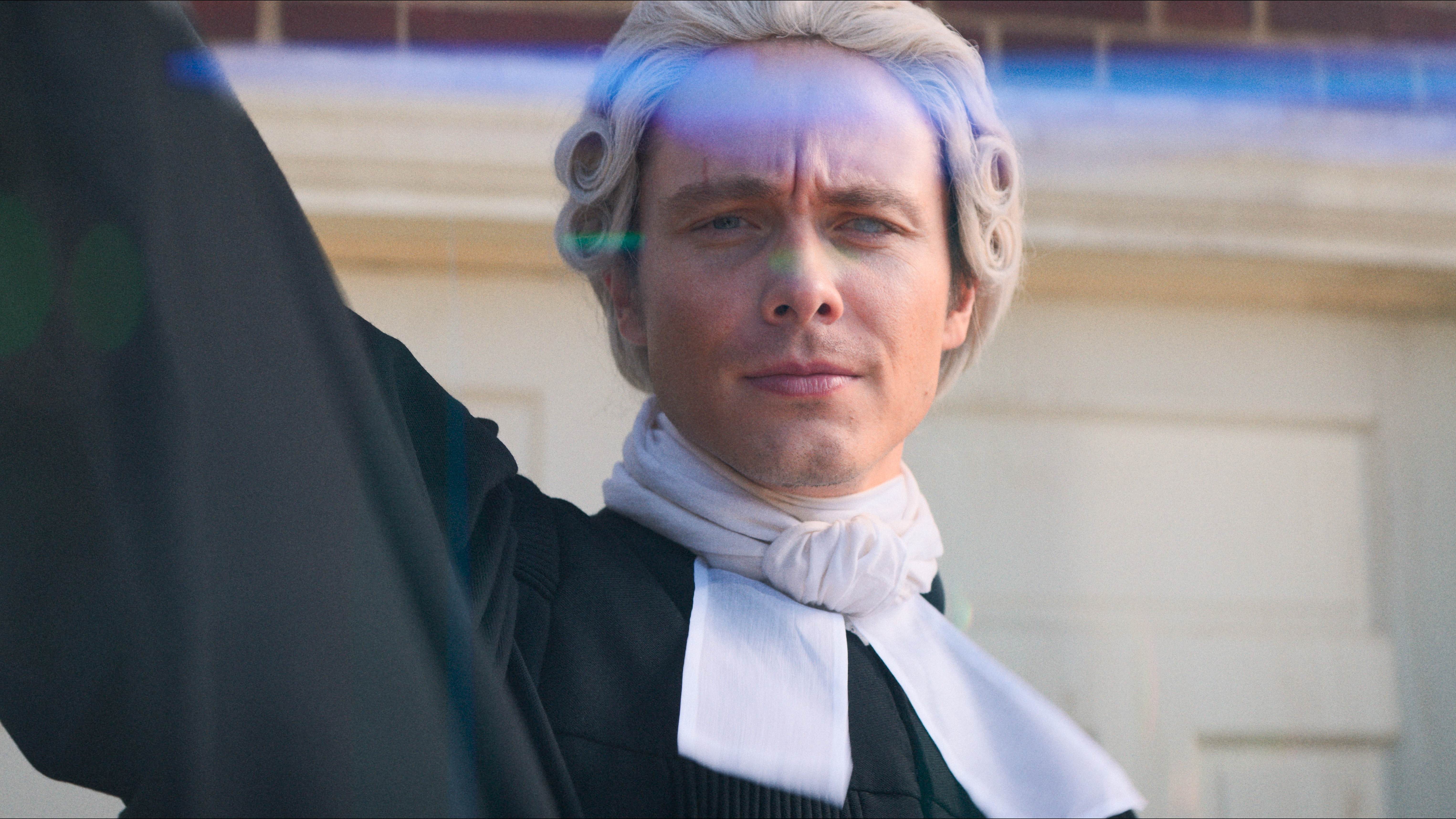
Film still. Image Credit – Sight & Sound
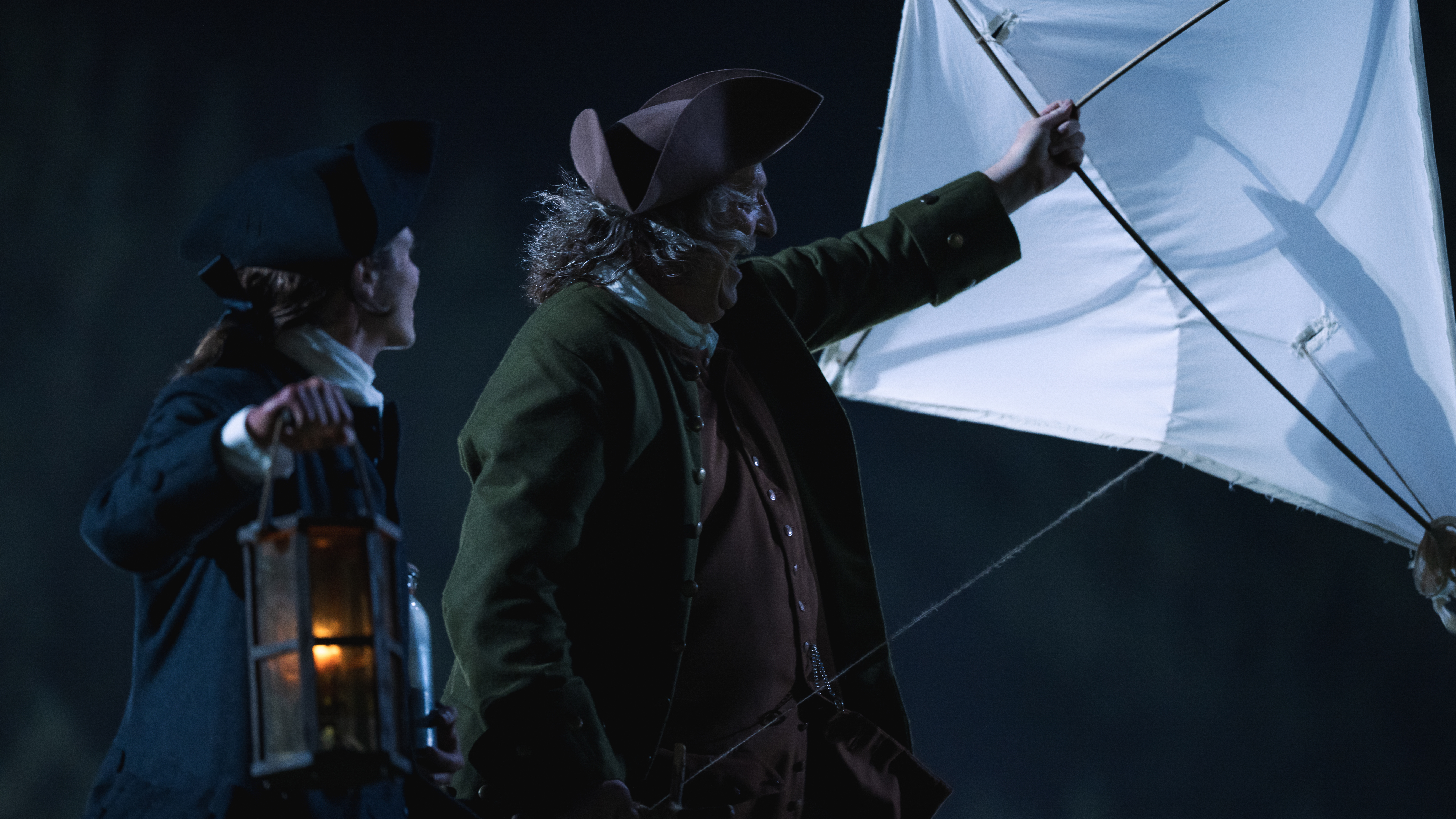
Film still. Image Credit – Sight & Sound
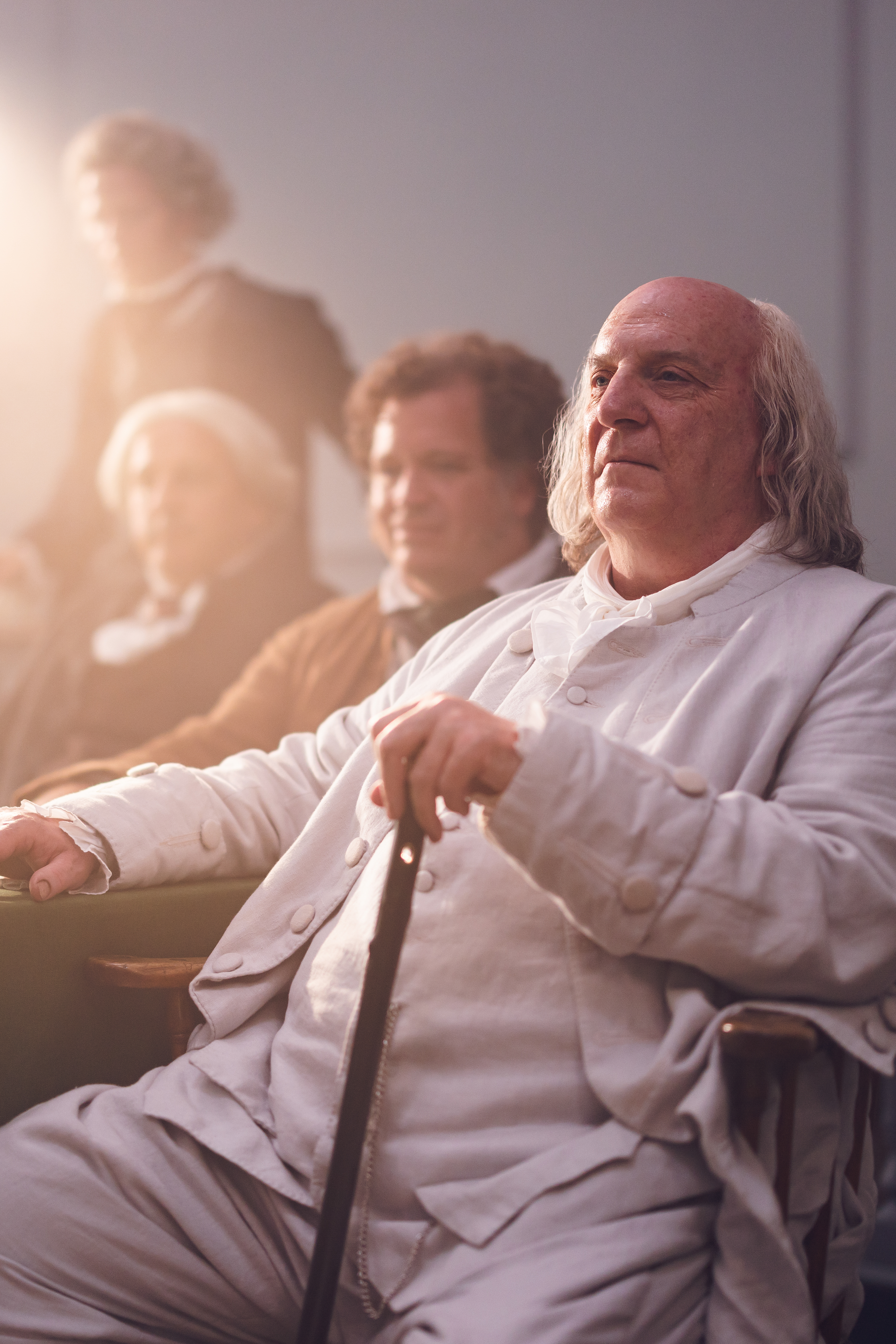
Film still. Image Credit – Sight & Sound
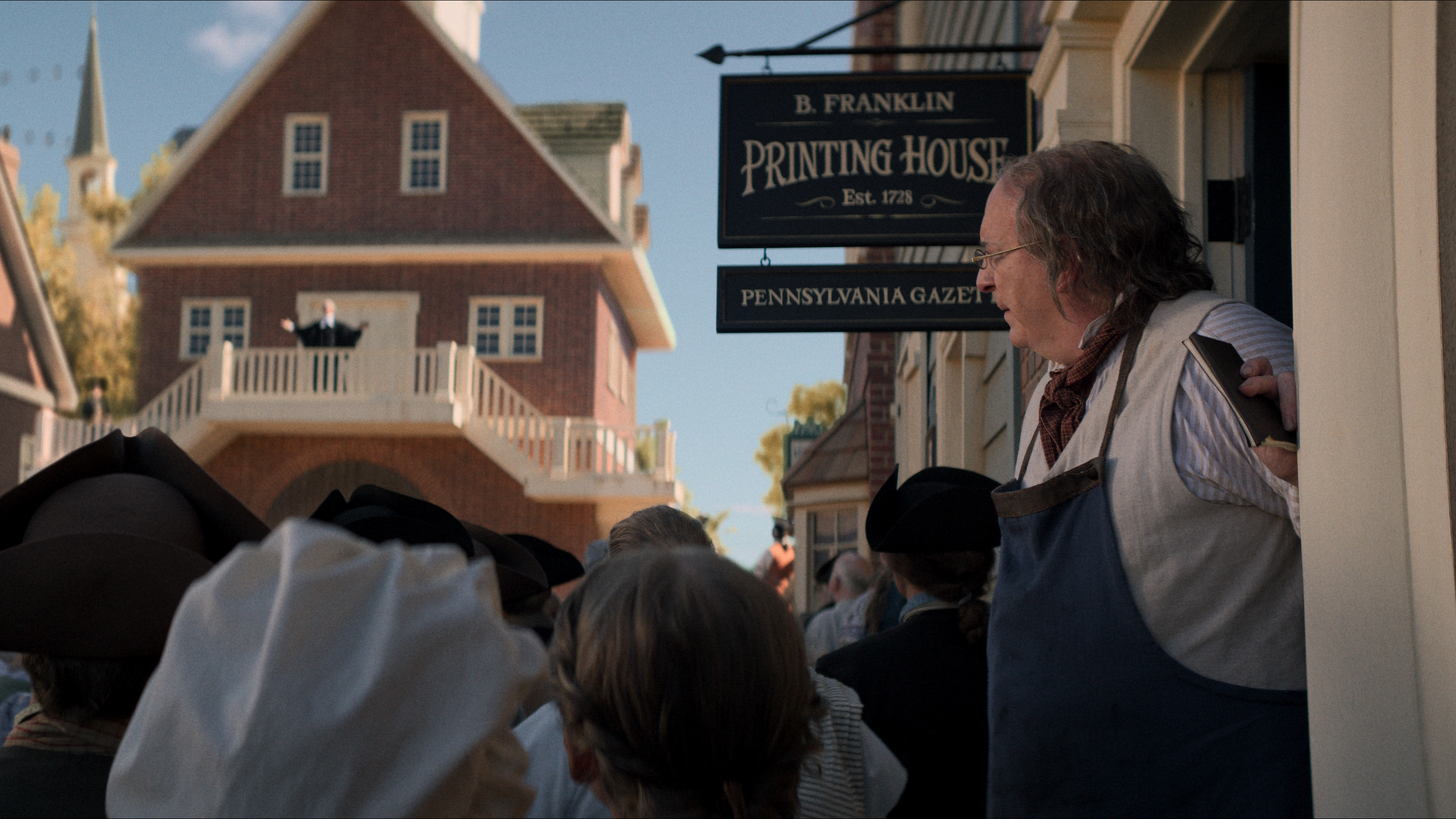
Film still. Image Credit – Sight & Sound Productions
Banner Image: Ben Franklin in Film still. Image Credit – Sight & Sound Productions



[…] the stories of Ben Franklin and Rev. George Whitefield and the evolution of the evangelical church in the newly forming United States, A Great Awakening takes viewers on a journey back through… to the earliest origins of the Colonies as they transformed into the independent and free […]
[…] of what the early pre-Revolution colonies were like, check out our must-see movie review for A Great Awakening, an epic sage of the early and political life of Revolutionary War and Constitutional hero Benjamin Franklin, along with others in his vicinity as they attempted to […]
[…] is July 4th of this year. Readers interested in learning about the crucial time that followed the Revolutionary War and full independence from England can see A Great Awakening, which follows Benjam… and a brief friendship he has with an evangelical minister before the war. According to an article […]
GW: “Some have said your Poor Richard’s Almanac is one of the lost books of the Bible”
BF: “You flatter me. But a man wrapped up in himself makes a very small bundle.”
GW: “Indeed”
Classic!
[…] note: Readers interested in a dramatization of this period made to celebrate America’s anniversary can learn about A Great Awakening, a film about the partnership between … and George Whitefield in 1770. NYC TLC unveiled a 250th anniversary commemorative medallion for […]
[…] sesquicentennial, or 250th anniversary of the signing of the Declaration of Independence, the movie A Great Awakening sought to explore the history of evangelicism in America and its relation to…, including Ben Franklin. We published a little-known history of Staten Island as a landing ground […]
[…] America, featuring an excellent performance of Benjamin Franklin, as he likely was at the time, we reviewed the film A Great Awakening, an inside look at the life of Rev. George Whitefield, a well-known figure in the early evangelical […]